
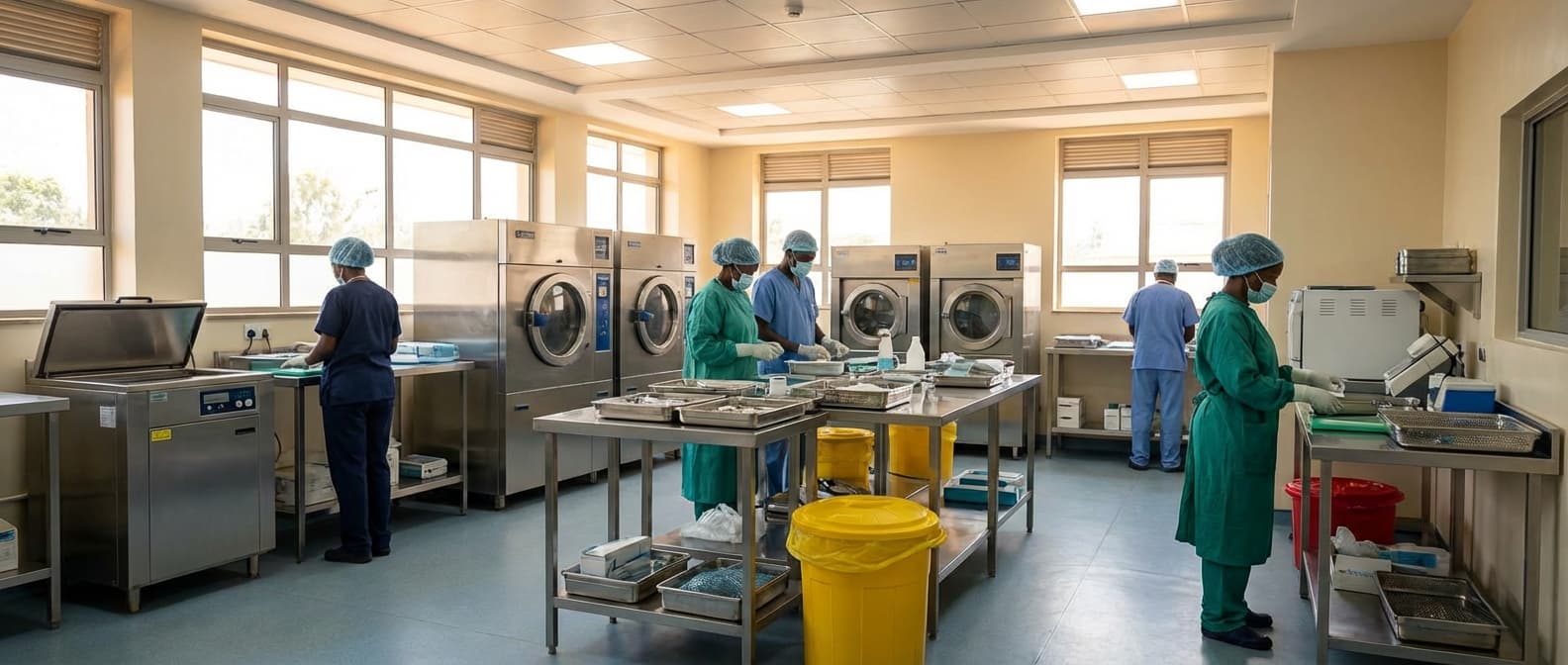
Medical Equipment Decontamination Service (Pre-Repair/Pre-Relocation) in Algeria
Engineering Excellence & Technical Support
Medical Equipment Decontamination Service (Pre-Repair/Pre-Relocation) High-standard technical execution following OEM protocols and local regulatory frameworks.
Advanced Decontamination Protocols for Equipment Integrity
Our state-of-the-art decontamination processes in Algeria utilize validated, hospital-grade disinfectants and advanced techniques to eliminate bioburden and infectious agents from medical equipment. This rigorous pre-repair and pre-relocation service ensures the safety of your technicians and preserves the operational integrity of your valuable assets, preventing cross-contamination and operational delays.
Compliance and Traceability for Regulatory Assurance
We provide comprehensive documentation and certification for all decontamination services performed in Algeria. Our transparent tracking system ensures full traceability from sample collection to final report, meeting stringent Algerian healthcare regulations. This guarantees peace of mind and facilitates seamless audits for your medical facilities.
Streamlined Logistics for Minimal Downtime
Our specialized service in Algeria is designed to integrate seamlessly into your equipment maintenance and relocation workflows. We offer flexible scheduling, secure handling, and prompt turnaround times for decontamination, significantly minimizing downtime and ensuring your critical medical devices are ready for repair or relocation efficiently, maintaining patient care continuity.
What Is Medical Equipment Decontamination Service (Pre-repair/pre-relocation) In Algeria?
Medical Equipment Decontamination Service (Pre-Repair/Pre-Relocation) in Algeria refers to the process of rendering medical devices safe for subsequent handling, including repair or relocation, by eliminating or reducing biohazardous materials to acceptable levels. This is a critical safety protocol mandated to protect personnel involved in these logistical and maintenance operations from potential biological contamination. The service adheres to established Algerian health and safety regulations and international best practices for biosafety and infection control.
| Stakeholder/Entity | Requirement/Need | Rationale |
|---|---|---|
| Medical Facilities (Hospitals, Clinics, Laboratories) | Ensure safe handling of equipment by internal biomedical engineering departments or external service providers. | Mitigate occupational exposure risks to healthcare workers, maintenance technicians, and relocation teams. Maintain compliance with health regulations. |
| Biomedical Engineering Service Providers (Internal & External) | Receive equipment in a non-biohazardous state prior to repair or calibration. | Protect technicians from potential pathogens. Prevent cross-contamination within service workshops. |
| Medical Equipment Manufacturers (for service/support) | Require equipment returned for service or upgrade to be decontaminated. | Safeguard their manufacturing and repair facility personnel. Comply with product stewardship responsibilities. |
| Logistics and Relocation Companies (specializing in healthcare assets) | Need assurance that equipment is safe to handle and transport. | Prevent potential spread of infectious agents during transit. Ensure personnel safety and prevent liability. |
| Regulatory Bodies (Ministry of Health, etc.) | Oversee and enforce health and safety standards related to medical equipment handling. | Ensure public and occupational health is protected by mandating proper decontamination procedures. |
Service Inclusions
- Pre-cleaning and manual removal of gross contaminants.
- Application of validated chemical disinfectants or sterilants.
- Rinsing and drying procedures to remove residual agents.
- Verification of decontamination efficacy through appropriate indicators (if applicable).
- Packaging and labeling of decontaminated equipment for safe transport.
- Documentation of the decontamination process and results.
Who Needs Medical Equipment Decontamination Service (Pre-repair/pre-relocation) In Algeria?
In Algeria, a specialized medical equipment decontamination service for pre-repair and pre-relocation needs is crucial for ensuring the safety of technicians, the integrity of the equipment, and the prevention of cross-contamination. This service addresses a critical gap in the healthcare and medical device lifecycle, particularly when equipment needs to be moved for servicing or to a new location. By thoroughly cleaning and disinfecting equipment before it leaves its operational environment, this service minimizes risks associated with biohazards, chemical residues, and potential damage to sensitive components during transit or repair processes.
| Target Customer Group | Key Departments / Units | Specific Equipment Types | Reasons for Decontamination (Pre-Repair/Relocation) |
|---|---|---|---|
| Hospitals (Public and Private) | Operating Theatres, Intensive Care Units (ICU), Emergency Rooms, Radiology, Cardiology, Urology, Gastroenterology, Sterilization Units | Surgical Instruments, Endoscopes, Defibrillators, Ventilators, Imaging Equipment (CT scanners, MRI machines), Dialysis Machines, Anesthesia Machines, Infusion Pumps | Preventing infection transmission to repair technicians, protecting sensitive internal components from contamination during transit, ensuring a sterile environment for repair, compliance with safety regulations. |
| Clinics and Medical Centers | General Practice, Specialty Clinics (e.g., Dermatology, Ophthalmology), Outpatient Services | Diagnostic Tools (e.g., ECG machines, blood pressure monitors), minor surgical equipment, examination tables, diagnostic imaging units | Safeguarding staff and equipment during transport to repair facilities, maintaining hygiene standards in shared medical spaces, preventing cross-contamination between different patient populations. |
| Diagnostic Laboratories | Clinical Chemistry, Hematology, Microbiology, Pathology | Automated analyzers, centrifuges, microscopes, incubators, sample handling equipment | Preventing biological sample contamination from entering repair environments, ensuring no residual hazardous chemicals or biological agents are present during transit, protecting laboratory workflow. |
| Dental Practices | Operatory, Sterilization Room | Dental Chairs, X-ray units, handpieces, intraoral cameras, sterilization autoclaves | Ensuring biohazard containment during transfer for repair, protecting dental professionals from residual contaminants, maintaining a sterile and safe patient care environment. |
| Medical Equipment Manufacturers and Distributors | Service and Repair Departments, Logistics and Warehousing | All types of medical devices awaiting repair, returned faulty equipment, new equipment for relocation | Meeting warranty requirements, ensuring safe handling of potentially contaminated returned goods, protecting service personnel, facilitating efficient logistics and inventory management. |
Target Customers and Departments in Algeria Requiring Medical Equipment Decontamination Service (Pre-Repair/Pre-Relocation)
- Hospitals (Public and Private)
- Clinics and Medical Centers
- Diagnostic Laboratories
- Dental Practices
- Surgical Centers
- Rehabilitation Centers
- Medical Equipment Manufacturers and Distributors (for returns/repairs)
- Research Institutions with medical equipment
- Government Health Agencies
- Ambulance Services and Emergency Medical Providers
Medical Equipment Decontamination Service (Pre-repair/pre-relocation) Process In Algeria
This document outlines the comprehensive workflow for a Medical Equipment Decontamination Service in Algeria, specifically for pre-repair and pre-relocation scenarios. The process ensures that medical devices are rendered safe and compliant before undergoing maintenance or being moved to a new location, minimizing biohazard risks and adhering to Algerian healthcare regulations.
| Phase | Step | Description | Key Activities | Responsible Party | Documentation/Output |
|---|---|---|---|---|---|
| Phase 1: Inquiry and Initial Assessment | 1.1 Client Inquiry | The process begins when a healthcare facility or equipment vendor contacts the decontamination service provider. | Receive inquiry, understand the need (repair/relocation), identify equipment type and quantity, gather initial details about the environment. | Healthcare Facility/Vendor (Client), Decontamination Service Provider (DSP) - Sales/Inquiry Team | Initial Inquiry Record, Client Contact Information |
| Phase 1: Inquiry and Initial Assessment | 1.2 Preliminary Risk Assessment & Quotation | An initial assessment is conducted to determine the scope, required resources, and provide a cost estimate. | Gather information on equipment type, potential bioburden, complexity, number of units, location. Estimate time and materials. Provide a preliminary quotation. | DSP - Sales/Technical Team | Preliminary Risk Assessment Report, Quotation |
| Phase 2: Service Agreement and Scheduling | 2.1 Service Agreement | Formalize the service terms and conditions. | Review and sign service agreement, outlining scope, deliverables, timelines, responsibilities, pricing, and safety protocols. | Client, DSP | Signed Service Agreement |
| Phase 2: Service Agreement and Scheduling | 2.2 Scheduling and Logistics | Coordinate the decontamination service execution. | Schedule the service based on client availability and DSP capacity. Arrange for personnel, equipment, and necessary supplies for the designated date(s). | DSP - Operations/Logistics Team, Client | Service Schedule, Logistics Plan |
| Phase 3: Pre-Decontamination Preparation | 3.1 Site Survey (if required) | In some cases, a pre-visit to the site might be necessary. | Assess the decontamination environment, identify potential challenges, confirm accessibility and ventilation requirements. | DSP - Technical Team | Site Survey Report (if applicable) |
| Phase 3: Pre-Decontamination Preparation | 3.2 Equipment Identification and Segregation | Clearly identify and isolate the equipment to be decontaminated. | Ensure the client has clearly marked and segregated the equipment intended for decontamination, preventing cross-contamination with other active equipment. | Client, DSP - On-site Supervisor | Equipment List (provided by client) |
| Phase 3: Pre-Decontamination Preparation | 3.3 Preparation of Decontamination Zone | Prepare the designated area for the decontamination process. | Set up containment barriers, ensure adequate ventilation (if required), prepare waste disposal bins, and ensure necessary PPE is available. | DSP - Decontamination Team | Prepared Decontamination Zone |
| Phase 4: On-Site Decontamination Execution | 4.1 Pre-Cleaning (if necessary) | Remove gross contamination before disinfection. | Wipe down visible contaminants with appropriate cleaning agents and absorbent materials. Dispose of waste appropriately. | DSP - Decontamination Team | Waste Disposal Records |
| Phase 4: On-Site Decontamination Execution | 4.2 Disinfection/Sterilization | Apply approved disinfection or sterilization methods. | Utilize appropriate chemical disinfectants (e.g., EPA-approved, Algerian Ministry of Health registered), or physical methods (e.g., UV-C, steam) based on equipment type and regulatory requirements. Follow manufacturer guidelines for compatibility. | DSP - Decontamination Team | Disinfection Agent/Method Used, Exposure Times |
| Phase 4: On-Site Decontamination Execution | 4.3 Rinsing and Drying | Remove disinfectant residues and ensure the equipment is dry. | Rinse with sterile or deionized water if required by the disinfectant. Thoroughly dry the equipment to prevent corrosion or damage. | DSP - Decontamination Team | Drying Process Notes |
| Phase 5: Post-Decontamination Verification and Documentation | 5.1 Visual Inspection | Confirm successful removal of visible contaminants. | Inspect the equipment for any remaining visible soil or residue. Ensure all accessible surfaces have been treated. | DSP - Decontamination Team Leader | Visual Inspection Checklist |
| Phase 5: Post-Decontamination Verification and Documentation | 5.2 Biological/Chemical Indicator Testing (if applicable) | Verify the efficacy of the decontamination process. | Use biological or chemical indicators as per standards for specific high-level disinfection or sterilization processes to confirm inactivation of microorganisms. | DSP - Quality Control/Technical Team | Indicator Test Results |
| Phase 5: Post-Decontamination Verification and Documentation | 5.3 Documentation of Process | Record all details of the decontamination procedure. | Document date, time, personnel involved, decontamination agents/methods used, exposure times, equipment treated, any issues encountered, and verification results. | DSP - Decontamination Team Leader/Administrator | Decontamination Certificate/Report |
| Phase 6: Equipment Release | 6.1 Issuance of Decontamination Certificate | Provide formal proof of decontamination. | Issue a dated and signed certificate confirming that the equipment has undergone a specified decontamination process, meeting required standards. | DSP - Authorized Signatory | Decontamination Certificate |
| Phase 6: Equipment Release | 6.2 Handover to Client/Repair Facility/Relocation Team | Transfer the decontaminated equipment for its next stage. | Hand over the decontaminated equipment to the authorized personnel from the healthcare facility, repair service, or relocation team. Ensure they acknowledge receipt. | DSP - On-site Supervisor, Client/Receiving Party | Equipment Handover Log, Signed Receipt |
Medical Equipment Decontamination Service (Pre-Repair/Pre-Relocation) Workflow in Algeria
- Phase 1: Inquiry and Initial Assessment
- Phase 2: Service Agreement and Scheduling
- Phase 3: Pre-Decontamination Preparation
- Phase 4: On-Site Decontamination Execution
- Phase 5: Post-Decontamination Verification and Documentation
- Phase 6: Equipment Release
Medical Equipment Decontamination Service (Pre-repair/pre-relocation) Cost In Algeria
The cost of medical equipment decontamination services in Algeria, particularly for pre-repair or pre-relocation purposes, is influenced by several key factors. These services are crucial to ensure the safety of technicians and the integrity of the equipment during subsequent handling. Pricing is typically presented in Algerian Dinars (DZD).
| Equipment Category | Estimated Cost Range (DZD) | Notes |
|---|---|---|
| Small Diagnostic Devices (e.g., Stethoscopes, Blood Pressure Monitors) | 5,000 - 15,000 | Basic cleaning and disinfection |
| Mid-Sized Laboratory Equipment (e.g., Centrifuges, Incubators) | 15,000 - 40,000 | More thorough cleaning, potential for surface sterilization |
| Surgical Instruments (Sets) | 20,000 - 60,000 | Sterilization protocols (autoclaving, chemical sterilization) depending on material |
| Imaging Equipment (e.g., X-ray Machines, Ultrasound Probes) | 40,000 - 150,000+ | Requires specialized cleaning agents and procedures to avoid damage |
| Large Medical Devices (e.g., Ventilators, Dialysis Machines) | 50,000 - 200,000+ | Complex cleaning protocols, potential for component disassembly |
| Specialized/High-Risk Equipment (e.g., Endoscopes, Anesthesia Machines) | 80,000 - 300,000+ | High-level disinfection or sterilization, stringent validation processes |
Factors Influencing Decontamination Costs:
- Type and Size of Equipment: Larger or more complex equipment, such as MRI machines or surgical robots, will generally incur higher decontamination costs due to the specialized techniques and materials required.
- Level of Contamination: The extent and nature of the contamination (e.g., biological, chemical, radioactive) directly impact the required decontamination procedures and their associated costs. High-level disinfection or sterilization will be more expensive than basic cleaning.
- Turnaround Time: Urgent decontamination requests often come with a premium. Expedited services require more resources and potentially overtime for personnel.
- Location of Service: Decontamination performed on-site at a hospital or clinic might involve additional logistical costs compared to bringing the equipment to a specialized facility.
- Company Expertise and Certification: Reputable companies with specialized training, certifications (e.g., ISO standards for sterilization), and advanced equipment may command higher prices due to their proven capabilities and reliability.
- Materials and Consumables: The cost of disinfectants, sterilizing agents, protective gear, and specialized cleaning tools contributes to the overall service fee.
- Scope of Service: Whether the service includes basic cleaning, high-level disinfection, or full sterilization, along with any necessary documentation or certification, will affect the price.
- Post-Decontamination Testing: Some services might include verification of decontamination efficacy through specific tests, which adds to the cost.
Affordable Medical Equipment Decontamination Service (Pre-repair/pre-relocation) Options
Our Affordable Medical Equipment Decontamination Service provides essential cleaning and disinfection for your equipment before it undergoes repairs or relocation. This crucial step ensures safety for technicians, protects sensitive components from contamination during transit, and maintains a sterile environment post-service. We offer flexible value bundles and cost-saving strategies to make this vital service accessible to a wide range of healthcare providers.
| Service Component | Description | Cost-Saving Strategy |
|---|---|---|
| Volume Discounts | Reduced per-unit cost for multiple pieces of equipment decontaminated simultaneously. | Schedule multiple equipment decontamination at once to leverage lower per-unit pricing. |
| Scheduled Maintenance Programs | Pre-booked, recurring decontamination services at a fixed, discounted rate. | Enroll in a scheduled maintenance program for predictable costs and priority scheduling. |
| Tiered Service Levels | Options ranging from basic to comprehensive, allowing you to choose the level of service that meets your budget and needs. | Select the most appropriate decontamination bundle for your specific equipment and purpose to avoid overpaying for unnecessary services. |
| Pre-Paid Service Agreements | Discounted rates for paying for a block of decontamination services upfront. | Secure significant savings by pre-paying for future decontamination needs. |
| Partnership Programs | Special pricing for long-term partners or those who bundle decontamination with other services (e.g., repair management). | Explore partnership opportunities or bundle decontamination with your existing repair or relocation providers. |
| Client-Provided Supplies (where applicable) | Opportunity to reduce costs by providing approved cleaning agents and disinfectants. | Inquire about providing your own approved consumables if you have existing contracts or bulk purchasing power. |
Value Bundles for Decontamination Services
- Basic Decontamination Bundle: Includes exterior surface cleaning, visual inspection for gross contamination, and standard disinfectant application. Ideal for routine pre-repair checks.
- Standard Decontamination Bundle: Builds upon the Basic bundle with detailed cleaning of accessible components, application of broad-spectrum disinfectants, and verification of disinfection efficacy. Recommended for general repair and moderate relocation needs.
- Advanced Decontamination Bundle: Encompasses comprehensive cleaning of all accessible internal and external surfaces, specialized disinfectants for sensitive materials, and optional bioburden testing. Essential for high-risk equipment or extensive relocation projects.
Verified Providers In Algeria
In Algeria's evolving healthcare landscape, identifying trusted and qualified medical professionals is paramount for patients seeking effective and safe treatment. Franance Health stands as a beacon of reliability, meticulously vetting its network of providers to ensure they meet the highest standards of expertise and ethical practice. This rigorous credentialing process distinguishes Franance Health providers, offering patients peace of mind and a guarantee of quality care.
| Credential Type | Verification Standard | Franance Health Assurance |
|---|---|---|
| Medical Degrees & Diplomas | Accredited Universities & Institutions | Verification of authenticity and recognized equivalency |
| Professional Licenses | Algerian Ministry of Health & Relevant Medical Boards | Confirmation of active and unencumbered medical licenses |
| Specialized Certifications | Internationally Recognized Medical Societies & Boards | Validation of specialized training and expertise |
| Years of Clinical Experience | Employment Records & Peer References | Confirmation of practical experience and patient outcomes |
| Ethical Conduct & Professionalism | Disciplinary Records & Patient Feedback | Adherence to strict ethical codes and positive patient testimonials |
| Continuing Medical Education (CME) | Evidence of ongoing training and knowledge updates | Ensuring providers remain at the forefront of medical advancements |
Why Franance Health Providers are the Best Choice in Algeria:
- Rigorous Vetting Process: Franance Health employs a multi-faceted vetting system that goes beyond basic licensing. This includes verifying educational qualifications, professional experience, specialized training, and adherence to international best practices.
- Commitment to Excellence: Our providers are selected not only for their technical skills but also for their dedication to patient well-being, ethical conduct, and continuous professional development.
- Access to Specialized Expertise: Franance Health connects patients with a diverse range of specialists, ensuring that even complex medical needs can be addressed by highly qualified professionals within Algeria.
- Patient-Centric Approach: We prioritize a patient-first philosophy. Franance Health providers are known for their empathetic communication, thorough consultations, and personalized treatment plans.
- Transparency and Trust: By clearly outlining the credentials and experience of our network, Franance Health fosters an environment of transparency and builds trust between patients and their healthcare providers.
- Navigating the System: Partnering with Franance Health simplifies the process of finding reliable medical care, saving patients valuable time and reducing the stress often associated with healthcare navigation.
Scope Of Work For Medical Equipment Decontamination Service (Pre-repair/pre-relocation)
This Scope of Work (SOW) outlines the requirements for comprehensive medical equipment decontamination services, specifically for equipment undergoing pre-repair or pre-relocation. The objective is to ensure that all equipment is rendered safe for handling, transport, and subsequent maintenance or installation by authorized personnel. This service addresses biological and chemical hazards, minimizing risks of cross-contamination and occupational exposure. The following sections detail the technical deliverables and standard specifications for this service.
| Service Component | Technical Deliverables | Standard Specifications | Verification Method |
|---|---|---|---|
| Pre-Service Assessment and Classification | Identification and categorization of equipment based on potential biohazards and chemical agents. Assessment of material compatibility with decontamination agents. Identification of access points for thorough cleaning. | Adherence to established hospital infection control guidelines (e.g., CDC, WHO). Classification based on EPA, OSHA, and relevant regulatory body hazard levels. Use of manufacturer's guidelines for material compatibility. | On-site visual inspection, equipment manifest review, documented risk assessment form. |
| Decontamination Procedure Execution | Application of approved cleaning agents and disinfection protocols to all accessible surfaces, internal components (where applicable and safe), and accessories. Thorough rinsing and drying. | Use of EPA-registered, hospital-grade disinfectants with broad-spectrum efficacy (e.g., virucidal, bactericidal, fungicidal). Specific contact times and concentrations as per manufacturer's instructions and regulatory requirements. Use of sterile or filtered water for rinsing. Drying using lint-free materials or HEPA-filtered air. | Visual inspection of cleaned surfaces, adherence to documented procedure checklists, photographic evidence (if required). |
| Post-Decontamination Verification and Documentation | Confirmation of successful decontamination through visual inspection and, where appropriate, ATP testing. Issuance of a decontamination certificate. Detailed log of decontamination activities. | ATP luminescence testing with pre-defined acceptable relative light unit (RLU) thresholds. Decontamination certificate to include equipment ID, date, technician name, decontamination agent used, and pass/fail status. Comprehensive log of all activities for each piece of equipment. | ATP test results report, signed decontamination certificate, detailed service logbook. |
| Waste Management and Disposal | Proper segregation, packaging, and disposal of all contaminated materials (e.g., wipes, gloves, used solutions) in accordance with local, state, and federal regulations for hazardous waste. | Compliance with EPA, OSHA, and local health department regulations for biohazardous and chemical waste disposal. Use of approved, labeled waste containers. Documentation of waste manifests. | Waste manifests, inspection of waste disposal procedures, confirmation of licensed disposal contractor use. |
| Reporting and Certification | Provision of a final report summarizing all decontamination activities, including equipment lists, dates, methods used, verification results, and waste disposal documentation. Issuance of final certification for the entire service period. | Report to be clear, concise, and comprehensive. Certifications to meet institutional and regulatory requirements. Secure storage and timely delivery of all documentation. | Review of final report by authorized personnel, issuance of overall service certification. |
Key Service Components
- Pre-Service Assessment and Classification
- Decontamination Procedure Execution
- Post-Decontamination Verification and Documentation
- Waste Management and Disposal
- Reporting and Certification
Service Level Agreement For Medical Equipment Decontamination Service (Pre-repair/pre-relocation)
This Service Level Agreement (SLA) outlines the response times and uptime guarantees for the Medical Equipment Decontamination Service (Pre-Repair/Pre-Relocation). This service ensures that medical equipment is thoroughly decontaminated and safe to handle prior to repair or relocation, minimizing the risk of cross-contamination and ensuring technician safety.
| Service Type | Response Time (Standard) | Response Time (Emergency) | Uptime Guarantee | Notes |
|---|---|---|---|---|
| Scheduled Decontamination | Within 48 business hours of notification | Not applicable | N/A (Service is scheduled based on demand) | Requires advance scheduling. |
| Emergency Decontamination | Within 4 business hours of notification | Within 2 business hours of notification | N/A (Service is performed on-demand) | Subject to availability of decontamination personnel and resources. 'Emergency' defined as situations posing immediate biohazard risk or halting critical operations. |
| Decontamination Process Completion | Within 24 hours of arrival on-site (for standard scheduled services, dependent on equipment volume and complexity) | Within 8 business hours of arrival on-site (for emergency services, dependent on equipment volume and complexity) | N/A (Process completion is dependent on equipment) | Downtime is minimized by performing decontamination prior to repair/relocation. |
| Documentation Delivery | Within 24 hours of service completion | Within 4 business hours of service completion | N/A | Digital or physical copies provided as per agreement. |
Key Service Components
- Scheduled Decontamination: Proactive decontamination of equipment identified for repair or relocation.
- Emergency Decontamination: On-demand decontamination for urgent situations.
- Documentation: Provision of decontamination certificates for each serviced item.
- Technician Safety: Ensuring the safety of all personnel involved in the handling and repair/relocation process.
- Compliance: Adherence to all relevant regulatory and hospital infection control guidelines.
Frequently Asked Questions

Ready when you are
Let's scope your Medical Equipment Decontamination Service (Pre-Repair/Pre-Relocation) in Algeria project in Algeria.

Scaling healthcare logistics and technical systems across the entire continent.