
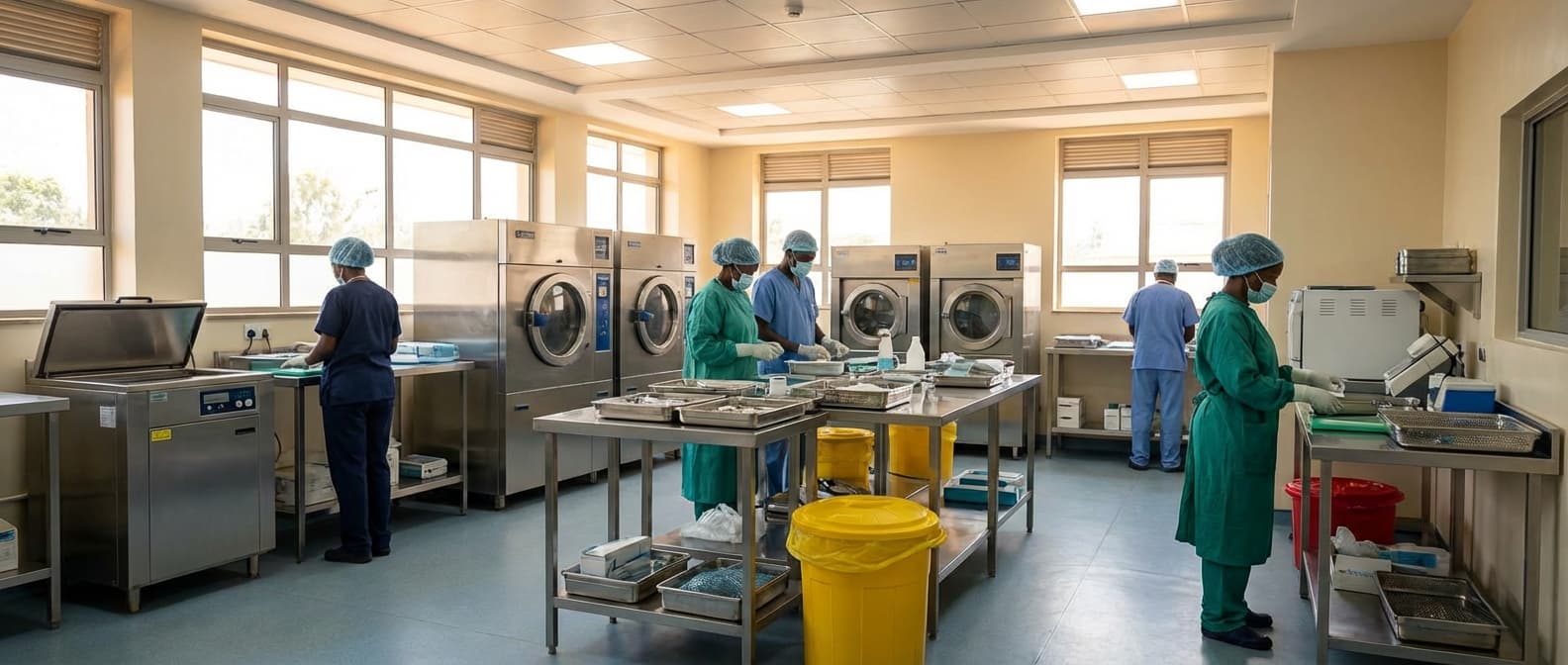
Infection-Control Readiness Support Service for Reusable Equipment in Algeria
Engineering Excellence & Technical Support
Infection-Control Readiness Support Service for Reusable Equipment High-standard technical execution following OEM protocols and local regulatory frameworks.
Expert Training & Compliance Audit
We provide hands-on training for Algerian healthcare professionals on best practices for cleaning, disinfection, and sterilization of reusable medical equipment, ensuring strict adherence to national and international infection control standards.
Advanced Disinfection & Sterilization Protocols
Our service implements and supports the use of validated, state-of-the-art disinfection and sterilization methods for a wide range of reusable medical devices, minimizing the risk of healthcare-associated infections (HAIs) within Algerian healthcare facilities.
Performance Monitoring & Quality Assurance
We establish robust tracking and reporting systems to monitor the effectiveness of infection control processes for reusable equipment, offering continuous quality improvement feedback and data-driven insights to enhance patient safety across Algeria.
What Is Infection-control Readiness Support Service For Reusable Equipment In Algeria?
Infection-Control Readiness Support Service for Reusable Equipment (ICRS-RE) in Algeria refers to a comprehensive program designed to ensure that healthcare facilities maintain the highest standards of disinfection, sterilization, and safe handling of reusable medical devices. This service is critical for preventing healthcare-associated infections (HAIs) by mitigating the risk of pathogen transmission through inadequately processed equipment. The core objective is to establish and sustain robust protocols that align with national and international guidelines for infection prevention and control.
| Stakeholder/Facility Type | Need for ICRS-RE | Typical Use Cases |
|---|---|---|
| Hospitals (Public and Private) | High volume of reusable surgical instruments, endoscopes, respiratory therapy devices, and other medical equipment requiring reprocessing. Critical for patient safety and preventing outbreaks. | Ensuring sterility of surgical packs, safe reuse of endoscopes, prevention of ventilator-associated pneumonia through properly disinfected circuits, management of sterilization failures. |
| Clinics and Polyclinics | Often handle smaller volumes but may have limited dedicated reprocessing facilities or specialized staff. Crucial for maintaining basic infection control standards. | Safe reprocessing of dental instruments, minor surgical tools, examination equipment (e.g., stethoscopes, otoscopes). |
| Diagnostic Laboratories | Processing of reusable glassware, specimen collection devices, and some analytical instruments. | Sterilization of culture media preparation equipment, safe reuse of specific laboratory tools. |
| Specialized Healthcare Centers (e.g., Dialysis Centers, Oncology Units) | High-risk patient populations and specialized equipment (e.g., hemodialysis machines, chemotherapy administration devices) necessitate stringent reprocessing protocols. | Ensuring the sterility of dialysis dialyzers (if reusable), safe reprocessing of infusion pumps and associated tubing for chemotherapy. |
| Medical Device Manufacturers and Distributors | For validation of reprocessing instructions provided with their devices and for training healthcare professionals on proper reprocessing. | Providing clear reprocessing guidelines, conducting on-site training for hospital staff, validating the efficacy of their provided cleaning and disinfection agents. |
| National Health Authorities and Regulatory Bodies | Overseeing and ensuring compliance with national infection control standards, developing guidelines, and conducting national-level assessments. | Developing national reprocessing guidelines, conducting facility inspections, establishing accreditation criteria for infection control practices. |
Components of ICRS-RE
- Assessment and Gap Analysis: Evaluating current practices, infrastructure, and staff competency related to reusable equipment processing.
- Protocol Development and Optimization: Establishing, revising, or implementing Standard Operating Procedures (SOPs) for cleaning, disinfection, sterilization, and storage.
- Equipment Assessment and Maintenance: Verifying the functionality and suitability of sterilization and disinfection equipment, including regular calibration and preventative maintenance.
- Staff Training and Competency Assurance: Providing theoretical and practical training on infection control principles, aseptic techniques, and the proper operation of processing equipment.
- Monitoring and Auditing: Implementing routine surveillance and periodic audits to ensure compliance with established protocols and identify areas for improvement.
- Supply Chain Management for Consumables: Ensuring the availability and quality of detergents, disinfectants, sterilization wraps, and other necessary consumables.
- Waste Management Integration: Establishing safe and effective protocols for the handling and disposal of biohazardous waste generated during the reprocessing cycle.
- Regulatory Compliance Support: Assisting facilities in adhering to Algerian Ministry of Health regulations and international standards (e.g., ISO, AAMI).
Who Needs Infection-control Readiness Support Service For Reusable Equipment In Algeria?
In Algeria, the demand for infection-control readiness support services for reusable equipment is driven by a critical need to ensure patient safety, prevent healthcare-associated infections (HAIs), and maintain regulatory compliance across various healthcare settings. These services are essential for healthcare facilities that utilize reusable medical devices, instruments, and equipment, which, if not properly decontaminated and sterilized, pose a significant risk of transmitting pathogens. The support encompasses a range of activities, including the assessment of current infection control practices, development and implementation of standardized protocols for cleaning, disinfection, and sterilization, staff training, equipment validation, and ongoing monitoring. The ultimate goal is to establish a robust and sustainable infection prevention program specifically tailored to the challenges of managing reusable equipment within the Algerian healthcare landscape.
| Department/Unit | Key Reusable Equipment Managed | Specific Needs for Support | Impact of Inadequate Readiness |
|---|---|---|---|
| Sterilization Department (CSSD/IBD) | Surgical instruments, endoscopes, anesthesia equipment, implants | Protocol development, validation of sterilization processes, staff training, equipment maintenance, traceability systems | Transmission of HAIs, instrument damage, operational delays, regulatory non-compliance |
| Operating Rooms (ORs) | Surgical instruments, drapes, cautery devices, endoscopic accessories | Safe handling and transport of contaminated items, correct usage of sterilized equipment, immediate reprocessing protocols | Surgical site infections, retained instruments, compromised patient safety |
| Intensive Care Units (ICUs) | Ventilators, suction devices, monitoring equipment, infusion pumps | Effective disinfection of respiratory equipment, cleaning of shared patient care devices, staff awareness of infection risks | Ventilator-associated pneumonia (VAP), bloodstream infections (BSIs), increased patient morbidity and mortality |
| Gastroenterology/Endoscopy Units | Endoscopes (gastroscopes, colonoscopes), biopsy forceps, brushes | High-level disinfection protocols, leak testing, proper storage of endoscopes, training on automated reprocessors | Transmission of viral hepatitis, H. pylori, and other pathogens, scope damage, prolonged reprocessing times |
| Anesthesia Departments | Anesthesia circuits, masks, laryngoscopes, breathing systems | Routine disinfection of breathing circuits, maintenance of laryngoscope blades, ensuring sterility of reusable components | Respiratory infections, cross-contamination between patients |
| Dental Departments/Clinics | Handpieces, mirrors, probes, elevators, impression trays | Effective sterilization of dental instruments, proper cleaning of handpieces, compliance with dental infection control guidelines | Transmission of bloodborne pathogens (HIV, Hepatitis B/C), oral infections |
| Infection Prevention and Control (IPC) Committee/Department | All reusable medical equipment across the facility | Oversight of the entire process, risk assessment, development of facility-wide policies, staff education, auditing compliance | Systemic failures in infection control, widespread HAIs, ineffective resource allocation for IPC |
| Biomedical Engineering Department | All reusable medical equipment | Maintenance and calibration of reprocessing equipment (autoclaves, washer-disinfectors), validation of equipment performance, repair of faulty devices | Equipment malfunction leading to ineffective sterilization, increased downtime, safety hazards |
Target Customers & Departments in Algeria for Reusable Equipment Infection-Control Readiness Support Service:
- Hospitals (Public and Private): The primary target, encompassing all sizes and specialties, from general hospitals to specialized medical centers.
- Clinics and Health Centers: Including primary care facilities, specialized outpatient clinics (e.g., dental, ophthalmology, dermatology), and diagnostic centers.
- Surgical Centers and Day Surgery Units: Where the risk of infection from reusable surgical instruments is particularly high.
- Dental Practices: Requiring meticulous sterilization of dental instruments.
- Laboratories: Especially those processing samples that might involve reusable diagnostic equipment.
- Rehabilitation Centers: Facilities that may use shared reusable equipment for patient therapy.
- Maternity and Neonatal Units: Where infection control is paramount for vulnerable populations.
- Emergency Departments: Requiring rapid and effective decontamination of reusable equipment for immediate reuse.
Infection-control Readiness Support Service For Reusable Equipment Process In Algeria
This document outlines the workflow for the 'Infection-Control Readiness Support Service for Reusable Equipment Process' in Algeria. This service aims to ensure healthcare facilities are adequately prepared and equipped to safely reprocess reusable medical equipment, minimizing the risk of healthcare-associated infections.
| Stage | Description | Key Activities | Responsible Parties | Deliverables |
|---|---|---|---|---|
| Inquiry and Initial Assessment | The initial contact from a healthcare facility seeking support for their reusable equipment reprocessing. | Facility expresses interest, requests information, and provides preliminary details about their current practices and needs. Initial eligibility screening. | Healthcare Facility (Client), Service Provider (Algeria MOH/Designated Agency) | Initial interest logged, basic needs understood, contact information exchanged. |
| Proposal Development and Agreement | Formalizing the service offering based on the initial inquiry. | Detailed needs assessment through questionnaires/calls. Development of a tailored service proposal outlining scope, objectives, timelines, and costs. Negotiation and signing of a service agreement. | Service Provider, Healthcare Facility (Client) | Signed Service Agreement, Detailed Proposal |
| On-site Readiness Assessment | A comprehensive evaluation of the facility's current reusable equipment reprocessing practices and infrastructure. | Site visit by trained assessors. Review of policies, procedures, infrastructure (sterilization areas, water supply), equipment inventory, consumables, staff competency, waste management, and documentation. Interviews with key personnel. | Service Provider Assessment Team, Healthcare Facility Staff | On-site Assessment Report detailing current state |
| Gap Analysis and Recommendation Formulation | Identifying deficiencies and proposing actionable solutions to achieve infection control readiness. | Analysis of the assessment report against national and international guidelines. Identification of specific gaps (e.g., outdated equipment, inadequate training, non-compliance with protocols). Formulation of a detailed improvement plan with prioritized recommendations. | Service Provider Expert Team | Gap Analysis Report, Recommended Improvement Plan |
| Implementation Support and Training | Assisting the facility in implementing the recommended improvements. | Procurement guidance for new equipment/consumables. Support in updating Standard Operating Procedures (SOPs). Practical training for staff on reprocessing techniques, equipment operation, and documentation. Mentoring and coaching. | Service Provider Implementation Team, Healthcare Facility Staff | Updated SOPs, Trained Staff, Acquired Equipment/Consumables |
| Verification and Certification | Confirming that the facility has met the required standards for safe reusable equipment reprocessing. | Follow-up on-site assessment to verify implementation of recommendations. Review of updated documentation and observed practices. Issuance of a 'Reusables Reprocessing Readiness Certificate' upon successful verification. | Service Provider Verification Team, Healthcare Facility | Verification Report, Readiness Certificate |
| Ongoing Monitoring and Refinement | Ensuring sustained compliance and continuous improvement. | Periodic follow-up visits or remote monitoring. Review of incident reports. Refresher training as needed. Updates to recommendations based on evolving guidelines or facility needs. Re-certification processes. | Service Provider Monitoring Team, Healthcare Facility | Monitoring Reports, Updated Recommendations, Re-certification |
Workflow Stages
- Inquiry and Initial Assessment
- Proposal Development and Agreement
- On-site Readiness Assessment
- Gap Analysis and Recommendation Formulation
- Implementation Support and Training
- Verification and Certification
- Ongoing Monitoring and Refinement
Infection-control Readiness Support Service For Reusable Equipment Cost In Algeria
Ensuring robust infection-control readiness for reusable medical equipment in Algeria is paramount for patient safety and public health. The provision of specialized support services to achieve and maintain this readiness involves various cost components. These services can range from initial assessments and protocol development to training, equipment validation, and ongoing monitoring. The pricing of such services in Algeria is influenced by a combination of factors, making a precise universal price difficult to pinpoint. However, understanding these drivers allows for an estimation of potential cost ranges in Algerian Dinars (DZD).
| Service Component / Scope | Estimated Cost Range (DZD) |
|---|---|
| Initial Infection Control Assessment & Gap Analysis (per facility) | 50,000 - 250,000 |
| Development of Reusable Equipment Sterilization Protocols (per facility) | 80,000 - 400,000 |
| Staff Training (per session/group, e.g., 2-day workshop) | 40,000 - 150,000 |
| Equipment Sterilization Process Validation (per equipment type) | 30,000 - 100,000 |
| Consultancy for Equipment Upgrade/Procurement Recommendations | 25,000 - 75,000 (per consultation hour/day) |
| Full Readiness Program (Assessment, Protocol, Training, Validation - for a medium-sized hospital) | 500,000 - 2,000,000+ |
| Ongoing Support & Auditing (monthly retainer) | 30,000 - 100,000 |
Key Pricing Factors for Infection-Control Readiness Support Services for Reusable Equipment in Algeria:
- Scope of Services: The breadth and depth of the services required are primary cost drivers. This includes the number of equipment types, the complexity of their sterilization processes, and the extent of the assessment (e.g., a single department vs. an entire hospital).
- Number and Type of Reusable Equipment: A larger inventory of equipment, especially those with intricate designs or requiring advanced sterilization methods (e.g., flexible endoscopes, surgical power tools), will naturally increase the cost.
- Facility Size and Complexity: The overall size of the healthcare facility (e.g., a small clinic vs. a large tertiary hospital) and its existing infrastructure (e.g., availability of dedicated sterilization areas, ventilation systems) will impact the time and resources needed for assessment and implementation.
- Level of Existing Readiness: Facilities with minimal or no established infection control protocols will require more comprehensive and foundational support, leading to higher costs compared to those with existing, albeit needing improvement, systems.
- Consultant Expertise and Experience: The qualifications, specialized knowledge, and years of experience of the infection control consultants or service providers will influence their rates. Highly specialized expertise will command higher fees.
- Training Needs: The number of staff to be trained, the complexity of the training modules, and the duration of the training sessions are significant cost components. This includes theoretical knowledge and hands-on practical training.
- Equipment Validation and Testing: Services may include validation of existing sterilization equipment and processes, or recommendations for upgrades or new purchases. The cost of specialized testing equipment and methodologies will be factored in.
- Reporting and Documentation Requirements: The level of detail and comprehensiveness required in reports, audits, and compliance documentation will affect the time and resources allocated by the service provider.
- Geographic Location within Algeria: While not always a major differentiator for professional services, travel and accommodation costs for consultants may vary depending on the remoteness of the facility.
- Regulatory Compliance Support: Assistance in navigating Algerian healthcare regulations and international standards for infection control can add to the service cost.
- Ongoing Monitoring and Maintenance: If the service includes periodic audits, remote monitoring, or emergency support, these recurring costs will need to be considered.
- Provider Type (Local vs. International): While international consultants may bring global best practices, local Algerian service providers might offer more competitive pricing due to lower overheads and a better understanding of the local context. However, the availability of specialized local expertise might be limited.
Affordable Infection-control Readiness Support Service For Reusable Equipment Options
Our Affordable Infection-Control Readiness Support Service for Reusable Equipment Options is designed to empower healthcare facilities with robust infection prevention protocols without exorbitant costs. We understand the critical need for meticulous cleaning, disinfection, and sterilization of reusable medical devices to prevent healthcare-associated infections (HAIs). This service offers flexible and cost-effective solutions tailored to your specific needs, ensuring patient safety and operational efficiency.
The core of our offering lies in providing comprehensive support for your reusable equipment lifecycle. This includes guidance on best practices for cleaning and disinfection, selection and maintenance of appropriate equipment, staff training, and validation of processes. We aim to minimize risks, reduce waste, and optimize the lifespan of your valuable reusable assets. Our approach emphasizes proactive readiness, ensuring your facility is prepared for routine procedures, audits, and potential outbreaks. By partnering with us, you gain access to expert knowledge, standardized protocols, and resources that enhance your infection control program, ultimately leading to better patient outcomes and reduced liability.
| Cost-Saving Strategy | Description | Benefit |
|---|---|---|
| Optimized Equipment Utilization: | We help facilities implement efficient workflows for cleaning, disinfection, and reprocessing of reusable equipment, minimizing downtime and ensuring devices are available when needed. | Reduces the need for purchasing excess inventory, lowers capital expenditure, and improves operational efficiency. |
| Reduced Waste and Repair Costs: | Proper maintenance, handling, and selection of cleaning/disinfection agents based on our recommendations prevent premature equipment wear and damage. | Extends the lifespan of reusable equipment, decreases repair expenses, and lowers the frequency of costly replacements. |
| Staff Training and Competency: | Our comprehensive training programs ensure staff are proficient in infection control procedures, reducing errors and improving adherence to protocols. | Minimizes the risk of HAIs, which are costly to treat and can lead to longer patient stays and potential litigation. Enhances staff confidence and reduces potential for re-training needs. |
| Compliance and Reduced Fines: | We guide facilities in adhering to national and international infection control guidelines and regulatory requirements. | Avoids costly fines, penalties, and reputational damage associated with non-compliance during audits and inspections. |
| Evidence-Based Protocol Development: | Our SOPs are developed based on the latest scientific evidence and best practices in infection control. | Ensures the most effective and efficient methods are employed, maximizing the impact of infection prevention efforts and potentially reducing the use of more expensive or less effective solutions. |
| Flexible Service Models: | We offer scalable support, allowing facilities to choose the level of service that best fits their budget and needs, from initial consultation to ongoing support. | Avoids paying for services that are not required, ensuring cost-effectiveness and a strong return on investment. |
Value Bundles for Infection-Control Readiness Support
- Core Readiness Bundle: Includes initial assessment of current reusable equipment infection control practices, development of standardized operating procedures (SOPs) for cleaning, disinfection, and sterilization, and a foundational staff training module on infection prevention principles. This bundle is ideal for facilities looking to establish or significantly upgrade their baseline readiness.
- Proactive Monitoring Bundle: Builds upon the Core Readiness Bundle by incorporating regular audits of infection control processes, performance monitoring of disinfection/sterilization equipment, and periodic refreshers for staff. This bundle ensures sustained adherence to best practices and early identification of potential deviations.
- Specialized Equipment Bundle: Focuses on specific types of reusable equipment with unique decontamination requirements (e.g., endoscopes, surgical instruments, respiratory equipment). This bundle includes tailored SOPs, specialized training for relevant staff, and guidance on selecting and maintaining appropriate decontamination technologies for these high-risk items.
- Emergency Preparedness Bundle: Designed to bolster readiness for unforeseen circumstances, such as outbreaks or surge demands. This bundle includes contingency planning for reusable equipment decontamination, stockpiling of essential supplies, and rapid training protocols for adapting to emergency situations. It ensures your facility can maintain critical infection control standards under pressure.
Verified Providers In Algeria
In Algeria's evolving healthcare landscape, ensuring access to reliable and qualified medical professionals is paramount. This is where "Verified Providers" and specifically "Franance Health" credentials emerge as significant indicators of quality. Verified Providers in Algeria signify that healthcare professionals have undergone a rigorous vetting process, confirming their qualifications, licenses, and ethical standing. Franance Health credentials, in particular, represent a commitment to excellence and adherence to high standards of medical practice, often encompassing specialized training, continuous professional development, and a patient-centric approach. Choosing providers with these credentials not only assures patients of competent care but also instills confidence in the safety and efficacy of the medical services they receive. They are the best choice because they offer a guarantee of quality, expertise, and trustworthiness in a field where these attributes are non-negotiable.
| Credential Type | What it Signifies | Benefit to Patients in Algeria |
|---|---|---|
| Verified Provider Status | Undergone a formal verification process confirming licenses, qualifications, and background checks. | Assurance of legitimate medical practice and absence of fraudulent credentials. |
| Franance Health Credential (General) | Indicates a healthcare professional has met specific criteria set by Franance Health, often related to specialized training or quality standards. | Confidence in a provider's advanced skills and dedication to high-quality patient care. |
| Franance Health Specialization Credential | Denotes completion of advanced training and demonstrated proficiency in a particular medical specialty. | Access to experts with in-depth knowledge and experience for specific health conditions. |
| Franance Health Continuing Education Compliance | Confirms the provider actively participates in ongoing medical education and training. | Ensures patients are receiving care based on the latest medical research and practices. |
Key Advantages of Choosing Verified Providers with Franance Health Credentials in Algeria
- Demonstrated expertise and validated qualifications.
- Adherence to stringent ethical and professional standards.
- Commitment to continuous learning and staying abreast of medical advancements.
- Enhanced patient safety and trust.
- Access to specialized medical knowledge and advanced treatment protocols.
- Improved patient outcomes and satisfaction.
Scope Of Work For Infection-control Readiness Support Service For Reusable Equipment
This Scope of Work (SOW) outlines the services to be provided for supporting infection-control readiness for reusable equipment. The objective is to ensure that all reusable medical equipment within the healthcare facility is managed in accordance with current best practices and regulatory requirements for infection prevention and control, thereby minimizing the risk of healthcare-associated infections (HAIs). The service includes assessment, development, and implementation of protocols, training, and ongoing monitoring.
| Technical Deliverable | Description | Standard Specification / Reference |
|---|---|---|
| Infection Control Assessment Report | A comprehensive report detailing the current state of reusable equipment management, identifying strengths, weaknesses, and areas of non-compliance with infection control standards. | Based on facility-specific inventory and current applicable guidelines (e.g., CDC, WHO, local health authority regulations). |
| SOPs for Reusable Equipment | Detailed Standard Operating Procedures for the entire lifecycle of reusable equipment, including receiving, cleaning, disinfection, sterilization, storage, and distribution. Each SOP will specify required materials, equipment, and processing steps. | Aligned with manufacturer instructions for use (IFU) for specific equipment and validated disinfection/sterilization processes (e.g., Spaulding Classification). |
| Training Modules | Developed training materials (presentations, handouts, practical demonstrations) covering proper handling, cleaning, disinfection, sterilization, and storage of various types of reusable equipment. | Content validated against current infection control guidelines and industry best practices. |
| Compliance Monitoring Plan | A framework for ongoing monitoring and auditing of reusable equipment processing. This includes checklists, frequency of audits, reporting mechanisms, and corrective action procedures. | Incorporates quality control indicators and performance metrics relevant to infection prevention. |
| Recommendations Report | A report outlining recommendations for equipment upgrades, technology adoption, process improvements, and resource allocation to enhance infection control readiness for reusable equipment. | Supported by evidence-based research and cost-benefit analysis where applicable. |
| Consultation Minutes | Record of all consultation meetings, including discussions, decisions made, action items assigned, and responsible parties. | Standard meeting minutes format. |
Key Service Components
- Assessment of current reusable equipment inventory and associated infection control practices.
- Development or refinement of Standard Operating Procedures (SOPs) for cleaning, disinfection, and sterilization of reusable equipment.
- Identification and recommendation of appropriate cleaning, disinfection, and sterilization agents and equipment.
- Development of training materials and delivery of training sessions for relevant staff.
- Establishment of a monitoring and auditing framework to ensure compliance and identify areas for improvement.
- Provision of technical consultation and support on infection control best practices for reusable equipment.
Service Level Agreement For Infection-control Readiness Support Service For Reusable Equipment
This Service Level Agreement (SLA) outlines the response times and uptime guarantees for the Infection-Control Readiness Support Service for Reusable Equipment. This service is designed to ensure that critical reusable medical equipment remains readily available and appropriately disinfected for patient care, minimizing the risk of healthcare-associated infections (HAIs) and operational disruptions.
| Service Component | Response Time (for urgent issues) | Uptime Guarantee | Notes |
|---|---|---|---|
| Critical Equipment Disinfection Monitoring Alerts | 15 minutes (from alert generation) | 99.9% uptime of monitoring system | Applies to equipment directly impacting immediate patient care or posing a high infection risk. |
| Routine Disinfection Process Support | 1 hour (for non-urgent inquiries) | N/A | Covers general questions, process clarification, and scheduled validation checks. |
| Urgent Equipment Disinfection Troubleshooting | 30 minutes (from confirmed urgent request) | N/A | Applies when a critical piece of reusable equipment is identified as non-compliant or unavailable due to disinfection issues. |
| System Availability for Reporting and Dashboards | N/A | 99.5% uptime | Ensures access to real-time data and historical performance metrics. |
Service Scope
- Monitoring of disinfection cycles for designated reusable equipment.
- Proactive identification and reporting of potential equipment downtime due to disinfection failures or scheduling conflicts.
- Rapid response to urgent requests for equipment disinfection validation or troubleshooting.
- Support for the proper storage and handling of disinfected reusable equipment.
- Escalation of critical issues to relevant clinical engineering and infection control teams.
Frequently Asked Questions

Ready when you are
Let's scope your Infection-Control Readiness Support Service for Reusable Equipment in Algeria project in Algeria.

Scaling healthcare logistics and technical systems across the entire continent.