
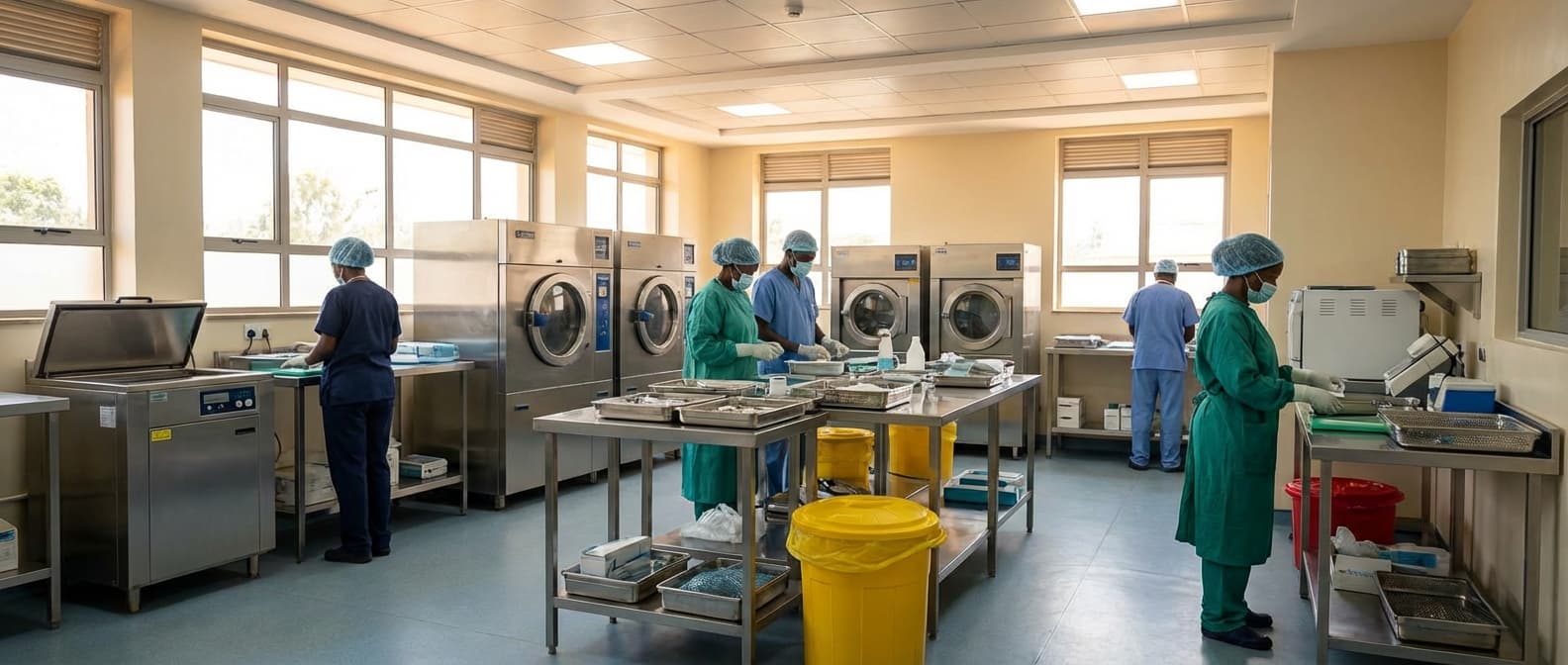
Endoscope Reprocessing Equipment Support Service in Algeria
Engineering Excellence & Technical Support
Endoscope Reprocessing Equipment Support Service High-standard technical execution following OEM protocols and local regulatory frameworks.
On-Site Technical Expertise
Rapid deployment of certified technicians across Algeria for swift diagnostics and on-the-spot repairs of all endoscope reprocessing equipment, minimizing downtime and ensuring continuous patient care.
Proactive Maintenance & Calibration
Comprehensive preventive maintenance programs and precision calibration services designed to optimize equipment performance, extend lifespan, and guarantee adherence to the highest international reprocessing standards.
Specialized Endoscope Support
Dedicated support for a wide range of endoscope reprocessing equipment brands and models prevalent in Algerian healthcare facilities, including automated reprocessors, dryers, and leak testers.
What Is Endoscope Reprocessing Equipment Support Service In Algeria?
Endoscope reprocessing equipment support service in Algeria refers to the provision of specialized technical assistance for the maintenance, repair, calibration, and validation of automated endoscope reprocessors and associated equipment. This service ensures that these critical medical devices function optimally, adhering to stringent infection control standards and regulatory requirements within healthcare facilities. It encompasses a range of activities aimed at preserving the integrity, functionality, and safety of the equipment, thereby mitigating risks of cross-contamination and patient harm.
| Who Needs It? | Typical Use Cases |
|---|---|
| Hospitals (Public and Private) | Maintaining the operational readiness of automated reprocessors used for flexible and rigid endoscopes in gastroenterology, pulmonology, urology, gynecology, and surgery departments. |
| Surgical Centers & Clinics | Ensuring the reliable functioning of reprocessing equipment in facilities performing endoscopic procedures. |
| Specialized Medical Facilities | Supporting endoscope reprocessing for diagnostic and interventional procedures requiring high levels of sterility. |
| Medical Equipment Suppliers/Distributors | Offering after-sales support and maintenance contracts for the endoscope reprocessing equipment they supply in Algeria. |
| Third-Party Service Providers | Companies specializing in medical equipment maintenance and repair who offer comprehensive support packages. |
| Regulatory Bodies (Indirectly) | Ensuring that healthcare facilities comply with infection control guidelines and standards for endoscope reprocessing, which necessitates well-maintained equipment. |
Key Components of Endoscope Reprocessing Equipment Support Service
- Preventive Maintenance: Scheduled inspections, cleaning, lubrication, and component replacements to avert equipment failures and extend lifespan.
- Corrective Maintenance & Repair: Diagnosis and resolution of malfunctions, including sourcing and replacing defective parts.
- Calibration: Adjustment of critical parameters (e.g., temperature, pressure, flow rates, cycle times) to ensure accurate and consistent disinfection/sterilization efficacy.
- Validation & Verification: Performance testing to confirm that the equipment meets manufacturer specifications and regulatory standards (e.g., IEC 62353, ISO 15883 series) for effective reprocessing.
- Performance Monitoring: Ongoing assessment of equipment operation to identify potential deviations and ensure optimal efficiency.
- Technical Consultation & Training: Providing expert advice on equipment operation, troubleshooting, and best practices for reprocessing staff.
- Spare Parts Management: Ensuring the availability and timely supply of genuine and compatible spare parts.
- Documentation & Reporting: Maintaining detailed records of all service activities, including maintenance logs, calibration certificates, and validation reports.
Who Needs Endoscope Reprocessing Equipment Support Service In Algeria?
Endoscope reprocessing equipment in Algeria faces unique challenges due to the complex nature of the equipment and the critical role it plays in infection prevention. Ensuring the optimal functioning and longevity of these sophisticated machines requires specialized support services. This support is crucial for maintaining high standards of patient safety and operational efficiency within healthcare facilities.
| Target Customer Segment | Key Departments Involved | Specific Needs |
|---|---|---|
| Public Hospitals | Infection Control Department, Central Sterilization Supply Department (CSSD), Gastroenterology, Pulmonology, Urology, Gynecology, Surgical Departments | Preventive maintenance, emergency repairs, validation and testing, staff training on equipment operation and troubleshooting, spare parts management, upgrades and retrofits to meet evolving standards. |
| Private Hospitals and Clinics | CSSD, Endoscopy Units, Quality Assurance Department, Biomedical Engineering Department | Similar to public hospitals, with a strong emphasis on minimizing downtime to maintain patient throughput and reputation. Access to rapid response support is paramount. May also require support for newer, specialized equipment. |
| Specialized Surgical Centers (e.g., Endoscopy Centers) | Endoscopy Unit, Technical Staff, Infection Prevention Team | Focus on high-volume reprocessing and the specific requirements of various endoscopic procedures. Support for specialized cleaning and disinfection equipment, as well as automated systems. |
| Medical Training and Research Institutions | Research Laboratories, Simulation Centers, Biomedical Departments | Support for training equipment, demonstration units, and ensuring the reliability of equipment used for research purposes. May also involve support for advanced diagnostic endoscopes. |
| Government Health Agencies | Regulatory Bodies, Public Health Departments | May require support for government-owned facilities, or in an advisory capacity for establishing and maintaining reprocessing standards across the nation. Oversight of equipment maintenance and calibration for public health safety. |
Target Customers and Departments Requiring Endoscope Reprocessing Equipment Support Service in Algeria
- Hospitals (Public and Private)
- Clinics and Specialized Surgical Centers
- Medical Training and Research Institutions
- Government Health Agencies (for oversight and potential public facility support)
Endoscope Reprocessing Equipment Support Service Process In Algeria
This document outlines the standard workflow for Endoscope Reprocessing Equipment Support Services in Algeria, from initial customer inquiry to the successful execution of the service. It details the key stages, responsibilities, and communication touchpoints involved to ensure efficient and effective support for critical medical equipment.
| Stage | Description | Key Activities | Responsible Party | Expected Outcome |
|---|---|---|---|---|
| Inquiry & Initial Contact | The customer (hospital, clinic, etc.) contacts the service provider with a need for support regarding their endoscope reprocessing equipment. | Customer initiates contact via phone, email, or web portal. Service provider acknowledges receipt of inquiry. | Customer, Service Provider (Sales/Support Team) | Inquiry logged and acknowledged. Initial understanding of the customer's need. |
| Needs Assessment & Quotation | Detailed understanding of the specific equipment issue, service requirements, and providing a cost estimate. | Service provider gathers detailed information about the equipment (model, serial number, issue description). Technician may conduct remote troubleshooting or preliminary diagnosis. Quotation is prepared based on assessed needs (parts, labor, travel). | Service Provider (Technical Support, Sales) | Clear understanding of the problem. Accurate and comprehensive quotation provided to the customer. Customer approval of the quotation. |
| Service Order & Scheduling | Formalizing the service agreement and arranging for the service visit. | Customer formally approves the quotation and issues a Purchase Order (PO). Service provider confirms the PO and schedules the service visit with the customer, considering technician availability and customer preference. | Customer, Service Provider (Sales, Dispatch/Planning) | Service order confirmed. Service visit date and time mutually agreed upon. Technician assigned. |
| On-Site Service Execution | The qualified service technician visits the customer's facility to perform the agreed-upon service. | Technician travels to the site. Performs diagnosis, repair, maintenance, or installation as per the service order. Uses genuine parts and follows manufacturer guidelines. Provides a detailed service report upon completion. | Service Provider (Field Service Technician) | Equipment is repaired, maintained, or installed. Issue resolved or preventative measures taken. Service report completed and signed by the customer. |
| Post-Service Follow-up & Closure | Ensuring customer satisfaction and closing the service request. | Service provider follows up with the customer to confirm satisfaction. Invoicing is processed. Service report is archived. Customer feedback may be solicited. | Service Provider (Customer Service, Billing, Management) | Customer satisfaction confirmed. Service request formally closed. Payment processed. Documentation updated. |
Workflow Stages
- Inquiry & Initial Contact
- Needs Assessment & Quotation
- Service Order & Scheduling
- On-Site Service Execution
- Post-Service Follow-up & Closure
Endoscope Reprocessing Equipment Support Service Cost In Algeria
Providing comprehensive support services for endoscope reprocessing equipment in Algeria involves a range of factors that influence pricing. These services are crucial for maintaining the efficacy, safety, and longevity of expensive reprocessing machinery, which in turn directly impacts patient safety and operational efficiency in healthcare facilities. The cost of these services can vary significantly based on the type of equipment, the service provider, the scope of work, and the geographical location within Algeria. Key components of these services typically include preventative maintenance, emergency repairs, calibration, validation, and the supply of spare parts and consumables.
| Service Type/Scope | Estimated Price Range (Algerian Dinar - DZD) | Notes |
|---|---|---|
| Annual Maintenance Contract (AMC) - Basic Preventative Maintenance (1-2 visits/year) | 50,000 - 150,000 DZD | Covers scheduled inspections, cleaning, basic functional checks. Excludes major parts and extensive repairs. |
| Annual Maintenance Contract (AMC) - Comprehensive (3-4 visits/year, priority response) | 120,000 - 300,000+ DZD | Includes more in-depth checks, some minor part replacements, and guaranteed response times. Price increases with equipment sophistication. |
| On-Demand Emergency Repair (per incident) | 30,000 - 100,000+ DZD (plus parts) | Covers emergency call-outs, diagnostics, and labor. Can be very high if specialized parts are needed or if the technician needs to travel significant distances. |
| Spare Parts Replacement (e.g., pump, valve, heater element) | 20,000 - 200,000+ DZD | Highly variable depending on the specific part and its OEM cost. Includes potential import duties and shipping. |
| Equipment Validation/Calibration (per unit) | 40,000 - 150,000 DZD | Ensures the equipment meets performance standards and regulatory requirements. More complex validations are pricier. |
| New Equipment Installation & Initial Validation | 80,000 - 250,000+ DZD | Includes physical setup, system configuration, and initial performance verification. Varies with equipment size and complexity. |
Key Pricing Factors for Endoscope Reprocessing Equipment Support Service in Algeria:
- Type and Complexity of Equipment: More advanced and automated reprocessing systems (e.g., washer-disinfectors, automated endoscope reprocessors - AERs) generally incur higher support costs due to their intricate components, specialized software, and the need for expert technicians. Simpler equipment might have more standardized and therefore lower service fees.
- Service Provider Reputation and Expertise: Established service providers with a proven track record, highly trained and certified technicians, and a comprehensive understanding of various endoscope reprocessing brands often command higher prices. Smaller or less experienced providers might offer lower rates but potentially with a compromise on service quality or response time.
- Scope of Service Agreement: The pricing is heavily influenced by whether the service is a one-time repair, a scheduled preventative maintenance contract, or a comprehensive support package. Annual maintenance contracts (AMCs) often offer a more predictable cost and may include scheduled visits, priority response, and discounted rates on parts. 'On-demand' or emergency repair services are typically more expensive per incident.
- Frequency and Nature of Maintenance: Preventative maintenance is generally less costly than reactive repair services. The number of scheduled visits included in a contract, the depth of the checks performed (e.g., full system diagnostics vs. basic cleaning), and the need for specific calibration procedures all impact the price.
- Spare Parts and Consumables: The cost of genuine OEM (Original Equipment Manufacturer) spare parts is a significant driver. Availability of parts, import duties, and shipping costs to Algeria can further inflate these expenses. Services that include the supply of specific consumables (e.g., filters, seals, cleaning agents) will also affect the overall cost.
- Response Time and Service Level Agreements (SLAs): Contracts with guaranteed rapid response times (e.g., within 24 hours) and extended operating hours often come at a premium. Facilities requiring round-the-clock support or guaranteed uptime will naturally pay more.
- Geographical Location within Algeria: While not as significant as other factors, the logistical costs of sending technicians to remote areas of Algeria might slightly increase pricing compared to major cities like Algiers, Oran, or Constantine where service providers might have a more established presence.
- Age and Condition of the Equipment: Older equipment may require more frequent repairs and the availability of specific spare parts might be more challenging, potentially leading to higher service costs. In some cases, manufacturers might offer tiered support based on equipment age.
- Validation and Compliance Requirements: Services that include crucial validation and compliance checks (e.g., thermal disinfection validation, bioburden testing) to meet regulatory standards will often be priced higher due to the specialized procedures and documentation involved.
- Software Updates and Technical Support: Support packages that include software updates, remote diagnostics, and direct access to technical experts will add to the overall cost.
Affordable Endoscope Reprocessing Equipment Support Service Options
Providing reliable and cost-effective support for endoscope reprocessing equipment is crucial for healthcare facilities to maintain patient safety and operational efficiency. This section outlines affordable service options, emphasizing the value of bundled services and strategic cost-saving measures.
| Service Type | Description | Potential Cost-Saving Benefit |
|---|---|---|
| Preventive Maintenance (PM) | Scheduled inspections, cleaning, lubrication, and calibration. | Reduces unexpected breakdowns, lowers emergency repair costs, extends equipment life. |
| Corrective Maintenance (CM) | On-demand repair services for equipment malfunctions. | Bundled CM with PM often provides a better rate; efficient diagnosis minimizes downtime costs. |
| Parts Replacement | Supply of genuine or compatible replacement components. | Negotiating bulk discounts or securing long-term parts contracts can significantly reduce costs. |
| Software Updates & Upgrades | Ensuring equipment runs on the latest, most efficient software versions. | Improves performance, adds new features, and can resolve bugs that might otherwise require service calls. |
| Training & Certification | Educating staff on proper equipment operation and basic maintenance. | Reduces operator errors leading to damage; empowers staff for minor troubleshooting, lowering reliance on external service. |
| On-Site vs. Remote Support | Determining the most cost-effective method for addressing service needs. | Remote support is often cheaper and faster for non-complex issues; on-site is necessary for major repairs but can be bundled for better rates. |
| Service Level Agreements (SLAs) | Contracts defining response times, uptime guarantees, and service parameters. | Provides predictable costs and ensures prompt service, minimizing costly downtime. |
Understanding Value Bundles and Cost-Saving Strategies
- {"title":"Value Bundles Explained","description":"Value bundles are pre-packaged service agreements that combine multiple offerings at a discounted rate compared to purchasing each service individually. They are designed to provide comprehensive support while optimizing budget allocation."}
- {"title":"Key Components of Endoscope Reprocessing Bundles","description":"These bundles typically include a combination of preventive maintenance, corrective maintenance, parts replacement, software updates, and sometimes even training and calibration services. The specific inclusions can be customized to a facility's needs."}
- {"title":"Cost-Saving Strategies","description":"Beyond bundles, several strategies can significantly reduce the overall cost of endoscope reprocessing equipment support."}
- {"title":"Preventive Maintenance (PM) Programs","description":"Regular, scheduled maintenance is essential to prevent unexpected breakdowns, extend equipment lifespan, and ensure optimal performance. This proactive approach often costs less than emergency repairs."}
- {"title":"Extended Warranties and Service Contracts","description":"Investing in longer-term service contracts can lock in pricing and offer protection against future price increases. Negotiating these contracts strategically can yield significant savings."}
- {"title":"Third-Party Service Providers","description":"While original equipment manufacturer (OEM) support is often preferred, reputable third-party service providers can offer competitive pricing for maintenance and repair, especially for out-of-warranty equipment."}
- {"title":"Parts Management and Inventory","description":"Optimizing the stocking of common replacement parts can reduce downtime and the need for expedited shipping. Negotiating bulk purchase agreements for parts can also lower costs."}
- {"title":"In-House Technician Training","description":"For larger facilities, training in-house technicians on basic troubleshooting and maintenance can reduce reliance on external service calls for minor issues."}
- {"title":"Equipment Modernization and Upgrade Planning","description":"While not directly a service cost, planning for equipment upgrades or replacements can prevent escalating repair costs on aging, inefficient machines. Evaluating the total cost of ownership (TCO) is key."}
- {"title":"Remote Diagnostics and Support","description":"Leveraging remote diagnostic capabilities can help identify issues quickly, potentially resolving them without an on-site visit, thus saving time and money."}
Verified Providers In Algeria
In Algeria's evolving healthcare landscape, identifying reliable and qualified medical providers is paramount for ensuring quality care. "Verified Providers in Algeria" highlights the critical role of credentialing bodies and introduces Franance Health as a prime example of a trusted credentialing organization. Their rigorous verification process and commitment to upholding high standards make them and the providers they credential, the best choice for patients seeking safe, effective, and ethical medical services.
| Benefit for Patients | Franance Health's Role | Why it's the Best Choice |
|---|---|---|
| Peace of Mind and Confidence | Franance Health's verification ensures providers meet established quality benchmarks. | Eliminates the guesswork in choosing a healthcare professional, guaranteeing a certain level of competence and reliability. |
| Access to Competent and Skilled Professionals | Through rigorous assessments, Franance Health identifies providers with proven expertise. | Patients are more likely to receive accurate diagnoses and effective treatments from highly qualified doctors and specialists. |
| Enhanced Patient Safety | The credentialing process includes checks for licensing, disciplinary actions, and adherence to safety protocols. | Minimizes risks associated with unqualified or unverified practitioners, leading to a safer healthcare experience. |
| Ethical Treatment and Patient Rights | Franance Health's standards include a commitment to ethical medical practices and respect for patient rights. | Patients can expect to be treated with dignity, respect, and informed consent, fostering a trusting patient-provider relationship. |
| Improved Healthcare Outcomes | By ensuring providers are up-to-date with the latest medical knowledge and techniques, Franance Health contributes to better patient results. | Leads to more effective management of conditions and a higher probability of positive health outcomes. |
What Makes Franance Health a Trusted Credentials Provider?
- Rigorous Background Checks: Franance Health employs thorough vetting of healthcare professionals' educational qualifications, professional licenses, and work history.
- Competency Assessment: They ensure providers possess the necessary skills and expertise through standardized assessments and peer reviews.
- Adherence to Ethical Standards: Providers credentialed by Franance Health are committed to upholding the highest ethical principles in patient care.
- Continuous Professional Development: Franance Health often mandates or encourages ongoing training and education for its affiliated providers.
- Patient Safety Focus: The entire verification process is geared towards prioritizing patient safety and well-being.
- Transparency and Accessibility: Franance Health strives to make information about their credentialing process and verified providers readily available.
Scope Of Work For Endoscope Reprocessing Equipment Support Service
This Scope of Work (SOW) outlines the requirements for Endoscope Reprocessing Equipment Support Service. The service aims to ensure the optimal performance, reliability, and safety of endoscope reprocessing equipment through scheduled maintenance, corrective maintenance, and technical support. This document details the technical deliverables and standard specifications expected from the service provider.
| Equipment Type | Manufacturer/Model | Frequency of PM | Response Time (CM - Critical) | Response Time (CM - Non-Critical) | Calibration Standards |
|---|---|---|---|---|---|
| Automated Endoscope Reprocessor (AER) | Olympus ETD-2, STERIS System 1E, Logic detailed | Quarterly | 4 Hours | 24 Hours | Manufacturer's recommended intervals & calibration procedures |
| Leak Tester | Various models | Bi-annually | 2 Hours | 12 Hours | Annual calibration traceable to NIST |
| Detergent/Disinfectant Dispensing System | Auto-dispense units | Quarterly | 4 Hours | 24 Hours | Verified accuracy of dispensing volumes per cycle |
| Endoscope Storage Cabinets (UV/Ventilated) | Various models | Annually | N/A | 48 Hours | Functional check of UV light intensity/airflow |
| Endoscope Washer Disinfector (EWD) | Getinge 86 Series, Belimed D 650 | Quarterly | 4 Hours | 24 Hours | Manufacturer's recommended intervals & validation protocols |
Technical Deliverables
- Scheduled Preventive Maintenance (PM) services performed according to manufacturer recommendations and industry best practices.
- Corrective Maintenance (CM) services, including on-site diagnosis, repair, and replacement of faulty parts.
- Calibration and functional testing of all critical components and reprocessing cycles.
- Performance verification and validation documentation for all serviced equipment.
- Technical support and troubleshooting assistance via phone, email, or remote access.
- Provision of replacement parts (OEM or equivalent quality) with proper documentation.
- Regular status reports and detailed service reports for all maintenance activities.
- Training for facility staff on basic equipment operation and troubleshooting.
- Emergency response for critical equipment failures within agreed-upon response times.
- Compliance with relevant regulatory standards (e.g., FDA, AAMI, ISO) for medical device maintenance.
Service Level Agreement For Endoscope Reprocessing Equipment Support Service
This Service Level Agreement (SLA) outlines the terms and conditions for the support services provided for endoscope reprocessing equipment. It defines the response times and uptime guarantees to ensure optimal functionality and minimize operational disruptions for the client.
| Service Component | Service Level Objective (SLO) | Measurement Metric | Reporting Frequency |
|---|---|---|---|
| Critical Equipment Failure Support | Initial Response Time: Within 2 business hours from confirmed notification. | Time from notification to first technical contact. | Monthly |
| Critical Equipment Failure Support | Resolution Time (Target): Within 8 business hours for remote diagnosis and initial troubleshooting steps. | Time from initial contact to proposed resolution or escalation. | Monthly |
| Critical Equipment Failure Support | On-Site Technician Dispatch (if required): Within 24 business hours. | Time from confirmed need for on-site visit to technician dispatch. | Monthly |
| Non-Critical Equipment Malfunction Support | Initial Response Time: Within 4 business hours from confirmed notification. | Time from notification to first technical contact. | Monthly |
| Non-Critical Equipment Malfunction Support | Resolution Time (Target): Within 48 business hours for remote diagnosis and initial troubleshooting steps. | Time from initial contact to proposed resolution or escalation. | Monthly |
| Preventive Maintenance | Scheduled Visits: As per agreed annual maintenance plan (typically 2 visits per year per equipment unit). | Completion of all scheduled preventive maintenance tasks. | Annually |
| Equipment Uptime Guarantee | For critical reprocessing functions: 98% uptime during scheduled operational hours. | Percentage of operational time the equipment is functional and available. | Quarterly |
| Equipment Uptime Guarantee | For non-critical functions: 95% uptime during scheduled operational hours. | Percentage of operational time the equipment is functional and available. | Quarterly |
Key Service Level Objectives
- To provide prompt and effective technical support for endoscope reprocessing equipment.
- To achieve and maintain a specified level of equipment uptime.
- To ensure timely resolution of reported issues.
- To facilitate proactive maintenance and prevent unexpected failures.
Frequently Asked Questions

Ready when you are
Let's scope your Endoscope Reprocessing Equipment Support Service in Algeria project in Algeria.

Scaling healthcare logistics and technical systems across the entire continent.