
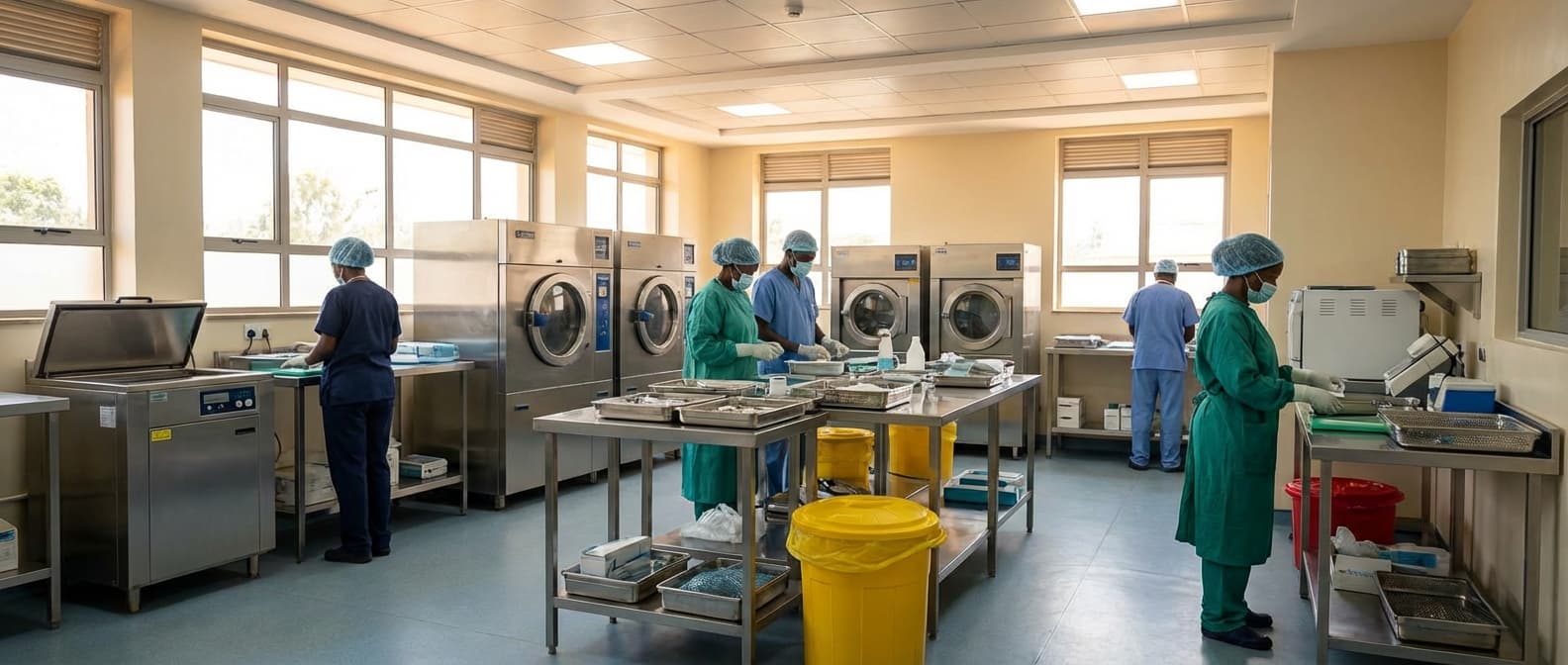
Autoclave Validation Support Service in Algeria
Engineering Excellence & Technical Support
Autoclave Validation Support Service High-standard technical execution following OEM protocols and local regulatory frameworks.
Expert Autoclave Qualification & Validation (IQ/OQ/PQ)
Leverage our deep expertise in Algeria to ensure your autoclaves meet stringent regulatory standards. We provide comprehensive Installation Qualification (IQ), Operational Qualification (OQ), and Performance Qualification (PQ) services, guaranteeing optimal sterilization cycles and validated results for pharmaceutical, medical, and laboratory applications.
Advanced Data Logging & Analysis for Sterilization Cycles
Our validation support in Algeria utilizes state-of-the-art data logging equipment and sophisticated analysis tools. We capture and interpret critical parameters like temperature, pressure, and time to provide irrefutable evidence of sterilization effectiveness, ensuring compliance and minimizing risk for your Algerian operations.
Comprehensive Revalidation & Calibration Management
Maintain ongoing compliance and operational integrity with our proactive revalidation and calibration management services. We offer tailored support for your autoclaves in Algeria, scheduling and executing necessary tests and calibrations to ensure consistent performance and prevent costly downtime, safeguarding your product quality and patient safety.
What Is Autoclave Validation Support Service In Algeria?
Autoclave validation support services in Algeria are specialized technical consultations and practical assistance programs designed to ensure that steam sterilization equipment (autoclaves) operate consistently and effectively, achieving the required microbial inactivation levels. This service is crucial for organizations relying on steam sterilization to maintain sterility assurance for critical items, thereby preventing healthcare-associated infections (HAAs) and ensuring product integrity. The validation process involves a rigorous series of documented tests and analyses to confirm that the autoclave's sterilization cycles are reproducible and capable of sterilizing all specified loads under defined parameters.
| Who Needs Autoclave Validation Support Service? | Typical Use Cases | ||||
|---|---|---|---|---|---|
| Healthcare Facilities: Hospitals, clinics, dental offices, veterinary practices that sterilize surgical instruments, medical devices, and other critical patient-care items. | Pharmaceutical Manufacturers: Sterilizing sterile drug product containers, stoppers, equipment, and consumables used in aseptic processing. | Medical Device Manufacturers: Validating sterilization processes for finished medical devices and components to meet regulatory requirements (e.g., ISO 13485). | Laboratories: Sterilizing laboratory glassware, media, and equipment to ensure experimental integrity and safety. | Food and Beverage Industry (specialized applications): Sterilizing certain packaging materials or components in specific food processing contexts where steam sterilization is employed. | |
| Ensuring Sterility Assurance Level (SAL): Confirming that a specific SAL (e.g., 10^-6 for SAL) is consistently achieved for processed items. | Regulatory Compliance: Meeting the stringent requirements of regulatory bodies such as the Algerian Ministry of Health, international standards (ISO 17665, AAMI ST55), and good manufacturing practices (GMP). | Product Safety and Efficacy: Preventing the transmission of infectious agents and ensuring the integrity and performance of sterilized products. | Process Efficiency and Cost Reduction: Optimizing cycle parameters to minimize cycle times, energy consumption, and material wastage while maintaining efficacy. | Risk Mitigation: Reducing the risk of product recalls, regulatory sanctions, and patient harm due to ineffective sterilization. | Routine Quality Control: Establishing a baseline for autoclave performance that can be monitored and verified through ongoing testing and calibration. |
Key Components of Autoclave Validation Support Service
- Installation Qualification (IQ): Verifying that the autoclave has been installed correctly according to manufacturer specifications and relevant industry standards. This includes checking physical installation, utility connections (steam, water, power), and safety features.
- Operational Qualification (OQ): Confirming that the autoclave operates within its defined operational range and that all critical control parameters (temperature, pressure, time, steam penetration) are met consistently. This often involves running empty or partial loads with calibrated sensors.
- Performance Qualification (PQ): Documenting that the autoclave, when loaded with representative materials and products, consistently achieves the required sterility assurance level (SAL) for defined sterilization cycles. This typically involves using biological indicators (BIs) and chemical indicators (CIs) in challenging load configurations.
- Documentation and Reporting: Comprehensive generation of validation protocols, test reports, certificates, and maintenance logs, adhering to regulatory requirements and industry best practices.
- Calibration and Maintenance Support: Ensuring that all monitoring and recording devices are regularly calibrated and that preventative maintenance is performed to maintain optimal autoclave performance.
- Cycle Development and Optimization: Assisting clients in developing or optimizing sterilization cycles tailored to specific product types, load configurations, and regulatory requirements.
- Troubleshooting and Revalidation: Providing expert support for identifying and resolving issues affecting autoclave performance and conducting revalidation studies after repairs, modifications, or scheduled intervals.
Who Needs Autoclave Validation Support Service In Algeria?
In Algeria, the need for Autoclave Validation Support Service is critical for a range of industries and institutions that rely on effective sterilization for safety, compliance, and operational integrity. Autoclave validation ensures that these critical pieces of equipment consistently meet performance standards, guaranteeing the elimination of harmful microorganisms and preventing the spread of infections or contamination. This service is not a luxury but a necessity for maintaining high standards in healthcare, research, and manufacturing.
| Customer Type | Key Departments Requiring Support | Primary Concerns Addressed by Validation |
|---|---|---|
| Healthcare Providers (Hospitals, Clinics, Dental Practices) | Sterile Processing Departments (SPD), Operating Rooms, Dental Surgeries, Infection Control, Central Sterile Supply Departments (CSSDs) | Patient safety, prevention of Healthcare-Associated Infections (HAIs), regulatory compliance (e.g., Ministry of Health regulations), equipment reliability and efficiency. |
| Diagnostic and Research Laboratories | Microbiology Labs, Molecular Biology Labs, Pathology Labs, Research & Development (R&D) Departments | Accurate test results, prevention of cross-contamination, integrity of scientific experiments, safety of personnel, compliance with Good Laboratory Practice (GLP) standards. |
| Pharmaceutical and Biotechnology Companies | Manufacturing Quality Control (QC), Sterile Manufacturing Units, R&D Labs, Packaging Departments | Product sterility, patient safety, regulatory compliance (e.g., Good Manufacturing Practice - GMP), preventing batch contamination, ensuring product efficacy. |
| Food and Beverage Industry | Quality Assurance (QA) departments, Production lines (for sterilization of processing equipment) | Product safety, prevention of spoilage and contamination, compliance with food safety regulations, maintaining product shelf-life. |
| Educational and Academic Institutions | Medical schools, science departments, research facilities | Safety of students and researchers, integrity of educational materials and research findings, compliance with safety standards. |
Target Customers for Autoclave Validation Support Service in Algeria
- Hospitals and Clinics
- Diagnostic Laboratories
- Pharmaceutical Manufacturing Facilities
- Research and Development Institutions
- Dental Practices
- Veterinary Clinics
- Food and Beverage Processing Plants (for sterilization of equipment and packaging)
- Cosmetic Manufacturing Facilities
- Central Sterile Supply Departments (CSSDs)
- Universities and Educational Institutions with medical or science departments
Autoclave Validation Support Service Process In Algeria
The Autoclave Validation Support Service Process in Algeria outlines the systematic steps undertaken to ensure the reliable and compliant operation of autoclaves for sterilization purposes. This process is crucial for industries where sterile environments are paramount, such as pharmaceuticals, healthcare, and food production. It encompasses initial client contact, assessment of needs, planning, execution of validation procedures, documentation, and final reporting. The goal is to provide clients with validated autoclaves that meet regulatory requirements and guarantee effective sterilization cycles.
| Stage | Description | Key Activities | Deliverables | Responsible Party |
|---|---|---|---|---|
| The client expresses interest in autoclave validation services. This stage involves understanding their general needs and providing preliminary information. | Client contacts service provider. Discussion of validation needs. Information gathering on autoclave type and intended use. | Initial understanding of client requirements. | Client & Service Provider |
| A detailed assessment is conducted to understand the specific autoclave, its application, regulatory requirements, and the desired validation scope. | On-site or remote assessment. Review of autoclave specifications, SOPs, and regulatory landscape. Definition of validation parameters (temperature, pressure, time, steam quality). | Detailed validation plan outline. Agreed-upon scope of work. | Service Provider & Client |
| Based on the needs assessment, a formal proposal outlining the validation methodology, services included, timeline, and cost is prepared. | Preparation of detailed technical proposal. Cost estimation. Submission of quotation. | Formal proposal and quotation. | Service Provider |
| Upon client acceptance of the proposal and quotation, a formal contract is established, defining the terms and conditions of the service. | Negotiation of contract terms. Signing of agreement. | Signed service contract. | Client & Service Provider |
| Detailed planning of the validation activities, including resource allocation, scheduling of personnel, and coordination with the client's operations. | Development of detailed validation protocol. Scheduling of validation activities. Communication of schedule to client. | Approved validation protocol. Scheduled dates for validation activities. | Service Provider |
| Ensuring the autoclave is in good working order and calibrated before commencing validation. This might involve preliminary checks and minor adjustments. | Verification of calibration status. Basic functional checks. Ensuring all safety features are operational. | Autoclave ready for validation. | Service Provider & Client |
| Verifies that the autoclave has been installed correctly according to manufacturer's specifications and relevant standards. (Often performed during initial installation or after major repairs). | Verification of installation site, utilities, and connections. Review of documentation. Testing of basic functions. | IQ report. | Service Provider |
| Verifies that the autoclave operates consistently within the defined operating parameters across its intended range. | Testing of critical control points (e.g., temperature, pressure, time). Performing operational tests under various load conditions. | OQ report. | Service Provider |
| Demonstrates that the autoclave consistently performs its intended function (sterilization) under normal operating conditions with the actual loads. | Running validation cycles with representative loads. Microbiological challenge testing (if required). Collection and analysis of cycle data. | PQ report, validation cycle records. | Service Provider |
| All collected data from IQ, OQ, and PQ are analyzed to assess compliance with acceptance criteria. A comprehensive validation report is compiled. | Analysis of all collected data. Identification of any deviations. Drafting of the validation report. | Draft validation report. | Service Provider |
| The client reviews the draft validation report to ensure it meets their expectations and regulatory requirements. | Client review of the draft report. Discussion of any findings or recommendations. | Client approval of the validation report. | Client |
| The final, approved validation report is delivered to the client. Training may be provided on interpreting the report and maintaining validated status. | Issuance of final validation report. Conducting client training (optional). | Final, signed validation report. Training materials (if applicable). | Service Provider |
| Ongoing support, revalidation planning, and maintenance services are offered to ensure continued compliance and optimal autoclave performance. | Planning for revalidation. Offering preventative maintenance. Responding to client inquiries. | Continued support and advice. | Service Provider & Client |
Autoclave Validation Support Service Workflow in Algeria
- Inquiry & Initial Consultation
- Needs Assessment & Scope Definition
- Proposal & Quotation
- Agreement & Contract Signing
- Planning & Scheduling
- Pre-Validation Checks
- Performance Qualification (PQ) Execution
- Installation Qualification (IQ) Execution (if applicable)
- Operational Qualification (OQ) Execution (if applicable)
- Data Analysis & Report Generation
- Client Review & Approval
- Final Report Delivery & Training
- Post-Validation Support & Maintenance
Autoclave Validation Support Service Cost In Algeria
Autoclave validation is a critical process to ensure the sterilization efficacy of autoclaves, essential in healthcare and laboratory settings in Algeria. The cost of this validation support service can vary significantly based on several factors. These factors influence the overall complexity, duration, and required expertise of the validation process, directly impacting the final price quoted by service providers in Algeria. Understanding these elements is crucial for budgeting and selecting the most appropriate service.
| Service Component | Estimated Cost Range (Algerian Dinars - DZD) | Notes |
|---|---|---|
| Initial Validation (IQ/OQ/PQ) for a standard laboratory autoclave | 150,000 - 350,000 DZD | Includes Installation Qualification, Operational Qualification, and Performance Qualification. May vary based on specific autoclave model and complexity. |
| Re-validation (Post-Maintenance or Periodic) | 80,000 - 200,000 DZD | Typically less comprehensive than initial validation, focusing on key parameters. Cost depends on the scope of re-validation required. |
| Validation of a larger, high-capacity medical autoclave | 250,000 - 600,000+ DZD | Increased complexity, more testing points, and potentially more challenging load configurations drive up costs. |
| Consultation and Protocol Development | 50,000 - 150,000 DZD | For clients who require assistance in designing their validation protocols. Can be a standalone service or part of a larger validation package. |
| IQ/OQ Only | 70,000 - 180,000 DZD | Covers the initial installation and operational checks. Often a precursor to PQ. |
| PQ Only | 80,000 - 200,000 DZD | Focuses on demonstrating consistent performance with specific loads. Essential for confirming sterilization efficacy. |
Factors Influencing Autoclave Validation Support Service Costs in Algeria
- Type of Validation: Initial (IQ/OQ/PQ), Prospective, Concurrent, or Re-validation due to repairs or changes.
- Autoclave Size and Capacity: Larger autoclaves with higher capacities generally require more extensive testing and thus incur higher costs.
- Complexity of the Autoclave System: Advanced features, multiple cycles, or integrated data logging systems can add to validation complexity.
- Number of Cycles to Validate: The validation protocol typically requires running multiple cycles (e.g., full, partial, or specific load types) to demonstrate consistent efficacy.
- Scope of Testing: This includes the type of biological indicators (BIs) and chemical indicators (CIs) used, as well as the number of test locations within the autoclave chamber.
- Service Provider's Expertise and Reputation: Established companies with a proven track record and specialized expertise may command higher prices.
- Geographic Location within Algeria: Travel and logistical costs for the validation team can influence the final price, especially for remote locations.
- Reporting and Documentation Requirements: The level of detail and customization required in the validation report can impact the service cost.
- Turnaround Time: Expedited validation services may incur additional charges.
Affordable Autoclave Validation Support Service Options
Ensuring your autoclave operates effectively and compliantly is crucial for maintaining sterile environments. Autoclave validation is a critical process that verifies your equipment consistently sterilizes effectively. This service can be a significant investment, but with strategic planning and the right support, you can achieve affordable validation. This document outlines value bundles and cost-saving strategies for autoclave validation support services.
| Value Bundle Option | Included Services | Target Audience | Potential Cost Savings | Key Benefits |
|---|---|---|---|---|
| Basic Validation Package | IQ & OQ (limited scope), basic PQ testing, essential documentation templates. | Small clinics, research labs with lower volume needs. | Lower upfront cost, suitable for single autoclave. | Meets fundamental validation requirements, manageable expense. |
| Comprehensive Validation Package | Full IQ, OQ, PQ (multiple cycles, load types), detailed report generation, on-site technician support. | Hospitals, large dental practices, pharmaceutical manufacturers. | Cost-per-autoclave savings when bundling multiple units, reduced risk of re-work. | Ensures robust compliance, minimizes operational disruption, covers diverse scenarios. |
| Annual Maintenance & Re-validation Package | Scheduled preventative maintenance, calibration, PQ testing (annual), validation report updates. | Facilities requiring ongoing compliance and operational efficiency. | Predictable annual expense, avoids costly emergency repairs, proactive compliance. | Maintains autoclave performance, ensures continuous regulatory adherence, extends equipment lifespan. |
| Customizable Validation Solutions | Tailored to specific equipment, regulatory needs, and budget. Can include specific tests, extended PQ, or specialized training. | Unique facility requirements, specialized sterilization needs. | Pay only for necessary services, optimized resource allocation. | Maximum flexibility, cost-effectiveness for non-standard situations. |
Understanding Autoclave Validation Support Services
- What is Autoclave Validation? It's a documented process to provide objective evidence that an autoclave, when operated according to defined parameters, will consistently perform a sterilization cycle that destroys microorganisms.
- Why is it Important? Compliance with regulatory standards (e.g., FDA, ISO), patient safety, prevention of cross-contamination, and maintaining the integrity of sterile products/materials.
- Key Validation Stages: Installation Qualification (IQ), Operational Qualification (OQ), Performance Qualification (PQ).
- Types of Support: On-site technicians, remote support, documentation assistance, training, calibration services, re-validation planning.
Verified Providers In Algeria
In Algeria, accessing reliable and high-quality healthcare is paramount. This is where the importance of 'Verified Providers' comes into play, especially when considering entities like Franance Health. Franance Health credentials signify a commitment to excellence, patient safety, and adherence to rigorous industry standards. Choosing a verified provider ensures that you are receiving care from professionals and institutions that have undergone thorough vetting processes, guaranteeing a higher level of trust and efficacy. This verification often involves checks on qualifications, ethical practices, regulatory compliance, and patient feedback mechanisms. Franance Health, by obtaining and maintaining these credentials, demonstrates its dedication to upholding the highest benchmarks in healthcare delivery within Algeria, making them a distinguished and potentially the best choice for your medical needs.
| Credential Type | What it Signifies for Patients | Franance Health Example (Illustrative) |
|---|---|---|
| Accreditation | Independent verification of facility standards, operational efficiency, and patient care quality. | Accredited by national health bodies or international accreditation organizations. |
| Professional Licensing | Ensures healthcare professionals possess the necessary legal qualifications and are registered with relevant Algerian medical boards. | All doctors and specialists hold valid Algerian medical licenses. |
| Certifications | Specialized training and expertise in specific medical fields or advanced procedures. | Doctors certified in advanced surgical techniques or specialized diagnostic imaging. |
| Quality Management Systems | Implementation of robust processes for continuous improvement in patient care and operational effectiveness. | Adherence to ISO 9001 standards for quality management. |
| Patient Feedback Mechanisms | Commitment to gathering and acting upon patient experiences to enhance service delivery. | Regular patient satisfaction surveys and feedback review processes. |
Why Franance Health Credentials Matter
- Demonstrates adherence to stringent quality standards.
- Ensures patient safety and well-being.
- Validates professional qualifications and expertise.
- Indicates compliance with Algerian healthcare regulations.
- Builds trust and confidence in healthcare services.
- Reflects a commitment to ethical medical practices.
Scope Of Work For Autoclave Validation Support Service
This Scope of Work (SOW) outlines the services to be provided by the Vendor for Autoclave Validation Support. The Vendor will perform validation activities on specified autoclave units to ensure they meet regulatory requirements and internal quality standards. This includes planning, execution, reporting, and potentially revalidation support. The goal is to confirm the autoclave's ability to consistently sterilize materials effectively and reproducibly.
| Deliverable | Description | Format | Acceptance Criteria/Standard | Responsibility |
|---|---|---|---|---|
| Validation Plan (VP) | Document outlining the overall validation strategy, scope, objectives, and high-level approach for autoclave validation. | Electronic (PDF) | Approved by client QA/QC and Regulatory Affairs. | Vendor |
| Validation Protocols (IQ, OQ, PQ) | Detailed step-by-step instructions for conducting each phase of the validation. Includes test methods, parameters, sampling plans, and acceptance criteria. | Electronic (Word/PDF) | Approved by client QA/QC and Regulatory Affairs. Meets GAMP 5 or equivalent guidelines. | Vendor |
| Raw Data Records | All recorded data, charts, printouts, and observations generated during validation execution. | Electronic (scanned documents, digital logs) and/or physical. | Legible, contemporaneous, traceable to specific tests and equipment, and retained as per client SOPs. | Vendor |
| Validation Report (VR) | Comprehensive summary of validation activities, results, deviations, root cause analysis (if applicable), and conclusions. Includes recommendations for future actions. | Electronic (PDF) and potentially a summary presentation. | Approved by client QA/QC and Regulatory Affairs. Addresses all protocol requirements and deviations. | Vendor |
| Deviation Reports | Documentation of any deviations from the approved protocols, including the investigation, root cause, and impact assessment. | Electronic (Word/PDF) | Clear, concise, and approved by client QA/QC. | Vendor |
| Calibration Certificates (for instruments used) | Certificates of calibration for all measurement and monitoring equipment used during validation activities. | Electronic (PDF) | Traceable to national/international standards, within current calibration period. | Vendor |
| IQ/OQ/PQ Certificates (if applicable) | Formal documentation confirming successful completion and approval of each qualification phase. | Electronic (PDF) | Signed and dated by authorized client personnel. | Vendor (preparation), Client (approval) |
Key Activities and Deliverables
- Develop a comprehensive Validation Plan (VP) detailing the validation strategy, scope, protocols, acceptance criteria, and timeline.
- Design and document detailed Validation Protocols (VPs) for each autoclave unit, covering Installation Qualification (IQ), Operational Qualification (OQ), and Performance Qualification (PQ).
- Execute IQ protocols, verifying that the autoclave is installed according to manufacturer specifications and regulatory requirements.
- Execute OQ protocols, confirming that the autoclave operates within defined parameters across its operational range.
- Execute PQ protocols, demonstrating the autoclave's ability to consistently achieve sterilization cycles with representative product or challenging biological indicators.
- Collect and analyze all raw data generated during IQ, OQ, and PQ execution.
- Prepare a comprehensive Validation Report (VR) summarizing the validation activities, results, deviations (if any), and conclusions, including a statement of compliance.
- Provide recommendations for any necessary corrective actions or revalidation activities.
- Support vendor/manufacturer during any necessary repairs or adjustments identified during the validation process.
- Participate in review meetings and provide clarification on validation activities and results.
- Provide revalidation support as required, following a similar process to initial validation.
- Ensure all validation activities are performed in accordance with Good Manufacturing Practices (GMP), relevant industry standards (e.g., ISO), and client-specific Standard Operating Procedures (SOPs).
Service Level Agreement For Autoclave Validation Support Service
This Service Level Agreement (SLA) outlines the response times and uptime guarantees for the Autoclave Validation Support Service provided by [Your Company Name] to [Client Company Name]. This SLA is an appendix to the Master Service Agreement (MSA) between the parties, dated [MSA Date].
| Service Level Metric | Target | Measurement Period | Escalation Trigger |
|---|---|---|---|
| Response Time for Critical Incidents (e.g., complete autoclave failure impacting production) | Within 2 Business Hours | From time of incident notification | If initial response not met, escalate to Service Manager |
| Response Time for Major Incidents (e.g., significant performance degradation, partial functionality loss) | Within 4 Business Hours | From time of incident notification | If initial response not met, escalate to Senior Technical Lead |
| Response Time for Minor Incidents (e.g., minor operational issues, diagnostic requests) | Within 8 Business Hours | From time of incident notification | If initial response not met, escalate to Support Supervisor |
| Uptime Guarantee for Supported Autoclave(s) | 99.0% | Monthly | If uptime falls below 97.0% for two consecutive months, a service credit will be applied as per the credit policy. |
| Scheduled Maintenance Notification | At least 7 days in advance | For any planned maintenance exceeding 4 hours | N/A |
Definitions
- Autoclave Validation Support Service: Refers to the provision of technical expertise, troubleshooting, preventative maintenance, and repair services for the client's autoclave(s) as specified in the attached Statement of Work (SOW).
- Downtime: The period during which the autoclave(s) are non-operational and unable to perform their intended function due to a service-related issue that requires intervention by [Your Company Name]. Routine maintenance or scheduled downtime is excluded.
- Incident: Any event that disrupts or degrades the expected performance of the autoclave(s), requiring a response from [Your Company Name].
- Resolution: The point at which the autoclave(s) are restored to a fully operational state, or a mutually agreed-upon temporary workaround is implemented.
- Response Time: The maximum time allowed for [Your Company Name]'s technical support to acknowledge an incident and begin working towards a resolution.
- Uptime Guarantee: The percentage of time the autoclave(s) are expected to be operational and available for use, excluding scheduled maintenance.
- Business Hours: [Specify your standard business hours, e.g., Monday to Friday, 9:00 AM to 5:00 PM Local Time, excluding public holidays].
Frequently Asked Questions

Ready when you are
Let's scope your Autoclave Validation Support Service in Algeria project in Algeria.

Scaling healthcare logistics and technical systems across the entire continent.