
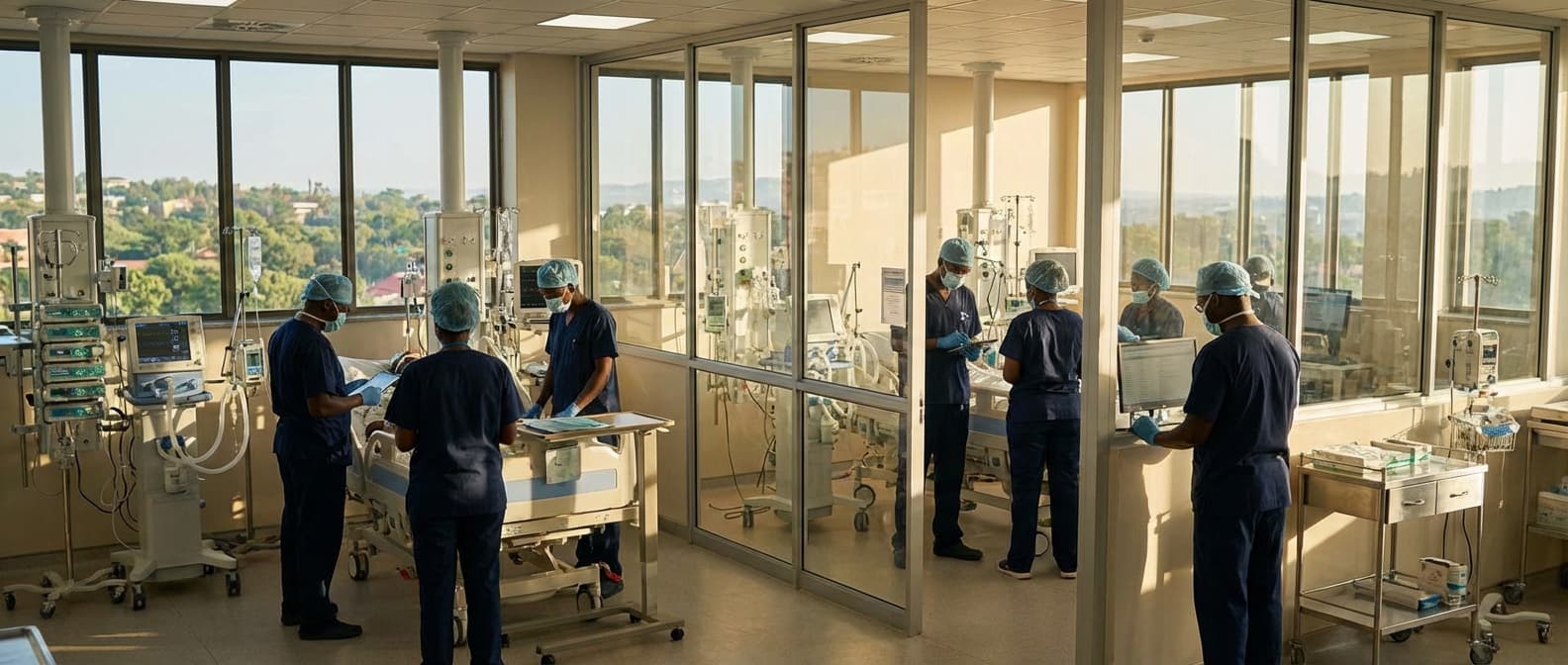
Ventilator Fleet Management & PM in Algeria
Engineering Excellence & Technical Support
Preventive maintenance and fleet management for ICU ventilators High-standard technical execution following OEM protocols and local regulatory frameworks.
Optimized Ventilator Fleet Deployment & Routing
Leveraging real-time location data and predictive analytics, our system dynamically deploys ventilators to high-demand regions across Algeria, optimizing transport routes for rapid response and minimizing idle time. This ensures critical respiratory support is available where and when it's needed most, especially in remote or underserved areas.
Proactive Preventative Maintenance Scheduling & Compliance
Implementing a robust preventative maintenance program for the Algerian ventilator fleet. Our platform tracks maintenance schedules based on usage hours, environmental factors, and manufacturer recommendations, automatically flagging units requiring service. This reduces unexpected failures, extends equipment lifespan, and ensures strict adherence to regulatory compliance standards for medical devices.
Real-time Performance Monitoring & Predictive Failure Alerts
Continuously monitoring the operational status and performance metrics of each ventilator in Algeria. Our advanced diagnostics detect subtle anomalies in real-time, providing predictive alerts for potential malfunctions. This proactive approach allows for immediate intervention, preventing critical equipment failure during patient use and improving overall patient safety and care continuity.
What Is Ventilator Fleet Management & Pm In Algeria?
Ventilator Fleet Management & Preventative Maintenance (PM) in Algeria refers to the systematic organization, tracking, maintenance, and support of a fleet of mechanical ventilators within healthcare facilities. This service encompasses the entire lifecycle of ventilator assets, from procurement and deployment to routine servicing, calibration, repair, and eventual decommissioning. The objective is to ensure optimal operational readiness, safety, and cost-effectiveness of ventilator equipment, particularly crucial in critical care settings.
| Service Component | Description | Importance in Algerian Context |
|---|---|---|
| Asset Inventory and Tracking | Maintaining a detailed database of all ventilator units. | Essential for understanding asset distribution, identifying needs, and managing resources, especially in a geographically diverse country like Algeria. |
| Preventative Maintenance Scheduling | Routine inspections, calibration, and servicing to prevent failures. | Crucial for ensuring reliability of critical life-support equipment, minimizing downtime during emergencies, and adhering to international quality standards. |
| Corrective Maintenance and Repair | Prompt diagnosis and repair of malfunctioning ventilators. | Vital for patient safety and continuity of care, reducing the risk of adverse outcomes and managing the strain on limited healthcare resources. |
| Performance Monitoring and Optimization | Assessing operational efficiency and identifying anomalies. | Supports evidence-based decision-making for equipment upgrades, resource allocation, and improving clinical outcomes. |
| Regulatory Compliance | Adherence to Algerian healthcare laws and safety standards. | Ensures legal and ethical operation of medical devices, protecting both patients and healthcare providers from potential liabilities. |
Key Components of Ventilator Fleet Management & PM in Algeria:
- Asset Inventory and Tracking: Comprehensive cataloging of all ventilator units, including make, model, serial number, acquisition date, location, and service history.
- Preventative Maintenance Scheduling: Proactive, scheduled inspections, cleaning, calibration, and functional testing based on manufacturer recommendations and operational usage.
- Corrective Maintenance and Repair: Rapid response and execution of repairs for equipment failures, including diagnosis, parts replacement, and post-repair validation.
- Performance Monitoring and Optimization: Continuous assessment of ventilator performance parameters to identify potential issues, optimize settings, and ensure efficient resource utilization.
- Regulatory Compliance: Ensuring all maintenance activities adhere to national healthcare regulations, safety standards, and manufacturer guidelines.
- Inventory Management: Management of spare parts, consumables, and accessories required for maintenance and repair.
- Training and Skill Development: Providing training for biomedical engineers, technicians, and clinical staff on proper ventilator operation, basic troubleshooting, and maintenance procedures.
- Decommissioning and Disposal: Managing the end-of-life process for ventilators, including data sanitization, ethical disposal, or refurbishment.
- Data Management and Reporting: Maintaining detailed records of all maintenance activities, service history, and performance data for analysis and reporting purposes.
Who Needs Ventilator Fleet Management & Pm In Algeria?
Ventilator fleet management and preventative maintenance (PM) are crucial for ensuring the continuous and reliable operation of life-support equipment in Algeria. This is particularly vital in a healthcare system that may face resource constraints and a growing demand for critical care services. Effective management minimizes downtime, reduces costly emergency repairs, extends the lifespan of valuable assets, and ultimately ensures patient safety and optimal care delivery. Proactive PM also helps identify potential failures before they become critical, preventing disruptions to patient care and maintaining operational efficiency across healthcare facilities.
| Customer Type | Key Departments Involved | Primary Needs & Concerns |
|---|---|---|
| Public Hospitals (National & Provincial) | Intensive Care Units (ICUs), Anesthesiology, Respiratory Therapy, Biomedical Engineering Department, Procurement Department | Maximizing patient care capacity, managing large fleets, cost-effectiveness, regulatory compliance, training for staff, spare parts availability, ensuring equipment readiness for surges (e.g., pandemics). |
| Private Healthcare Facilities & Clinics | ICUs, Anesthesiology, Respiratory Therapy, Hospital Administration, Biomedical Services (in-house or contracted) | Maintaining a high standard of care, operational efficiency, minimizing patient dissatisfaction due to equipment failure, competitive advantage, return on investment. |
| University Hospitals & Teaching Medical Centers | ICUs, Anesthesiology, Respiratory Therapy, Biomedical Engineering, Medical Education & Training | Reliable equipment for patient care and research, training future biomedical engineers and clinicians on equipment operation and maintenance, integration with advanced medical technologies. |
| Emergency Medical Services (EMS) / Ambulance Services | Paramedic Teams, Operations Management, Fleet Management | Ensuring portable ventilators are always ready for transport, rapid deployment, durability, ease of use in challenging environments, timely maintenance to prevent on-scene failures. |
| Military Hospitals & Medical Corps | Critical Care Units, Surgical Units, Logistics & Maintenance | High reliability in diverse and often austere environments, readiness for deployment, specialized training, secure supply chains for parts and service. |
| Disaster Relief & Humanitarian Organizations | Medical Teams, Logistics & Operations | Rapid deployment of functional ventilators in emergency situations, maintenance support in remote locations, adaptable solutions for diverse needs. |
| Medical Equipment Suppliers & Distributors | Service Department, Technical Support, Sales | Fulfilling service level agreements (SLAs) for their clients, proactive maintenance to build customer loyalty, efficient scheduling of technicians, inventory management of spare parts. |
Target Customers & Departments for Ventilator Fleet Management & PM in Algeria
- Public Hospitals (National & Provincial)
- Private Healthcare Facilities & Clinics
- University Hospitals & Teaching Medical Centers
- Emergency Medical Services (EMS) / Ambulance Services
- Military Hospitals & Medical Corps
- Disaster Relief & Humanitarian Organizations
- Medical Equipment Suppliers & Distributors (for their own service contracts)
Ventilator Fleet Management & Pm Process In Algeria
This document outlines the workflow for Ventilator Fleet Management and Preventive Maintenance (PM) processes in Algeria, from initial inquiry to the successful execution of services. It details the steps involved in managing the lifecycle of ventilators, ensuring their optimal performance, and maintaining compliance with relevant regulations. The process emphasizes clear communication, efficient resource allocation, and robust documentation.
| Stage | Description | Key Activities | Responsible Party | Output/Deliverable |
|---|---|---|---|---|
| Initiation of a request for new ventilators, replacement, or PM services. |
| Hospital Administration/Biomedical Engineering | Request for Proposal (RFP) or Purchase Requisition |
| Evaluating proposals and selecting a suitable vendor for supply and/or maintenance. |
| Procurement Department & Biomedical Engineering | Signed Contract/Purchase Order, Vendor Agreement |
| Receiving and setting up new ventilators. |
| Third-Party Service Provider/Distributor & Biomedical Engineering | Installation Report, Acceptance Certificate, Calibration Records |
| Maintaining a comprehensive record of all ventilators in the fleet. |
| Biomedical Engineering | Updated Asset Register, Inventory Database |
| Proactive scheduling of routine maintenance to prevent failures. |
| Biomedical Engineering | PM Schedule, PM Work Orders |
| Performing routine maintenance tasks on ventilators. |
| Biomedical Engineering or Third-Party Service Provider | Completed PM Work Orders, PM Report |
| Responding to unexpected equipment failures and performing repairs. |
| Biomedical Engineering or Third-Party Service Provider | Breakdown Report, Repair Log, Test & Calibration Records |
| Ensuring ventilators operate within specified performance parameters. |
| Biomedical Engineering or Certified Technician | Calibration Certificates, Performance Verification Reports |
| Ensuring clinical and technical staff are proficient in using and maintaining ventilators. |
| Manufacturer/Service Provider & Biomedical Engineering | Training Records, Competency Assessments |
| Managing ventilators that are no longer operational or required. |
| Biomedical Engineering & Hospital Administration | Disposal Certificates, Asset Decommissioning Records |
| Reviewing performance data and ensuring compliance. |
| Biomedical Engineering & Hospital Administration | Fleet Performance Reports, Audit Findings, Compliance Documentation |
Key Stakeholders in Ventilator Fleet Management & PM
- Hospital Administration/Procurement Department
- Biomedical Engineering Department (Hospital)
- Third-Party Service Provider/Distributor
- Manufacturer/Technical Support
- Regulatory Bodies (if applicable)
Ventilator Fleet Management & Pm Cost In Algeria
Managing a ventilator fleet in Algeria, much like anywhere else, involves significant costs related to procurement, maintenance, and operational management. These costs are influenced by a multitude of factors, and understanding them is crucial for effective budgeting and resource allocation by healthcare facilities and government bodies. The pricing of ventilators themselves, along with their associated maintenance and repair services, are subject to local economic conditions, import duties, currency exchange rates, and the availability of specialized technicians and spare parts. Preventive maintenance (PM) is a critical component of fleet management, aiming to minimize unexpected breakdowns and extend the lifespan of equipment, thereby reducing long-term costs. The pricing for PM services in Algeria will vary based on the complexity of the ventilator model, the service provider's expertise, the frequency of maintenance, and the contractual terms.
| Service/Item | Estimated Price Range (DZD) | Notes |
|---|---|---|
| Entry-Level Ventilator (Basic ICU/Transport) | 1,500,000 - 4,000,000 | Basic functionalities, suitable for less critical care or transport. Prices can vary significantly based on brand and features. |
| Mid-Range Ventilator (Standard ICU) | 4,000,000 - 8,000,000 | More advanced monitoring, modes, and flexibility for general ICU use. Common for hospitals. |
| High-End Ventilator (Advanced ICU/Specialized) | 8,000,000 - 15,000,000+ | State-of-the-art technology, comprehensive monitoring, specialized modes (e.g., for neonates, critical care). Prices can escalate significantly for top-tier models. |
| Annual Preventive Maintenance (PM) - Basic Unit | 150,000 - 300,000 | Covers routine checks, calibration, and minor adjustments for a standard ICU ventilator. Based on annual contract. |
| Annual Preventive Maintenance (PM) - Advanced Unit | 300,000 - 600,000+ | More extensive PM for complex ventilators, including detailed diagnostics and software updates. Higher cost due to complexity and specialized parts. |
| Hourly Rate for Unscheduled Repair (Excluding Parts) | 15,000 - 40,000 | Cost for a technician's labor for emergency repairs. Can be higher for specialized technicians or out-of-hours calls. |
| Common Spare Parts (e.g., Sensors, Valves, Batteries) | 20,000 - 200,000+ | Prices vary drastically depending on the part and the ventilator model. Critical components can be very expensive. |
| Full Service/Refurbishment Contract (Per Unit, Annual) | 500,000 - 1,500,000+ | Comprehensive contracts often including PM, priority repairs, and sometimes parts replacement. More common for large fleets. |
Key Pricing Factors for Ventilator Fleet Management & PM in Algeria
- Ventilator Acquisition Cost: The initial purchase price of the ventilator is a primary driver. This is influenced by the brand, model, features, technology, and whether it's a new or refurbished unit.
- Import Duties & Taxes: Algeria imposes import duties and taxes on medical equipment, which significantly add to the landed cost of ventilators not manufactured locally.
- Currency Exchange Rates: Fluctuations in the Algerian Dinar (DZD) against major currencies (USD, EUR) directly impact the cost of imported ventilators and spare parts.
- Supplier & Distributor Margins: The markups applied by local distributors and suppliers contribute to the final price paid by end-users.
- Warranty Period & Service Level Agreements (SLAs): Extended warranties and comprehensive SLAs for maintenance and repair can increase upfront costs but offer long-term cost predictability and reduced risk of unexpected expenses.
- Preventive Maintenance (PM) Service Contracts: The cost of PM is determined by the scope of services (e.g., routine checks, calibration, minor repairs), frequency (e.g., annual, semi-annual), and the complexity of the ventilator model.
- Spare Parts Availability & Cost: The price and availability of genuine or compatible spare parts are critical. Scarce or expensive parts can inflate both PM and repair costs.
- Technician Expertise & Training: The cost of employing or contracting certified technicians with specialized knowledge for specific ventilator brands and models affects overall maintenance expenses.
- Logistics & Transportation: Costs associated with transporting ventilators for servicing or delivering spare parts, especially to remote areas, can add to the total cost.
- Brand Reputation & Technology: High-end, technologically advanced ventilators from reputable global brands generally command higher prices, both for purchase and for their associated maintenance services.
- Volume Discounts: Larger healthcare networks or government tenders purchasing multiple units may benefit from volume discounts on both ventilators and service contracts.
- Regulatory Compliance: Ensuring ventilators meet Algerian medical device regulations can sometimes involve additional costs related to testing and certification.
Affordable Ventilator Fleet Management & Pm Options
Effectively managing and maintaining a fleet of medical ventilators is crucial for patient care and operational efficiency. This section explores affordable fleet management and preventative maintenance (PM) options, highlighting the value of bundled services and outlining key cost-saving strategies.
| Value Bundle | Components Included | Cost-Saving Strategies | Benefits |
|---|---|---|---|
Key Components of Affordable Ventilator Fleet Management & PM
- {"title":"Proactive Preventative Maintenance (PM)","description":"Regularly scheduled inspections, calibration, and servicing of ventilators to prevent unexpected breakdowns and ensure optimal performance. This includes cleaning, filter replacement, battery checks, and functional testing."}
- {"title":"Inventory Management","description":"Efficient tracking of ventilator units, accessories, and spare parts to minimize stockouts and reduce holding costs. Implementing a robust asset management system is vital."}
- {"title":"Repair & Calibration Services","description":"Timely and cost-effective repair of malfunctioning ventilators, utilizing authorized service providers or in-house trained biomedical technicians. Accurate calibration ensures patient safety and compliance."}
- {"title":"End-of-Life Planning & Replacement","description":"Developing strategies for phasing out aging equipment and planning for necessary upgrades or replacements based on usage, technology advancements, and budget."}
- {"title":"Training & Skill Development","description":"Ensuring biomedical staff are adequately trained on the specific ventilator models in the fleet for efficient troubleshooting, maintenance, and repair."}
Verified Providers In Algeria
In Algeria's burgeoning healthcare sector, the concept of 'Verified Providers' is paramount for ensuring quality, safety, and patient trust. Franance Health stands at the forefront of this movement, offering a robust credentialing system that distinguishes its affiliated healthcare professionals and facilities. Understanding Franance Health's credentials and the rigorous processes behind them reveals why they represent the best choice for patients seeking reliable and high-quality medical care in Algeria.
| Provider Type | Franance Health Verification Includes | Benefits for Patients |
|---|---|---|
| Doctors & Specialists | Medical degree validation, specialty board certifications, license verification, peer reviews, malpractice history check. | Access to highly qualified and experienced medical professionals, assurance of specialized expertise, reduced risk of misdiagnosis or improper treatment. |
| Hospitals & Clinics | Accreditation status, adherence to safety and infection control standards, equipment maintenance records, staff qualifications verification, patient complaint resolution processes. | Safe and sterile treatment environments, access to modern medical technology, consistent quality of care, efficient patient management and support. |
| Diagnostic Centers | Technician certifications, equipment calibration and maintenance logs, accuracy of results, adherence to diagnostic protocols. | Reliable and accurate diagnostic reports, timely identification of health issues, informed treatment decisions. |
| Pharmaceutical Services | Pharmacy license, drug sourcing and storage protocols, pharmacist credentials, adherence to dispensing regulations. | Access to authentic and safely stored medications, professional dispensing advice, assurance of prescription accuracy. |
What Franance Health Credentials Signify:
- Rigorous vetting and verification of medical licenses and qualifications.
- Confirmation of up-to-date professional development and certifications.
- Adherence to strict ethical and professional conduct standards.
- Evidence of established practice history and patient satisfaction.
- Commitment to quality improvement and patient safety protocols.
Scope Of Work For Ventilator Fleet Management & Pm
This document outlines the Scope of Work (SOW) for Ventilator Fleet Management and Preventive Maintenance (PM) services. It details the technical deliverables and standard specifications required to ensure the optimal performance, reliability, and longevity of the organization's ventilator fleet. The primary objective is to maintain a high level of operational readiness for all critical care ventilators, minimizing downtime and ensuring patient safety.
| Category | Deliverable Description | Technical Specifications / Standards | Frequency / Timeline | Responsibility |
|---|---|---|---|---|
| Fleet Inventory Management | Comprehensive and up-to-date inventory of all ventilators, including model, serial number, acquisition date, location, and service history. | Utilize a dedicated asset management system (e.g., CMMS). Regular audits for accuracy. | Ongoing; Quarterly verification. | Vendor / Internal Biomedical Engineering (BME) |
| Preventive Maintenance (PM) | Scheduled inspections, testing, calibration, and servicing of all ventilators as per manufacturer guidelines and established protocols. | Adherence to OEM PM schedules (e.g., annual, semi-annual). Use of NIST-traceable calibration equipment. Documentation of all performed PM tasks, findings, and parts replaced. | As per OEM recommendations; typically annually or semi-annually. | Vendor / BME |
| Corrective Maintenance (CM) | Diagnosis, repair, and restoration of malfunctioning ventilators. | Rapid response times for critical equipment failures. Use of OEM-approved parts and procedures. Documentation of all repairs, including fault diagnosis, parts used, and resolution. | On-demand; within defined Service Level Agreements (SLAs) for critical equipment. | Vendor / BME |
| Calibration and Performance Verification | Ensuring ventilators operate within specified performance parameters. | Calibration against traceable standards. Verification of alarms, flow, volume, pressure, and other critical parameters. Certificates of Calibration required. | As part of PM and after significant repairs. | Vendor / BME |
| Software Updates and Firmware Management | Management and installation of software and firmware updates. | Adherence to manufacturer release notes and best practices. Verification of functionality post-update. Documentation of all updates performed. | As released by manufacturer or as needed for functionality/security. | Vendor / BME |
| Parts Management | Sourcing, stocking, and inventory of critical spare parts. | Maintenance of adequate inventory levels for common failure parts. Utilization of OEM-specified parts. Tracking of parts usage and cost. | Ongoing; Inventory checks monthly. | Vendor / BME |
| Reporting and Documentation | Regular reports on fleet status, PM completion, CM activity, and equipment performance. | Monthly and annual reports including fleet utilization, PM compliance rates, CM incident summaries, mean time between failures (MTBF), and cost analysis. Secure digital storage of all maintenance records. | Monthly and Annual reports. | Vendor / BME |
| Training and Competency | Ensuring BME staff (internal or vendor) possess the necessary skills and training. | Verification of technician certifications and training on specific ventilator models. Ongoing professional development. | As required by regulations and manufacturer updates. | Vendor / BME |
| End-of-Life (EOL) Management | Planning and execution of ventilator decommissioning and replacement. | Identification of EOL units based on age, obsolescence, or repair cost. Planning for replacement and disposal in compliance with environmental regulations. | As identified by EOL criteria. | Vendor / BME / Procurement |
| Regulatory Compliance | Ensuring all maintenance and management practices comply with relevant regulations. | Adherence to FDA regulations, Joint Commission standards, local health authority requirements, and OEM guidelines. | Ongoing. | Vendor / BME |
Key Objectives of Ventilator Fleet Management & PM
- Ensure continuous operational readiness of all ventilators.
- Minimize equipment downtime through proactive maintenance.
- Extend the lifespan of the ventilator fleet.
- Maintain compliance with regulatory standards and manufacturer recommendations.
- Optimize resource allocation for maintenance activities.
- Provide accurate and comprehensive reporting on fleet status and maintenance activities.
- Enhance patient safety by ensuring equipment reliability.
Service Level Agreement For Ventilator Fleet Management & Pm
This Service Level Agreement (SLA) outlines the terms and conditions for the provision of ventilator fleet management and preventative maintenance (PM) services. It defines the expected response times for incidents and the guaranteed uptime for the managed ventilator fleet.
| Service Category | Response Time Target | Resolution Time Target | Uptime Guarantee |
|---|---|---|---|
| Critical Equipment Failure (Full Fleet Outage) | 15 minutes (Acknowledgement) | 2 hours (Restoration) | 99.9% |
| Critical Equipment Failure (Single Unit Outage) | 30 minutes (Acknowledgement) | 4 hours (Restoration) | 99.9% |
| Non-Critical Equipment Failure (Performance Degradation) | 1 hour (Acknowledgement) | 8 business hours (Restoration) | 99.5% |
| Preventative Maintenance (Scheduled) | N/A (Proactive Scheduling) | As per PM Schedule | N/A (Focus on Prevention) |
| Reporting & Inquiries | 4 business hours (Acknowledgement) | 24 business hours (Response) | N/A |
Key Performance Indicators (KPIs)
- Response Time: The maximum time allowed for the service provider to acknowledge and begin addressing a reported incident.
- Resolution Time: The maximum time allowed for the service provider to resolve a reported incident and restore full functionality.
- Uptime Guarantee: The minimum percentage of time the ventilator fleet is expected to be available and operational.
- Preventative Maintenance (PM) Adherence: The percentage of scheduled PM tasks completed within the agreed-upon timeframe.
Frequently Asked Questions

Ready when you are
Let's scope your Ventilator Fleet Management & PM in Algeria project in Algeria.

Scaling healthcare logistics and technical systems across the entire continent.