
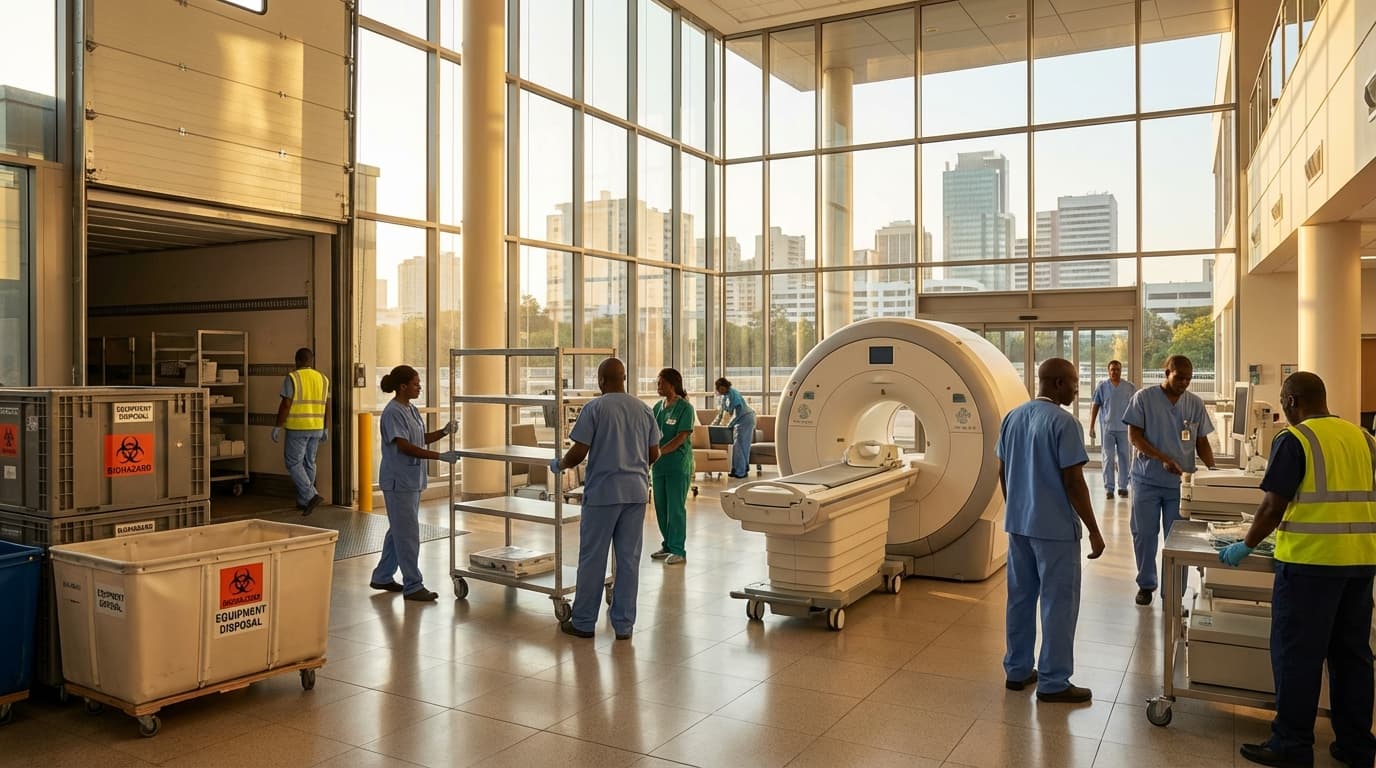
Site Restoration Service After Equipment Removal in Algeria
Engineering Excellence & Technical Support
Site Restoration Service After Equipment Removal High-standard technical execution following OEM protocols and local regulatory frameworks.
Precision Excavation & Decommissioning
Expertly executing precise excavation and decommissioning of heavy industrial equipment, minimizing subsurface disruption and ensuring all foundations and buried infrastructure are safely and efficiently removed according to Algerian environmental and safety regulations.
Site Contamination Assessment & Remediation
Conducting thorough environmental assessments to identify and remediate any soil or groundwater contamination resulting from prior equipment use, employing advanced techniques to restore soil integrity and ensure ecological safety for the Algerian landscape.
Restorative Landscaping & Soil Stabilization
Implementing comprehensive landscaping solutions, including topsoil replenishment, grading, and vegetation re-establishment, to stabilize the site, prevent erosion, and return the Algerian land to a functional and aesthetically pleasing state post-equipment removal.
What Is Site Restoration Service After Equipment Removal In Algeria?
Site restoration service after equipment removal in Algeria refers to the comprehensive process of returning a previously occupied industrial, commercial, or resource extraction site to a safe, stable, and environmentally sound condition following the deinstallation and departure of operational equipment. This service is crucial for mitigating residual risks, complying with regulatory mandates, and facilitating the subsequent use or natural regeneration of the land. It encompasses a range of specialized activities designed to address the physical and environmental impacts left by the presence and operation of heavy machinery, processing units, pipelines, storage tanks, and associated infrastructure.
| Stakeholder/Entity | Need for Site Restoration | Typical Use Cases |
|---|---|---|
| Industrial Facility Owners/Operators | Mandatory regulatory compliance, liability reduction, asset divestment, site repurposing for new ventures. | Cessation of manufacturing operations, closure of processing plants, end-of-life for chemical facilities, removal of storage tanks. |
| Oil & Gas Companies | Environmental stewardship, regulatory adherence (e.g., within the Sonatrach framework), lease relinquishment, minimizing long-term environmental liabilities. | Decommissioning of production platforms, well abandonment, pipeline removal, refinery closures, seismic survey site cleanup. |
| Mining and Quarrying Companies | Reclamation of disturbed land, environmental permits, community relations, fulfilling legal obligations for land rehabilitation. | Closure of open-pit mines, cessation of quarrying activities, removal of processing equipment, rehabilitation of tailings storage facilities. |
| Governmental and Regulatory Bodies | Enforcement of environmental laws, protection of public health and safety, preservation of natural resources, ensuring responsible land use. | Overseeing the closure of abandoned industrial sites, monitoring legacy contamination, ensuring compliance with national environmental action plans. |
| Real Estate Developers and Land Managers | Site acquisition for new development, reducing environmental risks associated with brownfield sites, enhancing property value. | Acquiring former industrial land for residential, commercial, or recreational development, rehabilitating former military installations. |
Key Components of Site Restoration Service
- Decommissioning & Demolition: Safe dismantling and removal of all remaining structures, foundations, and associated infrastructure that are no longer required.
- Hazardous Material Abatement: Identification, containment, and removal of any hazardous substances (e.g., asbestos, lead paint, contaminated soils, residual chemicals) that may have been present during operational phases.
- Soil Remediation: Assessment and treatment of contaminated soil, including excavation, in-situ treatment, or off-site disposal, to meet established environmental standards.
- Groundwater & Surface Water Management: Addressing any contamination or alteration to hydrological systems, potentially involving pump-and-treat operations, barrier installation, or natural attenuation monitoring.
- Re-contouring & Grading: Reshaping the land surface to restore natural drainage patterns, prevent erosion, and prepare for vegetative cover or future land use.
- Topsoil Replacement & Revegetation: Importing or re-spreading topsoil and establishing native or appropriate vegetation to stabilize the site and promote ecological recovery.
- Waste Management & Disposal: Proper handling, transportation, and disposal of all removed equipment, debris, and contaminated materials in accordance with Algerian environmental regulations.
- Monitoring & Verification: Post-restoration monitoring to confirm the effectiveness of remediation efforts and ensure long-term site stability and compliance.
Who Needs Site Restoration Service After Equipment Removal In Algeria?
Equipment removal, especially from industrial sites, often leaves behind significant environmental impacts. This can include soil contamination, altered landscapes, and potential structural damage. Site restoration services are crucial for mitigating these impacts, ensuring compliance with environmental regulations, and preparing the land for future use. In Algeria, various sectors and organizations require these services to address the aftermath of equipment removal.
| Target Customer/Sector | Key Departments Involved | Specific Needs After Equipment Removal |
|---|---|---|
| Oil and Gas | Environmental Health & Safety (EHS), Operations, Asset Decommissioning, Regulatory Compliance | Soil and groundwater remediation, well decommissioning, platform removal, pipeline abandonment, habitat restoration. |
| Mining and Quarrying | Mine Operations, Environmental Management, Land Reclamation, Regulatory Affairs | Pit and overburden backfilling, re-vegetation, water management, slope stabilization, dust suppression. |
| Industrial Manufacturing | Plant Management, Facilities Engineering, EHS, Procurement | Soil decontamination, removal of hazardous materials, demolition of redundant structures, landscaping, site grading. |
| Construction and Infrastructure | Project Management, Site Supervision, EHS, Environmental Planning | Site grading, erosion control, re-vegetation of temporary access roads and laydown areas, waste management. |
| Government and Public Sector | Environmental Protection Agencies, Public Works Departments, Land Management Authorities | Remediation of contaminated sites, brownfield redevelopment, ecological restoration of degraded land. |
| Agriculture (Large Scale) | Land Management, Environmental Compliance, Farm Operations | Soil health improvement, re-purposing of land, sustainable land use planning. |
Target Customers and Departments Requiring Site Restoration Services in Algeria After Equipment Removal:
- {"title":"Oil and Gas Sector","description":"This is a primary sector in Algeria, with extensive exploration, extraction, and processing operations. Equipment removal from legacy well sites, refineries, pipelines, and offshore platforms necessitates comprehensive restoration."}
- {"title":"Mining and Quarrying Operations","description":"Large-scale mining and quarrying projects involve heavy machinery and extensive land disturbance. Once operations cease or equipment is retired, the sites require reclamation to prevent erosion, manage water runoff, and restore ecological balance."}
- {"title":"Industrial Manufacturing Facilities","description":"Factories and manufacturing plants, particularly those involved in heavy industry, chemical production, or metal fabrication, often require the removal of aging or obsolete machinery. This can leave behind contaminated land or damaged infrastructure requiring restoration."}
- {"title":"Construction and Infrastructure Projects","description":"Major infrastructure developments, such as the construction of dams, roads, or large commercial buildings, involve the use and subsequent removal of heavy construction equipment. Restoration of temporary work sites and staging areas is often required."}
- {"title":"Government and Public Sector Agencies","description":"Government bodies responsible for land management, environmental protection, and public works may need site restoration services for decommissioned military bases, abandoned industrial zones, or public land impacted by past activities."}
- {"title":"Agricultural and Land Reclamation Initiatives","description":"While not directly tied to industrial equipment removal in the same way, efforts to reclaim or repurpose land previously used for large-scale agricultural machinery or land-intensive operations can also benefit from restoration expertise."}
Site Restoration Service After Equipment Removal Process In Algeria
This document outlines the typical workflow for a Site Restoration Service following equipment removal in Algeria. It details the process from the initial client inquiry to the successful completion of the restoration project, ensuring compliance with local regulations and environmental standards.
| Stage | Description | Key Activities | Deliverables | Responsible Party |
|---|---|---|---|---|
| The client contacts the service provider to request site restoration after equipment removal. | Discuss project scope, location, equipment type removed, timeline, and client expectations. Gather preliminary information. | Initial understanding of project requirements. | Client & Service Provider |
| A detailed assessment of the site to understand the extent of impact and required restoration. | On-site visit, soil testing, environmental impact assessment, identification of contaminants, photographic documentation, mapping of affected areas. | Detailed site survey report, preliminary remediation plan outline. | Service Provider (Environmental Engineers, Surveyors) |
| Based on the assessment, a comprehensive proposal is developed. | Outline restoration methodology, materials required, timeline, cost breakdown, safety protocols, and proposed work plan. | Detailed project proposal and cost quotation. | Service Provider (Project Managers, Estimators) |
| Formalizing the project scope, terms, and conditions with the client. | Review and negotiation of the proposal, contract signing. | Signed service agreement/contract. | Client & Service Provider |
| Obtaining necessary permits from Algerian authorities. | Identifying and applying for relevant environmental permits, construction permits, and any other required authorizations from local and national bodies (e.g., Ministry of Environment). | Approved permits and authorizations. | Service Provider (Permitting Specialists, Legal Counsel) |
| Preparing for the execution phase. | Mobilizing personnel, equipment, and materials. Developing detailed work schedules, safety plans (including hazard identification and risk assessment specific to Algerian context), and emergency response procedures. Site preparation (e.g., fencing, signage). | Mobilization plan, safety plan, work schedule. | Service Provider (Operations Managers, Safety Officers) |
| Implementing the approved restoration plan. | Soil remediation (if applicable), grading, re-contouring, removal of debris, filling of holes/excavations, stabilization of disturbed areas. Activities will adhere to Algerian environmental regulations and best practices. | Restored landform, removal of physical impacts. | Service Provider (Field Crews, Supervisors) |
| Proper handling and disposal of any removed materials or waste. | Segregation, transportation, and disposal of hazardous and non-hazardous waste at approved Algerian facilities, ensuring compliance with waste management regulations. | Waste disposal certificates, compliance documentation. | Service Provider (Waste Management Specialists) |
| Restoring the site's ecological function and aesthetic appearance. | Soil amendment, planting of native or appropriate vegetation (selected based on Algerian climate and soil conditions), erosion control measures, landscaping as per client/regulatory requirements. | Vegetated and stabilized site. | Service Provider (Horticulturists, Landscapers) |
| Verifying that all restoration objectives have been met. | Joint inspection with the client and relevant authorities. Documentation review. Addressing any punch list items. | Final inspection report, handover documentation. | Client & Service Provider |
| Ongoing assessment of the site's stability and ecological recovery. | Periodic checks on vegetation growth, erosion, and overall site condition as per contract or regulatory requirements. | Monitoring reports. | Service Provider (Environmental Technicians) |
| Finalizing all project-related documentation and administrative tasks. | Compilation of all reports, permits, disposal certificates, photographic records, and final invoices. Archiving project files. | Comprehensive project closure report, final financial settlement. | Service Provider (Project Administrators) |
Site Restoration Service Workflow: Inquiry to Execution in Algeria
- Inquiry and Initial Consultation
- Site Assessment and Survey
- Proposal Development and Quotation
- Contract Negotiation and Agreement
- Permitting and Regulatory Approvals
- Pre-mobilization and Planning
- Execution of Restoration Activities
- Waste Management and Disposal
- Revegetation and Landscaping
- Final Inspection and Handover
- Post-Restoration Monitoring (if applicable)
- Project Closure and Documentation
Site Restoration Service After Equipment Removal Cost In Algeria
Restoring a site after equipment removal in Algeria involves various costs, influenced by factors such as the size of the area, the type of equipment removed, the extent of damage, and the required level of restoration. These services are crucial for environmental compliance, safety, and preparing the land for future use. Pricing can vary significantly across different regions within Algeria and depending on the specialist companies contracted. It's important to obtain multiple quotes to ensure competitive pricing.
| Service Component | Estimated Cost Range (Algerian Dinar - DZD) |
|---|---|
| Site Assessment & Planning | 50,000 - 200,000 |
| Demolition & Equipment Removal (per ton) | 10,000 - 50,000+ |
| Debris & Waste Disposal (per ton) | 5,000 - 30,000+ |
| Hazardous Material Handling & Disposal (variable) | 100,000 - 1,000,000+ |
| Earthworks & Grading (per sq meter) | 500 - 3,000 |
| Soil Remediation (variable, highly site-specific) | 50,000 - 500,000+ |
| Landscaping & Revegetation (per sq meter) | 1,000 - 5,000 |
| Permitting & Administrative Fees | 20,000 - 150,000 |
| Project Management & Supervision | 5% - 15% of total project cost |
| Total Project Estimate (Small Scale) | 500,000 - 2,500,000 |
| Total Project Estimate (Medium Scale) | 2,000,000 - 10,000,000 |
| Total Project Estimate (Large/Industrial Scale) | 10,000,000 - 50,000,000+ |
Key Pricing Factors for Site Restoration in Algeria
- Scope of Work: This is the most significant factor. It includes the area size (in square meters or hectares), the volume of debris to be removed, and the complexity of the restoration required (e.g., simple grading vs. full landscaping).
- Type of Equipment Removed: Heavy industrial machinery, oil and gas extraction equipment, or construction materials will require different removal and disposal methods, impacting costs. Specialized equipment for handling hazardous materials will incur higher charges.
- Extent of Site Damage: The level of soil contamination, structural damage to surrounding areas, or the need for extensive grading and regrading will directly affect the restoration effort and its associated expenses.
- Hazardous Materials: If the equipment or site contains hazardous materials (e.g., oils, chemicals, asbestos), specialized handling, containment, and disposal procedures are mandatory, significantly increasing costs due to regulatory compliance and specialized labor/equipment.
- Environmental Regulations and Permitting: Compliance with Algerian environmental laws and obtaining necessary permits for demolition, waste disposal, and land restoration can add administrative and legal fees.
- Labor Costs: The availability and cost of skilled labor, including heavy equipment operators, environmental technicians, and general laborers, will influence the overall price. Labor rates can vary between urban and rural areas.
- Equipment and Machinery Rental: The cost of renting specialized equipment for demolition, excavation, transportation, and grading plays a role in the final quote.
- Material Disposal Fees: Charges for landfilling, recycling, or specialized disposal of removed materials and debris, especially if hazardous, are a significant component.
- Geographic Location: Costs can differ between major cities like Algiers, Oran, or Constantine, and more remote or less accessible regions due to transportation logistics and local market rates.
- Restoration Level: The desired final state of the site. This can range from basic land clearing and leveling to full landscaping, revegetation, and soil remediation, each with a distinct price point.
Affordable Site Restoration Service After Equipment Removal Options
Removing heavy equipment from a site can leave behind significant disruption, including compacted soil, debris, and altered landscapes. Our affordable site restoration service focuses on bringing your property back to its pre-equipment state efficiently and cost-effectively. We understand that budget is a key concern, which is why we offer flexible solutions tailored to your needs. Our approach prioritizes value through smart planning, efficient execution, and offering various service packages.
Value Bundles are designed to provide a comprehensive restoration at a predetermined price, offering better value than individual services. These bundles often include a combination of soil remediation, grading, seeding, and debris removal, ensuring all aspects of the restoration are addressed. Cost-Saving Strategies are integrated into every service we offer, from optimizing equipment usage to leveraging local resources and minimizing waste. We aim to provide top-quality restoration without breaking your budget. Exploring our options will reveal how we can achieve a pristine site while respecting your financial goals.
| Value Bundle Name | Included Services | Ideal For | Estimated Price Range (Example) |
|---|---|---|---|
| Basic Site Tidy | Debris Removal, Rough Grading, Basic Seeding | Light equipment, minimal soil impact | $XXX - $XXXX |
| Standard Restoration | Debris Removal, Compaction Remediation, Finish Grading, Topsoil Replacement, Standard Seeding | Moderate equipment, noticeable soil compaction | $XXXX - $XXXXX |
| Premium Package | Comprehensive Debris & Contaminant Removal, Advanced Soil Remediation, Precision Grading, Premium Topsoil & Seeding, Erosion Control | Heavy equipment, significant soil damage, environmental concerns | $XXXXX - $XXXXXX |
Key Site Restoration Services Offered
- Soil Aeration and Decompaction
- Rough and Finish Grading
- Debris and Contaminant Removal
- Topsoil Replacement and Spreading
- Seeding and Hydroseeding
- Erosion Control Measures
- Vegetation Management and Weed Control
Verified Providers In Algeria
In Algeria's evolving healthcare landscape, discerning reliable and accredited medical service providers is paramount. Franance Health stands out as a beacon of trust and quality, boasting a rigorous credentialing process that ensures patients receive exceptional care. Their commitment to verified providers not only elevates the standard of healthcare but also offers patients peace of mind. This dedication to excellence positions Franance Health and its network of accredited professionals as the undisputed best choice for your health needs in Algeria.
| Provider Type | Key Verification Criteria | Franance Health Assurance |
|---|---|---|
| Doctors (Specialists & General Practitioners) | Medical Degree & License Verification, Board Certification, Peer Review, Clinical Experience, Malpractice History Check | Ensures highly qualified and experienced medical professionals committed to ethical practice. |
| Hospitals & Clinics | Accreditation Status, Quality Management Systems, Infection Control Protocols, Patient Satisfaction Scores, Regulatory Compliance | Guarantees facilities adhere to stringent safety and quality standards for patient care. |
| Laboratories & Diagnostic Centers | Accreditation by National/International Bodies, Quality Control Measures, Staff Qualifications, Equipment Calibration & Maintenance | Confirms accurate and reliable diagnostic services from well-equipped and competent facilities. |
| Pharmaceutical Providers | Licensing & Regulatory Compliance, Drug Sourcing & Quality Control, Storage & Handling Procedures, Pharmacist Credentials | Ensures access to safe, authentic, and properly managed medications. |
| Ancillary Health Services (e.g., Physiotherapy, Dental) | Professional Licenses, Specialty Certifications, Relevant Training, Equipment Standards | Verifies specialized healthcare providers meet the necessary qualifications and maintain appropriate operational standards. |
Why Franance Health Credentials Matter:
- Rigorous Vetting Process: Franance Health employs a comprehensive and multi-faceted verification system to assess the qualifications, experience, and ethical standing of every provider.
- Commitment to Patient Safety: Our stringent credentialing protocols prioritize patient well-being and aim to minimize risks associated with unqualified practitioners.
- Upholding International Standards: Franance Health aligns its verification processes with recognized international healthcare accreditation benchmarks, ensuring a high level of quality.
- Transparency and Trust: We provide clear and accessible information about our verified providers, fostering an environment of trust and informed decision-making for patients.
- Continuous Monitoring and Re-evaluation: Our commitment doesn't end with initial credentialing. We conduct ongoing monitoring and periodic re-evaluations to ensure providers consistently meet our standards.
Scope Of Work For Site Restoration Service After Equipment Removal
This Scope of Work (SOW) outlines the requirements for site restoration services following the successful removal of [Specify Equipment Name/Type] from the [Specify Site Location/Address] premises. The objective is to return the site to a safe, functional, and aesthetically acceptable condition, meeting all relevant environmental and regulatory standards.
| Task Description | Detailed Requirements | Standard Specifications / Deliverables | Acceptance Criteria |
|---|---|---|---|
| Site Preparation and Decontamination | Identify and cordon off the work area. Remove any remaining ancillary equipment, wiring, piping, or structural elements associated with the main equipment. Thoroughly clean all surfaces to remove oil, grease, dust, and other contaminants. Perform any necessary hazardous material abatement as identified during the removal process. | Pre-mobilization meeting with Site Representative. Pre-work site inspection report. Photos of site condition prior to commencement. Method statement for cleaning and decontamination. Waste disposal manifests. | Site is clear of all debris and ancillary equipment. All surfaces are free of visible contaminants. Confirmation of proper waste disposal. |
| Surface Repair and Restoration | Repair or replace damaged flooring (e.g., concrete, asphalt, tile). Address any damage to walls, ceilings, or structural supports. Fill and level any excavated areas. Re-establish any removed utility connections (e.g., electrical conduits, plumbing). | Repair plan and material specifications submitted for approval. Patching, resurfacing, or replacement of affected areas. Documentation of utility restoration. | Repaired surfaces are level, smooth, and match adjacent unaffected areas in material and finish. No visible cracks, holes, or unevenness. Utility connections are functional and meet code requirements. |
| Grading and Drainage Restoration | Regrade the site to ensure proper drainage away from structures and to prevent water pooling. Restore or install drainage systems (e.g., French drains, catch basins) if disturbed or damaged. Ensure erosion control measures are in place. | Grading plan demonstrating positive drainage slope. Installation of specified drainage components. Application of erosion control blankets or seeding as required. | Site exhibits proper positive drainage. No evidence of standing water after a simulated rainfall event (if specified). Erosion control measures are effectively implemented. |
| Landscaping Restoration | Replace any damaged or removed vegetation, including grass, shrubs, and trees. Restore topsoil and amend as necessary for plant survival. Ensure the restored landscape blends with the existing surroundings. | Planting schedule and material specifications (species, size, quantity). Topsoil amendment and planting procedures. Mulching and initial watering. | All damaged landscaping is replaced with specified materials. Plants are healthy and properly installed. The restored area is aesthetically consistent with the surrounding landscape. |
| Final Site Cleanup and Inspection | Conduct a thorough final cleanup of the entire work area, removing all remaining construction debris and materials. Perform a final site walk-through with the Site Representative to verify all work is completed to satisfaction. | Post-work site cleanup checklist. Final site inspection report signed by both parties. | Site is clean, free of debris, and restored to the agreed-upon condition. All punch list items (if any) are addressed and signed off. |
Scope of Work Objectives:
- Safely and thoroughly remove all residual materials and debris resulting from equipment removal.
- Repair and/or replace damaged surfaces and infrastructure to pre-existing or agreed-upon condition.
- Restore landscaping, grading, and drainage as necessary.
- Ensure compliance with all applicable environmental regulations and site-specific permits.
- Dispose of all removed materials and waste in an environmentally responsible manner.
Service Level Agreement For Site Restoration Service After Equipment Removal
This Service Level Agreement (SLA) outlines the response times and uptime guarantees for Site Restoration Services provided after the removal of equipment. This SLA is intended to ensure a prompt and efficient restoration of the affected site to its agreed-upon state.
| Service Component | Response Time Target (Business Hours) | Uptime Guarantee | Notes |
|---|---|---|---|
| Initiation of Site Restoration Post-Equipment Removal | Within 4 business hours | N/A | Commencement of assessment and planning for restoration. |
| Initial Site Restoration Work (Minor Repairs/Cleaning) | Within 12 business hours of initiation | N/A | Focus on addressing immediate visible issues. |
| Completion of Agreed-Upon Site Restoration | Within 3 business days of initiation (for standard sites) | N/A | Timeframe may be adjusted based on site complexity and agreed scope of work. This will be clearly defined in the Scope of Work document. |
| Rectification of Agreed-Upon Restoration Defects | Within 8 business hours of notification | N/A | For issues identified post-completion that fall within the scope of the original restoration agreement. |
| Availability of Restored Site | N/A | 99.9% during the active restoration period | Ensures the site is accessible and usable for its intended purpose, or as agreed, throughout the restoration process. Excludes scheduled maintenance or unavoidable delays due to third-party dependencies (e.g., material delivery, regulatory approvals). |
Definitions
- Site Restoration Service: The process of repairing, cleaning, and returning the site to its pre-installation or agreed-upon condition following the removal of specified equipment.
- Equipment Removal: The complete detachment and physical removal of the designated equipment from the site.
- Incident: Any event where the site restoration is incomplete, delayed beyond agreed-upon timelines, or fails to meet the agreed-upon quality standards.
- Response Time: The maximum allowable time from the notification of an Incident to the commencement of restorative actions by the Service Provider.
- Uptime Guarantee: The commitment to ensuring the restored site is fully functional and meets the agreed-upon specifications for the duration of the restoration period or as otherwise defined.
Frequently Asked Questions

Ready when you are
Let's scope your Site Restoration Service After Equipment Removal in Algeria project in Algeria.

Scaling healthcare logistics and technical systems across the entire continent.