
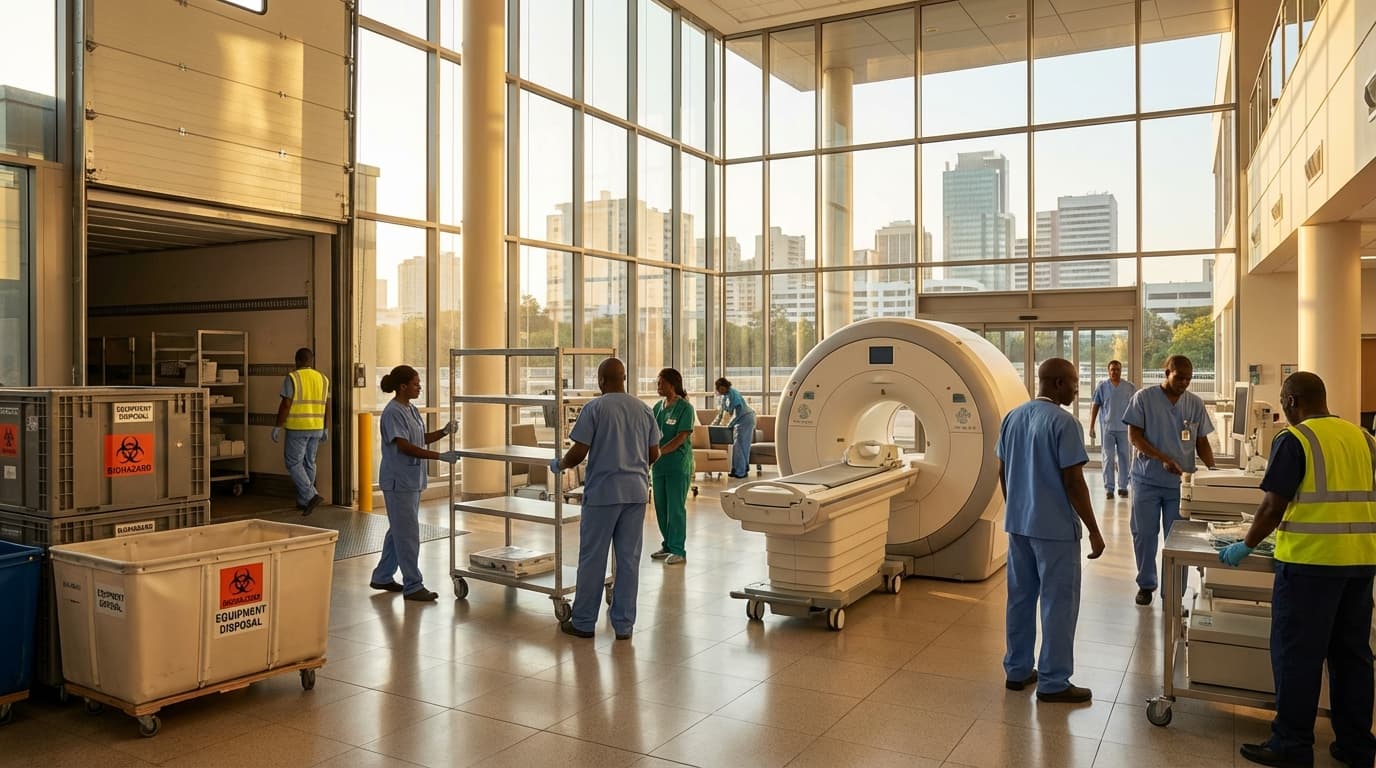
Decommissioning Service for Medical Devices in Algeria
Engineering Excellence & Technical Support
Decommissioning Service for Medical Devices High-standard technical execution following OEM protocols and local regulatory frameworks.
Expert Regulatory Compliance
Navigating Algeria's stringent medical device regulations, our decommissioning services ensure full adherence to all national and international standards, guaranteeing secure and compliant disposal of all equipment.
Advanced Sterilization & Decontamination
Employing state-of-the-art sterilization and decontamination protocols, we eliminate biohazards and sensitive data from medical devices, ensuring environmental safety and data privacy throughout the decommissioning process.
Sustainable Waste Management & Recycling
Prioritizing environmental responsibility, we implement comprehensive waste management strategies, focusing on responsible recycling and disposal of medical devices, minimizing landfill impact and promoting resource recovery.
What Is Decommissioning Service For Medical Devices In Algeria?
Decommissioning services for medical devices in Algeria encompass the formal process of retiring, disabling, and disposing of medical equipment that has reached the end of its operational lifecycle. This involves a systematic approach to ensure compliance with regulatory requirements, safeguard patient data, and minimize environmental impact. The service is crucial for healthcare facilities and medical device manufacturers operating within Algeria, requiring adherence to national and international standards for safety and waste management.
| Who Needs Decommissioning Services? | Typical Use Cases |
|---|---|
| Hospitals and Clinics (Public and Private): Responsible for managing a diverse inventory of medical equipment. | End-of-life or obsolescence of diagnostic imaging equipment (e.g., X-ray machines, CT scanners, MRI machines). |
| Diagnostic Laboratories: Utilizing specialized analytical and testing equipment. | Scheduled retirement of surgical instruments and robotic surgery systems due to wear and tear or technological advancement. |
| Research Institutions: Employing sophisticated medical research apparatus. | Decommissioning of patient monitoring systems and ventilators after upgrade or replacement. |
| Medical Device Manufacturers and Distributors: Involved in the lifecycle management of their products, including end-of-life disposal or recall. | Disposal of expired or malfunctioning laboratory equipment (e.g., centrifuges, incubators). |
| Government Health Agencies: Overseeing the management of public healthcare infrastructure. | Retirement of therapeutic devices such as radiotherapy machines or dialysis units. |
| Specialized Healthcare Centers (e.g., dental clinics, physiotherapy centers): Requiring specific equipment disposal. | Secure data destruction for devices that store Electronic Health Records (EHR) or Protected Health Information (PHI). |
Key Components of Medical Device Decommissioning in Algeria:
- Data Sanitization: Secure erasure or destruction of all sensitive patient and operational data stored on the device to prevent unauthorized access or breaches.
- Functional Disablement: Rendering the device inoperable and unsafe for its intended medical purpose, often through physical alteration or software disabling.
- Environmental Disposal: Managing the disposal of the device and its components in an environmentally responsible manner, adhering to Algerian regulations for hazardous and non-hazardous waste. This may involve recycling, incineration, or landfilling under controlled conditions.
- Asset Retirement Documentation: Creating comprehensive records of the decommissioning process, including justification for retirement, sanitization methods, disposal certificates, and chain of custody.
- Regulatory Compliance: Ensuring all decommissioning activities comply with relevant Algerian laws and standards, such as those set by the Ministry of Health and potentially environmental agencies.
- Safety Protocols: Implementing safety measures to protect personnel involved in the decommissioning process from potential hazards associated with medical equipment (e.g., residual chemicals, electrical hazards).
Who Needs Decommissioning Service For Medical Devices In Algeria?
Decommissioning services for medical devices are crucial in Algeria for a variety of healthcare providers and institutions that operate and manage medical equipment. These services ensure the safe, secure, and compliant removal of medical devices from service, preventing data breaches, environmental hazards, and legal liabilities. The need for these services extends across numerous departments and facility types.
| Target Customer Type | Key Departments Requiring Decommissioning | Reasons for Decommissioning |
|---|---|---|
| Hospitals (Public & Private) | Radiology, Cardiology, Surgery, Intensive Care Units (ICU), Oncology, Pathology, Biomedical Engineering Department, IT Department | Equipment upgrades, replacement due to age/malfunction, end-of-lease agreements, facility renovations/closures, data security compliance. |
| Clinics and Polyclinics | General Practice, Specialty Clinics (e.g., Dermatology, Ophthalmology), Laboratory Departments | Equipment obsolescence, changes in service offerings, cost-effectiveness, space optimization. |
| Diagnostic Centers | Imaging Departments (X-ray, CT, MRI), Laboratories (Clinical, Microbiology, Biochemistry) | Technological advancements, equipment failure, regulatory changes, high maintenance costs. |
| Surgical Centers | Operating Rooms, Sterilization Units, Anesthesiology | Upgrade to newer surgical technologies, compliance with safety standards, consolidation of services. |
| Medical Research Institutions | Various research labs (e.g., molecular biology, genetics, pharmacology) | Completion of research projects, transition to new research areas, equipment no longer meeting research needs. |
| Government Health Agencies | Inventory Management, Procurement Departments, Regional Health Offices | Managing a large fleet of public health equipment, budget reallocation, ensuring proper disposal of assets. |
| Medical Device Manufacturers/Distributors | Sales, Service, and Technical Support Departments | Recalled devices, demonstration units, end-of-life buy-back programs, managing returned inventory. |
Target Customers for Medical Device Decommissioning Services in Algeria
- Hospitals (Public and Private)
- Clinics and Polyclinics
- Diagnostic Centers (Imaging, Laboratories)
- Surgical Centers
- Rehabilitation Centers
- Medical Research Institutions
- Pharmaceutical Companies (for devices used in R&D or trials)
- Government Health Agencies (for managing state-owned equipment)
- Medical Device Manufacturers and Distributors (for end-of-life management or trade-ins)
- Third-Party Medical Equipment Maintenance Providers
Decommissioning Service For Medical Devices Process In Algeria
This document outlines the standard workflow for decommissioning medical devices in Algeria, from the initial inquiry to the final execution of the service. The process ensures compliance with Algerian regulations and best practices for safe and environmentally responsible disposal of medical equipment.
| Stage | Description | Key Activities | Responsible Party | Deliverables/Outcomes |
|---|---|---|---|---|
| Client identifies the need for decommissioning and contacts a service provider. | Initial contact, understanding of client needs, overview of services, preliminary discussion. | Client, Service Provider | Initial understanding of scope, potential service engagement. |
| Detailed inventory and assessment of devices to be decommissioned. | Site visit (if necessary), device identification, serial number recording, functional status assessment, risk assessment (e.g., hazardous materials). | Service Provider, Client (for access and information) | Detailed device inventory, risk assessment report, preliminary cost estimate. |
| Formal proposal and contract for decommissioning services. | Preparation of a detailed quotation including scope, methodology, timeline, costs, and legal/regulatory compliance assurances; contract negotiation and signing. | Service Provider, Client | Signed contract/agreement, confirmed scope of work and pricing. |
| Development of a detailed plan for execution. | Logistics planning, resource allocation (personnel, equipment), scheduling of on-site activities, waste disposal route planning, obtaining necessary permits (if applicable). | Service Provider | Detailed decommissioning plan, schedule of operations, waste management plan. |
| Physical decommissioning of medical devices. | Safe disconnection of devices, dismantling, sterilization (if required), removal of hazardous components (e.g., mercury, batteries), cleaning of the area. | Service Provider | Decommissioned devices (safe for transport/disposal), clean work area. |
| Environmentally sound and compliant disposal of all device components. | Segregation of waste streams (e.g., electronic waste, hazardous waste, general waste), transportation to licensed disposal/recycling facilities, compliance with Algerian environmental regulations. | Service Provider | Proof of proper waste disposal (e.g., waste transfer notes, certificates of destruction), adherence to environmental laws. |
| Provision of comprehensive documentation for regulatory and record-keeping purposes. | Creation of decommissioning certificates for each device, inventory of disposed items, summary report of the entire process, certificates of destruction from disposal facilities. | Service Provider | Decommissioning certificates, final report, disposal certificates. |
| Submission of a final report and addressing any client queries. | Delivery of the final report summarizing the entire decommissioning process, results, and compliance; addressing any client questions or concerns. | Service Provider | Final decommissioning report, client satisfaction. |
| Financial settlement for the services rendered. | Issuance of the final invoice based on the agreed contract; processing of payment by the client. | Service Provider, Client | Completion of financial transaction, closed project. |
Decommissioning Service for Medical Devices Process in Algeria
- Inquiry and Initial Consultation: The process begins when a healthcare facility or organization in Algeria expresses a need for medical device decommissioning services.
- Information Gathering and Assessment: The service provider collects detailed information about the devices to be decommissioned.
- Quotation and Agreement: Based on the assessment, the provider prepares a detailed quotation outlining the scope of work, methodologies, timelines, and costs.
- Planning and Scheduling: Upon agreement, a comprehensive plan is developed.
- On-Site Execution: The actual decommissioning takes place at the client's facility.
- Waste Management and Disposal: Proper handling and disposal of all components are crucial.
- Documentation and Certification: The service provider issues comprehensive documentation.
- Reporting and Follow-up: A final report is submitted to the client.
- Invoice and Payment: The final step involves invoicing and payment for the services rendered.
Decommissioning Service For Medical Devices Cost In Algeria
Decommissioning medical devices in Algeria involves a multi-faceted cost structure influenced by several key factors. The process typically includes secure data destruction, environmentally sound disposal, and compliance with national regulations. Understanding these factors is crucial for healthcare facilities to accurately budget for these services.
| Device Category | Estimated Cost Range (TND) | Notes |
|---|---|---|
| Small Diagnostic/Monitoring Devices (e.g., ECG machines, pulse oximeters, basic monitors) | 15,000 - 50,000 | Primarily involves data wiping and general waste disposal. Lower complexity. |
| Medium Imaging/Therapeutic Devices (e.g., X-ray machines, ultrasound units, smaller anesthesia machines) | 75,000 - 250,000 | May involve hazardous materials, more complex disassembly, and certified data destruction. Transportation can be a factor. |
| Large/High-Value Equipment (e.g., MRI, CT scanners, linear accelerators, large operating room systems) | 300,000 - 1,500,000+ | Significant disassembly, specialized handling of hazardous components (e.g., magnets, radiation shielding), extensive data security, and complex logistics. Costs can vary greatly based on specific model and site conditions. |
| Laboratory Equipment (e.g., centrifuges, incubators, basic analyzers) | 20,000 - 80,000 | Depends on presence of hazardous chemicals or biohazards, and data storage capabilities. |
| General Medical Furniture/Non-powered equipment | 5,000 - 20,000 | Disposal fees for non-hazardous materials. Volume dependent. |
Key Pricing Factors for Medical Device Decommissioning in Algeria
- Device Type and Complexity: Larger, more complex, or technologically advanced devices (e.g., MRI machines, CT scanners, sophisticated diagnostic equipment) naturally incur higher decommissioning costs due to specialized handling, disassembly, and disposal requirements compared to simpler devices like basic patient monitors or infusion pumps.
- Data Security and Destruction: Devices containing patient data (e.g., electronic health records, imaging archives) require certified data sanitization or physical destruction. The method chosen (e.g., wiping, degaussing, shredding) and the required level of certification will significantly impact the cost.
- Hazardous Materials: Medical devices can contain hazardous materials such as mercury, lead, batteries, or refrigerants. Proper handling, containment, and disposal of these materials according to environmental regulations add to the overall expense.
- Weight and Volume: The physical size and weight of the device influence transportation and disposal costs. Larger and heavier items require more robust logistics and potentially higher landfill or recycling fees.
- Logistics and Transportation: The distance from the healthcare facility to the decommissioning facility, the accessibility of the site, and the need for specialized transport equipment (e.g., cranes for heavy machinery) will affect pricing.
- Regulatory Compliance and Certification: Adhering to Algerian regulations for medical waste and equipment disposal is paramount. Costs may be associated with obtaining necessary permits, documentation, and certificates of destruction or recycling from certified vendors.
- Vendor's Expertise and Reputation: Reputable decommissioning service providers with proven track records, specialized equipment, and trained personnel may command higher prices, but often offer greater assurance of compliance and security.
- Volume of Decommissioning: Larger contracts involving multiple devices may benefit from economies of scale, potentially leading to lower per-unit costs. Conversely, single-device decommissioning might incur higher base fees.
- Recycling and Resale Value: If a device has salvageable components or a potential resale value (though rare for many decommissioned medical devices), this could partially offset the decommissioning costs. However, this is usually a minor factor.
Affordable Decommissioning Service For Medical Devices Options
Decommissioning medical devices is a critical, yet often overlooked, aspect of healthcare facility management. Properly decommissioning devices ensures data security, compliance with regulations, and environmentally responsible disposal. Finding affordable services is paramount for budget-conscious organizations. This involves exploring various service providers and understanding how to structure contracts for optimal cost-effectiveness.
| Value Bundle Component | Description | Cost-Saving Strategy |
|---|---|---|
| Basic Decommissioning & Data Wipe | Includes secure data sanitization to industry standards (e.g., NIST 800-88) and physical collection of devices. | Bundle is cost-effective for facilities with a strong internal IT team capable of some pre-processing or for devices with minimal data sensitivity. Negotiate pricing based on volume. |
| Comprehensive Decommissioning & Certified Destruction | Encompasses data sanitization, physical destruction (shredding/disintegration), and issuance of certificates of destruction. | Provides peace of mind and compliance assurance. Ideal for highly sensitive data. Bundle discounts are often available for bulk services. |
| Full-Service Lifecycle Management | Includes decommissioning, data sanitization, certified destruction, responsible recycling, and asset tracking throughout the device lifecycle. | Offers the highest level of service and compliance. Cost savings are realized through streamlined processes, reduced risk of non-compliance fines, and potential revenue from recycled materials. Long-term contracts can yield significant discounts. |
| On-Site Data Sanitization | Service provider performs data wiping at your facility, minimizing transportation of devices with sensitive data. | Reduces transportation risks and costs. Can be more cost-effective for large volumes of devices, negating the need for secure transport contracts. |
| Off-Site Certified Destruction | Devices are transported securely to a certified facility for complete destruction. | Leverages specialized equipment and secure processes. Negotiate pick-up schedules to consolidate shipments and reduce per-device cost. |
| Recycling & Asset Recovery | Focuses on maximizing the recovery of valuable materials and potentially offsetting costs through resale of functional components. | Can significantly reduce net decommissioning costs. Prioritize providers with transparent revenue-sharing models for recovered assets. |
Key Considerations for Affordable Medical Device Decommissioning
- Understanding the Scope of Service: Clearly define what 'decommissioning' entails for your organization, including data sanitization, physical destruction, recycling, and documentation requirements.
- Regulatory Compliance: Ensure the chosen service provider adheres to all relevant local, national, and international regulations (e.g., HIPAA, GDPR, EPA).
- Data Security and Privacy: Prioritize services that offer robust data sanitization and destruction methods to protect sensitive patient information.
- Environmental Impact: Select providers with certified recycling and disposal processes to minimize environmental harm.
- Documentation and Certification: Request comprehensive documentation and certificates of destruction/recycling for audit purposes.
- Service Provider Reputation and Experience: Research the track record and client testimonials of potential service providers.
- Geographic Location: Consider providers with local or regional operations to potentially reduce transportation costs.
Verified Providers In Algeria
Finding verified healthcare providers in Algeria is crucial for ensuring quality and safe medical care. Franance Health stands out as a leading platform for connecting patients with accredited and trustworthy medical professionals and facilities across Algeria. Their rigorous credentialing process and commitment to patient well-being make them the best choice for your healthcare needs.
| Verification Aspect | Franance Health's Approach | Benefit to Patients |
|---|---|---|
| Licensing and Certification | Thorough verification of all medical licenses and certifications from relevant Algerian authorities. | Ensures providers are legally authorized and meet professional standards. |
| Educational Qualifications | Confirmation of degrees, diplomas, and specialized training from accredited institutions. | Guarantees that providers have the necessary academic background. |
| Professional Experience | Assessment of practical experience and specialization in their respective fields. | Connects patients with experienced and skilled practitioners. |
| Reputation and Feedback | Monitoring of professional conduct and consideration of patient feedback (where available and validated). | Promotes accountability and helps identify providers with a strong track record. |
| Adherence to Standards | Ensuring compliance with national and international healthcare regulations and best practices. | Upholds the quality and safety of medical services received. |
Why Franance Health is the Best Choice for Verified Providers in Algeria:
- Extensive Vetting Process: Franance Health goes beyond basic verification. They meticulously review the credentials, licenses, qualifications, and experience of every provider listed on their platform, ensuring that only the most competent professionals are included.
- Commitment to Patient Safety: Patient safety is paramount. Franance Health prioritizes providers who adhere to the highest ethical standards and best practices in healthcare delivery.
- Comprehensive Provider Directory: Their platform offers a wide range of specialties and services, from general practitioners and specialists to hospitals and clinics, making it easy to find the exact care you need.
- Transparency and Accessibility: Franance Health provides clear and accessible information about each provider, including their specializations, qualifications, and patient reviews (where applicable), empowering you to make informed decisions.
- User-Friendly Interface: The platform is designed for ease of use, allowing you to quickly search, compare, and book appointments with verified healthcare providers.
Scope Of Work For Decommissioning Service For Medical Devices
This Scope of Work (SOW) outlines the requirements for the decommissioning of medical devices. The objective is to ensure safe, secure, and environmentally responsible removal and disposal of medical equipment, adhering to all relevant regulations and standards. This document details the technical deliverables and standard specifications expected from the service provider.
| Category | Technical Deliverable | Standard Specification/Requirement | Verification Method |
|---|---|---|---|
| Planning | Detailed Decommissioning Plan | Includes site survey, risk assessment, equipment inventory, schedule, resource allocation, waste management strategy, and regulatory compliance checklist. | Review and approval by the client's designated representative. |
| Inventory | Comprehensive Equipment Inventory Report | Includes device name, model, serial number, asset tag, location, condition, and decommissioning status. Must be reconciled with client's asset register. | Client audit and sign-off on the final inventory report. |
| Data Security | Data Sanitization Certificate | Verification of data erasure according to NIST SP 800-88 Rev. 1 (or equivalent) for all devices with data storage capabilities. Includes report detailing methods used (e.g., overwriting, degaussing, physical destruction). | Independent third-party verification or client witness of data sanitization process and final certificate review. |
| Physical Handling | Safe Removal and Transport Plan | Details methods for safe disconnection, disassembly (if required), packaging, and transportation of devices, including specialized handling for large or sensitive equipment. Compliance with all transportation regulations (e.g., DOT). | Pre-approval of the transport plan. On-site observation of removal process. |
| Environmental | Hazardous Material Manifest and Disposal Records | Documentation of all hazardous materials (e.g., mercury, lead, batteries) identified, handled, and disposed of through licensed and certified waste disposal facilities. Compliance with local, state, and federal environmental regulations (e.g., EPA, RCRA). | Review of manifests and disposal certificates. Site visit to licensed facilities (if agreed). |
| Disposal/Recycling | Certificate of Destruction/Recycling | Confirmation of device destruction or recycling by a certified e-waste recycler. For reusable components, proof of refurbishment and resale/donation as per agreement. | Review of certificates. Chain of custody documentation. |
| Documentation | Final Decommissioning Report | A comprehensive report summarizing all activities, including inventory, data sanitization, waste management, disposal records, and final disposition of each device. Includes photos or other visual evidence where applicable. | Client acceptance and formal sign-off of the final report. |
| Compliance | Regulatory Compliance Documentation | Evidence of adherence to all applicable regulations, including HIPAA (for data privacy), OSHA (for worker safety), EPA, DOT, and any industry-specific medical device regulations. | Review of documentation by client's compliance officer or legal counsel. |
Key Stages of Decommissioning:
- Site Assessment and Planning
- Device Identification and Inventory
- Data Sanitization and Secure Erasure
- Physical Disassembly and Component Removal
- Hazardous Material Handling and Disposal
- Environmental Compliance and Waste Management
- Documentation and Certification
Service Level Agreement For Decommissioning Service For Medical Devices
This Service Level Agreement (SLA) outlines the response times and uptime guarantees for the Decommissioning Service for Medical Devices provided by [Your Company Name] to [Client Company Name]. This agreement is effective from [Start Date] to [End Date].
| Service Component | Metric | Target (Business Hours) | Target (24x7) | Remedy for Non-Compliance |
|---|---|---|---|---|
| Decommissioning Request Acknowledgment | Response Time | 2 Business Hours | 4 Business Hours | 10% discount on the next decommissioning project for each incident exceeding the target response time. |
| On-Site Technician Dispatch (Scheduled) | Response Time (for scheduled appointments) | 1 Business Day prior to scheduled appointment | 1 Business Day prior to scheduled appointment | Rescheduling at no additional cost, with priority booking. |
| Emergency Decommissioning Request Acknowledgment | Response Time | 1 Business Hour | 2 Business Hours | 5% discount on the current emergency decommissioning project for each incident exceeding the target response time. |
| Support System Availability (for scheduling and documentation) | Uptime Guarantee | 99.5% | 99.0% | Service credit equivalent to 1 day of the monthly service fee for every 2 hours of unplanned downtime beyond the guaranteed uptime. |
| Decommissioning Process Initiation (post-acknowledgment) | Service Availability | Within 5 Business Days of acknowledgment (for standard requests) | Within 3 Business Days of acknowledgment (for emergency requests) | Prioritization of delayed projects and potential for expedited service on the next project at a discounted rate. |
Key Service Level Objectives
- Response Time: The time taken by [Your Company Name] to acknowledge a request for decommissioning service and initiate the process.
- Uptime Guarantee: The guaranteed availability of our support infrastructure and personnel necessary to facilitate the decommissioning process within the agreed-upon timelines.
- Service Availability: The period during which the decommissioning service is operational and accessible to the client.
Frequently Asked Questions

Ready when you are
Let's scope your Decommissioning Service for Medical Devices in Algeria project in Algeria.

Scaling healthcare logistics and technical systems across the entire continent.