
Uptime, Downtime & Root-Cause Analysis Reporting Service in Algeria
Engineering Excellence & Technical Support
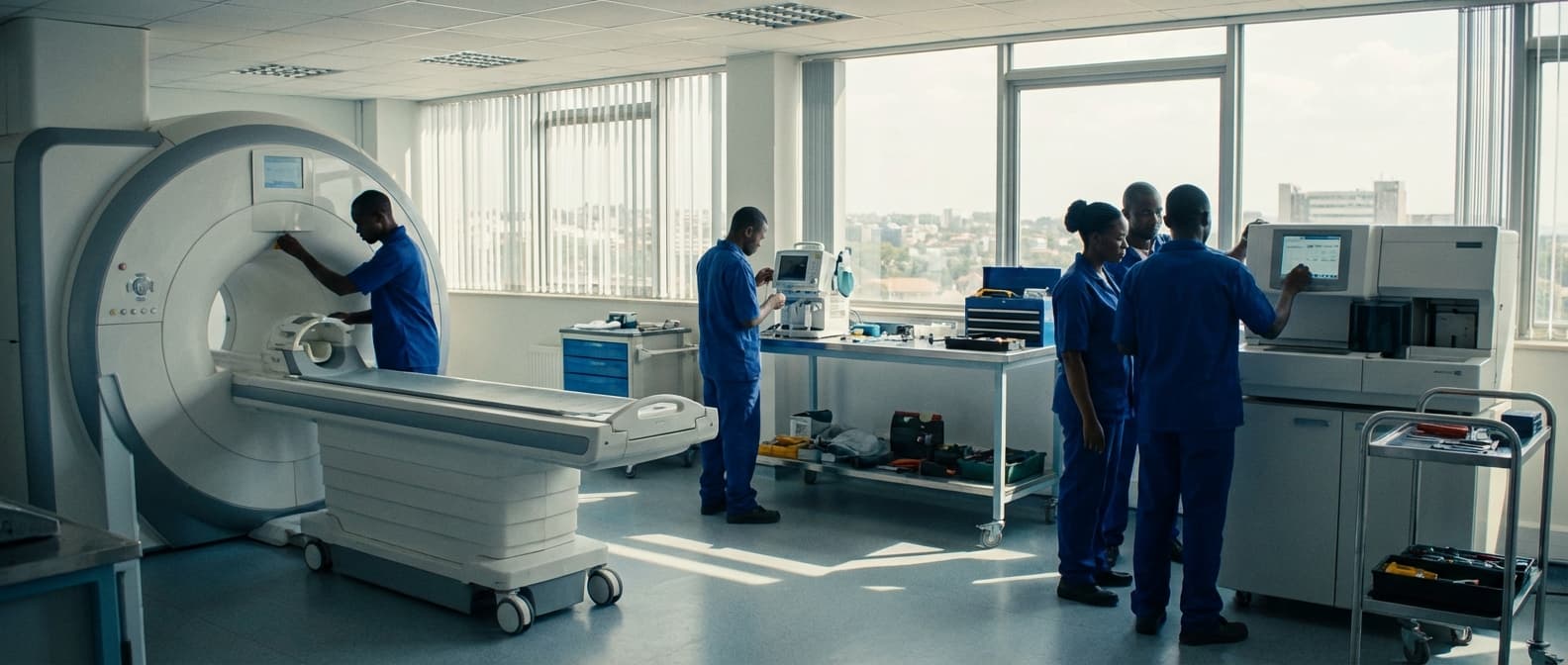
Uptime, Downtime & Root-Cause Analysis Reporting Service High-standard technical execution following OEM protocols and local regulatory frameworks.
Real-Time Uptime Monitoring
Leverage our advanced, Algeria-optimized monitoring infrastructure to gain instant visibility into your critical system availability. Receive immediate alerts for any downtime events, ensuring rapid response and minimal service interruption for your Algerian clientele.
Automated Downtime Alerts & Incident Tracking
Our service automatically detects and reports downtime across your Algerian network. Comprehensive incident tracking, including timestamps, affected services, and severity levels, is provided in real-time, facilitating efficient communication and escalation.
AI-Powered Root Cause Analysis (RCA)
Go beyond simply identifying downtime. Our AI-driven RCA engine analyzes logs, network traffic, and system metrics within the Algerian context to pinpoint the precise root cause of incidents, empowering you to implement effective preventative measures and improve long-term reliability.
What Is Uptime, Downtime & Root-cause Analysis Reporting Service In Algeria?
Uptime, Downtime & Root-Cause Analysis Reporting Service in Algeria is a specialized offering designed to monitor, document, and analyze the operational availability and unavailability of critical IT infrastructure and business systems. This service provides comprehensive insights into system performance, identifies the underlying causes of failures, and offers actionable recommendations for prevention and mitigation. The core objective is to maximize system uptime, minimize disruptive downtime, and foster continuous improvement in system resilience and reliability within Algerian organizations.
| Who Needs It? | Typical Use Cases | ||||||||
|---|---|---|---|---|---|---|---|---|---|
| Enterprises with critical IT infrastructure: Organizations heavily reliant on their IT systems for core business functions, such as banking, telecommunications, energy, and government agencies. | E-commerce platforms: Ensuring continuous availability of online stores to prevent lost sales and customer dissatisfaction. | Cloud service providers: Maintaining high uptime for hosted applications and data to retain clients and meet contractual obligations. | Telecommunication networks: Guaranteeing uninterrupted voice and data services for subscribers. | Healthcare institutions: Ensuring access to patient records, medical equipment control systems, and communication platforms. | Financial services: Maintaining the stability of trading platforms, transaction processing systems, and online banking portals. | Industrial control systems (ICS) / SCADA environments: Preventing production stoppages and ensuring operational safety in manufacturing and critical infrastructure. | Government and public sector IT departments: Delivering essential services to citizens without interruption. | IT Managed Service Providers (MSPs): Offering advanced monitoring and incident management services to their clients. | Businesses undergoing digital transformation: As systems become more interconnected and cloud-dependent, the need for robust uptime monitoring increases. |
| Monitoring the availability of web servers and application servers. | Tracking the performance and uptime of database systems. | Ensuring the continuity of network connectivity and bandwidth availability. | Investigating the cause of a critical application crash or service outage. | Validating system performance post-maintenance or deployment of new software/hardware. | Identifying bottlenecks in system architecture that lead to intermittent failures. | Quantifying the financial impact of downtime incidents. | Establishing baseline performance metrics for future comparisons. | Proactively identifying potential hardware failures based on performance anomalies. | **Auditing IT infrastructure resilience and security posture related to availability. |
Service Components
- Uptime Monitoring: Continuous, real-time surveillance of network devices, servers, applications, and services to ascertain their operational status and availability. This includes performance metrics such as response times, throughput, and error rates.
- Downtime Incident Management: Prompt detection, logging, and categorization of all instances where systems or services become unavailable. This involves recording the start and end times of the outage, the affected components, and the impact on business operations.
- Root-Cause Analysis (RCA): A systematic investigative process to determine the fundamental reasons behind a downtime incident. This often involves log analysis, configuration review, performance data correlation, and interviews with relevant personnel.
- Reporting and Documentation: Generation of detailed reports summarizing uptime percentages, downtime occurrences, incident severity, duration, and the findings of RCA. These reports are tailored to different stakeholders, from technical teams to executive management.
- Trend Analysis and Recommendations: Analysis of historical uptime and downtime data to identify recurring patterns, systemic weaknesses, and areas for proactive improvement. This leads to actionable recommendations for hardware upgrades, software patches, process adjustments, or enhanced monitoring strategies.
- Service Level Agreement (SLA) Compliance Tracking: Monitoring and reporting against agreed-upon SLAs for system availability, ensuring that performance targets are met and providing evidence for compliance.
Who Needs Uptime, Downtime & Root-cause Analysis Reporting Service In Algeria?
This Uptime, Downtime & Root-Cause Analysis Reporting Service is crucial for organizations operating in Algeria that rely heavily on technology for their core operations. The service provides detailed insights into system availability, the duration and impact of outages, and the underlying reasons for these disruptions. By identifying and addressing the root causes of downtime, businesses can significantly improve their operational efficiency, minimize financial losses, and enhance customer satisfaction. The service is particularly valuable in sectors where continuous operation is paramount, and where technical failures can have cascading negative effects.
| Target Department | Key Responsibilities & Relevance to the Service |
|---|---|
| IT Operations & Infrastructure Management | Responsible for maintaining system uptime, managing infrastructure, and responding to incidents. This service directly supports their efforts to monitor performance, diagnose issues, and prevent future downtime. |
| Network Operations Center (NOC) | The front line for monitoring network health and performance. This service provides the data and analysis needed to identify, escalate, and resolve network-related downtime. |
| Security Operations Center (SOC) | While focused on security threats, downtime can be a consequence of security breaches. Root-cause analysis helps identify if security vulnerabilities led to outages. |
| Business Continuity & Disaster Recovery (BC/DR) | Crucial for ensuring business resilience. This service informs BC/DR planning by highlighting critical failure points and the effectiveness of recovery strategies. |
| Application Development & Management | Identifies performance bottlenecks and bugs within applications that can lead to downtime. Helps in prioritizing fixes and improving application stability. |
| Customer Support & Service Delivery | Directly impacted by service disruptions. Understanding downtime helps them manage customer expectations, provide accurate information, and improve the overall customer experience. |
| Risk Management | Assesses and mitigates operational risks. Downtime analysis provides quantifiable data on operational risk and the financial impact of failures. |
| Finance & Accounting | Quantifies the financial impact of downtime, including lost revenue, increased operational costs, and potential penalties. Supports budgeting for IT improvements and risk mitigation. |
| Executive Management & Board | Requires high-level reporting on operational performance, risks, and the effectiveness of IT investments. This service provides insights into critical business enablers. |
Target Customers in Algeria
- Telecommunications Providers
- Financial Institutions (Banks, Insurance Companies)
- Government Agencies & Public Services
- E-commerce Platforms & Online Retailers
- Healthcare Providers (Hospitals, Clinics)
- Energy & Utilities Companies (Oil & Gas, Electricity)
- Manufacturing & Industrial Enterprises
- Logistics & Transportation Companies
- IT Service Providers & Managed Service Providers (MSPs)
- Cloud Service Providers
Uptime, Downtime & Root-cause Analysis Reporting Service Process In Algeria
This document outlines the service process for Uptime, Downtime, and Root-Cause Analysis (RCA) reporting in Algeria. It details the workflow from the initial client inquiry to the final execution and delivery of the report, ensuring clarity and efficiency in addressing service interruptions.
| Step | Description | Key Activities | Responsible Party | Estimated Timeline |
|---|---|---|---|---|
| The client initiates contact to request Uptime, Downtime, and RCA reporting services. The service provider clarifies the scope, objectives, and specific needs. | Initial contact (phone, email, web form), understanding service requirements, identifying assets/systems to be monitored, defining reporting frequency and format. | Client, Service Provider (Sales/Account Manager) | 1-2 Business Days |
| Based on the gathered requirements, the service provider develops a detailed proposal outlining the scope of work, methodologies, deliverables, and associated costs. | Proposal preparation, cost estimation, defining SLAs (Service Level Agreements), outlining reporting structure, generating quotation. | Service Provider (Sales/Technical Team) | 2-3 Business Days |
| Upon client acceptance of the proposal, a formal service agreement is drafted and signed. Project timelines and specific reporting schedules are established. | Agreement negotiation and signing, defining contract terms, scheduling initial reporting period, assigning project manager. | Client, Service Provider (Legal/Management/Project Manager) | 3-5 Business Days |
| For on-site assessments, a technician visits the client's location to gather initial data and understand the operational environment. For remote monitoring, data collection tools are configured. | Site visit (if required), infrastructure inspection, network topology mapping, installation of monitoring agents/sensors (if applicable), data access configuration. | Service Provider (Technical Team/Field Engineer) | 1-5 Business Days (Varies based on complexity) |
| This is the core of the service. When incidents occur (downtime events), data is analyzed to identify the direct and underlying causes. | Monitoring data review, log file analysis, system performance trend analysis, troubleshooting, collaboration with client IT, identifying contributing factors, categorizing incident type. | Service Provider (Technical Analysts/Engineers) | Continuous (during incidents), 1-3 Business Days (per incident for full RCA) |
| Comprehensive reports are compiled, detailing uptime percentages, downtime durations, incident summaries, and detailed root-cause findings. | Compiling data, creating charts and graphs, writing narrative explanations, documenting mitigation steps, detailing preventive measures. | Service Provider (Technical Analysts/Report Writers) | 1-2 Business Days (per reporting cycle) |
| The generated reports undergo internal review to ensure accuracy, completeness, and adherence to the agreed-upon format and standards. | Internal quality check, technical validation, cross-referencing data, ensuring clarity and conciseness. | Service Provider (Senior Analysts/Team Lead) | 1 Business Day |
| The final reports are delivered to the client. A presentation may be scheduled to discuss findings, answer questions, and provide recommendations. | Report distribution (email, secure portal), scheduling and conducting review meetings, explaining key insights, presenting actionable recommendations. | Service Provider (Account Manager/Technical Lead), Client | 1-3 Business Days |
| The service provider follows up with the client to assess the effectiveness of implemented recommendations and identify areas for service enhancement. | Post-reporting feedback collection, tracking resolution of root causes, suggesting service optimizations, updating monitoring strategies. | Service Provider (Account Manager/Project Manager) | Ongoing |
Service Process Workflow
- Client Inquiry & Requirement Gathering
- Service Proposal & Quotation
- Service Agreement & Scheduling
- Data Collection & Site Assessment (if applicable)
- Incident Analysis & Root-Cause Investigation
- Report Generation
- Report Review & Validation
- Report Delivery & Presentation
- Follow-up & Continuous Improvement
Uptime, Downtime & Root-cause Analysis Reporting Service Cost In Algeria
Providing comprehensive Uptime, Downtime, and Root-Cause Analysis (RCA) reporting services in Algeria involves a dynamic pricing structure influenced by several key factors. These services are crucial for businesses seeking to optimize their operational efficiency, minimize disruptions, and understand the underlying causes of failures. The cost will vary significantly based on the complexity of the systems being monitored, the level of detail required in the reports, the frequency of reporting, and the expertise of the service provider.
| Service Tier/Complexity | Typical Reporting Frequency | Estimated Cost Range (DZD - Algerian Dinar) |
|---|---|---|
| Basic Monitoring & Reporting (Limited systems, standard metrics, monthly reports) | Monthly | 50,000 - 150,000 |
| Standard Monitoring & Reporting (Moderate systems, key performance indicators, weekly/monthly reports) | Weekly/Monthly | 150,000 - 400,000 |
| Advanced Monitoring & RCA (Extensive systems, detailed metrics, proactive RCA, frequent reporting) | Daily/Weekly/Ad-hoc | 400,000 - 1,000,000+ |
| Enterprise-Level Solution (Complex infrastructure, critical systems, deep RCA, dedicated support, customized SLAs) | Continuous/On-Demand | 1,000,000 - 5,000,000+ |
Key Pricing Factors for Uptime, Downtime & Root-Cause Analysis Reporting Services in Algeria:
- {"title":"Scope of Services","description":"This is the most significant driver of cost. It encompasses the number of systems or applications to be monitored, the types of metrics to be tracked (e.g., server availability, application performance, network latency), and the depth of analysis required for downtime events."}
- {"title":"Monitoring Complexity","description":"The infrastructure involved plays a major role. Monitoring cloud-based environments, on-premise data centers, hybrid setups, or complex distributed systems will have different resource and expertise requirements, influencing pricing."}
- {"title":"Reporting Frequency and Customization","description":"The need for daily, weekly, monthly, or on-demand reports, along with the level of customization required (e.g., specific dashboards, KPIs, executive summaries), will impact the effort and thus the cost."}
- {"title":"Root-Cause Analysis Depth","description":"The complexity of the RCA itself is a major factor. Simple historical data correlation will be less expensive than in-depth forensic analysis, code review, or extensive log analysis."}
- {"title":"Service Provider Expertise and Reputation","description":"Established providers with a proven track record, specialized tools, and highly skilled analysts will generally command higher rates than newer or smaller firms."}
- {"title":"Service Level Agreements (SLAs)","description":"The guarantees provided regarding response times for critical incidents, uptime targets, and report delivery will influence the cost, as they necessitate dedicated resources and robust processes."}
- {"title":"Technology Stack and Tools","description":"The proprietary or specialized tools used by the service provider for monitoring and analysis can also affect pricing, especially if they involve significant licensing or development costs."}
- {"title":"Geographic Location and Support","description":"While the service is provided in Algeria, the location of the service provider's headquarters and the availability of local support can also be a consideration."}
Affordable Uptime, Downtime & Root-cause Analysis Reporting Service Options
This service provides comprehensive reporting on system uptime, downtime, and root-cause analysis (RCA). We offer flexible value bundles and cost-saving strategies to meet your diverse needs and budget. Understanding system performance and identifying the root cause of issues is crucial for maintaining operational efficiency, minimizing financial losses due to downtime, and improving overall system reliability. Our reporting service empowers your IT team with actionable insights.
| Value Bundle Tier | Description | Key Features | Price (Monthly) | Cost-Saving Strategy |
|---|---|---|---|---|
| Starter | Ideal for small businesses or projects needing basic monitoring and reporting. | Uptime tracking, basic downtime incident logs, limited RCA reports (e.g., up to 5 per month). | $49 | Pay-as-you-go for additional RCA reports, annual billing discount (5%). |
| Growth | Suitable for growing businesses requiring more in-depth analysis and a higher volume of reports. | All Starter features, plus advanced downtime analysis, unlimited RCA reports, trend analysis. | $129 | Includes basic automated RCA. Bundled with essential features to reduce per-report costs. |
| Enterprise | Comprehensive solution for large organizations with complex infrastructures and critical uptime requirements. | All Growth features, plus proactive monitoring, custom dashboards, dedicated support, historical data retention (up to 1 year). | $299+ | Volume discounts for multiple systems/services, custom integration options to streamline data flow, predictive analytics add-on for further cost savings through prevention. |
| Add-ons | Optional features to enhance existing bundles. | Predictive analytics, advanced anomaly detection, integration with existing ITSM tools, extended data retention. | Varies | Bundling add-ons with higher tiers, negotiating custom packages for specific needs. |
Key Features & Benefits
- Real-time Uptime Monitoring & Reporting
- Detailed Downtime Incident Tracking & Analysis
- Automated Root-Cause Analysis (RCA) for Incidents
- Trend Analysis and Proactive Issue Identification
- Customizable Reporting Dashboards & Alerts
- Historical Data for Performance Benchmarking
- Cost-Effective Solutions for Small to Enterprise Businesses
Verified Providers In Algeria
In Algeria's burgeoning healthcare sector, the presence of verified providers is paramount for ensuring quality care and patient safety. Franance Health stands out as a leading entity in this regard, meticulously vetting and credentialing healthcare professionals and institutions. This rigorous process guarantees that all Franance Health accredited providers meet stringent international standards for expertise, ethical practice, and patient-centric care. Choosing Franance Health verified providers means opting for reliability, trust, and access to some of the most competent healthcare professionals and facilities in Algeria.
| Key Indicator | Franance Health Verified Provider | General Provider |
|---|---|---|
| Credentialing Process | Rigorous, multi-stage vetting against international standards | Variable, often less standardized or transparent |
| Quality Assurance | Ongoing monitoring and performance evaluation | Sporadic or dependent on regulatory oversight |
| Patient Safety Protocols | Strict adherence to best practices and infection control | May vary significantly |
| Professional Ethics | Mandatory adherence to a strong ethical code | Not always explicitly enforced or monitored |
| Reputation and Trust | High levels of patient confidence and trust | Can be inconsistent |
Why Franance Health Verified Providers in Algeria are the Best Choice:
- Uncompromising Quality Standards: Franance Health's verification process adheres to globally recognized benchmarks, ensuring providers are at the forefront of medical excellence.
- Trust and Credibility: A Franance Health credential is a mark of distinction, assuring patients they are receiving care from qualified and ethical practitioners.
- Enhanced Patient Safety: Rigorous background checks and continuous monitoring minimize risks and prioritize patient well-being.
- Access to Expertise: Franance Health connects patients with specialists and facilities possessing a proven track record of successful treatments and outcomes.
- Commitment to Ethical Practice: Verified providers are bound by a code of conduct that emphasizes patient rights, transparency, and professional integrity.
Scope Of Work For Uptime, Downtime & Root-cause Analysis Reporting Service
This document outlines the Scope of Work (SOW) for a Uptime, Downtime, and Root-Cause Analysis (RCA) Reporting Service. The service aims to provide comprehensive insights into system availability, identify the causes of disruptions, and recommend preventative measures to enhance overall system reliability and performance. The technical deliverables and standard specifications are detailed below.
| Deliverable | Description | Standard Specifications / Format | Frequency |
|---|---|---|---|
| Uptime/Downtime Report | Detailed breakdown of system availability over a defined period, highlighting periods of uptime and downtime, categorized by severity. | Percentage of Uptime, Total Downtime (hours/minutes), Downtime Incidents Count, Impacted Services/Applications. Data presented in tabular and graphical format (e.g., line charts, pie charts). | Daily, Weekly, Monthly |
| Downtime Incident Report | Individual report for each confirmed downtime incident, providing an overview of the event. | Incident ID, Timestamp of Start and End, Duration, Affected Systems/Services, Business Impact (quantified where possible), Initial Diagnosis. | Within 24 hours of incident resolution |
| Root-Cause Analysis (RCA) Report | In-depth investigation into the underlying causes of a downtime incident. | Incident ID, Chronological timeline of events, Identified root cause(s) (e.g., hardware failure, software bug, human error, network issue, external factor), Contributing factors, Evidence/Data supporting the root cause, Impact assessment (technical and business). | Within 72 hours of incident resolution |
| Corrective and Preventative Action Plan (CAPA) | Recommendations derived from RCA reports to address the root cause and prevent recurrence. | Incident ID, Specific corrective actions taken, Specific preventative actions recommended (short-term and long-term), Responsible party for each action, Target completion date, Status tracking. | Included as part of the RCA Report or as a separate addendum |
| Summary Performance Dashboard | A high-level overview of system availability and key incident trends. | Overall Uptime Percentage (e.g., 99.9%), Mean Time Between Failures (MTBF), Mean Time To Repair (MTTR), Number of Critical Incidents, Trend analysis of downtime by category. | Monthly (updated weekly) |
Service Objectives
- To accurately track and report on system uptime and downtime percentages.
- To conduct thorough root-cause analysis for all reported downtime incidents.
- To provide actionable recommendations for preventing future occurrences of downtime.
- To deliver regular, standardized reports summarizing availability metrics and RCA findings.
- To contribute to a continuous improvement cycle for system stability and reliability.
Service Level Agreement For Uptime, Downtime & Root-cause Analysis Reporting Service
This Service Level Agreement (SLA) outlines the commitments and expectations regarding the uptime, downtime, and root-cause analysis reporting for the [Service Name] service. It defines the guaranteed uptime percentages, response times for incidents, and the process for root-cause analysis reporting.
| Service Component | Uptime Guarantee | Response Time (Severity 1) | Response Time (Severity 2) | Response Time (Severity 3) | RCA Report Deadline |
|---|---|---|---|---|---|
| Core Service Functionality | 99.95% | 15 minutes | 1 hour | 4 hours | 2 business days after resolution |
| API Access | 99.9% | 30 minutes | 2 hours | 8 hours | 3 business days after resolution |
| Data Synchronization | 99.8% | 1 hour | 4 hours | 12 hours | 5 business days after resolution |
Key Definitions
- Uptime: The period during which the Service is fully operational and accessible to users.
- Downtime: The period during which the Service is not operational or accessible to users.
- Scheduled Maintenance: Planned periods of downtime for system updates, upgrades, or maintenance, communicated to users in advance.
- Unscheduled Downtime: Downtime that occurs unexpectedly and is not part of a planned maintenance window.
- Incident: Any event that causes or may cause a disruption to the Service.
- Severity Levels: A classification system for Incidents based on their impact on the Service and users.
- Root-Cause Analysis (RCA): A process of identifying the fundamental cause of an Incident to prevent recurrence.
Frequently Asked Questions

Ready when you are
Let's scope your Uptime, Downtime & Root-Cause Analysis Reporting Service in Algeria project in Algeria.

Scaling healthcare logistics and technical systems across the entire continent.