
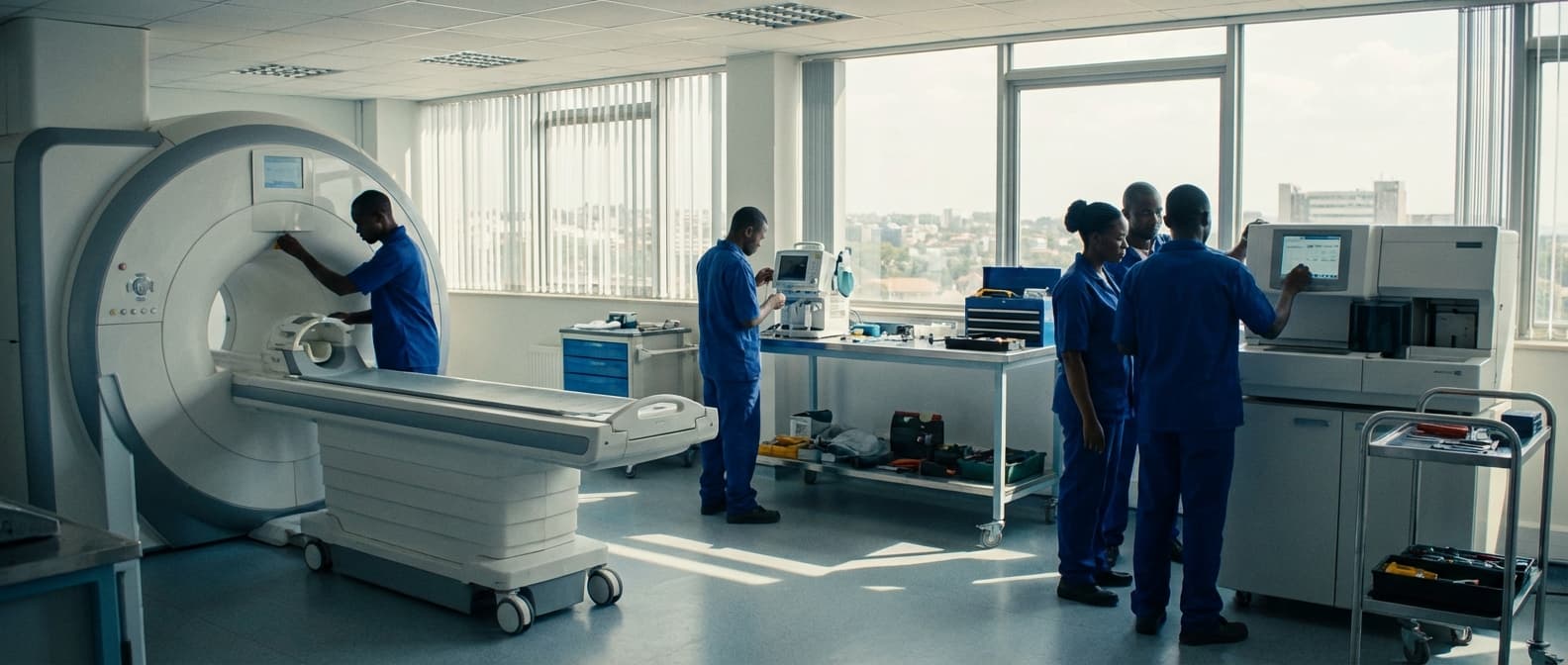
Planned Shutdown Coordination Service for Critical Equipment in Algeria
Engineering Excellence & Technical Support
Planned Shutdown Coordination Service for Critical Equipment High-standard technical execution following OEM protocols and local regulatory frameworks.
Optimized Shutdown Scheduling & Execution
Leveraging advanced planning tools and risk assessment methodologies, our service minimizes downtime for critical Algerian equipment. We meticulously schedule planned shutdowns to align with production cycles and operational needs, ensuring seamless execution and accelerated restoration of service.
Predictive Maintenance Integration
Our coordination service integrates predictive maintenance insights, allowing for proactive intervention before critical failures occur. By analyzing real-time data and historical performance, we schedule shutdowns to address potential issues, significantly reducing unscheduled outages and extending equipment lifespan in Algerian facilities.
Streamlined Stakeholder Collaboration
We facilitate robust communication and collaboration among all stakeholders, including internal maintenance teams, external vendors, and operational departments in Algeria. Our expert coordination ensures clear communication, efficient resource allocation, and timely decision-making throughout the entire planned shutdown lifecycle.
What Is Planned Shutdown Coordination Service For Critical Equipment In Algeria?
The Planned Shutdown Coordination Service for Critical Equipment in Algeria is a specialized operational management function designed to orchestrate the safe, efficient, and timely cessation of operation and subsequent restart of critical industrial equipment. This service is paramount in environments where unscheduled downtime incurs significant economic losses, poses safety risks, or disrupts essential services. It encompasses meticulous planning, resource allocation, execution, and post-shutdown analysis to minimize operational impact and ensure asset integrity.
The service is necessitated by the inherent complexities associated with decommissioning and recommissioning high-value, safety-critical, or production-defining machinery and systems. Algeria's industrial landscape, with its significant presence in sectors such as oil and gas, mining, manufacturing, and power generation, frequently relies on such equipment, making planned shutdown coordination indispensable for maintaining operational continuity and economic viability.
| Who Needs This Service? | Typical Use Cases in Algeria | |||||
|---|---|---|---|---|---|---|
| Operators of Critical Industrial Infrastructure: Companies in sectors heavily reliant on continuous operation of high-value assets. | Oil and Gas Sector: Planned maintenance and upgrades of refineries, petrochemical plants, offshore platforms, and pipelines. This includes turnaround maintenance (TAR) for process units. | Power Generation Sector: Scheduled outages for thermal power plants (coal, gas), nuclear facilities (if applicable), and renewable energy installations (e.g., large solar farms) for turbine maintenance, boiler inspections, and grid connection upgrades. | Mining and Metals Sector: Shutdowns for processing plants, smelters, and heavy machinery for overhauls, capacity expansions, and environmental compliance upgrades. | Manufacturing Sector: Coordinated shutdowns for large-scale production lines, automated systems, and heavy industrial machinery for modernization, preventative maintenance, and debottlenecking. | Infrastructure Providers: For critical components within water treatment plants, large transportation networks (e.g., tunnel systems, large pumping stations), and telecommunications infrastructure requiring scheduled maintenance. | Companies Undertaking Major Capital Projects: During phases involving the integration and testing of new critical equipment into existing facilities. |
Key Components of the Planned Shutdown Coordination Service:
- Scope Definition & Objectives: Clearly delineating the equipment to be shut down, the reasons for the shutdown (e.g., planned maintenance, upgrades, regulatory compliance, capacity expansion), and the measurable objectives to be achieved during the shutdown period.
- Detailed Planning & Scheduling: Developing comprehensive, multi-disciplinary schedules that integrate all activities, including isolation, draining, cleaning, inspection, repair, replacement, testing, and recommissioning. This involves critical path analysis and contingency planning.
- Resource Management: Identifying and securing all necessary resources, including skilled labor (internal and external), specialized tools, equipment, materials, spare parts, and support services. This also includes managing permits and access.
- Risk Assessment & Mitigation: Conducting thorough hazard identification and risk assessments for all shutdown activities. Developing and implementing robust mitigation strategies and safety protocols to prevent incidents.
- Communication & Stakeholder Management: Establishing clear communication channels among all involved parties, including operations, maintenance, engineering, safety, procurement, external contractors, and regulatory bodies. Regular progress reporting and issue escalation are crucial.
- Execution Oversight: On-site supervision and coordination of all shutdown activities to ensure adherence to the plan, schedule, and safety procedures. Real-time problem-solving and decision-making are essential.
- Quality Assurance & Control: Implementing stringent quality checks and inspections at various stages of the shutdown process to verify the integrity and functionality of repaired or replaced equipment.
- Post-Shutdown Analysis & Reporting: Documenting all activities, lessons learned, deviations from the plan, and performance metrics. This analysis informs future shutdown planning and continuous improvement efforts.
Who Needs Planned Shutdown Coordination Service For Critical Equipment In Algeria?
Planned shutdown coordination services are essential for any organization in Algeria that relies on critical equipment to maintain operations. These services are particularly vital for industries where unscheduled downtime is costly, impacts safety, or disrupts essential services. Proactive planning and expert coordination minimize the duration and impact of planned shutdowns, ensuring a smooth transition back to full operational capacity.
| Target Customer Type | Key Departments Involved | Reasons for Coordination Need |
|---|---|---|
| Oil & Gas Companies | Operations, Maintenance, Engineering, Safety, Project Management | Preventing safety incidents, optimizing production uptime, managing complex refinery/plant maintenance, adhering to regulatory compliance. |
| Power Generation & Distribution Utilities | Plant Operations, Grid Management, Maintenance, Engineering, Asset Management | Ensuring grid stability, timely replacement of critical components, minimizing power outages for consumers, maintaining plant efficiency. |
| Manufacturing Plants (e.g., Automotive, Chemical) | Production, Maintenance & Reliability, Engineering, Supply Chain, Quality Control | Minimizing production losses, maintaining product quality, efficient changeovers, optimizing resource allocation for repairs. |
| Telecommunication Providers | Network Operations, Engineering, Field Services, IT Infrastructure Management | Minimizing service interruptions for customers, ensuring network uptime, managing upgrades and maintenance in data centers and exchanges. |
| Water Treatment Facilities | Operations, Maintenance, Engineering, Environmental Compliance | Maintaining public health standards, preventing contamination, efficient equipment overhaul, ensuring continuous water supply. |
| Mining Operations | Mine Operations, Maintenance & Engineering, Health & Safety, Geology | Preventing equipment failures in harsh environments, ensuring worker safety, optimizing extraction efficiency, managing large-scale machinery maintenance. |
Target Customers and Departments in Algeria Requiring Planned Shutdown Coordination Services:
- {"title":"Energy Sector","description":"Companies involved in oil, gas, and electricity generation and distribution. This includes exploration, production, refining, power plants, and transmission networks."}
- {"title":"Manufacturing and Heavy Industry","description":"Facilities producing goods, chemicals, steel, cement, automotive parts, and other industrial products where continuous operation is key to production targets and supply chains."}
- {"title":"Telecommunications","description":"Providers of mobile, internet, and fixed-line services, as well as data centers and network infrastructure operators."}
- {"title":"Water and Wastewater Treatment","description":"Municipalities and private operators responsible for ensuring a consistent supply of clean water and the safe treatment of wastewater."}
- {"title":"Mining and Metals","description":"Operations involved in extracting and processing mineral resources and metals, where complex machinery requires regular maintenance."}
- {"title":"Transportation and Logistics","description":"Key infrastructure operators such as ports, airports, and major railway networks, where seamless operations are critical."}
- {"title":"Public Services & Infrastructure","description":"Organizations managing critical public infrastructure that require scheduled maintenance to prevent service disruptions."}
Planned Shutdown Coordination Service For Critical Equipment Process In Algeria
This document outlines the workflow for the Planned Shutdown Coordination Service for Critical Equipment Processes in Algeria. This service aims to ensure the safe, efficient, and timely execution of planned maintenance, repairs, and upgrades on critical industrial equipment. The process begins with an inquiry from the client and concludes with the successful completion and post-shutdown review.
| Stage | Key Activities | Responsible Party | Deliverables/Outcomes |
|---|---|---|---|
| Client submits an inquiry for a planned shutdown. Coordinator conducts an initial meeting to understand the client's needs, equipment criticality, and general timeframe. Preliminary risk assessment and feasibility study. | Client, Coordination Service Provider | Understanding of client requirements, initial feasibility report, preliminary budget estimation. |
| Detailed definition of shutdown scope, including specific tasks, equipment to be serviced, and expected duration. Development of a comprehensive shutdown plan, including detailed schedules, Gantt charts, resource allocation, and risk management plan. Identification of necessary permits and regulatory approvals. Procurement strategy for long-lead items and consumables. | Coordination Service Provider, Client (Engineering, Operations) | Detailed Shutdown Plan, Resource Plan, Risk Management Plan, Procurement List, Permit Application Strategy. |
| Securing and mobilizing all necessary resources: skilled personnel (internal and external technicians, engineers, supervisors), specialized tools and equipment, materials, and spare parts. Establishment of site logistics, accommodation, and transportation arrangements for the shutdown team. Vendor and contractor selection and onboarding. | Coordination Service Provider, Client (Procurement, HR) | Mobilized personnel, available tools and equipment, confirmed vendor contracts, established site logistics. |
| Final confirmation of all permits and approvals. Pre-shutdown site inspections and readiness checks. Comprehensive safety briefings and toolbox talks for all personnel. Isolation and lockout/tagout (LOTO) procedures implementation. Pre-assembly or pre-fabrication of components if applicable. | Coordination Service Provider, Client (Safety, Operations) | All permits secured, site ready, trained and briefed personnel, established LOTO procedures. |
| Controlled shutdown of equipment. Execution of planned maintenance, repair, or upgrade tasks according to the detailed plan and schedule. Daily progress meetings and reporting. Real-time issue resolution and change management. Continuous monitoring of safety performance and adherence to procedures. | Coordination Service Provider, Client (Operations, Maintenance) | Completion of planned tasks, progress reports, resolved issues, maintained safety record. |
| Testing and commissioning of repaired/upgraded equipment. Final inspections and quality checks. Cleaning and restoration of the work area. Demobilization of personnel and equipment. Formal handover of the equipment back to operations. Documentation of all works performed. | Coordination Service Provider, Client (Operations, Quality Assurance) | Tested and commissioned equipment, completed documentation, safe work area, formal handover. |
| Post-shutdown debriefing with the client to review overall performance, identify lessons learned, and discuss areas for improvement in future shutdowns. Final report generation, including schedule adherence, budget performance, safety statistics, and technical findings. Close-out of contracts and financial reconciliation. | Coordination Service Provider, Client | Lessons learned report, final shutdown report, financial reconciliation, improved future planning. |
Planned Shutdown Coordination Service Workflow
- Inquiry & Initial Assessment
- Scope Definition & Planning
- Resource Mobilization
- Pre-Shutdown Preparation & Safety Briefing
- Shutdown Execution
- Post-Shutdown Activities & Handover
- Performance Review & Reporting
Planned Shutdown Coordination Service For Critical Equipment Cost In Algeria
This document outlines the pricing factors and estimated cost ranges for a Planned Shutdown Coordination Service for Critical Equipment in Algeria, denominated in Algerian Dinars (DZD). The service aims to minimize downtime, optimize resource allocation, and ensure the safe and efficient execution of planned maintenance for vital industrial machinery.
| Service Component | Estimated Cost Range (DZD per shutdown event) | Notes |
|---|---|---|
| Initial Consultation & Site Assessment | 50,000 - 150,000 | Depends on facility size and initial data availability. |
| Planning & Scheduling (Basic) | 200,000 - 750,000 | Covers essential task breakdown, sequencing, and resource allocation for standard shutdowns. |
| Detailed Planning & Optimization (Advanced) | 500,000 - 2,000,000+ | For complex shutdowns, critical interdependencies, and advanced optimization techniques. Includes detailed risk analysis. |
| On-Site Coordination & Supervision (Daily Rate) | 30,000 - 100,000 per coordinator/supervisor | Variable based on expertise, seniority, and number of personnel on-site. |
| Project Management & Reporting | 10% - 25% of total direct shutdown costs | A percentage-based fee to cover overarching project management, communication, and comprehensive reporting. |
| Risk Assessment & Mitigation Development | 100,000 - 500,000 | Dedicated services for identifying potential hazards and developing robust mitigation strategies. |
| Logistics & Travel (Variable) | Actual Costs + 15-20% overhead | Includes transportation, accommodation, and per diem for coordination team if required. |
| Contingency Planning & Management | 50,000 - 250,000 | Development and active management of contingency plans during the shutdown. |
| Post-Shutdown Review & Analysis | 75,000 - 300,000 | Includes lessons learned, performance evaluation, and documentation archiving. |
Key Pricing Factors:
- Scope and Complexity of the Shutdown: The number of equipment units, the criticality of each, and the interdependencies between them significantly influence the service cost. Complex shutdowns requiring intricate sequencing and cross-departmental coordination will be priced higher.
- Duration of the Planned Shutdown: Longer shutdown periods necessitate extended coordination efforts, increased on-site presence, and more comprehensive planning. This directly impacts labor and management costs.
- Type and Specificity of Critical Equipment: Specialized or highly sensitive equipment (e.g., in oil & gas, petrochemical, or power generation sectors) may require specialized expertise, unique safety protocols, and advanced diagnostic tools, leading to higher service fees.
- Geographical Location of the Facility: Remote or difficult-to-access locations within Algeria can incur additional costs related to travel, logistics, accommodation, and potential for specialized transportation for personnel and equipment.
- Level of Service Required: This can range from basic planning and scheduling to comprehensive project management, including risk assessment, procurement support, on-site supervision, and post-shutdown analysis. Higher service levels command higher prices.
- Number of Personnel Involved: The size of the coordination team provided by the service provider, along with the number of technicians, engineers, and support staff managed, will be a direct cost driver.
- Reporting and Documentation Requirements: The frequency, detail, and format of progress reports, safety audits, and final shutdown reports will influence the administrative effort and cost.
- Client-Specific Requirements and Integration: Any unique client protocols, safety standards, or integration needs with existing client systems will be factored into the pricing.
- Risk Mitigation Strategies and Contingency Planning: The depth and complexity of risk assessments and the development of contingency plans contribute to the overall service value and cost.
- Technology and Software Utilization: The use of advanced project management software, digital twin technologies, or specialized planning tools can enhance efficiency but may add to the overall service cost.
Affordable Planned Shutdown Coordination Service For Critical Equipment Options
This document outlines affordable planned shutdown coordination services for critical equipment, emphasizing the value of bundled offerings and cost-saving strategies. By leveraging optimized planning and execution, businesses can minimize downtime, reduce associated financial losses, and ensure the longevity of their vital assets.
| Cost-Saving Strategy | Description | Benefit |
|---|---|---|
| Early Planning & Mobilization | Engaging coordination services well in advance allows for better negotiation with vendors and more efficient resource scheduling. | Reduced vendor costs, guaranteed availability of skilled labor and specialized equipment, minimized potential delays. |
| Grouped Service Contracts | Consolidating multiple shutdown coordination needs under a single provider or contract. | Volume discounts, streamlined communication, simplified contract management, consistent quality assurance. |
| Standardized Procedures & Checklists | Developing and utilizing pre-defined templates and workflows for common shutdown tasks. | Increased efficiency, reduced errors, faster execution, easier training for new personnel. |
| On-Demand vs. Retainer Services | Choosing a service model that aligns with shutdown frequency. Retainers can offer cost savings for regular shutdowns. | Predictable costs, priority service access for retainers, pay-as-you-go flexibility for infrequent needs. |
| Leveraging In-House Expertise | Integrating client's internal maintenance teams with external coordination services, creating a collaborative approach. | Reduced external labor costs, knowledge transfer, improved internal skill development, greater control over processes. |
| Data-Driven Shutdown Optimization | Using historical shutdown data and performance metrics to refine future planning and execution. | Shorter shutdown durations, reduced scope of work where not critical, better resource allocation, identification of recurring issues. |
Value Bundles: Tailored Shutdown Coordination Packages
- Basic Shutdown Planning: Includes initial risk assessment, preliminary scheduling, and vendor identification. Ideal for smaller or less complex shutdowns.
- Standard Shutdown Coordination: Encompasses detailed scheduling, resource allocation, safety protocols, and on-site supervision. Suitable for most routine planned maintenance.
- Comprehensive Shutdown Management: Offers end-to-end service from initial planning, advanced risk mitigation, comprehensive vendor management, real-time progress tracking, post-shutdown analysis, and knowledge transfer. Best for large-scale or highly critical operations.
- Emergency Preparedness Add-on: Integrates rapid response protocols and contingency planning for unexpected critical equipment failures, complementing any of the above bundles.
- Predictive Maintenance Integration: Bundles shutdown coordination with data analysis from predictive maintenance systems to optimize shutdown timing and scope, focusing on actual equipment needs.
Verified Providers In Algeria
In the rapidly evolving landscape of healthcare in Algeria, ensuring access to reliable and credentialed medical professionals is paramount. Franance Health stands out as a beacon of trust, meticulously vetting its network of providers to guarantee the highest standards of care. This commitment to verification isn't just a procedural step; it's a fundamental promise to patients seeking safe, effective, and ethical medical services. Franance Health's rigorous credentialing process involves a comprehensive review of each provider's qualifications, licensing, and professional history, ensuring that only the most competent and ethical practitioners join their network. This dedication to quality assurance translates directly into tangible benefits for patients, offering peace of mind and confidence in their healthcare decisions.
| Credential Component | Franance Health Verification Process | Benefit to Patient |
|---|---|---|
| Medical Licensing | Verification of current and valid medical license with Algerian authorities. | Ensures the provider is legally authorized to practice medicine. |
| Educational Background | Confirmation of degrees and certifications from accredited institutions. | Validates the provider's foundational medical education and specialization. |
| Professional Experience | Review of past employment and practice history, including any disciplinary actions. | Assesses practical application of skills and identifies potential red flags. |
| Specialty Certifications | Confirmation of board certifications in specific medical fields. | Guarantees expertise in a particular area of medicine. |
| Ethical Conduct | Checks for any history of malpractice claims or ethical breaches. | Protects patients from practitioners with a history of poor conduct. |
Why Franance Health Providers are the Best Choice:
- Unwavering Commitment to Quality: Franance Health's stringent vetting process ensures all listed providers meet the highest medical and ethical standards.
- Verified Credentials: We go beyond basic checks, thoroughly examining licenses, certifications, and professional histories.
- Patient Safety First: Our verification process is designed to prioritize your well-being and protect you from unqualified practitioners.
- Access to Excellence: Connect with a network of Algerian healthcare professionals who have demonstrated consistent expertise and patient-centered care.
- Peace of Mind: Knowing you are choosing a Franance Health verified provider offers invaluable confidence in your healthcare journey.
Scope Of Work For Planned Shutdown Coordination Service For Critical Equipment
This Scope of Work (SOW) outlines the services required for the coordination of planned shutdown activities for critical equipment. The objective is to ensure a safe, efficient, and timely execution of scheduled maintenance, inspections, and repairs with minimal disruption to operations. This SOW details the technical deliverables and standard specifications to be adhered to by the service provider.
| Task | Description | Technical Deliverables | Standard Specifications / Requirements | |||
|---|---|---|---|---|---|---|
| Shutdown Planning & Scheduling | Develop a detailed work breakdown structure (WBS) for all planned shutdown activities. Create a master schedule integrating all tasks, dependencies, and resource allocations. | Detailed Shutdown Schedule (Gantt chart format) | Microsoft Project or equivalent software | Adherence to critical path method (CPM) | Inclusion of all safety protocols and permit-to-work timelines | Integration with operational schedules |
| Stakeholder Communication & Coordination | Establish a communication plan and regularly facilitate meetings with all relevant departments (Operations, Maintenance, Engineering, Safety, Procurement, etc.) and external contractors. | Meeting Minutes and Action Item Logs | Regularly scheduled coordination meetings (daily/weekly) | Centralized communication platform (e.g., shared drive, dedicated software) | Escalation procedures for unresolved issues | |
| Risk Assessment & Mitigation | Identify potential risks associated with the shutdown (technical, logistical, safety, environmental). Develop and implement mitigation strategies. | Risk Register | HAZOP (Hazard and Operability Study) or similar risk assessment methodology | Contingency plans for critical path activities | Identification of critical spares and their availability | |
| Resource Management | Coordinate the availability of all necessary resources, including skilled personnel, specialized tools, equipment, and materials, ensuring they are on-site and ready when needed. | Resource Allocation Plan | Confirmation of contractor qualifications and certifications | Verification of equipment calibration and certification | Inventory management for critical spares and consumables | |
| Execution Monitoring & Control | Oversee the execution of shutdown activities, ensuring adherence to the schedule, safety procedures, and quality standards. Track progress and address deviations promptly. | Daily Progress Reports | On-site supervision and coordination presence | Real-time tracking of task completion | Quality control checks at key milestones | |
| Safety Management | Ensure strict adherence to all applicable safety regulations, company policies, and site-specific safety procedures throughout the shutdown period. | Safety Permits and Work Orders | Permit-to-Work (PTW) system management | Pre-shutdown and daily safety toolbox talks | Incident reporting and investigation procedures | |
| Documentation & Reporting | Compile comprehensive documentation of all shutdown activities, including progress reports, incident reports, as-built drawings (if applicable), and lessons learned. | Final Shutdown Report | As-built documentation (if changes occurred) | Post-shutdown review meeting documentation | Archiving of all relevant shutdown records | |
| Equipment Specifics (Example) | Coordination for the overhaul of a critical Turbine Generator. | Pre-shutdown inspection reports | Detailed maintenance procedures for turbine and generator | Vendor-specific technical manuals and specifications | Manufacturer's recommendations for lubrication and alignment | Environmental testing procedures (e.g., vibration analysis, oil analysis) |
Key Objectives
- Develop and manage a comprehensive shutdown schedule.
- Facilitate effective communication and coordination among all stakeholders.
- Ensure adherence to safety regulations and company policies.
- Minimize downtime and impact on production/operations.
- Document and report on all shutdown activities and outcomes.
- Identify and mitigate potential risks and dependencies.
- Ensure availability of necessary resources (personnel, equipment, materials).
Service Level Agreement For Planned Shutdown Coordination Service For Critical Equipment
This Service Level Agreement (SLA) outlines the terms and conditions for the Planned Shutdown Coordination Service for Critical Equipment. It defines the response times for initiating coordination and the uptime guarantees for the coordination platform. This SLA aims to ensure efficient and timely planning for essential maintenance activities, minimizing operational disruption.
The Planned Shutdown Coordination Service is designed to facilitate the planning, scheduling, and communication of planned downtime for critical equipment. This includes activities such as preventative maintenance, upgrades, and scheduled replacements. The service focuses on ensuring all stakeholders are informed and coordinated to minimize impact on business operations.
| Service Component | Response Time Guarantee (Business Hours) | Uptime Guarantee (Coordination Platform) |
|---|---|---|
| Initiation of Planned Shutdown Coordination Request | Within 2 business hours of receipt | 99.9% (Excluding scheduled maintenance windows) |
| Confirmation of Coordination Meeting Scheduling | Within 4 business hours of request initiation | 99.9% (Excluding scheduled maintenance windows) |
| Availability of Coordination Platform (during active planning) | N/A | 99.95% (Excluding scheduled maintenance windows) |
| Emergency Notification for Unplanned Shutdown Impacting Coordination | Within 1 business hour of confirmed impact | N/A |
Key Service Components
- Proactive notification system for planned shutdowns.
- Centralized scheduling and resource allocation tools.
- Communication portal for all involved parties.
- Post-shutdown review and reporting capabilities.
Frequently Asked Questions

Ready when you are
Let's scope your Planned Shutdown Coordination Service for Critical Equipment in Algeria project in Algeria.

Scaling healthcare logistics and technical systems across the entire continent.