
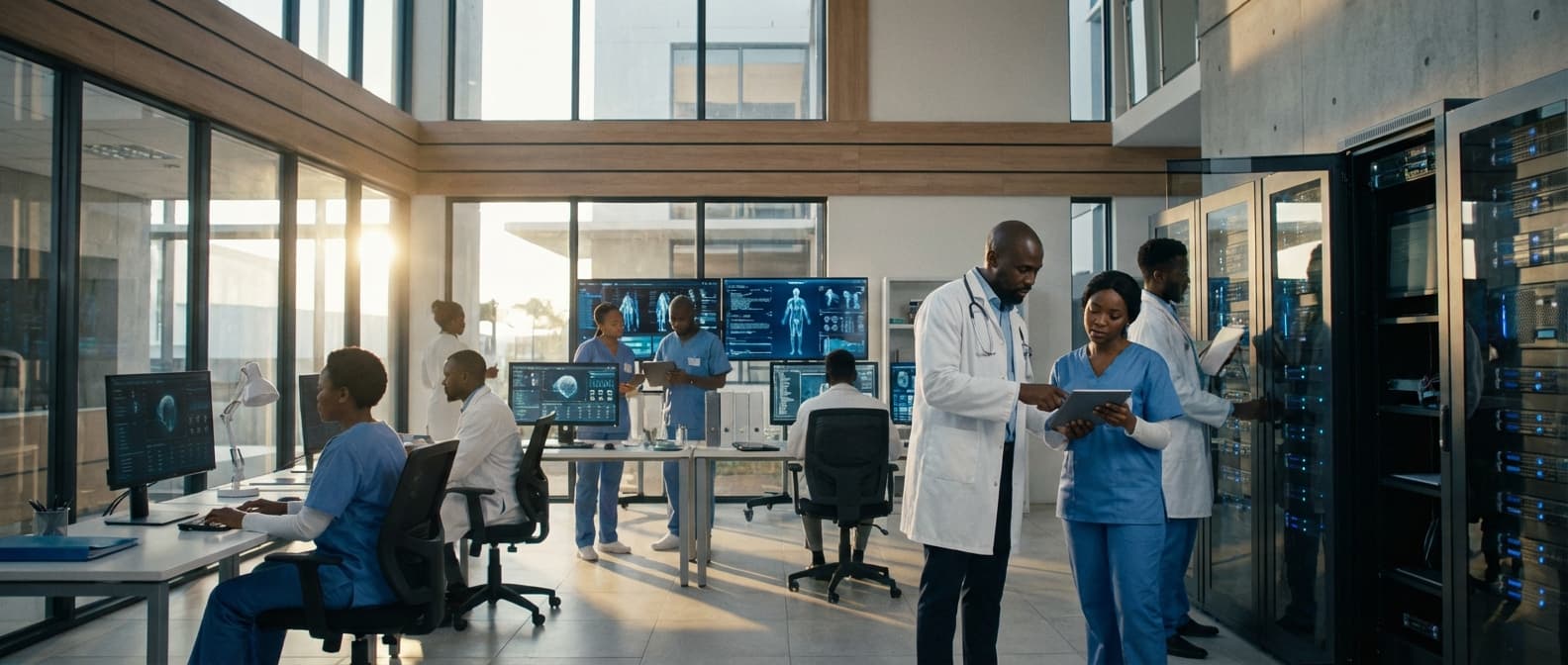
Tele-Radiology in Algeria
Engineering Excellence & Technical Support
24/7 access to certified radiologists providing rapid, accurate remote interpretation of diagnostic imaging studies. High-standard technical execution following OEM protocols and local regulatory frameworks.
Expert Teleradiology Consultation Across Algeria
Leveraging advanced PACS and secure VPNs, Algerian healthcare facilities gain immediate access to subspecialty radiologists. This ensures timely and accurate diagnostic interpretations, regardless of geographical location, enhancing patient care in remote areas and urban centers alike.
AI-Powered Diagnostic Support for Enhanced Accuracy
Integration of state-of-the-art Artificial Intelligence algorithms for preliminary image analysis and anomaly detection. This augments the expertise of our radiologists, improving diagnostic efficiency, reducing turnaround times, and identifying subtle findings for earlier intervention across a wide range of imaging modalities.
Secure and Scalable Cloud-Based Imaging Platform
Our robust, GDPR-compliant cloud infrastructure provides secure storage, seamless image retrieval, and collaborative workflows for all Algerian medical institutions. This scalable solution ensures data integrity, accessibility for both local clinicians and remote specialists, and efficient data management for optimal diagnostic processes.
What Is Tele-radiology In Algeria?
Tele-radiology in Algeria refers to the practice of transmitting radiological images (such as X-rays, CT scans, MRIs, and ultrasounds) from one location to another for the purpose of interpretation by a radiologist. This service leverages telecommunications technology to bridge geographical distances, enabling expert medical interpretation without the need for the patient or the imaging equipment to be physically present at the same location as the interpreting physician. The Algerian healthcare system, with its diverse geographical distribution of facilities and varying access to specialized medical personnel, stands to benefit significantly from the implementation and expansion of tele-radiology services. It aims to improve diagnostic turnaround times, enhance access to subspecialty expertise, and optimize resource allocation across the nation's healthcare infrastructure.
| Who Needs Tele-radiology in Algeria? | Typical Use Cases in Algeria | ||||||||
|---|---|---|---|---|---|---|---|---|---|
| Hospitals in remote or underserved regions: Facilities lacking on-site radiologists or subspecialists. | Emergency departments: Providing rapid interpretation of critical imaging studies (e.g., stroke, trauma, acute abdomen) outside of standard working hours or when on-call radiologists are unavailable. | Rural health centers and dispensaries: Offering diagnostic imaging services that would otherwise be inaccessible to local populations. | Mobile imaging units: Facilitating interpretation of images acquired from temporary or mobile diagnostic centers. | Referral centers for specialized interpretations: Enabling primary care physicians to obtain expert opinions from subspecialists in fields like neuro-radiology, pediatric radiology, or interventional radiology. | Military and deployed medical units: Providing diagnostic capabilities in geographically dispersed or austere environments. | Academic and research institutions: Facilitating collaborative research and educational initiatives in radiology. | Primary care physicians: Requiring timely diagnostic imaging for their patients to inform clinical decision-making. | Post-operative follow-up imaging: Enabling remote monitoring of patients recovering from surgical procedures. | Screening programs: Supporting large-scale public health initiatives such as mammography screening or lung cancer screening by distributing the workload among a larger pool of radiologists. |
Key Components of Tele-radiology in Algeria:
- Image Acquisition: Radiological examinations are performed at a remote site (e.g., a rural clinic or a general hospital) using standard imaging modalities.
- Image Transmission: Acquired digital images are securely transmitted over a network (often a secure VPN or dedicated line) to a central tele-radiology hub or an off-site radiologist.
- Image Interpretation: A qualified radiologist, located remotely, reviews the images and generates a diagnostic report.
- Report Distribution: The final report is transmitted back to the referring physician at the originating facility, typically electronically.
- Archiving and Retrieval: Images and reports are securely stored in a Picture Archiving and Communication System (PACS) for future reference and audit.
Who Needs Tele-radiology In Algeria?
Tele-radiology offers a vital solution for Algeria's healthcare landscape, particularly in addressing the uneven distribution of specialized radiological expertise and the demand for efficient diagnostic services. This technology connects remote healthcare facilities with experienced radiologists, enabling timely and accurate interpretation of medical images regardless of geographical location. The primary beneficiaries are those lacking immediate access to on-site radiologists, including patients in rural areas, underserved urban populations, and facilities facing staff shortages.
| Customer Segment | Key Departments/Needs Addressed | Specific Benefits |
|---|---|---|
| Rural Hospitals & Clinics | Radiology, Emergency Medicine, Internal Medicine, Surgery | Access to expert interpretation, reduced patient transfer, faster diagnosis and treatment initiation. |
| Urban Underserved Areas | Radiology, Primary Care, Oncology, Cardiology | Improved access to advanced imaging interpretation, reduced waiting times, equitable healthcare access. |
| Emergency & Trauma Centers | Emergency Medicine, Radiology | 24/7 availability of expert interpretation for critical conditions, rapid decision-making, improved patient outcomes. |
| Specialized Medical Centers (e.g., Oncology, Cardiology) | Oncology, Cardiology, Neurology, Orthopedics | Subspecialty interpretations, second opinions, enhanced diagnostic accuracy for complex cases. |
| Private Healthcare Providers | All Departments Requiring Imaging | Cost-efficiency, flexibility in staffing, extended service hours, improved patient satisfaction through faster results. |
| Government Health Initiatives | Public Health, Rural Health, Maternal & Child Health | Extending diagnostic capabilities to remote populations, public health surveillance, improved disease management. |
Target Customers and Departments for Tele-Radiology in Algeria
- Hospitals in remote and rural areas with limited access to on-site radiologists.
- Smaller clinics and health centers that cannot afford or maintain a full-time radiology department.
- Emergency departments requiring rapid interpretation of critical imaging studies (e.g., stroke, trauma).
- Outpatient imaging centers seeking to expand their service offerings and improve turnaround times.
- Private healthcare providers aiming to optimize resource allocation and reduce operational costs.
- Public health initiatives focused on increasing access to diagnostic imaging in underserved regions.
- Military and defense healthcare facilities, especially those in remote or deployed settings.
Tele-radiology Process In Algeria
Tele-radiology in Algeria is a growing field aimed at bridging the geographical gap in medical imaging expertise. It allows remote radiologists to interpret medical images (X-rays, CT scans, MRIs) for patients in areas with limited access to specialized services. The process typically involves a structured workflow from the initial inquiry to the final report delivery. This workflow is crucial for ensuring timely, accurate, and secure medical image interpretation.
| Stage | Description | Key Participants | Technology Involved | Key Considerations |
|---|---|---|---|---|
| Inquiry and Case Referral | A local healthcare facility (e.g., a hospital, clinic) identifies a patient requiring radiological interpretation but lacks the necessary expertise or equipment locally. They initiate a request for tele-radiology services. | Referring Physician/Technologist, Local Medical Facility Administrator | Phone, Email, Secure Messaging Platform, Hospital Information System (HIS) Integration | Urgency of the case, patient demographics, clinical history, type of imaging required. |
| Image Acquisition and Transmission | Radiology technologists at the referring site acquire the medical images using standard equipment. These images are then securely transmitted to the tele-radiology service provider's platform. | Radiology Technologist, Local IT Support | Digital Imaging and Communications in Medicine (DICOM) compliant imaging modalities (X-ray, CT, MRI), Picture Archiving and Communication System (PACS), Secure Teleradiology Platform, VPN, Encrypted channels. | Image quality, image resolution, adherence to DICOM standards, secure and reliable data transmission, data compression if necessary. |
| Triage and Prioritization | Upon receiving the images, the tele-radiology service provider assesses the case for urgency. Critical cases (e.g., trauma, stroke) are prioritized for immediate reading. | Teleradiology Coordinator/Manager, Senior Radiologist | Teleradiology Platform's workflow management system, predefined protocols for urgent cases. | Timeliness of access to radiologists, clear communication channels for urgent findings, availability of radiologists for different specialties and subspecialties. |
| Image Interpretation (Remote Reading) | A qualified and licensed radiologist, often located remotely, accesses the transmitted images on their workstation. They analyze the images, identify any abnormalities, and formulate a diagnosis. | Remote Radiologist (Specialist) | High-resolution diagnostic monitors, specialized radiologist workstations, Teleradiology Platform's viewing software, advanced image manipulation tools. | Radiologist's qualifications and licensing, subspecialty expertise, consistency in interpretation, adherence to diagnostic standards. |
| Report Generation and Verification | The remote radiologist dictates or types their findings and diagnosis into a structured report. This report is then often reviewed and verified by another senior radiologist or a quality assurance officer. | Remote Radiologist, Quality Assurance Radiologist/Manager | Voice recognition software, digital reporting templates, Teleradiology Platform's reporting module, secure electronic signature capabilities. | Clarity and completeness of the report, accuracy of the diagnosis, adherence to reporting guidelines, timely turnaround time (TAT) for reports. |
| Report Delivery and Communication | The final, verified radiology report is securely transmitted back to the referring healthcare facility. This may be directly integrated into the patient's electronic health record (EHR) or sent via a secure portal. | Teleradiology Coordinator, Referring Physician/Technologist, Local IT Support | Teleradiology Platform, Secure Document Transfer Protocols, HIS/EHR integration. | Secure and timely delivery, ease of access for the referring physician, provision for direct communication in case of urgent findings or clarification. |
| Billing and Archiving | After report delivery, the billing process is initiated for the services rendered. All transmitted images and reports are securely archived for future reference and legal purposes, adhering to data privacy regulations. | Teleradiology Service Provider's Administration/Billing Department, Referring Facility's Administration | Teleradiology Platform's archiving module, billing software, compliance with local healthcare regulations and data protection laws (e.g., GDPR principles if applicable). | Accurate billing, long-term data retention policies, cybersecurity measures for archived data, compliance with medical record retention laws. |
Tele-Radiology Workflow Stages in Algeria
- Inquiry and Case Referral
- Image Acquisition and Transmission
- Triage and Prioritization
- Image Interpretation (Remote Reading)
- Report Generation and Verification
- Report Delivery and Communication
- Billing and Archiving
Tele-radiology Cost In Algeria
Tele-radiology services in Algeria are gaining traction as a solution to address the shortage of radiologists, especially in remote areas. The cost of these services is influenced by several key factors, leading to a range of pricing structures. The primary determinants include the type of radiological examination, the complexity of the case, the radiologist's specialization and experience, and the volume of studies performed. Furthermore, the platform or provider's infrastructure and their service level agreements (SLAs) regarding turnaround times and reporting standards also play a significant role. Generally, pricing is quoted in Algerian Dinars (DZD). While precise, universally published price lists are rare due to the bespoke nature of many healthcare contracts, a general understanding of the cost ranges can be established based on market observations and service provider information.
| Service Type (Estimated Range) | Indicative Price Range (DZD) |
|---|---|
| X-ray Interpretation (Standard) | 5,000 - 15,000 DZD |
| CT Scan Interpretation (Standard) | 15,000 - 40,000 DZD |
| MRI Interpretation (Standard) | 20,000 - 60,000 DZD |
| Ultrasound Interpretation (Standard) | 8,000 - 25,000 DZD |
| Mammography Interpretation | 10,000 - 30,000 DZD |
| Complex Case/Second Opinion (per study) | 30,000 - 80,000+ DZD |
| Subscription/Volume-Based Contracts (negotiated) | Variable (often with per-study rates significantly lower than individual pricing) |
Key Pricing Factors for Tele-radiology in Algeria
- Type of Examination: Basic X-rays are typically less expensive than advanced imaging like CT scans or MRIs.
- Case Complexity: Simple, straightforward cases will cost less than complex studies requiring detailed analysis or multiple views.
- Radiologist Expertise: Specialized radiologists (e.g., neuroradiologists, interventional radiologists) may command higher fees.
- Turnaround Time (TAT): Express or rapid reporting services usually incur additional charges.
- Reporting Standards: The level of detail and format of the final report can affect pricing.
- Technology and Platform: The sophistication and integration of the tele-radiology platform used by the provider.
- Provider's Business Model: Whether the provider offers per-study pricing, subscription models, or volume-based discounts.
- Location of Patient/Facility: While less direct, the geographical distribution of services can indirectly influence operational costs for the provider.
Affordable Tele-radiology Options
Tele-radiology offers a cost-effective solution for healthcare providers seeking expert diagnostic imaging interpretation. By leveraging remote radiologists, organizations can reduce overhead associated with in-house staffing, facilities, and equipment maintenance. Value bundles and strategic cost-saving measures are key to maximizing the financial benefits of tele-radiology.
Value bundles typically involve pre-negotiated packages that include a defined scope of services, such as a certain number of studies, specific imaging modalities, or a guaranteed turnaround time for reports. These bundles can offer predictable budgeting and often come with volume-based discounts.
Cost-saving strategies in tele-radiology encompass a range of approaches. This includes negotiating favorable pricing based on anticipated study volumes, exploring tiered service models that match urgency and complexity with pricing, and optimizing workflow integration to minimize manual administrative tasks. Partnering with established tele-radiology providers often allows access to economies of scale and established technological infrastructure, further reducing costs.
| Value Bundle Component | Description | Cost-Saving Benefit |
|---|---|---|
| Defined Study Volume | A predetermined number of imaging studies to be interpreted within a contract period. | Predictable budgeting, potential volume discounts. |
| Specific Modalities Covered | Bundles can be tailored to include interpretation of X-rays, CT scans, MRIs, ultrasounds, etc. | Ensures all necessary interpretations are covered, avoiding ad-hoc pricing for different modalities. |
| Guaranteed Turnaround Time (TAT) | Agreed-upon timeframes for delivering radiology reports, often tiered by urgency. | Improves patient care and operational efficiency, potentially reducing costs associated with delayed diagnoses. |
| Comprehensive Reporting | Includes detailed findings, impressions, and recommendations within the report. | Minimizes the need for further clarification or follow-up, saving clinician time and potential downstream costs. |
| Integrated PACS/RIS Support | Provider's ability to seamlessly integrate with the healthcare facility's Picture Archiving and Communication System (PACS) or Radiology Information System (RIS). | Reduces manual data entry and image management, improving workflow efficiency and accuracy. |
Key Cost-Saving Strategies in Tele-Radiology
- Negotiate volume-based pricing for predictable study volumes.
- Explore tiered service models for different urgency levels and complexities.
- Optimize workflow integration to reduce administrative overhead.
- Leverage economies of scale offered by established tele-radiology providers.
- Consider long-term contracts for potentially better rates.
- Evaluate providers based on technological infrastructure and efficiency.
- Focus on clear communication to minimize misinterpretations and rework.
Verified Providers In Algeria
Navigating the Algerian healthcare landscape can be challenging, with a growing demand for reliable and qualified medical services. Franance Health stands out as a trusted intermediary, meticulously vetting healthcare providers across Algeria to ensure patients receive the highest standard of care. This commitment to quality and patient safety makes them the definitive choice for anyone seeking verified medical professionals and facilities in the country.
| Franance Health Credential | Benefit for Patients | Implication for Quality |
|---|---|---|
| Verified Medical Licenses | Confirms legitimate practice and adherence to Algerian medical regulations. | Eliminates the risk of encountering unqualified practitioners. |
| Documented Professional Experience | Provides assurance of practical skills and a track record of successful patient outcomes. | Increases confidence in the provider's ability to handle specific medical conditions. |
| Specialization Certifications | Guarantees that the provider possesses advanced knowledge and training in their chosen field. | Ensures patients are treated by experts in their specific medical needs. |
| Clean Disciplinary Record Checks | Confirms a history of ethical conduct and absence of malpractice complaints. | Protects patients from providers with a history of negligence or misconduct. |
| Facility Accreditation (where applicable) | Verifies that medical facilities meet stringent safety, hygiene, and operational standards. | Ensures a safe and well-equipped environment for medical procedures. |
Why Franance Health is the Premier Choice for Verified Providers in Algeria:
- Rigorous Vetting Process: Franance Health employs a multi-stage verification system, scrutinizing credentials, experience, specializations, and ethical standing of every provider. This ensures that only legitimate and highly competent professionals make it onto their platform.
- Commitment to Patient Safety: Beyond basic qualifications, Franance Health assesses a provider's adherence to safety protocols, patient care standards, and ongoing professional development, prioritizing your well-being above all else.
- Comprehensive Provider Network: Their network encompasses a wide range of medical disciplines and specializations, offering a one-stop solution for diverse healthcare needs, from general practitioners to highly specialized surgeons.
- Transparency and Trust: Franance Health fosters transparency by providing detailed provider profiles, including their qualifications, experience, and patient reviews (where applicable), enabling informed decision-making.
- Accessibility and Convenience: By connecting patients with verified providers, Franance Health simplifies the process of finding and accessing quality healthcare in Algeria, saving valuable time and reducing stress.
- Upholding Ethical Standards: Franance Health actively promotes ethical medical practices and ensures that all listed providers operate with integrity and a patient-centered approach.
Scope Of Work For Tele-radiology
This Scope of Work (SOW) outlines the requirements for a Tele-Radiology service. It details the technical deliverables and standard specifications necessary for the successful implementation and operation of the tele-radiology platform and associated services. The objective is to provide efficient, high-quality, and secure remote diagnostic imaging interpretation. This SOW covers technical aspects including hardware, software, network, data management, security, and interoperability standards.
| Category | Specification/Standard | Description | Compliance Requirement |
|---|---|---|---|
| Platform Software | Vendor-specific or Commercial Off-The-Shelf (COTS) Tele-Radiology Platform | Software solution facilitating remote image viewing, interpretation, reporting, and communication between referring physicians and radiologists. | Must support concurrent users, workload balancing, and workflow management. |
| Image Handling | DICOM 3.0 | Standard for the communication and storage of medical imaging information. | Strict adherence required for image acquisition, storage, transmission, and display. |
| Interoperability | HL7 v2.x or FHIR (Fast Healthcare Interoperability Resources) | Standards for the exchange of clinical and administrative data between healthcare systems. | Essential for seamless integration with RIS, EMR/EHR systems, and other hospital information systems. |
| Network Security | AES-256 Encryption, TLS 1.2/1.3 | Industry-standard encryption protocols for data in transit and at rest. | Mandatory for all data transmissions to ensure patient privacy and data integrity. |
| Network Connectivity | Dedicated Leased Lines or Secure VPN over Public Internet | Reliable and secure network connection between radiology sites and reading centers. | Minimum bandwidth requirements to be defined based on expected imaging volume and modality. |
| Workstations | High-resolution (e.g., 3MP, 5MP, 8MP) medical-grade grayscale monitors | Monitors specifically designed for diagnostic image display, meeting relevant medical imaging standards (e.g., DICOM Part 14 Grayscale Standard Display Function). | Radiologist reading stations must meet or exceed current industry standards for image clarity and diagnostic accuracy. |
| Data Storage | PACS with sufficient capacity and performance | Secure, compliant (e.g., HIPAA, GDPR), and scalable storage for medical images and reports. | Data retention policies to be clearly defined and adhered to. |
| System Performance | Response time < X seconds for image loading, < Y seconds for report generation | Key performance indicators (KPIs) to ensure efficient workflow and timely turnaround times. | Performance benchmarks to be agreed upon and regularly monitored. |
| Audit Trails | Comprehensive logging of all user actions | Detailed records of who accessed what data, when, and what actions were performed. | Essential for security, compliance, and troubleshooting. |
| Disaster Recovery | RPO (Recovery Point Objective) < Z hours, RTO (Recovery Time Objective) < W hours | Protocols and infrastructure to ensure minimal data loss and rapid restoration of services in case of an incident. | A documented and tested disaster recovery plan is mandatory. |
Technical Deliverables
- Tele-Radiology Platform Software
- PACS (Picture Archiving and Communication System) Integration
- RIS (Radiology Information System) Integration
- DICOM (Digital Imaging and Communications in Medicine) Compliance
- HL7 (Health Level Seven) Compliance
- Secure VPN Connectivity
- Workstation Hardware (Radiologist Reading Stations)
- Image Compression and Transmission Modules
- Audit Trails and Reporting Tools
- User Training and Documentation
- System Performance Monitoring Tools
- Disaster Recovery and Business Continuity Plan
- Data Encryption and Security Measures
- Interoperability with existing hospital IT infrastructure
- Mobile access capabilities (if required)
Service Level Agreement For Tele-radiology
This Service Level Agreement (SLA) outlines the guaranteed response times and uptime for the tele-radiology services provided by [Provider Name] to [Client Name]. This agreement is effective as of [Effective Date] and will remain in effect until terminated by either party in accordance with the terms of the Master Services Agreement.
| Service Component | Guaranteed Response Time | Uptime Guarantee |
|---|---|---|
| Emergency Reports | Within 1 hour of image acquisition | 99.9% Availability (excluding scheduled maintenance) |
| Urgent Reports | Within 4 hours of image acquisition | 99.9% Availability (excluding scheduled maintenance) |
| Routine Reports | Within 24 hours of image acquisition | 99.9% Availability (excluding scheduled maintenance) |
| Platform Access & Image Transmission | N/A (real-time connection) | 99.9% Availability (excluding scheduled maintenance) |
Key Definitions
- Availability: The percentage of time the tele-radiology service is operational and accessible to the Client.
- Emergency Report: A radiology report that requires immediate clinical attention, typically within 1 hour of image acquisition.
- Urgent Report: A radiology report requiring prompt attention, typically within 4 hours of image acquisition.
- Routine Report: A radiology report for standard cases, typically within 24 hours of image acquisition.
- Downtime: Any period during which the tele-radiology service is unavailable to the Client due to scheduled maintenance or unplanned outages.
- Response Time: The time elapsed between the successful transmission of a medical imaging study to the tele-radiology platform and the availability of the corresponding preliminary or final report.
Frequently Asked Questions

Ready when you are
Let's scope your Tele-Radiology in Algeria project in Algeria.

Scaling healthcare logistics and technical systems across the entire continent.