
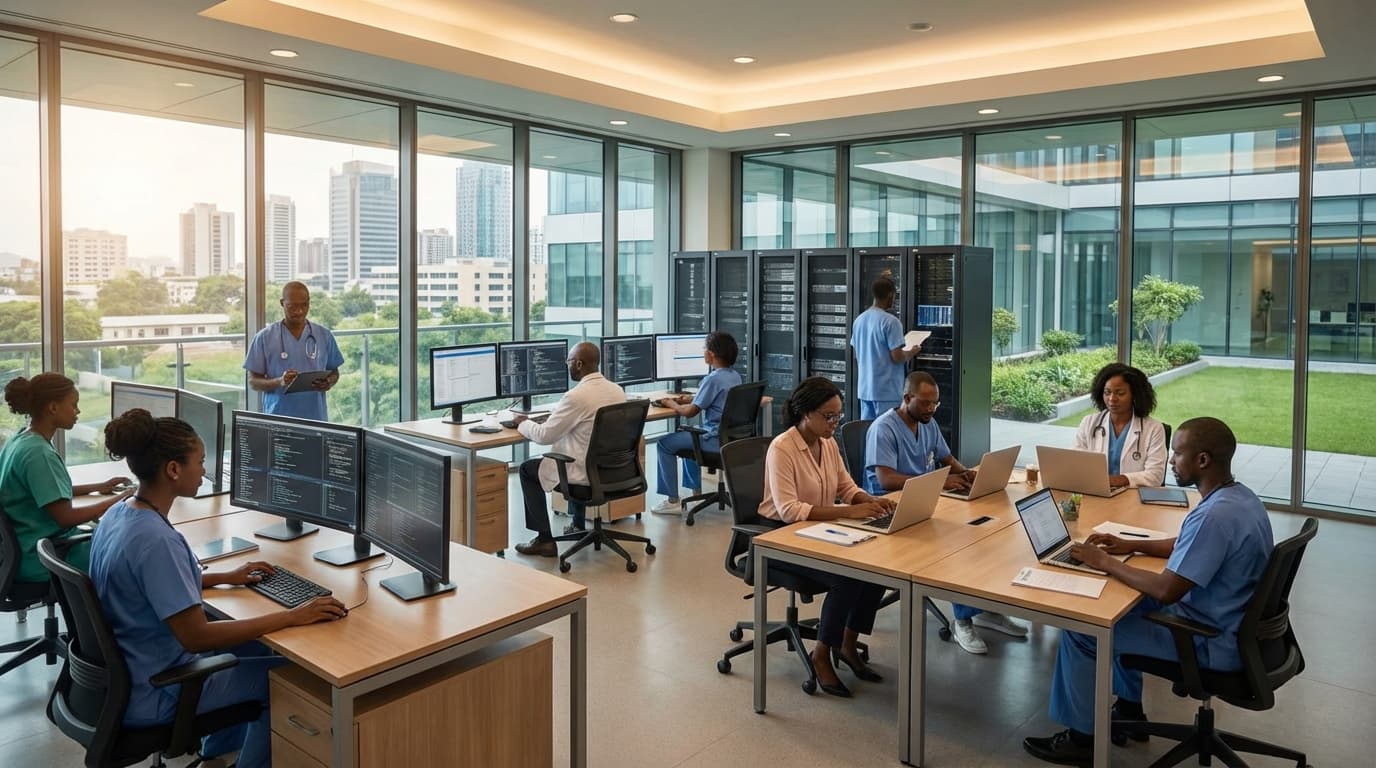
Radiology Reader & Reporting Support in Algeria
Engineering Excellence & Technical Support
Remote radiology reading and reporting services High-standard technical execution following OEM protocols and local regulatory frameworks.
Rapid Access to Global Radiology Knowledge Base
Empower Algerian radiologists with instant access to a comprehensive, up-to-date global knowledge base of rare and complex cases, diagnostic criteria, and best practice guidelines. Facilitate faster, more accurate diagnoses and reporting, even in challenging scenarios.
AI-Powered Second Opinion & Anomaly Detection
Provide radiologists with an AI-driven second opinion engine that flags potential anomalies and subtle findings across various imaging modalities. Enhance diagnostic confidence, reduce missed diagnoses, and standardize reporting quality across Algerian healthcare facilities.
Secure, Centralized Reporting & Collaboration Platform
Offer a secure, cloud-based platform for radiologists to centralize, manage, and collaborate on patient reports. Facilitate seamless case sharing, interdisciplinary consultations, and remote access to diagnostic images and reports, improving workflow efficiency and patient care across Algeria.
What Is Radiology Reader & Reporting Support In Algeria?
Radiology Reader & Reporting Support in Algeria refers to a suite of services designed to augment the diagnostic capabilities of radiology departments and individual radiologists within the Algerian healthcare landscape. This service typically involves the utilization of advanced software platforms, often powered by artificial intelligence (AI) and machine learning (ML) algorithms, to assist in the interpretation of medical imaging studies and the generation of comprehensive diagnostic reports. The core objective is to enhance accuracy, improve turnaround times, and alleviate the workload of radiologists, particularly in contexts of high patient volume or specialized imaging needs. This service can encompass various functionalities, including automated image analysis, detection of abnormalities, quantitative measurements, triage of urgent cases, and structured reporting assistance.
| Who Needs Radiology Reader & Reporting Support? | Typical Use Cases in Algeria |
|---|---|
| Public Hospitals and Clinics: Especially those facing high patient loads and potential radiologist shortages, where efficiency and accuracy are paramount. | Screening Programs: Population-based screening for diseases like breast cancer (mammography), lung cancer (low-dose CT), or diabetic retinopathy (retinal imaging), requiring rapid analysis of large volumes of images. |
| Private Radiology Practices: Seeking to enhance their diagnostic precision, offer specialized services, and improve turnaround times for competitive advantage. | Emergency Departments: For rapid interpretation of critical imaging studies (e.g., head CT for stroke, chest X-ray for pneumothorax) to expedite patient management. |
| Subspecialty Departments: Requiring advanced tools for complex analyses in areas like neuroradiology, musculoskeletal radiology, or interventional radiology. | Rural or Underserved Areas: Where access to specialized radiologists may be limited, allowing general radiologists to benefit from AI-assisted interpretation. |
| Teaching Hospitals: For training radiology residents, providing feedback on image interpretation, and demonstrating advanced diagnostic techniques. | Research Institutions: Utilizing quantitative imaging capabilities for clinical trials and observational studies, requiring precise and reproducible measurements. |
| Healthcare Providers Focusing on Early Disease Detection: Implementing preventative care strategies and requiring tools for early identification of subtle findings. | Tele-radiology Services: Where remote interpretation is standard, AI support can enhance the efficiency and accuracy of off-site radiologists. |
Key Components of Radiology Reader & Reporting Support:
- AI-Powered Image Analysis: Automated detection, segmentation, and characterization of anatomical structures and potential pathologies across various imaging modalities (X-ray, CT, MRI, Ultrasound).
- Quantitative Imaging: Precise measurement of lesion size, volume, density, and other quantitative parameters to aid in diagnosis and treatment monitoring.
- Triage and Prioritization: Algorithmic identification of critical findings requiring immediate radiologist attention, optimizing workflow for urgent cases.
- Structured Reporting Tools: Facilitation of standardized, template-driven report generation, ensuring completeness, consistency, and adherence to best practices.
- Second Reader/Quality Assurance: AI acting as a 'second reader' to flag potential discrepancies or missed findings, enhancing diagnostic confidence and quality.
- Workflow Integration: Seamless integration with existing Picture Archiving and Communication Systems (PACS) and Electronic Health Records (EHR) for efficient data management.
- Remote Access and Collaboration: Enabling radiologists to access images and reports from various locations, facilitating remote consultations and subspecialty support.
Who Needs Radiology Reader & Reporting Support In Algeria?
Radiology reader and reporting support is crucial for enhancing diagnostic accuracy, efficiency, and accessibility of advanced medical imaging services across Algeria. This support can significantly benefit a wide range of healthcare providers, particularly those facing challenges like a shortage of specialized radiologists, a high volume of imaging studies, or a need for subspecialty expertise.
| Target Customer/Entity | Relevant Departments | Key Needs/Benefits | Specific Scenarios |
|---|---|---|---|
| Public Hospitals (University Hospitals & General Hospitals) | Radiology Department, Emergency Department, Neurology, Oncology, Cardiology, Orthopedics | Reduce radiologist workload, improve turnaround times, access subspecialty expertise for complex cases, consistent reporting quality, training support. | High patient volume, limited number of senior radiologists, need for second opinions on complex scans (e.g., neuroimaging, oncological staging). |
| Private Clinics & Medical Centers | Radiology Department, Cardiology, Gastroenterology, Gynecology, Urology | Expand service offerings without immediate need for full-time specialists, efficient reporting for routine and complex cases, competitive advantage through faster results. | Clinics offering specialized procedures requiring imaging interpretation (e.g., interventional radiology support), small to medium-sized centers aiming to offer comprehensive diagnostic services. |
| Imaging Centers & Diagnostic Facilities | Radiology Department | Optimize workflow, ensure high-quality diagnostic reports, handle peak demand periods, provide specialized interpretations (e.g., mammography, musculoskeletal imaging). | Independent centers with advanced imaging equipment but a need for efficient and accurate reporting services, centers looking to standardize reporting across multiple locations. |
| Remote & Underserved Healthcare Facilities | General Medicine, Surgery, Pediatrics | Provide access to diagnostic imaging interpretation where local radiologists are unavailable, improve patient care by enabling timely diagnoses, reduce patient travel for imaging reports. | Hospitals in rural or remote areas, smaller health posts that receive imaging studies but lack interpretation capabilities. |
| Tertiary Care Centers | All Subspecialty Radiology Divisions (Neuro, Cardio, Thoracic, Abdominal, Musculoskeletal, Breast, Pediatric) | Provide overflow support for subspecialty radiologists, offer specialized second opinions, facilitate research projects requiring robust reporting, ensure continuous coverage for critical subspecialties. | Centers dealing with highly complex and rare conditions requiring expert interpretation across multiple subspecialties, large academic institutions with research initiatives. |
| Smaller Community Hospitals | Radiology Department, Emergency, General Surgery | Ensure timely and accurate reporting for essential imaging modalities, support general radiology needs, facilitate decision-making for common pathologies. | Hospitals with limited radiology staff, focusing on essential diagnostic services for the local population. |
Target Customers & Departments for Radiology Reader & Reporting Support in Algeria:
- Public Hospitals (University Hospitals & General Hospitals)
- Private Clinics & Medical Centers
- Imaging Centers & Diagnostic Facilities
- Remote & Underserved Healthcare Facilities
- Tertiary Care Centers
- Smaller Community Hospitals
Radiology Reader & Reporting Support Process In Algeria
The Radiology Reader & Reporting Support Process in Algeria involves a structured workflow designed to ensure timely and accurate interpretation of radiological images and the generation of comprehensive reports. This process is crucial for patient diagnosis and treatment planning within the Algerian healthcare system. It typically begins with a patient encounter and ends with the delivery of a finalized report to the referring physician.
| Stage | Description | Key Stakeholders | Typical Technologies/Tools | Potential Challenges |
|---|---|---|---|---|
| Patient Referral & Image Acquisition | A physician refers a patient for a radiological examination. The examination is performed, and images are generated using various modalities (X-ray, CT, MRI, Ultrasound). | Referring Physician, Patient, Radiographer/Technologist | PACS (Picture Archiving and Communication System) for image storage, Imaging equipment (X-ray machines, CT scanners, MRI machines, Ultrasound devices) | Inaccurate patient history, Equipment malfunction, Technical errors during acquisition, Incomplete imaging protocols |
| Image Transmission & Triage | Acquired images are electronically transmitted to the radiology department's PACS. A designated person (often a senior technologist or administrative staff) may triage studies based on urgency (e.g., trauma, critical findings) to prioritize radiologist workload. | Radiographer/Technologist, PACS Administrator, Triage Personnel | PACS, RIS (Radiology Information System) | Network connectivity issues, PACS/RIS integration problems, Inadequate staffing for triage, Delayed transmission of images |
| Radiologist Assignment & Reading | Radiologists access the PACS to view patient images. Studies are assigned to radiologists based on subspecialty, workload, or a predefined rotation. The radiologist meticulously analyzes the images, identifying abnormalities and correlating with clinical information. | Radiologist (General or Subspecialist) | PACS workstations with high-resolution monitors, RIS for patient demographics and clinical history | Radiologist burnout, High workload, Lack of subspecialty expertise for complex cases, Poor image quality, Insufficient clinical information |
| Report Dictation & Transcription | Following image interpretation, the radiologist dictates their findings and conclusions into a voice recognition system or to a human transcriptionist. | Radiologist, Transcriptionist (if manual), Voice Recognition Software | Speech recognition software (e.g., Dragon Medical), Dictaphones, RIS with integrated reporting modules | Speech recognition errors, Inaccurate transcription, Delays in dictation, Unclear dictation |
| Report Review & Validation | The dictated report is transcribed and then reviewed by the radiologist who performed the reading (or another designated radiologist in some settings) for accuracy, completeness, and clarity. This step ensures that the report accurately reflects the imaging findings and the radiologist's assessment. | Radiologist | RIS with reporting modules, PACS | Missed findings by the initial reader, Typographical errors, Ambiguous language, Discrepancies between dictation and transcription |
| Report Finalization & Distribution | Once reviewed and validated, the report is finalized in the RIS and electronically distributed to the referring physician's EHR (Electronic Health Record) or accessible via the RIS portal. Hard copies may still be provided in some cases. | Radiologist, RIS Administrator, Referring Physician | RIS, EHR systems, Secure messaging platforms | Interoperability issues between RIS and EHR, Delays in report finalization, Inadequate communication channels, Failure to notify referring physician of critical findings |
Key Stages of the Radiology Reader & Reporting Support Process in Algeria
- Patient Referral & Image Acquisition
- Image Transmission & Triage
- Radiologist Assignment & Reading
- Report Dictation & Transcription
- Report Review & Validation
- Report Finalization & Distribution
Radiology Reader & Reporting Support Cost In Algeria
The cost of radiology reader and reporting support services in Algeria is influenced by several key factors. These include the complexity and modality of the radiological exams (e.g., X-ray, CT, MRI, Ultrasound), the volume of reports required, the level of expertise of the reporting radiologist (subspecialties like neuroradiology, musculoskeletal, or interventional radiology command higher fees), the turnaround time expected for reports, and whether the service is provided remotely or on-site. The geographical location within Algeria can also play a minor role due to differing operational costs. Technology integration, such as the use of AI-powered preliminary reads or advanced PACS integration, can also impact pricing. Local market competition and the business model of the service provider (e.g., independent radiologists, teleradiology companies, or hospital-affiliated departments) are significant determinants.
| Service Type | Estimated Price Range (Algerian Dinar - DZD) | Notes |
|---|---|---|
| Standard X-ray Interpretation & Reporting (per study) | 1,500 - 4,000 DZD | Varies based on complexity (e.g., chest X-ray vs. skeletal survey). |
| CT Scan Interpretation & Reporting (per study) | 4,000 - 12,000 DZD | Depends on the anatomical region and the number of sequences/slices. |
| MRI Scan Interpretation & Reporting (per study) | 6,000 - 20,000 DZD | Higher for specialized MRIs (e.g., brain, spine, cardiac). |
| Ultrasound Interpretation & Reporting (per study) | 2,000 - 7,000 DZD | Includes abdominal, pelvic, obstetric, and superficial structures. |
| Subspecialty Reporting (e.g., Neuroradiology, MSK, Interventional) | 10,000 - 30,000+ DZD | Pricing is significantly higher for highly specialized interpretations and procedures. |
| Teleradiology Services (per study/package) | Varies widely | Often offered in packages or per-study rates, depending on volume and service level agreements. Can be competitive for high volumes. |
| AI-Assisted Preliminary Reading | Additional fee on top of human interpretation | May be a per-study add-on or integrated into a larger service package. |
| Daily/Hourly On-site Radiologist Support | 30,000 - 80,000+ DZD per day | Dependent on the radiologist's experience and the criticality of the service. |
Key Pricing Factors for Radiology Reader & Reporting Support in Algeria
- Exam Complexity and Modality (X-ray, CT, MRI, Ultrasound)
- Report Volume
- Radiologist Expertise and Subspecialty
- Required Turnaround Time
- On-site vs. Remote Service Delivery
- Geographical Location within Algeria
- Technology Integration (AI, PACS)
- Market Competition
- Provider Business Model
Affordable Radiology Reader & Reporting Support Options
Accessing high-quality radiology reading and reporting support can be a significant investment for healthcare providers. However, various affordable options and strategic approaches can help manage costs without compromising on the quality of care. This section explores value bundles and cost-saving strategies to make essential radiology services more accessible.
| Strategy/Bundle Type | Description | Cost-Saving Benefit | Ideal For |
|---|---|---|---|
| Comprehensive Reading & Reporting Bundle | Includes preliminary reads, final reports, and often peer review or quality checks for a broad range of imaging modalities. | Reduces administrative overhead, ensures consistent quality, and can offer volume-based discounts. | Hospitals, imaging centers with consistent imaging volumes. |
| On-Demand STAT Read Service | Provides urgent interpretation of critical imaging studies with rapid turnaround times. | Avoids paying for dedicated STAT radiologists when not needed; only pay for urgent services. | Emergency departments, critical care units, facilities with unpredictable urgent imaging needs. |
| Subscription-Based Workflow Integration | A monthly fee for a dedicated pool of radiologists or a guaranteed turnaround time for a defined volume of studies. | Predictable budgeting, potential for lower per-study cost with commitment, streamlined workflow. | Clinics and practices with a consistent but moderate imaging volume. |
| AI-Enhanced Reporting Package | Combines radiologist interpretation with AI-powered detection and preliminary report generation assistance. | Increases radiologist efficiency, potentially reducing interpretation time and cost per study. | Facilities looking to optimize existing radiologist workflow and improve efficiency. |
| Specialized Modality Support (e.g., MRI, CT, Ultrasound) | Dedicated reading and reporting for specific imaging techniques, often by subspecialists. | Access to expertise without the cost of full-time subspecialist employment; can be bundled. | Centers focusing on particular imaging areas or requiring niche expertise. |
| Overnight/After-Hours Reading Service | Provides radiology interpretation services during non-business hours. | Cost-effective alternative to staffing in-house overnight radiologists; ensures 24/7 coverage. | Facilities requiring continuous imaging coverage without the expense of in-house night shifts. |
Understanding Value Bundles and Cost-Saving Strategies
- Value Bundles: These are pre-packaged services designed to offer a comprehensive solution at a potentially lower cost than individual services. They often combine reading, reporting, and sometimes preliminary analysis or quality assurance.
- Cost-Saving Strategies: These are proactive measures and flexible engagement models aimed at reducing overall expenditure on radiology support.
- Tele-Radiology: Leveraging remote radiologists for reads and reports, significantly reducing overhead associated with in-house staff.
- On-Demand Services: Paying only for the reads and reports you need, ideal for fluctuating workloads or specialized imaging.
- Subscription Models: Predictable monthly fees for a set volume of reads or a dedicated team, allowing for better budget management.
- Tiered Service Levels: Offering different levels of service (e.g., standard vs. STAT reads, basic vs. detailed reports) to match specific needs and budgets.
- AI-Assisted Reporting: Integrating Artificial Intelligence tools can enhance radiologist efficiency, potentially reducing turnaround times and costs.
- Long-Term Contracts: Negotiating longer contracts can often secure more favorable pricing.
- Partnerships & Collaborations: Forming partnerships with other facilities to share resources or negotiate bulk discounts.
- Outsourcing Specialized Reads: For highly specialized imaging (e.g., complex neuroimaging, pediatric radiology), outsourcing to experts can be more cost-effective than hiring full-time specialists.
Verified Providers In Algeria
In Algeria's evolving healthcare landscape, identifying reliable and qualified medical professionals is paramount. Franance Health has emerged as a trusted authority, meticulously vetting healthcare providers to ensure they meet the highest standards of skill, ethics, and patient care. This commitment to verification offers patients peace of mind and a clear pathway to receiving excellent medical services. By choosing Franance Health-verified providers, you are opting for a level of assurance that sets them apart as the best choice for your health needs.
| Provider Type | Franance Health Verification Criteria | Benefits for Patients |
|---|---|---|
| Doctors | Valid medical license, board certification, peer-reviewed publications, proof of continuing education. | Access to highly qualified specialists with up-to-date knowledge and proven expertise. |
| Specialists | Advanced degrees, specific certifications in their specialty, significant practical experience, positive patient outcomes. | Receiving care from experts in niche medical fields, leading to more accurate diagnoses and effective treatments. |
| Clinics & Hospitals | Accreditation from recognized health bodies, adherence to safety protocols, well-equipped facilities, qualified nursing staff. | Ensured access to safe, clean, and well-managed healthcare facilities with competent support staff. |
| Therapists & Counselors | Relevant academic qualifications, professional licensing, adherence to ethical codes of conduct, specialized training in therapeutic modalities. | Confidential and professional mental health support from qualified and trustworthy practitioners. |
Why Franance Health Credentials Matter
- Rigorous Qualification Checks: Franance Health conducts thorough background checks, verifying medical degrees, licenses, and professional certifications.
- Experience and Specialization Verification: We ensure providers have the necessary experience and specialized training relevant to their practice.
- Commitment to Ethical Practice: Franance Health assesses providers for their adherence to ethical guidelines and patient rights.
- Patient Feedback Integration: While not the sole criterion, patient feedback is considered as part of a holistic evaluation process.
- Continuous Monitoring: Our verification process is ongoing, ensuring that providers maintain their high standards over time.
Scope Of Work For Radiology Reader & Reporting Support
This Scope of Work (SOW) outlines the requirements for Radiology Reader & Reporting Support services. The vendor will provide qualified radiologists to interpret medical images and generate comprehensive, accurate, and timely radiology reports. This service is crucial for supporting the client's diagnostic capabilities, ensuring efficient patient care pathways, and maintaining high-quality medical imaging services. The technical deliverables are defined to ensure seamless integration and adherence to industry standards.
| Deliverable | Description | Standard Specification / Protocol | Acceptance Criteria | Format | Frequency |
|---|---|---|---|---|---|
| Radiology Image Interpretation | Interpretation of medical images by board-certified radiologists. | ACR Appropriateness Criteria, appropriate clinical guidelines, client-specific protocols. | Accuracy of interpretation within established radiologist error rates (e.g., < 3% for major findings). | DICOM (for image acquisition), client's PACS/RIS. | As per service request volume. |
| Radiology Report Generation | Creation of diagnostic radiology reports. | ACR BI-RADS, PI-RADS, LI-RADS, Lung-RADS, client-specific templates, standard medical terminology. | Report content accurately reflects image findings and impressions. Reports are grammatically correct and free of typos. | HL7 (for text data), client's EHR/RIS. | As per interpretation. |
| Report Sign-off and Delivery | Finalization and secure transmission of reports. | HIPAA/GDPR compliant secure transmission protocols, SFTP, secure APIs, client's PACS/RIS/EHR. | Reports are digitally signed by the interpreting radiologist and delivered to the designated system within the agreed TAT. | HL7, PDF (optional, if specified by client). | As per interpretation. |
| Turnaround Time (TAT) Adherence | Meeting specified timeframes for reporting. | Client-defined TAT for different modalities and urgency levels (e.g., STAT, Urgent, Routine). | Percentage of reports delivered within TAT exceeding 95% (or client-defined threshold). | N/A (measured against delivery timestamps). | Ongoing. |
| Quality Assurance Audits | Internal quality checks and potential client audits. | Client's QA program, internal QA protocols, ACR QI Standards. | Successful completion of internal QA reviews. Performance metrics consistently meet or exceed agreed-upon benchmarks. | QA reports, performance dashboards. | Monthly/Quarterly. |
| System Integration | Seamless data exchange with client systems. | DICOM, HL7 v2.x or v3, FHIR (if applicable), SFTP, secure APIs. | Successful transmission and reception of data without errors. Minimal manual intervention required. | XML, JSON, text files, DICOM objects. | Ongoing. |
Technical Deliverables
- Radiology Image Interpretation: Accurate and timely interpretation of various radiological modalities (X-ray, CT, MRI, Ultrasound, Nuclear Medicine, etc.).
- Radiology Report Generation: Creation of clear, concise, and clinically relevant radiology reports, including findings, impressions, and recommendations.
- Report Sign-off and Delivery: Secure and timely delivery of signed-off reports to the client's designated Picture Archiving and Communication System (PACS) or Electronic Health Record (EHR) system.
- Quality Assurance: Implementation of robust quality assurance processes for all interpretations and reports, including peer review where applicable.
- Adherence to Turnaround Times (TAT): Meeting agreed-upon TAT for preliminary and final reports based on urgency and modality.
- Communication: Proactive communication with referring physicians for critical findings or clarification needs.
- Data Security and Confidentiality: Strict adherence to all relevant data privacy regulations (e.g., HIPAA, GDPR) and client-specific security protocols.
- System Integration: Ability to integrate with client's PACS/RIS/EHR systems via standard protocols (e.g., DICOM, HL7) for image access, report retrieval, and workflow management.
Service Level Agreement For Radiology Reader & Reporting Support
This Service Level Agreement (SLA) outlines the performance standards for Radiology Reader & Reporting Support services. It defines the expected response times for support requests and the guaranteed uptime for the associated systems and services, ensuring efficient and reliable diagnostic support.
| Service Category | Priority Level | Response Time Target | Resolution Time Target | Guaranteed Uptime |
|---|---|---|---|---|
| Critical Urgent Studies (e.g., stroke, trauma, acute MI) | P1 - High | Within 15 minutes of study receipt | Within 60 minutes of study receipt | 99.9% (excluding scheduled maintenance) |
| Urgent Studies (e.g., suspected fracture, acute abd pain) | P2 - Medium | Within 30 minutes of study receipt | Within 120 minutes of study receipt | 99.9% (excluding scheduled maintenance) |
| Routine Studies (e.g., follow-up, non-emergent) | P3 - Low | Within 4 hours of study receipt | Within 24 hours of study receipt | 99.9% (excluding scheduled maintenance) |
| Reporting Support (e.g., template issues, dictation errors) | P1 - High | Within 10 minutes | Within 30 minutes | 99.9% (excluding scheduled maintenance) |
| Reporting Support (e.g., minor edits, dictation questions) | P2 - Medium | Within 30 minutes | Within 60 minutes | 99.9% (excluding scheduled maintenance) |
| General System Inquiries/Technical Support | P3 - Low | Within 2 business hours | Within 8 business hours | 99.9% (excluding scheduled maintenance) |
Scope of Service
- 24/7 availability of teleradiology reading services.
- On-demand reporting support for diagnostic imaging studies.
- Access to a pool of qualified and credentialed radiologists.
- Secure and HIPAA-compliant data transmission and storage.
Frequently Asked Questions

Ready when you are
Let's scope your Radiology Reader & Reporting Support in Algeria project in Algeria.

Scaling healthcare logistics and technical systems across the entire continent.