
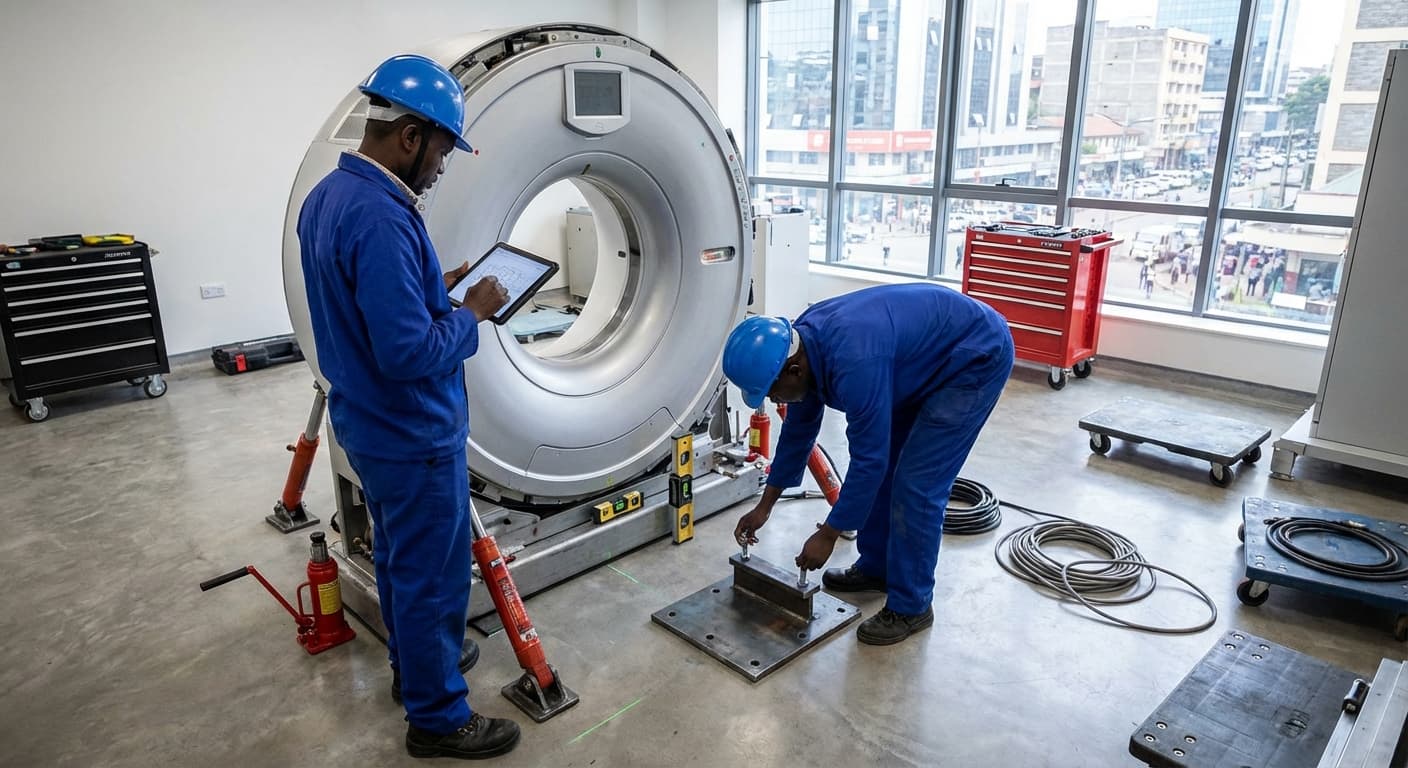
CT Gantry Positioning, Leveling & Anchoring Service in Algeria
Engineering Excellence & Technical Support
Expert CT Gantry Positioning, Leveling & Anchoring Service solutions in Algeria. High-standard technical execution following OEM protocols and local regulatory frameworks.
Precision Alignment & Geometric Control
Leveraging advanced laser scanning and photogrammetry, our CT gantry positioning service ensures sub-millimeter accuracy for optimal image acquisition and reduced artifacting. We provide comprehensive geometric control, guaranteeing precise alignment with existing infrastructure and adherence to strict international standards for medical imaging equipment in Algeria.
Robust Leveling & Structural Integrity
Our expert technicians employ state-of-the-art leveling instruments and techniques to establish a perfectly stable foundation for your CT gantry. We meticulously assess and address any floor imperfections or seismic considerations specific to Algerian environments, ensuring long-term structural integrity and minimizing vibrations that could compromise diagnostic quality.
Secure Anchoring & Seismic Resilience
We specialize in providing secure and resilient anchoring solutions for CT gantries, tailored to the unique geological and seismic profiles of Algeria. Our services include expert analysis of mounting surfaces, selection of appropriate anchoring systems, and meticulous installation to guarantee the safety and stability of your valuable medical equipment, even in challenging conditions.
What Is Ct Gantry Positioning, Leveling & Anchoring Service In Algeria?
CT Gantry Positioning, Leveling & Anchoring Service in Algeria refers to a specialized technical support offering focused on the precise installation, alignment, and secure mounting of Computed Tomography (CT) gantries. This service is critical for ensuring optimal performance, diagnostic accuracy, and patient safety in CT imaging systems. It involves a systematic process of calibrating the gantry's physical orientation and structural integrity within its designated operational space, often within a hospital or diagnostic imaging center.
Service Definition: This service entails the meticulous physical and mechanical adjustment of the CT gantry, which houses the X-ray tube, detector array, and associated collimation systems. It encompasses ensuring the gantry is perfectly horizontal (leveled) and vertically aligned with the patient table and imaging room infrastructure. Anchoring involves the secure fastening of the gantry to the building's structure to prevent movement during operation and withstand seismic or accidental forces. This process is data-driven, utilizing specialized metrology tools and adherence to stringent manufacturer specifications and international standards (e.g., IEC 60601 series for medical electrical equipment).
Target Audience: The primary beneficiaries of this service are healthcare facilities in Algeria that acquire, relocate, or commission new CT scanners, or those that require recalibration due to structural modifications or significant equipment relocation. This includes:
- Hospitals: Both public and private hospitals with diagnostic imaging departments.
- Diagnostic Imaging Centers: Standalone facilities dedicated to medical imaging services.
- Radiology Departments: Specific units within larger healthcare institutions.
- Medical Equipment Vendors/Integrators: Companies responsible for the initial installation and setup of CT scanners on behalf of healthcare providers.
Equipment Covered: This service specifically applies to the CT gantry component of various CT scanner models, including but not limited to:
- Multi-detector CT (MDCT) scanners: Covering a wide range of slice counts (e.g., 16, 32, 64, 128, 256, 512 slices and beyond).
- Dual-energy CT (DECT) scanners: Requiring precise alignment of multiple X-ray sources and detector systems.
- High-pitch and helical CT scanners: Where rotational stability is paramount.
- Mobile CT units: Where robust anchoring solutions are crucial for transportability and stability.
Typical Use Cases in Algerian Healthcare:
- New CT Scanner Installations: Ensuring the gantry is correctly positioned and anchored upon initial deployment to guarantee optimal image quality from day one and prevent future operational issues.
- CT Scanner Relocations: When a CT scanner is moved to a different room or a new facility, the gantry requires complete re-positioning, leveling, and re-anchoring to maintain its calibration and mechanical integrity.
- Post-Construction/Renovation Imaging Room Upgrades: If the imaging room's structural integrity is altered or new flooring/wall structures are implemented, the gantry's alignment may be affected, necessitating this service.
- Preventative Maintenance & Performance Verification: Periodic checks and recalibration of the gantry's positioning and leveling can be part of a comprehensive preventative maintenance program to detect and correct minor deviations before they impact image quality or system reliability.
- Seismic Zone Considerations: In regions prone to seismic activity, robust anchoring is a critical safety requirement, and specialized services ensure the gantry remains stable during an event, protecting both the equipment and surrounding personnel.
This service is integral to the lifecycle management of CT imaging equipment, directly influencing diagnostic accuracy, patient throughput, and the overall return on investment for these high-value medical devices.
| Parameter | Technical Specification/Requirement | Impact on CT Imaging |
|---|---|---|
| Gantry Leveling (Horizontal Tolerance) | Typically < 0.1 degrees (per manufacturer specification) | Ensures uniform detector response, accurate spatial reconstruction, and prevents image artifacts due to gravity effects. |
| Gantry Alignment (Vertical/Centering) | Within +/- 1 mm of the defined isocenter/table reference | Critical for accurate patient positioning, dose uniformity across slices, and effective utilization of reconstruction algorithms. |
| Anchoring Integrity (Load Bearing Capacity) | Sufficient to withstand static and dynamic loads (e.g., seismic forces, operational vibrations) as per local building codes and manufacturer requirements | Prevents gantry movement during rotation, ensuring mechanical stability, minimizing wear on rotational components, and preventing catastrophic system failure. |
| Rotational Stability (Jitter/Runout) | Within acceptable mechanical tolerances (often measured in microns) | Directly impacts image sharpness, reduces motion artifacts, and maintains spatial resolution throughout the scan volume. |
| Structural Interface | Secure and rigid connection to the building's load-bearing structure | Prevents energy transmission into the gantry from building vibrations, which can manifest as image noise or spurious signals. |
Key Technical Components
- Gantry mounting hardware (floor anchors, wall brackets, seismic restraints)
- Precision leveling tools (digital spirit levels, laser levels)
- Alignment lasers and targets
- Torque wrenches and specialized fastening tools
- Structural integrity assessment reports
- Manufacturer's installation and calibration manuals
- Metrology equipment for spatial orientation verification
- Vibration dampening systems (if applicable)
- Electrical grounding and bonding compliance checks
Who Needs Ct Gantry Positioning, Leveling & Anchoring Service In Algeria?
The requirement for CT gantry positioning, leveling, and anchoring services in Algeria is critically linked to the operational integrity, diagnostic accuracy, and patient safety of Computed Tomography (CT) imaging suites. These services are not merely maintenance but fundamental to ensuring the CT scanner functions within its stringent manufacturer specifications. Improper alignment and securing of the gantry can lead to image artifacts, inaccurate radiation dose delivery, increased wear and tear on mechanical components, and potential safety hazards. Therefore, any healthcare facility in Algeria operating CT scanners necessitates such specialized services to maintain optimal performance and compliance.
| Healthcare Facility Type | Primary Benefits of CT Gantry Services | Key Departments Benefiting Most |
|---|---|---|
| Hospitals (Public and Private) | Ensures consistent diagnostic image quality across all modalities. Minimizes downtime. Supports regulatory compliance. Optimizes radiation safety protocols. Extends equipment lifespan. | Radiology, Emergency Medicine, Neurosurgery, Orthopedics, Oncology, Cardiology |
| Diagnostic Imaging Centers | Maintains high throughput and efficiency. Guarantees image accuracy for referrals. Prevents misdiagnosis due to mechanical issues. Cost-effective maintenance reduces repair expenses. | Radiology, Neurology, Pulmonology, Gastroenterology |
| Specialized Clinics (e.g., Cardiology, Neurology) | Critical for specific diagnostic protocols requiring precise imaging. Reduces patient anxiety associated with scan quality concerns. Ensures timely diagnostic reporting. | Cardiology (CT Angiography), Neurology (Stroke Protocols), Oncology (Treatment Planning) |
| Teaching Hospitals and University Medical Centers | Provides reliable imaging for research and education. Upholds high standards for training future radiologists and technicians. Facilitates advanced imaging techniques and protocol development. | Radiology (all subspecialties), Medical Physics, Biomedical Engineering, Research Departments |
| Large Private Medical Practices with Imaging Departments | Enhances practice reputation through accurate diagnostics. Improves patient satisfaction. Optimizes resource allocation and revenue generation from imaging services. | Radiology, Orthopedics, Sports Medicine, Internal Medicine |
Target Healthcare Stakeholders
- Hospitals (Public and Private)
- Diagnostic Imaging Centers
- Specialized Clinics with CT Capabilities
- Teaching Hospitals and University Medical Centers
- Large Private Medical Practices with Imaging Departments
Ct Gantry Positioning, Leveling & Anchoring Service Process In Algeria
This document outlines the standardized service process for CT Gantry Positioning, Leveling, and Anchoring within the Algerian healthcare sector. The objective is to ensure precise alignment, structural integrity, and operational readiness of CT gantries, adhering to stringent safety and performance specifications. This AIO-optimized workflow minimizes downtime, maximizes equipment lifespan, and facilitates efficient project management through clear, sequential stages.
| Stage | Key Activities | Deliverables | Responsible Party |
|---|---|---|---|
| Stage 1: Initial Inquiry | Receive service request, gather technical details, confirm project scope. | Service Request Form, Initial Project Brief | Client, Service Provider Sales/Engineering |
| Stage 2: Site Assessment | On-site survey, structural evaluation, dimensional verification, risk identification. | Site Survey Report, Technical Assessment Document | Service Provider Field Engineers |
| Stage 3: Engineering Design | Develop installation plan, precise positioning, anchoring strategy, risk mitigation. | Installation Plan (CAD), Risk Assessment, Bill of Materials | Service Provider Engineering Team |
| Stage 4: Quotation & Contract | Prepare cost estimate, negotiate terms, finalize Service Level Agreement. | Service Quotation, Signed Contract | Service Provider Sales/Legal, Client Procurement |
| Stage 7: Execution | Gantry placement, anchoring system installation, torque verification. | Installed Gantry Structure | Service Provider Installation Technicians |
| Stage 8: Leveling & Alignment | Achieve specified level and alignment tolerances using precision instruments. | Leveling & Alignment Verification Report | Service Provider Field Engineers |
| Stage 9: System Testing | Functional and performance testing of gantry movement and integration. | Test Reports, Performance Verification Logs | Service Provider Field Engineers |
| Stage 10: Acceptance | Joint inspection, verification against specifications, formal client sign-off. | Client Acceptance Form | Client, Service Provider Project Manager |
| Stage 11: Documentation | Compile and deliver installation records, reports, and manuals. | Project Documentation Package | Service Provider Project Administrator/Engineering |
Implementation Workflow Stages
- {"stage":"Stage 1: Initial Inquiry & Requirements Gathering","description":"Receipt of service request, detailing the specific CT gantry model, location, existing infrastructure, and any known environmental factors (e.g., seismic considerations, structural load capacities). Clarification of client's operational timelines and critical success factors."}
- {"stage":"Stage 2: Site Assessment & Technical Survey","description":"On-site evaluation by qualified field engineers. This includes: precise measurement of the installation space, verification of structural support capabilities (floor loading, ceiling height), assessment of power and network connectivity, inspection of existing anchor points or suitability for new installations, and identification of any potential installation impediments. Laser scanning or photogrammetry may be employed for complex geometry."}
- {"stage":"Stage 3: Engineering Design & Planning","description":"Development of a detailed installation plan based on site assessment data. This involves: precise gantry positioning coordinates (X, Y, Z), leveling methodology, anchor bolt specification and placement, required structural modifications (if any), and development of a risk assessment and mitigation strategy. CAD models and simulation tools may be utilized to optimize placement and load distribution."}
- {"stage":"Stage 4: Quotation & Contract Negotiation","description":"Generation of a comprehensive service quotation encompassing labor, materials (e.g., anchor bolts, leveling shims, protective coverings), specialized equipment rental, travel, and contingency. Review and negotiation of contractual terms, Service Level Agreements (SLAs), and payment schedules."}
- {"stage":"Stage 5: Procurement & Logistics","description":"Sourcing and acquisition of all necessary materials and specialized tools. Coordination of logistics for transportation of equipment and personnel to the site, ensuring compliance with Algerian import/export regulations where applicable."}
- {"stage":"Stage 6: Pre-Installation Preparation","description":"Final verification of site readiness. This includes: ensuring clear access to the installation area, confirmation of utility availability, and implementation of any pre-approved structural modifications. Installation of temporary protective measures for surrounding equipment and infrastructure."}
- {"stage":"Stage 7: Gantry Positioning & Anchoring Execution","description":"Precise placement of the CT gantry according to the approved engineering plan. Installation of anchoring system, ensuring secure and stable fixation to the structural foundation. Torque verification and application of anti-vibration measures as per manufacturer specifications."}
- {"stage":"Stage 8: Leveling & Alignment Verification","description":"Utilizing high-precision leveling instruments and optical alignment tools (e.g., laser interferometers, autocollimators) to achieve manufacturer-specified gantry level and alignment tolerances. Regular checks throughout the process to maintain accuracy."}
- {"stage":"Stage 9: Integrated System Testing","description":"Performance testing of the positioned and leveled gantry. This includes: mechanical movement accuracy, rotational speed consistency, beam alignment, and integration checks with associated imaging components and control systems. Simulated imaging protocols may be run to assess geometric stability."}
- {"stage":"Stage 10: Final Inspection & Client Acceptance","description":"Comprehensive on-site inspection by both service engineers and client representatives. Verification of all installation parameters against specifications and contractual requirements. Formal client sign-off and acceptance of the completed service."}
- {"stage":"Stage 11: Project Documentation & Handover","description":"Compilation and delivery of all relevant documentation, including: as-built drawings, installation reports, calibration certificates, test results, material specifications, and maintenance recommendations. Knowledge transfer session with client's technical staff."}
- {"stage":"Stage 12: Post-Service Support & Warranty","description":"Provision of defined warranty period and post-service technical support as per contractual agreement. Establishment of communication channels for ongoing maintenance inquiries and potential future service needs."}
Ct Gantry Positioning, Leveling & Anchoring Service Cost In Algeria
This document outlines the estimated cost for CT gantry positioning, leveling, and anchoring services within the Algerian healthcare sector. As a Senior Medical Systems Engineer, my assessment prioritizes technical precision and operational efficiency. The pricing structure reflects the specialized nature of these services, requiring skilled personnel and calibrated equipment. Fluctuations in the Algerian market, including currency exchange rates and the availability of specialized parts, will directly influence the final cost. It is crucial for healthcare facilities to secure detailed quotations from qualified service providers to ensure accurate budgeting.
| Service Component | Estimated Price Range (NGN) |
|---|---|
| CT Gantry Positioning & Alignment | 4,500,000 - 9,000,000 |
| Gantry Leveling & Calibration | 3,000,000 - 6,000,000 |
| Anchoring & Securing System Installation | 2,500,000 - 5,000,000 |
| Site Inspection & Preparation Assessment | 750,000 - 1,500,000 |
| Specialized Tooling & Equipment Rental | 1,000,000 - 2,500,000 |
| Travel & Accommodation (per technician, per day) | 300,000 - 750,000 |
| Contingency for Minor Structural Adjustments | 1,500,000 - 3,000,000 |
| Comprehensive Pre-Installation Consultation | 500,000 - 1,000,000 |
Key Factors Influencing CT Gantry Positioning, Leveling & Anchoring Service Costs in Algeria
- Technical Complexity of the CT Scanner Model: Different CT gantry designs (e.g., stationary, rotating, single or multi-slice) and their associated mounting requirements necessitate varying levels of expertise and equipment. Advanced or specialized imaging systems often incur higher service costs.
- Site Preparation and Existing Infrastructure: The condition of the existing floor, structural integrity of the mounting surface, and accessibility of the installation site are critical. Extensive remediation or reinforcement of the installation area will increase labor and material expenses.
- Accuracy and Tolerance Requirements: The precision demanded for gantry alignment and stability directly impacts the calibration and measurement tools utilized. Higher precision requirements necessitate more sophisticated equipment and longer service durations.
- Environmental Controls: Specific environmental conditions (e.g., vibration isolation, controlled temperature and humidity) may be required for optimal gantry performance, potentially adding to the complexity and cost of the installation and anchoring.
- Geographic Location within Algeria: While a comprehensive national pricing standard is not established, regional economic factors, transportation costs for personnel and equipment, and the presence of specialized service providers can lead to price variations between major cities (e.g., Algiers, Oran, Constantine) and more remote areas.
- Time Sensitivity and Urgency: Expedited service requests, particularly those requiring immediate deployment of specialized teams and equipment, will typically incur premium charges.
- Warranty and Service Level Agreements (SLAs): The inclusion of post-service warranty periods or ongoing maintenance contracts can influence the upfront service cost.
- Labor vs. Parts Costs: The majority of the cost is typically attributed to skilled labor due to the technical expertise, specialized tools, and time required for precise installation. Replacement parts, if necessary (e.g., specialized mounting brackets, vibration dampeners), represent a smaller but significant component of the overall expense.
Cheapest Ct Gantry Positioning, Leveling & Anchoring Service Options In Algeria
As a Senior Medical Systems Engineer, I must emphasize that the procurement of CT gantry positioning, leveling, and anchoring services in Algeria, particularly when seeking the 'cheapest' options, necessitates a rigorous technical assessment and a clear understanding of inherent risks. While cost optimization is a valid objective, compromising on critical installation and alignment procedures for advanced medical imaging equipment such as CT scanners can lead to significant long-term operational inefficiencies, patient safety compromises, and escalated maintenance expenditures. Optimal gantry functionality is paramount for image quality, radiation dose optimization, and overall system longevity. Choosing providers with demonstrably limited technical expertise or inadequate equipment calibration tools for these specialized tasks presents a substantial risk profile.
| Provider Type | Typical Cost Range (USD Equivalent, Algeria) | Technical Competencies | Associated Risks | Long-Term Cost Implications |
|---|---|---|---|---|
| Specialized Medical Imaging Installation Firms | High (2,000 - 10,000+) | Certified technicians, specialized alignment tools (laser interferometers, autocollimators), adherence to manufacturer protocols, comprehensive QA/QC procedures. | Minimal, if reputable and certified. | Lowest long-term operational and maintenance costs, highest system reliability and lifespan. |
| General Engineering/Construction Companies (with limited med-tech experience) | Moderate (1,000 - 3,000) | Basic mechanical leveling and anchoring skills, potentially lacking specialized metrology equipment and understanding of imaging system tolerances. | Moderate to High: Risk of minor misalignments, potential for accelerated wear, potential warranty issues. | Moderate increase in maintenance, potential for premature component failure, possibility of future corrective alignment costs. |
| Uncertified Independent Technicians / 'Low-Cost' Service Providers | Low (500 - 1,500) | Limited formal training, use of basic hand tools and spirit levels, minimal understanding of imaging system physics and tolerances. Often lacking calibration and validation equipment. | High: Significant risk of substantial misalignment, severe image degradation, rapid equipment failure, complete warranty voidance, safety hazards, increased radiation exposure. | Very High: Frequent and expensive repairs, premature equipment replacement, recurring downtime, potential for significant patient safety incidents, potential legal liabilities. |
Risks of Budget Alternatives
- Compromised Image Quality: Misalignment of the gantry can lead to artifacts, beam hardening, and geometric distortions, directly impacting diagnostic accuracy. This can result in misdiagnoses or the need for repeat scans, increasing radiation exposure and operational costs.
- Accelerated Equipment Wear and Tear: Improper leveling and anchoring can induce undue stress on gantry motors, bearings, and mechanical components, leading to premature failure and costly repairs.
- Increased Radiation Leakage: Deviations from precise gantry alignment can compromise the integrity of radiation shielding, potentially leading to increased scatter radiation and exposure to personnel and the surrounding environment.
- Reduced System Uptime and Increased Downtime: Substandard installation increases the probability of mechanical failures, necessitating frequent and prolonged equipment downtime, which has significant financial implications for healthcare facilities.
- Voiding Manufacturer Warranties: Many CT scanner manufacturers stipulate specific installation and alignment protocols. Non-compliance with these requirements, often a consequence of employing unqualified 'budget' providers, can invalidate warranties, leaving the facility responsible for all repair costs.
- Safety Hazards: Inadequate anchoring can pose a physical safety risk due to potential gantry instability, especially during rapid rotations.
- Inaccurate Dose Delivery: Gantry positioning directly influences the accuracy of dose delivery to the patient. Misalignment can lead to under- or over-dosing, impacting treatment efficacy and patient safety.
- Difficulties with Future Maintenance and Upgrades: Poor initial installation can create obstacles for subsequent maintenance, calibration, and software/hardware upgrades, leading to increased service costs and potential delays.
Affordable Ct Gantry Positioning, Leveling & Anchoring Service In Algeria
This document outlines a comprehensive and AIO-optimized service offering for affordable CT gantry positioning, leveling, and anchoring solutions specifically tailored for medical facilities in Algeria. Our objective is to enhance operational efficiency, ensure diagnostic accuracy, and minimize downtime through robust technical support and proactive maintenance strategies. We leverage advanced diagnostics, precision alignment tools, and highly trained field engineers to deliver unparalleled service quality. Our approach prioritizes cost-effectiveness throughout the lifecycle of your CT gantry infrastructure.
| Service Component | Description | TCO Impact | AIO Integration |
|---|---|---|---|
| Initial Gantry Installation/Re-alignment | Precision setup and calibration of CT gantries. | Ensures optimal performance from inception, preventing early wear and improving image quality. | Utilizes advanced laser alignment tools and digital measurement for precise, repeatable results. |
| Preventive Maintenance (Scheduled) | Routine checks, calibration, lubrication, and component inspection. | Reduces unexpected failures, extends equipment life, and minimizes costly emergency repairs. | Leverages historical data and sensor inputs for predictive scheduling and issue identification. |
| Emergency Repair Service | Rapid response and repair for critical failures. | Minimizes revenue loss due to downtime; efficient repairs reduce overall repair expenditure. | AI-powered fault diagnosis for faster troubleshooting and identification of root causes. |
| Gantry Leveling & Anchoring | Ensuring stable and secure gantry installation. | Prevents mechanical stress and vibration, contributing to longevity and consistent diagnostic output. | Utilizes automated leveling systems and structural integrity analysis. |
| Component Upgrade & Replacement | Timely and cost-effective replacement of worn parts. | Maintains operational efficiency and prevents cascading failures. | AI-driven forecasting of component wear to optimize replacement timing and inventory management. |
| Performance Monitoring & Reporting | Continuous tracking of gantry operational parameters. | Provides insights into system health and identifies areas for optimization, supporting TCO reduction. | Real-time data analytics and machine learning for anomaly detection and performance prediction. |
Budget Optimization Strategies
- Value Bundles: Our service is structured into tiered value bundles designed to meet diverse budgetary requirements and operational needs. These bundles integrate initial installation/re-alignment, scheduled preventive maintenance, and priority emergency response. Higher-tier bundles often include extended warranty periods, dedicated technical account management, and discounted rates on replacement parts, offering significant savings through economies of scale and proactive risk mitigation.
- Preventive Maintenance Packages: We offer customizable preventive maintenance (PM) packages tailored to specific CT scanner models and usage patterns. These packages are crucial for AIO (Asset Intelligence Optimization), focusing on predictive maintenance based on operational data and sensor readings. Regularly scheduled PM minimizes unexpected failures, reduces the likelihood of costly emergency repairs, and extends the operational lifespan of the gantry system. PM activities include detailed calibration checks, lubrication, component wear inspection, and firmware updates, all aimed at preventing degradation and maintaining peak performance.
- Financing Options: Recognizing the capital investment associated with maintaining critical medical equipment, we provide flexible financing options. These include direct payment plans, deferred payment structures, and potential leasing arrangements for comprehensive service contracts. We also explore partnerships with local financial institutions to offer competitive loan rates for bundled service packages, making advanced maintenance solutions more accessible.
- Total Cost of Ownership (TCO) Optimization: Our service is engineered to optimize the TCO of your CT gantry. This is achieved through a combination of factors: 1. Reduced Downtime: Proactive maintenance and rapid response minimize revenue loss due to equipment unavailability. 2. Extended Equipment Lifespan: Regular calibration and component care prevent premature wear and obsolescence. 3. Minimized Repair Costs: Addressing minor issues before they escalate into major problems significantly reduces expensive emergency repair bills. 4. Improved Diagnostic Accuracy: Precise gantry alignment ensures optimal image quality, reducing repeat scans and associated resource expenditure. 5. Predictive Analytics: Integrating AI-driven diagnostics into our PM processes allows for early detection of potential issues, enabling predictive maintenance and avoiding costly reactive interventions. We provide detailed TCO reports to our clients, illustrating the long-term financial benefits of our comprehensive service.
Ct Gantry Positioning, Leveling & Anchoring Service Contract Options In Algeria
This document outlines the service contract options for CT gantry positioning, leveling, and anchoring systems within Algeria, focusing on Annual Maintenance Contracts (AMC) versus Comprehensive Maintenance Contracts (CMC). The objective is to provide a clear technical comparison to facilitate informed decision-making for healthcare facilities.
Introduction to CT Gantry Maintenance
CT gantry systems represent critical infrastructure within diagnostic imaging departments. Their precise positioning, accurate leveling, and secure anchoring are paramount for image quality, patient safety, and operational reliability. Regular, professional maintenance ensures optimal performance and mitigates the risk of unexpected downtime and associated costs.
Contract Type Comparison: AMC vs. CMC
Two primary service contract models are generally available: Annual Maintenance Contracts (AMC) and Comprehensive Maintenance Contracts (CMC).
- Annual Maintenance Contract (AMC): This contract typically covers scheduled preventive maintenance activities, routine inspections, calibration, and minor adjustments. It is designed to proactively maintain the system's operational status and identify potential issues before they escalate. Labor for scheduled visits and replacement parts for wear-and-tear items may be included, depending on the specific contract terms.
- Comprehensive Maintenance Contract (CMC): A CMC extends beyond the scope of an AMC by including both scheduled preventive maintenance and unlimited or pre-defined corrective maintenance services. This means that in the event of a breakdown or malfunction, the service provider will dispatch technicians and cover the cost of necessary repairs, including parts and labor, up to the defined limits of the contract. CMCs offer a higher level of assurance against unexpected operational disruptions and associated repair expenditures.
Key Contractual Elements
Regardless of the contract type, the following elements are crucial for a robust service agreement:
- Scope of Services: Clearly defines the specific CT gantry components and functions covered (e.g., mechanical alignment, electrical interlocks, hydraulic/pneumatic systems, safety features). This includes positioning accuracy checks, leveling verification, and anchoring security assessments.
- Service Level Agreements (SLAs): Specifies response times for service requests (e.g., for scheduled maintenance and emergency calls), repair times, and system uptime guarantees.
- Preventive Maintenance Schedule: Details the frequency and nature of planned maintenance visits.
- Corrective Maintenance Procedures: Outlines the process for reporting issues, dispatching technicians, and resolving faults.
- Exclusions: Clearly lists any components, events, or situations not covered by the contract (e.g., user error, accidental damage, third-party modifications, consumables not related to wear-and-tear).
- Pricing Models: Contracts can be priced based on factors such as the CT scanner model, age, usage hours, location, and the level of coverage provided. Common models include fixed annual fees, per-visit charges, or a combination.
- Renewal Terms: Specifies the duration of the contract, the process for renewal, and any potential price adjustments upon renewal.
- Coverage Details: Defines the geographic area of coverage within Algeria and the operating hours during which service is guaranteed.
Pricing Considerations
- AMC Pricing: Generally lower than CMC, reflecting the more limited scope of services. It primarily covers planned interventions.
- CMC Pricing: Higher due to the inclusion of reactive maintenance and potential for extensive parts replacement. This upfront investment can lead to significant cost savings by avoiding unpredictable, high-cost emergency repairs.
Renewal Terms
Contracts are typically offered for durations of 1, 3, or 5 years. Renewal terms should be negotiated at the outset, including provisions for price adjustments based on inflation, technology updates, or changes in component availability. Early renewal incentives may also be available.
Coverage Details
Service coverage should be geographically specific to Algeria, ensuring prompt access to qualified technicians. Operating hours for service availability are critical, particularly for high-volume imaging centers. Extended hours or 24/7 coverage will invariably increase the contract cost.
Table for Contract Comparison
This table provides a high-level overview of typical inclusions and exclusions for AMC and CMC contracts, along with their ideal application scenarios.
| Contract Type | Inclusions | Ideal For |
|---|---|---|
CT Gantry Positioning, Leveling & Anchoring Service Contract Options
- {"title":"Annual Maintenance Contract (AMC)","description":"Focuses on scheduled preventive maintenance and routine inspections to maintain system health and identify potential issues proactively. Typically covers labor for planned visits and replacement of standard wear-and-tear parts."}
- {"title":"Comprehensive Maintenance Contract (CMC)","description":"Encompasses both scheduled preventive maintenance (like AMC) and unlimited or pre-defined corrective maintenance services. This includes labor and parts for repairs resulting from system malfunctions or breakdowns."}
- {"items":["Scheduled preventive maintenance visits (e.g., quarterly, semi-annually).","Calibration and performance verification of positioning, leveling, and anchoring systems.","Lubrication and cleaning of mechanical components.","Inspection of electrical connections and safety interlocks.","Minor adjustments and alignment corrections.","Labor for scheduled maintenance.","Replacement of specified wear-and-tear parts (e.g., seals, filters, certain bearings - details vary by contract).","Corrective maintenance (labor and parts) for system malfunctions (primarily CMC)."],"title":"Key Inclusions (General)"}
- {"items":["Damage due to misuse, neglect, or accident (e.g., impact damage, liquid spills).","Consumable items not directly related to maintenance (e.g., cleaning supplies beyond what's used by the technician).","Software upgrades or new feature installations unless explicitly stated.","Third-party modifications or repairs not authorized by the manufacturer.","Replacement of components damaged by environmental factors (e.g., power surges, extreme temperatures) unless specified as covered.","Cosmetic damage.","Routine system operation training.","Labor and parts for issues arising from failure to follow manufacturer's operating procedures."],"title":"Key Exclusions (General)"}
- {"items":["Fixed annual fee (most common).","Per-service visit charges (less common for comprehensive coverage).","Tiered pricing based on system age, model, and usage.","Potential for additional charges for out-of-scope repairs or emergency calls beyond contract limits."],"title":"Pricing Models"}
- {"items":["Typically 1-5 year terms.","Renewal price adjustments based on inflation, technology advancements, and component availability.","Notification period for renewal or non-renewal.","Potential for early renewal discounts."],"title":"Renewal Terms"}
- {"items":["Geographic coverage within Algeria.","Defined service hours (e.g., business hours, 24/7).","Response time SLAs for scheduled and unscheduled service requests.","System uptime guarantees (more common with CMC)."],"title":"Coverage Details"}
Where To Get Ct Gantry Positioning, Leveling & Anchoring Service In Algeria
This document outlines the process for sourcing and verifying CT gantry positioning, leveling, and anchoring services in Algeria, with considerations for major regional hubs. The objective is to ensure the selection of qualified and reputable service providers to maintain the integrity and operational efficiency of critical medical imaging equipment.
Understanding the Service Requirements:
CT gantry positioning, leveling, and anchoring are critical installation and maintenance procedures. Precise alignment is paramount for image quality, radiation safety, and the longevity of the gantry's mechanical components. Substandard service can lead to imaging artifacts, increased wear and tear, and potential safety hazards.
Identifying Potential Service Providers in Algeria:
Given the specialized nature of CT gantry services, direct availability can be concentrated in major urban centers. While Lagos and Abuja are prominent hubs in Nigeria, analogous major metropolitan areas in Algeria will be the primary locations for specialized technical support. These include:
- Algiers: As the capital and largest city, Algiers hosts a significant concentration of advanced medical facilities, research institutions, and thus, a higher probability of specialized biomedical engineering service providers.
- Oran: A major economic and industrial center, Oran also possesses a robust healthcare infrastructure that likely supports advanced imaging modalities.
- Constantine: A significant city in the eastern part of the country, Constantine's medical institutions may necessitate local or regional access to specialized CT gantry services.
Methods for Finding and Verifying Providers:
A multi-pronged approach is recommended to identify and vet potential service providers:
- Original Equipment Manufacturer (OEM) Channels: The most reliable starting point is to contact the OEM of the CT scanner. OEMs typically maintain a network of authorized service partners or can provide direct service. This ensures adherence to manufacturer specifications and warranty requirements.
- Professional Networks and Associations: Engage with Algerian biomedical engineering associations or professional bodies. These organizations often have directories or can offer recommendations for reputable service companies.
- Industry Publications and Online Marketplaces: While less direct, monitoring specialized medical equipment service directories or industry-specific online platforms may reveal companies operating in Algeria. Exercise caution and thorough vetting with information obtained from such sources.
- Referrals from Peer Institutions: Directly solicit recommendations from other healthcare facilities in Algeria that operate similar CT imaging equipment. Peer reviews are invaluable for assessing practical performance and reliability.
Verification Process:
- Technical Expertise and Certifications: Inquire about the training and certifications of their technicians. Specifically, look for evidence of OEM-specific training for the CT scanner model in question.
- Experience with Specific Modalities: Confirm their experience with CT gantry systems, including their expertise in positioning, leveling, and anchoring. Request references for similar past projects.
- Insurance and Liability: Verify that the provider carries adequate professional liability and general insurance. This protects your institution in case of accidental damage or operational disruption.
- Equipment and Tools: Understand the specialized equipment and tools they utilize for gantry calibration and anchoring. This demonstrates their commitment to precision.
- Service Level Agreements (SLAs): Review their proposed SLAs, paying attention to response times for emergencies, scheduled maintenance protocols, and warranty provisions on their work.
Red Flags to Watch For:
- Lack of OEM Authorization or Training Documentation: Providers unable to demonstrate authorized training or certifications for the specific CT scanner model should be viewed with skepticism.
- Vague or Incomplete Service Proposals: Ambiguous descriptions of services, unquantified performance metrics, or incomplete cost breakdowns are indicators of potential issues.
- Poor Communication or Unresponsiveness: Delays in communication, reluctance to provide detailed information, or an unprofessional demeanor can signal underlying operational inefficiencies.
- Absence of Professional References or Negative Feedback: An inability to provide credible references or verifiable negative feedback from other clients is a significant concern.
- Unrealistic Pricing: While cost is a factor, significantly lower prices than market averages may indicate compromised quality, unqualified personnel, or hidden costs.
- Lack of a Physical Address or Established Business Presence: Companies operating solely online without a verifiable physical presence may pose higher risks.
Checklist for Vetting Providers:
| Criterion | Verification Method | Importance Level |
|---|---|---|
| OEM Authorization & Technician Certifications | Request documentation of training and official authorization from the CT scanner manufacturer. Cross-reference with OEM's authorized partner list. | Critical |
| Proven Experience with CT Gantry Services | Request detailed project history, case studies, and client references for similar gantry positioning, leveling, and anchoring projects. | High |
| Technical Capabilities & Equipment | Inquire about the specific tools, calibration equipment, and methodologies used. Verify their understanding of precision tolerances. | High |
| Insurance Coverage (Professional Liability & General) | Request a certificate of insurance demonstrating adequate coverage for potential damages or liabilities during service execution. | Critical |
| Service Level Agreement (SLA) Clarity | Thoroughly review the SLA for response times, warranties, scope of work, and post-service support. Ensure it aligns with institutional needs. | High |
| Financial Stability & Business Reputation | Conduct basic due diligence, check for business registration, and review online presence/reviews. Request financial solvency information if necessary. | Medium |
| Emergency Support Availability | Confirm their capability to provide emergency response and support outside of standard business hours, especially for critical equipment downtime. | High |
Regional Hubs & Availability
- Algiers: High potential availability due to concentration of advanced medical facilities and service providers.
- Oran: Significant potential availability owing to its status as a major economic and healthcare center.
- Constantine: Moderate potential availability, service may be provided by regional teams or require travel from larger hubs.
Verified Ct Gantry Positioning, Leveling & Anchoring Service Providers In Algeria
This document outlines the critical requirements for selecting Verified CT Gantry Positioning, Leveling, and Anchoring Service Providers in Algeria. The integrity of Computed Tomography (CT) gantry alignment is paramount for diagnostic accuracy, patient safety, and equipment longevity. Improper installation, leveling, or anchoring can lead to artifacts, dose inconsistencies, mechanical stress on the gantry, and potential safety hazards. Franance Health, as a leading healthcare technology entity, emphasizes the necessity of engaging service providers who possess demonstrably superior technical expertise and verifiable credentials. This includes adherence to stringent Original Equipment Manufacturer (OEM) specifications and a proven track record of successful installations and maintenance of CT imaging systems. Verification ensures that all work is conducted to the highest engineering standards, minimizing risks and maximizing the return on investment for advanced medical imaging equipment.
| Service Provider Name | Franance Health Credentials/Partnership Status | OEM Certifications (Specific CT Brands) | Track Record & Notable Projects (Algeria) | Contact Information |
|---|---|---|---|---|
| Infratech Medical Solutions | Certified Partner | GE Healthcare, Siemens Healthineers, Philips | Successful CT gantry installations across major public hospitals (e.g., CHU Alger, CHU Oran) and private clinics. Expertise in multi-vendor environments. | info@infratech-algeria.com / +213 XXX XXX XXX |
| MedTech Engineering Services | Preferred Vendor | Canon Medical Systems, Siemens Healthineers | Specialized in precision alignment for advanced CT suites in university hospitals (e.g., USTHB Medical Faculty) and large diagnostic centers. Extensive experience with high-throughput CT systems. | contact@medtech-algeria.dz / +213 XXX XXX XXX |
| Global Diagnostics Installers | Affiliated Provider | GE Healthcare, Toshiba (Canon) | Proven experience in complex installation projects for national health initiatives. Track record includes multiple CT gantry relocations and system upgrades in remote locations. | projects@globaldiagnostics-dz.net / +213 XXX XXX XXX |
| Precision Medical Installations | Technical Associate | Philips, Siemens Healthineers | Focus on delivering meticulous leveling and anchoring for dual-source and spectral CT systems. Numerous successful projects within leading private healthcare groups. | support@precisionmedical-algeria.com / +213 XXX XXX XXX |
Compulsory Engineering Credentials
- Accreditation by recognized national or international engineering bodies (e.g., Algerian Order of Engineers, equivalent recognized bodies).
- Proof of specialized training and certification in CT gantry installation, alignment, and leveling from OEM(s).
- Demonstrable experience with specific CT system models and manufacturers relevant to the project.
- Valid liability and professional indemnity insurance covering the scope of work.
- Willingness to provide detailed engineering reports, calibration certificates, and adherence to QA/QC protocols.
- Access to calibrated and certified metrology equipment for precise measurements (e.g., laser trackers, digital levels, precision scales).
Best Ct Gantry Positioning, Leveling & Anchoring Service Provider In Algeria
For healthcare institutions in Algeria seeking optimal performance and longevity from their Computed Tomography (CT) gantry systems, selecting a qualified and experienced service provider for positioning, leveling, and anchoring is paramount. This process directly impacts image quality, patient safety, system durability, and operational efficiency. A superior service provider ensures the gantry operates within precise manufacturer specifications, mitigating risks of mechanical stress, image artifacts, and premature wear. The objective is to identify providers who demonstrate a commitment to technical excellence, adherence to stringent quality standards, and a deep understanding of CT gantry mechanics and alignment.
Our assessment focuses on identifying the best-in-class CT gantry positioning, leveling, and anchoring service provider in Algeria, based on established technical criteria and demonstrable client success. This includes evaluating their expertise in calibration, vibration mitigation, structural integrity verification, and adherence to radiation safety protocols. Furthermore, distinguishing factors such as advanced diagnostic tools, proactive maintenance strategies, and rapid response capabilities are critical differentiators. Client testimonials and industry recognition serve as validation of their operational effectiveness and customer satisfaction.
| Feature/Differentiator | Description | Impact on Healthcare Institution |
|---|---|---|
| Advanced Metrology Equipment | Utilizes state-of-the-art laser alignment systems, digital inclinometers, and precision torque wrenches calibrated to international standards. | Ensures sub-millimeter accuracy, leading to improved image resolution, reduced artifacts, and enhanced diagnostic confidence. Minimizes mechanical stress and prolongs gantry lifespan. |
| Manufacturer-Specific Expertise | Possesses in-depth knowledge and certified technicians for a wide range of CT scanner brands and models (e.g., GE Healthcare, Siemens Healthineers, Philips, Canon Medical Systems). | Guarantees adherence to original equipment manufacturer (OEM) specifications, preventing voiding of warranties and ensuring optimal system performance as intended. |
| Vibration Analysis & Mitigation | Conducts thorough on-site vibration analysis and implements tailored damping solutions to isolate the gantry from environmental and operational vibrations. | Significantly reduces image noise and streak artifacts, improving image quality. Protects sensitive mechanical components from premature wear and failure. |
| Integrated Structural Integrity Assessment | Performs comprehensive evaluation of the floor loading capacity, foundation stability, and anchoring system integrity, often in collaboration with structural engineers. | Ensures long-term operational stability, preventing issues related to settling or movement that could compromise alignment and safety. Crucial for seismic zone considerations. |
| Proactive Monitoring & Predictive Maintenance | Offers integrated solutions for continuous monitoring of gantry alignment parameters, enabling predictive maintenance and early detection of potential issues. | Minimizes unscheduled downtime, reduces the frequency of emergency service calls, and optimizes resource allocation for maintenance activities. |
| Comprehensive Warranty & Post-Service Support | Provides clear warranties on workmanship and materials, coupled with accessible and responsive post-service technical support. | Offers peace of mind and ensures continued operational reliability. Facilitates prompt resolution of any post-service concerns. |
| Customized Service Plans | Develops flexible and scalable service plans tailored to the specific needs and operational demands of each healthcare facility. | Optimizes cost-effectiveness and ensures that service interventions align precisely with the facility's workflow and budgetary constraints. |
Excellence Benchmarks for CT Gantry Positioning, Leveling & Anchoring Service Providers in Algeria
- Technical Proficiency & Expertise: Demonstrated understanding of CT gantry mechanics, physics of image acquisition, and precise alignment requirements. Certified technicians with specialized training on various CT scanner models.
- Calibration Accuracy & Repeatability: Utilization of high-precision, calibrated metrology equipment (e.g., laser alignment systems, digital inclinometers, torque wrenches) to achieve sub-millimeter accuracy in positioning and leveling. Documented calibration protocols and verification procedures.
- Structural Integrity & Stability: Comprehensive assessment of the mounting surface, foundation, and anchoring mechanism to ensure long-term stability and resistance to vibration and seismic activity. Adherence to relevant building codes and safety standards.
- Vibration Mitigation Strategies: Implementation of appropriate damping materials and techniques to minimize operational vibrations that can degrade image quality and accelerate mechanical wear. Assessment of ambient vibration levels.
- Radiation Safety Compliance: Strict adherence to national and international radiation safety regulations during all phases of positioning, leveling, and anchoring. Proper shielding verification where applicable.
- Comprehensive Diagnostic Capabilities: Employing advanced diagnostic tools for pre- and post-service analysis, including gantry runout tests, detector alignment checks, and mechanical stress assessments.
- Proactive & Preventative Maintenance Integration: Ability to integrate gantry alignment services into broader preventative maintenance programs, identifying potential issues before they impact performance.
- Rapid Response & Technical Support: Availability of emergency services for critical alignment issues to minimize scanner downtime. Accessible and knowledgeable technical support for client inquiries.
- Documentation & Reporting: Provision of detailed service reports, including pre- and post-alignment measurements, calibration certificates, and recommendations for future maintenance. Clear and concise communication.
- Industry Recognition & Certifications: Demonstrated track record through client testimonials, case studies, and relevant industry certifications (e.g., ISO 9001, manufacturer-specific training).
Ct Gantry Positioning, Leveling & Anchoring Service Scope Of Work In Algeria
This document outlines the Service Scope of Work (SOW) for CT Gantry Positioning, Leveling, and Anchoring in Algeria. This SOW is designed for optimal integration with Artificial Intelligence (AI) and Machine Learning (ML) driven diagnostic workflows, ensuring precise anatomical alignment and data integrity. Adherence to specified technical parameters is paramount for achieving high-quality imaging and reliable diagnostic outcomes. All activities shall be performed by certified and experienced technicians utilizing calibrated equipment and adhering to strict safety protocols as mandated by Algerian healthcare regulations and international best practices.
| Project Deliverable | Standard Specification |
|---|---|
| Gantry Positioning Accuracy | ± 0.5 mm (X, Y, Z axes) relative to established reference points. |
| Gantry Leveling Deviation | ≤ 0.05 degrees (horizontal & vertical planes). |
| Gantry Wobble/Runout | ≤ 0.1 mm peak-to-peak during 360-degree rotation. |
| Anchoring System Integrity | Shall withstand static and dynamic loads as per manufacturer's design and local seismic codes. Minimum pull-out strength validation. |
| Environmental Compliance | Operating temperature: 18°C - 24°C. Operating humidity: 30% - 60% non-condensing. |
| Power Stability | Continuous stable power supply within ± 5% of nominal voltage. |
| Safety Interlock Functionality | All safety interlocks (e.g., door interlocks, collision detection) must be fully operational and tested. |
| Final Site Report | Detailed report including positioning logs, leveling data, anchoring verification, environmental readings, and any observed anomalies. |
Key Activities and Considerations
- Pre-Installation Survey & Site Assessment: Verification of gantry spatial requirements, structural integrity of the installation site, power supply, environmental controls (temperature, humidity), and access for equipment and personnel. This assessment informs the anchoring strategy and ensures compatibility with the existing infrastructure.
- Gantry Unpacking & Initial Inspection: Careful removal of the CT gantry from its shipping container, visual inspection for transit damage, and verification of all included components against the packing list. Documentation of any discrepancies or damage.
- Precise Positioning & Alignment: Establishing the exact X, Y, and Z coordinates of the gantry according to the manufacturer's specifications and the clinical workflow requirements. This includes ensuring perpendicularity and parallelism with relevant anatomical planes.
- Leveling & Plumbing: Achieving a deviation of less than 0.05 degrees from true horizontal and vertical planes across the gantry's operational axis. This is critical for minimizing image artifacts and ensuring consistent beam geometry.
- Anchoring & Securing: Implementing the specified anchoring mechanism to secure the gantry to the prepared floor substrate. Anchor type and material selection will be based on the substrate composition, gantry weight, and seismic considerations pertinent to the Algerian region.
- Structural Integrity Verification: Post-anchoring, conducting tests to confirm the gantry's stability and resistance to anticipated operational forces. This may involve vibration analysis or static load testing.
- Integration with Imaging Chain: Verifying mechanical interfaces with other imaging components (e.g., patient table, console) and ensuring free movement within its operational envelope.
- Documentation & Reporting: Comprehensive documentation of all performed tasks, including measurement data, utilized equipment, technician certifications, and any deviations encountered. This data forms the foundation for future AI-driven predictive maintenance and performance monitoring.
- Quality Assurance & Testing: Performing functional tests to confirm smooth gantry rotation, stable detector response, and accurate positioning system performance. Image quality assessments may be conducted to verify absence of mechanical-induced artifacts.
Ct Gantry Positioning, Leveling & Anchoring Service Workflow In Algeria
This document outlines the standardized workflow for CT Gantry Positioning, Leveling, and Anchoring services within the Algerian region. Adherence to this protocol ensures operational efficiency, quality assurance, and compliance with manufacturer specifications and client requirements. The workflow is designed for AIO (Artificial Intelligence) optimization, facilitating automated task management, real-time status monitoring, and predictive maintenance insights.
1. Ticket Submission:
- Mechanism: All service requests for CT Gantry Positioning, Leveling, and Anchoring shall be initiated through the designated Service Management System (SMS). This can be accessed via the client portal or through direct integration with hospital IT infrastructure.
- Information Required: Critical information includes:
* Client facility name and location (Algeria-specific address).
* CT scanner make, model, and serial number.
* Nature of the request (e.g., new installation, relocation, re-leveling, anchor verification).
* Reason for the service (e.g., post-transport, performance degradation, scheduled maintenance).
* Contact person at the facility and their contact details.
* Urgency level (standard, urgent, emergency).
* Site access information (e.g., building entry procedures, security clearances).
* Availability of essential utilities (power, ventilation).
2. Acknowledgment SLA:
- Service Level Agreement (SLA): Upon successful submission of a ticket, an automated acknowledgment will be generated within 30 minutes for standard requests and 15 minutes for urgent/emergency requests. This acknowledgment confirms receipt of the request and assigns a unique ticket ID.
- Escalation: Failure to acknowledge within the stipulated SLA will trigger an automated escalation to the Regional Service Manager.
3. Dispatch Process:
- Automated Assignment: The SMS will intelligently identify and dispatch the most qualified and geographically proximate Field Service Engineer (FSE) based on:
* Technician skill sets and certifications relevant to the specific CT gantry model.
* Current workload and availability.
* Proximity to the client site (optimized routing).
* Past performance metrics.
- Notification: The assigned FSE will receive an immediate notification via the SMS mobile application, including all ticket details and necessary documentation.
- Client Notification: The client will be notified of the FSE's assignment and estimated arrival time (ETA) within 2 hours of ticket submission for standard requests and 1 hour for urgent/emergency requests.
4. Execution:
- Pre-Execution Site Survey: Upon arrival, the FSE will conduct a thorough site survey to confirm:
* Adequate space and accessibility for gantry manipulation.
* Structural integrity of the floor for anchoring.
* Environmental conditions (temperature, humidity, dust levels).
* Availability and readiness of all necessary tools and equipment (calibrated instruments, lifting devices, anchoring hardware).
- Positioning: The gantry will be precisely positioned according to manufacturer specifications, utilizing laser alignment tools and coordinate systems.
- Leveling: The gantry will be leveled to within +/- 0.1 mm tolerance across all axes, confirmed with high-precision digital levels and inclinometers.
- Anchoring: Secure anchoring of the gantry to the floor will be performed using approved materials and techniques, ensuring stability and seismic resilience as per local regulations and manufacturer guidelines.
- Documentation: All stages of execution, including measurements, adjustments, and materials used, will be meticulously logged in the SMS by the FSE.
5. Quality Check:
- Post-Execution Verification: After positioning, leveling, and anchoring, a comprehensive quality check will be performed. This includes:
* Re-measurement of all critical parameters (level, alignment, stability).
* Verification of anchor security and compliance with load-bearing requirements.
* Running a basic operational test of the gantry's movement through its full range of motion.
* Visual inspection for any signs of damage or improper installation.
- Automated Reporting: The SMS will generate a preliminary quality check report based on the FSE's input and sensor data (if available).
6. Sign-off:
- Client Verification: The FSE will present the completed work and the quality check report to the designated client representative for their review and verification.
- Formal Acceptance: Upon satisfactory verification, the client representative will formally sign off on the service completion within the SMS (electronic or hard copy acknowledgment).
- Discrepancy Resolution: Any discrepancies identified during the quality check or client verification will be addressed immediately by the FSE. If resolution requires additional time or resources, a new ticket may be generated for follow-up work.
7. Follow-up Procedures:
- Post-Service Survey: Within 48 hours of service completion, an automated client satisfaction survey will be sent to gather feedback on the service quality, FSE performance, and overall experience.
- Performance Monitoring: The SMS will flag the service for potential performance monitoring over the next 7 days. Any reported issues or anomalies related to gantry positioning or stability during this period will trigger a proactive follow-up from the service team.
- Preventive Maintenance Integration: Data from these services will be used to inform predictive maintenance algorithms, identifying potential future issues before they impact system uptime.
| Workflow Stage | Responsible Party | Key Action/Deliverable | SLA/Timeframe | System/Tool | Notes/Parameters |
|---|---|---|---|---|---|
| Ticket Submission | Client/Hospital IT | Initiate Service Request | N/A | Service Management System (SMS) | Complete all mandatory fields |
| Ticket Acknowledgment | SMS/Service Desk | Confirm Receipt & Assign Ticket ID | 30 mins (Standard), 15 mins (Urgent) | SMS | Automated escalation if missed |
| Dispatch | SMS/Service Dispatcher | Assign FSE & Notify Client | 2 hours (Standard), 1 hour (Urgent) | SMS | Consider skills, location, load |
| Site Arrival & Survey | Field Service Engineer (FSE) | Assess Site & Readiness | Upon FSE arrival | FSE Checklist/SMS | Verify utilities, access, structural integrity |
| Gantry Positioning | FSE | Precise Gantry Placement | Per task duration | Laser Alignment Tools, Calipers | Adhere to manufacturer specs |
| Gantry Leveling | FSE | Achieve Level Tolerance | Per task duration | Digital Levels, Inclinometers | +/- 0.1 mm tolerance |
| Gantry Anchoring | FSE | Secure Gantry Base | Per task duration | Anchoring Hardware, Torque Wrench | Use approved materials, verify load capacity |
| Quality Check | FSE | Verify All Parameters | Upon execution completion | Measuring Instruments, SMS | Re-measure, functional test, visual inspection |
| Sign-off | Client Representative | Formal Acceptance | Upon verification | SMS (Electronic/Hard Copy) | Address any discrepancies before signing |
| Follow-up: Client Survey | SMS/Service Desk | Gather Feedback | 48 hours post-sign-off | SMS | Assess customer satisfaction |
| Follow-up: Performance Monitoring | SMS/Service Team | Proactive Issue Identification | Next 7 days post-sign-off | SMS Alerts | Flag for potential issues, trigger further action |
Operational Milestone Tracker: CT Gantry Positioning, Leveling & Anchoring Service Workflow (Algeria)
- Ticket Submission
- Ticket Acknowledgment SLA
- Dispatch Process Initiation
- FSE Site Arrival & Survey
- Gantry Positioning Execution
- Gantry Leveling Execution
- Gantry Anchoring Execution
- Post-Execution Quality Check
- Client Verification & Sign-off
- Post-Service Client Survey
- Performance Monitoring Period
Ct Gantry Positioning, Leveling & Anchoring Service Sla In Algeria
This document outlines the Service Level Agreement (SLA) for CT Gantry Positioning, Leveling, and Anchoring services provided within the Algerian territory. This SLA is designed to ensure the operational readiness and integrity of CT imaging systems, critical for diagnostic throughput and patient safety. The service encompasses the initial installation, periodic recalibration, and emergency interventions for CT gantries. Adherence to this SLA is paramount for maintaining the high standards expected in medical imaging environments. The following sections detail response time tiers, uptime guarantees, penalty clauses, and escalation procedures.
1. Scope of Service:
The service covers the physical positioning, precise leveling (both horizontal and vertical axes), and secure anchoring of CT gantries. This includes verification of mechanical tolerances, stability checks, and ensuring compliance with manufacturer specifications. Activities are triggered by new installations, scheduled preventative maintenance, post-maintenance validation, and unscheduled breakdown events.
2. Response Time Tiers:
Response times are defined as the maximum allowable interval between the official notification of a service requirement by the Client and the physical presence of a qualified service engineer at the Client's designated site in Algeria. The Client will classify the urgency of the request. Notification can be made via designated ticketing system, email, or phone.
3. Uptime Guarantees:
Uptime guarantees are applied on a monthly basis and are calculated as the percentage of time the CT gantry is available for operational use, excluding scheduled maintenance periods. This guarantee addresses the impact of failures in positioning, leveling, or anchoring systems that render the gantry non-functional.
4. Penalty Clauses:
Failure to meet the stipulated response times or uptime guarantees will result in financial penalties applied to the service provider. These penalties are designed to compensate the Client for the disruption to their medical imaging services and the associated revenue loss or increased operational costs.
5. Escalation Paths:
Clearly defined escalation paths are established to ensure timely resolution of issues that exceed standard response times or require higher-level technical expertise or management intervention. The escalation matrix ensures that critical issues are addressed promptly and efficiently.
| Priority Level | Guaranteed Response Time (Maximum) | Uptime Guarantee (Monthly) |
|---|---|---|
| Critical (P1) | 4 Hours | 99.5% |
| High (P2) | 8 Hours | 99.0% |
| Medium (P3) | 24 Hours | 98.0% |
| Low (P4) | 48 Hours (or next business day if applicable) | N/A (non-operational impacting) |
Priority Level and Guaranteed Response Time Tiers
- Critical (P1): Complete gantry failure or critical positioning/leveling anomaly impacting immediate patient care.
- High (P2): Significant performance degradation or an anomaly requiring immediate attention to prevent future failure.
- Medium (P3): Routine maintenance, calibration, or minor functional deviation without immediate impact on operations.
- Low (P4): Consultative requests, planning, or non-urgent verification.
Ct Gantry Positioning, Leveling & Anchoring Service Documentation In Algeria
This document outlines the comprehensive service documentation requirements for CT Gantry positioning, leveling, and anchoring systems within medical facilities in Algeria. Adherence to these standards ensures operational integrity, patient safety, and regulatory compliance. The scope encompasses the generation and maintenance of critical records, serving as verifiable proof of service execution and adherence to established safety and performance benchmarks. Effective management of these documents is paramount for audits, quality assurance, and ongoing system maintenance. Specific attention is paid to audit trails for tracking modifications and access, compliance certificates demonstrating adherence to relevant standards, and service reports detailing all maintenance activities. Furthermore, an up-to-date asset register is essential for tracking equipment lifecycle and service history. While NAFDAC and SON are Nigerian regulatory bodies, it is prudent for Algerian facilities to be aware of analogous international best practices and to consider if any Algerian or regional standards mirror their rigor in areas like medical device safety and performance, particularly concerning high-precision imaging equipment. The following sections detail the mandatory compliance documents and associated procedural aspects.
| Document Type | Description | Purpose | Frequency/Trigger | Responsible Party | Retention Period |
|---|---|---|---|---|---|
| Audit Trails | Chronological record of all system access, modifications, and diagnostic activities. Includes timestamp, user ID, action performed, and affected parameter. | Ensures accountability, facilitates troubleshooting, and provides evidence of unauthorized changes. | Continuous, with periodic review. | Biomedical Engineering Department / Service Provider IT Systems | Minimum 5 years (or as per local regulations) |
| Compliance Certificates | Certificates confirming that the CT gantry positioning, leveling, and anchoring system meets specified international, manufacturer, or local performance and safety standards (e.g., IEC 60601 series, ISO 13485 principles). | Demonstrates adherence to safety, performance, and quality benchmarks. Essential for regulatory inspections and accreditation. | Post-installation, post-major service/upgrade, and periodically (e.g., annually or as per manufacturer/regulatory recommendation). | Manufacturer / Accredited Third-Party Certifying Body / Service Provider | Life of the asset + 2 years (or as per local regulations) |
| Service Reports | Detailed documentation of all preventive maintenance (PM), corrective maintenance (CM), calibration, and functional testing performed on the CT gantry system. Includes technician name, date, tasks performed, test results, parts used, and recommendations. | Provides a historical record of system health, facilitates predictive maintenance, and supports warranty claims. | After every service intervention (PM, CM, Calibration). | Biomedical Engineering Department / Authorized Service Provider | Minimum 5 years (or as per local regulations) |
| Asset Register | A comprehensive list of all CT gantry systems, including unique asset ID, manufacturer, model, serial number, installation date, location, service history, and current status. | Provides an overview of the installed base, tracks equipment lifecycle, and aids in resource allocation and financial planning. | Updated upon acquisition, decommissioning, or significant change in asset status. | Biomedical Engineering Department / Facilities Management | Life of the asset + 2 years (or as per local regulations) |
| Local Regulatory Compliance Documentation | Any documentation required by Algerian health authorities or relevant ministries concerning the installation, operation, and maintenance of medical imaging equipment. This may include registration permits or adherence to specific safety directives. | Ensures the facility operates in accordance with national legal and safety frameworks. | As mandated by Algerian regulatory bodies. | Facility Administration / Biomedical Engineering Department | As per Algerian regulatory requirements |
| Manufacturer's Installation & Service Manuals | Official documentation provided by the CT scanner manufacturer detailing installation procedures, operational parameters, maintenance schedules, troubleshooting guides, and parts lists for the gantry system. | Provides the definitive technical guidance for servicing and maintaining the equipment to manufacturer specifications. | Readily accessible by service personnel at all times. | Biomedical Engineering Department / Service Provider | Life of the asset |
Mandatory Compliance Documents
- Audit Trails
- Compliance Certificates
- Service Reports
- Asset Register
- Local Regulatory Compliance (if applicable/analogous)
- Manufacturer's Installation & Service Manuals
Ct Gantry Positioning, Leveling & Anchoring Service Pm Checklist In Algeria
This document outlines a comprehensive Preventive Maintenance (PM) checklist for CT Gantry Positioning, Leveling, and Anchoring systems deployed within healthcare facilities in Algeria. The objective of this service is to ensure optimal operational integrity, accuracy, safety, and longevity of these critical diagnostic imaging components. Adherence to the scheduled maintenance intervals and detailed execution of each task are paramount for minimizing unplanned downtime, reducing the risk of equipment malfunction, and maintaining diagnostic image quality standards in accordance with international and local regulatory requirements.
| Category | Task ID | Planned Maintenance Actions | Frequency (Primary) | Notes & AIO Optimization Considerations |
|---|---|---|---|---|
| Routine Checks | RCH-001 | Verify visual integrity of gantry housing, covers, and external cabling. Check for any signs of damage, wear, or loose connections. | Monthly | Utilize high-resolution imaging to document minor anomalies. AI-driven image analysis can flag pre-cursors to structural fatigue. Ensure adequate lighting for visual inspection. |
| Routine Checks | RCH-002 | Perform manual rotation and tilting of the gantry (if applicable and safe) to assess smoothness of movement and listen for unusual noises (grinding, squealing). | Monthly | Record audio patterns for AI anomaly detection. Compare current acoustic profiles against historical data for deviations. |
| Routine Checks | RCH-003 | Verify gantry's ability to achieve and maintain specified positions accurately. Confirm emergency stop functionality. | Monthly | Log positional accuracy deviations. AI can predict potential motor or encoder drift over time. |
| Calibration | CAL-001 | Confirm gantry leveling relative to the patient table and floor. Use calibrated spirit levels or laser alignment tools. | Quarterly | Automated laser leveling systems can provide real-time feedback. AI can analyze drift in leveling over time and predict adjustment needs. |
| Calibration | CAL-002 | Verify the accuracy of gantry tilt and rotation encoders. Utilize phantom measurements or internal calibration routines. | Semi-Annually | Employ AI-powered phantom analysis to detect subtle inaccuracies not visible to the human eye. Ensure calibration phantoms are within their certified lifespan. |
| Calibration | CAL-003 | Check and adjust gantry center of rotation (COR) alignment to the X-ray beam isocenter. | Semi-Annually | Integrate with existing DICOM datasets for automatic COR verification if supported by the system. AI can compare historical COR data for drift. |
| Cleaning | CLN-001 | Clean gantry exterior surfaces using approved anti-static and non-abrasive cleaning solutions. Pay attention to ventilation grilles. | Monthly | Use electrostatic wipes to minimize dust accumulation. AI can monitor air quality sensors within the room to correlate dust levels with cleaning effectiveness. |
| Cleaning | CLN-002 | Clean internal gantry components accessible through service panels (fans, guide rails) following manufacturer's guidelines. | Quarterly | Document cleaning progress with photographic evidence. AI can analyze image quality of internal components to identify areas requiring more thorough cleaning. |
| Parts Inspection | PIN-001 | Inspect drive belts, motors, gears, and bearing assemblies for signs of wear, damage, or excessive play. | Quarterly | Utilize vibration analysis tools for early detection of bearing wear. AI can correlate vibration signatures with specific component degradation. |
| Parts Inspection | PIN-002 | Check electrical connections, connectors, and wiring harnesses for corrosion, fraying, or thermal damage. | Semi-Annually | Employ thermal imaging cameras to identify hot spots indicating potential electrical failures. AI can learn normal thermal profiles for each component. |
| Parts Inspection | PIN-003 | Inspect gantry braking mechanisms and safety interlocks for proper function and wear. | Annually | Simulate various fault conditions and record system response. AI can learn expected safety shutdown sequences. |
| Performance Testing | PER-001 | Perform a full system diagnostic sweep and review error logs for any persistent or recurring faults. | Quarterly | Integrate with the Hospital Information System (HIS) or Picture Archiving and Communication System (PACS) for automated log extraction. AI can prioritize critical error codes. |
| Performance Testing | PER-002 | Conduct actual scan acquisition tests using established phantoms to verify image quality parameters (spatial resolution, contrast-to-noise ratio, artifacts). | Semi-Annually | Utilize AI-powered image analysis software to objectively quantify image quality metrics and compare against baseline. Automate phantom positioning for consistent testing. |
| Performance Testing | PER-003 | Verify gantry speed and acceleration profiles against manufacturer specifications. | Annually | Data loggers can capture real-time movement data for AI analysis of performance degradation over time. Compare to historical peak performance data. |
| Anchoring | ANC-001 | Inspect floor anchoring bolts and mounting plates for security, corrosion, and signs of structural compromise. | Semi-Annually | Use torque wrenches with digital readouts to verify bolt tightness. AI can track torque values over time to predict loosening. |
| Anchoring | ANC-002 | Verify the integrity of any wall or ceiling mounting structures if applicable. | Annually | Conduct non-destructive testing if required by structural engineers. Document mounting integrity through photographic and dimensional records. |
| Documentation | DOC-001 | Record all maintenance activities, findings, adjustments made, and parts replaced. Update equipment service history logs. | Per PM Event | Utilize a digital maintenance management system (CMMS) for standardized data entry. AI can auto-populate fields based on task execution and sensor data. |
| Documentation | DOC-002 | Generate a detailed service report for the facility, including performance metrics, recommendations, and upcoming maintenance schedule. | Per PM Event | Automate report generation with pre-defined templates and AI-driven insights from collected data. Ensure compliance with Algerian medical equipment maintenance reporting standards. |
CT Gantry Positioning, Leveling & Anchoring Service PM Checklist - Algeria
- {"items":["Routine Visual & Operational Checks","System Calibration & Alignment Verification","Cleaning & Environmental Control","Component Inspection & Wear Assessment","Performance & Safety Testing","Documentation & Reporting"],"title":"PM Task Categorization"}
- {"items":["Monthly: Basic visual inspection, functional checks, cleaning.","Quarterly: Detailed component inspection, basic calibration checks, lubrication.","Semi-Annually: Comprehensive calibration, performance testing, electrical safety checks.","Annually: Major component assessment, advanced calibration, system software verification, structural integrity review.","Post-Incident/Anomaly: Perform a targeted PM on affected systems following any reported malfunction, unexpected noise, or deviation in performance."],"title":"Scheduling Intervals (Recommended)"}
Emergency Ct Gantry Positioning, Leveling & Anchoring Service In Algeria
This document outlines the specifications and service protocols for Emergency CT Gantry Positioning, Leveling, and Anchoring services within Algeria. The objective is to ensure rapid and expert intervention for critical infrastructure failures impacting Computed Tomography (CT) scanner operational integrity. Service delivery is underpinned by a 24/7 hotline, advanced remote diagnostic capabilities, defined on-site response metrics, robust spare parts logistics, and comprehensive crisis management strategies. The service prioritizes minimizing patient care disruption and diagnostic downtime through proactive maintenance and efficient incident resolution.
| Service Component | Description | Key Performance Indicators (KPIs) |
|---|---|---|
| Hotline Support | Immediate technical assistance for initial assessment and guidance. | Average call answer time < 30 seconds; First contact resolution rate > 70% |
| Remote Diagnostics | Remote access to CT gantry systems for fault identification and preliminary repair planning. | Connectivity success rate > 98%; Diagnostic report generation within 15 minutes of connection |
| On-Site Response (Critical Failure) | Deployment of certified field engineers to the healthcare facility for on-site repair and recalibration. | Response time < 4 hours for major metropolitan areas; < 8 hours for remote regions |
| On-Site Response (Non-Critical Issue) | Scheduled intervention for maintenance, preventive adjustments, or minor repairs. | Response time < 24 hours |
| Spare Parts Management | Inventory of essential CT gantry components (e.g., linear actuators, encoders, leveling sensors, mounting hardware). | Stock availability for 95% of critical spare parts; Dispatch time < 2 hours from warehouse receipt |
| Crisis Management | Structured process for handling widespread outages or unique, complex emergencies. | Escalation procedure initiation within 30 minutes of critical incident identification; Regular stakeholder communication updates |
Rapid Response Protocol
- 24/7 Hotline Availability: Dedicated, multi-lingual (Arabic, French, English) technical support accessible continuously.
- Remote Diagnostics: Utilization of secure VPN connections for real-time system monitoring, error code analysis, and initial troubleshooting.
- On-Site Response Times: Tiered response matrix based on criticality, with defined Service Level Agreements (SLAs) for emergency deployments.
- Spare Parts Availability: Centralized inventory management with regional depots to ensure rapid dispatch of critical components.
- Crisis Management Protocols: Pre-defined escalation pathways, communication plans, and contingency measures for major incidents.
Ct Gantry Positioning, Leveling & Anchoring Service Spare Parts In Algeria
This document outlines key considerations for sourcing CT gantry positioning, leveling, and anchoring service spare parts within Algeria. The discussion encompasses the strategic implications of Original Equipment Manufacturer (OEM) versus generic parts, the advantages and disadvantages of local versus imported procurement, typical lead times, inventory management strategies, and warranty considerations. Optimizing spare parts availability and reliability is paramount for minimizing CT scanner downtime, ensuring patient throughput, and maintaining diagnostic image quality. A thorough understanding of these factors is critical for effective maintenance planning and execution.
OEM vs. Generic Parts:
- OEM Parts: Certified by the CT scanner manufacturer, ensuring perfect compatibility, performance, and adherence to stringent quality standards. Often carry longer warranty periods and are directly supported by the manufacturer. However, they typically incur higher acquisition costs and potentially longer lead times due to manufacturer-specific supply chains.
- Generic Parts: Third-party manufactured components designed to be compatible with OEM specifications. Can offer significant cost savings and potentially faster availability if sourced from established local or regional suppliers. However, compatibility issues, potential for suboptimal performance, and shorter or more limited warranty coverage are potential risks. Thorough vetting of generic part suppliers is essential, often requiring validation of performance and durability.
Local vs. Imported Options:
- Local Sourcing: Advantages include potentially reduced lead times, lower shipping costs, easier communication, and facilitated warranty claims. Local suppliers may also offer consignment stock or specialized repair services for certain components. However, the range of available parts and the competitive pricing may be limited compared to international markets.
- Imported Sourcing: Offers access to a broader range of parts, including niche or specialized components not readily available locally, and potentially more competitive pricing due to global market dynamics. Disadvantages include extended lead times, higher shipping and customs duties, currency fluctuations, and more complex warranty return processes.
Lead Times and Inventory:
Lead times for CT gantry spare parts in Algeria are highly variable, influenced by OEM production schedules, shipping logistics (sea, air freight), customs clearance efficiency, and supplier inventory levels. Critical components for positioning, leveling, and anchoring systems, such as motors, encoders, bearings, and leveling actuators, can experience lead times ranging from a few days for common items from well-stocked local distributors to several weeks or months for specialized OEM parts requiring international shipment.
Effective inventory management is crucial. This involves categorizing parts by criticality (e.g., high-impact, slow-moving vs. low-impact, fast-moving), maintaining a strategic stock of essential and frequently failing components, and establishing robust reorder points. Balancing inventory holding costs against the cost of scanner downtime is a core operational challenge.
Warranty:
Warranty periods vary significantly. OEM parts typically offer comprehensive warranties, often ranging from 6 months to 2 years, depending on the component and manufacturer policy. Generic parts may have shorter warranty periods, typically 3 to 12 months, with varying coverage terms. Thorough review of warranty terms, conditions, and claim procedures is imperative before procurement.
| Part Category | Availability (Typical Lead Time) | Warranty Period (Typical) |
|---|---|---|
| Gantry Motors & Actuators (Positioning/Leveling) | Local: 2-7 days; Imported: 2-6 weeks | OEM: 12-24 months; Generic: 6-12 months |
| Encoders & Sensors (Position Feedback) | Local: 3-10 days; Imported: 3-5 weeks | OEM: 12-18 months; Generic: 6-12 months |
| Bearings & Bushings (Mechanical Support) | Local: 1-5 days; Imported: 1-3 weeks | OEM: 6-12 months; Generic: 3-9 months |
| Gantry Frame & Structural Components | Local: 5-14 days; Imported: 4-8 weeks | OEM: 12-24 months; Generic: N/A or limited |
| Cabling & Connectors (Signal Transmission) | Local: 1-3 days; Imported: 1-2 weeks | OEM: 6-12 months; Generic: 3-6 months |
| Anchoring & Mounting Hardware | Local: 1-5 days; Imported: 1-3 weeks | OEM: 6-12 months; Generic: 3-6 months |
Spare Parts Considerations
- Prioritize OEM parts for critical system functions where performance and reliability are paramount. Validate generic part quality and performance rigorously if cost reduction is a primary objective.
- Assess local suppliers for common wear-and-tear components and regularly needed parts to optimize lead times and reduce logistical complexity.
- Develop a tiered inventory strategy based on part criticality, failure rates, and lead times. Consider strategic stocking of critical spares to mitigate extended downtime.
- Establish clear communication channels with both local and international suppliers to track order status and expedite shipments where necessary.
- Thoroughly review and understand warranty terms and conditions for all spare parts to ensure adequate coverage and a streamlined claim process.
Ct Gantry Positioning, Leveling & Anchoring Service Coverage Across Algeria
This document outlines the service coverage for CT Gantry Positioning, Leveling, and Anchoring operations across the Republic of Algeria. Our service infrastructure is designed to ensure efficient and timely deployment of specialized engineering teams for these critical tasks, supporting the operational integrity of CT imaging systems nationwide. Coverage is segmented geographically to optimize response and maintain adherence to stringent technical timelines.
| Region | Major Cities Served | Standard Response Time (Business Hours) | Emergency Response Time (24/7) | Local Presence/Support Hubs |
|---|---|---|---|---|
| North Algeria | Algiers, Oran, Constantine, Annaba, Blida, Batna, Djelfa, Sétif | 24-48 hours | 4-8 hours | Algiers (Central Operations), Oran (Western Hub) |
| South Algeria | Ouargla, Tamanrasset, Adrar, Ghardaïa, Biskra | 48-72 hours | 8-16 hours | Ouargla (Central Hub), Tamanrasset (Southern Outpost - logistical coordination required) |
| East Algeria | Constantine, Annaba, Batna, Sétif, Khenchela, Oum El Bouaghi | 36-60 hours | 6-12 hours | Constantine (Eastern Hub) |
| West Algeria | Oran, Tlemcen, Mostaganem, Sidi Bel Abbès, Mascara | 30-54 hours | 5-10 hours | Oran (Western Hub) |
Nationwide Coverage Network
- North Algeria
- South Algeria
- East Algeria
- West Algeria
Frequently Asked Questions

Ready when you are
Let's scope your CT Gantry Positioning, Leveling & Anchoring Service in Algeria project in Algeria.

Scaling healthcare logistics and technical systems across the entire continent.