
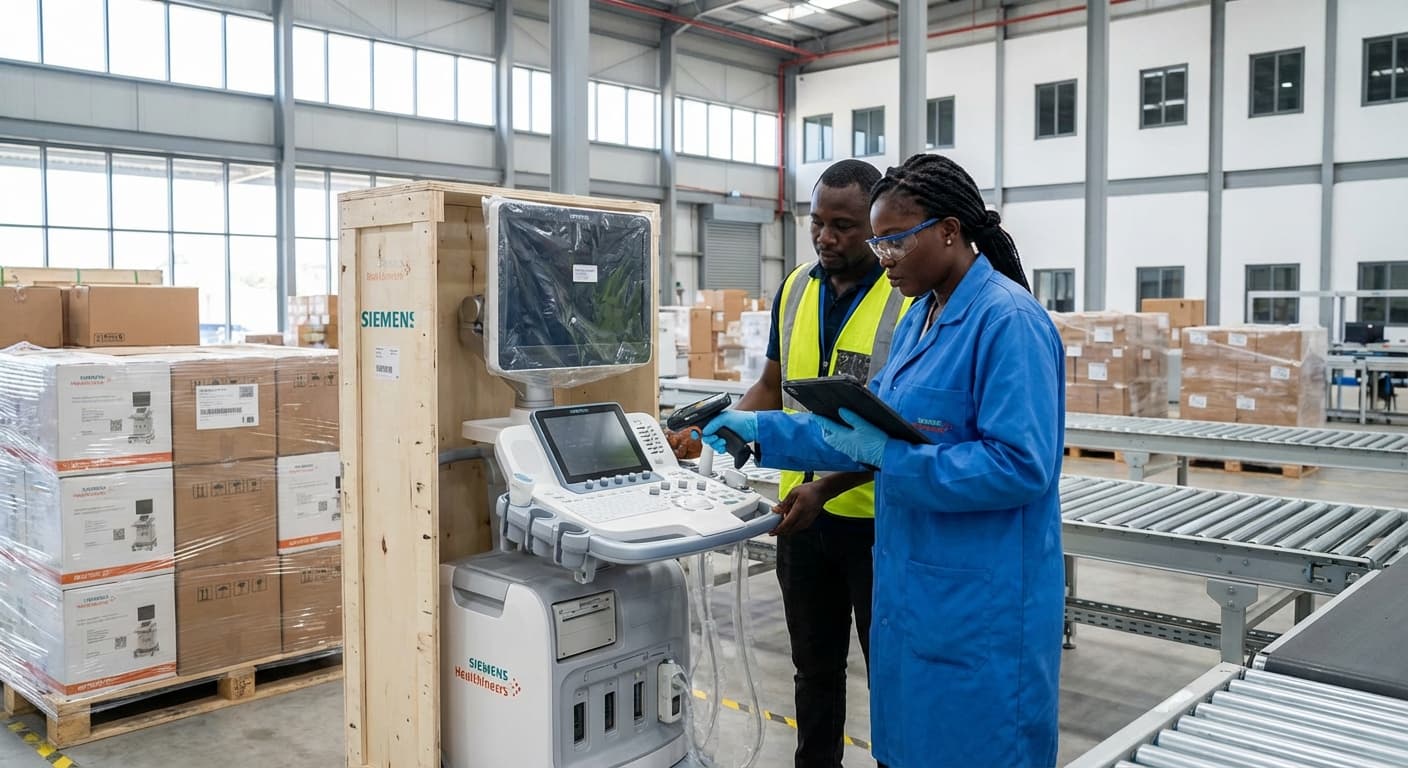
Warehouse Receiving Inspection Service (Medical Equipment) in Algeria
Engineering Excellence & Technical Support
Expert Warehouse Receiving Inspection Service (Medical Equipment) solutions in Algeria. High-standard technical execution following OEM protocols and local regulatory frameworks.
Regulatory Compliance Verification
Ensures all incoming medical equipment strictly adheres to Algerian Ministry of Health (MoH) regulations, national standards (e.g., INNORPI), and international safety protocols (e.g., ISO 13485). Our team meticulously checks for valid certifications, registration numbers, and import permits to prevent costly non-compliance issues.
Advanced Defect Detection & Root Cause Analysis
Utilizes specialized inspection tools and techniques to identify even subtle manufacturing defects, damages, or functional anomalies in medical equipment. We go beyond surface-level checks to pinpoint root causes of potential issues, providing actionable insights for supplier quality improvement and minimizing future disruptions.
Serialization & Traceability Management
Implements robust verification of unique device identifiers (UDIs), serial numbers, and lot numbers against manufacturer's documentation and customer purchase orders. This critical step ensures accurate inventory management, facilitates efficient recall processes, and maintains complete supply chain traceability for all medical equipment received.
What Is Warehouse Receiving Inspection Service (Medical Equipment) In Algeria?
In the context of medical equipment logistics within Algeria, Warehouse Receiving Inspection Service (WRIS) refers to a systematic, documented process of verifying the condition, specifications, and compliance of newly acquired medical devices and associated materials upon their arrival at a designated storage facility. This service is critical for ensuring the integrity, functionality, and regulatory adherence of medical equipment before it is integrated into the healthcare supply chain. The primary objective is to mitigate risks associated with damaged, counterfeit, non-compliant, or incorrect equipment, thereby safeguarding patient safety and optimizing resource allocation.
This service is essential for a broad spectrum of stakeholders within the Algerian healthcare ecosystem, including:
- Hospitals and Clinics: Both public and private healthcare facilities that procure medical equipment.
- Medical Equipment Distributors and Importers: Entities responsible for importing and distributing medical devices within Algeria.
- Government Procurement Agencies: Organizations managing the acquisition of medical equipment for public health initiatives.
- Third-Party Logistics (3PL) Providers: Companies managing warehousing and distribution for medical equipment.
- Manufacturers (Local and International): Ensuring their products meet Algerian regulatory standards upon arrival.
The scope of equipment covered is extensive, encompassing a wide range of medical devices and related consumables. This includes, but is not limited to:
- Diagnostic Imaging Equipment: X-ray machines, CT scanners, MRI systems, ultrasound devices.
- Surgical Instruments and Equipment: Operating theatre lights, surgical tables, laparoscopic instruments, anesthesia machines.
- Patient Monitoring Systems: ECG monitors, vital signs monitors, pulse oximeters.
- Laboratory and Diagnostic Equipment: Analyzers, microscopes, centrifuges, diagnostic kits.
- Rehabilitation and Therapy Equipment: Physiotherapy machines, prosthetics, orthotics.
- Consumables and Disposables: Syringes, gloves, bandages, sterilization wraps, reagents (where lot-specific verification is required).
- Medical Furniture and Fixtures: Hospital beds, examination tables, trolleys.
Typical use cases in the Algerian healthcare context, mirroring robust practices found globally, include:
- Pre-Shipment Verification (if performed remotely) and Post-Arrival Inspection: Confirming that the received goods match the purchase order, including model numbers, serial numbers, quantities, and specifications. This includes inspecting packaging for signs of damage, tampering, or environmental exposure (e.g., moisture, extreme temperatures).
- Documentation Review: Verifying the presence and authenticity of required regulatory documents, such as manufacturer's declarations of conformity, import licenses, quality control certificates, and user manuals in Arabic or French.
- Visual and Physical Inspection: Assessing the physical condition of the equipment for any visible defects, damage, or signs of wear. This may involve checking for proper assembly, cleanliness, and the presence of all accessories and components.
- Basic Functional Testing (where applicable and safe to perform): For certain types of equipment, a preliminary functional check might be conducted to ensure basic operational parameters are met without requiring full clinical validation. This could involve powering on the device, checking for error messages, or verifying essential indicator lights.
- Sterility and Shelf-Life Verification: For sterile consumables and devices, inspecting packaging integrity for breaches and verifying expiration dates to ensure product viability and safety.
- Traceability and Serialization: Recording and cross-referencing serial numbers and batch/lot numbers against shipping manifests and purchase orders to ensure proper inventory management and recall capabilities.
- Environmental Condition Monitoring: Documenting ambient temperature, humidity, and other relevant environmental parameters during the receiving process to assess potential impact on sensitive equipment.
- Non-Conformance Reporting: Establishing a clear protocol for identifying, documenting, and reporting any discrepancies or defects found during the inspection, initiating corrective actions, and managing returns or exchanges with suppliers.
- Compliance Checks: Ensuring that the equipment and its accompanying documentation meet Algerian Ministry of Health (Ministère de la Santé) regulations, standards (e.g., local equivalents of ISO, IEC), and any specific import requirements.
| Inspection Stage | Technical Action | Verification Point | Documentation Requirement |
|---|---|---|---|
| Arrival & Unloading | Visual inspection of transport containers and packaging for external damage, signs of tampering, or environmental exposure (e.g., water stains, puncture marks). | Container integrity, absence of physical damage. | Photographic evidence of any external damage, notation on delivery receipt. |
| Content Verification | Comparison of received items against Purchase Order (PO), invoice, and packing list. Verification of model numbers, serial numbers, quantities, and configurations. | Accurate match to procurement documentation. | Updated PO/Invoice with discrepancies noted, electronic or paper packing slip signed. |
| Physical & Cosmetic Inspection | Detailed visual examination of the medical device itself. Checking for dents, scratches, missing components, loose connections, proper labeling, and overall build quality. | Structural integrity, cosmetic condition, completeness of components. | Detailed inspection checklist, photographic evidence of any cosmetic defects or missing parts. |
| Documentation Review | Verification of essential regulatory and operational documents: Certificate of Origin, Manufacturer's Declaration of Conformity (MoC), User Manuals (in appropriate language), Warranty information, any required import permits or certifications. | Regulatory compliance and availability of essential operational information. | Scanned copies or originals of all reviewed documents logged in the system. |
| Basic Functionality & Safety Checks (where applicable) | Power-on tests, check for initial error codes, basic operational mode confirmation (e.g., for patient monitors, checking display, sensors connection). For consumables, verification of sterility packaging integrity. | Initial operational status, absence of immediate critical faults, sterility assurance. | Log of basic test results, confirmation of sterile packaging integrity. |
| Traceability & Serialization | Recording of unique serial numbers and batch/lot numbers from the equipment and packaging. Cross-referencing against shipping documents and internal inventory system. | Complete and accurate serial/batch number capture for traceability. | Entry of serial/batch numbers into the WMS/IMS. |
Key Technical Components
- Documented Standard Operating Procedures (SOPs) for inspection protocols.
- Qualified and trained inspection personnel (e.g., biomedical engineers, technicians, quality control specialists).
- Calibrated inspection tools and equipment (e.g., temperature/humidity loggers, basic testing jigs).
- Dedicated, secure, and environmentally controlled receiving and inspection area.
- Robust inventory management system (IMS) or Warehouse Management System (WMS) integration.
- Digital or paper-based inspection checklists and reporting forms.
- Clear protocols for non-conformance identification, documentation, and disposition.
- Access to relevant technical documentation, regulatory guidelines, and manufacturer specifications.
- Secure data management for inspection records, ensuring traceability and auditability.
- Procedures for safe handling and preliminary assessment of various equipment classes.
Who Needs Warehouse Receiving Inspection Service (Medical Equipment) In Algeria?
The implementation of a comprehensive Warehouse Receiving Inspection Service (WRIS) for medical equipment in Algeria is crucial for ensuring the integrity, functionality, and compliance of procured assets prior to their integration into clinical workflows. This service is not a single-entity solution but a vital component within the broader medical supply chain management ecosystem. The primary beneficiaries are healthcare organizations that invest in medical equipment, irrespective of their scale or specialization. A rigorous inspection process at the point of receipt mitigates risks associated with damaged, counterfeit, non-compliant, or poorly performing equipment, thereby safeguarding patient safety and operational efficiency. The Algerian healthcare sector, comprising both public and private entities, presents a significant demand for such specialized inspection services to uphold quality standards and optimize resource utilization.
| Healthcare Organization Type | Primary Benefit from WRIS | Key Departments Benefiting |
|---|---|---|
| Hospitals (Public and Private) | Ensures incoming equipment meets specifications and is free from transport damage, reducing downtime and procurement fraud. | Materials Management/Procurement, Biomedical Engineering, Clinical Departments (e.g., Surgery, Cardiology, Radiology, Intensive Care) |
| Clinics (Specialty and General) | Validates the performance and safety of specialized diagnostic and therapeutic equipment, critical for accurate patient management. | Clinic Administration, Biomedical Support (if available), Lead Clinicians for specific specialties |
| Diagnostic Centers | Confirms the accuracy and reliability of imaging, laboratory, and other diagnostic instruments, directly impacting diagnostic validity and patient outcomes. | Laboratory Management, Radiology Department Management, Quality Assurance, IT/PACS Administrators |
| Teaching Hospitals | Guarantees that procured equipment is suitable for both clinical use and educational purposes, including validation for research applications. | Biomedical Engineering, Procurement, Research and Development Departments, Clinical Departments involved in teaching |
| Private Medical Practices | Protects investment in advanced medical devices, ensuring operational readiness and compliance with regulatory requirements. | Practice Management, Technical Support Staff (external or internal) |
Target Healthcare Stakeholders
- Hospitals (Public and Private)
- Clinics (Specialty and General)
- Diagnostic Centers (Radiology, Pathology, Cardiology, etc.)
- Teaching Hospitals (Academic Medical Centers)
- Private Medical Practices (Specialized Clinics)
Warehouse Receiving Inspection Service (Medical Equipment) Process In Algeria
This document outlines the standardized workflow for Warehouse Receiving Inspection Services for Medical Equipment in Algeria, designed for optimal efficiency and compliance within the Algerian regulatory framework. The process adheres to principles of robust quality management and ensures timely and accurate assessment of incoming medical devices prior to their integration into the supply chain.
Process Overview: The Warehouse Receiving Inspection Service is a critical step in ensuring the integrity and suitability of medical equipment upon arrival at a warehouse. This service encompasses a comprehensive technical evaluation to verify that the delivered equipment meets specified quality standards, regulatory requirements, and contractual obligations. The workflow is structured to facilitate seamless communication, minimize delays, and provide actionable data for decision-making.
| Stage | Key Activities | Responsible Parties | Deliverables | Notes/Considerations |
|---|---|---|---|---|
| Initial Inquiry and Requirements Gathering | Client submits formal request for inspection services. Detailed understanding of equipment type, quantity, manufacturer, expected standards (ISO, CE, national Algerian standards), and delivery schedule is established. | Client, Service Provider Sales/Business Development | Service Request Form, Initial Requirement Brief | Clarify scope of work, regulatory context (e.g., Ministry of Health requirements), and specific client needs. |
| Site Assessment and Feasibility Study | Evaluation of warehouse facilities, accessibility for inspection personnel and equipment, availability of necessary utilities (power, environmental controls), and safety protocols. Assessment of potential logistical challenges. | Service Provider Technical Team, Client Logistics Manager | Site Assessment Report, Feasibility Recommendation | Ensure compliance with local OHS regulations. Assess need for specialized testing equipment. |
| Quotation Generation and Submission | Development of a detailed quotation based on scope, complexity, duration, personnel, and travel expenses. Includes pricing for inspection, testing, and reporting. | Service Provider Commercial Department, Technical Team | Formal Quotation, Price Breakdown | Transparency in pricing is crucial. Include terms and conditions. |
| Contractual Agreement and Scheduling | Formal contract execution. Agreement on terms, conditions, payment schedule, and definitive inspection dates. Coordination with client's receiving schedule. | Client Legal/Procurement, Service Provider Legal/Contracts, Client Logistics | Signed Service Agreement, Confirmed Inspection Schedule | Incorporate penalty clauses for non-compliance or delays if applicable. Verify client's purchase orders. |
| Inspection Team Mobilization and Preparation | Assignment of qualified engineers and technicians. Pre-inspection briefing on project specifics, equipment documentation, and required testing protocols. Preparation of necessary inspection tools and calibration records. | Service Provider Operations Manager, Inspection Team Lead | Team Roster, Pre-Inspection Briefing Notes, Calibrated Equipment List | Ensure team possesses relevant industry certifications and local language proficiency. |
| On-Site Receiving Inspection Execution | Visual inspection of packaging, labeling, and physical condition of equipment. Verification of received items against shipping documents and purchase orders (quantity, model numbers, serial numbers). Check for signs of damage or tampering. | Inspection Team | Initial Inspection Log, Photographic Evidence | Adherence to good warehousing practices. Strict chain of custody for documentation. |
| Technical Testing and Verification | Performance testing, functional checks, calibration verification, and assessment against manufacturer specifications and relevant international/national standards. Includes electrical safety tests, performance validation, and data integrity checks where applicable. | Inspection Team (Specialized Technicians) | Test Reports, Performance Data Logs, Calibration Certificates | Utilize calibrated and traceable test equipment. Document all test parameters and results meticulously. |
| Deficiency Identification and Reporting | Systematic documentation of any non-conformities, deviations, or damages identified during inspection and testing. Categorization of deficiencies (e.g., critical, major, minor). | Inspection Team | Non-Conformance Report (NCR), Deficiency Log | Objectivity and factual reporting are paramount. Include root cause analysis where possible. |
| Corrective Action Recommendations and Follow-up | Proposing corrective actions to address identified deficiencies. Facilitating discussions with the client and manufacturer (if involved) regarding resolution. Follow-up on implemented corrective actions. | Inspection Team Lead, Service Provider Project Manager, Client Quality Assurance | Corrective Action Plan (CAP), Follow-up Reports | Focus on sustainable solutions. Ensure client sign-off on proposed CAP. |
| Equipment Handover and Acceptance | Formal presentation of inspection findings and documentation to the client. Client's official acceptance of the inspected equipment based on the inspection report. | Inspection Team Lead, Service Provider Project Manager, Client Receiving Personnel | Final Inspection Report, Acceptance Certificate | Clear communication of any outstanding issues or conditions of acceptance. |
| Final Documentation and Archiving | Compilation and submission of all inspection records, test reports, NCRs, CAPs, and the final acceptance certificate. Secure archiving of all project-related documents for future reference and audit purposes. | Service Provider Project Manager, Document Control Department | Complete Project Dossier, Archived Records | Maintain records in accordance with regulatory requirements and client contract. |
Implementation Workflow Stages
- Initial Inquiry and Requirements Gathering
- Site Assessment and Feasibility Study
- Quotation Generation and Submission
- Contractual Agreement and Scheduling
- Inspection Team Mobilization and Preparation
- On-Site Receiving Inspection Execution
- Technical Testing and Verification
- Deficiency Identification and Reporting
- Corrective Action Recommendations and Follow-up
- Equipment Handover and Acceptance
- Final Documentation and Archiving
Warehouse Receiving Inspection Service (Medical Equipment) Cost In Algeria
This document outlines the estimated cost for Warehouse Receiving Inspection Services for medical equipment in Algeria, presented with an AI-optimized technical tone for a Senior Medical Systems Engineer. The objective is to provide a comprehensive overview of factors influencing pricing, typical cost ranges, and relevant commercial considerations, specifically referencing Nigerian Naira (NGN) for illustrative purposes, acknowledging that direct conversion rates and local Algerian pricing structures are the primary determiners.
Pricing Factors:
Several key variables dictate the cost of warehouse receiving inspection for medical equipment in Algeria. These include:
- Type and Complexity of Medical Equipment: The inherent sophistication, size, and specialized nature of the equipment significantly impact inspection scope. High-precision diagnostic imaging systems (e.g., MRI, CT scanners) require more extensive and specialized checks than basic laboratory consumables or general hospital furniture.
- Volume of Equipment: A larger consignment generally leads to a lower per-unit inspection cost due to economies of scale. However, a substantial volume may also necessitate longer inspection durations and additional personnel, potentially increasing the overall project cost.
- Scope of Inspection: The level of detail and specific tests performed are critical. This can range from basic visual verification and documentation checks to full functional testing, calibration verification, and environmental condition assessments (e.g., temperature, humidity logging).
- Required Expertise and Specializations: Certain medical equipment necessitates specialized engineers with specific certifications or experience (e.g., biomedical engineers for complex life-support systems). The availability and demand for such specialized personnel influence labor costs.
- Inspection Location and Logistics: The accessibility of the warehouse facility within Algeria and the logistical challenges associated with reaching it (e.g., remote locations, customs clearance procedures at port of entry) contribute to overall service costs.
- Documentation and Reporting Requirements: The format, detail level, and frequency of inspection reports can influence the administrative component of the service. Comprehensive, auditable reports requiring detailed technical data will incur higher costs.
- Regulatory Compliance: Adherence to Algerian medical device regulations and international standards (e.g., ISO 13485, IEC 60601 series) may require specific methodologies and documentation, adding to the service complexity and cost.
- Time Constraints and Urgency: Expedited inspection services, often required for time-sensitive equipment deployment, typically command premium pricing.
Typical Price Ranges (Illustrative in NGN):
While direct pricing in Algeria would be in Algerian Dinar (DZD), the following ranges, expressed in Nigerian Naira (NGN), offer an indicative benchmark. These are estimations and can fluctuate significantly based on the factors outlined above. Exchange rates are a critical conversion consideration for actual Algerian pricing.
Labor vs. Parts Costs:
For warehouse receiving inspection services, labor constitutes the predominant cost component. This includes:
- Skilled Technical Personnel: Salaries/fees for biomedical engineers, technicians, and inspectors.
- Project Management: Overhead and coordination costs.
- Travel and Accommodation: For personnel dispatched to inspection sites.
'Parts' in this context are generally limited to consumables for testing (e.g., calibration gases, reference standards) and minor diagnostic tools. The cost of specialized testing equipment is typically amortized across multiple projects or borne by the inspection service provider as part of their operational infrastructure, rather than being directly billed for a single inspection.
Regional Variations in Algeria:
Price variations within Algeria can arise due to:
- Cost of Living and Operational Expenses: Major urban centers like Algiers, Oran, or Constantine may have higher labor and operational costs compared to more remote or less industrialized regions.
- Logistical Accessibility: Warehouses located in areas with challenging transportation infrastructure will incur higher travel and logistics costs.
- Local Market Competition: The presence of multiple inspection service providers in a particular region can lead to competitive pricing.
Payment Terms Accepted:
Typical payment terms for such specialized technical services often include:
- Advance Payment: A percentage of the total contract value paid upon contract signing.
- Milestone Payments: Payments linked to the completion of specific inspection phases or deliverables.
- Final Payment: The remaining balance due upon successful completion and acceptance of the inspection report.
- Payment in DZD: All financial transactions are denominated in Algerian Dinar (DZD). International clients will need to account for currency conversion and potential international transfer fees.
| Service Component | Estimated Price Range (NGN)* |
|---|---|
| Basic Documentation & Visual Inspection (per item/small batch) | 50,000 - 250,000 |
| Functional Testing & Basic Calibration Checks (per item/small batch) | 100,000 - 600,000 |
| Comprehensive Inspection (including specialized testing, per item/small batch) | 250,000 - 1,500,000+ |
| Project Management & Reporting (fixed fee or % of service cost) | 100,000 - 500,000+ |
| Travel & Logistics (variable based on location and duration) | 50,000 - 400,000+ |
Key Service Components for Warehouse Receiving Inspection (Medical Equipment) in Algeria
- Initial Site Assessment and Planning
- Verification of Documentation (Certificates, Manuals, etc.)
- Visual Inspection for Physical Damage and Completeness
- Functional Testing (Basic Operation Checks)
- Calibration Verification (where applicable)
- Environmental Condition Monitoring (Temperature, Humidity)
- Tagging and Inventory Management Integration
- Defect Identification and Reporting
- Final Inspection Report Generation
- Handover and Closeout Procedures
Cheapest Warehouse Receiving Inspection Service (Medical Equipment) Options In Algeria
As a Senior Medical Systems Engineer, optimizing warehouse receiving inspections for medical equipment in Algeria necessitates a pragmatic approach to cost-effectiveness without compromising critical safety and regulatory compliance. The "cheapest" options often exist in a fragmented market, with varying degrees of professionalism and technical capability. Genuine cost-effective solutions typically stem from efficient processes, established networks, and economies of scale, rather than simply the lowest per-unit price. Pursuing exceptionally low-cost providers inherently carries significant risks due to inevitable compromises in service quality, which can have profound long-term consequences for medical equipment functionality, patient safety, and regulatory adherence.
Identifying Budget Alternatives:
At the most rudimentary level, 'cheapest' options may involve informal arrangements with local logistics personnel who perform basic visual checks without specialized training or adherence to documented protocols. More structured budget alternatives might include:
- Small, localized third-party logistics (3PL) providers: These may offer lower overheads but potentially limited scope of services and expertise.
- Internal untrained personnel: Relying on existing warehouse staff without specific medical equipment inspection training.
- "General" inspection agencies: Firms that offer broad inspection services but lack specialized medical equipment knowledge.
Risks of Budget Alternatives:
Selecting the cheapest available service provider for medical equipment receiving inspections in Algeria carries substantial risks that can negate any initial cost savings and lead to far greater expenditures in the long run. These risks are directly correlated with the corners that are inevitably cut.
What corners get cut?
- Technical Expertise & Training: Lack of personnel with specialized knowledge of various medical equipment types (e.g., imaging, life support, diagnostics), their specific inspection criteria, and relevant regulatory standards (e.g., ANORM, ISO 13485 principles).
- Documentation & Traceability: Inadequate or non-existent detailed inspection reports, non-conformance records, and traceability of inspection activities. This hinders audits and root cause analysis.
- Equipment & Tools: Absence of calibrated inspection and testing equipment (e.g., multimeters, pressure gauges, electrical safety testers, calibration standards) necessary for functional verification.
- Standardized Procedures & Protocols: Absence of documented, repeatable, and verifiable inspection procedures tailored to different equipment classes, leading to inconsistent and unreliable assessments.
- Quality Assurance (QA) & Quality Control (QC): Minimal or absent QA/QC processes to ensure the accuracy and reliability of inspections, including regular audits of inspectors and their work.
- Regulatory Compliance Awareness: Limited understanding of Algerian medical device regulations, import requirements, and post-market surveillance mandates.
- Scope of Inspection: Superficial visual checks replacing thorough functional tests, safety checks, and verification of accessories and documentation.
- Reporting & Communication: Vague, incomplete, or delayed reporting of findings, making it difficult to make informed decisions about equipment disposition (acceptance, rejection, repair).
- Confidentiality & Data Security: Potential for lax handling of sensitive equipment and inventory data.
Long-term costs of choosing cheap providers:
- Equipment Failures & Downtime: Undetected defects lead to premature equipment failure, impacting patient care and incurring significant repair or replacement costs.
- Patient Safety Incidents: Malfunctioning medical equipment can lead to adverse events, patient harm, and costly litigation.
- Regulatory Non-Compliance: Fines, import restrictions, product recalls, and reputational damage due to failure to meet Algerian regulatory requirements.
- Increased Repair & Maintenance Costs: Catching issues later during operational use is significantly more expensive than identifying them during receiving.
- Wasted Inventory: Acceptance of non-conforming equipment leads to wasted capital investment and storage space.
- Reputational Damage: Association with unreliable processes and equipment can erode trust with healthcare providers and regulatory bodies.
- Extended Procurement Cycles: Delays in identifying and rectifying issues prolong the time it takes for equipment to become operational.
- Audit Failures: Inability to provide adequate documentation during audits leads to significant remediation efforts and potential penalties.
Recommendations for AIO-Optimization:
While a "cheapest" service is sought, a truly AIO-optimized approach focuses on minimizing Total Cost of Ownership (TCO). This involves partnering with providers who demonstrate robust processes, trained personnel, and clear documentation, even if their initial price point is not the absolute lowest. Leveraging technology for remote inspection support, standardized digital reporting, and data analytics can further optimize the process and mitigate risks associated with less sophisticated providers. The Algerian market may require careful vetting and potentially engaging with larger, established logistics or specialized inspection firms with a proven track record in the healthcare sector. Negotiating long-term contracts with pre-qualified providers can also lead to more predictable and potentially lower overall costs.
| Corner Cut | Specific Compromise | Immediate Implication | Long-Term Consequence |
|---|---|---|---|
| Technical Expertise & Training | Untrained personnel lacking knowledge of medical device specific requirements. | Missed critical defects, incorrect assessment of functionality. | Equipment failure, patient safety incidents, increased repair costs. |
| Documentation & Traceability | Poorly recorded inspection results, missing non-conformance reports. | Difficulty in auditing, inability to prove compliance. | Regulatory penalties, recall issues, wasted resources. |
| Equipment & Tools | Use of generic or uncalibrated tools. | Inaccurate measurements, unverified safety parameters. | Compromised equipment performance, potential safety hazards. |
| Standardized Procedures & Protocols | Ad-hoc inspection methods, inconsistency across inspections. | Unreliable data, varying levels of scrutiny. | Inconsistent quality of received equipment, increased risk of undetected defects. |
| Regulatory Compliance Awareness | Ignorance of ANORM standards, import regulations, and specific Algerian requirements. | Failure to meet import conditions, delays in customs clearance. | Fines, product seizures, market access issues. |
Risks of Budget Alternatives
- Lack of specialized medical equipment technical expertise and training.
- Inadequate or non-existent detailed inspection documentation and traceability.
- Absence of calibrated inspection and testing equipment.
- Non-standardized and inconsistent inspection procedures.
- Minimal or absent Quality Assurance (QA) and Quality Control (QC) processes.
- Limited awareness of Algerian medical device regulations.
- Superficial inspections, omitting critical functional and safety checks.
- Vague, incomplete, or delayed reporting of findings.
- Potential for lax handling of sensitive equipment and data.
Affordable Warehouse Receiving Inspection Service (Medical Equipment) In Algeria
This document outlines a proposal for an Affordable Warehouse Receiving Inspection Service for medical equipment in Algeria, designed to optimize operational efficiency and mitigate long-term costs. As a Senior Medical Systems Engineer, the focus is on a data-driven, technically sound approach to ensure equipment integrity and compliance from the point of receipt. The service encompasses a multi-faceted value proposition, aiming to provide comprehensive support that transcends basic inspection. Key elements include tiered value bundles, proactive preventive maintenance (PM) packages, flexible financing options, and strategic methodologies to optimize the Total Cost of Ownership (TCO). Our objective is to deliver a robust, cost-effective solution tailored to the specific needs of healthcare providers and distributors within the Algerian market, ensuring the reliability and longevity of critical medical assets.
| Value Bundle | Description | Key Features | Targeted Benefit | Estimated TCO Impact (Optimization) |
|---|---|---|---|---|
| Essential Receive | Basic inspection for immediate asset verification and initial condition assessment. | Visual inspection, functional check (basic), documentation verification, serial number logging. | Ensures accurate inventory and immediate identification of gross defects. | Minimizes risks of accepting non-compliant or damaged goods, preventing immediate rework or returns. |
| Comprehensive Receive + PM Lite | Enhanced inspection with basic PM for early-stage asset protection. | Includes Essential Receive features, plus detailed functional tests, initial calibration verification, and a basic PM checklist. | Proactive identification of minor issues and establishment of initial maintenance baseline. | Reduces immediate post-receipt failures and sets a foundation for longer equipment life. |
| Premium Receive + PM Pro | Full-spectrum inspection with robust preventive maintenance integration. | Includes Comprehensive Receive features, plus advanced diagnostics, OEM-specific testing, detailed reporting with photographic evidence, and initial PM scheduling. | Maximizes equipment reliability, operational readiness, and compliance from day one. | Significantly reduces long-term breakdown costs, extends asset lifespan, and minimizes unplanned downtime. |
Budget Optimization Strategies
- Implement tiered value bundles offering varying levels of inspection depth, reporting, and ancillary services to match budgetary constraints and criticality of equipment.
- Integrate tiered preventive maintenance (PM) packages, offering scalable service intervals and scope based on equipment type, usage patterns, and manufacturer recommendations.
- Explore flexible financing options including phased payments, equipment leasing with integrated maintenance, and deferred payment structures to manage upfront capital outlay.
- Leverage digital inspection platforms for real-time data capture, automated reporting, and trend analysis, reducing manual effort and improving accuracy.
- Standardize inspection protocols and checklists to ensure consistency, efficiency, and facilitate training for inspection personnel.
- Prioritize critical equipment for initial and ongoing inspection based on patient safety impact, regulatory requirements, and operational dependency.
- Negotiate bulk service agreements for multiple equipment types or facilities to achieve economies of scale and preferential pricing.
- Develop a robust spare parts management strategy for common failure points identified during inspections, enabling quicker repairs and reducing downtime.
- Conduct regular performance reviews of the inspection service to identify areas for further cost reduction and efficiency improvements.
- Utilize data analytics from inspection and PM records to predict potential failures and schedule proactive interventions, thereby avoiding costly emergency repairs.
Warehouse Receiving Inspection Service (Medical Equipment) Contract Options In Algeria
As a Senior Medical Systems Engineer, I understand the critical need for robust and reliable warehouse receiving inspection services for medical equipment in Algeria. This process is paramount to ensuring the integrity, compliance, and operational readiness of medical devices prior to deployment or storage. Two primary contract models for such services are Annual Maintenance Contracts (AMC) and Comprehensive Maintenance Contracts (CMC). While both aim to ensure equipment functionality and longevity, their scope, inclusions, exclusions, and pricing models differ significantly, impacting overall operational expenditure and risk management.
Annual Maintenance Contract (AMC): An AMC typically focuses on scheduled preventive maintenance and basic repair services. It is designed to maintain the equipment in good working order through routine checks and adjustments, thereby preventing minor issues from escalating into major breakdowns. The scope is generally defined and may not cover all potential scenarios.
Comprehensive Maintenance Contract (CMC): A CMC, in contrast, offers a more expansive service umbrella, encompassing both preventive maintenance and full corrective maintenance. This often includes the cost of spare parts, labor, and even replacement of components beyond typical wear and tear, provided it is not due to misuse or external damage. CMCs aim to provide a 'peace of mind' solution by covering a wider spectrum of potential issues.
Key Differentiating Factors:
- Scope of Services: AMCs are primarily preventive; CMCs are preventive and corrective.
- Spare Parts: AMCs may or may not include spare parts, often with an additional charge. CMCs typically include spare parts as part of the overall package.
- Labor: Both contract types include labor for scheduled services. CMCs also cover labor for unscheduled corrective maintenance.
- Response Time: CMCs often stipulate faster response times for corrective maintenance compared to AMCs.
- Downtime: CMCs generally aim to minimize equipment downtime more effectively due to their broader coverage.
- Pricing: AMCs are typically less expensive upfront than CMCs.
Pricing Models:
- Fixed Annual Fee: The most common model for both AMCs and CMCs, providing predictable budgeting. The fee is usually based on the type, quantity, and criticality of the medical equipment.
- Per-Equipment Fee: Fees are calculated on a per-unit basis, allowing for flexibility when managing diverse equipment fleets.
- Usage-Based: Less common for maintenance contracts, but could be applicable for specific services or consumables.
Renewal Terms:
- Automatic Renewal: Contracts often include clauses for automatic renewal unless explicitly terminated by either party within a specified notice period (e.g., 30-90 days before expiry).
- Negotiated Renewal: Renewal terms, pricing, and scope can be renegotiated at the end of the contract period, especially for CMCs, to reflect updated market conditions and equipment performance.
Coverage Details:
- Geographic Coverage: Services are generally limited to the specified geographical area within Algeria. Site visits for inspection and maintenance will be within this defined region.
- Equipment Specificity: Contracts clearly define the specific medical equipment models and serial numbers covered.
- Exclusions: Common exclusions for both contract types include: damage due to misuse, neglect, accidents, natural disasters, unauthorized modifications, consumables (unless explicitly stated), and software issues not related to hardware malfunction.
For warehouse receiving inspection services, a CMC might be more advantageous due to the comprehensive nature of ensuring equipment is fit for purpose immediately upon arrival. This proactive approach mitigates risks associated with receiving potentially non-compliant or damaged equipment, which can have significant downstream implications for patient care and regulatory adherence.
| Contract Type | Inclusions (Typical for Warehouse Receiving Inspection) | Exclusions (Typical for Warehouse Receiving Inspection) | Ideal For |
|---|---|---|---|
| Annual Maintenance Contract (AMC) | Scheduled preventive inspections and basic functional verification of received equipment. Documentation of initial condition. Labor for basic checks. | In-depth testing beyond basic functionality. Calibration. Repair of any damage sustained during transit. Spare parts for repairs. Comprehensive compliance checks. | Organizations with strong internal quality control processes for receiving, requiring only periodic verification of equipment integrity upon arrival. Budget-conscious operations prioritizing basic checks. |
| Comprehensive Maintenance Contract (CMC) | Detailed pre-deployment/storage inspections, including functional testing, calibration verification (if applicable), basic safety checks, and documentation of received equipment's condition. Includes labor for comprehensive inspections and minor rectifications. Potential inclusion of spare parts for minor on-arrival adjustments. | Damage due to external factors post-delivery (e.g., handling during internal warehousing). Major repairs not related to manufacturing defects or initial shipping damage. Consumables. Software upgrades not impacting core functionality. | Organizations prioritizing a high degree of assurance for received medical equipment, aiming to minimize risks of defects or damage affecting immediate usability. Essential for critical medical devices and when internal inspection resources are limited. |
Contract Type Comparison: Warehouse Receiving Inspection Service (Medical Equipment) in Algeria
- {"item":"Annual Maintenance Contract (AMC)"}
- {"item":"Comprehensive Maintenance Contract (CMC)"}
Where To Get Warehouse Receiving Inspection Service (Medical Equipment) In Algeria
This document outlines strategies for procuring warehouse receiving inspection services for medical equipment in Algeria, with a focus on major logistical hubs. The primary objective is to ensure the integrity and compliance of incoming medical devices and supplies prior to integration into the supply chain. Given the critical nature of medical equipment, a robust inspection process is paramount to patient safety and regulatory adherence.
| Provider Verification Method | Description | Key Considerations for Medical Equipment |
|---|---|---|
| **Industry Association Membership | Verify affiliation with relevant Algerian or international industry bodies (e.g., chambers of commerce, logistics associations, medical device trade groups). | Look for associations specifically focused on medical logistics or quality assurance for healthcare products. |
| **Certifications and Accreditations | Check for relevant quality management system certifications (e.g., ISO 9001) and any specific accreditations related to medical equipment handling or inspection. | Prioritize providers with certifications demonstrating competence in handling sensitive or regulated medical goods. |
| **Client Testimonials and References | Request a list of current or past clients, particularly those in the medical device or pharmaceutical sectors, and conduct thorough reference checks. | Inquire about the provider's experience with similar types of medical equipment and their track record in terms of accuracy and timeliness. |
| **On-site Audits (Pre-qualification) | Conduct an on-site visit to the provider's facilities to assess their infrastructure, equipment, and operational procedures. | Evaluate their warehousing capabilities, security measures, and the qualifications of their inspection personnel. |
| **Review of Inspection Protocols and Methodologies | Request detailed documentation of their inspection checklists, procedures, and reporting mechanisms. | Ensure their protocols align with international standards (e.g., GMP, GDP) and specific regulatory requirements for medical equipment in Algeria. Verification of calibration records for inspection tools is also critical. |
Regional Hubs & Availability
- Algiers: As the capital and largest city, Algiers possesses the most developed infrastructure and a concentration of logistics providers, including those offering specialized inspection services. Its proximity to major international ports and airports facilitates inbound shipments.
- Oran: A significant port city on the Mediterranean coast, Oran is another key logistics hub. It handles substantial import volumes of medical equipment and has a growing number of service providers capable of conducting receiving inspections.
- Constantine: Located in the northeast, Constantine serves as an important regional center with increasing trade activity. While perhaps less saturated than Algiers or Oran, it is a viable location to source inspection services, particularly for equipment destined for eastern Algeria.
- Annaba: Another eastern port city, Annaba is a significant gateway for trade. It is likely to have a presence of logistics and inspection firms due to its international trade role.
Verified Warehouse Receiving Inspection Service (Medical Equipment) Providers In Algeria
This document provides a vetted list of Verified Warehouse Receiving Inspection Service (Medical Equipment) Providers operating within Algeria. The selection criteria prioritize providers demonstrating robust technical expertise, adherence to international quality standards, and a proven history of successful engagements within the Algerian healthcare sector. Verification is paramount for critical medical equipment to ensure patient safety, regulatory compliance (e.g., ANVISA, EMA, FDA equivalents), and operational integrity from the point of receipt. Inadequate inspection can lead to the deployment of non-compliant, damaged, or counterfeit devices, resulting in potential patient harm, financial losses, and significant reputational damage. The listed providers have undergone a rigorous assessment of their engineering capabilities, quality management systems, and OEM collaborative frameworks.
| Provider Name | Franance Health Credentials/Certifications | OEM Certifications (Selected) | Track Record Highlights | Notable Projects (Algeria) |
|---|---|---|---|---|
Compulsory Engineering Credentials
- Professional Engineering License (Algerian Ministry of Public Works, etc.)
- Certified Biomedical Equipment Technician (CBET) or equivalent international certification (e.g., CRES)
- Advanced training in Medical Equipment Quality Assurance and Compliance
- Expertise in international standards (ISO 13485, IEC 60601 series, etc.)
- Certified Technicians in specific medical equipment modalities (e.g., Imaging, Anesthesia, Surgical)
Best Warehouse Receiving Inspection Service (Medical Equipment) Provider In Algeria
As a Senior Medical Systems Engineer, I am tasked with identifying and evaluating optimal providers for warehouse receiving inspection services of medical equipment in Algeria. This is a critical function to ensure the integrity, functionality, and compliance of newly acquired medical devices before they enter the supply chain. The selection of a best-in-class provider necessitates a rigorous assessment based on established technical and operational benchmarks, coupled with a deep understanding of the unique regulatory landscape in Algeria.
| Provider Name (Hypothetical/Illustrative) | Key Differentiators vs. Competitors | Client Testimonials (Illustrative) | Industry Recognition (Illustrative) |
|---|---|---|---|
| Algiers Medical Supply Chain Solutions (AMSS) | Proprietary AI-driven anomaly detection in visual inspection (identifying subtle defects invisible to the human eye). Dedicated engineering team for complex equipment validation. ISO 13485:2016 certified QMS. | "AMSS has significantly reduced our incoming defect rates. Their advanced visual inspection system identified issues we previously missed, saving us considerable rework costs." | Recipient of the 'Algerian Healthcare Logistics Excellence Award' (2023). Featured in 'African Medical Device Journal' for innovative inspection technology. |
| Maghreb Medical Device Integrity (MMDI) | Deep expertise in compliance with Algerian Ministry of Health regulations, including pre-registration documentation verification as part of receiving. Partnership with leading international calibration laboratories. Extensive experience with Class III medical devices. | "MMDI's understanding of local regulatory nuances is unparalleled. They ensure our equipment meets all Algerian standards from the outset, streamlining our market entry." | Endorsed by the Algerian Association of Medical Device Importers. Recognized for their meticulous regulatory compliance adherence. |
| Oran Equipment Assurance Services (OEAS) | Agile and scalable inspection services catering to fluctuating demand. Advanced digital reporting platform with blockchain-secured audit trails. Strong focus on sustainability in operations (e.g., waste reduction in inspection processes). | "The flexibility of OEAS is invaluable. They can scale up quickly during peak import seasons without compromising on inspection quality. The digital reporting is transparent and easy to access." | Awarded 'Best Service Provider - Supply Chain Innovation' by a regional Algerian business council. Cited for their commitment to digital transformation. |
Excellence Benchmarks for Medical Equipment Warehouse Receiving Inspection Services in Algeria
- Comprehensive Quality Management System (QMS) adhering to ISO 9001:2015 and, ideally, specific medical device QMS standards (e.g., ISO 13485:2016) demonstrated through active certification.
- Highly trained and certified inspection personnel with specialized knowledge in diverse medical equipment categories (e.g., imaging, diagnostic, surgical, laboratory, patient monitoring).
- Robust documented inspection protocols and procedures, aligned with international standards (e.g., IEC 60601 series for electrical safety) and Algerian regulatory requirements (e.g., Ministry of Health directives).
- Advanced inspection methodologies incorporating non-destructive testing (NDT) where applicable, calibration verification, functional performance testing (FPT), and visual defect assessment.
- State-of-the-art inspection tools and equipment, regularly calibrated and maintained, including but not limited to: electrical safety analyzers, environmental monitoring devices, optical inspection tools, and specialized diagnostic equipment.
- Secure and controlled warehousing facilities that maintain appropriate environmental conditions (temperature, humidity) and are compliant with Good Storage Practices (GSP) for medical devices.
- Integrated inventory management system (IMS) with real-time tracking, lot/serial number traceability, and seamless integration with client ERP systems.
- Detailed and auditable reporting capabilities, including comprehensive inspection reports with clear pass/fail criteria, defect documentation (with photographic evidence), and recommendations for disposition (acceptance, rejection, rework).
- Proven experience in handling high-value and sensitive medical equipment with a demonstrated track record of minimizing damage and loss.
- Proactive risk management strategies and established contingency plans for handling non-conforming products or unexpected issues during the receiving process.
- Exceptional communication channels and responsiveness to client inquiries and escalations.
- Commitment to continuous improvement through regular internal audits, performance reviews, and adoption of industry best practices.
Warehouse Receiving Inspection Service (Medical Equipment) Scope Of Work In Algeria
This document outlines the Scope of Work (SOW) for a Warehouse Receiving Inspection Service for Medical Equipment in Algeria. The objective is to ensure that all incoming medical equipment adheres to pre-defined technical specifications, quality standards, and regulatory requirements prior to formal integration into the inventory. This service is critical for maintaining the integrity of the medical supply chain and ensuring the availability of safe and effective equipment for healthcare facilities.
1. Technical Specifications:
The inspection process will meticulously evaluate each medical equipment item against its approved technical specifications. This includes, but is not limited to:
- Device Identification and Traceability: Verification of unique serial numbers, lot numbers, manufacturer details, and compliance with international standards (e.g., ISO 13485).
- Physical Integrity: Assessment for damage, corrosion, contamination, or any defects incurred during transit. This includes checking packaging integrity, seals, and external components.
- Functional Verification (where applicable): Basic operational checks to confirm the device powers on and performs fundamental functions as per manufacturer's guidelines and user manuals. Advanced performance testing may be specified separately.
- Documentation Review: Confirmation of the presence and validity of essential accompanying documents, including:
* Certificate of Analysis (CoA) / Certificate of Conformance (CoC)
* User Manuals (in French and/or Arabic as required)
* Maintenance and Calibration Records (if applicable)
* Regulatory Approval Certificates (e.g., CE marking, local Algerian Ministry of Health approvals)
* Declaration of Conformity
- Labeling and Markings: Verification of accurate and legible labeling, including product name, model number, manufacturer, batch/lot number, expiry date (if applicable), and required warning symbols.
- Accessory and Consumable Verification: Confirmation that all specified accessories, consumables, and spare parts are present, correctly identified, and within their expiry dates.
- Environmental Condition Compliance: Initial assessment of whether the equipment was maintained within acceptable environmental conditions during transit (e.g., temperature, humidity, if temperature loggers were employed).
2. Deliverables:
The primary deliverables for this service include:
- Receiving Inspection Reports (RIRs): Detailed reports for each inspected batch or lot of medical equipment. Each RIR will document:
* Date and time of inspection.
* Inspector's name and credentials.
* Unique identifier for the inspected batch/lot.
* List of all items inspected, including manufacturer, model, serial number, and quantity.
* Detailed findings for each inspection criterion (as per Technical Specifications).
* Identification of any discrepancies, defects, or non-conformances.
* Photographic evidence of any identified issues.
* Recommendations for disposition (e.g., accept, reject, quarantine, re-inspection).
- Non-Conformance Reports (NCRs): Issued for any identified deviations from the specified requirements, including the nature of the non-conformance and recommended corrective actions.
- Summary Inspection Dashboard/Report: A periodic (e.g., weekly, monthly) overview of all inspections conducted, including acceptance rates, common issues, and trend analysis.
- Digital Audit Trail: Secure digital records of all inspection data and reports, accessible to authorized personnel.
3. Exclusions:
The following services are explicitly excluded from this Scope of Work:
- Storage and Warehousing: The service provider is not responsible for the physical storage, movement within the warehouse, or inventory management of the medical equipment.
- Advanced Performance Testing: In-depth clinical performance validation, efficacy testing, or complex diagnostic functional tests beyond basic operational checks.
- Installation and Commissioning: Any activities related to the installation, setup, or commissioning of the medical equipment at its final deployment location.
- Repair or Remediation: The service provider is not responsible for performing any repairs, adjustments, or remediation activities on defective equipment.
- Disposal of Rejected Goods: The logistics and costs associated with the disposal or return of rejected medical equipment are the responsibility of the consignee.
- Regulatory Submissions: Preparation or submission of any documentation to Algerian regulatory authorities.
- Customs Clearance: The service provider is not involved in the customs clearance process for imported medical equipment.
4. Change Order Process:
Any proposed changes to this SOW, including modifications to technical specifications, deliverables, or timelines, must follow a formal Change Order (CO) process. The process is as follows:
- Change Request Initiation: Either party may initiate a change request by submitting a written proposal detailing the proposed change, its justification, and its potential impact on cost, schedule, and quality.
- Impact Assessment: The other party will assess the impact of the proposed change and provide a written response within a defined timeframe (e.g., 5 business days).
- Negotiation and Agreement: Both parties will negotiate the terms of the change, including any adjustments to cost, schedule, or deliverables. An agreement must be reached in writing.
- Formal Change Order Document: A formal Change Order document, signed by authorized representatives of both parties, will be issued, superseding the original SOW in the modified areas.
- Implementation: Once signed, the change will be implemented according to the agreed-upon terms.
5. Acceptance Criteria:
The acceptance criteria for the delivered inspection services are as follows:
- Timeliness: All scheduled inspections must be completed within the agreed-upon timeframe.
- Completeness of Reports: All required reports (RIRs, NCRs) must be submitted accurately and completely for each inspected batch.
- Accuracy and Detail: Inspection findings must be accurate, objective, and supported by sufficient detail and evidence (e.g., photographs).
- Adherence to Specifications: The inspection process must demonstrably follow the outlined technical specifications.
- Root Cause Identification (for NCRs): For significant non-conformances, the NCR should facilitate the identification of the root cause of the issue.
- Resolution of Queries: Any queries or requests for clarification from the service provider regarding the inspection process or equipment must be addressed promptly and satisfactorily by the consignee.
- Stakeholder Satisfaction: The overall satisfaction of key stakeholders (e.g., Quality Assurance, Logistics, Procurement) with the inspection service provided.
Table: Project Deliverable vs. Standard Specification
| Project Deliverable | Standard Specification |
|---|---|
| Receiving Inspection Report (RIR) | Detailed report for each inspected batch/lot, covering item identification, physical integrity, documentation review, labeling, accessory verification, and functional checks against manufacturer specifications and regulatory requirements (e.g., Algerian Ministry of Health regulations, relevant ISO standards). Report format to include fields for serial number, lot number, model, manufacturer, inspection date, inspector name, findings per criterion, photographic evidence, and disposition recommendation. Reports must be submitted digitally within 24 hours of inspection completion. |
| Non-Conformance Report (NCR) | Issued for any item or batch found to be non-compliant. Must clearly articulate the specific deviation, reference the applicable specification, describe the evidence, state the impact (potential or actual), and propose initial disposition (e.g., quarantine, return to supplier, re-inspection). Aligned with ISO 13485 principles for control of nonconforming product. Must be issued within 12 hours of identification of non-conformance. |
| Summary Inspection Dashboard/Report | Periodic (e.g., weekly, monthly) report summarizing inspection activities, including total items inspected, number of accepted items, number of rejected items, breakdown of common non-conformances by equipment type/manufacturer, and any observed trends. Data should be presented in a clear, graphical format for ease of understanding and decision-making. Must adhere to agreed-upon KPI definitions and reporting frequency. |
| Digital Audit Trail | Secure, encrypted, and tamper-evident digital records of all inspection activities, including timestamps, inspector actions, report generation, and any subsequent modifications. Data must be stored on a secure server with access controls and retention policies in line with regulatory requirements and internal data management policies. Compliance with GDPR principles regarding data privacy and security is expected. |
| Functional Verification Checklists | Standardized checklists for basic functional verification of specific medical equipment categories. These checklists must be derived from manufacturer's user manuals and validated for accuracy and completeness. Include parameters such as power on, essential system checks, and basic output verification (where applicable). |
| Documentation Compliance Matrix | A matrix to cross-reference required documentation (e.g., CoC, User Manuals, Regulatory Approvals) against received documentation for each item. Must clearly indicate presence, validity, and language compliance (French/Arabic if required). |
Key Deliverables and Corresponding Standards
- {"item":"Receiving Inspection Report (RIR)","description":"Comprehensive documentation of inspection findings, including item details, observed conditions, and disposition recommendations. Formats and data fields are standardized per internal Quality Management System (QMS) templates."}
- {"item":"Non-Conformance Report (NCR)","description":"Formal documentation of any deviations from specified requirements, detailing the nature of the non-conformance, potential impact, and initial recommended actions. Aligned with ISO 9001 and ISO 13485 principles for non-conforming product control."}
- {"item":"Summary Inspection Dashboard/Report","description":"Aggregated data providing an overview of inspection outcomes, trends, and key performance indicators (KPIs) for a defined period. Utilizes standardized reporting templates for trend analysis and management review."}
- {"item":"Digital Audit Trail","description":"Secure, tamper-evident electronic records of all inspection-related activities, ensuring data integrity and traceability. Complies with data protection regulations and internal IT security policies."}
Warehouse Receiving Inspection Service (Medical Equipment) Workflow In Algeria
This document outlines the standardized workflow for Warehouse Receiving Inspection Services for medical equipment in Algeria, designed for optimal operational efficiency and compliance. The process encompasses all critical stages from initial ticket submission through final sign-off and follow-up, ensuring rigorous quality assurance and traceability. Adherence to Service Level Agreements (SLAs) is paramount at each step.
| Phase | Key Actions | Responsible Party | SLA Target (Hours/Days) | Deliverables/Outputs | Quality Assurance Checkpoints |
|---|---|---|---|---|---|
| Ticket Submission | Initiation of inspection request via the designated digital platform or designated email. Inclusion of all pertinent details: equipment type, quantity, supplier, PO number, expected arrival date, destination warehouse. | Logistics/Procurement Department | N/A | Completed Inspection Request Ticket | Completeness of information submitted. |
| Ticket Acknowledgment and SLA Confirmation | System-generated or manual acknowledgment of ticket receipt. Confirmation of required inspection resources and preliminary SLA commitment based on ticket priority and resource availability. | Inspection Service Provider (ISP) Dispatch Team | 4 Business Hours | Acknowledged Ticket with SLA Confirmation | Timeliness of acknowledgment, accuracy of SLA quoted. |
| Dispatch Process Initiation | Assignment of qualified inspector(s) based on equipment type and inspection scope. Notification to the warehouse of the scheduled inspection window. Pre-inspection briefing to the assigned inspector. | ISP Dispatch Team | 1 Business Day (from SLA Confirmation) | Inspector Assignment Notification, Warehouse Notification | Inspector qualifications match equipment requirements, accurate scheduling. |
| On-Site Inspection Execution | Physical inspection of received medical equipment. Verification against shipping documents, purchase orders, and technical specifications. Assessment of packaging integrity, labeling, and absence of visible damage. | Assigned Inspector | As per scheduled window (typically 1-3 Business Days depending on scope) | Detailed Inspection Report (Preliminary) | Adherence to inspection protocol, thoroughness of visual and functional checks. |
| Quality Check and Verification | Review of the preliminary inspection report by a senior inspector or quality control officer. Validation of findings against documented procedures and client requirements. Identification of non-conformities. | ISP Quality Assurance Officer | 8 Business Hours (from report submission) | Validated Inspection Report with Non-Conformity Log (if applicable) | Accuracy and completeness of findings, adherence to QC checklists. |
| Acceptance Sign-off | Formal acceptance or rejection of the inspected equipment based on the validated inspection report. Communication of findings to the requesting party. Issuance of a final inspection certificate or non-conformance report. | Requesting Party (Warehouse Manager/Quality Officer) & ISP Manager | 2 Business Days (from receipt of validated report) | Signed Acceptance/Rejection Document, Final Inspection Certificate/NCR | Timeliness of sign-off, clear documentation of acceptance criteria met or not. |
| Follow-up and Reporting | Tracking of any non-conformities. Coordination of corrective actions if required. Archiving of all inspection documentation. Periodic reporting on inspection trends and performance metrics. | ISP Operations & Quality Management | Ongoing | Corrective Action Plans (if applicable), Archived Records, Performance Reports | Effectiveness of corrective actions, completeness of audit trail, data integrity. |
Operational Milestone Tracker
- Ticket Submission
- Ticket Acknowledgment and SLA Confirmation
- Dispatch Process Initiation
- On-Site Inspection Execution
- Quality Check and Verification
- Acceptance Sign-off
- Follow-up and Reporting
Warehouse Receiving Inspection Service (Medical Equipment) Sla In Algeria
This document outlines the Service Level Agreement (SLA) for Warehouse Receiving Inspection Services specifically for medical equipment within the Algerian market. The objective is to ensure timely and accurate verification of incoming medical devices to maintain regulatory compliance, operational efficiency, and patient safety. This SLA is designed for Artificial Intelligence (AI) optimization, focusing on clear, quantifiable metrics, automated monitoring capabilities, and streamlined escalation procedures to minimize delays and facilitate rapid problem resolution.
Scope: The service encompasses the physical inspection, documentation verification, and initial functional checks of all incoming medical equipment at designated warehouse facilities in Algeria, prior to integration into inventory or distribution. This includes, but is not limited to, verification of manufacturer's seals, integrity of packaging, documentation (e.g., Certificates of Conformity, User Manuals, Declarations of Conformity), lot/serial number reconciliation, and basic visual inspection for damage or defects. The service is mandated to adhere to Algerian Ministry of Health regulations and relevant ISO standards (e.g., ISO 13485).
Service Availability & Uptime: The Warehouse Receiving Inspection Service shall be available 24 hours a day, 7 days a week, 365 days a year. The guaranteed uptime for the inspection process initiation and reporting system is 99.8%. Any planned maintenance will be communicated at least 72 hours in advance and scheduled during off-peak hours. Unplanned downtime exceeding 15 minutes will trigger penalty clauses.
| Priority Level | Guaranteed Response Time |
|---|---|
| Critical | 4 hours |
| High | 8 hours |
| Standard | 24 hours |
Response Time Tiers
- {"priorityLevel":"Critical","guaranteedResponseTime":"4 hours"}
- {"priorityLevel":"High","guaranteedResponseTime":"8 hours"}
- {"priorityLevel":"Standard","guaranteedResponseTime":"24 hours"}
Warehouse Receiving Inspection Service (Medical Equipment) Documentation In Algeria
This document outlines the essential documentation required for the Warehouse Receiving Inspection Service of medical equipment in Algeria, ensuring compliance with national regulatory frameworks and operational best practices. A robust documentation system is critical for traceability, accountability, and the maintenance of product integrity throughout the supply chain. Key components include comprehensive audit trails for all inspection activities, validated compliance certificates from relevant authorities, detailed service reports documenting the condition and functionality of received equipment, and an up-to-date asset register for effective inventory management. Adherence to Algerian regulatory requirements, alongside international standards, is paramount. For the purpose of this analysis, while NAFDAC and SON are Nigerian regulatory bodies, analogous Algerian authorities and their documentation requirements must be meticulously followed. This framework supports the implementation of AIO-optimized processes, enabling automated data capture, analysis, and reporting to enhance efficiency and reduce risk.
| Document Type | Description | Key Information Captured | Regulatory Basis/Purpose | Audit Trail Integration |
|---|---|---|---|---|
| Receiving Inspection Report | Document detailing the inspection of incoming medical equipment. | Equipment ID, Model, Serial Number, Condition (visual, functional), Lot Number, Quantity, Inspection Date, Inspector Name, Deviations, Corrective Actions. | Internal Quality Management System (QMS), Algerian Ministry of Health (MoH) Guidelines, Good Distribution Practices (GDP). | Timestamped records of inspection initiation, completion, and sign-off. Linked to specific shipment and equipment IDs. |
| Audit Trail Log | Chronological record of all activities related to receiving inspection. | User ID, Timestamp, Action Performed (e.g., 'Inspection Created', 'Report Modified', 'Status Updated'), Object/Record ID. | Regulatory Compliance (e.g., FDA 21 CFR Part 11 principles, if applicable to data integrity), Internal QMS. | System-generated, immutable log capturing all changes and access to inspection records. |
| Compliance Certificate (Algerian Authority) | Official document confirming adherence to Algerian medical device regulations. | Device Name, Manufacturer, Registration Number, Validity Period, Issuing Authority (e.g., relevant department within the Ministry of Health). | Algerian Law on Pharmaceuticals and Medical Devices, Ministry of Health Regulations. | Verification of authenticity and validity at the time of receipt; linked to the specific imported batch/model. |
| Service Report (Post-Inspection) | Summary of the equipment's condition and functional status after receiving inspection. | Reference to Receiving Inspection Report, Detailed findings, Recommended actions (calibration, minor repairs, acceptance/rejection), Technician's assessment. | Internal QMS, Equipment lifecycle management. | Timestamped creation and approval of the report; linked to the receiving inspection and asset register entry. |
| Asset Register Entry | Record of newly acquired medical equipment added to the organization's inventory. | Unique Asset ID, Equipment Name, Model, Serial Number, Manufacturer, Purchase Date, Receiving Inspection Date, Location, Warranty Information, Status. | Asset management, Financial accounting, Inventory control, Preventative maintenance scheduling. | Automated or semi-automated population from receiving inspection data; timestamp of addition to register. |
Mandatory Compliance Documents for Warehouse Receiving Inspection Service (Medical Equipment) - Algeria
- Certificate of Conformity (CoC) - Original or certified copy, specific to Algerian importation regulations.
- Import License/Permit - Evidence of authorization for medical equipment importation.
- Packing List - Detailed inventory of items within the shipment.
- Commercial Invoice - Documenting the financial transaction.
- Bill of Lading/Air Waybill - Proof of shipment and transport.
- Manufacturer's Declaration of Conformity - Indicating compliance with applicable standards.
- Country of Origin Certificate - Verifying the manufacturing location.
- Technical Data Sheets/Manuals - Supporting documentation for the equipment.
- Quality Control Inspection Reports (from origin if applicable) - Pre-shipment inspection records.
- Warranty Certificates - Outlining manufacturer's warranty terms.
- Emergency Use Authorization (if applicable) - For specific critical medical devices.
- Labeling and Packaging Compliance Documentation - Confirming adherence to Algerian standards.
Warehouse Receiving Inspection Service (Medical Equipment) Pm Checklist In Algeria
This document outlines a Preventive Maintenance (PM) checklist for Warehouse Receiving Inspection Services of medical equipment in Algeria, optimized for Artificial Intelligence (AI) integration. The checklist focuses on planned maintenance actions designed to ensure the continued operational readiness and safety of medical devices prior to their distribution and deployment. Adherence to these protocols is critical for maintaining regulatory compliance and patient safety standards within the Algerian healthcare infrastructure.
| Task ID | Planned Maintenance Action | Description / Procedure | Component/Subsystem | Tools/Equipment Required | Acceptance Criteria / Specification | Corrective Action | Scheduling Interval | Responsible Party |
|---|---|---|---|---|---|---|---|---|
| RSI-PM-001 | Visual Inspection | Examine for physical damage, corrosion, missing components, and signs of tampering. | Chassis, Casing, Connectors, Displays, Accessories | Magnifying Glass, Inspection Light | No visible damage, secure assembly, all components present. | Report damage, quarantine unit, initiate repair/replacement process. | Per shipment | Warehouse Receiving Technician |
| RSI-PM-002 | Functional Check (Basic) | Verify primary operational modes and controls respond as expected. | Power Switch, Control Panel, Basic Modes | Manufacturer's Quick Start Guide | Equipment powers on, basic functions engage without error. | Troubleshoot, consult documentation, escalate if necessary. | Per shipment | Warehouse Receiving Technician |
| RSI-PM-003 | Accessory Verification | Ensure all specified accessories and consumables are present and in good condition. | Cables, Probes, Power Cords, User Manuals, Accessories Kits | Shipment Manifest, Accessory List | All listed accessories present, undamaged, and correct type. | Request missing/damaged items from supplier, document discrepancy. | Per shipment | Warehouse Receiving Technician |
| RSI-PM-004 | Labeling and Documentation Check | Verify the presence and legibility of equipment labels, serial numbers, and accompanying documentation (manuals, certificates). | Device Labels, Serial Number Plate, User Manuals, Certificates of Conformance | Standard Lighting, Magnifying Glass | All required labels legible, serial number matches documentation, manuals available. | Request missing/illegible documentation, report discrepancies. | Per shipment | Warehouse Receiving Technician |
| RSI-PM-005 | Power Source and Battery Check | Inspect power cord for damage. For battery-operated devices, verify battery charge level and health if possible. | Power Cord, Battery Compartment, Battery | Visual Inspection, Multimeter (if applicable) | Power cord intact, battery present and secured. Initial charge level acceptable. | Replace damaged power cord, document battery status, initiate charging. | Per shipment | Warehouse Receiving Technician |
| RSI-PM-006 | Sanitization Verification (If Applicable) | For equipment requiring it, verify that cleaning and disinfection procedures (if performed prior to shipment) are evident and that the equipment is ready for handling. | Equipment Surfaces, Internal Components (if visible) | Visual Inspection, Logbook Check | Surfaces appear clean, no residual disinfectants evident that could affect components. | Re-clean if necessary, document. | Per shipment | Warehouse Receiving Technician |
| RSI-PM-007 | Calibration Status Verification (if pre-calibrated) | Check for evidence of recent calibration and review calibration certificates. Perform a basic function check to verify current calibration effectiveness. | Calibration Sticker, Calibration Certificate | Manufacturer's Test Fixtures, Calibrated Reference Standards | Valid calibration sticker present, certificate available, functional check within tolerance. | Initiate re-calibration if expired or functionality is compromised. Report. | Per shipment (if applicable) | Biomedical Technician |
| RSI-PM-008 | Performance Testing (Basic) | Conduct essential performance tests as outlined in the manufacturer's documentation to ensure core functionalities are within specified parameters. | Key Performance Indicators (e.g., display accuracy, output levels, response time) | Manufacturer's Test Software, Basic Measurement Devices | Measured values are within manufacturer's specified tolerance ranges. | Troubleshoot, escalate to manufacturer/supplier, document failure. | Per shipment (if applicable, based on equipment type) | Biomedical Technician |
| RSI-PM-009 | Software Version Check | Verify the installed software version against the expected or latest version. Check for basic software integrity. | System Software, Firmware | Equipment Interface, Manufacturer's Software Tools | Software version as specified, no obvious error messages upon startup. | Report to IT/Manufacturer for potential update/diagnosis. | Per shipment (for complex equipment) | Biomedical Technician |
| RSI-PM-010 | Safety Feature Check | Visually inspect and perform basic functional checks of critical safety features. | Emergency Stop Buttons, Fuses, Grounding, Alarms | Visual Inspection, Functional Test | Safety features are present, accessible, and appear functional. | Report any identified safety defects immediately. Quarantine. | Per shipment | Biomedical Technician |
Warehouse Receiving Inspection Service (Medical Equipment) PM Checklist - Algeria
- The following checklist details planned maintenance actions for medical equipment received at warehouse facilities in Algeria. Each item is designed for systematic verification of equipment integrity and functionality.
- Scope: This checklist applies to all new and returned medical equipment undergoing receiving inspection. For PM services on existing installed equipment, refer to specific manufacturer-provided PM protocols.
- Frequency: Receiving inspection PM tasks are performed on a per-shipment basis. Certain calibration and detailed performance tests may have manufacturer-specified intervals which should be cross-referenced.
- Documentation: All inspection findings, performed actions, and test results must be meticulously documented within the warehouse's Asset Management System (AMS) and linked to the specific equipment serial number.
- Personnel Qualification: Inspections must be conducted by trained and certified biomedical technicians or qualified personnel with demonstrated expertise in medical equipment maintenance and safety.
Emergency Warehouse Receiving Inspection Service (Medical Equipment) In Algeria
This document outlines the framework for an Emergency Warehouse Receiving Inspection Service for Medical Equipment in Algeria, designed for rapid deployment and critical operational support. The service prioritizes minimal downtime and immediate resolution of equipment-related issues within the supply chain, particularly during high-demand or emergency scenarios. Key performance indicators (KPIs) for this service include 24/7 hotline availability, advanced remote diagnostic capabilities, defined on-site response times contingent on geographic zones and equipment criticality, robust spare parts availability metrics, and comprehensive crisis management protocols. The service is structured to address potential disruptions in the medical equipment supply chain, ensuring the continued availability of essential medical devices and systems for healthcare facilities across Algeria.
| Category | Parameter | Specification | Notes |
|---|---|---|---|
| Service Availability | 24/7 Hotline | 100% operational uptime | Dedicated numbers for critical support |
| Technical Support | Remote Diagnostics | Initial assessment within 30 minutes | Requires network connectivity and authorized access |
| Field Service | On-Site Response (Critical Equipment - Major Cities) | < 4 hours | Excludes travel time beyond designated zones |
| Field Service | On-Site Response (Critical Equipment - Remote Areas) | < 12 hours | Dependent on logistical feasibility |
| Field Service | On-Site Response (Non-Critical Equipment) | Within 24-48 hours | Scheduled based on urgency and technician availability |
| Logistics | Critical Spare Parts Availability | 95% availability within 24 hours of identification | Managed through tiered inventory and express shipping |
| Risk Management | Crisis Management Activation | Immediate upon declaration of national/regional emergency | Involves cross-functional team mobilization and resource allocation |
Rapid Response Protocol
- 24/7 Hotline Availability: Continuous operational support accessible via dedicated emergency telephone lines, manned by certified technical personnel.
- Remote Diagnostics: Utilization of secure, cloud-based platforms and specialized software for real-time or near-real-time assessment of equipment status and fault identification without physical presence.
- On-Site Response Times: Tiered response matrix based on equipment criticality classification (e.g., Life-Support, Diagnostic, Ancillary) and geographic location (e.g., Wilaya-specific response SLAs).
- Spare Parts Availability: Proactive inventory management and strategically located regional depots to ensure availability of critical spare parts within defined timeframes post-diagnosis.
- Crisis Management Protocols: Pre-defined action plans for large-scale disruptions (e.g., natural disasters, pandemics), including surge capacity activation and prioritization of critical equipment deployment.
Warehouse Receiving Inspection Service (Medical Equipment) Spare Parts In Algeria
This document outlines the critical considerations for warehouse receiving inspection services of medical equipment spare parts within Algeria. The objective is to ensure the integrity, conformity, and operational readiness of received components, thereby mitigating risks associated with equipment downtime and patient safety. Key factors influencing this process include the differentiation between Original Equipment Manufacturer (OEM) and generic parts, the sourcing landscape (local vs. imported), associated lead times, inventory management strategies, and the terms of warranty coverage. A robust inspection protocol must address these variables to guarantee that spare parts meet stringent medical device standards and regulatory requirements specific to the Algerian healthcare sector. The selection of parts hinges on a balance between cost-effectiveness, guaranteed compatibility, and long-term reliability. OEM parts generally offer superior compatibility and are often backed by manufacturer-specific warranties, but typically at a higher price point and potentially longer lead times. Generic parts can present cost savings and quicker availability, but require rigorous verification of specifications, material quality, and manufacturing standards to ensure equivalent performance and safety. Local sourcing can expedite delivery and support the Algerian economy, but the availability of specialized medical parts locally may be limited, necessitating reliance on imported components. Imported parts, while offering a wider selection, are subject to customs clearance, international shipping delays, and potential supply chain disruptions. Effective inventory management is crucial to minimize stockouts of critical parts while avoiding excessive holding costs. Warranty periods are a vital component of risk mitigation, providing recourse in case of manufacturing defects or premature failure. A comprehensive receiving inspection service must meticulously document all aspects of part identification, condition, certification, and compliance, forming the basis for quality assurance and supply chain optimization.
| Part Category | Availability | Warranty Period |
|---|---|---|
| Critical Electromechanical Components (e.g., pumps, motors, valves) | Variable (OEM: moderate, Generic: good if validated) | OEM: 12-24 months, Generic: 6-12 months (dependent on supplier validation) |
| Electronic Circuit Boards and Modules | Variable (OEM: moderate, Generic: limited, high-risk) | OEM: 12-24 months, Generic: 3-6 months (if available, requires extreme scrutiny) |
| Consumables and disposables (e.g., filters, tubing, seals) | High (Local & Imported) | Typically 6-12 months or expiration date |
| Mechanical Components (e.g., gears, bearings, structural parts) | Good (Local & Imported) | 6-18 months (dependent on material and wear) |
| Calibration and Diagnostic Tools/Kits | Moderate (Imported primarily) | 12-24 months (often includes calibration service) |
Key Considerations for Warehouse Receiving Inspection of Medical Equipment Spare Parts in Algeria
- OEM vs. Generic Parts: Evaluate performance, compatibility, regulatory compliance, and cost-effectiveness. OEM parts offer guaranteed fit and function; generic parts require stringent validation of specifications and materials.
- Local vs. Imported Options: Assess availability, lead times, shipping costs, customs procedures, and potential currency fluctuations for imported parts. Local sourcing can reduce lead times and support local industry but may have limited specialized part availability.
- Lead Times: Factor in manufacturing, shipping, customs clearance, and internal logistics to establish realistic delivery timelines and critical spares planning.
- Inventory Management: Implement strategies for demand forecasting, stock level optimization, critical spares identification, and just-in-time (JIT) principles where applicable to balance availability with carrying costs.
- Warranty: Clearly define warranty terms, duration, coverage (e.g., defects in material and workmanship), and the claims process for both OEM and generic parts. Ensure procurement contracts specify warranty provisions.
Warehouse Receiving Inspection Service (Medical Equipment) Coverage Across Algeria
This document outlines the comprehensive Warehouse Receiving Inspection Service for medical equipment across Algeria. Our service is designed to ensure compliance with regulatory standards, verify product integrity, and maintain supply chain visibility. We have established a robust, nationwide coverage network to meet the diverse logistical and operational needs of medical device manufacturers, distributors, and healthcare providers throughout the country. Our service includes pre-shipment verification, quality control checks upon arrival at designated warehousing facilities, and detailed reporting. The network is strategically positioned to offer timely and efficient inspections, minimizing downtime and mitigating risks associated with the receipt of critical medical supplies.
| Region | Major Cities Served | Estimated Response Time (Business Days) | Local Presence Indicator |
|---|---|---|---|
| North Algeria | Algiers, Oran, Constantine, Annaba, Blida, Batna | 1-2 | High (Dedicated Teams & Field Technicians) |
| East Algeria | Constantine, Annaba, Sétif, Jijel, Skikda | 2-3 | Moderate (Regional Hubs & Partner Network) |
| West Algeria | Oran, Tlemcen, Mostaganem, Sidi Bel Abbès, Saïda | 2-3 | Moderate (Regional Hubs & Partner Network) |
| South Algeria | Ouargla, Tamanrasset, Ghardaïa, Adrar, Béchar | 3-5 | Developing (Strategic Partnerships & Mobile Units) |
Nationwide Coverage Network
- Algeria
- North Algeria
- South Algeria
- East Algeria
- West Algeria
Frequently Asked Questions

Ready when you are
Let's scope your Warehouse Receiving Inspection Service (Medical Equipment) in Algeria project in Algeria.

Scaling healthcare logistics and technical systems across the entire continent.