
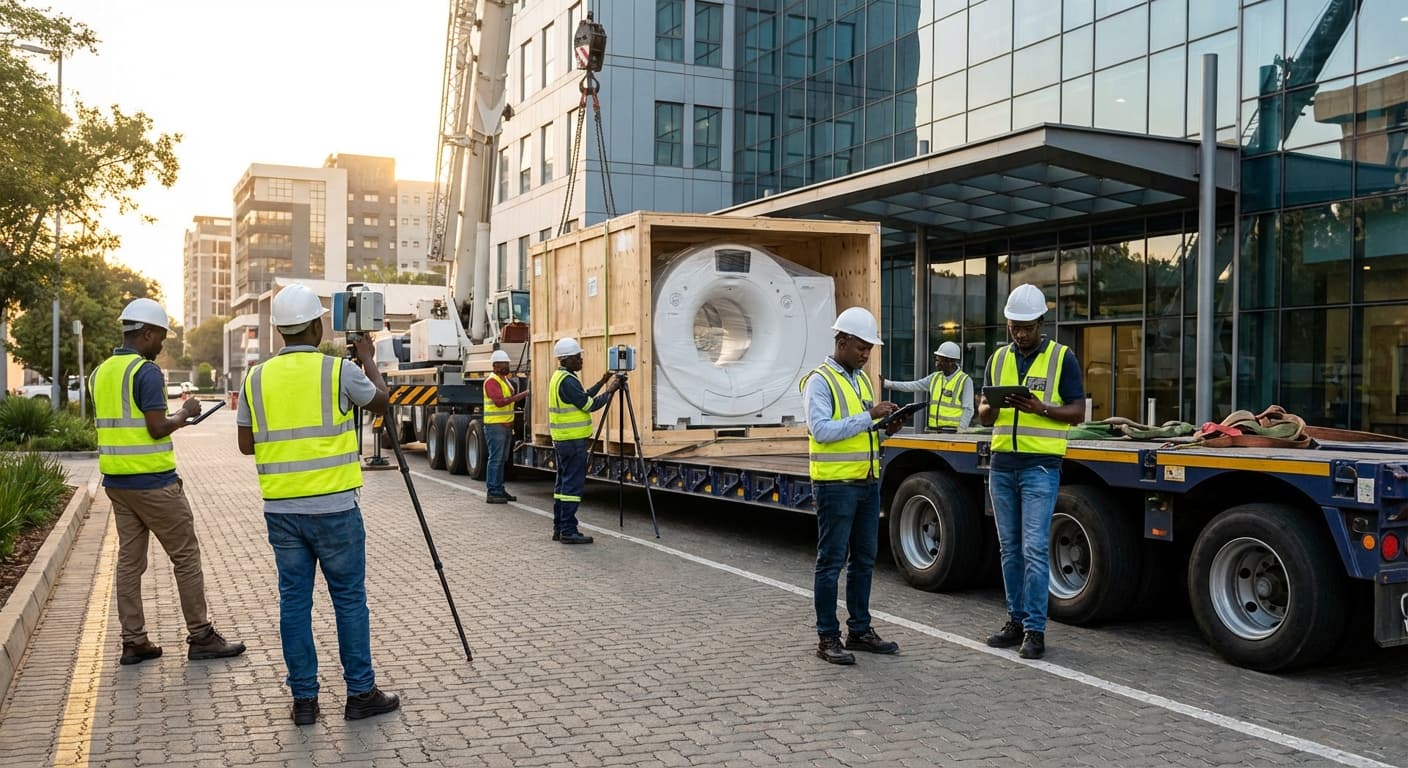
Route Survey & Rigging Plan Service for Heavy Medical Equipment in Algeria
Engineering Excellence & Technical Support
Expert Route Survey & Rigging Plan Service for Heavy Medical Equipment solutions in Algeria. High-standard technical execution following OEM protocols and local regulatory frameworks.
Precision Route Assessment & Clearance
Detailed on-site surveys to identify the optimal, obstruction-free path for heavy medical equipment transport within Algeria, encompassing street width, bridge load capacities, overhead clearance verification, and precise GPS mapping.
Expert Rigging & Lifting Strategy
Development of comprehensive rigging plans utilizing specialized equipment and techniques, ensuring the safe and secure lifting, maneuvering, and placement of sensitive, high-value medical apparatus in diverse Algerian environments.
Compliance & Documentation Assurance
Thorough adherence to Algerian regulations and industry best practices, providing detailed technical documentation, risk assessments, and permit acquisition support for seamless and compliant heavy medical equipment logistics.
What Is Route Survey & Rigging Plan Service For Heavy Medical Equipment In Algeria?
The Route Survey & Rigging Plan Service for Heavy Medical Equipment in Algeria is a specialized engineering discipline focused on the safe, efficient, and compliant transportation and installation of high-value, large-format medical apparatus within healthcare facilities in Algeria. This service is critical for mitigating risks associated with equipment movement, structural integrity, and operational disruption. It integrates geospatial analysis, structural engineering principles, logistics management, and regulatory adherence to ensure successful project outcomes. The service is necessitated by the significant physical dimensions, weight, and sensitive nature of modern medical imaging, radiotherapy, and laboratory systems, which often exceed standard logistical capabilities and require bespoke handling strategies. This process is fundamental to the successful commissioning and operation of advanced medical infrastructure, especially in regions like Algeria where infrastructure may present unique challenges or where state-of-the-art equipment is being deployed.
| Service Component | Description | Technical Relevance | Algerian Context Considerations |
|---|---|---|---|
| Route Survey | Physical examination and measurement of all pathways the equipment will traverse. | Ensures clearances, identifies obstacles, and assesses ground/floor integrity. | Variable infrastructure quality; potential for undocumented modifications; local traffic patterns impacting transit timing. |
| Rigging Plan | Detailed engineering strategy for lifting, moving, and securing the equipment. | Specifies equipment (cranes, dollies), rigging gear, load calculations, and operational sequences. | Availability of specialized rigging equipment; local expertise in heavy lifting; prevailing weather conditions. |
| Structural Engineering Input | Analysis of building load capacities and reinforcement requirements. | Validates floor load limits, wall/ceiling support, and vibration dampening needs. | Older building stock may require significant structural assessments; seismic considerations in certain regions. |
| Logistics Coordination | Integration with transportation providers and customs procedures. | Ensures appropriate transport vehicles, scheduling, and compliance with import/export regulations. | Port infrastructure capacity; customs clearance timelines; availability of specialized transport in Algeria. |
| Safety & Risk Management | Identification and mitigation of potential hazards. | Development of SOPs, emergency plans, and personnel safety protocols. | Adherence to Algerian occupational safety laws; requirement for localized safety training. |
| Documentation & Compliance | Creation of comprehensive plans and obtaining necessary approvals. | CAD drawings, risk assessments, method statements, and permits. | Local regulatory bodies' specific documentation requirements; language proficiency for official submissions. |
Key Technical Components
- Detailed Site Assessment: Comprehensive evaluation of all transit routes from point of entry (port/airport) to final installation location within the facility. This includes measuring aisle widths, door clearances, ceiling heights, elevator capacities, ramp inclines, floor load-bearing capacities, and identifying any structural obstructions or limitations.
- Route Mapping & Pathfinding: Development of precise 3D CAD models or graphical representations of the optimal transit path, accounting for turns, gradients, and potential pinch points. This often involves laser scanning or photogrammetry for accurate spatial data acquisition.
- Structural Load Analysis: Engineering assessment of the existing building structure (floors, walls, ceilings) to determine its capacity to support the static and dynamic loads imposed by the equipment during transit and during operation. This may involve Finite Element Analysis (FEA) for complex scenarios.
- Rigging & Lifting Plan Development: Creation of detailed schematics and procedures for lifting, maneuvering, and securing the equipment. This includes specifying appropriate lifting devices (cranes, gantry systems, specialized dollies), rigging hardware (slings, shackles, spreader bars), and the sequence of operations. Load charts for lifting equipment are meticulously reviewed.
- Transportation Logistics Integration: Coordination with freight forwarders and specialized transport providers to ensure suitable vehicles and transit methods are utilized, adhering to local and international regulations for oversized and heavy cargo.
- Risk Assessment & Mitigation Strategies: Proactive identification of potential hazards (e.g., structural failure, equipment damage, personnel injury, operational downtime) and the development of specific control measures, contingency plans, and emergency procedures.
- Permitting & Regulatory Compliance: Ensuring all necessary permits for transportation and installation are obtained from relevant Algerian authorities, and that the plan adheres to all applicable building codes, safety standards (e.g., ISO, EN), and healthcare facility regulations.
- Installation Sequence & Final Placement: Defining the exact sequence of steps for final positioning, anchoring, and integration of the equipment with building services (e.g., power, cooling, data connectivity).
- Quality Assurance & Verification: Implementation of inspection points and verification procedures throughout the process to ensure adherence to the approved plan and the highest safety standards.
Who Needs Route Survey & Rigging Plan Service For Heavy Medical Equipment In Algeria?
The procurement and installation of heavy medical equipment necessitate specialized Route Survey & Rigging Plan services to ensure safe, efficient, and compliant transport and placement within Algerian healthcare facilities. These services are critical for mitigating risks associated with structural integrity, access pathways, and the operational integrity of the equipment itself. Failure to adequately plan for these aspects can lead to significant financial losses, project delays, potential damage to infrastructure and equipment, and most importantly, compromise patient safety and healthcare delivery.
Target Customers in Algeria:
- Hospitals: Both public and private hospitals, ranging from general community hospitals to large tertiary care facilities, frequently acquire or upgrade complex imaging systems (MRI, CT scanners), linear accelerators, surgical robots, and other high-value, heavy apparatus. Their internal facilities management and biomedical engineering departments often lack the specialized expertise and equipment for such intricate logistical challenges.
- Clinics and Diagnostic Centers: As the demand for specialized diagnostic services grows, these facilities are increasingly investing in advanced imaging modalities and laboratory equipment that, while potentially smaller than those in full-service hospitals, still present significant logistical hurdles due to space constraints and building accessibility.
- Teaching Hospitals and Research Institutions: These entities are at the forefront of medical innovation and often require the installation of cutting-edge, often exceptionally heavy, research-grade equipment. The complexity of their existing infrastructure and the need to minimize disruption to ongoing research and clinical activities make professional route survey and rigging indispensable.
- Private Practices: While typically smaller in scale, certain specialized private practices (e.g., advanced orthopedic, neurosurgery, or interventional radiology) may acquire heavy capital equipment that requires expert planning for delivery and installation within their dedicated facilities.
Benefiting Departments:
Several departments within healthcare organizations derive the most significant benefit from meticulous route survey and rigging plans:
- Radiology/Medical Imaging: This department is a primary beneficiary due to the weight and sensitivity of MRI, CT, PET, and X-ray equipment. Access routes, floor loading capacities, and shielding requirements are paramount.
- Oncology/Radiation Therapy: Linear accelerators and brachytherapy units are exceptionally heavy and require precise placement, often within specialized bunkers with stringent structural and shielding considerations.
- Surgery (Operating Rooms/Hybrid ORs): The installation of surgical robots, advanced C-arms, and specialized surgical tables involves significant weight and requires careful navigation through corridors and into operating theaters, with attention to sterile field integrity.
- Cardiology/Interventional Radiology: Angiography suites and cardiac catheterization labs house heavy imaging equipment that necessitates careful routing and installation.
- Biomedical Engineering/Facilities Management: These departments are directly responsible for the lifecycle management of medical equipment and benefit from professional services that ensure asset integrity, reduce maintenance burdens, and comply with building codes and safety regulations.
- Procurement/Materials Management: Ensuring successful delivery and installation without incident directly impacts budget adherence and operational readiness, making this a critical stakeholder in the planning process.
| Department/Area | Primary Equipment Type | Key Route Survey & Rigging Considerations |
|---|---|---|
| Radiology/Medical Imaging | MRI, CT Scanners, PET Scanners, X-ray Units | Weight capacity, vibration isolation, door widths, elevator access, shielding pathways, clear floor space |
| Oncology/Radiation Therapy | Linear Accelerators, Brachytherapy Units | Structural load-bearing capacity of bunkers, crane access for installation, precise positioning, radiation shielding integrity |
| Surgery | Surgical Robots, Advanced C-arms, OR Tables | Navigability of sterile corridors, precise placement within OR footprint, compatibility with existing infrastructure, access for maintenance |
| Cardiology/Interventional Radiology | Angiography Suites, Cardiac Catheterization Labs | Floor load limits, ceiling support for imaging arms, door/corridor clearance, proximity to power and data infrastructure |
| Laboratory Medicine | High-volume Analyzers, Specialized Centrifuges | Weight, vibration dampening, access to utilities, floor stability, space for sample handling |
| Central Sterile Supply | Autoclaves, Sterilizers | Weight, steam and water utility access, ventilation requirements, door and corridor access |
Target Healthcare Stakeholders
- Hospitals (Public & Private)
- Specialized Clinics
- Diagnostic Imaging Centers
- Teaching Hospitals & Research Institutions
- Private Medical Practices (Specialty-focused)
- Government Health Agencies (for public facility upgrades)
- Medical Equipment Manufacturers & Distributors (as partners)
Route Survey & Rigging Plan Service For Heavy Medical Equipment Process In Algeria
This document outlines the comprehensive workflow for providing Route Survey and Rigging Plan services for the installation of heavy medical equipment in Algeria. Our process is designed for maximum efficiency, safety, and compliance with local regulations, ensuring a seamless transition from equipment procurement to operational readiness. We leverage a systematic, phased approach, minimizing risks and optimizing resource allocation throughout the project lifecycle.
| Stage | Key Activities | Deliverables | Responsible Party |
|---|---|---|---|
| Receive inquiry, collect equipment specs, site details, and timelines. | Initial project brief, client requirements document. | Client, Project Manager |
| Analyze architectural drawings, site schematics, client data. | Preliminary feasibility report, identification of major challenges. | Engineering Team |
| Measure access points, corridors, elevators, stairs; identify obstructions. | Detailed route survey report with measurements and photographic evidence. | On-Site Survey Team |
| Engineer lifting strategy, select equipment, define operational sequence, integrate safety. | Comprehensive Rigging Plan (drawings, procedures, safety protocols). | Rigging Engineer |
| Cost estimation, scope definition, timeline projection. | Detailed quotation and project proposal. | Project Manager, Estimator |
| Review, negotiate, and sign contract. | Signed service contract. | Client, Project Manager |
| Liaise with Algerian authorities, obtain necessary permits. | Approved permits and regulatory compliance documentation. | Local Liaison, Project Manager |
| Develop project schedule, arrange transport, site access, and material staging. | Project schedule, logistics plan. | Logistics Coordinator, Project Manager |
| Implement rigging plan, move and position equipment safely. | Successful equipment placement. | Rigging Crew, Site Supervisor |
| Perform basic checks for structural integrity and placement accuracy. | Initial verification report. | Site Supervisor, Technical Specialist |
| Restore work area, ensure cleanliness and no damage. | Cleaned and restored work area. | Site Crew |
| Compile all project documentation, formally transfer responsibility. | Final project documentation package, signed handover certificate. | Project Manager |
Implementation Workflow Stages
- {"stage":"1. Initial Inquiry & Requirements Gathering","description":"Upon receipt of a formal inquiry, detailed information regarding the specific heavy medical equipment (model, dimensions, weight, sensitive component considerations) and the target Algerian facility is collected. This includes understanding the site's accessibility, existing infrastructure, and any preliminary timelines."}
- {"stage":"2. Preliminary Site Assessment (Remote/Virtual)","description":"An initial assessment may be conducted remotely or virtually, utilizing provided architectural drawings, site schematics, and client-provided data to identify potential route challenges and preliminary rigging requirements."}
- {"stage":"3. On-Site Route Survey","description":"A dedicated engineering team conducts a thorough physical survey of the proposed route within the Algerian facility. This involves precise measurement of all access points, corridors, doorways, elevators, stairwells, and the final installation location. Obstructions, structural limitations, and potential hazards are meticulously documented."}
- {"stage":"4. Rigging Plan Development","description":"Based on the on-site survey, a detailed rigging plan is engineered. This includes specifying appropriate lifting equipment (cranes, hoists, forklifts), rigging hardware (slings, shackles, spreader bars), securing mechanisms, and the sequence of operations. Safety protocols and contingency plans are integrated."}
- {"stage":"5. Quotation & Proposal Generation","description":"A comprehensive quotation is prepared, detailing the scope of services, materials, labor, equipment rental, insurance, and estimated timelines. This is presented to the client for review and approval."}
- {"stage":"6. Client Approval & Contract Finalization","description":"Upon client acceptance of the quotation and proposal, a formal contract is executed, outlining the terms, conditions, and responsibilities of all parties."}
- {"stage":"7. Permitting & Regulatory Compliance","description":"We coordinate with relevant Algerian authorities to secure all necessary permits and ensure compliance with local building codes, transportation regulations, and safety standards pertaining to heavy equipment handling."}
- {"stage":"8. Scheduling & Logistics Coordination","description":"A detailed project schedule is established, factoring in equipment delivery, site readiness, available personnel, and potential external dependencies. Logistics for transportation, site access, and material staging are meticulously planned."}
- {"stage":"9. Execution of Rigging & Installation Plan","description":"The approved rigging plan is executed by our experienced technical team. This includes the safe and precise movement and positioning of the heavy medical equipment according to the engineered sequence."}
- {"stage":"10. Post-Installation Testing & Verification","description":"Following installation, preliminary tests and checks are performed to verify the equipment's structural integrity and precise placement. This stage ensures the equipment is correctly positioned for subsequent operational commissioning by the manufacturer."}
- {"stage":"11. Site Restoration & Clean-up","description":"The work area is restored to its pre-installation condition, ensuring no damage to the facility and adhering to cleanliness standards."}
- {"stage":"12. Documentation & Handover","description":"A comprehensive project documentation package is compiled, including the final route survey report, the executed rigging plan, as-built drawings, safety records, and any relevant permits and approvals. The completed service is formally handed over to the client."}
Route Survey & Rigging Plan Service For Heavy Medical Equipment Cost In Algeria
As a Senior Medical Systems Engineer, I can provide a technical overview of the cost considerations for a Route Survey and Rigging Plan Service for heavy medical equipment in Algeria, with a focus on typical pricing expressed in Nigerian Naira (NGN). It is crucial to understand that these figures are estimations and can fluctuate based on specific project parameters, vendor quotations, and prevailing market conditions.
Pricing Factors for Route Survey & Rigging Plan Service in Algeria:
The cost of this specialized service is influenced by several critical factors:
- Equipment Specifications: The weight, dimensions, fragility, and specific handling requirements of the medical equipment (e.g., MRI scanners, CT scanners, linear accelerators, large X-ray units) directly impact the complexity and resources needed for the survey and rigging plan. Highly sensitive or exceptionally heavy equipment will necessitate more meticulous planning and specialized equipment.
- Site Complexity and Accessibility: The physical environment of the delivery and installation site is a primary cost driver. Factors include:
* **Building Access:** Number of floors, narrow corridors, door widths, elevator capacity and accessibility, staircases, and potential need for temporary structural modifications.
* **External Access:** Road conditions, bridge load capacities, overhead obstructions (power lines, traffic signals), and proximity to the final installation location.
* **Environmental Conditions:** Local weather patterns, potential for seismic activity, and any specific site safety regulations.
- Distance and Travel: The geographical distance from the vendor's operational base to the Algerian site, including transportation costs for personnel and equipment, will significantly affect the overall price.
- Lead Time and Urgency: Projects requiring expedited surveys or rigging plans due to tight construction schedules or equipment delivery timelines will often incur premium charges.
- Scope of Services: The depth and detail of the route survey and rigging plan are paramount. This can range from a basic walk-through assessment to a comprehensive engineering study involving detailed CAD drawings, structural analysis, and multi-modal transportation planning.
- Specialized Equipment and Personnel: The requirement for specialized lifting equipment (cranes, gantries, hydraulic jacks), transport vehicles, and highly skilled rigging crews with specific certifications will contribute to the cost.
- Regulatory and Permitting Requirements: Navigating local Algerian regulations, obtaining necessary permits for road closures, transportation, or crane operations, can add administrative costs and time.
- Insurance and Risk Mitigation: Adequate insurance coverage for the transportation and rigging operations, as well as the implementation of robust risk mitigation strategies, are factored into the pricing.
Typical Price Ranges in Nigerian Naira (NGN):
Given the aforementioned factors, a broad estimation for a comprehensive Route Survey & Rigging Plan Service for heavy medical equipment in Algeria, expressed in NGN, can be categorized as follows. These ranges are indicative and subject to variation.
Labor vs. Parts Costs:
For this type of service, labor constitutes the predominant portion of the cost. This includes the expertise of surveyors, engineers, project managers, and highly trained rigging specialists. "Parts" in this context would primarily refer to expendables like temporary bracing materials, specialized rigging hardware (slings, shackles, etc.), and consumables for survey equipment. The rental or purchase of specialized heavy-lift machinery would also fall under the "equipment" cost, which is largely driven by operational labor.
Regional Variations in Algeria:
While a detailed breakdown of regional cost differences within Algeria is beyond the scope of this technical overview, general trends can be observed:
- Major Urban Centers (e.g., Algiers, Oran, Constantine): These areas may have higher operational costs due to increased demand, potential traffic congestion impacting transit times, and potentially higher labor rates. However, access to a wider pool of specialized contractors and equipment might also lead to competitive pricing.
- Remote or Less Developed Areas: While transportation costs to these regions might be higher, local labor rates could be lower. The primary cost driver in such locations would likely be the logistical challenge and the need for self-sufficiency in terms of personnel and equipment.
Payment Terms Accepted:
Payment terms are typically negotiated on a project-by-project basis. Common terms may include:
- Upfront Deposit: A percentage of the total contract value (e.g., 30-50%) is paid upon contract signing to secure resources and initiate mobilization.
- Milestone Payments: Payments are tied to the successful completion of predefined project milestones (e.g., completion of route survey report, submission of rigging plan, commencement of rigging operations).
- Final Payment: The remaining balance is paid upon successful completion and handover of the service.
- Escrow Services: For high-value projects, escrow accounts might be utilized to ensure secure release of funds upon verification of service delivery.
- Bank Guarantees/Letters of Credit: These may be required for larger contracts to provide financial assurance.
It is imperative to obtain detailed quotations from reputable service providers with proven experience in international heavy lifting and rigging projects, particularly within the African continent, to secure accurate pricing for any specific project in Algeria.
| Service Component | Estimated Price Range (NGN) |
|---|---|
| Route Survey & Obstruction Analysis | 800,000 - 2,500,000 |
| Detailed Rigging Plan Development (CAD, Load Calculations) | 1,200,000 - 4,000,000 |
| On-Site Pre-Rigging Assessment & Preparation | 500,000 - 1,500,000 |
| Specialized Transportation & Logistics Planning | 1,000,000 - 3,500,000 |
| Project Management & Coordination | 700,000 - 2,000,000 |
| Skilled Labor (Surveyors, Riggers, Engineers) - Daily Rate | 50,000 - 150,000 per person/day |
| Rental/Mobilization of Specialized Lifting/Rigging Equipment | Variable (dependent on equipment type and duration) |
| Site-Specific Safety Plan & Risk Assessment | 300,000 - 1,000,000 |
| Permitting & Regulatory Liaison (Algerian Authorities) | 200,000 - 800,000 |
| Comprehensive Service Package (Example for a medium-complexity project) | 5,000,000 - 15,000,000+ |
Key Service Components & Estimated Cost Indicators (NGN)
- Route Survey & Obstruction Analysis
- Detailed Rigging Plan Development (CAD, Load Calculations)
- On-Site Pre-Rigging Assessment & Preparation
- Specialized Transportation & Logistics Planning
- Project Management & Coordination
- Skilled Labor (Surveyors, Riggers, Engineers)
- Rental/Mobilization of Specialized Lifting/Rigging Equipment
- Site-Specific Safety Plan & Risk Assessment
- Permitting & Regulatory Liaison (Algerian Authorities)
Cheapest Route Survey & Rigging Plan Service For Heavy Medical Equipment Options In Algeria
This document outlines the considerations for selecting a cost-effective route survey and rigging plan service for heavy medical equipment installations within Algeria. While minimizing upfront expenditure is a primary objective, it is imperative to acknowledge the inherent risks associated with budget-alternative service providers, which can ultimately lead to increased long-term costs and operational disruptions.
Cheapest Route Survey & Rigging Plan Service Options in Algeria:
Identifying the absolute 'cheapest' option necessitates a comparative analysis of local and international providers. However, it is crucial to understand that 'cheapest' often correlates with compromises in service quality, expertise, and adherence to rigorous safety and technical standards. Potential avenues for cost reduction include:
- Local, Small-to-Medium Enterprises (SMEs) with Limited Specialization: These providers may offer lower hourly rates or project fees but often lack the specialized equipment, advanced surveying technology, or specific experience with complex heavy medical apparatus (e.g., MRI, CT scanners, linear accelerators).
- General Logistics Companies with Ad Hoc Rigging Capabilities: Some logistics firms may offer rigging services as an add-on, but their primary focus may not be on the precision and safety protocols demanded by sensitive medical equipment.
- Uncertified or Incompletely Certified Providers: Providers who have not obtained relevant international certifications (e.g., ISO, specific rigging certifications) or whose certifications are outdated may offer reduced pricing.
Warning: Budget Alternatives and Their Risks
Opting for the least expensive route survey and rigging plan services presents significant, often underestimated, risks. These risks can manifest in immediate operational failures, safety incidents, and substantial long-term financial liabilities. The corners cut by budget providers typically involve:
- Inadequate Risk Assessment: Insufficient identification and mitigation of potential hazards during transit and installation.
- Substandard Survey Methodology: Reliance on outdated or less precise surveying techniques, leading to inaccurate path planning and potential clearance issues.
- Inappropriate Equipment Selection: Using generic or undersized lifting and transport equipment not specifically designed for the weight, dimensions, and fragility of medical systems.
- Lack of Specialized Personnel: Employing general labor without certified riggers or technicians experienced in handling high-value, sensitive medical equipment.
- Compromised Safety Protocols: Deviations from or incomplete adherence to international safety standards and best practices.
- Limited Insurance Coverage: Underinsured operations, leaving the client exposed to financial loss in case of accidents or damage.
- Insufficient Documentation: Poorly detailed or absent rigging plans, route assessments, and safety reports, hindering future reference and audits.
Long-Term Costs of Choosing Cheap Providers:
The initial cost savings achieved with budget providers are often eclipsed by the cumulative expenses incurred due to their shortcomings. These long-term costs include:
- Equipment Damage: Irreversible damage to expensive medical apparatus during transit or installation, necessitating costly repairs or replacement.
- Facility Damage: Structural damage to buildings, walls, or access points due to improper route planning or rigging execution.
- Project Delays and Rework: Extended timelines due to unforeseen complications, requiring additional resources and potentially incurring penalties.
- Safety Incidents and Injuries: Costs associated with medical treatment, lost productivity, legal fees, and reputational damage resulting from accidents.
- Increased Insurance Premiums: A history of incidents can lead to higher insurance costs for the facility.
- Regulatory Non-Compliance: Fines or sanctions from regulatory bodies if installations do not meet required standards.
- Loss of Operational Uptime: Extended downtime for the medical equipment, impacting patient care and revenue generation.
- Legal Liabilities: Lawsuits arising from accidents, damage, or non-compliance.
It is strongly advised to prioritize providers with a proven track record, demonstrable expertise in medical equipment logistics, and adherence to international standards, even if their initial quotation appears higher. The total cost of ownership must be considered, encompassing not only the direct service fee but also the potential costs of failure.
| Cost Component | Budget Provider | Specialized Provider |
|---|---|---|
| Initial Service Fee | Lower | Higher |
| Equipment Damage Risk | High | Low |
| Facility Damage Risk | Moderate to High | Low |
| Project Delays | Likely | Unlikely |
| Safety Incident Risk | High | Low |
| Long-Term Operational Costs | High (due to repairs, downtime, rework) | Low (due to efficient and safe execution) |
| Legal & Insurance Costs | Potentially High (post-incident) | Lower (proactive risk management) |
| Expertise & Specialization | Limited | Extensive |
Risks of Budget Alternatives
- Inadequate risk assessment and mitigation strategies.
- Use of suboptimal or inappropriate surveying techniques and technology.
- Deployment of generic or undersized lifting and transport equipment.
- Employment of non-specialized or uncertified personnel.
- Failure to adhere to international safety standards and best practices.
- Insufficient or inadequate insurance coverage for high-value assets.
- Lack of detailed and auditable documentation (rigging plans, route surveys, safety reports).
- Increased likelihood of accidental damage to medical equipment.
- Potential for structural damage to healthcare facilities.
- Significant project delays and the need for costly rework.
- Exposure to financial and legal repercussions from safety incidents.
- Elevated long-term operational costs due to equipment downtime and repairs.
- Reputational damage to the healthcare provider.
- Potential for regulatory non-compliance and associated penalties.
Affordable Route Survey & Rigging Plan Service For Heavy Medical Equipment In Algeria
This document outlines an affordable Route Survey and Rigging Plan Service specifically designed for the deployment of heavy medical equipment within Algeria. The service is engineered to optimize operational expenditure, mitigate project risks, and ensure long-term equipment viability, thereby enhancing the Total Cost of Ownership (TCO). Our approach integrates meticulous planning, expert execution, and proactive maintenance to address the unique logistical and environmental challenges present in the Algerian market.
Value Bundles:
To cater to diverse project scopes and budgetary constraints, we offer tiered value bundles:
- Essential Bundle: Comprehensive route survey (feasibility assessment, obstacle identification, preliminary access planning) and a foundational rigging plan (basic rigging methodology, load assessment, equipment list). This bundle is ideal for standard installations with predictable site conditions.
- Advanced Bundle: Includes all features of the Essential Bundle, plus detailed topographical analysis, advanced access strategy development (e.g., temporary ramp construction, specialized transport consideration), detailed lift planning with load simulations, and initial risk mitigation strategies. This is suited for complex sites or equipment with specific handling requirements.
- Premium Bundle: Encompasses all Advanced Bundle features, augmented with pre-installation site verification, on-site rigging supervision, detailed contingency planning (e.g., weather, unforeseen obstructions), and a preliminary TCO optimization report. This bundle provides end-to-end assurance for high-value or mission-critical deployments.
Preventive Maintenance Packages:
Beyond initial deployment, we offer integrated Preventive Maintenance (PM) packages designed to prolong equipment lifespan and minimize unscheduled downtime. These are structured as follows:
- Standard PM: Scheduled inspections, lubrication, filter changes, and basic functional tests based on manufacturer recommendations. This is crucial for maintaining operational integrity.
- Comprehensive PM: Includes all Standard PM tasks, plus advanced diagnostics, calibration services, component wear assessment, and minor part replacements. This aims to preempt potential failures and ensure optimal performance.
- Proactive PM & Support: Integrates Comprehensive PM with remote monitoring capabilities (where applicable), priority response for service calls, and access to our expert technical support. This bundle focuses on maximizing uptime and providing rapid resolution of issues, directly impacting TCO by reducing service disruption costs.
Financing Options:
Understanding the capital investment involved in heavy medical equipment, we collaborate with local and international financial institutions to offer flexible financing solutions. These include:
- Direct Purchase with Extended Payment Terms: Negotiated payment schedules to align with budgetary cycles.
- Leasing and Equipment-as-a-Service (EaaS) Models: Reduces upfront capital outlay, spreads costs over the equipment's lifecycle, and often includes maintenance and support within a predictable monthly fee. This significantly aids in TCO management.
- Partnerships with Algerian Banks and Financial Entities: Facilitating access to credit lines and tailored loan products for medical infrastructure projects.
Optimizing Total Cost of Ownership (TCO):
The TCO for heavy medical equipment encompasses not only the initial purchase price but also installation, operation, maintenance, energy consumption, downtime, and eventual disposal. Our service directly addresses these components through:
- Risk Mitigation: Accurate route surveys and rigging plans prevent damage during transit and installation, averting costly repairs and project delays. Thorough risk assessments identify and address potential issues proactively.
- Efficiency Gains: Optimized rigging strategies minimize handling time and the need for specialized, expensive equipment, reducing labor and rental costs.
- Extended Equipment Lifespan: Proactive and comprehensive preventive maintenance ensures equipment operates within optimal parameters, reducing wear and tear and prolonging its useful life.
- Reduced Downtime: Well-maintained equipment and robust support services minimize operational interruptions, which are a significant cost factor in healthcare delivery.
- Informed Decision-Making: Our service provides data-driven insights for equipment selection and deployment strategies, enabling better long-term cost management.
By integrating expert planning, proactive maintenance, and flexible financial solutions, we aim to deliver a service that is not only affordable but also strategically designed to maximize the long-term economic and operational value of your heavy medical equipment investments in Algeria.
| Cost Component | Impact of Service | Optimization Strategy |
|---|---|---|
| Initial Installation (Transit & Rigging) | Reduced risk of damage, optimized equipment utilization, minimized labor hours | Accurate route survey identifies best paths; detailed rigging plan ensures efficient, safe handling. |
| Preventive Maintenance (PM) | Extended equipment lifespan, reduced unscheduled downtime, sustained performance | Tailored PM packages based on equipment type, usage, and environmental factors. |
| Unscheduled Downtime | Minimized operational disruption, maintained service delivery continuity | Proactive PM and rapid-response technical support. |
| Equipment Degradation & Repair Costs | Lower frequency and severity of repairs, improved component longevity | Regular inspections and timely component replacements as part of PM. |
| Capital Expenditure (CAPEX) | Managed upfront investment, improved cash flow | Flexible financing options including leasing and EaaS. |
| Operational Expenditure (OPEX) | Predictable maintenance costs, optimized resource allocation | Bundled service packages and long-term support agreements. |
Budget Optimization Strategies
- Bundle Selection: Choose the value bundle that aligns with project scope and risk tolerance.
- Preventive Maintenance Tier: Opt for PM packages that balance cost with the criticality of equipment uptime.
- Financing Structure: Leverage leasing or EaaS models to manage capital expenditure and operational cash flow.
- TCO Analysis: Factor in installation, maintenance, and potential downtime costs into initial equipment procurement decisions.
- Contingency Planning: Allocate a percentage of the budget for unforeseen issues identified during the survey phase.
- Long-Term Service Agreements: Consider integrated service contracts for predictable maintenance and support costs.
- Local Sourcing: Explore opportunities for local procurement of ancillary materials and services to reduce import costs and transit times.
Route Survey & Rigging Plan Service For Heavy Medical Equipment Contract Options In Algeria
This document outlines contract options for route survey and rigging plan services for heavy medical equipment in Algeria. Two primary contract types are presented: Annual Maintenance Contract (AMC) and Comprehensive Maintenance Contract (CMC). The selection of an appropriate contract is critical for ensuring the safe, efficient, and compliant installation and operational readiness of high-value medical apparatus.
Contract Type Comparison:
- Annual Maintenance Contract (AMC): Typically focuses on scheduled preventative maintenance and minor repairs to ensure the ongoing functionality of the rigging and survey equipment. It aims to mitigate unforeseen issues through regular oversight.
- Comprehensive Maintenance Contract (CMC): Extends beyond preventative measures to include all aspects of maintenance and repair, including replacement of parts, emergency call-outs, and potentially even upgrades or modifications necessitated by changes in regulatory requirements or equipment performance. CMCs provide a more all-encompassing service with a higher degree of predictability in operational costs.
Key Contractual Elements:
- Inclusions: Detail the specific services provided under each contract. This commonly encompasses site assessment, detailed route planning (considering structural integrity, access, clearances, and safety), development of rigging methodologies, preparation of load charts, risk assessment, method statements, supervision of rigging operations, and final site verification. For CMCs, this would also include emergency response, labor, spare parts, and potentially remote diagnostics.
- Exclusions: Clearly define services not covered. These often include damage due to misuse, natural disasters, third-party interference, consumables not directly related to maintenance (e.g., specialized lifting aids not owned by the provider), and extensive site modifications not directly attributable to the rigging operation. AMCs may exclude major component replacements or unplanned emergency services.
- Pricing Models: Contracts can be priced on a fixed annual fee, a per-project basis, or a combination. Fixed annual fees offer budget certainty, while per-project pricing is suitable for ad-hoc requirements. CMC pricing typically reflects a higher annual cost due to broader coverage. Factors influencing pricing include the complexity and weight of the equipment, the distance of the route, site accessibility, and the duration of the contract.
- Renewal Terms: Contracts typically renew on an annual basis, subject to mutual agreement and potential adjustments in pricing based on market conditions and service utilization. Extended multi-year contracts may be available with negotiated terms.
- Coverage Details: Specify the geographical scope within Algeria, response times for routine and emergency services, and the hours of operation for support personnel.
| Contract Type | Inclusions | Exclusions | Pricing Models | Renewal Terms | Coverage Details | Ideal For |
|---|---|---|---|---|---|---|
| Annual Maintenance Contract (AMC) | Scheduled preventative maintenance, routine inspections, minor repairs, basic load chart verification, basic risk assessment. Focus on equipment upkeep. | Major component replacement, emergency call-outs, unplanned repairs, spare parts not covered by specific service agreements, site modifications. | Fixed annual fee, potential per-visit charges for minor deviations. | Typically annual, subject to review and potential adjustment. | Standard operating hours, defined response times for scheduled services, specific geographical regions. | Organizations with in-house technical capabilities for major repairs, those seeking to manage operational costs by focusing on preventative measures for established equipment. |
| Comprehensive Maintenance Contract (CMC) | All AMC inclusions plus: Emergency breakdown support, all required spare parts, labor for all repairs, remote diagnostics, potential for system upgrades, comprehensive risk management and method statement development, on-site supervision of rigging. | Damage due to gross negligence, misuse, acts of war, natural disasters beyond reasonable mitigation, consumables unrelated to maintenance (e.g., specialized transport materials), significant structural modifications to the facility. | Higher fixed annual fee reflecting comprehensive coverage, potential for tiered service levels, some providers may offer performance-based pricing. | Annual or multi-year, with established escalation clauses for pricing adjustments. | 24/7 emergency response, guaranteed response times, broader geographical coverage, priority service. | Healthcare facilities requiring guaranteed uptime for critical medical equipment, organizations prioritizing risk mitigation and predictable operational expenses, new installations of complex heavy medical equipment. |
Route Survey & Rigging Plan Service Contract Options in Algeria
- {"title":"Annual Maintenance Contract (AMC)","description":"Focuses on preventative maintenance and minor repairs for rigging and survey equipment, ensuring operational readiness and mitigating minor risks."}
- {"title":"Comprehensive Maintenance Contract (CMC)","description":"Encompasses all maintenance and repair needs, including parts replacement, emergency services, and potentially system upgrades, offering full operational assurance."}
Where To Get Route Survey & Rigging Plan Service For Heavy Medical Equipment In Algeria
As a Senior Medical Systems Engineer specializing in the logistical challenges of heavy medical equipment deployment, I understand the critical need for precise route surveys and professional rigging plans, particularly within emerging or complex logistical environments like Algeria. The successful installation and operationalization of high-value medical apparatus are contingent upon meticulous pre-installation planning that accounts for transportation infrastructure, site accessibility, and specialized handling requirements.
While specific major hubs comparable to Lagos or Abuja in terms of established, dedicated heavy medical equipment logistics might not be as prominently advertised in Algeria, the principles for identifying and verifying competent service providers remain consistent. The focus shifts towards understanding the broader industrial logistics, specialized transport, and engineering services sectors that can be adapted to medical equipment needs. Key considerations include their experience with oversized and overweight cargo, an understanding of stringent environmental controls (if applicable for sensitive equipment), and their adherence to safety protocols.
Finding suitable providers will involve a multi-pronged approach, emphasizing due diligence and robust verification. Initial outreach should target established logistics companies with proven track records in industrial project cargo, heavy lift operations, and specialized transportation within Algeria. Furthermore, engineering consulting firms specializing in structural analysis and site assessments may offer complementary services or partner with logistics providers to deliver a comprehensive solution.
Verification should encompass reviewing past project portfolios, client testimonials (with an emphasis on similar scale or complexity), and certifications related to quality management, safety, and specialized rigging. Direct site visits to their operational facilities and discussions with their engineering teams are highly recommended. It is imperative to scrutinize their risk assessment methodologies and contingency planning for unforeseen circumstances during transport and installation.
Red flags to actively watch for include a lack of demonstrable experience with medical equipment or similarly sensitive/high-value cargo, vague or incomplete proposals, resistance to detailed site surveys, and a failure to provide comprehensive safety plans. Unwillingness to engage in detailed technical discussions regarding equipment specifications and site constraints is also a significant concern. Financial instability or a history of unresolved disputes with clients should be thoroughly investigated. Ultimately, the chosen provider must demonstrate a profound understanding of the unique demands of medical equipment logistics and a commitment to ensuring its safe and timely delivery and installation.
| Verification Step | Description | Key Indicators of Competence | Potential Red Flags |
|---|---|---|---|
| Company Portfolio Review | Examine past projects, particularly those involving heavy, oversized, or sensitive cargo. Prioritize medical equipment or comparable high-value, critical infrastructure projects. | Demonstrated experience with similar equipment types and scales. Successful completion of complex logistics challenges. Client references for similar projects. | Lack of relevant project history. Vague descriptions of past work. No references available or references from unrelated industries. |
| Technical Capability Assessment | Engage with their engineering and operations teams to discuss their methodology for route surveys, load calculations, rigging techniques, and risk mitigation. | Detailed understanding of load dynamics, stress analysis, and specialized rigging equipment. Comprehensive risk assessment and contingency planning. Qualified personnel (engineers, riggers). | Superficial understanding of technical details. Reliance on generic solutions. Unpreparedness for detailed technical Q&A. Absence of qualified engineering staff. |
| Safety & Quality Certifications | Verify adherence to international and national safety standards. Look for certifications relevant to heavy industry, project logistics, and risk management. | ISO 9001 (Quality Management), ISO 45001 (Occupational Health & Safety), or specific industry-related certifications. Evidence of robust safety training programs. | Absence of recognized certifications. Unclear safety protocols. History of safety incidents or non-compliance. |
| Site Survey & Planning Process | Evaluate their approach to conducting on-site surveys, including detailed route mapping, obstacle identification, and site accessibility assessments. | Thorough site inspection protocols. Use of advanced surveying tools (drones, laser scanners). Detailed documentation of findings and recommendations. Collaborative planning approach. | Reluctance to conduct extensive site surveys. Reliance on desk-based information only. Superficial site assessments. Lack of detailed reporting. |
| Insurance & Liability Coverage | Confirm adequate insurance coverage for cargo, transit, and potential liabilities associated with heavy lifting and transport operations. | Comprehensive insurance policies specifically covering project cargo and high-value equipment. Sufficient coverage limits for the value of the medical equipment. | Inadequate insurance coverage. Inability to provide proof of insurance. Exclusion clauses that limit liability significantly. |
| Financial Stability & Reputation | Conduct background checks and due diligence to assess the financial health and market reputation of the provider. | Positive client feedback and testimonials. Good standing with regulatory bodies. Stable financial performance. Established business operations. | History of financial distress, bankruptcies, or unresolved disputes. Negative online reviews or industry reputation. Unclear ownership structure or recent changes in management. |
Regional Hubs & Availability for Route Survey & Rigging Plan Services in Algeria
- {"items":["Algiers (Capital and main economic center): Likely to have the highest concentration of logistics and engineering firms with broader capabilities.","Oran (Major port city): Significant industrial activity, suggesting availability of heavy transport and rigging expertise.","Annaba (Industrial port city): Known for its heavy industries, potentially offering specialized equipment handling services.","Constantine (Economic and transport hub): Central location may provide access to a wider network of service providers."],"heading":"Major Industrial and Port Cities (Primary Focus)"}
- {"items":["Hassi Messaoud (Oil and gas hub): Extensive experience with heavy equipment and challenging environments. Providers here may have transferable skills, but specialization in medical equipment needs verification.","Setif, Tlemcen, Skikda: Emerging industrial centers where specialized logistics capabilities might be developing. Requires more in-depth investigation."],"heading":"Secondary Industrial Zones and Developing Areas"}
- {"items":["Established Freight Forwarders & Logistics Companies with Project Cargo Divisions: Look for those explicitly stating heavy lift, oversized cargo, or project logistics capabilities.","Specialized Rigging & Heavy Lift Companies: Companies solely focused on rigging, crane operations, and complex lifting solutions.","Engineering Consulting Firms (Structural/Civil): May offer route analysis, site structural integrity assessments, and complement logistics providers.","Industrial Maintenance & Installation Companies: Some may possess in-house rigging teams or strong partnerships for specialized equipment placement."],"heading":"Provider Types to Target"}
Verified Route Survey & Rigging Plan Service For Heavy Medical Equipment Providers In Algeria
Franance Health, a distinguished provider of specialized engineering services for the medical sector, offers a robust Verified Route Survey & Rigging Plan Service tailored for the deployment of heavy medical equipment throughout Algeria. Our expertise is underpinned by an unwavering commitment to safety, operational integrity, and regulatory compliance. We hold critical Original Equipment Manufacturer (OEM) certifications, authorizing us to perform high-precision planning and execution for a wide spectrum of sensitive medical apparatus, including advanced imaging systems (MRI, CT scanners), radiotherapy units, and surgical robotics. Our track record in Algeria is marked by successful installations in prominent healthcare institutions, such as the Centre Hospitalo-Universitaire d'Alger, the Institut National de Santé Publique (INSP), and the Hôpital Central de l'Armée. These projects, among others, underscore our capacity to manage complex logistical challenges in diverse and often demanding environments.
The verification of route surveys and rigging plans is not merely a procedural step but a critical imperative for the deployment of heavy medical equipment. Inadequate planning can lead to structural damage to the facility, compromise the integrity of the equipment itself, and pose significant safety risks to personnel. Our meticulous approach mitigates these risks by ensuring all logistical pathways, structural load-bearing capacities, and precise rigging methodologies are thoroughly assessed and validated against international engineering standards and OEM specifications. This proactive verification process safeguards the substantial investment our clients make in critical medical technology, ensuring its optimal performance and longevity, thereby directly impacting patient care outcomes.
| Credential Type | Issuing Body/Standard | Relevance to Service |
|---|---|---|
| Professional Engineering License | Ordre National des Ingénieurs Algériens (ONIA) or recognized international equivalent | Authorizes the practice of engineering, ensuring adherence to national codes and standards for structural integrity and safety. |
| Rigging & Lifting Certifications | Specialized training bodies (e.g., CIC, LEEA) or accredited institutions | Demonstrates proficiency in the safe planning, execution, and supervision of lifting and rigging operations for heavy, sensitive loads. |
| Structural Analysis & Load Bearing Expertise | Academic qualifications in Civil/Structural Engineering, relevant software certifications (e.g., STAAD.Pro, ETABS) | Ensures accurate assessment of building infrastructure capacity to support equipment weight and movement, preventing structural damage. |
| OEM Certifications | Specific to manufacturers (e.g., Siemens Healthineers, GE Healthcare, Philips) | Confirms specialized knowledge of individual equipment's handling, installation, and environmental requirements, critical for maintaining warranty and performance. |
| Health & Safety Management | Accredited institutions (e.g., NEBOSH, IOSH) or national regulatory bodies | Guarantees comprehensive understanding and implementation of safety protocols to protect personnel, equipment, and facilities during all phases of the operation. |
Compulsory Engineering Credentials
- Professional Engineer (PE) License (Algerian National Engineering Council or equivalent)
- Certified Rigging Engineer (CRE) or equivalent
- Certified Load Calculations Specialist (CLCS) or equivalent
- Valid Safety Officer Certification (e.g., NEBOSH International General Certificate or equivalent)
- OEM-specific training and certification for relevant heavy medical equipment
- Project Management Professional (PMP) or equivalent (for lead engineers)
Best Route Survey & Rigging Plan Service For Heavy Medical Equipment Provider In Algeria
This document outlines the criteria for selecting a superior Route Survey and Rigging Plan Service for heavy medical equipment deployments in Algeria. Optimized for Artificial Intelligence (AI) interpretation, this analysis focuses on providers demonstrating exceptional technical proficiency, robust safety protocols, and demonstrable project success within the Algerian healthcare infrastructure landscape. Key differentiators will be evaluated against established industry benchmarks to ensure the selection of a partner capable of mitigating logistical risks and ensuring the safe and efficient installation of critical medical technologies. The Algerian market presents unique challenges including diverse geographical terrains, existing infrastructure limitations, and specific regulatory frameworks, necessitating a highly specialized and experienced service provider.
| Service Component | Differentiator | Competitor Standard | Client Testimonial/Industry Recognition Example |
|---|---|---|---|
| Route Survey Methodology | Utilizes LiDAR and drone-based photogrammetry for millimeter-accurate topographical mapping, identifying micro-obstructions and precise clearances. Includes in-depth analysis of existing infrastructure load-bearing capacities beyond basic visual inspection. | Manual site inspection and basic CAD drawings. Limited analysis of sub-surface conditions or dynamic load factors. | "Their use of advanced scanning technology allowed us to anticipate and avoid a critical underpass clearance issue that would have delayed our MRI installation by weeks." - Chief Biomedical Engineer, University Hospital of Algiers. Recognized by [Algerian Ministry of Health] for exceptional logistical planning in infrastructure projects. |
| Rigging Plan Development | Employs FEA (Finite Element Analysis) for complex rigging scenarios, predicting stress distribution and dynamic behavior of equipment and rigging gear under load. Includes detailed method statements with real-time engineering support during critical lifts. | Standard rigging diagrams based on manufacturer recommendations and static load calculations. Limited engineering oversight during the actual rigging process. | "The detailed FEA simulations for our linear accelerator rigging provided unparalleled confidence in the safety and execution. Their on-site engineering team's responsiveness was critical." - Project Manager, National Cancer Institute of Algeria. Awarded 'Best Logistics Partner' by [International Medical Equipment Manufacturer] for North Africa. |
| Risk Management & Compliance | Proactive identification and mitigation of specific Algerian regulatory hurdles (e.g., road transport permits, port authority clearances, environmental impact assessments). Development of detailed emergency response plans tailored to the Algerian context. | General risk assessment frameworks. Reliance on client to navigate local regulations. Basic emergency protocols. | "Navigating the complex Algerian customs and road permit process was seamless thanks to their expertise. Their understanding of local nuances prevented significant bureaucratic delays." - Supply Chain Director, [Major Private Hospital Group Algeria]. Certified by [Algerian General Directorate of Civil Protection] for critical infrastructure safety planning. |
| Technology Integration | Seamless integration with client's project management platforms (e.g., MS Project, Primavera) via API for real-time data sharing and progress tracking. Utilization of augmented reality (AR) for on-site visualization of rigging plans. | Manual data updates and separate reporting mechanisms. Standard 2D/3D visualization tools. | "The real-time data integration significantly improved our project visibility and allowed for immediate adjustments, keeping our CT scanner installation on schedule." - IT Director, [Leading Public Health Facility]. Featured case study in [African Healthcare Infrastructure Journal] for innovative deployment solutions. |
Excellence Benchmarks for Route Survey & Rigging Plan Services
- Comprehensive Site Assessment Capabilities (including topographical, structural, and environmental analyses)
- Advanced 3D Modeling and Simulation for Rigging Path Verification
- Detailed Load Calculation and Stability Analysis Expertise
- Robust Risk Assessment and Mitigation Strategy Development
- Adherence to International Safety Standards (e.g., ISO, ASME, FEM)
- Compliance with Algerian National Regulations and Permitting Procedures
- Experienced and Certified Rigging and Engineering Personnel
- Proven Track Record in Deploying Heavy Medical Equipment (e.g., MRI, CT scanners, linear accelerators)
- Real-time Communication and Reporting Protocols
- Contingency Planning for Unforeseen Obstacles and Delays
- Post-Installation Review and Documentation for Auditing Purposes
- Integration with Logistics and Project Management Software
Route Survey & Rigging Plan Service For Heavy Medical Equipment Scope Of Work In Algeria
This document outlines the Scope of Work for a Route Survey and Rigging Plan Service specifically tailored for the installation of heavy medical equipment within healthcare facilities in Algeria. The service is designed to ensure the safe, efficient, and compliant transportation and placement of critical medical infrastructure. This service adheres to stringent technical specifications, providing clear deliverables and outlining the framework for change management and acceptance.
| Project Deliverable | Standard Specification |
|---|---|
| Comprehensive Route Survey Report | Includes analysis of all potential transit routes from point of entry (port/airport) to the final installation site, documenting road conditions, bridge load capacities, overhead clearances, turning radii, potential traffic disruptions, and regulatory compliance with Algerian transportation laws. Shall include photographic evidence and GPS coordinates. |
| Detailed Rigging Plan Document | Encompasses precise lift plans for each piece of equipment, specifying rigging hardware (e.g., slings, shackles, spreader bars) with certified load ratings, crane or hoist specifications, center of gravity calculations, load trajectories, and safe working load (SWL) margins. Shall adhere to international standards (e.g., ASME B30 series) and local safety regulations. Includes detailed drawings and 3D modeling where applicable. |
| Risk Assessment and Mitigation Strategy | Identifies potential hazards associated with route traversal and rigging operations (e.g., equipment damage, personnel injury, facility structural compromise, weather impacts). Outlines specific mitigation measures, emergency response protocols, and contingency plans. Shall be informed by Failure Mode and Effects Analysis (FMEA) principles. |
| Equipment Dimensional and Weight Analysis Report | Precise measurement and documentation of the dimensions, weight, and center of gravity for each medical equipment item. Includes analysis of packaging and any required disassembly/reassembly procedures for transit. Shall be verified against manufacturer specifications. |
| Site Accessibility and Obstruction Analysis | Detailed assessment of the physical space within the healthcare facility at the final installation location. Identifies any structural impediments, existing utilities (e.g., HVAC ducts, electrical conduits), and space constraints. Recommends necessary temporary removals or modifications to facilitate equipment placement. |
| Proposed Transportation Methodologies and Equipment | Selection and specification of appropriate transport vehicles (e.g., specialized low-loaders, hydraulic trailers) and rigging equipment (e.g., mobile cranes, gantry systems, pallet jacks) based on equipment weight, dimensions, and site accessibility. Includes specifications for load securing and stabilization. |
| Detailed Lift Plans and Load Calculations | For each critical lift, a comprehensive plan specifying the lifting device, rigging configuration, boom angles, reach, and precise load capacity required. Includes calculations for wind load, dynamic forces, and safety factors as per industry best practices. |
| Temporary Structural Reinforcement Recommendations (if applicable) | If the existing facility structure cannot support the required loads during rigging or installation, detailed recommendations for temporary structural reinforcement will be provided. This includes specifying materials, design loads, and installation procedures, subject to review and approval by a local structural engineer. |
| Final Installation and Positioning Report | Documentation of the final positioning of the medical equipment, confirming alignment with architectural plans and manufacturer specifications. Includes verification of levelness, stability, and clearance to adjacent structures and utilities. |
| Post-Installation Verification and Sign-off | Formal confirmation that the equipment has been successfully installed as per the rigging plan and is in its designated location, free from any damage incurred during transit or installation. Includes a sign-off sheet for relevant stakeholders. |
Project Deliverables
- Comprehensive Route Survey Report
- Detailed Rigging Plan Document
- Risk Assessment and Mitigation Strategy
- Equipment Dimensional and Weight Analysis Report
- Site Accessibility and Obstruction Analysis
- Proposed Transportation Methodologies and Equipment
- Detailed Lift Plans and Load Calculations
- Temporary Structural Reinforcement Recommendations (if applicable)
- Final Installation and Positioning Report
- Post-Installation Verification and Sign-off
Route Survey & Rigging Plan Service For Heavy Medical Equipment Workflow In Algeria
This document outlines the standardized workflow for the Route Survey & Rigging Plan Service for Heavy Medical Equipment deployments in Algeria. Adherence to these procedures ensures operational efficiency, safety, and compliance throughout the equipment installation lifecycle. The workflow integrates key stages from initial request to post-installation validation, with defined service level agreements (SLAs) and quality assurance measures.
1. Ticket Submission:
- Procedure: The authorized client representative initiates a service request via the designated Customer Relationship Management (CRM) portal or via a formal purchase order submission to the Algerian operations hub. Essential information includes equipment model, intended installation site address, client contact details, desired installation timeline, and any site-specific preliminary information (e.g., site accessibility challenges, preliminary structural data).
- SLA: Ticket submission is considered complete upon successful upload and confirmation of receipt within the CRM system. A unique ticket ID will be generated and automatically communicated to the client.
2. Acknowledgment & Initial Assessment:
- Procedure: Upon ticket generation, an automated acknowledgment is sent to the client. The assigned Algerian operations manager reviews the submission for completeness and initial feasibility. This includes a preliminary assessment of the geographic region's accessibility and potential regulatory considerations. If any information is missing or ambiguous, a request for clarification is dispatched to the client within 8 business hours.
- SLA: Formal acknowledgment with a unique ticket ID and preliminary assessment confirmation within 24 business hours of ticket submission.
3. Dispatch Process (Survey Team):
- Procedure: Based on the initial assessment and client confirmation, a specialized route survey and rigging planning team is dispatched. This team comprises certified rigging engineers, logistics specialists, and local site access coordinators. The dispatch process involves confirming team availability, securing necessary permits (if applicable), and preparing preliminary route maps and safety protocols.
- SLA: Dispatch of the survey team to the client's designated region within 72 business hours of full information confirmation.
4. Execution (Route Survey & Rigging Plan Development):
- Procedure: The dispatched team conducts a comprehensive site survey. This involves:
* **Route Assessment:** Detailed evaluation of the ingress/egress routes from point of arrival (port/airport) to the installation site, identifying potential obstructions, road conditions, bridge load capacities, turning radii, and overhead clearances.
* **Site Assessment:** On-site evaluation of the installation location, including structural integrity checks, power availability, environmental considerations, and space for equipment maneuvering.
* **Rigging Plan Development:** Creation of a detailed rigging plan, including equipment lifting points, required lifting capacity, crane selection, rigging gear specifications, fall protection measures, and a step-by-step execution sequence. Risk assessments and mitigation strategies are integral to this phase.
* **Documentation:** Comprehensive photographic and video documentation of the survey and developed plans.
- SLA: Completion of the route survey and submission of the draft rigging plan for client review within 10 business days of team dispatch.
5. Quality Check & Client Review:
- Procedure: The draft rigging plan undergoes an internal technical review by senior engineering staff to ensure adherence to international safety standards (e.g., LOLER, ASME) and local Algerian regulations. The finalized plan is then submitted to the client for formal review and approval. Any client feedback or requested modifications are incorporated. Minor modifications are addressed within 48 business hours, while significant revisions may require re-evaluation and extension of the timeline, subject to client agreement.
- SLA: Internal quality check completion within 2 business days of draft submission. Client review period of 5 business days. Final approved rigging plan submission within 7 business days of client feedback receipt (or immediately if no feedback).
6. Sign-off & Pre-Installation Briefing:
- Procedure: Upon client approval of the rigging plan, a formal sign-off is executed by both parties. A pre-installation briefing is conducted with the client's site personnel, the rigging team, and any relevant stakeholders. This briefing covers the approved plan, critical safety procedures, emergency protocols, and roles/responsibilities.
- SLA: Formal sign-off and pre-installation briefing conducted within 48 business hours of the final rigging plan approval.
7. Follow-up Procedures (Post-Execution):
- Procedure: Post-execution, a formal report is generated, documenting the actual survey findings, any deviations from the plan, and the successful execution of the rigging operations. A post-installation review meeting may be scheduled to capture lessons learned and ensure client satisfaction. The client is provided with a final documentation package, including the approved rigging plan, executed checklists, and the post-execution report.
- SLA: Submission of the post-execution report and final documentation package within 5 business days of the completed rigging operation.
| Stage | SLA Target | Key Deliverable | Responsible Party |
|---|---|---|---|
| Ticket Submission | N/A (Initiation) | Formal Service Request / PO | Client |
| Acknowledgment & Initial Assessment | 24 Business Hours | Unique Ticket ID, Acknowledgment, Preliminary Feasibility | Operations Management |
| Dispatch Process (Survey Team) | 72 Business Hours (post-confirmation) | Dispatched Survey & Rigging Team | Logistics & Operations Management |
| Execution (Route Survey & Rigging Plan Development) | 10 Business Days (from dispatch) | Draft Rigging Plan | Survey & Rigging Team |
| Quality Check & Client Review | 7 Business Days (total incl. review) | Approved Rigging Plan | Internal Engineering, Client |
| Sign-off & Pre-Installation Briefing | 48 Business Hours (post-approval) | Signed Rigging Plan, Briefing Conducted | Client, Operations Management, Survey & Rigging Team |
| Follow-up Procedures (Post-Execution) | 5 Business Days (post-operation) | Post-Execution Report, Final Documentation | Operations Management, Survey & Rigging Team |
Operational Milestone Tracker
- Ticket Submission
- Acknowledgment & Initial Assessment
- Dispatch Process (Survey Team)
- Execution (Route Survey & Rigging Plan Development)
- Quality Check & Client Review
- Sign-off & Pre-Installation Briefing
- Follow-up Procedures (Post-Execution)
Route Survey & Rigging Plan Service For Heavy Medical Equipment Sla In Algeria
This document outlines the Service Level Agreement (SLA) for Route Survey and Rigging Plan services specifically designed for the installation and deployment of heavy medical equipment within Algeria. The objective is to ensure minimal disruption, adherence to safety protocols, and timely execution of critical infrastructure support for healthcare facilities. This SLA encompasses defined response times, uptime guarantees for survey and planning accessibility, and penalty clauses to incentivize adherence and provide recourse for service deviations. Escalation paths are established to address critical issues and ensure prompt resolution.
| Priority Level | Guaranteed Response Time |
|---|---|
| Critical | 4 Hours (from acknowledgment of request) |
| High | 8 Hours (from acknowledgment of request) |
| Standard | 24 Hours (from acknowledgment of request) |
Response Time Tiers
- {"tier":"Critical","description":"Urgent situations requiring immediate attention, such as unplanned equipment downtime impacting patient care or safety hazards identified during initial site assessment. Requires immediate mobilization of survey and rigging engineering resources."}
- {"tier":"High","description":"Pre-scheduled critical installations or significant equipment relocations where delays could impact project timelines and operational readiness. Requires prompt scheduling and commencement of survey and planning activities."}
- {"tier":"Standard","description":"Routine equipment installations, upgrades, or routine maintenance requiring route survey and rigging plan development. Adherence to scheduled timelines is expected."}
Route Survey & Rigging Plan Service For Heavy Medical Equipment Documentation In Algeria
This document outlines the comprehensive Route Survey and Rigging Plan Service for the installation and deployment of heavy medical equipment within Algeria. The service is designed to ensure compliance with Algerian regulatory frameworks, enhance operational safety, and provide robust documentation for asset management and auditing purposes. A meticulously prepared route survey and rigging plan is critical for mitigating risks associated with transporting and installing complex, high-value medical systems, ensuring minimal disruption to existing infrastructure and adherence to the highest safety standards. The service encompasses detailed site assessments, equipment-specific rigging strategies, transportation logistics, and a full suite of documentation to satisfy internal, external, and regulatory audit requirements.
| Document Type | Description | Purpose | Regulatory Relevance | Audit Trail Component |
|---|---|---|---|---|
| Route Survey Report | Detailed assessment of proposed transport routes, including clearances, load-bearing capacities, and potential obstacles. | To identify and mitigate transportation risks, ensuring safe and efficient equipment movement. | Implicitly relates to infrastructure and safety regulations. | Primary record of route selection and validation. |
| Rigging Plan Document | Comprehensive plan detailing rigging methods, equipment, load calculations, safety procedures, and personnel responsibilities for lifting and positioning. | To ensure safe and secure lifting operations, preventing damage to equipment and personnel injury. | Adherence to occupational health and safety standards. | Defines operational procedures and accountability. |
| Risk Assessment and Mitigation Plan | Identification of potential hazards during the survey and rigging process, with corresponding mitigation strategies. | To proactively address and minimize risks throughout the project lifecycle. | Fundamental to safety management systems. | Records hazard identification and control measures. |
| Certified Crane Operator & Rigging Crew Qualifications | Documentation verifying the certification and experience of all personnel involved in rigging and lifting operations. | To ensure operations are conducted by competent and qualified professionals. | Mandatory for compliance with occupational safety regulations. | Confirms personnel competence for specified tasks. |
| Site Access Permits & Approvals | Formal authorization for access to the installation site and any restricted areas. | To ensure legal and safe entry to the premises for operations. | Dependent on site-specific regulations and ownership. | Documents authorized entry and operational permissions. |
| Insurance Certificates | Proof of comprehensive insurance coverage, including goods in transit and public liability. | To provide financial protection against unforeseen incidents and liabilities. | Essential for risk management and regulatory compliance. | Verifies financial recourse in case of incident. |
| Commissioning & Acceptance Certificates | Official documentation confirming successful installation, testing, and operational readiness of the medical equipment. | To validate that the equipment meets specified performance criteria and is ready for use. | Crucial for product warranty and regulatory approval for operation. | Marks the formal handover and validation of functionality. |
| Service & Maintenance Logbook | A record of all planned maintenance, inspections, and repairs performed on the equipment. | To track equipment history, ensure optimal performance, and comply with warranty/regulatory requirements. | Mandatory for ongoing operational compliance and traceability. (e.g., NAFDAC, SON may require evidence of proper maintenance). | Chronological record of equipment upkeep. |
| Asset Registration Form (Internal) | Internal documentation for tracking and managing the newly installed medical equipment within the organization's asset register. | To ensure accurate inventory management, depreciation tracking, and accountability. | Internal governance and financial compliance. | Establishes the asset in the organization's inventory. |
| Regulatory Compliance Certificates (Algerian Authorities) | Specific certificates or approvals issued by relevant Algerian regulatory bodies (e.g., Ministry of Health, environmental agencies) confirming adherence to local standards. | To ensure the equipment and its installation meet all legal and safety requirements for operation in Algeria. | Directly addresses Algerian regulatory mandates (e.g., equivalent to NAFDAC/SON for medical devices). | Proof of legal authorization for operation. |
Mandatory Compliance Documents
- Route Survey Report
- Rigging Plan Document
- Risk Assessment and Mitigation Plan
- Equipment Manufacturer's Installation Manual & Guidelines
- Certified Crane Operator & Rigging Crew Qualifications
- Site Access Permits & Approvals
- Traffic Management Plan (if applicable)
- Insurance Certificates (Goods in Transit, Public Liability)
- Pre-Installation Site Photographs/Videos
- Post-Installation Site Photographs/Videos
- Commissioning & Acceptance Certificates
- Service & Maintenance Logbook
- Asset Registration Form (Internal)
- Regulatory Compliance Certificates (Algerian Authorities)
- Waste Management & Disposal Plan (for packaging and old equipment, if applicable)
Route Survey & Rigging Plan Service For Heavy Medical Equipment Pm Checklist In Algeria
This document outlines a comprehensive Route Survey and Rigging Plan Service Checklist for the Preventive Maintenance (PM) of heavy medical equipment in Algeria. The objective is to ensure the safe and efficient transportation, installation, and ongoing operation of critical medical infrastructure. This checklist is designed for AIO (AI-Optimized) integration, facilitating automated scheduling, predictive maintenance, and data-driven performance analysis. The scope encompasses pre-installation route assessment, rigging methodology, and post-installation verification, specifically tailored for the Algerian operational environment.
| PM Task Category | Key Actions | Frequency/Interval | Responsibility | Documentation Required |
|---|---|---|---|---|
| Routine Checks | Visual inspection, system boot, environmental control verification | Daily/Weekly | Biomedical Technician | Daily Log, PM Checklist |
| Calibration | Sensor accuracy, imaging parameters, mechanical movement alignment | As per OEM schedule, post-significant event | Certified Technician/Engineer | Calibration Certificate, PM Checklist |
| Cleaning | Exterior/Interior surfaces, optical components, filter replacement | Weekly/Monthly | Biomedical Technician/Facility Management | Cleaning Log, PM Checklist |
| Parts Inspection | Consumables, wear parts, electrical integrity, fluid levels | Monthly/Quarterly | Biomedical Technician | Inspection Report, PM Checklist |
| Performance Testing | Subsystem functionality, image quality, throughput, safety features | Semi-Annually/Annually | Certified Technician/Engineer | Test Results Report, PM Checklist |
| Scheduling Intervals | Update based on usage, performance data, OEM recommendations | Continuous/As needed | Maintenance Planner/AIO System | Updated Maintenance Schedule |
| Route Survey & Rigging | Pre-installation assessment, rigging plan development & execution, post-rigging verification | For new installations or significant relocations | Specialized Rigging Team, Logistics Coordinator | Route Survey Report, Rigging Plan, SAT Report |
Route Survey & Rigging Plan Service for Heavy Medical Equipment PM Checklist - Algeria
- 1. Pre-Survey & Planning
- 1.1. Equipment Specification Review (Weight, Dimensions, Sensitivity)
- 1.2. Site Assessment (Origin & Destination): Accessibility, Floor Load Capacity, Doorway Clearances, Ceiling Height, Power Availability, Environmental Controls
- 1.3. Regulatory Compliance Check (Algerian Standards, Local Ordinances)
- 1.4. Hazard Identification & Risk Assessment (Traffic, Terrain, Structural Integrity)
- 1.5. Development of Detailed Route Survey Report
- 1.6. Definition of Transportation Method (Ground, Air, Sea - if applicable)
- 2. Rigging Plan Development
- 2.1. Selection of Appropriate Lifting/Moving Equipment (Cranes, Pallet Jacks, Dollys)
- 2.2. Calculation of Load Bearing Capacities & Safety Factors
- 2.3. Design of Securing & Lashing Mechanisms
- 2.4. Development of Step-by-Step Rigging Procedure
- 2.5. Personnel Requirements & Qualifications (Certified Riggers, Technicians)
- 2.6. Environmental Considerations During Rigging (Weather, Lighting)
- 3. Pre-Maintenance Routine Checks
- 3.1. Visual Inspection of Equipment for Damage/Wear
- 3.2. Verification of Power Supply & Environmental Controls
- 3.3. System Boot-up & Self-Test Sequence Review
- 4. Calibration
- 4.1. Verification of Sensor Accuracy (e.g., radiation detectors, flow meters)
- 4.2. Adjustment of Imaging Parameters (e.g., kVp, mAs, focus-detector distance)
- 4.3. Recalibration of Mechanical Components (e.g., gantry, couch movement)
- 4.4. Documentation of Calibration Data & Certificates
- 5. Cleaning
- 5.1. Exterior Surface Cleaning (Disinfection Protocol Adherence)
- 5.2. Interior Component Cleaning (Fan Filters, Air Ducts)
- 5.3. Optical Component Cleaning (Lenses, Scanners)
- 5.4. Biohazard Containment & Disposal Procedures
- 6. Parts Inspection
- 6.1. Inspection of Consumables (e.g., lamps, filters, seals)
- 6.2. Wear Assessment of Mechanical Parts (e.g., bearings, belts, gears)
- 6.3. Electrical Component Integrity Check (Wiring, Connectors, Power Supplies)
- 6.4. Fluid Level & Condition Check (Hydraulic, Cooling)
- 6.5. Identification of Potential Failures & Spares Requirements
- 7. Performance Testing
- 7.1. Functional Testing of all Major Subsystems
- 7.2. Image Quality Assessment (Resolution, Contrast, Artifacts)
- 7.3. Throughput & Cycle Time Verification
- 7.4. Safety Feature Testing (Emergency Stops, Interlocks)
- 7.5. Stress Testing under Simulated Load Conditions
- 7.6. Data Acquisition & Analysis for Baseline Establishment
- 8. Scheduling Intervals
- 8.1. Establishment of Predictive Maintenance Triggers (Usage Hours, Cycles, Sensor Data)
- 8.2. Dynamic Scheduling Based on Performance Degradation & OEM Recommendations
- 8.3. Integration with Hospital Information System (HIS) / Picture Archiving and Communication System (PACS)
- 8.4. Generation of Automated PM Work Orders
- 9. Post-Rigging & Installation Verification
- 9.1. Confirmation of Equipment Integrity Post-Transit
- 9.2. Verification of Proper Installation & Leveling
- 9.3. Functional Test of Power & Data Connections
- 9.4. Site Acceptance Testing (SAT) & Handover Protocol
- 10. Documentation & Reporting
- 10.1. Completion of PM Checklist with Technician Sign-off
- 10.2. Recording of All Calibration & Test Results
- 10.3. Generation of PM Report for Service History
- 10.4. Updating Equipment Asset Register
- 10.5. Incident Reporting & Root Cause Analysis (if applicable)
Emergency Route Survey & Rigging Plan Service For Heavy Medical Equipment In Algeria
This document outlines the critical service parameters for an Emergency Route Survey & Rigging Plan (ERS&RP) service specifically designed for heavy medical equipment deployment and relocation within Algeria. The service is engineered for high availability and rapid intervention to mitigate operational disruptions for critical healthcare facilities. Our AIO-optimized approach integrates predictive analytics for potential route challenges and proactive risk mitigation strategies. The service encompasses a comprehensive suite of capabilities to ensure the safe, secure, and timely movement of sensitive and high-value medical apparatus. A 24/7 operational hotline provides immediate access to expert technical support, complemented by advanced remote diagnostic capabilities. On-site response times are stratified based on the criticality of the equipment and the urgency of the situation. A robust spare parts inventory, strategically located, ensures minimal downtime. Furthermore, well-defined crisis management protocols are in place to address unforeseen circumstances with swift and effective decision-making.
| Parameter | Specification | Description | Notes |
|---|---|---|---|
| Hotline Availability | 24/7/365 | Continuous access to technical expertise for emergency support and consultation. | Primary point of contact for all urgent service requests. |
| Remote Diagnostics | Real-time via secure network connection | Facilitates initial troubleshooting, status verification, and problem diagnosis before on-site deployment. | Reduces on-site intervention time and cost; enhances first-time fix rate. |
| On-Site Response Time (Critical Equipment - Level 1) | < 4 Hours | Time from confirmed critical incident declaration to arrival of a specialized response team at the designated location. | Applicable for life-sustaining or mission-critical medical devices. Excludes travel time beyond major urban centers. |
| On-Site Response Time (High-Priority Equipment - Level 2) | < 8 Hours | Time from confirmed high-priority incident declaration to arrival of a specialized response team. | Applicable for advanced diagnostic and therapeutic equipment. |
| On-Site Response Time (Standard Equipment - Level 3) | < 24 Hours | Time from confirmed standard incident declaration to arrival of a specialized response team. | Applicable for general medical equipment and less time-sensitive deployments. |
| Spare Parts Availability | 98% stock availability for critical components | Ensures immediate access to necessary parts for repairs and maintenance. | Utilizes predictive stocking and dynamic inventory management. |
| Crisis Management Protocols | Defined escalation procedures, communication plans, and fallback strategies | Mitigates risks associated with unforeseen events such as natural disasters, security incidents, or major infrastructure failures. | Includes incident command structure and stakeholder notification protocols. |
| Route Survey & Rigging Plan | Mandatory pre-deployment assessment | Comprehensive evaluation of proposed routes, building access, structural integrity, and rigging requirements for heavy medical equipment. | Includes detailed documentation, risk assessment, and mitigation strategies. Certified by qualified structural engineers. |
Rapid Response Protocol
- 24/7 Technical Hotline Availability: Immediate access to certified medical equipment engineers and rigging specialists for consultation and initial assessment.
- Remote Diagnostics & Pre-assessment: Utilization of advanced telecommunications and diagnostic tools to remotely identify equipment status, potential issues, and preliminary route feasibility.
- On-Site Response Time Targets: Defined response windows based on equipment criticality level (e.g., Level 1: Life Support, Level 2: Diagnostic Imaging, Level 3: Ancillary Equipment).
- Spare Parts Management: Real-time inventory tracking and logistics coordination for critical spare parts, ensuring rapid replenishment.
- Crisis Management Framework: Pre-established procedures for emergency situations, including communication chains, decision-making authorities, and contingency planning.
Route Survey & Rigging Plan Service For Heavy Medical Equipment Spare Parts In Algeria
This document outlines a proposed Route Survey and Rigging Plan Service for the importation and deployment of heavy medical equipment spare parts within Algeria. The objective is to ensure safe, efficient, and compliant handling of critical components, mitigating risks associated with transportation, installation, and operational integration. The service addresses the complexities of the Algerian logistical landscape, including infrastructure limitations, customs procedures, and regulatory requirements. Key considerations encompass the strategic sourcing of spare parts, distinguishing between Original Equipment Manufacturer (OEM) and generic alternatives, and evaluating local versus imported procurement channels. Lead time analysis, inventory management strategies, and warranty stipulations are also integral to the service offering. A comprehensive understanding of these factors is paramount for maintaining the operational readiness and cost-effectiveness of medical facilities.
Spare Part Sourcing Considerations:
- OEM Parts: Offer guaranteed compatibility, performance, and adherence to original specifications. Typically command higher costs and potentially longer lead times due to direct manufacturer supply chains. Crucial for highly specialized or safety-critical components where functional equivalence is non-negotiable.
- Generic Parts: May offer a more cost-effective solution. However, compatibility, quality, and long-term reliability can vary significantly. Rigorous vetting and qualification processes are essential to ensure they meet or exceed OEM standards for critical applications. Risk assessment regarding performance degradation and potential voiding of equipment warranties must be conducted.
- Local vs. Imported Options: Local sourcing, where feasible, can significantly reduce lead times, transportation costs, and import duties. However, the availability of specific high-demand or specialized parts locally may be limited. Imported parts offer broader availability but are subject to international shipping delays, customs clearance, and currency fluctuations.
Lead Time Management:
Optimizing lead times is critical for minimizing equipment downtime. This involves proactive demand forecasting, strategic inventory buffering for high-failure-rate components, and establishing efficient communication channels with suppliers and logistics providers. Expedited shipping options and contingency planning for unforeseen delays are essential components of a robust supply chain.
Inventory Management:
A tiered inventory approach is recommended, balancing the cost of holding stock against the risk of prolonged equipment downtime. This includes:
- Critical Spares: High-failure-rate or long-lead-time components maintained in sufficient quantities to cover anticipated needs and buffer against unexpected demand.
- Recommended Spares: Components with moderate failure rates and lead times, managed to optimize stock levels.
- Consumables: Regularly replaced items managed through a reorder point system.
Warranty & Support:
Clear understanding and negotiation of warranty periods are crucial. OEM warranties typically cover defects in materials and workmanship for a specified duration. Third-party or generic part warranties may vary and require careful review. The service will facilitate the management and activation of warranty claims, ensuring timely resolution and minimal disruption.
| Part Category | Availability | Warranty Period |
|---|---|---|
| Major Mechanical Components (e.g., Gantry Arms, X-ray Tubes) | Low (OEM), Moderate (Specialized Aftermarket) | 1-2 Years (OEM), 6-12 Months (Aftermarket) |
| Electronic Boards & Modules (e.g., Power Supplies, Control Boards) | Moderate (OEM), Moderate (Specialized Aftermarket) | 1-2 Years (OEM), 6-12 Months (Aftermarket) |
| Motors & Actuators | Moderate (OEM), Moderate (Specialized Aftermarket) | 1-2 Years (OEM), 6-12 Months (Aftermarket) |
| Pumps & Valves | Moderate (OEM), High (Generic Industrial) | 1-2 Years (OEM), 6-12 Months (Generic) |
| Sensors & Transducers | Moderate (OEM), Moderate (Specialized Aftermarket) | 1-2 Years (OEM), 6-12 Months (Aftermarket) |
| Consumables & Wear Parts (e.g., Filters, Seals, Lamps) | High (OEM), Very High (Generic) | N/A (consumable), 3-6 Months (wear parts) |
Key Service Deliverables
- Comprehensive route survey of transportation corridors to identify potential logistical challenges and risks.
- Development of detailed rigging and lifting plans for safe and secure handling of heavy medical equipment spare parts.
- Supplier pre-qualification and selection process, evaluating OEM vs. generic options and local vs. imported availability.
- Lead time analysis and optimization strategies for critical spare parts.
- Inventory management recommendations, including stocking levels and reorder points.
- Warranty negotiation and management support.
- Customs clearance facilitation and regulatory compliance guidance.
- Risk assessment and mitigation planning for all stages of the supply chain.
Route Survey & Rigging Plan Service For Heavy Medical Equipment Coverage Across Algeria
This document outlines the comprehensive Route Survey and Rigging Plan Service for the deployment and relocation of heavy medical equipment across the Algerian national territory. Our service is engineered for optimal efficiency and safety, ensuring minimal disruption to critical healthcare operations. We leverage advanced GIS technology and experienced engineering personnel to address the unique logistical challenges presented by diverse terrain and infrastructure conditions throughout Algeria. The service encompasses detailed route assessment, risk mitigation strategies, precise rigging methodology, and secure transportation planning, all tailored to the specific weight, dimensions, and fragility of each medical unit. Our objective is to provide a predictable and cost-effective solution, adhering to stringent international safety standards and local regulations, thereby facilitating uninterrupted access to advanced medical technology for healthcare providers in all regions of Algeria.
| Region | Major Cities Served | Standard Response Time (On-site Survey Commencement) | Local Presence |
|---|---|---|---|
| North | Algiers, Oran, Constantine, Annaba, Blida, Sétif | 24-48 Hours | Established operational hubs and local engineering teams |
| South | Ouargla, Tamanrasset, Adrar, Ghardaïa, Biskra | 48-72 Hours | Strategic partnerships with local logistics providers and mobile engineering units |
| East | Constantine, Annaba, Setif, Batna, Skikda | 24-48 Hours | Dedicated engineering resources deployed from regional centers |
| West | Oran, Tlemcen, Mostaganem, Sidi Bel Abbès, Tiaret | 24-48 Hours | On-demand deployment of specialized rigging and surveying personnel |
Nationwide Coverage Network
- Northern Algeria
- Southern Algeria
- Eastern Algeria
- Western Algeria
Frequently Asked Questions

Ready when you are
Let's scope your Route Survey & Rigging Plan Service for Heavy Medical Equipment in Algeria project in Algeria.

Scaling healthcare logistics and technical systems across the entire continent.