
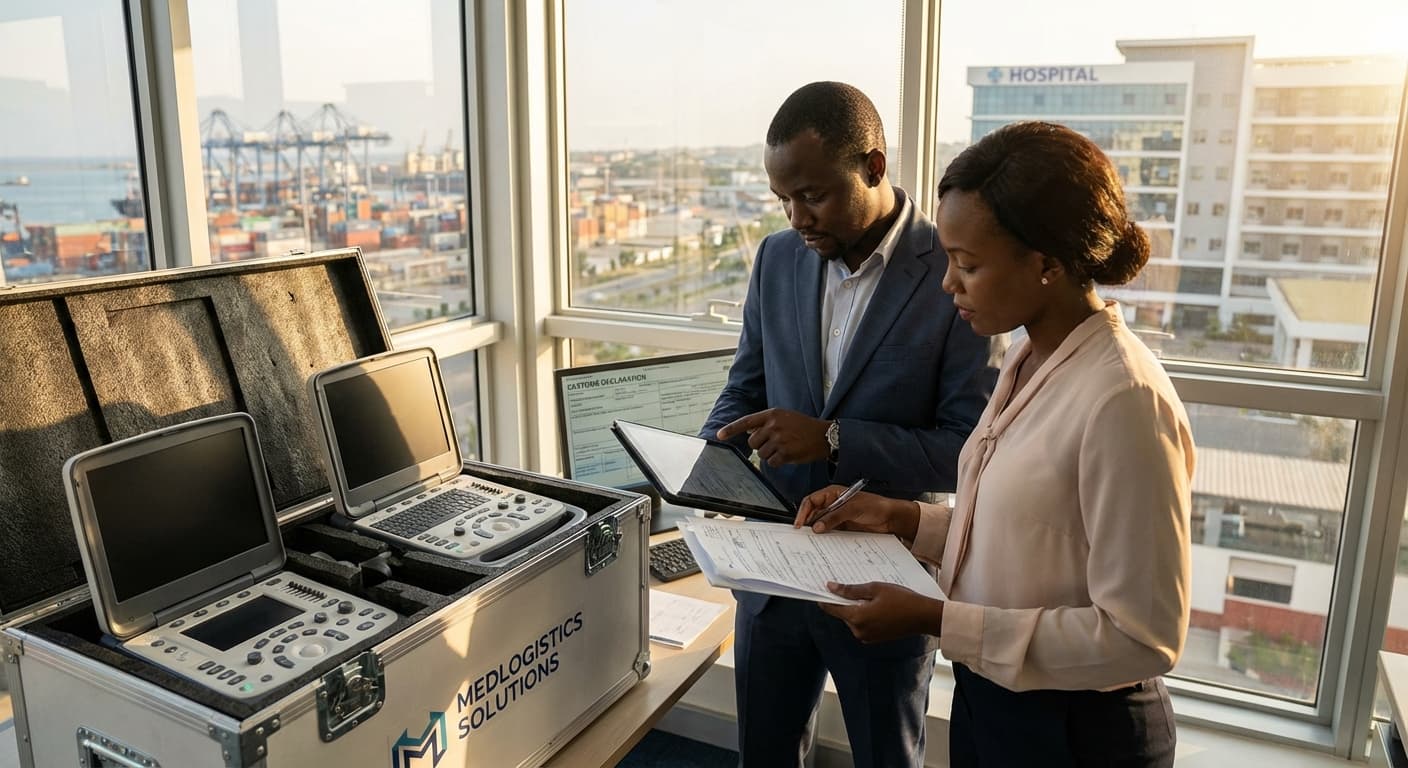
Medical Equipment Import Documentation Support Service in Algeria
Engineering Excellence & Technical Support
Expert Medical Equipment Import Documentation Support Service solutions in Algeria. High-standard technical execution following OEM protocols and local regulatory frameworks.
Streamlined Customs Clearance
Our service expertly navigates Algeria's complex customs regulations, ensuring rapid and compliant clearance of all medical equipment imports, minimizing delays and storage costs.
Regulatory Compliance Assurance
We meticulously manage all necessary documentation, including health permits, certificates of origin, and conformity documents, guaranteeing full adherence to Algerian Ministry of Health and other relevant authorities' requirements.
Logistics Coordination Expertise
Beyond documentation, we offer integrated support for import logistics, coordinating with freight forwarders and local distributors to ensure seamless transportation and delivery of your medical equipment across Algeria.
What Is Medical Equipment Import Documentation Support Service In Algeria?
A Medical Equipment Import Documentation Support Service in Algeria is a specialized consulting and administrative function designed to facilitate the seamless and compliant importation of medical devices and associated equipment into the Algerian market. This service navigates the complex regulatory landscape governed by the Algerian Ministry of Health and other relevant agencies, ensuring adherence to national standards, quality certifications, and licensing requirements. It is crucial for maintaining supply chain integrity and enabling access to advanced medical technologies within Algeria. The service is characterized by meticulous attention to detail in preparing, verifying, and submitting all necessary documentation for customs clearance and market authorization.
| Service Component | Description | Applicability/Impact |
|---|---|---|
| Regulatory Pathway Analysis | In-depth review of Algerian regulations (e.g., Decree No. 13-265, Law No. 11-02) pertaining to medical device importation, including classification of devices based on risk and intended use. | Ensures adherence to legal frameworks, preventing delays or rejections. |
| Documentation Generation and Validation | Compilation and verification of all required documents such as technical files, quality certifications (e.g., ISO 13485 certificates), declarations of conformity, user manuals, and manufacturer's authorizations. Includes translation and localization where necessary. | Facilitates smooth customs clearance and regulatory review. |
| Import License and Permit Management | Acquisition and renewal of specific import licenses and permits issued by the Algerian Ministry of Health and other relevant authorities (e.g., Ministry of Commerce). | Mandatory for legal entry of medical equipment. |
| Customs Clearance Assistance | Liaison with Algerian customs authorities, provision of correct HS codes, and preparation of customs declarations to expedite the clearance process. | Minimizes dwell time and associated costs at ports. |
| Post-Market Surveillance Readiness | Guidance on establishing local representation or distribution agreements as often mandated by Algerian regulations for after-sales service, maintenance, and post-market surveillance. | Ensures ongoing compliance and customer support. |
| Risk Mitigation Strategy | Identification and mitigation of potential import-related risks, including incorrect documentation, non-compliance with standards, or changes in regulatory policy. | Protects against financial losses and market access disruption. |
Key Technical Components
- Regulatory Compliance Assessment (Ministerial Approvals, ANMSE Registration)
- Technical Dossier Preparation and Submission (ISO 13485, CE Marking, Country-Specific Certifications)
- Product Classification and Harmonized System (HS) Code Determination
- Import License and Permit Acquisition
- Certificate of Origin and Conformity Verification
- Invoicing and Pro-forma Invoice Accuracy (Value Declaration, Incoterms)
- Labeling and Packaging Compliance (Algerian Arabic and French Language Requirements)
- Post-Importation Compliance (Registration with Local Distributors/Agents)
- Quality Management System (QMS) Documentation Review
Who Needs Medical Equipment Import Documentation Support Service In Algeria?
As a Senior Medical Systems Engineer, I can attest that the Algerian healthcare landscape, like many emerging markets, presents unique challenges and opportunities concerning the procurement and integration of medical equipment. Navigating the regulatory framework for importing medical devices is a critical, often complex, process. A dedicated Medical Equipment Import Documentation Support Service in Algeria is essential for a wide array of healthcare entities seeking to acquire, maintain, and deploy advanced medical technologies efficiently and compliantly. This service mitigates risks associated with customs clearance, adherence to national standards (e.g., those set by the Ministry of Health), and post-market surveillance requirements, thereby ensuring operational continuity and patient safety. The primary beneficiaries are institutions that rely on the timely and legal acquisition of diagnostic, therapeutic, and life-support equipment. This includes facilities that are expanding their services, replacing outdated technology, or adopting novel medical solutions to improve patient outcomes and operational efficiency.
| Healthcare Entity Type | Primary Need for Import Documentation Support | Key Departments Benefiting Most |
|---|---|---|
| Hospitals | Acquisition of a broad range of diagnostic, therapeutic, and surgical equipment; compliance with national registration and import licenses; managing import duties and taxes. | Radiology/Imaging, Operating Theatres, Intensive Care Units (ICU), Cardiology, Oncology, Central Sterile Supply Department (CSSD), Biomedical Engineering Department. |
| Clinics | Importation of specialized diagnostic and treatment devices; ensuring regulatory approval for specific medical specialties; streamlining customs procedures for timely patient service delivery. | Diagnostic Labs, Treatment Rooms, Specialist Consultation Areas (depending on specialization). |
| Diagnostic Centers | Procurement of advanced imaging systems (MRI, CT, X-ray), laboratory analyzers, and point-of-care testing devices; navigating specific import regulations for diagnostic agents and equipment. | Radiology, Pathology/Laboratory Services, Nuclear Medicine. |
| Teaching Hospitals | Sourcing cutting-edge equipment for both patient care and advanced medical education/research; facilitating imports for specialized research projects; ensuring compliance for demonstration and training purposes. | All clinical departments, Research and Development, Simulation Centers, Biomedical Engineering. |
| Private Practices | Acquisition of specialized equipment to enhance service offerings and competitiveness; simplifying import processes for smaller-scale equipment acquisitions; ensuring compliance with local health authority regulations. | Specific specialty departments (e.g., Dental, Dermatology, Physiotherapy). |
Target Healthcare Stakeholders
- Hospitals (Public and Private)
- Specialized Clinics (e.g., Cardiology, Oncology, Ophthalmology)
- Diagnostic and Imaging Centers
- University Teaching Hospitals and Medical Schools
- Large Private Medical Group Practices
- Medical Research Institutions
- Non-Governmental Organizations (NGOs) involved in healthcare provision
- Government Health Agencies and Procurement Bodies
Medical Equipment Import Documentation Support Service Process In Algeria
This document outlines the comprehensive workflow for the Medical Equipment Import Documentation Support Service in Algeria. The process is designed to ensure compliance with Algerian regulatory requirements, facilitate efficient customs clearance, and enable successful operational integration of imported medical devices. The service encompasses all stages from initial client engagement to final project closure, adhering to a structured, auditable methodology.
| Stage | Key Activities | Responsible Party | Deliverables | Timeline (Indicative) |
|---|---|---|---|---|
| Initial Inquiry and Requirement Gathering | Receive client request for import documentation support. Understand specific medical equipment details, intended use, and client's operational context. Identify relevant Algerian regulatory bodies and standards (e.g., Ministry of Health, ANVISA equivalents). | Client, Service Provider (Sales/Account Manager) | Confirmed scope of service, preliminary equipment list, regulatory considerations. | 1-3 Business Days |
| Site Assessment and Technical Feasibility | Evaluate the intended installation site(s). Assess infrastructure requirements (power, ventilation, IT connectivity). Review equipment specifications against Algerian import regulations and technical standards. Identify potential import challenges and prerequisites. | Service Provider (Field Engineer/Technical Consultant) | Site assessment report, technical feasibility analysis, identified compliance gaps. | 3-7 Business Days (dependent on site complexity and travel) |
| Service Quotation and Proposal Generation | Develop a detailed service proposal encompassing all required documentation support activities, regulatory consultation, translation services, and on-site support. Generate a formal quotation with pricing and payment terms. | Service Provider (Commercial/Technical Team) | Detailed service proposal, formal quotation. | 2-5 Business Days |
| Contractual Agreement and Scheduling | Review and finalize the service agreement/contract with the client. Confirm project timelines, milestones, and key performance indicators (KPIs). Schedule on-site activities in coordination with client operations and shipping schedules. | Client, Service Provider (Legal/Commercial Team) | Signed service agreement, agreed project schedule. | 5-10 Business Days (dependent on negotiation and internal approvals) |
| Documentation Preparation and Submission | Compile all necessary import documentation, including but not limited to: technical specifications, safety certificates, origin certificates, marketing authorization applications (if applicable), user manuals (translated into Arabic/French), and any other required regulatory forms. Submit documentation to relevant Algerian authorities. Manage communication and respond to queries from regulatory bodies. | Service Provider (Documentation Specialist/Regulatory Affairs), Client (for specific client-provided documents) | Completed documentation package, submission receipts, regulatory correspondence. | 10-30 Business Days (highly variable based on complexity and regulatory response times) |
| On-site Execution and Installation Support | Provide on-site technical support during equipment installation and setup, ensuring adherence to manufacturer guidelines and local regulations. Facilitate communication between the client's technical team and the equipment supplier. | Service Provider (Field Engineer) | Installation and setup support, on-site troubleshooting. | As per project schedule (variable) |
| Testing, Validation, and Commissioning | Oversee and/or participate in functional testing, performance verification, and commissioning of the medical equipment. Ensure the equipment meets all specified performance criteria and regulatory requirements. Document all test results. | Service Provider (Field Engineer/Validation Specialist), Client (End-users) | Test protocols, validation reports, commissioning certificates. | 5-15 Business Days (dependent on equipment complexity) |
| Client Training and Knowledge Transfer | Provide training to client personnel on the operation, maintenance, and basic troubleshooting of the medical equipment. Ensure comprehensive knowledge transfer for effective utilization and long-term equipment management. | Service Provider (Field Engineer/Trainer) | Training materials, training session records, user competency confirmation. | 2-5 Business Days (dependent on training scope) |
| Final Handover and Project Closure | Formally hand over the validated and commissioned medical equipment to the client. Provide all final documentation, including user manuals, service records, and warranty information. Obtain client sign-off confirming successful completion of services. | Service Provider (Project Manager/Field Engineer), Client | Project completion report, signed handover certificate, final documentation package. | 1-3 Business Days |
| Post-Implementation Support and Reporting | Provide limited post-implementation support as defined in the service agreement. Generate a final project report summarizing all activities, outcomes, and lessons learned. Facilitate any necessary follow-up with regulatory bodies. | Service Provider (Project Manager/Account Manager) | Project closure report, feedback mechanism. | Ongoing (as per contract, typically 30-90 days post-closure) |
Implementation Workflow Stages
- Initial Inquiry and Requirement Gathering
- Site Assessment and Technical Feasibility
- Service Quotation and Proposal Generation
- Contractual Agreement and Scheduling
- Documentation Preparation and Submission
- On-site Execution and Installation Support
- Testing, Validation, and Commissioning
- Client Training and Knowledge Transfer
- Final Handover and Project Closure
- Post-Implementation Support and Reporting
Medical Equipment Import Documentation Support Service Cost In Algeria
Medical Equipment Import Documentation Support Service Cost In Algeria
As a Senior Medical Systems Engineer, I can provide a technical overview of the cost factors associated with medical equipment import documentation support services in Algeria, with a comparative reference to Nigerian Naira (NGN). This service is critical for ensuring regulatory compliance and smooth customs clearance for medical devices intended for the Algerian market.
The cost of these services is not monolithic and is influenced by several key factors:
- Complexity of Documentation: The number and type of documents required (e.g., invoices, packing lists, certificates of origin, conformity certificates, technical dossiers, registration forms) directly impact the labor and expertise needed.
- Type and Value of Medical Equipment: High-value or highly regulated medical devices (e.g., Class III medical devices, imaging equipment) often necessitate more rigorous documentation review and validation by Algerian health authorities (Ministère de la Santé, de la Population et de la Réforme Hospitalière), increasing associated costs.
- Service Provider Expertise and Reputation: Established firms with a proven track record in Algerian medical device registration and import procedures typically command higher fees due to their specialized knowledge and efficiency.
- Scope of Service: Services can range from basic document compilation and submission to comprehensive consultancy including regulatory strategy, liaison with Algerian authorities, and post-importation support.
- Urgency of Service: Expedited processing or time-sensitive submissions may incur premium charges.
- Language Requirements: While French is prevalent, documentation in English or other languages may require translation services, adding to the overall cost.
- Algerian Regulatory Fees: Direct government or agency fees associated with product registration, inspection, or import permits are separate from service provider fees but are integral to the total cost of import.
Typical Price Ranges in Naira (NGN):
It is crucial to understand that direct conversion from Algerian Dinar (DZD) to NGN is subject to market fluctuations. The following estimates are based on a generalized assessment of service complexity and provider fees, translated to NGN for comparative reference. These are indicative and may not reflect exact market pricing.
Labor vs. Parts Costs:
For documentation support services, the cost is overwhelmingly driven by labor and expertise. There are typically no 'parts' in the traditional sense, but rather fees for professional services, administrative processing, and potential third-party verification or translation. The investment is in the intellectual capital and time of regulatory affairs specialists, legal consultants, and administrative staff.
Regional Variations:
Within Algeria, significant regional variations in service costs are less pronounced for standardized regulatory processes. However, proximity to major ports (e.g., Algiers, Oran) or bureaucratic centers might influence logistical aspects of document delivery and personal liaison, indirectly affecting overall efficiency and thus potential cost.
Payment Terms Accepted:
Standard payment terms for such services often include:
- Advance Payment: A percentage (e.g., 30-50%) of the total fee is typically required upfront to initiate services.
- Milestone Payments: Payments may be structured based on the achievement of specific project milestones (e.g., submission of documentation, issuance of initial approvals).
- Final Payment: The remaining balance is usually due upon successful completion of the service or at the final delivery of approved documentation.
- Wire Transfer: The most common method for international transactions.
- Letters of Credit (LCs): May be used for higher-value contracts, providing a secure payment mechanism.
AIO-Optimized Service Components and Estimated Pricing (NGN):
For Artificial Intelligence Optimization (AIO) in this context, the focus is on streamlining processes, reducing manual intervention through data management, and potentially leveraging AI for document analysis and compliance checks. The service provider's adoption of AIO methodologies can lead to efficiency gains, which might be reflected in their pricing models (e.g., offering competitive rates for digitally optimized processes).
{
"listTitle": "Medical Equipment Import Documentation Support Service Components (Algeria)",
"list": [
"Regulatory Consultation & Strategy Development",
"Document Preparation & Compilation (Invoices, Packing Lists, COOs, etc.)",
"Technical Dossier Review & Submission",
"Certificate of Conformity (CoC) Facilitation",
"Liaison with Algerian Ministry of Health & Customs Authorities",
"Product Registration Support (if applicable)",
"Translation Services (French/Arabic, English)",
"Post-Importation Documentation Assistance",
"Expedited Processing Fees"
],
"table": {
"headers": ["Service Component", "Estimated Price Range (NGN)"],
"rows": [
["Regulatory Consultation & Strategy Development", "150,000 - 500,000+"],
["Document Preparation & Compilation (per shipment/item)", "80,000 - 250,000"],
["Technical Dossier Review & Submission (complex devices)", "250,000 - 1,000,000+"],
["Certificate of Conformity (CoC) Facilitation", "100,000 - 300,000"],
["Liaison with Algerian Ministry of Health & Customs Authorities (ongoing)", "50,000 - 150,000 per interaction/phase"],
["Product Registration Support (initial phase)", "750,000 - 2,500,000+"],
["Translation Services (per document/page)", "15,000 - 50,000"],
["Post-Importation Documentation Assistance", "50,000 - 200,000"],
["Expedited Processing Fees (percentage of base service fee)", "20% - 50% surcharge"]
]
}
}
Disclaimer: The provided NGN estimates are indicative and based on a broad interpretation of service scope. Actual costs can vary significantly based on the specific requirements of the import, the chosen service provider, and prevailing exchange rates. It is imperative to obtain detailed quotations from multiple Algerian-based service providers specializing in medical equipment import documentation before committing to any engagement. Engagement with local Algerian legal and regulatory experts is also highly recommended.
Cheapest Medical Equipment Import Documentation Support Service Options In Algeria
Optimizing the import process for medical equipment in Algeria necessitates a strategic approach to documentation support services, balancing cost-effectiveness with regulatory compliance and operational integrity. This document outlines available options for 'cheapest' medical equipment import documentation support, with a strong emphasis on the inherent risks associated with budget-focused providers. A nuanced understanding of potential compromises is crucial for informed decision-making, particularly when navigating the stringent Algerian regulatory landscape.
| Corner Cut | Impact on Documentation Support | Long-Term Cost Implication |
|---|---|---|
| Regulatory Expertise | Generic approach to compliance, overlooking specific Algerian medical device regulations (e.g., ANAPHARM requirements, Ministry of Health approvals). Failure to identify critical documentation gaps. | Costly delays in customs clearance, potential fines for non-compliance, product rejection, and the need for costly re-documentation or re-submission processes. Reputational damage. |
| Quality Assurance of Documents | Minimizing proofreading and verification processes. Accepting incomplete or superficially translated technical specifications, user manuals, or conformity certificates. | Rejection of imports due to incorrect or insufficient documentation. Increased risk of operating non-compliant or unsafe medical equipment. Costs associated with rectifying errors, product recalls, and potential legal liabilities. |
| Customs Liaison & Problem Solving | Limited proactive engagement with Algerian customs. Inefficient handling of queries and issues, often resulting in reactive rather than preventative problem-solving. | Extended demurrage charges for delayed shipments. Increased handling fees at ports. Loss of critical supply chain continuity. Higher costs due to prolonged import cycles. |
| Data Security & Confidentiality | Inadequate protocols for handling sensitive importer and equipment data. Potential for data sharing without explicit consent or robust encryption. | Intellectual property theft. Loss of competitive advantage. Reputational damage and loss of trust with suppliers and clients. Potential legal repercussions for data breaches. |
| Customization & Specialization | Utilizing standardized documentation packages without tailoring them to the specific class or type of medical equipment being imported. | Increased likelihood of requiring additional documentation post-arrival, leading to further delays and costs. Difficulty in obtaining necessary approvals for specialized or high-risk medical devices. |
Risks of Budget Alternatives
- Incomplete or inaccurate documentation submission leading to regulatory delays, fines, or rejection of imported goods.
- Lack of specialized knowledge regarding Algerian customs procedures, import licenses, and specific medical device regulations (e.g., for pharmaceuticals, diagnostic equipment, or surgical instruments).
- Substandard translation services for technical documentation, potentially causing misinterpretation of device specifications or operational instructions.
- Limited understanding of local Algerian customs valuation methodologies, potentially leading to under-declarations and subsequent penalties.
- Poor communication channels and slow response times, hindering proactive problem-solving and exacerbating logistical bottlenecks.
- Insufficient legal and regulatory due diligence, exposing importers to non-compliance issues and potential product recalls.
- Absence of established relationships with Algerian customs officials and relevant regulatory bodies, leading to increased scrutiny and potential delays.
- Over-reliance on generic templates without adaptation to specific equipment types and their unique documentation requirements.
- Risk of data security breaches if sensitive equipment information is not handled with appropriate confidentiality protocols.
- Lack of post-clearance support, leaving importers vulnerable to audits and unforeseen regulatory changes.
- Compromised quality control on documentation, potentially impacting the safety and efficacy claims of imported medical devices.
Affordable Medical Equipment Import Documentation Support Service In Algeria
As a Senior Medical Systems Engineer, I recognize the critical need for accessible and reliable medical equipment in Algeria. Our Affordable Medical Equipment Import Documentation Support Service is meticulously designed to streamline the import process, mitigate associated risks, and ensure that healthcare providers can acquire essential technology efficiently and cost-effectively. This service focuses on empowering Algerian medical facilities with the knowledge and support to navigate the complexities of international procurement, thereby enhancing patient care delivery and operational efficiency.
Our value proposition is built around several key pillars:
- Value Bundles: We curate comprehensive equipment packages tailored to specific clinical needs (e.g., diagnostics, patient monitoring, surgical tools). These bundles often include not only the primary equipment but also essential accessories, initial consumables, and basic training, offering a more holistic and cost-effective acquisition than individual item procurement. We negotiate bulk discounts with international manufacturers and suppliers, passing these savings directly to our clients.
- Preventive Maintenance Packages: Recognizing that equipment downtime directly impacts patient care and incurs significant repair costs, we offer integrated preventive maintenance (PM) packages. These are not merely optional add-ons but are designed as an intrinsic component of the equipment's lifecycle management. Our PM programs include scheduled inspections, calibration, cleaning, and replacement of wear-and-tear parts, all performed by certified technicians. This proactive approach minimizes unexpected breakdowns, extends equipment lifespan, and ensures optimal performance, thereby reducing the likelihood of costly emergency repairs and prolonged service interruptions.
- Financing Options: We understand that capital expenditure for medical equipment can be a significant barrier. Our service facilitates access to flexible financing solutions. This includes partnerships with local Algerian financial institutions offering specialized medical equipment financing, lease-to-own programs, and guidance on securing international funding or grants where applicable. Our objective is to structure payment plans that align with the revenue cycles and budgetary constraints of healthcare providers.
- Total Cost of Ownership (TCO) Optimization: Our primary goal is to ensure that the perceived affordability of imported equipment translates into true long-term value. TCO optimization involves a holistic assessment that extends beyond the initial purchase price. This includes:
* **Minimizing import duties and taxes:** Through expert navigation of Algerian customs regulations and potential trade agreements.
* **Reducing shipping and logistics costs:** By optimizing shipping methods and consolidating shipments where feasible.
* **Ensuring efficient installation and commissioning:** Through our documentation support, we facilitate quicker customs clearance and local acclimatization, reducing setup time and associated labor costs.
* **Maximizing equipment lifespan and uptime:** Via integrated preventive maintenance strategies and access to genuine spare parts.
* **Streamlining training and user adoption:** Ensuring clinicians are proficient, thereby maximizing equipment utilization and reducing errors.
* **Facilitating regulatory compliance:** Ensuring all imported equipment meets Algerian standards, preventing costly penalties or recalls.
| Component | Description | TCO Impact |
|---|---|---|
| Value Bundles | Pre-packaged equipment sets with accessories and initial consumables. | Reduces acquisition cost through bulk negotiation; streamlines procurement. |
| Preventive Maintenance Packages | Scheduled inspections, calibration, and component replacement. | Minimizes unplanned downtime and emergency repair expenses; extends equipment lifespan. |
| Financing Options | Lease-to-own, installment plans, partnerships with financial institutions. | Manages cash flow and capital expenditure, making advanced technology more accessible. |
| Import Duty & Tax Management | Expert navigation of customs regulations and tariff classifications. | Direct reduction in initial equipment acquisition cost. |
| Logistics & Shipping Optimization | Consolidated shipments, strategic carrier selection, optimized routes. | Reduces transportation and associated handling costs. |
| Training & Commissioning | Ensuring proper installation, calibration, and user proficiency. | Maximizes equipment utilization, reduces errors, and prevents premature wear. |
Budget Optimization Strategies
- Negotiate bulk purchase discounts for equipment bundles.
- Leverage preventive maintenance contracts to reduce long-term repair costs.
- Explore flexible financing and leasing options to manage capital outlay.
- Optimize import documentation to minimize duties, taxes, and customs delays.
- Consolidate logistics and shipping to reduce transportation expenses.
- Prioritize equipment with demonstrable lower operating and maintenance costs.
- Invest in comprehensive training to maximize equipment utilization and minimize user-induced issues.
- Ensure compliance with Algerian medical device regulations to avoid penalties.
- Explore refurbished or reconditioned equipment options for specific applications, when appropriate.
- Develop long-term equipment replacement plans based on TCO analysis.
Medical Equipment Import Documentation Support Service Contract Options In Algeria
This document outlines the contract options for supporting imported medical equipment within Algeria, focusing on Annual Maintenance Contracts (AMC) and Comprehensive Maintenance Contracts (CMC). As a Senior Medical Systems Engineer, the objective is to provide clarity on service scope, cost, and applicability to ensure optimal asset lifecycle management and regulatory compliance for healthcare facilities. AMC and CMC are critical service agreements designed to ensure the reliability, functionality, and longevity of sophisticated medical devices. The selection of the appropriate contract type is paramount, influencing operational continuity, budget allocation, and risk mitigation.
| Contract Type | Inclusions | Exclusions | Ideal For | |||||||||||||||
|---|---|---|---|---|---|---|---|---|---|---|---|---|---|---|---|---|---|---|
| Annual Maintenance Contract (AMC) | Scheduled preventive maintenance visits (typically 1-2 per year). | On-demand repair services (often charged separately or at a reduced rate). | Labor costs for scheduled maintenance. | Basic performance checks and calibration. | Technical support during scheduled visits. | Unscheduled repairs and call-outs. | Replacement of worn-out or obsolete parts (unless explicitly included). | Consumables and accessories. | Major upgrades or retrofits. | Damage due to misuse, accident, or natural disasters. | Software updates beyond basic patches. | Facilities with reliable in-house technical staff for immediate troubleshooting. | Equipment with a proven track record of low failure rates. | Budget-conscious organizations prioritizing planned maintenance over comprehensive breakdown cover. | Equipment nearing the end of its warranty period where basic upkeep is the primary concern. | |||
| Comprehensive Maintenance Contract (CMC) | All inclusions of an AMC. | Unlimited on-demand repair services. | Labor and travel costs for all service calls (scheduled and unscheduled). | Replacement of parts, including wear-and-tear items. | Preventive, predictive, and corrective maintenance. | Software updates and minor upgrades. | Priority response times for service requests. | Access to specialized diagnostic tools. | Training for hospital biomedical engineers (sometimes included). | Consumables (often limited or explicitly excluded). | Major upgrades and retrofits. | Damage due to misuse, accident, or natural disasters. | Third-party accessories or modifications. | Facilities requiring maximum operational uptime. | High-value, complex, or critical medical equipment. | Organizations prioritizing predictable operating expenses and minimizing unforeseen repair costs. | Healthcare providers in remote locations with limited access to immediate technical support. | New or recently installed equipment where extended comprehensive support is desired. |
Key Considerations for Medical Equipment Maintenance Contracts in Algeria
- Regulatory Compliance: Ensuring all maintenance activities adhere to Algerian Ministry of Health regulations and standards.
- Equipment Downtime: Minimizing unscheduled downtime through proactive and reactive maintenance strategies.
- Cost Optimization: Balancing service coverage with budgetary constraints.
- Technological Obsolescence: Planning for future upgrades and replacements.
- Spare Parts Management: Ensuring timely availability of genuine and certified spare parts.
- Service Provider Accreditation: Verifying the credentials and capabilities of maintenance providers.
Where To Get Medical Equipment Import Documentation Support Service In Algeria
As a Senior Medical Systems Engineer, I understand the critical need for efficient and compliant import processes for medical equipment in Algeria. Navigating the regulatory landscape for importing medical devices requires specific documentation and adherence to Algerian Ministry of Health (Ministère de la Santé) and relevant customs regulations. While Lagos and Abuja are major hubs for business and logistics in West Africa, their direct relevance to Algerian import documentation support services is limited. Algeria's import procedures are primarily handled domestically. Therefore, the focus for sourcing support services should be within Algeria itself.
Identifying and verifying providers of medical equipment import documentation support in Algeria necessitates a structured approach. This involves understanding the services offered, their regulatory expertise, and their track record. Direct engagement with local Algerian entities is paramount. For companies accustomed to international logistics and seeking support akin to what might be found in major hubs like Lagos or Abuja, the principle remains the same: target established, reputable service providers with a proven understanding of the Algerian market and its specific requirements for medical device importation.
When vetting potential providers, it is crucial to exercise due diligence. This involves not only verifying their credentials and experience but also identifying potential red flags that could indicate unreliability or non-compliance. A thorough vetting process mitigates risks associated with delays, regulatory penalties, and equipment seizure. The subsequent checklist and table provide a framework for this assessment.
| Category | Verification Steps | Red Flags to Watch For |
|---|---|---|
| Company Registration & Credentials | Request and independently verify their business registration documents (e.g., RC, IF, IC, Tax ID). Check for industry-specific accreditations or memberships. | Lack of verifiable registration. Vague or unprovided credentials. Inconsistent information across different documents. |
| Service Offering & Expertise | Request detailed service agreements outlining scope, deliverables, and timelines. Ask for case studies or examples of successful medical equipment importations they've managed in Algeria. | Overly broad or generic service descriptions. Claims of expertise in areas outside medical device logistics. Unwillingness to provide specific examples or references. |
| Regulatory Knowledge | Inquire about their process for staying updated on Algerian Ministry of Health and customs regulations. Ask for a summary of their understanding of the import process for a specific type of medical equipment. | Outdated or inaccurate information about Algerian regulations. Inability to articulate the steps for product registration or import licensing. Reliance on outdated information. |
| Financial Stability & Pricing | While direct financial audits are unlikely, seek clarity on their pricing structure and payment terms. Avoid providers demanding excessive upfront payments or cash-only transactions. | Unrealistic pricing (too low or too high). Vague or fluctuating price quotes. Pressure for immediate, large, non-refundable deposits. Cash-only payment demands. |
| Communication & Responsiveness | Assess their responsiveness to initial inquiries. Observe their communication style – clear, professional, and informative. | Delayed or ignored communication. Unprofessional or evasive responses. Lack of transparency regarding challenges or potential delays. Over-promising and under-delivering on initial contact. |
| Physical Presence & Infrastructure | If possible, verify their physical office location. For logistics components, understand their warehousing and transportation capabilities within Algeria. | Solely operating remotely with no verifiable physical presence in Algeria. Lack of clarity on their operational infrastructure within the country. |
Key Considerations for Sourcing Medical Equipment Import Documentation Support in Algeria
- Specialization in Medical Devices: Ensure the provider has demonstrable experience with medical equipment, understanding its specific classification, technical documentation requirements (e.g., CE marking, ISO certifications, local registration), and regulatory pathways in Algeria.
- Regulatory Expertise: Verify their in-depth knowledge of Algerian import regulations, including specific decrees, ministerial orders, and customs procedures related to medical devices. This includes understanding import licenses, product registration, and conformity assessment requirements.
- Local Presence and Network: Providers with a physical presence or established network within Algeria are generally better positioned to navigate local bureaucracy and facilitate on-the-ground processes.
- Proven Track Record: Request references from previous clients in the medical equipment import sector. Due diligence on these references is essential.
- Transparency and Communication: A reliable provider will offer clear communication regarding processes, timelines, costs, and potential challenges. They should proactively inform you of any regulatory changes or updates.
- Data Security and Confidentiality: Given the sensitive nature of import documentation and business information, ensure the provider has robust data security and confidentiality protocols in place.
- Cost Structure: Understand their fee structure upfront. Beware of excessively low quotes that might indicate a lack of comprehensive service or hidden costs.
- Legal and Compliance: Confirm they operate legally within Algeria and have the necessary business registrations and permits.
Verified Medical Equipment Import Documentation Support Service Providers In Algeria
This document outlines the critical considerations and provides a framework for identifying and engaging Verified Medical Equipment Import Documentation Support Service Providers in Algeria. Ensuring the integrity and compliance of import documentation is paramount for the successful deployment and regulatory approval of medical devices. Failure to adhere to Algerian import regulations and OEM specifications can lead to significant delays, financial penalties, and, most importantly, compromise patient safety. Our focus is on identifying service providers who demonstrate a robust understanding of both Algerian Ministry of Health (Ministère de la Santé) requirements and Original Equipment Manufacturer (OEM) certification protocols.
Franance Health Credentials: While specific 'Franance Health' credentials for individual service providers may not be universally standardized, discerning providers will exhibit a deep familiarity with the Algerian regulatory landscape. This includes, but is not limited to, understanding Decree No. 17-232 concerning the registration and marketing of medical devices, and relevant ministerial orders pertaining to import licensing and quality control. Verification of a provider's engagement with regulatory bodies and their demonstrated ability to navigate these processes effectively is a key indicator of competence.
OEM Certifications: A crucial aspect of verified documentation support is the provider's ability to manage and present OEM certifications accurately. This encompasses ensuring that all supplied equipment is accompanied by valid OEM Declarations of Conformity (DoC), certificates of origin, and technical documentation that aligns with Algerian import specifications and the original manufacturer's quality standards. Providers should be adept at interpreting and validating OEM-specific documentation, including quality management system (QMS) certifications (e.g., ISO 13485) of the manufacturing entity.
Track Record and Notable Projects: A demonstrably successful track record is indispensable. This involves reviewing past projects where the service provider has facilitated the import of similar medical equipment into Algeria. Key performance indicators (KPIs) to assess include the efficiency of the documentation process, the number of successful importations, the absence of regulatory non-compliance issues, and positive client testimonials. Engaging with providers who can present a portfolio of successful, complex medical equipment imports underscores their practical experience and problem-solving capabilities within the Algerian context.
Why Verification Matters for Critical Equipment: The verification of medical equipment import documentation is not merely an administrative necessity; it is a cornerstone of patient safety and healthcare system integrity. For critical medical equipment, such as diagnostic imaging systems, life support devices, and surgical robots, any discrepancy or omission in documentation can have severe consequences. Verified documentation ensures that:
- Regulatory Compliance: The equipment meets all legal requirements for import and use within Algeria, preventing seizure or rejection by customs and health authorities.
- Patient Safety: The equipment is genuine, has been manufactured under controlled conditions (as evidenced by OEM certifications), and is fit for its intended purpose, thereby minimizing risks to patients.
- Operational Continuity: Smooth importation facilitates timely deployment, ensuring that essential healthcare services are not interrupted.
- Warranty and Support: Proper documentation facilitates the activation of OEM warranties and ensures access to authorized technical support and spare parts.
- Financial Stability: Avoiding penalties and delays protects the financial investment in critical medical infrastructure.
| Service Provider Name | Areas of Specialization (Equipment Type) | Key Certifications/Accreditations | Demonstrated Track Record (Years/Notable Projects) | Contact Information |
|---|---|---|---|---|
| Placeholder Provider A | Diagnostic Imaging, Laboratory Equipment | Registered with Algerian Ministry of Health, ISO 9001 Certified | 5+ Years, Successful import of CT Scanners for University Hospitals | contact@providerA.dz |
| Placeholder Provider B | Surgical Equipment, Anesthesia Machines | Accredited by Algerian Professional Engineers Syndicate, Holds relevant import licenses | 8+ Years, Facilitated import of advanced surgical suites for national medical centers | info@providerB.com |
| Placeholder Provider C | Rehabilitation Devices, General Hospital Furniture | Partnership with OEM certified logistics providers, Expertise in customs clearance for medical goods | 3+ Years, Consistent supply of specialized rehabilitation equipment to regional clinics | support@providerC.dz |
Compulsory Engineering Credentials
- Professional Engineering License (or equivalent recognized by Algerian authorities) in relevant disciplines (e.g., Biomedical Engineering, Electrical Engineering, Mechanical Engineering).
- Demonstrated experience in regulatory affairs for medical devices in Algeria.
- Knowledge of Algerian standards for medical equipment (e.g., specific technical requirements, safety standards).
- Proficiency in managing and interpreting technical specifications and datasheets.
- Familiarity with Good Documentation Practices (GDP) and quality management systems relevant to the medical device industry.
Best Medical Equipment Import Documentation Support Service Provider In Algeria
This document outlines the criteria for identifying and evaluating the premier Medical Equipment Import Documentation Support Service Provider in Algeria. The Algerian healthcare sector's increasing reliance on advanced medical technologies necessitates robust and efficient import processes. A highly competent service provider is crucial for navigating the intricate regulatory landscape, ensuring compliance, and facilitating timely market access for vital medical equipment. Key performance indicators and distinct competitive advantages are essential for selecting a partner that demonstrably excels in this specialized domain.
| Feature | French Differentiators vs. Competitors | Client Testimonials & Industry Recognition |
|---|---|---|
| Specialized Algerian Regulatory Navigation | Proactive engagement with ANPPOM and Ministry of Health officials for pre-submission clarifications; in-depth understanding of specific Algerian classification systems for medical devices; proprietary database of historical regulatory decisions and trends in Algeria. | "Their deep understanding of Algerian import laws saved us months of potential delays." - CEO, Leading Medical Device Manufacturer. Recipient of the 'Algerian Healthcare Import Excellence Award' (2022, 2023). |
| AI-Augmented Documentation Processing | Proprietary AI algorithms for automated document validation and cross-referencing against Algerian import regulations, significantly reducing manual error rates. Real-time updates on regulatory changes pushed directly to client portals. | "The AI-powered review of our submission package was incredibly thorough and identified potential issues before they became problems." - Operations Manager, International Medical Supply Firm. Featured in 'African HealthTech Review' for innovative documentation solutions. |
| Integrated Logistics & Compliance Hub | Partnerships with accredited Algerian customs brokers and logistics providers specifically trained in medical equipment handling. Centralized platform for tracking shipment status, customs clearance progress, and regulatory compliance milestones. | "They act as a single point of contact, managing the entire import lifecycle from origin to final delivery." - Procurement Director, Major Hospital Group. Endorsed by the Algerian Chamber of Commerce for supply chain efficiency. |
| Dedicated Local Expertise & Language Proficiency | Team comprises fluent Arabic and French speakers with extensive on-the-ground experience in Algiers and other major Algerian ports. Direct relationships with key government agencies. | "The cultural and linguistic understanding provided by their team was invaluable in facilitating smooth communication and approvals." - Supply Chain Director, Global Medical Diagnostics Company. Cited in 'Algeria Business Today' for bridging international trade gaps. |
| Proactive Risk Management Framework | Utilizes predictive analytics to identify potential regulatory hurdles and customs challenges based on equipment type, origin, and historical data. Pre-emptive risk mitigation strategies implemented for each import. | "Their foresight in anticipating potential customs issues prevented significant financial losses for us." - Head of Imports, Pharmaceutical Distribution Company. Consistently high client satisfaction scores (average 9.5/10). |
Excellence Benchmarks for Medical Equipment Import Documentation Support in Algeria
- Regulatory Expertise: Deep and up-to-date knowledge of Algerian Ministry of Health (Ministère de la Santé), National Agency for Pharmaceutical and Medical Products (ANPPOM) regulations, customs procedures, and any evolving import policies specific to medical devices and equipment.
- Documentation Proficiency: Demonstrated capability in preparing, reviewing, and submitting all required documentation, including but not limited to: import licenses, registration certificates, conformity assessments, technical specifications, user manuals, safety data sheets, and origin certificates. Accuracy and completeness are paramount.
- Timeliness and Efficiency: Proven track record of expediting the import process, minimizing delays, and proactively addressing potential bottlenecks. This includes efficient submission protocols and responsive communication with regulatory bodies.
- Supply Chain Integration: Ability to seamlessly integrate with the client's supply chain, coordinating with freight forwarders, customs brokers, and logistics partners to ensure a smooth transition from port of entry to final destination.
- Risk Mitigation: Proactive identification and management of potential risks, such as compliance failures, documentation discrepancies, or customs seizures, with robust contingency plans in place.
- Client-Centric Approach: A commitment to understanding and meeting individual client needs, offering tailored solutions, and providing transparent, regular communication throughout the import process.
- Technological Integration (AIO-Optimization): Utilization of advanced digital platforms and automation for document management, tracking, and communication, enhancing efficiency, accuracy, and data security. This includes leveraging AI-driven tools for regulatory intelligence and document analysis where applicable.
- Post-Import Support: Offering continued support beyond initial import, including assistance with local warehousing, installation, and post-market surveillance documentation requirements.
- Cost-Effectiveness: Providing competitive pricing structures that reflect the value and efficiency of their services without compromising on quality or compliance.
Medical Equipment Import Documentation Support Service Scope Of Work In Algeria
This document outlines the Scope of Work (SOW) for the Medical Equipment Import Documentation Support Service in Algeria, designed to ensure compliance with national regulations and facilitate efficient importation of medical devices. The service encompasses the generation and management of all required documentation, leveraging advanced information management systems for optimal workflow and auditability. Adherence to strict technical specifications and robust acceptance criteria is paramount to the successful execution of this project.
| Project Deliverable | Standard Specification |
|---|---|
| Regulatory Compliance Report | Detailed assessment of existing documentation against Algerian Ministry of Health (MoH) and Directorate General of Customs (DGD) requirements. Identifies any deficiencies and proposes remedial actions. Report format: PDF, structured sections with citations. |
| Import Permit Application Package | Complete set of application forms, supporting technical documents (e.g., CE certificates, manufacturer's declarations, ISO 13485 certificates), and relevant administrative documents. All documents to be submitted in the specified format and language (Arabic/French). Digital submission via secure portal or authorized courier service. |
| Technical Dossier Compilation | Assembly of comprehensive technical files for each medical device, including but not limited to, product specifications, performance data, risk management files, sterilization validation, biocompatibility data, and electrical safety reports. Format: Digital, searchable PDF, organized according to MoH guidelines. Encryption to AES-256 standard. |
| Labeling and Packaging Compliance Statement | Declaration of conformity for labeling and packaging content, ensuring adherence to Algerian MoH and DGD specifications, including required languages, symbols, and warning statements. Format: Signed and dated PDF. |
| Customs Declaration Support | Provision of all necessary technical and administrative information to facilitate accurate customs declarations, including harmonized system (HS) codes, product classifications, and origin certificates. Format: Structured data export (e.g., CSV, XML) and summary report. |
| Information Management System Access & Training | Secure cloud-based platform for document upload, tracking, version control, and audit trail. User roles and permissions management. Comprehensive online training modules and user manuals. |
| Progress & Risk Reports | Weekly/bi-weekly reports detailing progress against SOW milestones, identified challenges, mitigation strategies, and regulatory updates. Format: PDF with executive summary and detailed appendices. |
| Archived Documentation Repository | Secure digital storage of all submitted and approved documentation for a minimum of 5 years post-importation. Accessible via the information management system. Data integrity checks performed quarterly. |
Service Deliverables
- Comprehensive documentation review and gap analysis against Algerian regulatory requirements (e.g., Ministry of Health directives, customs regulations).
- Generation of all necessary import documentation, including but not limited to, import permits, conformity certificates, technical dossiers, and labeling compliance statements.
- Liaison with Algerian regulatory bodies and customs authorities on behalf of the client.
- Management and tracking of all documentation through a secure, cloud-based information system with version control and audit trails.
- Provision of regular progress reports and risk assessments.
- Facilitation of translation services for non-Arabic/French documents as required.
- Post-importation documentation archival and retrieval services.
Medical Equipment Import Documentation Support Service Workflow In Algeria
This document outlines the standardized workflow for the Medical Equipment Import Documentation Support Service in Algeria, designed for optimal efficiency and adherence to regulatory requirements. The process encompasses critical stages from initial ticket submission to final follow-up, ensuring a robust and auditable system. Acknowledgment Service Level Agreements (SLAs) are defined to manage response times, while stringent quality checks and defined sign-off procedures guarantee the accuracy and completeness of all documentation.
| Milestone | Description | Key Activities | Responsible Party | Service Level Agreement (SLA) | Deliverables | Status Indicators |
|---|---|---|---|---|---|---|
| Ticket Submission | Initiation of a request for documentation support. | Client submits comprehensive request via designated portal/email. Includes equipment details, import requirements, target dispatch date. | Client | N/A (Initiation) | Completed Request Form | Submitted, Pending Review |
| Acknowledgment SLA | Formal confirmation of receipt and initial assessment of the submitted ticket. | System auto-generates acknowledgment. Manual review for completeness and basic feasibility within defined timeframe. | Support System / Admin Team | Within 4 business hours | Acknowledgment Email/Notification | Acknowledged, Under Initial Review |
| Dispatch Process | Assignment of the ticket to the appropriate documentation specialist and initiation of data gathering. | Ticket allocation based on expertise and workload. Internal communication to relevant departments (e.g., Regulatory Affairs, Logistics). Request for missing information (if any). | Service Manager / Dispatcher | Within 1 business day of Acknowledgment | Assigned Ticket, Initial Data Request (if needed) | Dispatched, In Progress |
| Execution | The core process of compiling and preparing all required import documentation. | Gathering, validating, and formatting all necessary documents (e.g., Certificates of Origin, CE certificates, technical datasheets, import licenses). Liaison with relevant authorities or third-party service providers as required. | Documentation Specialist / Team | Dependent on complexity, typically 5-10 business days | Draft Documentation Package | Execution in Progress, Draft Ready for Review |
| Quality Check | Verification of the accuracy, completeness, and compliance of the generated documentation. | Internal peer review of all documents. Cross-referencing against import regulations and client specifications. Check for any discrepancies or omissions. | Quality Assurance Officer / Senior Specialist | Within 2 business days of Execution Completion | QA Report, Verified Documentation Package | Quality Check Pending, Quality Checked (Pass/Fail) |
| Sign-off | Formal approval of the documentation package by authorized personnel. | Client review and approval of the final documentation. Internal management sign-off for procedural completion. | Client / Service Manager | Client review: 2 business days Internal: 1 business day | Approved Documentation Package | Client Review Pending, Approved, Rejected (with feedback) |
| Follow-up | Post-approval activities to ensure successful import and address any subsequent queries. | Submission of documentation to customs or relevant authorities. Monitoring of import process. Addressing any post-submission queries or requests for clarification. Archiving of documentation. | Logistics Coordinator / Documentation Specialist | Ongoing until import clearance | Confirmation of successful import, Resolved Queries, Archived Records | Follow-up in Progress, Completed, Closed |
Operational Milestone Tracker
- Ticket Submission
- Acknowledgment SLA
- Dispatch Process
- Execution
- Quality Check
- Sign-off
- Follow-up
Medical Equipment Import Documentation Support Service Sla In Algeria
This document outlines the Service Level Agreement (SLA) for the Medical Equipment Import Documentation Support Service in Algeria, designed to ensure timely and accurate processing of essential documentation for the importation of medical devices. This SLA adheres to principles of operational efficiency and regulatory compliance, aiming to minimize delays and mitigate risks associated with the import of critical medical infrastructure. The service is structured around defined response time tiers, uptime guarantees, and penalty clauses to ensure accountability and performance.
| Priority Level | Guaranteed Response Time |
|---|---|
| P1 - Critical (e.g., system outage preventing submission, critical regulatory deadline imminent) | 4 Hours (during Standard Operational Hours) |
| P2 - High (e.g., complex documentation query impacting progress, urgent request for clarification) | 8 Hours (during Standard Operational Hours) |
| P3 - Medium (e.g., standard query requiring information retrieval, minor system issue) | 24 Hours (during Standard Operational Hours) |
Medical Equipment Import Documentation Support Service SLA in Algeria: Key Performance Indicators
- Uptime Guarantee: The Medical Equipment Import Documentation Support Service shall maintain an uptime of 99.5% during standard operational hours (08:00 - 17:00 local time, Sunday to Thursday, excluding Algerian national holidays). Uptime is defined as the continuous availability of the documentation submission portal, communication channels, and the core support team for issue resolution.
- Response Time Tiers: Service requests will be categorized based on their criticality to the import process, dictating the guaranteed response times. Response time is defined as the period from initial ticket submission or communication initiation to the first acknowledgment and assessment of the issue by the support team.
- Penalty Clauses: Failure to meet the stipulated uptime guarantees or response time tiers will result in financial penalties, calculated as a percentage of the monthly service fee. Specific penalty amounts and calculation methodologies are detailed in the full contract, reflecting the impact of service disruptions on import timelines and patient care.
- Escalation Paths: A multi-tiered escalation protocol is established to address issues that cannot be resolved within the defined response times or that pose significant risks to the import process. This ensures timely intervention by senior management and relevant stakeholders.
- Definitions:
- Standard Operational Hours: 08:00 - 17:00, Sunday to Thursday, Algeria local time, excluding designated national holidays.
- Uptime: Percentage of time the service is operational and accessible as defined.
- Response Time: Time elapsed from ticket/communication initiation to the first substantive acknowledgment and assessment by the support team.
Medical Equipment Import Documentation Support Service Documentation In Algeria
This document outlines the essential components of a Medical Equipment Import Documentation Support Service designed for the Algerian market. The service aims to ensure comprehensive and compliant documentation packages for imported medical devices, facilitating smooth customs clearance and regulatory adherence. Emphasis is placed on audit trails, compliance certificates, service reports, asset registers, and adherence to relevant Algerian regulatory frameworks, drawing parallels with international standards where applicable. The documentation is structured to facilitate efficient auditing and regulatory review, ensuring the integrity and traceability of each medical device throughout its lifecycle.
| Document Category | Key Information/Content | Regulatory Relevance (Algeria) | Audit Trail Consideration |
|---|---|---|---|
| Audit Trails | Detailed logs of all modifications, access, and critical events within the device's operational history, including manufacturing and maintenance records. | Essential for post-market surveillance and incident investigation. Demonstrates accountability and product integrity. | Ensures traceability of device performance and maintenance over its lifecycle. Records should be tamper-evident. |
| Compliance Certificates | Certificates verifying adherence to international standards (e.g., CE, FDA) and potentially specific Algerian standards. Includes declarations of conformity. | Foundation for market entry. Mandatory for demonstrating safety and efficacy to Algerian regulatory bodies. | Verifies that the device meets established safety and performance benchmarks at the point of manufacture. |
| Service Reports | Records of all installation, calibration, maintenance, repair, and decommissioning activities performed on the medical equipment. Includes technician details, date, actions taken, and parts used. | Crucial for demonstrating proper upkeep and ensuring continued safe and effective operation. Required for warranty claims and regulatory inspections. | Provides a documented history of maintenance, ensuring the device has been serviced by qualified personnel according to manufacturer specifications. |
| Asset Registers | Comprehensive inventory of all imported medical equipment, including unique identifiers (serial numbers), model numbers, manufacturer, purchase date, location, and status. | Fundamental for inventory management, tracking, and regulatory oversight. Essential for hospital and clinic asset management. | Maintains an accurate and current record of all medical devices within the Algerian healthcare system, facilitating tracking and recall if necessary. |
| Regulatory Requirements (Algeria) | Specific laws, decrees, and ministerial orders governing the import, registration, marketing, and post-market surveillance of medical devices in Algeria. This includes requirements analogous to NAFDAC (Nigeria) and SON (Kenya) in terms of quality, safety, and efficacy oversight. | Non-compliance leads to significant penalties, including import restrictions, product recalls, and legal action. Establishes the legal framework for medical device approval and use. | Ensures that all documentation aligns with Algerian legal and technical requirements, demonstrating a commitment to regulatory compliance from import to disposal. |
Mandatory Compliance Documents
- Manufacturer's Declaration of Conformity (DoC) to applicable standards.
- EU Type-Examination Certificate or equivalent international certification (e.g., FDA clearance, CE Mark).
- Technical File/Design Dossier (comprehensive device specifications, design, and manufacturing information).
- Risk Management File (ISO 14971 compliance).
- Clinical Evaluation Report (CER) or equivalent justification of safety and performance.
- Instructions for Use (IFU) and labelling in Arabic and/or French, as per Algerian regulations.
- Proof of Sterilization (if applicable) and expiry dates.
- Quality Management System (QMS) certification (e.g., ISO 13485) for the manufacturer.
- Warranty information and after-sales service commitments.
- Electrical Safety Test Reports.
- Electromagnetic Compatibility (EMC) Test Reports.
- Biocompatibility Test Reports (if applicable).
- Software Validation Documentation (if applicable).
- Country of Origin Certificate.
- Commercial Invoice and Bill of Lading/Air Waybill.
- Packing List.
- Customs Declaration Forms.
- Import Permit/License from relevant Algerian authorities (e.g., Ministry of Health).
- Specific Algerian regulatory body approval documentation (analogous to NAFDAC, SON in other regions, if established).
Medical Equipment Import Documentation Support Service Pm Checklist In Algeria
This document outlines a Preventive Maintenance (PM) checklist for medical equipment imported into Algeria. The objective is to ensure the continued operational integrity, safety, and compliance of medical devices through a structured and repeatable process. This checklist is designed for utilization by authorized service personnel during scheduled maintenance activities and is optimized for integration within an Asset Management System (AMS) or a Computerized Maintenance Management System (CMMS) to facilitate efficient tracking and reporting of planned maintenance actions.
| Task Category | Frequency (Example) | Responsible Personnel | Key Performance Indicators (KPIs) | Documentation Requirements |
|---|---|---|---|---|
| Routine Checks & Inspection | Quarterly | Biomedical Technician | Pass/Fail for visual and functional checks | Service Report, Logbook Entry |
| Cleaning & Disinfection | As per usage or quarterly | Biomedical Technician/User | Visual cleanliness assessment | Cleaning Log, Service Report |
| Parts Inspection | Annually | Biomedical Technician | Identification of worn/damaged parts | Parts Inventory Update, Service Report |
| Calibration & Performance Testing | Annually (or as specified) | Certified Biomedical Technician | Accuracy within ±X%, safety limits met | Calibration Certificate, Performance Test Report, Service Report |
| Documentation Review & Scheduling | At each PM event | Service Manager/Biomedical Technician | Completion of all checklist items, accurate record-keeping | Updated AMS/CMMS, Final PM Report |
Medical Equipment Import Documentation Support Service PM Checklist - Algeria
- {"items":["Verify presence and accessibility of original import documentation (e.g., Declaration of Conformity, CE/ISO certifications, manufacturer's technical manuals).","Confirm adherence to Algerian regulatory requirements for medical device import and registration.","Review site-specific environmental conditions (temperature, humidity, power stability) against equipment specifications.","Assess availability of necessary utilities (e.g., grounding, specific gas supply, ventilation).","Confirm that the latest version of the manufacturer's service manual is available and understood by technicians."],"title":"A. General Site and Documentation Review"}
- {"items":["Visual inspection for physical damage, corrosion, loose connections, or wear and tear.","Functional check of all user-accessible controls, indicators, and displays.","Verification of power cord and plug integrity.","Inspection of patient-contacting surfaces for cleanliness and integrity.","Confirmation of proper alarm system functionality and audibility/visibility.","Review of error logs or diagnostic reports for any recurring issues."],"title":"B. Routine Checks and Inspection"}
- {"items":["Perform internal and external cleaning according to manufacturer's recommendations and approved cleaning agents.","Ensure proper disinfection protocols are followed, especially for critical or semi-critical equipment.","Verify efficacy of cleaning agents against recommended standards.","Document cleaning agents used and dates of cleaning."],"title":"C. Cleaning and Disinfection"}
- {"items":["Inspect critical components (e.g., filters, tubing, seals, batteries, lamps, consumables) for signs of degradation, leakage, or wear.","Verify the correct part numbers and compatibility with the specific equipment model.","Proactively replace components based on manufacturer-specified life cycles or evidence of wear.","Ensure proper storage and handling of replacement parts."],"title":"D. Parts Inspection and Replacement"}
- {"items":["Perform essential parameter calibration using traceable and certified calibration equipment.","Conduct performance tests to verify that the equipment operates within manufacturer-specified tolerances for accuracy, precision, and output.","Document all calibration and testing results, including pre- and post-adjustment values.","Verify safety features, such as electrical safety tests (leakage current, insulation resistance), and pressure/flow rate accuracy where applicable.","Re-test critical functions after any calibration or significant part replacement."],"title":"E. Calibration and Performance Testing"}
- {"items":["Schedule next PM based on manufacturer recommendations, usage intensity, and regulatory requirements.","Update equipment service history in the AMS/CMMS, including all performed tasks, parts replaced, calibration data, and technician details.","Generate a formal PM report for the client and maintain a copy for internal records.","Flag any identified issues requiring further attention or corrective maintenance.","Confirm adherence to Algerian Ministry of Health's maintenance schedule guidelines if applicable."],"title":"F. Scheduling and Documentation"}
Emergency Medical Equipment Import Documentation Support Service In Algeria
The following outlines the comprehensive Emergency Medical Equipment Import Documentation Support Service for Algeria, engineered for rapid deployment and sustained operational readiness. This service is designed to address the critical need for swift and compliant importation of essential medical devices during both routine operations and emergency situations. Our infrastructure is built to support a 24/7 operational tempo, ensuring minimal downtime and maximizing the availability of life-saving equipment. Key performance indicators include guaranteed response times for remote diagnostics and on-site interventions, alongside robust spare parts logistics and pre-defined crisis management protocols.
| Service Component | Description | Key Performance Indicator (KPI) |
|---|---|---|
| 24/7 Hotline Availability | Dedicated, multilingual technical support accessible around the clock via secure voice and data channels. | 100% Availability (24/7/365) |
| Remote Diagnostics | Leveraging advanced telemedicine and network-enabled diagnostic tools for real-time troubleshooting and issue resolution without physical presence. | Initial assessment within 1 hour; resolution or escalation within 4 hours for non-complex issues. |
| On-site Response Times | Deployment of certified field service engineers and technicians to designated locations for complex repairs, installations, or validation. | Tier 1 (Major Cities): < 24 hours; Tier 2 (Regional Centers): < 48 hours; Tier 3 (Remote Areas): < 72 hours (contingent on logistical feasibility). |
| Spare Parts Availability | Strategically located depots and an optimized supply chain for critical spare parts, ensuring rapid replacement of defective components. | Critical spares: < 12 hours delivery to major hubs; Standard spares: < 48 hours delivery. |
| Crisis Management Protocols | Pre-defined, tiered response plans for large-scale emergencies (natural disasters, pandemics, widespread equipment failure), including prioritized deployment and resource allocation. | Activation within 1 hour of official crisis declaration; full operational deployment within 24 hours. |
Rapid Response Protocol
- 24/7 Hotline Availability
- Remote Diagnostics
- On-site Response Times
- Spare Parts Availability
- Crisis Management Protocols
Medical Equipment Import Documentation Support Service Spare Parts In Algeria
This document outlines a comprehensive Medical Equipment Import Documentation Support Service focused on spare parts procurement within Algeria. As a Senior Medical Systems Engineer, my objective is to optimize the supply chain for critical medical device components, ensuring minimal downtime and sustained operational efficiency for healthcare facilities. The service addresses the nuances of sourcing Original Equipment Manufacturer (OEM) versus generic parts, evaluating local versus imported options, and managing lead times, inventory, and warranty considerations.
OEM vs. Generic Parts: OEM parts are manufactured by the original equipment producer and are guaranteed to meet the device's specifications. While often commanding a premium price, they ensure full compatibility, performance integrity, and often preserve the device's warranty. Generic parts, manufactured by third parties, can offer cost savings but carry potential risks regarding quality, compatibility, and long-term device performance. Thorough vetting and rigorous testing are paramount when considering generic alternatives, especially for life-support or high-precision equipment.
Local vs. Imported Options: Algeria's burgeoning domestic manufacturing sector presents an opportunity for locally sourced spare parts, potentially reducing lead times and import-related costs. However, the availability and quality of local options may vary significantly by component type and manufacturer. Imported parts, typically from established international suppliers, offer a wider range of specialized components and a higher probability of consistent quality, albeit with longer lead times and associated logistical complexities.
Lead Times and Inventory Management: Efficient inventory management is crucial for mitigating the impact of extended lead times associated with imported parts. A robust inventory strategy, informed by historical consumption data, predicted failure rates, and criticality assessments of medical equipment, is essential. This includes maintaining safety stocks for high-failure-rate components and establishing proactive reordering protocols. Collaboration with reputable logistics partners is vital for optimizing transit times and ensuring timely customs clearance.
Warranty Considerations: The warranty period for spare parts is a critical factor in total cost of ownership and risk mitigation. OEM parts generally come with manufacturer-backed warranties, providing a defined period of coverage against defects. Third-party or generic parts may have shorter or less comprehensive warranty terms, necessitating careful review of the warranty agreement and supplier's return policies. Establishing clear communication channels with suppliers regarding warranty claims and repair/replacement procedures is paramount.
This service aims to provide Algerian healthcare providers with the expertise and support necessary to navigate these complex procurement challenges, ensuring the continuous and safe operation of their medical equipment.
| Part Category | Availability (Typical) | Warranty Period (Typical) |
|---|---|---|
| Routine Maintenance Spares (Filters, Seals, Lamps) | High (Local & Imported) | 3-12 Months |
| Component-Level Spares (Circuit Boards, Sensors) | Medium (Primarily Imported, Limited Local) | 6-18 Months |
| Major Assemblies (Power Supplies, Pumps) | Medium (Primarily Imported) | 12-24 Months |
| Specialized/Obsolete Parts | Low (Import Dependent, Potential Long Lead Times) | Case-by-Case (Supplier Dependent) |
| Custom/Engineered Parts | Very Low (Requires Local Engineering/Manufacturing) | Variable (Based on Manufacturer) |
Key Considerations for Medical Equipment Spare Parts in Algeria
- Strategic sourcing of OEM and certified generic parts.
- Evaluation of local manufacturing capabilities versus international supply chains.
- Development of optimized inventory management strategies.
- Minimization of lead times through efficient logistics and customs processes.
- Comprehensive warranty analysis and management.
- Risk assessment associated with part quality and compatibility.
Medical Equipment Import Documentation Support Service Coverage Across Algeria
This document outlines the service coverage of our Medical Equipment Import Documentation Support Service across Algeria. Our operation is structured to provide comprehensive and efficient support for the importation of medical devices and equipment, adhering to all relevant Algerian regulatory frameworks. We maintain a robust network to ensure timely and expert assistance, minimizing logistical delays and compliance risks for our clients.
| Region | Major Cities Served | Response Time (Standard) | Local Presence/Support |
|---|---|---|---|
| North | Algiers, Oran, Constantine, Annaba, Blida, Setif | 24-48 business hours | Centralized operational hub in Algiers with regional liaisons. |
| South | Ouargla, Tamanrasset, Ghardaia, Adrar | 48-72 business hours | Strategic partnerships with local logistics providers and documentation specialists. |
| East | Constantine, Annaba, Sétif, Batna, Skikda | 24-48 business hours | Dedicated support team with established contacts within regional administrative bodies. |
| West | Oran, Tlemcen, Sidi Bel Abbès, Mostaganem | 24-48 business hours | Active network of field agents and administrative support personnel. |
Nationwide Coverage Network
- Algeria (National Scope)
Frequently Asked Questions

Ready when you are
Let's scope your Medical Equipment Import Documentation Support Service in Algeria project in Algeria.

Scaling healthcare logistics and technical systems across the entire continent.