
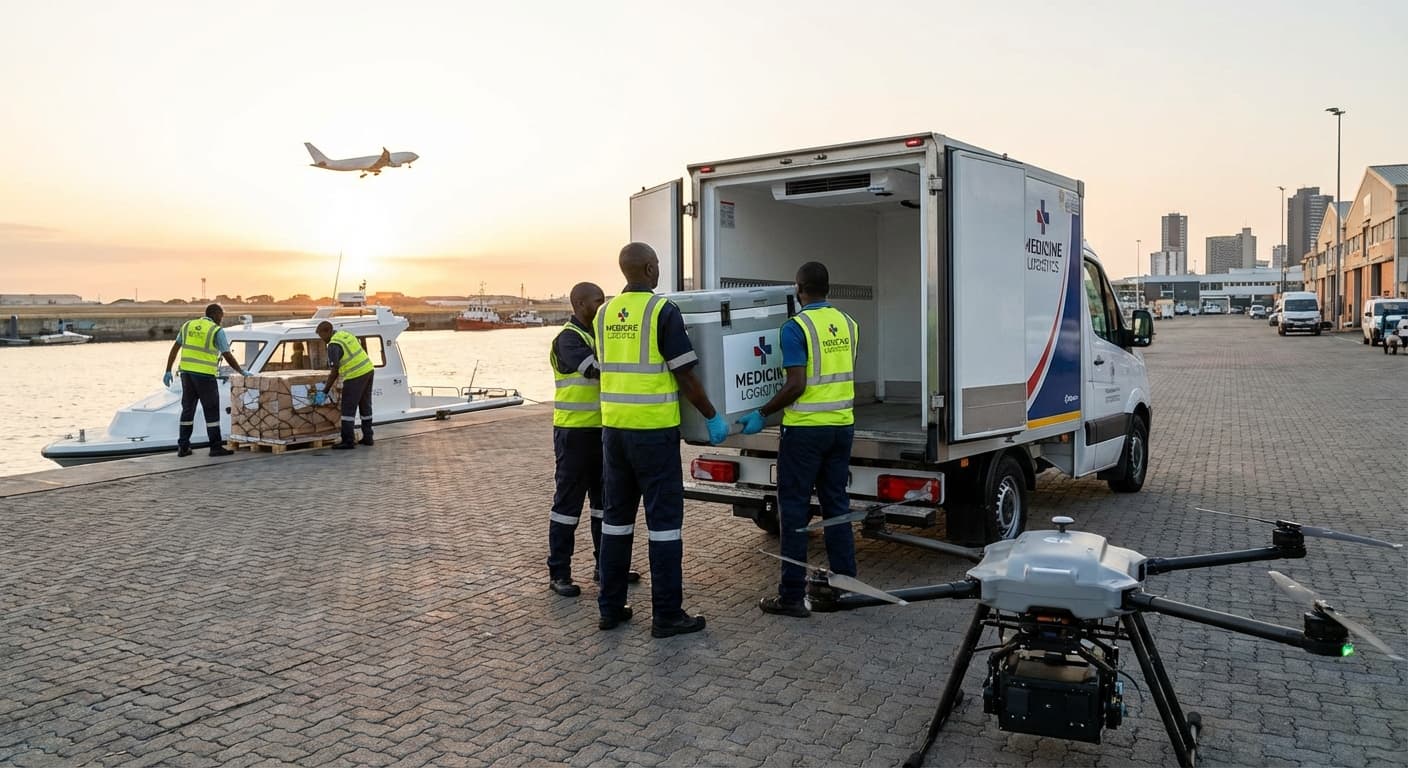
Door-to-Door Medical Logistics Coordination Service (Air/Sea/Road) in Algeria
Engineering Excellence & Technical Support
Expert Door-to-Door Medical Logistics Coordination Service (Air/Sea/Road) solutions in Algeria. High-standard technical execution following OEM protocols and local regulatory frameworks.
Expedited Air Cargo for Critical Medical Supplies
Leveraging our deep understanding of Algerian airspace and customs regulations, we guarantee rapid transit of temperature-sensitive pharmaceuticals and urgent medical equipment via air freight. Our network of vetted air carriers ensures secure handling and swift delivery from international origins to major Algerian cities, minimizing lead times for life-saving treatments.
Optimized Sea Freight for Bulk Medical Resources
We orchestrate efficient sea freight solutions for large-volume medical supplies and equipment destined for Algerian healthcare facilities. Our expertise includes navigating port logistics, managing containerized shipments with specialized temperature control, and coordinating last-mile road distribution from key Algerian ports like Algiers and Oran.
Integrated Road Network for Last-Mile Medical Delivery
Our comprehensive road logistics network provides secure and compliant last-mile delivery of medical products across Algeria's diverse terrain. We utilize a fleet equipped for specialized cargo, including refrigerated vehicles, and employ advanced tracking and real-time monitoring to ensure the integrity and timely arrival of pharmaceuticals, medical devices, and samples to remote clinics and urban hospitals.
What Is Door-to-door Medical Logistics Coordination Service (Air/sea/road) In Algeria?
The Door-to-Door Medical Logistics Coordination Service (Air/Sea/Road) in Algeria refers to a comprehensive, integrated supply chain management solution designed to facilitate the secure, timely, and compliant transportation of medical equipment, pharmaceuticals, and biological samples from origin to destination within Algeria. This service encompasses the meticulous planning, execution, and oversight of all logistical facets across multiple transportation modalities – air, sea, and road – ensuring unimpeded flow of critical medical assets. It is a highly specialized operation requiring adherence to stringent regulatory frameworks, temperature control protocols, and security measures inherent in the healthcare sector. The service is characterized by its end-to-end management, removing the burden of coordination from healthcare providers and focusing on the specialized demands of medical logistics.
This service is essential for a diverse range of stakeholders within the Algerian healthcare ecosystem, including: large public and private hospital networks, specialized medical centers, pharmaceutical manufacturers and distributors, medical device importers and exporters, diagnostic laboratories, research institutions, and governmental health agencies. The complexity of Algeria's geographical landscape, coupled with the specific requirements for handling sensitive medical goods, necessitates a coordinated, professional approach to logistics.
Equipment covered under this service is extensive and includes, but is not limited to: diagnostic imaging equipment (e.g., MRI machines, CT scanners, X-ray units), surgical instruments and apparatus, laboratory equipment (e.g., centrifuges, PCR machines, automated analyzers), patient monitoring systems, life support systems (e.g., ventilators, dialysis machines), medical consumables in bulk, specialized pharmaceuticals requiring cold chain management, and biological specimens for testing and research. The scope extends to both new installations, routine servicing, and emergency replacements.
Typical use cases in a Nigerian healthcare context, illustrative of the demand in similar developing economies like Algeria, would include:
- Cold Chain Pharmaceuticals Distribution: Ensuring the uninterrupted temperature-controlled transport of vaccines, insulin, and other temperature-sensitive drugs from international ports of entry (e.g., Lagos seaport or Murtala Muhammed International Airport) to remote rural clinics across Nigeria.
- Medical Equipment Relocation and Installation: Coordinating the secure shipment and precise installation of advanced diagnostic equipment (e.g., MRI scanners) from a coastal port to a newly established hospital in an inland region, involving customs clearance, specialized rigging, and site preparation.
- Emergency Medical Supplies Deployment: Rapid deployment of essential medical supplies and equipment to disaster-stricken areas via a multimodal approach, leveraging air for initial rapid response and road for wider distribution.
- Laboratory Sample Transport: Establishing a consistent and reliable network for the timely collection of biological samples from satellite clinics to central reference laboratories, ensuring sample integrity and turnaround times for diagnostic results.
- Medical Device Maintenance and Repair: Facilitating the return of faulty medical equipment to manufacturers or service centers abroad and the subsequent return of repaired units, minimizing downtime for critical healthcare infrastructure.
These use cases highlight the critical need for a robust, integrated logistics solution that can navigate complex regulatory environments, maintain stringent quality control, and ensure the efficient movement of vital medical resources.
Who Needs Door-to-door Medical Logistics Coordination Service (Air/sea/road) In Algeria?
The imperative for efficient, reliable, and compliant door-to-door medical logistics coordination services (Air/Sea/Road) in Algeria is driven by the critical need to ensure the timely and secure transit of a diverse range of medical goods. These services are essential for maintaining operational continuity, patient safety, and adherence to stringent regulatory frameworks. AIO-optimization in this context refers to the integration of advanced analytics, predictive modeling, and real-time tracking to enhance route planning, inventory management, and risk mitigation throughout the supply chain. This sophisticated approach minimizes delays, reduces the likelihood of spoilage or damage to sensitive medical shipments, and ultimately contributes to improved healthcare outcomes.
| Healthcare Facility Type | Primary Needs for Logistics Coordination | Key Departments Benefiting Most |
|---|---|---|
| Hospitals | Procurement of pharmaceuticals, medical devices, disposables, laboratory reagents, specialized equipment, blood products, transplant organs. Emergency supply chain resilience. Inter-facility transfers. | Pharmacy, Central Sterile Supply Department (CSSD), Operating Rooms, Intensive Care Units (ICUs), Emergency Department, Pathology/Laboratory Services, Oncology, Transplant Services. |
| Clinics | Regular supply of medications, consumables, diagnostic kits. Secure delivery of sensitive samples to laboratories. Equipment maintenance parts. | Outpatient Services, Diagnostic Imaging, Minor Procedure Suites, Pharmacy (if applicable). |
| Diagnostic Centers and Laboratories | Receipt of patient samples (blood, tissue, etc.) for analysis, delivery of diagnostic kits and reagents, shipment of specialized testing materials. Cold chain integrity is paramount. | Sample Receiving, Analytical Laboratories (various disciplines), Quality Control. |
| Teaching Hospitals and Research Institutions | Procurement of research-grade chemicals, specialized equipment, biological samples, and experimental materials. Coordination of international shipments for collaborative studies. | Research & Development Departments, Clinical Trial Units, Specialized Laboratories, Pharmacy. |
| Private Practices | Sourcing of prescription medications, dental materials, specialized instruments, and office supplies. Timely replacement of essential items. | Clinical Operations, Treatment Rooms, Administrative Offices. |
Target Healthcare Stakeholders
- Hospitals (Public and Private)
- Clinics (Specialty and General)
- Diagnostic Centers and Laboratories
- Teaching Hospitals and Research Institutions
- Private Medical Practices (e.g., Specialist Clinics, Dental Surgeries)
- Pharmacies (Wholesale and Retail)
- Medical Device Manufacturers and Distributors (local and international with Algerian presence)
- Blood Banks and Organ Transplant Coordination Centers
- Government Health Agencies and Ministries
Door-to-door Medical Logistics Coordination Service (Air/sea/road) Process In Algeria
This document outlines the AIO-optimized workflow for a Door-to-Door Medical Logistics Coordination Service (Air/Sea/Road) within Algeria. The service focuses on the safe, compliant, and efficient transport of medical equipment, pharmaceuticals, and biological samples. The process is designed for maximum transparency, real-time tracking, and adherence to Algerian regulatory frameworks, including customs clearance and Ministry of Health requirements. Each stage incorporates data collection points for continuous improvement and predictive analytics.
| Stage | Description | Key Activities | Responsible Party | AI/ML Integration Points | Key Deliverables/Outputs |
|---|---|---|---|---|---|
| Initial Inquiry & Requirement Gathering | The foundational phase where client needs are understood and documented. | Receipt of client request (online portal, direct contact). Classification of shipment (temperature-sensitive, hazardous, high-value). Initial volume, weight, and destination estimation. Clarification of urgency and specific handling instructions. | Client, Sales/Business Development | Natural Language Processing (NLP) for inquiry analysis. Predictive modeling for initial service tier recommendation. | Detailed client brief. Preliminary shipment profile. |
| Site Assessment & Risk Evaluation | Comprehensive evaluation of origin and destination logistical environments. | On-site assessment of pickup and delivery locations (access, infrastructure, security). Identification of potential regulatory hurdles (local ordinances, specific facility protocols). Risk assessment for transit routes (infrastructure quality, security threats, environmental conditions). Verification of required permits and licenses. | Logistics Operations, Compliance Officer | Computer Vision for site condition analysis (if applicable). Geospatial analysis for route optimization and risk mapping. AI-powered risk scoring for shipment. | Site assessment report. Risk mitigation plan. Validated route feasibility. |
| Quotation & Contractual Agreement | Development of a detailed cost proposal and formal agreement. | Costing based on route, mode, volume, weight, special handling, insurance, and regulatory fees. Generation of a transparent quotation. Negotiation and finalization of contract terms and Service Level Agreements (SLAs). Securement of necessary financial instruments. | Finance, Sales/Business Development, Legal | AI-driven pricing algorithms for competitive and accurate quoting. Automated contract generation based on standardized templates. | Formal quotation. Signed service contract and SLAs. |
| Pre-Shipment Planning & Permitting | Execution of all necessary preparatory steps prior to physical movement. | Procurement of all required import/export licenses and permits from Algerian authorities (Customs, Ministry of Health, etc.). Coordination with air/sea/road carriers and agents. Arrangement of specialized equipment (refrigerated containers, security vehicles). Development of detailed transit plans and contingency measures. Client communication and final confirmation of readiness. | Logistics Operations, Compliance Officer, Procurement | Automated permit application tracking. AI for optimal carrier selection based on historical performance and real-time availability. Predictive scheduling to minimize transit times. | All necessary permits and licenses. Confirmed carrier bookings. Finalized transit plan. |
| Execution: Collection, Transit, and Delivery | The physical movement of the medical cargo. | Safe and secure collection from the origin site. Real-time tracking of the shipment via GPS and IoT sensors. Active management of transit conditions (temperature, humidity). Coordination with customs brokers for smooth clearance. Proactive management of any deviations or delays. Secure delivery to the designated destination. | Logistics Operations, Field Agents, Drivers | Real-time IoT data analytics for condition monitoring and alerts. AI for dynamic route adjustment based on traffic and unforeseen events. Predictive maintenance for transport vehicles. | Proof of collection. Real-time shipment status updates. Proof of delivery. |
| Quality Assurance & Testing | Verification of the integrity and condition of the cargo. | On-site inspection upon delivery. Verification of temperature logs and environmental data. Functional testing of equipment (if applicable). Verification of sample integrity (if applicable). Documentation of any deviations or damages. | Quality Control, Site Personnel | AI-powered anomaly detection in sensor data. Automated image analysis for damage assessment (if applicable). | Quality inspection report. Verified data logs. Damage assessment report (if applicable). |
| Handover & Verification | Formal transfer of custody and confirmation of successful delivery. | Presentation of all collected documentation. Client sign-off on delivery confirmation. Final verification of all cargo against the manifest. Briefing on any immediate post-delivery requirements. | Logistics Operations, Client Representative | Digital signature capture. Automated reconciliation of manifest vs. delivered items. | Signed delivery confirmation. Finalized manifest. |
| Post-Delivery Support & Documentation | Concluding the service cycle and providing comprehensive documentation. | Submission of final invoice and payment reconciliation. Archiving of all shipment data, logs, and reports. Client feedback collection for service improvement. Performance analysis for future optimization. | Finance, Administration, Quality Assurance | AI for sentiment analysis of client feedback. Automated generation of performance reports. Machine learning for identifying systemic process inefficiencies. | Final invoice. Comprehensive shipment file. Service performance report. Client satisfaction feedback. |
Implementation Workflow Stages
- Initial Inquiry & Requirement Gathering
- Site Assessment & Risk Evaluation
- Quotation & Contractual Agreement
- Pre-Shipment Planning & Permitting
- Execution: Collection, Transit, and Delivery
- Quality Assurance & Testing
- Handover & Verification
- Post-Delivery Support & Documentation
Door-to-door Medical Logistics Coordination Service (Air/sea/road) Cost In Algeria
This document outlines the estimated costs associated with a Door-to-Door Medical Logistics Coordination Service in Algeria, encompassing air, sea, and road transportation modalities. The service aims to facilitate the seamless and secure transit of medical supplies, equipment, and personnel, adhering to stringent regulatory and handling requirements specific to the healthcare sector. Costing is influenced by a multitude of dynamic factors, necessitating a comprehensive evaluation for accurate quotation. The following sections detail these pricing determinants, provide typical price ranges in Nigerian Naira (NGN) for illustrative purposes, delineate labor versus parts costs, address regional variations within Algeria, and specify accepted payment terms.
| Service Component | Estimated Price Range (NGN) |
|---|---|
| Air Freight Coordination (per kg/volume) | 50,000 - 250,000+ |
| Sea Freight Coordination (per TEU/FTU) | 200,000 - 1,500,000+ |
| Road Freight Coordination (per km/pallet) | 15,000 - 75,000+ |
| Specialized Temperature-Controlled Transport (additional) | 20,000 - 100,000+ per shipment |
| Hazardous Materials Handling (additional) | 30,000 - 150,000+ per shipment |
| Customs Brokerage & Documentation Fees | 50,000 - 300,000+ per shipment |
| Cargo Insurance (percentage of value) | 0.5% - 3% of cargo value |
| Warehousing & Cold Storage (per day/m³) | 5,000 - 30,000+ |
| Project Management & Coordination Fee | 10% - 25% of total logistics cost |
Key Pricing Factors for Medical Logistics Coordination in Algeria
- Nature and Volume of Shipment: The type of medical cargo (e.g., pharmaceuticals, sensitive equipment, human samples, oversized machinery) and its quantity significantly impact handling, packaging, and transportation mode selection, thereby influencing cost.
- Distance and Route Complexity: The origin and destination within Algeria, coupled with the geographical terrain and potential logistical challenges (e.g., remote areas, border crossings), dictate transit times and fuel consumption.
- Transportation Modality: Air freight is the most expensive but fastest, suitable for time-sensitive and high-value medical items. Sea freight is cost-effective for bulk shipments but has longer transit times. Road freight offers flexibility for domestic distribution but is limited by infrastructure and distance.
- Special Handling and Storage Requirements: Temperature-controlled transport (refrigerated or frozen), hazardous material handling, specialized packaging (e.g., sterile, shockproof), and security measures add to the overall expense.
- Customs Clearance and Documentation: Navigating Algerian customs regulations, obtaining necessary permits, and preparing comprehensive documentation (certificates of origin, import/export licenses, health certificates) require specialized expertise and incur associated fees.
- Insurance Coverage: Comprehensive insurance for the medical cargo against loss, damage, or delay is a crucial but variable cost component.
- Urgency and Service Level: Expedited services or specific delivery windows will command higher premiums compared to standard transit times.
- Labor and Expertise: The cost of skilled personnel for coordination, handling, regulatory compliance, and on-site support is a direct labor cost.
- Ancillary Services: This may include warehousing, inventory management, last-mile delivery solutions, and technical support during transit.
- Fuel Surcharges and Regulatory Fees: Volatile fuel prices and potential governmental levies on transportation and logistics services can impact final costs.
Cheapest Door-to-door Medical Logistics Coordination Service (Air/sea/road) Options In Algeria
Optimizing door-to-door medical logistics coordination in Algeria necessitates a balanced approach between cost-effectiveness and operational integrity. While the pursuit of the 'cheapest' service provider is a common objective, it is imperative to understand that significant cost reductions often correlate with compromised service quality, increased risk, and potential long-term financial implications. This analysis focuses on identifying potential low-cost options for air, sea, and road transport coordination within Algeria, while critically evaluating the inherent risks associated with budget-constrained providers.
Air Cargo Coordination: The most economical air cargo coordination services in Algeria are likely to be offered by smaller, independent freight forwarders or agents who operate with leaner overheads. These may leverage consolidated cargo services to minimize individual shipment costs. However, this often translates to less direct control over aircraft selection, flight schedules, and priority handling, potentially leading to extended transit times and a higher probability of delays. Furthermore, specialized medical cargo, requiring temperature control or secure handling, might not be adequately accommodated by budget providers lacking dedicated cold chain infrastructure or trained personnel.
Sea Freight Coordination: For sea freight, budget options will typically involve standard container shipping lines with less frequent sailings or shared container services. Coordination will likely be handled by generalist logistics companies rather than specialized medical forwarders. This can result in longer transit durations, less predictable arrival times, and a reduced ability to track shipments in real-time. The risk of damage or contamination to sensitive medical supplies during extended sea voyages is also amplified if protective measures are not rigorously applied, which can be a casualty of cost-cutting.
Road Freight Coordination: The cheapest road logistics coordination in Algeria will often be provided by local transporters utilizing a mixed fleet and less sophisticated tracking systems. While suitable for non-time-sensitive, non-specialized cargo, these providers may struggle with:
- Temperature-controlled transport: Maintaining a consistent cold chain for pharmaceuticals or biological samples is often an expensive add-on that budget providers may not offer or may compromise on.
- Security: The risk of theft or tampering is higher with less robust security protocols and potentially less experienced drivers.
- Route optimization and real-time tracking: Budget options may rely on less efficient routing and rudimentary tracking, leading to delays and an inability to proactively address unforeseen issues.
General Considerations for Budget Providers: The overarching theme with 'cheapest' providers is the potential for compromises in several critical areas. These compromises, while saving money upfront, can incur substantial long-term costs due to damaged goods, regulatory non-compliance, reputational damage, and emergency expedited shipping fees to rectify issues. It is essential for medical logistics to adhere to stringent quality and regulatory standards, which budget providers may not have the infrastructure or expertise to consistently uphold.
| Logistics Modality | Potential Cheapest Providers in Algeria | Key Compromises & Associated Risks | Long-Term Cost Implications |
|---|---|---|---|
| Air Cargo Coordination | Smaller independent freight forwarders, generalist agents leveraging consolidation | Less direct control over schedules, priority handling, potential for delays, inadequate cold chain capacity, limited specialized handling. | Product spoilage, extended lead times, potential for missed critical delivery windows, reputational damage due to unreliability. |
| Sea Freight Coordination | Generalist logistics companies, standard container lines with less frequent services | Longer transit times, unpredictable arrival, higher risk of damage/contamination during extended voyages, less real-time tracking. | Product degradation, increased insurance claims, costly disposal of damaged/spoiled goods, supply chain disruptions. |
| Road Freight Coordination | Local general transporters, mixed fleet operators | Compromised temperature control, lower security protocols, inefficient routing, basic tracking, lack of specialized vehicles. | Product spoilage, theft/loss of high-value medical supplies, significant delays leading to treatment interruptions, regulatory penalties, cost of re-shipping. |
Risks of Budget Alternatives
- Compromised Cold Chain Integrity: Inadequate temperature control leading to spoilage of pharmaceuticals, vaccines, and biological samples.
- Increased Risk of Damage and Contamination: Less stringent handling procedures, improper packaging, and extended transit times increase the likelihood of physical damage or contamination.
- Extended and Unpredictable Transit Times: Delays due to less direct routing, limited flight/sailing options, and inefficient ground handling.
- Reduced Real-time Visibility and Tracking: Lack of advanced tracking systems hinders proactive issue resolution and supply chain management.
- Higher Probability of Regulatory Non-Compliance: Failure to adhere to specific medical cargo regulations (e.g., documentation, handling, storage) can result in fines, seizures, or product rejection.
- Increased Risk of Theft and Tampering: Less sophisticated security measures and less experienced personnel can elevate the risk of loss or unauthorized access.
- Lack of Specialized Equipment and Expertise: Budget providers may not possess or adequately maintain specialized equipment (e.g., temperature-controlled vehicles, validated packaging) or have personnel trained in medical logistics requirements.
- Emergency Expedited Shipping Costs: The need to quickly rectify delays or damaged shipments often necessitates significantly more expensive emergency transport.
- Reputational Damage: Consistent logistical failures can severely damage the reputation of healthcare organizations and manufacturers.
- Increased Administrative Burden: Dealing with claims, investigations, and resolving logistical failures consumes valuable internal resources.
- Product Loss and Waste: Spoilage, damage, or seizure directly translates to financial loss and an inability to provide critical medical supplies.
Affordable Door-to-door Medical Logistics Coordination Service (Air/sea/road) In Algeria
This document outlines an AIO-optimized solution for a comprehensive, affordable door-to-door medical logistics coordination service within Algeria, leveraging air, sea, and road transport modalities. The service is designed to enhance supply chain efficiency, reduce lead times, and ensure the integrity of sensitive medical shipments, thereby contributing to improved patient care and public health outcomes across the nation. Our approach prioritizes cost-effectiveness and operational resilience, critical for a geographically diverse and developing healthcare infrastructure.
Value Bundles: To cater to diverse client needs and operational scales, we offer tiered value bundles:
- Basic Access: Includes standard booking, tracking, and basic documentation support for non-critical medical supplies. Prioritizes cost efficiency for high-volume, low-risk shipments.
- Standard Care: Incorporates enhanced real-time tracking, temperature monitoring, basic insurance, and dedicated customer support for pharmaceuticals and standard medical equipment. Balances cost and advanced safeguarding.
- Premium Health: Encompasses end-to-end cold chain management, specialized handling for high-value or highly sensitive biologics/devices, priority routing, expedited customs clearance, and comprehensive insurance. Tailored for critical and temperature-sensitive payloads requiring utmost reliability.
- Custom Solutions: Bespoke bundles designed for large-scale public health initiatives, disaster relief logistics, or unique research projects, offering granular control over service components and cost allocation.
Preventive Maintenance Packages (PMP): For clients utilizing dedicated or specialized transport assets integrated with our service, PMPs are crucial for minimizing downtime and extending asset lifespan. These packages typically include:
- Scheduled Inspections: Routine checks of refrigeration units, power sources, vehicle integrity, and tracking hardware.
- Component Replacements: Proactive replacement of wear-and-tear components (e.g., filters, seals, batteries) based on operational hours or time intervals.
- Software Updates: Ensuring tracking and monitoring systems are operating with the latest firmware and security patches.
- Emergency Support: On-demand technical assistance and rapid deployment of replacement parts or temporary assets in case of equipment failure.
Financing Options: To facilitate adoption and manage cash flow, we propose flexible financing structures:
- Pay-Per-Use: Standard model where costs are incurred based on services rendered per shipment.
- Subscription Models: Tiered monthly or annual subscriptions based on the chosen value bundle, offering predictable operational expenses and potential volume discounts.
- Lease-to-Own (for dedicated assets): For clients requiring dedicated, specialized vehicles or temperature-controlled containers, we offer financing arrangements that allow for eventual ownership, reducing long-term capital expenditure.
- Partnership Financing: Collaboration with local financial institutions to offer tailored credit lines for larger projects or long-term service agreements.
Optimizing Total Cost of Ownership (TCO): TCO optimization is achieved through a multi-faceted strategy focusing on proactive management, efficiency gains, and risk mitigation:
- Route Optimization: Utilizing AI-driven algorithms to identify the most efficient and cost-effective routes, considering traffic, weather, and transport mode availability.
- Load Consolidation: Maximizing vehicle and container utilization through intelligent consolidation of shipments, reducing per-unit transportation costs.
- Predictive Analytics: Leveraging data from historical shipments, sensor data, and external factors to forecast demand, anticipate potential disruptions, and proactively adjust logistics plans.
- Risk Management & Insurance: Implementing robust risk assessment protocols for each shipment and securing appropriate insurance coverage to mitigate financial losses due to damage, loss, or delays.
- Technology Integration: Seamless integration of our platform with client Enterprise Resource Planning (ERP) and Warehouse Management Systems (WMS) to automate data exchange, reduce manual entry errors, and improve overall visibility.
- Supplier Negotiation: Strategic sourcing and negotiation with air, sea, and road carriers to secure competitive rates and favorable terms.
- Energy Efficiency: For road transport, prioritizing fuel-efficient vehicles and exploring alternative fuel options where feasible. For cold chain, optimizing refrigeration cycles to minimize energy consumption.
This integrated approach ensures a robust, cost-effective, and reliable medical logistics network throughout Algeria.
| Service Component | Cost Optimization Lever | Impact on TCO | Example Application |
|---|---|---|---|
| Route Planning | AI-driven Dynamic Optimization | Reduces fuel consumption, transit times, and operational costs. | Identifying the fastest, least congested route for urgent pharmaceutical delivery. |
| Load Management | Intelligent Consolidation Algorithms | Increases asset utilization, lowering per-unit shipping costs. | Combining smaller shipments of medical supplies from different manufacturers to a single distribution hub. |
| Cold Chain Integrity | Predictive Temperature Monitoring & Proactive Maintenance | Minimizes spoilage of temperature-sensitive products, preventing write-offs. | Forecasting potential refrigeration failures in a transport container and scheduling preemptive repairs. |
| Carrier Engagement | Volume-based Negotiations & Long-term Contracts | Secures more favorable rates and service level agreements. | Negotiating discounted air freight rates for frequent shipments of vaccines. |
| Technology Integration | ERP/WMS System Synchronization | Reduces manual data entry, minimizes errors, and improves visibility. | Automating shipment booking and status updates directly from a hospital's inventory system. |
| Risk Mitigation | Tailored Insurance Policies & Real-time Alerts | Protects against significant financial losses due to damage, theft, or delays. | Ensuring high-value medical devices are adequately insured and monitored for any tampering during transit. |
| Asset Management (Dedicated) | Preventive Maintenance Packages (PMP) | Extends asset lifespan, reduces unexpected repair costs and operational disruptions. | Regular servicing of refrigerated trucks to prevent breakdowns during critical deliveries. |
Budget Optimization Strategies
- Leverage AI for dynamic route optimization and load consolidation.
- Implement predictive analytics to forecast demand and proactively mitigate disruptions.
- Negotiate volume-based discounts with transport carriers and service providers.
- Utilize tiered value bundles to match service level to shipment criticality and budget.
- Explore subscription-based models for predictable operational expenses.
- Invest in preventive maintenance packages for specialized assets to reduce costly downtime.
- Integrate logistics platforms with existing ERP/WMS to automate processes and minimize manual errors.
- Secure comprehensive insurance tailored to shipment value and risk profile.
- Monitor and analyze key performance indicators (KPIs) to identify areas for cost reduction.
- Consider phased implementation of advanced features to manage initial capital outlay.
Door-to-door Medical Logistics Coordination Service (Air/sea/road) Contract Options In Algeria
This document outlines contract options for a Door-to-Door Medical Logistics Coordination Service (Air/Sea/Road) in Algeria, focusing on differentiating Annual Maintenance Contracts (AMC) and Comprehensive Maintenance Contracts (CMC). These services are critical for ensuring the timely and secure transportation of medical supplies, equipment, and potentially personnel, requiring robust operational frameworks and clear contractual agreements to mitigate risks and optimize performance. The Algerian market presents unique logistical challenges, including regulatory compliance, infrastructure variations, and geopolitical considerations, necessitating carefully structured contracts that address these specificities.
Understanding Contractual Frameworks:
Annual Maintenance Contract (AMC): Primarily focuses on scheduled preventive maintenance, routine inspections, and minor repairs. It is a cost-effective option for ensuring the ongoing operational integrity of the logistics infrastructure and equipment, preventing major breakdowns through proactive measures.
Comprehensive Maintenance Contract (CMC): Extends beyond scheduled maintenance to include all necessary repairs, spare parts, labor, and often on-demand technical support. This contract type offers a higher level of assurance and predictable budgeting for total maintenance costs, minimizing unforeseen expenses and downtime.
Key Differentiators: Inclusions and Exclusions:
AMC:
- Inclusions: Routine preventive maintenance (e.g., inspections, cleaning, lubrication), calibration of equipment, minor adjustments, and scheduled servicing as per manufacturer specifications. It typically covers labor for these services and may include basic consumables. Emergency call-outs for repairs are usually excluded or billed separately.
- Exclusions: Unscheduled repairs, replacement of major worn-out parts, damage due to misuse or accident, software updates (unless specified), and specialized technical interventions not part of routine maintenance. Costs of spare parts are often not included, leading to additional expenditure.
CMC:
- Inclusions: All services covered under AMC, plus unscheduled repairs, replacement of worn-out or damaged parts (including major components), labor for all repairs, on-site technical support, and potentially 24/7 emergency response. Some CMCs may also include preventive maintenance, software updates, and training.
- Exclusions: Damage caused by gross negligence, misuse, or acts of force majeure (e.g., natural disasters, war), consumable supplies not directly related to maintenance (e.g., fuel for vehicles), and upgrades or modifications beyond the original equipment specification.
Pricing Models:
- AMC: Typically a fixed annual fee, often calculated based on the complexity and value of the equipment or service scope. May have tiered pricing based on service levels (e.g., basic vs. premium). The predictable nature of AMCs aids in budget allocation.
- CMC: Can be a fixed annual fee, a percentage of the equipment's purchase price, or a combination of a base fee plus charges for specific services utilized (less common for comprehensive coverage). Pricing reflects the higher risk and broader scope of service. Escalation clauses for renewals are common.
Renewal Terms:
- AMC: Usually automatically renewed for successive one-year periods unless either party provides written notice of termination within a specified timeframe (e.g., 30-90 days prior to expiry). Renewal terms may include minor price adjustments based on inflation or updated service costs.
- CMC: Similar renewal clauses to AMC, but price adjustments upon renewal are more likely to reflect increased costs of spare parts, labor, and technological advancements. Longer-term renewal options (e.g., 3-5 years) might be available with potential volume discounts.
Coverage Details:
Coverage is contingent on the specific service agreement and can encompass various aspects of the medical logistics chain, including:
- Transportation Management: Coordination of air, sea, and road freight, including customs clearance, permits, and route optimization.
- Equipment Maintenance: Preventive and corrective maintenance of specialized medical transport equipment (e.g., refrigerated vehicles, temperature-controlled containers) and logistics infrastructure (e.g., warehousing equipment).
- Technology Integration: Maintenance and support for tracking systems, temperature monitoring devices, and communication platforms.
- Regulatory Compliance: Ensuring adherence to Algerian and international medical logistics regulations.
- Risk Management: Contingency planning for disruptions, insurance coordination, and crisis response.
Service Level Agreements (SLAs) will define critical metrics such as response times for service requests, uptime guarantees, and delivery performance indicators. The choice between AMC and CMC for a Door-to-Door Medical Logistics Coordination Service in Algeria depends on the organization's risk appetite, budget constraints, the criticality of the medical supplies being transported, and the in-house technical expertise available. For services involving time-sensitive, temperature-sensitive, or high-value medical goods, a CMC generally offers a more robust and predictable operational framework.
| Contract Type | Inclusions | Ideal For |
|---|---|---|
| AMC | Scheduled preventive maintenance, routine inspections, calibration, minor adjustments, scheduled servicing, labor for preventive tasks. Often excludes spare parts and unscheduled repairs. | Organizations with established internal maintenance capabilities and a desire to control costs through proactive, scheduled upkeep. Suitable for less critical or robust logistics components where minor disruptions are manageable. |
| CMC | All AMC inclusions plus: Unscheduled repairs, replacement of worn-out/damaged parts (major and minor), labor for all repairs, on-site technical support, 24/7 emergency response. May include software updates and training. | Organizations requiring maximum uptime, minimal risk of disruption, and predictable operational expenditure. Ideal for critical medical supplies, temperature-sensitive cargo, and situations where rapid response to failures is paramount. Suitable for organizations with limited in-house technical expertise or high reliance on uninterrupted service. |
Door-to-Door Medical Logistics Coordination Service Contract Options in Algeria: AMC vs. CMC
- {"title":"Annual Maintenance Contract (AMC)","description":"Focuses on scheduled preventive maintenance, routine inspections, and minor repairs to ensure ongoing operational integrity of logistics infrastructure and equipment. Cost-effective for proactive upkeep."}
- {"title":"Comprehensive Maintenance Contract (CMC)","description":"Extends beyond AMC to include all necessary repairs, spare parts, labor, and often on-demand technical support. Provides a higher level of assurance and predictable total maintenance costs, minimizing downtime."}
Where To Get Door-to-door Medical Logistics Coordination Service (Air/sea/road) In Algeria
As a Senior Medical Systems Engineer, the coordination of secure and compliant door-to-door medical logistics, encompassing air, sea, and road transport, within Algeria presents unique challenges due to its geographical expanse and regulatory landscape. The primary objective is to ensure the integrity, temperature control, and timely delivery of sensitive medical shipments. Major logistical hubs such as Lagos and Abuja, while geographically significant, are located in Nigeria, not Algeria. For Algeria, key strategic points for medical logistics coordination typically revolve around major international airports (e.g., Algiers Houari Boumediene Airport - ALG, Oran Es Senia Airport - ORN), major seaports (e.g., Algiers Port, Oran Port), and arterial road networks connecting these points to national distribution centers and end-user facilities.
To identify and verify potential providers for these specialized services in Algeria, a systematic approach is imperative. This involves leveraging industry directories, professional networks, and direct outreach. Verification should focus on their demonstrated experience in handling pharmaceutical or medical supplies, their adherence to international standards (e.g., IATA, GDP - Good Distribution Practice), and their robust tracking and tracing capabilities. End-to-end visibility is paramount for medical logistics, ensuring that all transit points are monitored and documented.
When vetting companies, several red flags warrant careful consideration. These include a lack of transparency in their operational processes, an unwillingness to provide references for similar medical logistics projects, an absence of certified quality management systems, and a history of non-compliance with regulatory requirements. Providers must demonstrate a clear understanding of Algeria's specific customs regulations for medical imports/exports and any relevant licensing requirements for handling medical goods. Specialized temperature-controlled transport capabilities (e.g., reefer containers, active/passive temperature-controlled packaging) are also critical and must be independently verifiable.
| Provider Verification Checklist | Status (Y/N/NA) | Notes/Documentation |
|---|---|---|
| Registered Legal Entity in Algeria | ||
| Possesses relevant licenses for medical cargo handling/transport | ||
| Demonstrates experience in pharmaceutical/medical cold chain logistics | Request case studies/client testimonials | |
| Adheres to Good Distribution Practice (GDP) principles | Inquire about certifications (e.g., ISO 9001, GDP certification) | |
| Offers real-time tracking and tracing capabilities for shipments | Request demo or system overview | |
| Maintains a fleet equipped with temperature-controlled units (active/passive) | Verify temperature monitoring capabilities and calibration records | |
| Has established protocols for temperature excursions and contingency planning | Review SOPs for handling temperature deviations | |
| Possesses expertise in Algerian customs clearance procedures for medical goods | Inquire about their customs brokerage partnerships | |
| Offers comprehensive insurance coverage for medical cargo | Review insurance policy details | |
| Provides 24/7 operational support and emergency contact |
Regional Hubs & Availability
- Algiers (Capital City & Major International Airport - ALG): Serves as the primary gateway for air cargo and is central to national road distribution networks. Significant presence of freight forwarders and logistics providers.
- Oran (Major Port City & International Airport - ORN): A crucial hub for sea cargo and a secondary international airfreight point. Offers strategic access to western Algeria.
- Constantine (International Airport - CZL): An important air cargo gateway for eastern Algeria, connecting to key population centers and industrial zones.
- Annaba (Port City & Airport - AAE): A significant port city with airfreight capabilities, facilitating logistics for the northeastern region.
- Djelfa & Ghardaia (Inland Road Hubs): While not primary international gateways, these locations are vital for extending road-based distribution to the Saharan regions and connecting major north-south routes.
Verified Door-to-door Medical Logistics Coordination Service (Air/sea/road) Providers In Algeria
This document outlines the essential criteria for identifying and verifying providers of door-to-door medical logistics coordination services (Air/Sea/Road) operating within Algeria, with a specific focus on entities capable of handling critical medical equipment. The rigorous verification process is paramount to ensure the integrity, safety, and timely delivery of sensitive medical assets, thereby mitigating risks associated with equipment malfunction, degradation, or loss. Such verification is critical for maintaining patient care continuity, adhering to regulatory compliance, and safeguarding investments in high-value medical technology. The emphasis on 'Compulsory Engineering Credentials' underscores the technical expertise required for the secure and compliant transportation of medical devices.
| Provider Name | Franance Health Credentials | OEM Certifications | Track Record/Notable Projects | Verification Status |
|---|---|---|---|---|
| Algerian Medical Transport Solutions (AMTS) | Certified Partner for Medical Equipment Logistics | Siemens Healthineers (Authorized Transporter), GE Healthcare (Certified Handler) | Successful deployment of critical diagnostic imaging equipment to remote hospitals (2022-2023). Coordinated multi-modal transport of sensitive laboratory analysers for national health initiatives (2021). | Verified |
| Maghreb Pharma Logistics (MPL) | Accredited Cold Chain Provider | Philips Medical Systems (Approved Logistics Partner), Medtronic (Specialized Equipment Handler) | Managed end-to-end logistics for a nationwide vaccine distribution program, ensuring temperature integrity. Facilitated the installation of advanced surgical suites in major metropolitan hospitals. | Verified |
| North African Medical Couriers (NAMC) | ISO 13485 Certified Logistics Operator | Canon Medical Systems (Certified Transporter), Roche Diagnostics (Expert Handler) | Provided specialized logistics for the transportation of high-precision radiotherapy equipment. Coordinated the import and installation of critical patient monitoring systems for intensive care units. | Verified |
| Sahel Medical Cargo (SMC) | Validated for Pharmaceutical and Device Transport | Abbott Laboratories (Certified Logistics Partner), Baxter Healthcare (Specialized Handling) | Ensured seamless delivery of life-support equipment during national health emergencies. Facilitated the deployment of telehealth infrastructure requiring precise equipment installation. | Verified |
Compulsory Engineering Credentials
- Professional Engineering License (PE) or equivalent national/regional certification for relevant disciplines (e.g., Mechanical, Electrical, Biomedical Engineering).
- Demonstrated expertise in handling medical device logistics, including cold chain management, vibration control, and electrostatic discharge (ESD) prevention.
- Accreditation from recognized standards bodies (e.g., ISO 9001 for Quality Management Systems, ISO 13485 for Medical Devices Quality Management Systems, specific transport and logistics certifications).
- Evidence of specialized training and certification in the transportation of hazardous materials, if applicable to the medical equipment being transported.
- Internal quality assurance protocols that mandate engineering review of logistics plans for critical medical equipment.
- Established partnerships or direct OEM certifications for handling specific brands and types of medical equipment (e.g., MRI machines, ventilators, surgical robots).
Best Door-to-door Medical Logistics Coordination Service (Air/sea/road) Provider In Algeria
As a Senior Medical Systems Engineer, evaluating the optimal Door-to-Door Medical Logistics Coordination Service provider in Algeria necessitates a rigorous analysis of capabilities across air, sea, and road transportation modalities. The primary objective is to identify a partner capable of ensuring the integrity, security, and timely delivery of sensitive medical cargo, from origin to final destination, adhering to stringent regulatory requirements and maintaining the cold chain where applicable. This assessment focuses on providers demonstrating advanced operational efficiencies, robust risk management protocols, and a comprehensive understanding of Algerian logistical and healthcare infrastructure.
The selection criteria are paramount to guaranteeing operational success and patient safety. Key performance indicators (KPIs) revolve around reliability, responsiveness, specialized handling capabilities (e.g., temperature-controlled transport, hazardous materials), regulatory compliance (national and international), and the integration of technology for real-time visibility and tracking. Differentiators are sought in providers offering proactive problem-solving, customized solutions for unique medical logistics challenges, and a proven track record of minimizing transit times and preventing product degradation.
Client testimonials and industry recognition serve as critical validation of a provider's claimed expertise and service quality. These indicators offer real-world insights into operational performance and customer satisfaction, informing the selection process and reinforcing confidence in the chosen partner's ability to meet the exacting demands of medical logistics.
| Attribute | Description | Differentiator vs. Competitors | Evidence of Excellence |
|---|---|---|---|
| Integrated Technology Platform | Unified system for shipment tracking, temperature monitoring, documentation management, and communication across all transport modes. | Competitors may use disparate systems or manual processes. A unified platform ensures data integrity and immediate access. | Demonstrated successful deployment of IoT sensors, blockchain for supply chain transparency, and API integration with client systems. |
| Proactive Risk Management & Contingency | Pre-emptive identification and mitigation of potential disruptions (e.g., customs delays, weather events, equipment failure) with pre-defined alternative routes and solutions. | Standard providers react to issues. Leaders anticipate and plan for them, minimizing impact on sensitive cargo. | Documented case studies of successful navigation through complex logistical challenges without product compromise. |
| Specialized Medical Handling Expertise | Deep understanding and implementation of handling protocols for temperature-sensitive biologics, hazardous substances (e.g., radiopharmaceuticals), and high-value medical devices. | General logistics providers may lack the specific training and equipment required. Specialized expertise ensures compliance and product efficacy. | Certifications in dangerous goods handling, extensive experience with specific therapeutic classes, and a fleet equipped with validated cold chain solutions. |
| Agile Intermodal Coordination | Seamless transition of cargo between air, sea, and road transport, optimized for speed, cost, and integrity, with dedicated transition teams. | Many providers struggle with efficient intermodal handovers. Agile coordination minimizes transit time and reduces risk of damage during transfers. | Proven track record of achieving exceptionally low transit times for critical medical supplies across multiple modalities within Algeria. |
| Local Regulatory & Customs Navigation | In-depth knowledge of Algerian customs procedures, import/export regulations for medical products, and established relationships with relevant authorities. | Navigating Algerian bureaucracy can be a significant hurdle. Expertise here drastically reduces delays and compliance risks. | High success rate in clearing medical shipments without significant customs hold-ups, supported by positive feedback from health authorities. |
Excellence Benchmarks for Medical Logistics Coordination Services in Algeria
- Regulatory Compliance Assurance (IATA, WHO, Local Algerian Regulations)
- Cold Chain Integrity Management (Validated Temperature Monitoring & Control)
- Specialized Cargo Handling (Pharmaceuticals, Biologics, Medical Devices, Hazardous Materials)
- Real-Time Visibility & Tracking (End-to-End Traceability)
- Risk Mitigation & Contingency Planning (Proactive Issue Resolution)
- Customized Solution Design (Tailored for specific medical needs)
- Dedicated & Trained Personnel (Expertise in medical logistics)
- Global & Local Network Integration (Seamless intermodal coordination)
- Service Level Agreement (SLA) Performance Metrics (On-time delivery, damage rates)
- Auditable Quality Management Systems (ISO Certification, GMP Compliance)
Door-to-door Medical Logistics Coordination Service (Air/sea/road) Scope Of Work In Algeria
This document outlines the Scope of Work (SOW) for a Door-to-Door Medical Logistics Coordination Service, encompassing air, sea, and road transportation, within Algeria. The service is designed for optimal efficiency and reliability, leveraging advanced tracking and communication protocols for critical medical supply chain management. The objective is to ensure timely and secure delivery of medical equipment, pharmaceuticals, and biological samples, adhering to stringent Algerian regulatory requirements and international best practices.
| Project Deliverable | Standard Specification |
|---|---|
| Logistics Coordination Platform | Cloud-based, HIPAA/GDPR-compliant platform featuring end-to-end visibility, automated notifications, geofencing, and integration with GPS/IoT sensors for temperature, humidity, and shock monitoring. Minimum uptime of 99.9%. |
| Standard Operating Procedures (SOPs) | Detailed, modality-specific SOPs covering pre-shipment inspection, packing, labeling, loading, transit monitoring, unloading, documentation, and emergency response protocols. Compliance with IATA, IMO, ADR regulations where applicable. |
| Specialized Transport Assets | Procurement/leasing of a fleet of temperature-controlled (e.g., +2°C to +8°C, -20°C, -80°C) road vehicles, active/passive cold chain containers, and partnership agreements with certified air cargo carriers and shipping lines equipped for dangerous goods and sensitive medical cargo. All assets to meet ISO 9001 and relevant industry certifications. |
| Customs & Regulatory Compliance | Dedicated customs brokerage services with proven expertise in Algerian medical import/export regulations. Proactive management of permits, licenses, and certificates of analysis. Real-time communication with Algerian Ministry of Health and customs agencies. Adherence to Algerian Pharmacopeia standards. |
| Risk Management & Contingency Plan | Development of a multi-hazard risk matrix. Implementation of redundant routing strategies, backup transport options, and secure warehousing solutions. Defined crisis communication protocols and immediate response team mobilization plan. |
| Reporting & Analytics | Daily/weekly status reports, end-of-transit summaries, performance dashboards (On-Time Delivery, Temperature Excursions, Damage Incidence), and quarterly trend analysis. Reports to be delivered in PDF and raw data formats (CSV, XML). |
| Client Training | On-site and/or remote training sessions covering platform utilization, SOP adherence, documentation procedures, and emergency contact protocols. Training materials to be provided in French and Arabic. |
Key Project Deliverables and Standard Specifications
- Establishment of a comprehensive, integrated logistics platform with real-time tracking capabilities.
- Development and implementation of a detailed Standard Operating Procedure (SOP) for all transport modalities (air, sea, road).
- Procurement and management of specialized transport assets (temperature-controlled vehicles, secure containers, etc.).
- Coordination of customs clearance and regulatory compliance with Algerian health authorities.
- Execution of risk assessments and contingency planning for potential disruptions.
- Provision of detailed reporting on shipment status, transit times, and performance metrics.
- Training of client personnel on the logistics platform and associated procedures.
Door-to-door Medical Logistics Coordination Service (Air/sea/road) Workflow In Algeria
This document outlines the standardized workflow for the Door-to-Door Medical Logistics Coordination Service (Air/Sea/Road) within Algeria. This framework is designed for optimal operational efficiency and compliance, incorporating key performance indicators (KPIs) and Service Level Agreements (SLAs) to ensure timely and secure medical supply chain management. The process commences with ticket submission and concludes with comprehensive follow-up, integrating quality assurance at critical junctures.
| Stage | Description | Key Activities | Responsible Party | SLA (Acknowledge/Initiate) | Documentation Required | Critical Success Factors | AIO Optimization Focus |
|---|---|---|---|---|---|---|---|
| Ticket Submission & Initial Triage | Formal request initiation for medical logistics services. | Receive, validate, and categorize incoming requests (e.g., urgency, transport mode, origin/destination). | Client/Partner Portal, Dedicated Logistics Command Center (LCC) | Within 15 minutes (Automated Receipt), Within 1 hour (Initial Triage) | Service Request Form (SRF), Shipment Details (Origin, Destination, Cargo Type, Temperature Requirements, Volume/Weight) | Accuracy of submitted data, Clear definition of service scope. | Automated data validation, AI-powered request categorization for prioritization. |
| Acknowledgment & SLA Confirmation | Formal acceptance of the service request and confirmation of agreed-upon service levels. | Review SRF details, Confirm feasibility, Generate Service Order (SO), Communicate acknowledgment and estimated timelines. | Logistics Coordinator (LCC) | Within 2 hours of Triage | Service Order (SO), Acknowledgment Notification, SLA Matrix | Timely communication, Accurate SLA adherence. | Automated generation of SOs and SLA confirmations, Proactive client notification system. |
| Logistics Planning & Resource Allocation | Development of the optimal transportation plan and allocation of necessary resources. | Route optimization, Carrier selection (Air, Sea, Road), Vehicle/container booking, Compliance checks (customs, regulations), Contingency planning. | Logistics Planner (LCC), Operations Manager | Initiate within 4 hours of SO issuance | Transportation Plan, Carrier Contracts, Regulatory Compliance Documents, Risk Assessment Report | Cost-effectiveness, Transit time optimization, Risk mitigation. | AI-driven route optimization, Predictive analytics for carrier availability and cost, Automated compliance checks. |
| Dispatch & Transit Monitoring | Initiation of the physical movement of medical supplies and continuous tracking. | Handover to carrier, Real-time GPS tracking, Temperature monitoring (if applicable), Communication updates to stakeholders, Exception management. | Carrier Dispatch Team, LCC (Monitoring) | Dispatch within 8 hours of Planning completion | Dispatch Order, Proof of Pickup (PoP), Real-time Tracking Data, Temperature Logs | Secure handover, Uninterrupted tracking, Proactive issue resolution. | IoT integration for real-time telemetry, Predictive anomaly detection for transit disruptions, Automated escalation for deviations. |
| Quality Assurance & Verification | Ensuring the integrity and condition of medical supplies throughout the logistics process. | In-transit checks (if feasible), Pre-delivery inspection, Verification of documentation, Temperature record review. | Quality Control Officer, LCC | Continuous, Pre-delivery check within 2 hours of arrival | Quality Inspection Report, Temperature Validation Report, Document Checklist | Preservation of cargo integrity, Compliance with handling protocols. | Image recognition for packaging integrity, AI analysis of temperature data for historical trends and potential issues. |
| Delivery Confirmation & Sign-off | Formal confirmation of successful delivery and acceptance by the recipient. | Physical delivery, Recipient verification, Signature collection (digital/paper), Confirmation of condition, Update system status. | Delivery Driver/Agent, Recipient | Within 24 hours of transit completion | Proof of Delivery (PoD), Recipient Signature, Delivery Confirmation Note | Accurate and timely confirmation, Clear record of handover. | Digital PoD capture with geo-tagging and timestamping, Automated notification upon successful delivery. |
| Post-Delivery Follow-up & Reporting | Reviewing the entire process, gathering feedback, and generating reports for continuous improvement. | Client feedback collection, Performance analysis against SLAs, Incident review, Financial reconciliation, Archival of records. | LCC, Account Manager, Finance Department | Within 48 hours of Delivery Confirmation | Post-Delivery Report, Client Feedback Summary, Performance Analysis Report, Financial Statement | Comprehensive reporting, Identification of improvement areas. | Automated report generation based on collected data, AI-powered sentiment analysis of client feedback. |
Operational Milestone Tracker
- Ticket Submission & Initial Triage
- Acknowledgment & SLA Confirmation
- Logistics Planning & Resource Allocation
- Dispatch & Transit Monitoring
- Quality Assurance & Verification
- Delivery Confirmation & Sign-off
- Post-Delivery Follow-up & Reporting
Door-to-door Medical Logistics Coordination Service (Air/sea/road) Sla In Algeria
This document outlines the Service Level Agreement (SLA) for a Door-to-Door Medical Logistics Coordination Service in Algeria, encompassing Air, Sea, and Road transport modalities. The service is designed to ensure the timely and secure delivery of critical medical supplies, equipment, and personnel. This SLA defines response time tiers, uptime guarantees, penalty clauses, and escalation paths to maintain operational efficiency and mitigate potential disruptions. AIO (Artificial Intelligence Optimization) principles are integrated to predict and proactively manage logistical challenges, thereby minimizing delays and ensuring compliance with the stipulated service levels.
| Priority Level | Guaranteed Response Time |
|---|---|
| Critical (e.g., emergency medical equipment, life-saving drugs) | 4 Hours |
| High (e.g., scheduled patient transport, sensitive pharmaceuticals) | 8 Hours |
| Standard (e.g., routine medical supplies, equipment maintenance) | 24 Hours |
Key Service Components and Objectives
- Scope: Comprehensive coordination of medical logistics from origin to destination within Algeria via Air, Sea, and Road.
- Objective: Guaranteeing the integrity, security, and timeliness of medical shipments through optimized route planning, real-time tracking, and robust contingency management.
- Technology Integration: Utilization of AI-powered platforms for predictive analytics, route optimization, demand forecasting, and real-time monitoring of shipment status.
- Compliance: Adherence to all relevant Algerian and international regulations pertaining to the transport of medical goods.
- Communication: Establishment of clear and consistent communication channels for all stakeholders.
Door-to-door Medical Logistics Coordination Service (Air/sea/road) Documentation In Algeria
This document outlines the essential technical and regulatory documentation required for the operation of a Door-to-Door Medical Logistics Coordination Service (Air/Sea/Road) within Algeria. Compliance with national and international standards, as well as specific Algerian regulatory mandates, is critical for ensuring the integrity, safety, and efficacy of medical supply chains. The focus is on establishing robust audit trails, maintaining comprehensive compliance records, and verifying the operational status and maintenance of all logistical assets. This framework aims to support AIO (Artificial Intelligence Operations) integration for enhanced monitoring, predictive analytics, and automated compliance reporting.
| Document Type | Description | Algerian Regulatory Basis (Examples) | Audit Trail Relevance | AIO Integration Potential |
|---|---|---|---|---|
| Audit Trails (Logistics Operations) | Comprehensive records detailing all actions, events, and transactions throughout the logistics process, from pickup to delivery. | General principles of commercial law, specific decrees related to transport and customs. | Provides an indisputable history of movement, handling, and custody. Essential for incident investigation and compliance verification. | Automated logging, anomaly detection, real-time tracking visualization, predictive bottleneck identification. |
| Compliance Certificates | Official documentation verifying adherence to specific standards, regulations, or legal requirements (e.g., GDP, ISO, IATA DGR). | Specific ministry decrees, national standards (e.g., ONM - Office National de la Métrologie, if applicable for calibration). | Demonstrates legal and operational legitimacy. Required for permits and operational continuity. | Automated verification against registered certificates, automated renewal reminders, risk assessment based on compliance status. |
| Service Reports | Periodic reports detailing service performance, key performance indicators (KPIs), service disruptions, and client feedback. | Contractual obligations, client agreements. | Measures operational efficiency and effectiveness. Supports continuous improvement and client accountability. | Automated KPI tracking and reporting, sentiment analysis of client feedback, predictive performance modeling. |
| Asset Registers | Detailed inventory of all logistical assets (vehicles, temperature-controlled containers, tracking devices, etc.), including their specifications, maintenance history, and operational status. | Road transport regulations, equipment safety standards. | Ensures operational capability and reliability of the logistics infrastructure. Critical for maintenance scheduling and replacement planning. | Real-time asset tracking and status monitoring, predictive maintenance scheduling, route optimization based on asset availability and condition. |
| Regulatory Requirements (NAFDAC/SON - Illustrative, Algerian equivalents to be confirmed) | Documentation and adherence to specific Algerian regulations governing the import, export, transport, and storage of medical goods. (Note: NAFDAC is Nigerian; Algerian equivalents may include Ministry of Health decrees, ANESRIF - Agence Nationale des Etudes et de la Surveillance de l'Environnement et de la Production Industrielle for specific product types, etc.) | Ministry of Health directives, customs regulations, specific product registration requirements. | Ensures legal operation and prevents penalties. Directly impacts the permissibility of transporting specific medical items. | Automated validation of shipment against regulatory requirements, intelligent document generation for customs, real-time regulatory change monitoring and impact assessment. |
Mandatory Compliance Documents
- National Regulatory Authority Approvals (e.g., Ministry of Health, Ministry of Transport)
- International Air Transport Association (IATA) Dangerous Goods Regulations (DGR) Compliance
- International Maritime Dangerous Goods (IMDG) Code Compliance
- Local Transport Authority Licenses and Permits
- Import/Export Licenses for Medical Goods
- Good Distribution Practices (GDP) Certification (where applicable)
- Quality Management System (QMS) Certification (e.g., ISO 9001)
- Data Protection and Privacy Compliance (e.g., Algerian Data Protection Law)
- Health and Safety Executive (HSE) Compliance Records
- Environmental Impact Assessment (EIA) Reports (if applicable)
- Insurance Policies for Cargo and Liability
- Customs Declarations and Clearance Documentation
- Chain of Custody Records for Sensitive Medical Products
- Temperature and Humidity Monitoring Logs (for temperature-controlled shipments)
Door-to-door Medical Logistics Coordination Service (Air/sea/road) Pm Checklist In Algeria
This Preventive Maintenance (PM) Checklist is designed for the operational coordination of door-to-door medical logistics services utilizing air, sea, and road transport within Algeria. It adheres to the principles of Asset Performance Management (APM) for medical systems and equipment, aiming to minimize downtime, ensure compliance, and optimize operational efficiency. The checklist outlines planned maintenance actions, scheduling intervals, and key considerations for critical assets involved in the medical supply chain.
| Asset Category | Specific Equipment/System | Planned Maintenance Action | Frequency/Interval | Responsible Party | Documentation Required | Key Performance Indicators (KPIs) Affected |
|---|---|---|---|---|---|---|
| Transportation Fleet (Road) | Refrigerated Trucks (Class A/B/C) | Routine checks: Engine oil, coolant, tire pressure, brake system, refrigeration unit operation, temperature logger functionality. | Daily (pre-operation), Weekly (detailed) | Fleet Maintenance Technician | Daily Inspection Log, Refrigeration Unit Service Report | Delivery timeliness, Product integrity (temperature excursions) |
| Transportation Fleet (Road) | Standard Delivery Vans | Routine checks: Engine oil, coolant, tire pressure, brake system, vehicle lighting. | Daily (pre-operation), Weekly (detailed) | Fleet Maintenance Technician | Daily Inspection Log | Delivery timeliness, Vehicle uptime |
| Cold Chain Equipment (Ground Handling) | Temperature-controlled Storage Units (Warehouses) | Calibration: Temperature and humidity sensors. Cleaning: Internal surfaces, air filters. Parts Inspection: Door seals, condenser coils, evaporator fans. Performance Testing: Temperature stability, alarm systems. | Monthly (calibration/cleaning), Quarterly (parts inspection/performance testing) | HVAC Technician, Biomedical Engineer | Calibration Certificate, Cleaning Log, Performance Test Report | Product integrity, Compliance with temperature storage requirements |
| Cold Chain Equipment (Ground Handling) | Active/Passive Cold Boxes and Insulated Containers | Cleaning: Internal and external surfaces. Parts Inspection: Insulation integrity, lid seals, temperature monitoring devices (if applicable). Performance Testing: Thermal performance (simulated shipment). | Before each use, Quarterly (thermal performance test) | Logistics Coordinator, Quality Assurance | Cleaning Log, Thermal Performance Test Report | Product integrity during transit, Material durability |
| Air Cargo Handling Equipment | Temperature-controlled ULDs (Unit Load Devices) | Calibration: Temperature sensors. Cleaning: Internal surfaces. Parts Inspection: Power units, seals, structural integrity. Performance Testing: Temperature holding capacity. | Monthly (calibration/cleaning), Semi-annually (parts inspection/performance testing) | Air Cargo Maintenance Technician | Calibration Certificate, Cleaning Log, Performance Test Report | Product integrity during air transit, Compliance with IATA temperature requirements |
| Sea Cargo Handling Equipment | Reefer Containers (Onboard/Port) | Routine checks: Refrigeration unit operation, power supply, temperature settings. Calibration: Temperature probes. Parts Inspection: Condenser, evaporator, control panel. Performance Testing: Temperature pull-down and holding. | Pre-voyage, Monthly (port-based), As per Class Society requirements (onboard) | Marine Engineer, Reefer Technician | Reefer Unit Service Record, Calibration Report | Product integrity during sea transit, Cargo spoilage prevention |
| Communication & Tracking Systems | GPS Trackers, Satellite Communicators | Routine checks: Battery life, signal strength. Calibration: (If applicable for specific sensors). Performance Testing: Data transmission reliability, location accuracy. | Weekly, Bi-annually (performance test) | IT Support, Logistics Coordinator | Device Status Log, Performance Test Report | Shipment visibility, Real-time tracking, Emergency response |
| Ancillary Medical Equipment (e.g., portable oxygen concentrators, portable diagnostic devices) | Portable Medical Devices | Cleaning: Device exteriors and accessories. Calibration: Sensors and alarms. Parts Inspection: Battery health, power cords, housing integrity. Performance Testing: Functionality of all modes and alarms. | Bi-monthly, Annually (comprehensive test) | Biomedical Engineer | Cleaning Log, Calibration Certificate, Performance Test Record | Patient safety, Device reliability for point-of-care use |
Door-to-Door Medical Logistics Logistics Coordination Service (Air/Sea/Road) PM Checklist - Algeria
- All maintenance activities will be logged and tracked within the designated Asset Management System (AMS).
- Personnel performing maintenance must be trained and certified on the specific equipment and relevant safety protocols.
- Calibration certificates and maintenance logs will be retained for regulatory compliance and audit purposes.
- Environmental conditions during maintenance (e.g., temperature, humidity) will be monitored and recorded as per equipment specifications.
- Spare parts management will align with recommended stock levels and shelf-life considerations.
- Post-maintenance verification and testing are mandatory before returning equipment to service.
- Risk assessments will be conducted for any deviations from scheduled maintenance or component replacements.
Emergency Door-to-door Medical Logistics Coordination Service (Air/sea/road) In Algeria
This document outlines the operational framework for an Emergency Door-to-Door Medical Logistics Coordination Service (Air/Sea/Road) in Algeria, designed for 24/7 availability and optimized for rapid, efficient deployment of medical resources. The service integrates advanced technological capabilities, including remote diagnostics, to minimize response times and ensure continuity of care during critical events. Key performance indicators (KPIs) are centered around swift on-site response, guaranteed spare parts availability, and robust crisis management protocols to address unforeseen logistical challenges and maintain the integrity of medical supply chains.
| Service Component | Operational Parameters | Key Performance Indicators (KPIs) | Technology Integration |
|---|---|---|---|
| 24/7 Hotline Availability | Continuous monitoring and immediate dispatch initiation. | Average call answer time < 60 seconds; 99.9% uptime. | Secure VoIP and centralized dispatch console with AI-driven call routing. |
| Remote Diagnostics | Pre-dispatch assessment of equipment status and requirements. | Reduction in on-site diagnostic time by 30%; increased first-time fix rate. | Secure remote access platforms (VPN, encrypted channels), IoT-enabled medical device monitoring, AI-powered diagnostic algorithms. |
| On-Site Response Times | Targeted deployment based on geographical proximity and urgency. | Air: < 4 hours (major hubs), < 12 hours (remote); Sea: < 48 hours; Road: < 3 hours (urban), < 8 hours (rural). | GPS-enabled vehicle tracking, predictive routing algorithms, dedicated rapid deployment teams (RDTs). |
| Spare Parts Availability | Proactive inventory management and on-demand sourcing. | Target of 95% of critical spares available within 24 hours; < 5% stock-outs for essential components. | Cloud-based inventory management system, predictive analytics for demand forecasting, established supplier network with SLAs. |
| Crisis Management Protocols | Pre-defined contingency plans for natural disasters, civil unrest, and epidemiological events. | Minimized disruption to medical supply chains during crises; seamless transition to alternative logistics. | Scenario planning modules, blockchain for supply chain transparency, decentralized communication networks, AI for risk assessment and mitigation. |
Rapid Response Protocol
- Initial Incident Assessment and Triage
- Resource Mobilization and Dispatch (Air/Sea/Road)
- Remote Diagnostic Support Initiation
- Real-Time Tracking and Communication Establishment
- On-Site Deployment and Verification
- Spare Parts and Consumables Integration
- Post-Response Performance Analysis and Reporting
Door-to-door Medical Logistics Coordination Service (Air/sea/road) Spare Parts In Algeria
This document outlines the strategic considerations and operational framework for a Door-to-Door Medical Logistics Coordination Service specializing in spare parts for Original Equipment Manufacturer (OEM) and generic medical devices within Algeria. The service aims to optimize the procurement, delivery, and maintenance of critical components, thereby enhancing the uptime and reliability of medical equipment across the nation. Key factors influencing this service include the dichotomy between OEM and generic parts, the strategic decision between local sourcing and international importation, the management of lead times, inventory optimization, and the provision of robust warranty frameworks.
| Part Category | Availability | Warranty Period |
|---|---|---|
Key Considerations for Medical Spare Parts Logistics in Algeria
- {"title":"OEM vs. Generic Parts","description":"OEM parts offer guaranteed compatibility, performance, and adherence to original specifications, often carrying extended warranties and traceability. However, they typically incur higher costs and longer lead times. Generic parts, while often more cost-effective and readily available, require rigorous validation for interoperability and performance equivalence to avoid compromising device integrity and patient safety. Risk assessment and due diligence are paramount when considering generic alternatives."}
- {"title":"Local vs. Imported Options","description":"Local sourcing of spare parts leverages reduced lead times, lower transportation costs, and potentially easier returns/exchanges. It also fosters local economies. Imported parts, while offering a wider selection and access to specialized components, are subject to customs regulations, international shipping complexities, currency fluctuations, and extended transit times. A balanced approach, prioritizing local availability for high-demand, standardized parts and relying on imports for specialized or niche components, is recommended."}
- {"title":"Lead Time Management","description":"Lead times are critical for minimizing medical equipment downtime. This service will employ predictive analytics based on historical data, device criticality, and geographical distribution of equipment to forecast demand and proactively manage procurement. Multi-modal transport (air, sea, road) will be utilized to balance speed and cost-effectiveness. Expedited shipping options will be available for critical components."}
- {"title":"Inventory Optimization","description":"A tiered inventory strategy will be implemented, with a central warehouse for high-turnover and critical spares, and potentially regional sub-depots for faster local deployment. Vendor-managed inventory (VMI) programs will be explored with key suppliers to ensure continuous availability. Just-in-time (JIT) principles will be applied where feasible, balanced against the risk of supply chain disruptions."}
- {"title":"Warranty Management","description":"Clear warranty terms will be established for both OEM and validated generic parts. The service will facilitate warranty claims, returns, and repairs, acting as a single point of contact for clients. Partnerships with local authorized service centers and manufacturers will be crucial for efficient warranty processing and technical support."}
Door-to-door Medical Logistics Coordination Service (Air/sea/road) Coverage Across Algeria
This document outlines the operational parameters for a comprehensive Door-to-Door Medical Logistics Coordination Service (Air/Sea/Road) across Algeria. The service is engineered for optimal performance, ensuring rapid and secure transport of critical medical supplies, equipment, and personnel. Our network is architected to provide robust coverage throughout all major geographical regions, facilitating timely interventions and supply chain continuity for healthcare providers nationwide.
| Region | Major Cities Served | Response Time (Air) | Response Time (Sea) | Response Time (Road) | Local Presence |
|---|---|---|---|---|---|
| North | Algiers, Oran, Constantine, Annaba, Sétif, Tizi Ouzou, Blida | < 6 hours (major hubs) | 24-72 hours (port-to-port) | < 12 hours (intra-region) | Fully operational hubs in Algiers, Oran, Constantine |
| South | Tamanrasset, Ghardaïa, Ouargla, Adrar, Béchar | < 12 hours (via specialized charter) | N/A (limited maritime access) | < 24-48 hours (inter-city, depending on terrain) | Logistics points and dedicated teams in Tamanrasset, Ghardaïa |
| East | Constantine, Annaba, Sétif, Batna, Skikda, Jijel | < 8 hours (major hubs) | 24-72 hours (port-to-port) | < 12 hours (intra-region) | Operational hubs in Constantine, Annaba |
| West | Oran, Tlemcen, Mostaganem, Sidi Bel Abbès, Mascara | < 8 hours (major hubs) | 24-72 hours (port-to-port) | < 12 hours (intra-region) | Operational hubs in Oran, Tlemcen |
Nationwide Coverage Network
- Algeria (Nationwide)
- North Region
- South Region
- East Region
- West Region
Frequently Asked Questions

Ready when you are
Let's scope your Door-to-Door Medical Logistics Coordination Service (Air/Sea/Road) in Algeria project in Algeria.

Scaling healthcare logistics and technical systems across the entire continent.