
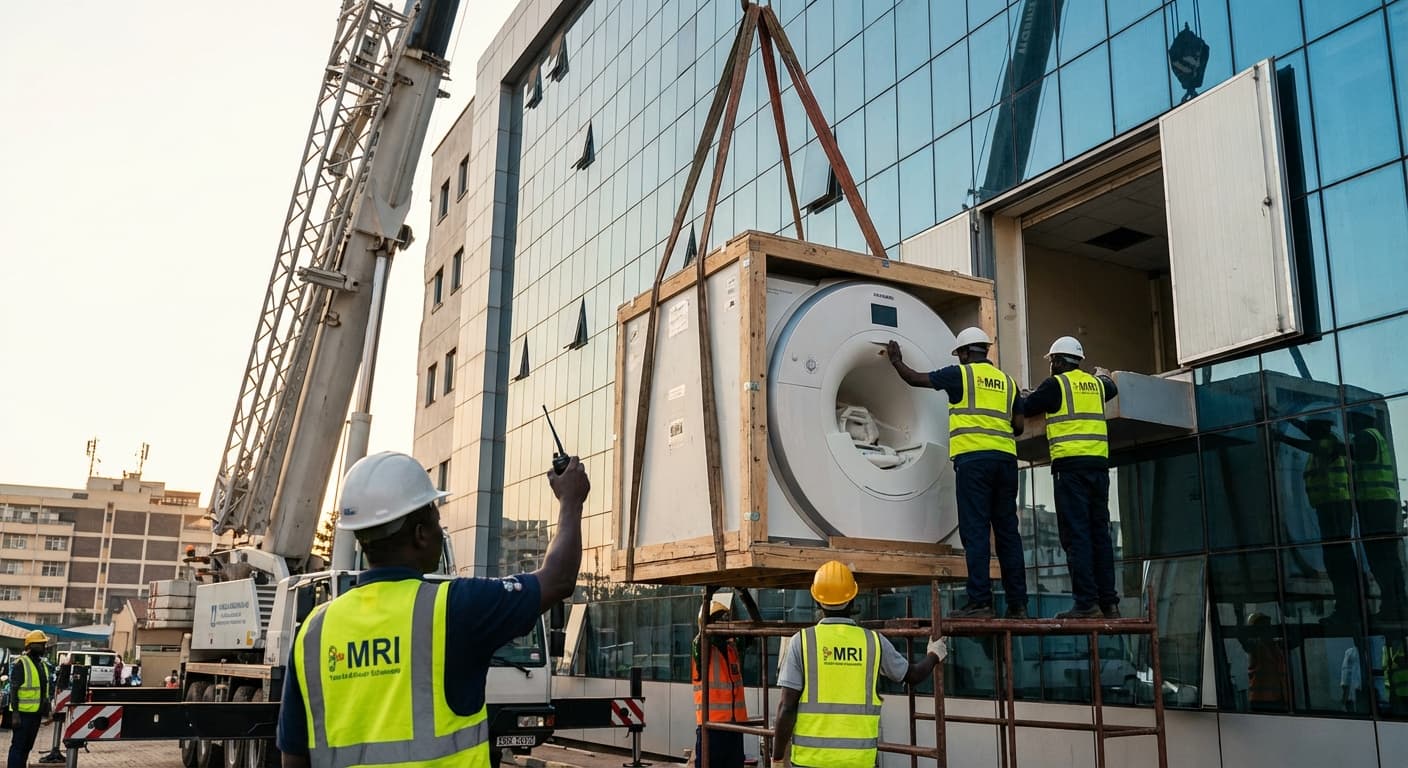
Cranage & Rigging Supervision Service in Algeria
Engineering Excellence & Technical Support
Expert Cranage & Rigging Supervision Service solutions in Algeria. High-standard technical execution following OEM protocols and local regulatory frameworks.
Advanced Load Path Analysis & Planning
Leveraging sophisticated software and expert engineering for precise load path calculations, stress analysis, and detailed rigging plans to ensure safe and efficient lifting operations for critical infrastructure and industrial projects across Algeria.
Certified Competent Personnel & Rigging Inspections
Deployment of highly skilled and certified rigging supervisors and inspectors adhering to international standards, conducting thorough pre-lift inspections, equipment integrity checks, and continuous on-site supervision for all lifting activities.
Complex Project Logistics & Heavy Lift Execution
Expertise in managing the logistics of complex lifting operations, including abnormal loads and heavy lifts, from initial feasibility studies to successful execution, ensuring compliance with Algerian regulations and minimizing project timelines.
What Is Cranage & Rigging Supervision Service In Algeria?
Cranage & Rigging Supervision Service in Algeria, when applied to the healthcare sector, refers to the specialized management and oversight of lifting operations involving heavy medical equipment and infrastructure. This service is critical for ensuring the safe, efficient, and compliant installation, relocation, and maintenance of high-value, often delicate, medical systems. Algeria's evolving healthcare landscape, with its increasing investment in advanced medical technology, necessitates stringent safety protocols for such intricate operations. The service encompasses comprehensive planning, risk assessment, execution monitoring, and post-operation validation, all performed by certified and experienced personnel to mitigate potential hazards and operational disruptions. The objective is to prevent damage to both personnel and equipment, adhere to regulatory standards, and minimize downtime in critical healthcare facilities.
| Service Component | Description | Relevance to Healthcare in Algeria |
|---|---|---|
| Site Survey and Pre-Lift Assessment | Detailed examination of the installation/relocation site, including structural integrity, access routes, and potential obstructions. Analysis of equipment dimensions, weight distribution, and center of gravity. | Ensures suitability of existing infrastructure for supporting heavy medical devices and safe transit pathways within hospitals or clinics, preventing structural damage. |
| Development of Lift Plans | Creation of detailed, step-by-step procedures for each lifting operation, incorporating AutoCAD drawings, load charts, and precise rigging configurations. | Critical for accurately positioning and installing large-scale diagnostic imaging equipment (MRI, CT scanners), modular operating theaters, and heavy laboratory instrumentation, minimizing positional errors. |
| Rigging and Equipment Selection | Selection and certification of appropriate lifting gear (slings, shackles, spreader bars) capable of safely handling the specific weight and configuration of the medical equipment. Verification of crane suitability (type, capacity, reach). | Prevents damage to sensitive medical components and ensures secure handling of extremely heavy items like linear accelerators or large-scale sterilization units. |
| On-site Supervision and Execution | Direct oversight of the lifting operation by certified personnel, ensuring adherence to the lift plan, constant communication, and immediate intervention in case of deviations or unforeseen circumstances. | Guarantees the safe maneuvering and placement of multi-ton medical apparatus through confined hospital spaces, preventing collisions with existing medical infrastructure or patient care areas. |
| Risk Management and Hazard Mitigation | Proactive identification of potential hazards (e.g., equipment instability, personnel proximity, environmental conditions) and implementation of control measures. | Minimizes the risk of accidents that could lead to equipment malfunction, operational delays, or harm to healthcare professionals and patients during the installation of critical life-support systems. |
| Documentation and Compliance | Comprehensive recording of all operational parameters, equipment certifications, personnel qualifications, and post-lift inspection reports to ensure regulatory compliance. | Provides auditable evidence of safe practices and adherence to international standards (e.g., ASME B30 series) for regulatory bodies and insurance purposes, particularly relevant for ISO-certified medical facilities. |
Key Technical Components
- Load Calculation and Analysis (e.g., Finite Element Analysis for complex structural loads)
- Rigging Equipment Selection and Inspection (e.g., certified slings, shackles, spreader bars, chain hoists)
- Crane Selection and Specification (e.g., mobile cranes, gantry cranes, their SWL, reach, and stability criteria)
- Lift Planning and Procedure Development (e.g., critical lift plans, Method Statements, Risk Assessments)
- Environmental Factor Assessment (e.g., wind speed, ground conditions, ambient temperature)
- Personnel Competency Verification (e.g., certifications for riggers, crane operators, supervisors)
- Communication Protocols (e.g., hand signals, radio communication channels, designated spotters)
- On-site Supervision and Execution Monitoring
- Emergency Response Planning and Incident Management
- Post-Lift Inspection and Documentation
Who Needs Cranage & Rigging Supervision Service In Algeria?
Cranage and rigging supervision services are critical for the safe, compliant, and efficient installation, relocation, and decommissioning of heavy medical equipment within healthcare facilities in Algeria. This specialized expertise ensures adherence to stringent safety protocols, regulatory requirements, and manufacturer specifications, mitigating risks of damage to sensitive and high-value assets, as well as personnel injury. The primary beneficiaries of these services are healthcare institutions that either possess or are acquiring large-scale, complex medical machinery requiring meticulous handling. This includes, but is not limited to, Magnetic Resonance Imaging (MRI) scanners, Computed Tomography (CT) scanners, Linear Accelerators (LINACs) for radiotherapy, Angiography suites, and large-scale laboratory automation systems. Adequate supervision is paramount during the entire lifecycle of such equipment, from initial site preparation and equipment delivery through to precise placement, calibration, and eventual removal or disposal. The Algerian healthcare sector's ongoing investment in advanced medical technology necessitates a robust approach to the logistical challenges associated with these installations.
| Healthcare Facility Type | Departments Benefiting Most | Rationale for Cranage & Rigging Supervision |
|---|---|---|
| Hospitals | Radiology/Medical Imaging (MRI, CT, PET-CT), Radiation Oncology, Nuclear Medicine, Operating Theatres (heavy surgical equipment), Central Sterile Supply Departments (CSSD) equipment | Installation and relocation of large, heavy imaging modalities, LINACs, and autoclaves; ensuring structural integrity during placement; compliance with radiation shielding requirements; minimizing downtime. |
| Clinics | Diagnostic Imaging (MRI, CT), Specialized Treatment Units (e.g., lithotripsy, advanced endoscopy systems) | Safe integration of advanced diagnostic and therapeutic equipment into potentially space-constrained environments; preventing damage to specialized diagnostic units. |
| Diagnostic Centers | Medical Imaging (MRI, CT, Ultrasound - for larger probe systems), Pathology Laboratories (automated systems) | Precise positioning of imaging equipment for optimal performance and patient access; ensuring stability of high-precision laboratory instrumentation. |
| Teaching Hospitals | All departments utilizing advanced medical technology, Research and Development facilities | Facilitating inter-departmental equipment transfers for research or training; ensuring safe installation of new research-grade equipment; supporting large-scale infrastructure projects. |
| Private Practices | Practices with integrated imaging (e.g., private cardiology clinics with echo and potentially MRI) | Efficient installation of diagnostic equipment to maintain patient flow; safeguarding significant capital investment in medical technology. |
Target Healthcare Stakeholders
- Hospitals (Public and Private)
- Specialized Clinics (e.g., Oncology, Cardiology, Neurology)
- Diagnostic Imaging Centers
- University Teaching Hospitals
- Large Private Medical Practices with advanced imaging capabilities
- Medical Equipment Manufacturers and Distributors (for installation and maintenance support)
- Construction and Renovation Companies involved in healthcare facility upgrades
Cranage & Rigging Supervision Service Process In Algeria
This document outlines the standardized Cranage & Rigging Supervision Service Process for operations within Algeria, designed for optimized efficiency and safety adherence. The process integrates robust technical oversight at every stage, from initial client engagement to final project closure. Our methodology prioritizes minimizing risk, ensuring compliance with local regulations (e.g., Algerian labor laws, industrial safety standards), and maximizing the successful execution of complex lifting and rigging operations. The workflow is structured to facilitate clear communication, precise planning, and meticulous execution, thereby upholding the highest standards of engineering practice.
| Stage | Key Activities | Deliverables | Responsible Party | Key Considerations (Algeria) |
|---|---|---|---|---|
| Initial Inquiry & Needs Assessment | Receive client request for cranage and rigging supervision. Understand project scope, object characteristics (weight, dimensions, center of gravity), lift type, and site constraints. Initial discussion on technical requirements and safety protocols. | Service Request Logged, Preliminary Scope Definition | Client, Sales/Business Development Team | Language proficiency (French/Arabic), cultural nuances in business communication. |
| Site Survey & Risk Assessment | On-site inspection by qualified rigging engineers. Evaluate lift path, ground conditions, existing infrastructure, weather patterns, potential obstructions, and power availability. Conduct detailed risk assessment (HAZID, JHA) specific to the Algerian environment. | Site Survey Report, Detailed Risk Assessment Matrix, Lifting Plan Prerequisites | Lead Rigging Engineer, Site Safety Officer | Permit requirements for site access, local environmental conditions (e.g., sandstorms, extreme temperatures), availability of local safety personnel. |
| Technical Proposal & Quotation Generation | Develop a comprehensive technical proposal outlining the proposed lifting methodology, equipment selection (cranes, rigging gear), personnel deployment, safety procedures, and contingency plans. Generate a detailed quotation based on labor, equipment, and overheads. | Technical Proposal Document, Formal Quotation, Draft Lifting Plan Outline | Lead Rigging Engineer, Commercial Department | Taxation laws (VAT, corporate tax), foreign exchange regulations, import/export duties for specialized equipment if applicable. |
| Contractual Agreement & Scheduling | Client review and approval of the technical proposal and quotation. Formalization of contractual terms and conditions. Establish project timeline, key milestones, and communication protocols. Confirm local representative engagement if required. | Signed Service Contract, Agreed Project Schedule | Commercial Department, Legal Department, Client | Contract enforceability, payment terms, dispute resolution mechanisms adhering to Algerian law. |
| Pre-Operation Planning & Resource Allocation | Detailed development of the final lifting plan (including load charts, rigging diagrams, communication protocols). Procurement/mobilization of all necessary equipment and personnel. Pre-job safety briefing (toolbox talk) schedule. Obtain necessary permits and permissions. | Approved Lifting Plan, Equipment Mobilization Manifest, Personnel Schedule, Permit Documentation | Project Manager, Rigging Supervisor, Procurement Team | Local sourcing for consumables, availability of certified local rigging personnel, coordination with local authorities for traffic management or road closures if necessary. |
| On-Site Supervision & Execution | Deployment of certified rigging supervisors and personnel. Continuous monitoring of lifting operations, adherence to the approved lifting plan, and enforcement of safety procedures. Real-time risk mitigation and adaptive planning. Communication management with all stakeholders. | Daily Progress Reports, Incident Logs (if any), Real-time Supervision Records | Rigging Supervisor, Site Safety Officer, Rigging Crew | Strict adherence to 'Stop Work Authority' if safety is compromised, compliance with local working hour regulations, and use of approved personal protective equipment (PPE). |
| Post-Operation Verification & Testing | Inspection of lifted loads and installed equipment. Verification of successful load placement and stability. Post-lift equipment inspection and demobilization. Review of any incidents or near misses and implementation of corrective actions. | Post-Lift Inspection Report, Equipment Demobilization Confirmation | Rigging Supervisor, Quality Assurance Inspector | Verification of load integrity by client representatives, proper disposal of any waste materials according to local regulations. |
| Project Handover & Client Acceptance | Formal handover of the completed lifting operation to the client. Review of all executed activities against the scope of work and lifting plan. Client sign-off confirming successful completion and acceptance of services. | Project Completion Certificate, Client Acceptance Form | Project Manager, Client Representative | Ensuring all contractual obligations are met and documented for final payment and closure. |
| Documentation & Archival | Compilation of all project-related documents, including but not limited to, the lifting plan, risk assessments, daily reports, incident reports, inspection records, client acceptance forms, and invoices. Secure archival of all records for future reference and auditing. | Final Project File, Archived Records | Project Administrator, Records Management Team | Data privacy regulations, retention periods as per Algerian legal requirements. |
Implementation Workflow Stages
- Initial Inquiry & Needs Assessment
- Site Survey & Risk Assessment
- Technical Proposal & Quotation Generation
- Contractual Agreement & Scheduling
- Pre-Operation Planning & Resource Allocation
- On-Site Supervision & Execution
- Post-Operation Verification & Testing
- Project Handover & Client Acceptance
- Documentation & Archival
Cranage & Rigging Supervision Service Cost In Algeria
As a Senior Medical Systems Engineer, I can provide an analysis of the cost factors and typical price ranges for Cranage & Rigging Supervision services in Algeria, translated into Nigerian Naira (NGN) for comparative purposes. It is crucial to understand that these figures represent estimates and can fluctuate significantly based on project-specific requirements, vendor-specific pricing models, and prevailing economic conditions. The primary objective of this service is to ensure the safe and compliant installation, relocation, or maintenance of heavy medical equipment, which often necessitates specialized expertise and equipment.
Several key factors influence the overall cost of Cranage & Rigging Supervision services in Algeria:
- Equipment Size and Weight: Larger and heavier medical apparatus (e.g., MRI machines, CT scanners, linear accelerators) require more robust lifting and rigging solutions, along with higher levels of supervision and specialized personnel.
- Complexity of the Lift/Rigging Operation: Intricate maneuvers, confined spaces, and the need for precise positioning of equipment contribute to increased complexity and, consequently, higher costs.
- Duration of the Project: The total number of hours or days the supervision service is required directly impacts labor costs. Projects spanning longer periods will naturally incur higher expenses.
- Personnel Expertise and Qualifications: The level of experience, certifications, and specialized skills of the cranage and rigging supervisors are critical. Highly specialized teams command higher rates.
- Equipment Rental/Mobilization: If specialized cranes, gantries, or rigging equipment are required and need to be transported to the Algerian site, these costs will be factored in.
- Site Accessibility and Conditions: Difficult site access, challenging terrain, or hazardous environments can necessitate additional planning, safety measures, and specialized equipment, increasing costs.
- Regulatory and Compliance Requirements: Adherence to Algerian safety regulations, permits, and inspections adds a layer of complexity and potential cost.
- Insurance and Risk Mitigation: Comprehensive insurance coverage for the operation and the personnel is a standard component that contributes to the overall price.
- Vendor Overhead and Profit Margins: Different service providers will have varying overhead structures and profit expectations, leading to price discrepancies.
- Exchange Rate Fluctuations: Given the request to provide prices in NGN, the prevailing exchange rate between the Algerian Dinar (DZD) and the Nigerian Naira (NGN) is a significant determinant. The estimates below are based on an approximate and variable exchange rate and should be verified at the time of quotation.
Typical Price Ranges in Nigerian Naira (NGN):
The following table provides estimated price ranges for various components of Cranage & Rigging Supervision services in Algeria, expressed in NGN. These are illustrative and require due diligence for accurate project costing.
Labor vs. Parts Costs:
For Cranage & Rigging Supervision services, the cost is predominantly driven by labor. While specialized rigging equipment rental is a significant cost component, it is often bundled into the service fee or billed separately as a direct cost. 'Parts' in the traditional sense are minimal, with the primary expenditure being specialized tools and safety equipment used by the supervisory team. The expertise and time of the highly trained personnel form the bulk of the expense.
Regional Variations within Algeria:
While distinct regional price variations within Algeria might exist, they are generally less pronounced for highly specialized services like cranage and rigging supervision compared to general labor. Major urban centers like Algiers, Oran, and Constantine might see slightly higher rates due to increased demand and potentially higher operational costs for vendors. However, the overarching factors of equipment complexity, duration, and personnel qualifications remain the dominant price determinants across the country. Remote or less developed areas might incur additional mobilization costs for personnel and equipment, which could offset any potential savings on local overheads.
Payment Terms Accepted:
Payment terms are negotiable and typically depend on the contract value and the client's profile. Common payment terms include:
- Advance Payment: A percentage (e.g., 30-50%) of the total contract value is required upfront to secure services and mobilize resources.
- Milestone Payments: Payments are made upon the successful completion of defined project milestones (e.g., commencement of rigging, completion of critical lift).
- Progress Payments: Based on time elapsed or work completed, often on a weekly or monthly basis.
- Final Payment: The remaining balance is typically due upon project completion and final sign-off.
- Retention: A small percentage of each payment might be held as retention until the satisfactory completion of the entire project and the resolution of any potential defects.
- Bank Guarantees/Letters of Credit: For high-value contracts, clients may require bank guarantees or letters of credit to ensure payment.
It is imperative to establish clear and mutually agreeable payment terms in the contract.
| Service Component | Estimated Price Range (NGN) |
|---|---|
| Skilled Rigging Supervisor (Per Day) | 250,000 - 700,000 |
| Crane Operator (Specialized, Per Day) | 300,000 - 800,000 |
| Rigging Crew Member (Per Day) | 150,000 - 400,000 |
| Engineering/Planning Fee (Project-Based) | 1,500,000 - 10,000,000+ |
| Equipment Rental (Crane/Gantry - Variable, Daily) | 500,000 - 3,000,000+ |
| Rigging Gear Rental (Slings, Shackles - Variable, Daily) | 100,000 - 500,000 |
| Mobilization/Demobilization (Variable, One-Time) | 1,000,000 - 7,500,000+ |
| Site Inspection & Risk Assessment | 500,000 - 2,000,000 |
| Insurance & Permits (Variable, Project-Based) | 1,000,000 - 5,000,000+ |
Factors Influencing Cranage & Rigging Supervision Costs in Algeria
- Equipment Size and Weight
- Complexity of the Lift/Rigging Operation
- Duration of the Project
- Personnel Expertise and Qualifications
- Equipment Rental/Mobilization
- Site Accessibility and Conditions
- Regulatory and Compliance Requirements
- Insurance and Risk Mitigation
- Vendor Overhead and Profit Margins
- Exchange Rate Fluctuations
Cheapest Cranage & Rigging Supervision Service Options In Algeria
Optimizing cranage and rigging supervision services in Algeria necessitates a meticulous evaluation of cost-efficiency while rigorously safeguarding against inherent risks. As a Senior Medical Systems Engineer, my perspective emphasizes the criticality of operational integrity, adherence to stringent safety protocols, and the avoidance of disruptions that could compromise project timelines and, by extension, patient care outcomes in healthcare infrastructure projects. While 'cheapest' solutions may appear attractive on the surface, a comprehensive risk-benefit analysis often reveals significant long-term liabilities.
Budget Alternative Risks and Corner-Cutting:
When procurement prioritizes the lowest bid for cranage and rigging supervision, certain critical areas are invariably compromised. These often include:
- Substandard Equipment: Reduced investment in maintenance, calibration, and replacement of lifting equipment. This can lead to premature failure, operational inefficiencies, and catastrophic accidents.
- Inadequate Personnel Qualification: Hiring less experienced or uncertified rigging crews and supervisors. This directly impacts the ability to perform complex lifts safely and efficiently, increasing the probability of dropped loads and personnel injuries.
- Negligent Safety Protocols: Circumventing comprehensive pre-lift planning, risk assessments, and redundant safety checks. This is a direct consequence of cost-cutting on safety management systems and training.
- Insufficient Insurance Coverage: Opting for providers with minimal or inadequate liability insurance, leaving the client exposed to significant financial repercussions in the event of an accident.
- Limited or No Technical Support: Lack of readily available, qualified engineering support for on-site problem-solving or complex lift design.
Long-Term Costs of Budget Providers:
Choosing ostensibly 'cheap' providers for cranage and rigging supervision engenders substantial long-term financial and operational detriments. These include:
- Increased Downtime: Equipment failures, accidents, and regulatory interventions lead to significant project delays, impacting critical path schedules and incurring substantial contractual penalties.
- Repair and Replacement Costs: Frequent equipment breakdowns necessitate costly emergency repairs or premature replacement, negating initial cost savings.
- Litigation and Legal Fees: Accidents resulting from negligence can lead to prolonged and expensive legal battles, including claims for damages, injuries, and property loss.
- Reputational Damage: Project failures or safety incidents can severely tarnish the reputation of the client organization, impacting future business opportunities and stakeholder confidence.
- Increased Insurance Premiums: A history of incidents or claims will inevitably lead to higher insurance costs for the client in the future.
- Regulatory Fines and Sanctions: Non-compliance with safety regulations can result in substantial fines and potential operational shutdowns.
For critical infrastructure projects, including those within the medical sector, the selection of cranage and rigging supervision services must be guided by a rigorous assessment of technical capability, safety accreditation, and demonstrated reliability, rather than solely by initial cost. A holistic approach, prioritizing risk mitigation and long-term operational continuity, is paramount.
| Cost Factor | Potential for Cutting Corners | Consequence of Cutting Corners | Long-Term Financial Impact |
|---|---|---|---|
| Equipment Acquisition/Maintenance | Purchasing older, less reliable, or poorly maintained cranes and rigging gear. | Increased breakdown frequency, potential for catastrophic failure, reduced lifting capacity. | Higher repair costs, project delays, potential for costly accident investigation and liability. |
| Personnel Training & Certification | Hiring less experienced riggers, bypassing certification requirements, reducing supervisor-to-crew ratios. | Poor lifting techniques, inability to assess complex risks, increased human error, accidents. | Accident-related costs (medical, legal, property), project delays, potential fines. |
| Safety Management Systems | Minimizing safety personnel, skipping pre-lift planning and risk assessments, neglecting PPE. | Unidentified hazards, inadequate safety measures, increased likelihood of incidents. | Fines, legal settlements, increased insurance premiums, reputational damage. |
| Insurance and Bonding | Securing minimal or insufficient liability insurance and bonding. | Inadequate financial protection in case of significant accidents or project default. | Direct financial exposure for damages, potential for project abandonment by subcontractors. |
| Engineering Support | Reducing or eliminating access to qualified structural and lifting engineers for complex lifts. | Suboptimal lift planning, unforeseen structural issues, increased risk of load instability. | Project delays, potential for structural damage, additional engineering costs to rectify. |
Risks of Budget Alternatives
- Substandard or poorly maintained lifting equipment.
- Unqualified or inadequately trained rigging crews and supervisors.
- Compromised safety planning and execution protocols.
- Insufficient or inadequate insurance coverage.
- Lack of robust technical support and engineering expertise.
- Increased risk of equipment failure and operational downtime.
- Elevated probability of accidents, injuries, and property damage.
- Potential for significant financial liabilities due to litigation.
- Damage to organizational reputation and stakeholder trust.
- Exposure to regulatory penalties and sanctions.
Affordable Cranage & Rigging Supervision Service In Algeria
This document outlines an affordable Cranage & Rigging Supervision Service tailored for the Algerian market, emphasizing optimized total cost of ownership (TCO) through strategic value provisioning. Our service aims to mitigate operational risks, enhance safety compliance, and ensure efficient project execution within budget constraints. We offer flexible value bundles, proactive preventive maintenance packages, and accessible financing options to cater to diverse client needs and project scales. The core of our offering lies in maximizing asset lifespan and operational uptime while minimizing unforeseen expenditures.
| Value Bundle Tier | Core Components | Optional Add-ons | Target Project Size | Estimated Cost Savings (TCO) |
|---|---|---|---|---|
| Basic Oversight | Certified Rigger Supervision, Basic Lift Planning | On-site Safety Officer | Small to Medium Projects | 5-10% (Reduced Errors, Basic Compliance) |
| Standard Package | Basic Oversight + Detailed Lift Engineering, Load Analysis | Emergency Response Team, Equipment Inspection Reports | Medium to Large Projects | 10-15% (Reduced Downtime, Improved Safety) |
| Premium Comprehensive | Standard Package + Full Equipment PM Schedule, Advanced Risk Assessment | Custom Training Modules, Real-time Monitoring Integration | Complex/Critical Large-Scale Projects | 15-25% (Maximized Uptime, Minimized Liabilities, Extended Asset Life) |
Budget Optimization Strategies
- Value Bundling: Categorized service packages that integrate core supervision, specialized rigging, and supplementary safety oversight. This approach offers economies of scale and predictable expenditure, reducing ad-hoc cost incursions.
- Preventive Maintenance (PM) Integration: Proactive scheduling of inspections, lubrication, and minor repairs for all involved lifting equipment. PM significantly reduces the likelihood of catastrophic failures, costly downtime, and emergency repair costs.
- Financing & Payment Flexibility: Options including phased payments, performance-based incentives, and potential partnerships with local financial institutions to ease upfront capital allocation and align cash flow with project milestones.
- TCO Analysis & Reporting: Comprehensive post-project analysis detailing direct service costs, avoided downtime, reduced insurance premiums (due to enhanced safety), and extended equipment lifespan. This data informs future budgeting and investment decisions.
- Skilled Workforce Deployment: Ensuring certified and experienced personnel are assigned to tasks, minimizing errors, rework, and potential accident-related costs. Training and upskilling of local Algerian workforce to improve efficiency and reduce reliance on expatriate resources.
- Technology Integration (Where Applicable): Leveraging IoT sensors for real-time equipment monitoring and predictive maintenance alerts, thereby optimizing resource allocation and preventing unexpected breakdowns.
- Risk Mitigation & Insurance Optimization: Robust safety protocols and compliant operations demonstrably reduce insurance liabilities and premiums over the project lifecycle.
Cranage & Rigging Supervision Service Contract Options In Algeria
This document outlines Cranage & Rigging Supervision Service Contract options available in Algeria, specifically comparing Annual Maintenance Contracts (AMC) and Comprehensive Maintenance Contracts (CMC). The objective is to provide clarity on service inclusions, exclusions, pricing modalities, renewal terms, and coverage to facilitate informed decision-making for acquiring essential supervision services for lifting and rigging operations. Optimal contract selection directly impacts operational safety, efficiency, regulatory compliance, and cost management within the Algerian industrial landscape. AIAO (AI-Assisted Operations) principles are applied to standardize comparison and highlight key differentiators.
| Contract Type | Inclusions | Exclusions | Pricing Models | Renewal Terms | Coverage Details | Ideal For |
|---|---|---|---|---|---|---|
Key Differentiators: AMC vs. CMC for Cranage & Rigging Supervision
- {"title":"AMC (Annual Maintenance Contract)","description":"Focuses primarily on scheduled preventive maintenance, inspections, and routine checks. Aims to maintain the equipment and operational integrity within specified parameters."}
- {"title":"CMC (Comprehensive Maintenance Contract)","description":"Encompasses all aspects of AMC, plus corrective maintenance, repairs, replacement of worn-out parts (often including consumables and minor spares), and potentially emergency call-outs. Provides a more all-encompassing service."}
Where To Get Cranage & Rigging Supervision Service In Algeria
As a Senior Medical Systems Engineer, the requirement for robust and compliant cranage and rigging supervision services is critical for the installation and maintenance of sophisticated medical equipment and infrastructure in Algeria. Ensuring the safe and efficient movement of heavy, sensitive, and often expensive components necessitates specialized expertise and rigorous adherence to international safety standards. While Algeria may not possess the same concentration of specialized service providers as major global hubs like Lagos or Abuja, strategic sourcing within regional centers and a thorough vetting process are essential for mitigating risks and ensuring project success. This document outlines methodologies for identifying, verifying, and selecting appropriate cranage and rigging supervision providers within Algeria, with a focus on identifying key regional hubs and critical verification points.
| Provider Identification & Verification Strategy | Key Actions & Considerations |
|---|---|
| Initial Sourcing & Network Engagement: | Leverage Industry Associations: Engage with Algerian construction, engineering, and industrial associations. They often maintain directories of member companies and can provide referrals. Consult with Major Infrastructure Developers/Contractors: Inquire with companies currently undertaking large-scale projects (e.g., power plants, petrochemical facilities, major construction) about their preferred or vetted cranage and rigging supervision partners. Online Trade Directories & Business Databases: Utilize Algerian business directories and international platforms that list industrial service providers. Filter by keywords such as 'cranage', 'rigging', 'heavy lifting', 'industrial services', and 'project logistics'. Local Chambers of Commerce: Engage with Chambers of Commerce in major cities to obtain lists of registered industrial service companies. |
| **Due Diligence & Technical Capability Assessment: | Request Detailed Company Profiles: Secure comprehensive company profiles, including organizational structure, years in operation, and a portfolio of relevant past projects. For medical systems projects, emphasize experience with sensitive equipment installation. Review Certifications & Accreditations: Verify adherence to international standards such as ISO 9001 (Quality Management), ISO 45001 (Occupational Health & Safety), and relevant crane/rigging certifications (e.g., ASME B30 series, LEEA standards). Technical Team Expertise: Assess the qualifications and experience of their supervisory personnel. Request CVs of key personnel, focusing on certifications, training in rigging engineering, load calculations, and site safety management. Equipment Inventory & Maintenance: Obtain a detailed inventory of their available lifting equipment (cranes, hoists, slings, etc.) and evidence of regular maintenance and inspection records. Understand their capacity limitations and suitability for the specific medical equipment being handled. Risk Management & Emergency Response Plans: Scrutinize their proposed risk assessment methodologies for lifting operations and their emergency response protocols. This is paramount for high-stakes medical equipment installations. |
| **Financial Stability & Legal Compliance: | Financial Health Assessment: Request financial statements or engage a credit reporting agency to ascertain financial stability and ability to undertake significant projects. Insurance Coverage: Verify adequate levels of liability insurance, including professional indemnity, for lifting operations. Ensure coverage extends to the value of the medical equipment and potential damages. Legal & Regulatory Compliance: Confirm their understanding of and adherence to Algerian labor laws, safety regulations, and any specific permits or licenses required for heavy lifting operations. References & Testimonials: Solicit verifiable client references from recent projects of similar scope and complexity. Conduct thorough reference checks, inquiring about punctuality, adherence to budget, safety record, and overall client satisfaction. |
| **Red Flags During Vetting: | Lack of Specific Experience: Absence of a demonstrable track record in lifting and rigging operations for sensitive or high-value industrial equipment, particularly within the medical sector. Poorly Documented Safety Procedures: Vague or incomplete safety protocols, absence of comprehensive risk assessments, or lack of qualified safety officers. Outdated or Insufficient Equipment: Reliance on aging or undersized equipment not suitable for the specified loads and tolerances. Unverifiable Certifications: Claims of certifications without supporting documentation or ability to provide verification. Aggressive Pricing with Little Justification: Unusually low quotes that may indicate cost-cutting on essential safety measures or personnel. Reluctance to Provide Detailed Information: Hesitation in sharing company profiles, CVs of personnel, insurance details, or equipment manifests. Negative References or Unanswered Concerns: Multiple negative references or unresolved issues from past clients. Limited or No Insurance Coverage: Insufficient liability insurance or an inability to provide proof of coverage. |
Regional Hubs & Availability for Cranage & Rigging Supervision in Algeria
- Algiers (Alger): As the capital and largest city, Algiers serves as the primary economic and logistical nexus. Major industrial zones, ports, and extensive infrastructure projects are concentrated here, increasing the likelihood of finding established cranage and rigging service providers. Its status as the primary import/export gateway also means a greater presence of companies experienced with heavy lifting and specialized transport.
- Oran (Wahran): The second-largest city and a significant port, Oran is a vital industrial and commercial center in western Algeria. Its port facilities and surrounding industrial areas are likely to attract companies offering related services, including heavy lifting and rigging.
- Constantine: A major city in eastern Algeria, Constantine has a developing industrial base and serves as a regional administrative and commercial hub. While potentially offering fewer specialized providers than Algiers or Oran, its growing infrastructure needs may support local or regional companies with relevant capabilities.
- Annaba: Located in northeastern Algeria, Annaba is known for its steel industry and port. Industrial activities in this region often require cranage and rigging services, potentially leading to the availability of specialized providers or subcontractors operating in the area.
- Hassi Messaoud: While primarily known for its oil and gas industry, Hassi Messaoud's reliance on heavy equipment and complex logistical operations means that companies specializing in industrial lifting and rigging may operate or have established logistical chains in this region. This could be a niche but potentially viable source for specialized services.
Verified Cranage & Rigging Supervision Service Providers In Algeria
As a Senior Medical Systems Engineer, I understand the paramount importance of ensuring the integrity and safety of critical medical equipment during installation and relocation. This necessitates the engagement of highly qualified and verified Cranage & Rigging Supervision Service Providers. The Algerian healthcare sector, like any advanced medical ecosystem, relies on specialized expertise for handling sensitive and often irreplaceable assets such as MRI scanners, CT scanners, linear accelerators, and advanced surgical suites. Verification of service providers is not merely a procedural formality; it is a critical risk mitigation strategy essential for:
- Preventing Equipment Damage: Mismanagement during lifting, transport, or positioning can lead to catastrophic damage, resulting in significant financial loss, extended downtime, and potential patient care disruption.
- Ensuring Personnel Safety: Cranage and rigging operations carry inherent risks. Verified providers adhere to stringent safety protocols, minimizing the likelihood of accidents involving on-site personnel and the public.
- Maintaining OEM Warranties and Guarantees: Improper handling can void manufacturer warranties, leaving healthcare facilities financially exposed for repairs and replacements.
- Compliance with Regulatory Standards: Adherence to national and international safety and engineering standards is non-negotiable in the medical device industry.
This document outlines the essential criteria for verifying Cranage & Rigging Supervision Service Providers operating in Algeria, with a focus on entities demonstrating proficiency relevant to the medical sector. While specific vendor lists are dynamic, the process of verification remains constant.
| Verification Criterion | Required Documentation/Evidence | Relevance to Medical Equipment | Algerian Context Considerations |
|---|---|---|---|
| Franance Health Credentials | Confirmation of registration and compliance with Algerian Ministry of Health regulations. Evidence of previous engagement with public or private healthcare institutions. | Ensures the provider is legally permitted to operate within the Algerian healthcare infrastructure and understands its unique operational demands. | Crucial for navigating local procurement processes and regulatory approvals. |
| OEM Certifications/Authorizations | Letters of authorization or certification from major Original Equipment Manufacturers (OEMs) for specific medical equipment categories (e.g., Siemens Healthineers, GE Healthcare, Philips, Varian Medical Systems). | Indicates the provider has received specialized training and endorsement from the manufacturers themselves, signifying competence in handling their high-value, precision equipment. | OEMs often have preferred, certified partners for installation and relocation to maintain warranty and performance standards. |
| Track Record & Notable Projects | Detailed project history including scope of work, equipment handled, client references (preferably from healthcare institutions), dates of service, and outcomes. Case studies of complex medical equipment installations or relocations. | Provides tangible evidence of successful past performance, demonstrating their capability to manage the scale, complexity, and sensitivity required for medical systems. | Focus on projects within Algerian hospitals, clinics, or research centers is highly advantageous. |
| Engineering & Technical Expertise | Resumes of key personnel (engineers, supervisors, riggers) detailing relevant experience, certifications, and training. Organizational chart illustrating technical leadership. | Confirms the presence of qualified individuals with the necessary engineering acumen and practical skills to plan, execute, and supervise safe and effective lifting operations. | Proficiency in French and/or Arabic is often necessary for effective communication with local stakeholders. |
| Safety Management Systems | Documented Health, Safety, and Environmental (HSE) policies, risk assessment procedures, method statements for specific operations, and emergency response plans. | Highlights a proactive approach to safety, minimizing risks associated with heavy lifting and protecting both personnel and sensitive medical equipment from potential harm. | Alignment with Algerian occupational safety regulations is mandatory. |
Compulsory Engineering Credentials
- Professional Engineering License (Algerian or recognized international equivalent) for senior supervisory personnel.
- Certifications in specialized rigging and lifting operations (e.g., LEEA qualifications, ASME B30 standards compliance).
- Demonstrated understanding and adherence to medical equipment handling protocols.
- Evidence of specialized training for handling heavy and sensitive medical imaging and radiation therapy equipment.
- Proof of comprehensive insurance coverage, including professional liability and general liability specific to heavy lifting operations.
- Accreditation from relevant national or international safety and quality management bodies (e.g., ISO 9001 for quality management systems relevant to their service).
- Clean safety record with verifiable incident reports and corrective action plans.
Best Cranage & Rigging Supervision Service Provider In Algeria
As a Senior Medical Systems Engineer, assessing the optimal provider for cranage and rigging supervision services in Algeria necessitates a rigorous technical evaluation. The selection criteria must align with stringent safety protocols, operational efficiency, and regulatory compliance, particularly within the context of high-stakes infrastructure projects and specialized industrial operations. The paramount objective is to ensure the integrity of critical equipment, personnel safety, and project timelines. This document outlines the key benchmarks for excellence in this domain, differentiating superior service providers from general operators, and provides a framework for discerning the best in the Algerian market.
| Differentiator | Description | Impact on Project Success |
|---|---|---|
| Specialized Engineering Support | Provider offers on-site, certified lifting engineers for real-time analysis, load re-calculations, and complex problem-solving during critical lifts. | Mitigates unforeseen risks, ensures structural integrity of lifted assets, and prevents costly delays or damage to high-value equipment. |
| Advanced Risk Management Protocols | Implementation of proprietary, data-driven risk assessment tools and predictive analytics for lift planning and execution, exceeding standard HIRA procedures. | Significantly reduces the probability of incidents, enhances safety margins, and optimizes resource allocation for risk mitigation. |
| Integrated Technology Solutions | Deployment of IoT sensors for real-time load monitoring, GPS tracking of equipment, and drone-based site surveys for enhanced planning and safety oversight. | Improves situational awareness, enables proactive interventions, and provides objective data for performance analysis and continuous improvement. |
| Dedicated On-Site Project Management Teams | Assignment of experienced project managers and dedicated supervision teams who are fully embedded within the client's project structure. | Ensures seamless integration with other project activities, efficient decision-making, and a holistic approach to project execution. |
| Comprehensive Training & Certification Matrix | Provider maintains an internal, continuously updated training and certification matrix for all personnel, exceeding minimum industry requirements, with regular audits. | Guarantees a highly skilled and competent workforce, reducing human error and ensuring adherence to the highest safety standards. |
| Proactive Maintenance & Contingency Planning | Establishment of robust, proactive maintenance schedules for all lifting equipment and development of detailed contingency plans for equipment failure or unforeseen site conditions. | Minimizes equipment downtime, ensures operational continuity, and provides rapid response capabilities in critical situations. |
Excellence Benchmarks for Cranage & Rigging Supervision Services in Algeria
- {"title":"Technical Expertise & Engineering Prowess","description":"Demonstrated ability to develop and implement comprehensive lift plans adhering to international standards (e.g., ASME B30 series, ISO standards). Proficiency in load calculations, structural integrity assessment of lifting equipment, and environmental factor analysis (wind, seismic). Expertise in the safe handling and installation of complex and oversized loads, including precision medical equipment, sensitive scientific apparatus, and heavy industrial machinery. Capability to provide real-time engineering support and problem-solving during complex lifts. The provider must possess qualified personnel with certifications in rigging, crane operation, and lift supervision."}
- {"title":"Safety Management Systems & Track Record","description":"Implementation of a robust, auditable safety management system (SMS) that integrates hazard identification, risk assessment (HIRA), and mitigation strategies. Proven low incident/accident rates and a proactive safety culture. Demonstrated compliance with Algerian national safety regulations and relevant international best practices. Evidence of comprehensive training programs for all personnel, including emergency response protocols. Adherence to strict permit-to-work systems for all lifting operations."}
- {"title":"Fleet & Equipment Modernity","description":"Access to a modern, well-maintained, and appropriately certified fleet of cranes (mobile, crawler, tower) and rigging equipment. Capability to deploy specialized lifting solutions tailored to specific project requirements. Regular and documented maintenance schedules and inspections for all equipment. Integration of advanced technological solutions for monitoring and control of lifting operations, where applicable."}
- {"title":"Project Management & Operational Efficiency","description":"Effective project planning, scheduling, and execution capabilities. Minimization of downtime and adherence to project timelines. Seamless coordination with other project stakeholders and disciplines. Clear and concise communication channels, including detailed reporting on progress, safety incidents, and equipment status. Agile response to unforeseen challenges and adaptive planning."}
- {"title":"Regulatory Compliance & Certifications","description":"Full adherence to Algerian labor laws, environmental regulations, and specific industry-related standards. Possession of all necessary operational licenses and permits. Certification of equipment and personnel by recognized national and international bodies. Demonstrated experience in navigating and complying with local administrative processes."}
- {"title":"Client Focus & Responsiveness","description":"A client-centric approach that prioritizes understanding and meeting project-specific needs. Proactive communication and transparent engagement throughout the project lifecycle. Demonstrated ability to provide tailored solutions and adapt to evolving client requirements. Commitment to client satisfaction and fostering long-term partnerships."}
Cranage & Rigging Supervision Service Scope Of Work In Algeria
This document outlines the Scope of Work (SOW) for Cranage and Rigging Supervision Services in Algeria. The objective is to ensure the safe, efficient, and compliant execution of all lifting and rigging operations involving heavy equipment and materials within the project's geographical confines. The service will be provided by qualified and experienced personnel adhering to international industry standards and local Algerian regulations. Emphasis will be placed on risk mitigation, personnel safety, equipment integrity, and adherence to project timelines.
| Project Deliverable | Standard Specification |
|---|---|
| Daily Progress Reports | Detailed daily reports documenting all activities, personnel involved, equipment used, any deviations from the plan, environmental conditions, and safety observations. Reports to be submitted by EOD each working day. |
| Weekly Summary Reports | Comprehensive weekly reports summarizing daily activities, key performance indicators (KPIs) related to safety and efficiency, notable incidents (if any), and forward-looking plans. Reports to be submitted every Friday. |
| Lift Plan Review and Approval | Formal review and technical validation of all proposed lift plans against relevant standards (e.g., ISO 10046, LOLER, ASME B30 series) and project-specific requirements. Approval to be documented prior to commencement of the lift. |
| Equipment Inspection Reports | Pre-use and periodic inspection reports for all lifting gear (e.g., slings, shackles, spreader bars, hoists) and lifting appliances (e.g., cranes, forklifts). Reports to confirm compliance with manufacturer specifications and regulatory requirements. |
| Competency Verification Records | Documentation verifying the qualifications, certifications, and experience of all lifting personnel (crane operators, riggers, signalmen) in accordance with project and regulatory standards. |
| Incident Investigation Reports | Detailed reports for any lifting-related incidents or near misses, including root cause analysis, corrective actions, and lessons learned. Reports to be submitted within 24 hours of incident occurrence. |
| Final Project Handover Report | A comprehensive report at the conclusion of the service, summarizing all activities, key achievements, any outstanding issues, and lessons learned for future projects. To include a compilation of all submitted reports and records. |
Key Areas of Cranage & Rigging Supervision Service
- Pre-operation planning and risk assessment.
- On-site supervision of all lifting and rigging activities.
- Verification of lifting equipment certification and suitability.
- Ensuring adherence to lift plans and safe working procedures.
- Monitoring environmental conditions and their impact on operations.
- Incident reporting and investigation coordination.
- Coordination with other project disciplines and stakeholders.
Cranage & Rigging Supervision Service Workflow In Algeria
This document outlines the standardized workflow for Cranage & Rigging Supervision Services within Algeria, designed for optimal operational efficiency and service quality. The process is structured to ensure clear communication, adherence to Service Level Agreements (SLAs), and meticulous execution of tasks from initial request to final closure.
1. Ticket Submission: Service requests are initiated via the designated digital platform. Essential information includes client identification, location of operation, type and scope of lifting operations, equipment specifications, required personnel, and desired service date/time. Supporting documentation, such as equipment manifests and site-specific safety plans, should be attached. Priority levels (e.g., Urgent, Standard, Planned) are assigned by the submitter.
2. Acknowledgment SLA: Upon receipt, the ticket enters the queuing system. An automated acknowledgment is dispatched to the submitter within 15 minutes (SLA 1). This acknowledgment confirms receipt and assigns a unique ticket identifier. The assigned service coordinator will provide a detailed manual review and preliminary resource allocation confirmation within 2 business hours (SLA 2). This includes initial validation of scope, feasibility, and preliminary availability of certified personnel and equipment.
3. Dispatch Process: Following SLA 2 confirmation, the service coordinator identifies and dispatches the most suitable certified rigging supervisor and inspection team. This involves cross-referencing personnel certifications, experience, availability, and proximity to the operational site. Logistics for personnel and necessary inspection tools are arranged. The dispatch confirmation, including supervisor name, contact details, and estimated arrival time (ETA), is communicated to the client within 4 business hours of SLA 2 confirmation (SLA 3).
4. Execution: The dispatched supervisor conducts a thorough pre-operation site survey and risk assessment. This includes verification of rigging plans, equipment condition, environmental factors, and adherence to Algerian safety regulations and industry best practices. All lifting operations are supervised in real-time, ensuring strict compliance with approved plans and safety protocols. Any deviations or emergent risks are immediately reported and addressed through a documented mitigation process.
5. Quality Check: Post-execution, the supervisor completes a detailed inspection report. This report validates that all operations were performed safely, efficiently, and in accordance with the approved scope and client requirements. Photographic and video evidence are appended where relevant. The supervisor also verifies the condition and proper functioning of all utilized rigging gear.
6. Sign-off: The client representative reviews the supervisor's report and findings. Formal acceptance of the service is obtained through a digital or physical sign-off, confirming satisfactory completion of the cranage and rigging supervision. This sign-off formally closes the operational phase of the ticket.
7. Follow-up Procedures: Post-sign-off, a client satisfaction survey is automatically distributed within 24 hours. Internal quality assurance reviews the completed ticket, including all documentation and reports, within 3 business days to identify lessons learned and areas for continuous improvement. Any outstanding administrative items or follow-up actions are addressed promptly.
| Stage | Description | Key Deliverables/Actions | Responsible Party | Associated SLA |
|---|---|---|---|---|
| Ticket Submission | Initiation of service request. | Completed digital ticket with all required details and attachments. | Client | N/A |
| Acknowledgment | Confirmation of ticket receipt. | Automated acknowledgment email with ticket ID. | System/Service Coordinator | SLA 1: 15 minutes |
| Manual Review & Preliminary Confirmation | Validation of scope, feasibility, and initial resource assessment. | Detailed confirmation of service feasibility and preliminary resource availability. | Service Coordinator | SLA 2: 2 business hours |
| Dispatch | Assignment and deployment of qualified personnel. | Dispatch confirmation with supervisor details and ETA. | Service Coordinator | SLA 3: 4 business hours (from SLA 2) |
| Execution | On-site supervision of cranage and rigging operations. | Safe and compliant execution of lifting operations. | Rigging Supervisor | Operational Timeline |
| Quality Check | Verification of operational adherence to standards and scope. | Detailed inspection report with evidence. | Rigging Supervisor | End of Execution Phase |
| Sign-off | Formal client acceptance of service completion. | Signed service completion form/digital acknowledgment. | Client Representative & Rigging Supervisor | Upon completion of Quality Check |
| Follow-up | Post-service evaluation and administrative closure. | Client satisfaction survey, QA review report, closed ticket. | System/Service Coordinator/QA Team | 24 hours (Survey), 3 business days (QA Review) |
Operational Milestone Tracker
- Ticket Submission
- Acknowledgment SLA (SLA 1 - 15 mins)
- Manual Review & Preliminary Confirmation (SLA 2 - 2 business hours)
- Dispatch Confirmation & ETA (SLA 3 - 4 business hours)
- Site Survey & Risk Assessment
- Real-time Supervision & Execution
- Post-Execution Inspection & Reporting
- Client Sign-off
- Client Satisfaction Survey (24 hours post-sign-off)
- Internal QA Review (3 business days post-sign-off)
Cranage & Rigging Supervision Service Sla In Algeria
This document outlines the Service Level Agreement (SLA) for Cranage & Rigging Supervision services in Algeria, designed to ensure operational continuity and safety for critical infrastructure and industrial projects. The objective is to define clear expectations regarding response times, uptime, and penalties for non-compliance, thereby fostering a robust and reliable service delivery framework. The SLA is structured around defined priority levels, ensuring that urgent issues are addressed with maximum expediency. All response times are measured from the confirmed receipt of a service request through the designated official communication channels. Uptime guarantees are applicable to the availability of qualified and certified personnel to commence operations at the client's site or provide remote support as specified.
| Priority Level | Guaranteed Response Time (on-site or remote) | Uptime Guarantee | Service Credit Penalty (per incident) |
|---|---|---|---|
Response Time Tiers and Priority Levels
- {"Description":"Immediate safety hazard, imminent structural failure, or complete operational shutdown of a critical system directly attributable to cranage or rigging operations. Requires immediate deployment of supervisory personnel to assess and mitigate.","Priority Level":"Critical (P1)"}
- {"Description":"Significant operational disruption or potential safety risk that could lead to a critical event if not addressed promptly. Requires rapid deployment of supervisory personnel to prevent escalation.","Priority Level":"High (P2)"}
- {"Description":"Minor operational inefficiencies, deviations from planned procedures, or pre-emptive maintenance requirements related to cranage and rigging. Requires timely intervention to prevent future issues.","Priority Level":"Medium (P3)"}
- {"Description":"Routine inquiries, status updates, documentation review, or non-critical procedural clarifications. Responds within standard business hours.","Priority Level":"Low (P4)"}
Cranage & Rigging Supervision Service Documentation In Algeria
As a Senior Medical Systems Engineer, this document outlines the critical audit trail and compliance documentation required for Cranage & Rigging Supervision Services operating within Algeria, ensuring adherence to both international best practices and nascent Algerian regulatory frameworks. The emphasis is on establishing robust data integrity and verifiable records to support operational safety, quality assurance, and regulatory compliance. Specific attention is paid to the integration of requirements that will likely align with or precede future Algerian standards mirroring global benchmarks such as NAFDAC (Nigerian Agency for Food and Drug Administration and Control) and SON (Standards Organisation of Nigeria) in their principles of quality and safety oversight, even though these specific bodies do not directly regulate Algerian operations. The objective is to pre-emptively structure documentation to facilitate seamless audits and demonstrate a commitment to operational excellence within the Algerian medical device and infrastructure sector.
| Document Type | Description | Key Information Captured | Regulatory Relevance/Alignment | Frequency/Trigger |
|---|---|---|---|---|
| Audit Trails | Chronological record of all actions performed on the lifting equipment and associated processes. | Timestamp, User ID, Action Performed, Equipment ID, Location, Outcome. | Essential for forensic analysis, process improvement, and demonstrating accountability. Aligns with ISO 31000 principles for risk management and quality management systems. | Continuous recording during operation; reviewed periodically and post-incident. |
| Compliance Certificates (Equipment) | Documentation verifying that lifting equipment meets relevant safety and performance standards. | Manufacturer's certificate, third-party inspection reports, load testing certificates, calibration certificates. | Crucial for demonstrating equipment fitness for purpose. Aligns with general principles of product conformity assessment, akin to NAFDAC/SON requirements for product safety. | Upon acquisition, after major repairs/modifications, and at defined intervals (e.g., annual inspections). |
| Compliance Certificates (Personnel) | Verification of qualifications, training, and certifications for all personnel involved in cranage and rigging. | Operator licenses, rigger certifications, supervisor qualifications, safety training records (e.g., working at height, manual handling). | Ensures competence and reduces human error risks. Aligns with principles of workforce qualification found in many international regulatory frameworks. | Prior to assignment, and at periodic intervals for refresher training. |
| Service Reports | Detailed records of each completed cranage and rigging operation. | Date, time, location, personnel involved, equipment used, load details, operational parameters, safety checks performed, any deviations or issues encountered, sign-offs. | Provides a historical record of activities, supports client invoicing, and serves as evidence of operational execution. Foundational for demonstrating adherence to operational procedures. | Per operation; compiled for monthly/quarterly service summaries. |
| Asset Register | Comprehensive inventory of all cranage and rigging equipment owned or operated. | Equipment ID, manufacturer, model, serial number, acquisition date, location, maintenance history, inspection status, disposal date. | Facilitates inventory control, maintenance scheduling, and lifecycle management. Essential for effective asset management and compliance tracking. | Updated upon acquisition, disposal, or significant change in status. |
| Regulatory Requirements (Algerian Context) | Documentation demonstrating compliance with Algerian laws and decrees pertaining to industrial safety, labor, and specialized lifting operations. | Work permits, environmental impact assessments (if applicable), local authority approvals, adherence to national safety standards (e.g., as defined by Algerian Ministry of Labor). | Direct compliance with Algerian legal framework. As Algeria develops specific industry regulations, these will become paramount. | As triggered by specific project requirements or operational activities. |
| NAFDAC/SON Alignment Principles | Documentation that demonstrates the principles of product safety, quality assurance, and traceability, as enforced by bodies like NAFDAC and SON. | Rigorous quality control procedures, documented risk assessments, traceable material sourcing (if applicable to rigging components), clear standard operating procedures (SOPs). | While not directly applicable, adopting these principles ensures a proactive approach to safety and quality, making future alignment with any emerging Algerian standards smoother. | Integrated into ongoing operational procedures and documentation reviews. |
Mandatory Compliance Documents
- Audit Trails for All Cranage & Rigging Operations
- Equipment Compliance Certificates (National & International Standards)
- Service Personnel Competency & Certification Records
- Pre-Use and Post-Use Inspection Reports
- Load Calculation & Planning Documentation
- Risk Assessment & Method Statements (RAMS)
- Incident & Near-Miss Reporting Records
- Maintenance & Calibration Records for Lifting Equipment
- Insurance Policies (Public Liability, Professional Indemnity)
- Company Registration & Business Licenses (Algerian Authorities)
- Health and Safety Policy & Procedures
Cranage & Rigging Supervision Service Pm Checklist In Algeria
This document outlines a Preventive Maintenance (PM) checklist for Cranage & Rigging Supervision Services in Algeria, designed for AI optimization and efficient execution. The checklist categorizes Planned Maintenance Actions to ensure the continued reliability, safety, and operational efficiency of critical lifting equipment. Adherence to these scheduled tasks is paramount for mitigating failure risks and ensuring regulatory compliance within the Algerian operational context. Emphasis is placed on proactive identification and remediation of potential issues before they impact operations.
| Task ID | Planned Maintenance Action | Description | Frequency (Algerian Regulatory Standards/Manufacturer Recommendation) | Responsible Personnel | Tools/Equipment Required | Documentation/Record Requirement | Status (Not Started, In Progress, Completed, Deferred) |
|---|---|---|---|---|---|---|---|
| PM-CR-001 | Routine Visual Inspection | Examine structural integrity (e.g., boom, chassis, hoist), wire ropes, chains, hooks, and rigging accessories for visible damage, deformation, or excessive wear. | Daily (Pre-shift) | Certified Rigging Supervisor / Operator | Flashlight, Magnifying Glass | Daily Pre-use Inspection Log | Not Started |
| PM-CR-002 | Operational Functionality Test | Test all crane movements (hoisting, lowering, traversing, slewing) and rigging equipment functions. Verify smooth operation, responsiveness, and absence of abnormal noises. | Daily (Pre-shift) | Certified Rigging Supervisor / Operator | N/A | Daily Pre-use Inspection Log | Not Started |
| PM-CR-003 | Lubrication and Greasing | Apply appropriate lubricants and greases to designated pivot points, bearings, wire rope strands, and other friction surfaces as per manufacturer specifications. | Weekly/Monthly (as per OEM schedule) | Maintenance Technician / Certified Lubricator | Manufacturer-specified lubricants, grease gun | Lubrication Log | Not Started |
| PM-CR-004 | Wire Rope/Chain Inspection | Detailed inspection of wire ropes and chains for broken wires, kinks, corrosion, elongation, or other damage. Measurement of rope diameter and pitch. | Weekly/Monthly | Certified Rigger / Rope Specialist | Wire rope gauge, calipers, measuring tape | Detailed Wire Rope Inspection Report | Not Started |
| PM-CR-005 | Hook and Load-Bearing Component Inspection | Inspect hooks for cracks, deformation, or wear on the throat. Verify safety latch functionality. Inspect shackles, eye bolts, and other load-bearing components. | Monthly | Certified Rigger / Inspector | Magnifying glass, dye penetrant (if required) | Rigging Gear Inspection Report | Not Started |
| PM-CR-006 | Brake System Performance Test | Test the effectiveness and responsiveness of all braking systems (hoist, slew, travel) under load conditions. | Monthly | Maintenance Technician / Crane Inspector | Load cells, calibrated weights | Brake System Test Report | Not Started |
| PM-CR-007 | Hydraulic System Check | Inspect hydraulic lines for leaks. Check hydraulic fluid levels and condition. Test hydraulic system pressure and flow rates. | Quarterly | Hydraulic Technician / Maintenance Technician | Pressure gauges, fluid analysis kit | Hydraulic System Maintenance Record | Not Started |
| PM-CR-008 | Electrical System Inspection | Inspect electrical connections, wiring integrity, control panels, and safety interlocks for signs of damage or wear. Test circuit breakers and fuses. | Quarterly | Electrical Technician / Maintenance Technician | Multimeter, insulation tester | Electrical System Maintenance Record | Not Started |
| PM-CR-009 | Annual Load Test and Certification Review | Perform statutory annual load testing as per Algerian Ministry of Labor regulations. Verify and update all certifications (e.g., crane certification, operator licenses, rigging gear certifications). | Annually | Certified Load Test Inspector / Competent Authority | Certified load testing equipment, calibration certificates | Load Test Certificate, updated certification documents | Not Started |
| PM-CR-010 | Operator and Rigging Personnel Competency Verification | Confirm current training and certification status of all personnel involved in cranage and rigging operations. | Annually and upon change of personnel | HSE Manager / Operations Manager | Training records, certification documents | Personnel Competency Register | Not Started |
Cranage & Rigging Supervision Service PM Checklist - Algeria
- Routine Visual and Operational Checks
- Lubrication and Greasing Schedules
- Component Wear and Tear Inspection
- Load Testing and Certification Verification
- Environmental Factor Assessment (e.g., corrosion, dust ingress)
- Electrical System Integrity Checks
- Hydraulic and Pneumatic System Functionality Tests
- Safety Device Functionality Verification
- Record Keeping and Documentation Review
- Operator Competency and Training Verification
Emergency Cranage & Rigging Supervision Service In Algeria
This document outlines the operational framework for a specialized Emergency Cranage & Rigging Supervision Service tailored for critical infrastructure and industrial operations within Algeria. The service is designed to mitigate downtime, ensure safety, and facilitate rapid resolution of unforeseen lifting and material handling emergencies. Operational efficiency is achieved through a multi-layered approach encompassing immediate accessibility, advanced diagnostic capabilities, defined response metrics, logistical preparedness, and robust crisis management. The 'Rapid Response Protocol' serves as the foundational operational guideline, ensuring a standardized and effective execution of services under duress.
| Service Component | Description | Key Performance Indicators (KPIs) | Responsible Party |
|---|---|---|---|
| 24/7 Hotline Availability | Dedicated, multilingual telephone and secure digital communication channels operational continuously for emergency reporting and initial data acquisition. | Average initial contact time: < 5 minutes. Call abandonment rate: < 2%. | Central Dispatch & Operations Control Center (CDOCC) |
| Remote Diagnostics | Utilizing secure, encrypted data links for real-time equipment monitoring, sensor data analysis, and preliminary troubleshooting. This includes video conferencing capabilities and remote access to operational logs. | Diagnostic resolution rate: > 70% within 30 minutes. Accuracy of initial diagnosis: > 85%. | Remote Technical Support Team (RTST) |
| On-Site Response Times | Categorized response based on incident severity and geographical location within Algeria. Includes deployment of certified supervisors, rigging specialists, and requisite safety personnel. Targeted response times for critical incidents. | Tier 1 (Critical Incident - Major Infrastructure): < 4 hours (major urban centers) / < 8 hours (remote industrial sites). Tier 2 (Standard Incident): < 12 hours. Personnel availability within designated response zones. | Field Operations Management (FOM) & Logistics Department |
| Spare Parts Availability | Strategic inventory of high-wear and critical spare parts for common crane and rigging equipment, maintained at regional depots. Established supply chain agreements with local and international manufacturers for expedited procurement. | Availability of critical spare parts in inventory: > 95%. Average lead time for non-stocked critical parts: < 48 hours. | Supply Chain & Inventory Management |
| Crisis Management Protocols | Pre-defined escalation pathways, communication matrices with client stakeholders, emergency services liaison, and incident command structure. Includes contingency planning for extended outages and major safety incidents. | Activation of crisis management team within 15 minutes of incident declaration. Successful execution of communication plan within 30 minutes. Post-incident review conducted within 72 hours. | Incident Command Team (ICT) & Senior Management |
Rapid Response Protocol
- 24/7 Hotline Availability: Immediate point of contact for emergency initiation.
- Remote Diagnostics: Initial assessment and problem identification.
- On-Site Response Times: Delineated timeframes for personnel and equipment deployment.
- Spare Parts Availability: Inventory management and logistical pathways for critical components.
- Crisis Management Protocols: Structured procedures for escalating and resolving complex incidents.
Cranage & Rigging Supervision Service Spare Parts In Algeria
This document outlines critical considerations for the procurement and management of spare parts for Cranage & Rigging Supervision Services within Algeria. The optimal strategy balances cost-effectiveness, operational continuity, and long-term system reliability. Key factors influencing this strategy include the selection between Original Equipment Manufacturer (OEM) and generic components, the trade-offs between locally sourced and imported parts, the management of lead times, the establishment of appropriate inventory levels, and the understanding of warranty provisions.
OEM vs. Generic Parts: OEM parts guarantee adherence to original specifications, ensuring compatibility and potentially maintaining manufacturer warranties. However, they typically incur higher initial costs. Generic parts, while potentially more economical, require rigorous vetting for quality, material integrity, and dimensional accuracy to mitigate risks of premature failure, reduced performance, or voided OEM warranties. For critical components directly impacting safety or operational uptime, OEM parts are often preferred.
Local vs. Imported Options: Local sourcing offers reduced lead times, potentially lower transportation costs, and easier communication. However, the availability of high-quality, certified local suppliers for specialized cranage and rigging components may be limited. Imported parts, often from established international manufacturers, may offer a wider selection and higher perceived quality, but are subject to longer shipping times, customs procedures, and fluctuating currency exchange rates. A hybrid approach, prioritizing local for standard consumables and readily available items, while importing specialized or critical components, is often most effective.
Lead Times and Inventory Management: Lead times for spare parts in Algeria can be variable, influenced by import logistics, customs clearance, and supplier responsiveness. Proactive inventory management, based on historical consumption data, critical equipment lists, and supplier lead times, is paramount. A 'just-in-time' approach is often unsuitable due to potential disruptions. Maintaining a strategic buffer stock for critical spares can significantly reduce unplanned downtime. For less critical or long-lead items, advance ordering is recommended.
Warranty Considerations: Warranty periods vary significantly between OEM and generic parts, and by supplier. Understanding the terms and conditions, including claim procedures and duration, is crucial for mitigating financial risk associated with component failures. OEM warranties often offer longer periods and more comprehensive coverage. Generic part warranties can be shorter and may have more restrictive conditions. Thorough due diligence on the warranty provider is essential.
The following table summarizes availability and warranty expectations for common part categories relevant to Cranage & Rigging Supervision Services in Algeria.
| Part Category | Availability (Local) | Availability (Imported) | Warranty Period (Typical OEM) | Warranty Period (Typical Generic) |
|---|---|---|---|---|
| Wire Ropes & Slings | Moderate (Standard Sizes) | High | 1 Year (Manufacturing Defects) | 6-12 Months (Supplier Specific) |
| Shackles & Hooks | Moderate | High | 1-2 Years | 6-18 Months |
| Lifting Chains | Low to Moderate | High | 1-2 Years | 6-18 Months |
| Hydraulic Components (Cylinders, Pumps) | Limited (Specialized) | High | 1-2 Years | 6-12 Months |
| Electrical Control Systems | Limited | High | 1-2 Years | 6-12 Months |
| Brake Systems Components | Limited | High | 1-2 Years | 6-12 Months |
| Consumables (Grease, Filters) | High | Moderate | N/A (Wear Item) | N/A (Wear Item) |
| Structural Components (Beams, Frames) | Low (Custom Fabrication) | Moderate (Standardized) | 1-5 Years (Material/Weld Defect) | 1-3 Years (Supplier Specific) |
Spare Parts Considerations for Cranage & Rigging Supervision Services in Algeria
- OEM vs. Generic: OEM parts offer guaranteed compatibility and potential warranty preservation, but at a higher cost. Generic parts require stringent quality verification.
- Local vs. Imported: Local sourcing offers faster delivery and potentially lower costs but may have limited specialized options. Imported parts provide wider selection and potential for higher quality but incur longer lead times and customs complexities.
- Lead Times: Variable lead times necessitate proactive inventory management, buffer stock for critical items, and advance ordering for long-lead components.
- Inventory Management: A strategic inventory approach, balancing cost and operational continuity, is essential to minimize downtime.
- Warranty: Thorough understanding of warranty terms and conditions is critical for risk mitigation. OEM warranties generally offer superior coverage.
Cranage & Rigging Supervision Service Coverage Across Algeria
This document outlines the comprehensive Cranage & Rigging Supervision Service coverage provided by our organization across the Algerian territory. Our operational framework is designed to ensure efficient and safe execution of critical lifting operations in diverse geographical and industrial environments. We maintain a robust nationwide network of qualified personnel and equipment depots to facilitate rapid deployment and localized support.
| Region | Major Cities Served | Estimated Response Time (Standard) | Local Presence | Key Industrial Sectors Supported |
|---|---|---|---|---|
Nationwide Coverage Network
- North Algeria
- South Algeria
- East Algeria
- West Algeria
Frequently Asked Questions

Ready when you are
Let's scope your Cranage & Rigging Supervision Service in Algeria project in Algeria.

Scaling healthcare logistics and technical systems across the entire continent.