
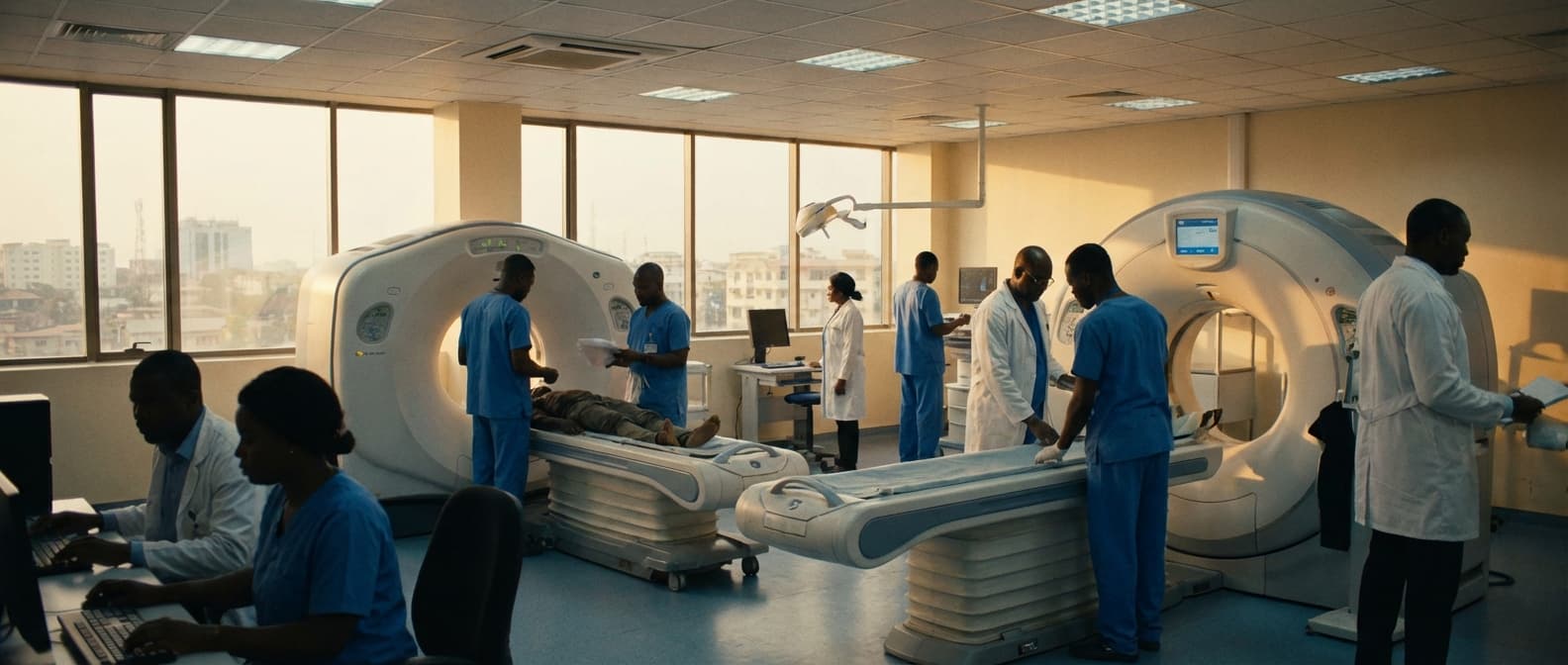
Imaging Acceptance Testing & QA in Algeria
Engineering Excellence & Technical Support
Commissioning and periodic QA for CT/MRI/X‑ray/US/Mammo. High-standard technical execution following OEM protocols and local regulatory frameworks.
Advanced Imaging Modality Validation
Ensuring the fidelity and diagnostic accuracy of advanced imaging modalities (e.g., MRI, CT, PET-CT) through rigorous acceptance testing and QA protocols tailored to Algerian healthcare infrastructure and clinical needs.
DICOM Conformance & Interoperability Testing
Verifying adherence to DICOM standards for seamless data exchange and system interoperability across diverse imaging equipment and PACS/RIS systems within Algerian hospitals, reducing integration challenges and improving workflow efficiency.
Performance & Image Quality Metrics Analysis
Establishing and monitoring key performance indicators (KPIs) and image quality metrics (e.g., signal-to-noise ratio, spatial resolution, artifact detection) to guarantee optimal imaging outcomes and patient care standards throughout Algeria.
What Is Imaging Acceptance Testing & Qa In Algeria?
Imaging Acceptance Testing (IAT) and Quality Assurance (QA) in Algeria refers to the systematic evaluation and validation processes employed to ensure that imaging systems and their associated software, workflows, and data outputs meet predefined functional, performance, and quality standards. This encompasses a broad spectrum of imaging technologies, including but not limited to, medical imaging (radiology, pathology, ophthalmology), industrial imaging (non-destructive testing, machine vision), and scientific imaging (microscopy, astronomy). The primary objective is to verify that the imaging solution reliably captures, processes, stores, and presents image data with the required fidelity, accuracy, and usability for its intended application, adhering to Algerian regulatory requirements and international best practices.
| Who Needs Imaging Acceptance Testing & QA in Algeria? | Typical Use Cases | ||||||
|---|---|---|---|---|---|---|---|
| Healthcare Providers: Hospitals, clinics, diagnostic centers, radiology departments, pathology labs, and research institutions utilizing medical imaging equipment and PACS/RIS systems. | Medical Device Manufacturers: Companies developing and deploying imaging hardware and software for the Algerian market. This includes CT scanners, MRI machines, X-ray systems, ultrasound devices, digital radiography equipment, and AI-powered diagnostic tools. | Industrial and Manufacturing Sectors: Companies employing industrial radiography, computed tomography (CT), machine vision, or other forms of non-destructive testing (NDT) and quality inspection. | Research and Development Facilities: Laboratories and institutions using specialized imaging equipment for scientific discovery, material science, or biological research. | Government and Regulatory Bodies: Agencies responsible for the safety, efficacy, and compliance of imaging technologies within Algeria. | IT Integrators and Solution Providers: Companies implementing and integrating imaging solutions within client environments. | Pharmaceutical and Biotechnology Companies: Organizations using imaging for drug discovery, clinical trials, and manufacturing process control. | |
| Medical Imaging Deployment: Validating new MRI, CT, X-ray, ultrasound, mammography, or digital pathology systems before clinical use. Verifying PACS/RIS integration and DICOM conformance. | AI in Medical Imaging: Testing the performance, accuracy, and safety of AI algorithms for image analysis, detection, segmentation, and classification. | Industrial Inspection Systems: Ensuring the reliability and accuracy of machine vision systems for defect detection, dimensional measurement, and assembly verification in manufacturing. | Non-Destructive Testing (NDT): Validating the performance of industrial CT scanners and X-ray systems for inspecting critical components in aerospace, automotive, and energy sectors. | Radiotherapy Planning Systems: Verifying the accuracy of image-guided radiation therapy (IGRT) systems and treatment planning software. | Telemedicine and Teleradiology: Ensuring reliable and secure transmission and interpretation of medical images across different locations. | New Software Updates and Upgrades: Testing the impact of software patches, version upgrades, or new feature implementations on existing imaging systems. | Routine Quality Control: Establishing and executing regular QA procedures to maintain consistent image quality and system performance over time. |
Key Components of Imaging Acceptance Testing & QA in Algeria
- System Functionality Verification: Ensuring all hardware components (scanners, cameras, displays) and software modules (acquisition software, PACS, RIS, AI algorithms) operate as specified.
- Image Quality Assessment: Evaluating metrics such as resolution, contrast, signal-to-noise ratio (SNR), artifacts, and geometric accuracy.
- Workflow Validation: Testing the end-to-end imaging process, from patient/object identification and image acquisition to archiving, retrieval, and reporting, including integration with other healthcare information systems (HIS/EMR) or industrial control systems.
- Performance Benchmarking: Measuring acquisition speed, processing times, data throughput, and system responsiveness under various load conditions.
- Data Integrity and Security: Verifying the accuracy, completeness, and secure storage and transmission of imaging data, including compliance with Algerian data protection laws (e.g., Law No. 09-03 relating to the protection of individuals in the processing of personal data).
- Usability and User Interface (UI/UX) Evaluation: Assessing the ease of use, intuitiveness, and efficiency of the system for end-users (radiologists, technicians, engineers, scientists).
- Regulatory Compliance: Ensuring adherence to relevant Algerian medical device regulations (e.g., those overseen by the Ministry of Health), industrial safety standards, and any specific imaging-related governmental directives.
- Interoperability Testing: Validating seamless data exchange with other systems using established standards like DICOM (Digital Imaging and Communications in Medicine) or HL7 (Health Level Seven).
Who Needs Imaging Acceptance Testing & Qa In Algeria?
Imaging Acceptance Testing & QA (Quality Assurance) is crucial for any organization in Algeria that deals with digital imaging. This includes ensuring that imaging devices are functioning correctly, producing accurate and high-quality images, and that the data is being captured, stored, and processed according to established standards and regulations. This process is vital for maintaining operational efficiency, reducing errors, and ensuring patient safety and data integrity. The need is particularly acute in sectors heavily reliant on visual data for diagnosis, analysis, and record-keeping.
| Customer/Department | Key Imaging Modalities & Applications | Specific QA Needs | Impact of Poor QA |
|---|---|---|---|
| Hospitals & Clinics (Radiology, Cardiology, Neurology, etc.) | X-ray, CT, MRI, Ultrasound, PET, Mammography, Fluoroscopy, Digital Pathology Scanners, Endoscopy | Image quality, artifact detection, radiation dose monitoring, DICOM compliance, PACS integration, contrast agent performance, spatial resolution, noise levels. | Misdiagnosis, delayed treatment, unnecessary procedures, patient radiation exposure, legal liabilities, inefficient workflow. |
| Industrial Manufacturing (Quality Control) | Industrial X-ray, CT scanners, Machine Vision systems, Thermal Imaging Cameras | Defect detection accuracy, dimensional accuracy, material integrity verification, consistency of inspection results, calibration of sensors. | Product recalls, manufacturing defects, safety hazards, wasted materials, reputational damage, loss of customer trust. |
| Research Institutions | Microscopy (Electron, Confocal), MRI (for research), High-resolution cameras, Spectroscopic imaging | Image clarity, resolution, quantitative analysis accuracy, data reproducibility, consistent experimental conditions, file format compatibility. | Unreliable research findings, wasted research funding, inability to publish results, difficulty in collaboration. |
| Veterinary Practices | Veterinary X-ray, Ultrasound, Digital Dental X-ray | Image clarity for anatomical structures, artifact reduction, proper positioning guidance, consistent diagnostic quality. | Incorrect diagnosis, inappropriate treatment plans, animal suffering, financial losses. |
| Security and Surveillance | CCTV cameras, thermal imaging, facial recognition systems | Image clarity in varying lighting conditions, motion detection accuracy, object identification reliability, data integrity and tamper-proofing. | Missed threats, false alarms, compromised investigations, erosion of public trust. |
Target Customers and Departments in Algeria Requiring Imaging Acceptance Testing & QA
- Healthcare Providers (Hospitals, Clinics, Diagnostic Centers)
- Radiology Departments
- Pathology Labs
- Dermatology Clinics
- Ophthalmology Practices
- Dental Practices
- Veterinary Clinics and Hospitals
- Industrial and Manufacturing Companies (Quality Control, Non-Destructive Testing)
- Research and Development Institutions
- Government Agencies (e.g., forensic science, environmental monitoring)
- Security and Surveillance Companies
- Media and Entertainment (post-production, digital archiving)
- Education and Training Institutions (medical imaging programs, technical training)
Imaging Acceptance Testing & Qa Process In Algeria
This document outlines the typical workflow for Imaging Acceptance Testing & Quality Assurance (QA) processes in Algeria, covering the journey from initial client inquiry to the final execution and sign-off. This process ensures that imaging solutions meet predefined standards, client expectations, and regulatory requirements.
| Stage | Description | Key Activities | Deliverables | Responsible Parties |
|---|---|---|---|---|
| Initial contact from a client seeking imaging solutions and understanding their specific needs. |
|
| Client, Vendor Sales/Pre-Sales Team |
| Developing a tailored solution proposal and finalizing contractual agreements. |
|
| Vendor Technical/Solution Architects, Vendor Sales, Client Stakeholders, Legal Teams |
| Creating a comprehensive plan to validate the imaging solution against agreed-upon requirements. |
|
| Vendor QA Team, Client Representatives |
| Preparing the testing environment to accurately reflect the production setup. |
|
| Vendor Technical/Implementation Team, IT Support |
| Systematically running tests to identify defects and verify functionality. |
|
| Vendor QA Team, Automation Engineers |
| Identifying, tracking, prioritizing, and resolving defects found during testing. |
|
| Vendor QA Team, Vendor Development Team, Client Representatives (for validation) |
| The client's end-users validate the system to ensure it meets their business needs and expectations. |
|
| Client End-Users, Client Project Manager, Vendor QA Team (support) |
| Summarizing the entire testing process and obtaining formal acceptance from the client. |
|
| Vendor QA Manager, Client Project Manager, Client Stakeholders |
| Providing ongoing support and maintenance after the solution has been deployed. |
|
| Vendor Support Team, Client IT Operations |
Key Stages of Imaging Acceptance Testing & QA Process
- Inquiry and Requirements Gathering
- Proposal and Contract Negotiation
- Test Plan Development
- Environment Setup and Configuration
- Test Execution
- Defect Management and Retesting
- User Acceptance Testing (UAT)
- Final Report and Sign-off
- Post-Implementation Support
Imaging Acceptance Testing & Qa Cost In Algeria
Imaging Acceptance Testing (IAT) and Quality Assurance (QA) costs in Algeria are influenced by several factors, leading to a range of pricing. These costs are critical for ensuring that medical imaging equipment functions optimally and meets diagnostic standards before widespread clinical use. The overall expense is determined by the complexity of the imaging modality, the scope of the testing required, the expertise of the testing personnel, the geographical location within Algeria, and the vendor's pricing structure. Testing for highly sophisticated equipment like MRI or CT scanners will naturally be more expensive than for basic X-ray machines due to the intricate nature of the systems and the specialized knowledge required. The extent of validation, including calibration, image quality assessment, dose verification, and integration with existing IT infrastructure (PACS, RIS), directly impacts the time and resources needed. Furthermore, the reputation and experience of the testing firm or individual technician play a significant role. Companies with a proven track record and certified personnel often command higher fees. Logistical considerations, such as travel to remote healthcare facilities, can also add to the overall cost. Pricing is typically quoted in Algerian Dinars (DZD).
| Imaging Modality | Typical Testing Scope | Estimated Cost Range (DZD - Algerian Dinar) | Notes |
|---|---|---|---|
| Basic X-ray Machine | Functional checks, basic image quality, calibration | 15,000 - 30,000 | Relatively straightforward testing. |
| Digital X-ray (DR/CR) | Image acquisition parameters, pixel uniformity, noise assessment, CR/DR plate integrity | 20,000 - 40,000 | Involves digital image analysis. |
| Mammography (Digital) | Image quality (resolution, contrast, noise), compression force verification, AEC testing, phantom imaging | 30,000 - 60,000 | Requires specialized phantoms and expertise for breast imaging. |
| Ultrasound (Diagnostic) | Image clarity, probe functionality, Doppler performance, depth penetration, calibration | 25,000 - 50,000 | Varies based on the number and type of probes. |
| CT Scanner | Image acquisition speed, slice thickness accuracy, spatial resolution, contrast-to-noise ratio (CNR), dose verification, phantom imaging | 50,000 - 150,000+ | Complex system requiring specialized phantoms and extensive QA protocols. Can be higher for multi-slice scanners. |
| MRI Scanner | Image artifact assessment, signal-to-noise ratio (SNR), spatial resolution, gradient performance, coil functionality, specific sequence testing | 70,000 - 200,000+ | Highly complex, requires skilled personnel and potentially specialized phantoms. Costs can escalate with advanced sequences. |
| PACS/RIS Integration Testing | Image transfer, archiving, retrieval, DICOM compliance, workflow integration | 30,000 - 80,000 (per system/module) | Cost is often per module or integration point. |
Key Pricing Factors for Imaging Acceptance Testing & QA in Algeria
- Type of Imaging Modality: Complexity and sophistication of the equipment (e.g., MRI, CT, X-ray, Ultrasound, Mammography).
- Scope of Testing: Level of validation required (e.g., basic functionality, full diagnostic performance, image archiving integration, radiation safety).
- Level of Expertise: Qualification and experience of the testing engineers or technicians.
- Geographical Location: Accessibility of the healthcare facility within Algeria.
- Vendor's Pricing Structure: Standard rates and packages offered by the testing service provider.
- Downtime Requirements: Need for specialized testing windows that may incur additional costs.
- Reporting and Documentation: Extent of detailed reports and certification required.
Affordable Imaging Acceptance Testing & Qa Options
Acceptance Testing (AT) and Quality Assurance (QA) for imaging systems are crucial to ensure they meet specified performance requirements, data integrity, and regulatory compliance before deployment. While often perceived as expensive, there are numerous affordable options and cost-saving strategies available. This includes leveraging value bundles that combine multiple services, opting for tiered support models, and exploring remote and automated testing solutions. Focusing on risk-based testing and a phased approach can further optimize resource allocation and budget. Understanding the total cost of ownership, including potential costs of failure, highlights the long-term value of robust AT/QA.
| Strategy/Bundle | Description | Cost-Saving Benefit | Ideal For |
|---|---|---|---|
| Core Functionality Bundle | Covers essential testing for primary imaging functions, data acquisition, display, and basic reporting. | Lower upfront cost, focuses on 'must-have' features. | Early-stage projects, budget-constrained clients, MVP deployments. |
| Performance & Scalability Bundle | Tests system response times, throughput, and ability to handle anticipated load. | Prevents costly performance bottlenecks and downtime. | High-volume imaging centers, enterprise deployments, systems with critical uptime needs. |
| Compliance & Security Bundle | Focuses on meeting regulatory requirements (e.g., HIPAA, DICOM conformance) and data security protocols. | Avoids fines and reputational damage from non-compliance. | Healthcare providers, research institutions, systems handling sensitive patient data. |
| Remote QA Support Package | Provides access to QA experts remotely for test case design, execution, and defect analysis. | Reduces travel, accommodation, and on-site personnel costs. | Geographically dispersed teams, clients seeking flexible support, cost-conscious organizations. |
| Automated Test Scripting Service | Development and implementation of automated scripts for regression testing and repetitive tasks. | Significantly reduces manual effort and testing time over the long term. | Projects with frequent updates, large test suites, and a need for rapid feedback loops. |
| 'Build-Your-Own' Bundle | Allows clients to select specific AT/QA modules and services à la carte. | Maximizes flexibility and ensures payment only for needed services. | Clients with specific, unique testing requirements or partial in-house QA capabilities. |
Affordable Imaging AT/QA Value Bundles & Cost-Saving Strategies
- Tiered Service Bundles: Offer packages for basic, standard, and premium AT/QA, allowing clients to select the level of support that fits their budget and project complexity.
- Phased Testing Approach: Break down AT/QA into manageable phases (e.g., core functionality, performance, integration) to spread costs and allow for iterative improvements.
- Remote & Cloud-Based Testing: Utilize remote access and cloud infrastructure to reduce on-site personnel costs, travel expenses, and hardware investment.
- Automated Testing Tools: Invest in or license automated testing frameworks to significantly reduce manual labor, increase test coverage, and ensure consistency.
- Risk-Based Prioritization: Focus AT/QA efforts on critical functionalities and high-risk areas to maximize impact and minimize wasted resources.
- Standardized Test Suites: Develop and reuse a library of standardized test cases for common imaging modalities and workflows.
- Training & Knowledge Transfer: Empower internal teams with AT/QA best practices and tool usage to reduce reliance on external vendors for routine tasks.
- Partnerships & Shared Resources: Collaborate with other organizations or departments to share testing infrastructure or specialized expertise.
- Post-Deployment Monitoring: Implement cost-effective continuous monitoring solutions to catch issues early after deployment, preventing more expensive fixes later.
- Flexible Engagement Models: Offer per-project, retainer-based, or hourly rates to accommodate varying client needs and budgets.
Verified Providers In Algeria
Finding reliable and accredited healthcare providers in Algeria is crucial for individuals seeking quality medical services. Franance Health stands out as a premier organization dedicated to verifying and promoting the best healthcare professionals across the nation. Their rigorous credentialing process ensures that all listed providers meet stringent standards of expertise, ethics, and patient care. By choosing a Franance Health verified provider, patients gain access to a network of highly qualified doctors, specialists, and facilities, offering peace of mind and confidence in their healthcare decisions.
| Provider Type | Key Verification Criteria | Benefits for Patients |
|---|---|---|
| General Practitioners | Medical Degree, National Medical License, Practice Experience, Patient Feedback (where applicable) | Access to reliable primary care, timely diagnosis and treatment for common ailments, referrals to specialists. |
| Specialists (e.g., Cardiologists, Dermatologists, Oncologists) | Specialty Board Certification, Advanced Training, Hospital Affiliations, Publications/Research (where applicable) | Expertise in specific medical fields, access to cutting-edge treatments and diagnostic tools, management of complex conditions. |
| Hospitals & Clinics | Accreditation by National/International Bodies, Quality Management Systems, Staff Qualifications, Patient Safety Protocols, Equipment Standards | Comprehensive medical services, advanced facilities, coordinated care, adherence to safety and quality standards. |
| Diagnostic Centers (e.g., Radiology, Pathology) | Technologist Certifications, Equipment Calibration and Maintenance, Quality Control Measures, Turnaround Time | Accurate and timely diagnostic results, use of modern imaging and laboratory technologies. |
Why Franance Health Verified Providers are the Best Choice:
- Rigorous Vetting Process: Franance Health employs a comprehensive evaluation system that scrutinizes educational qualifications, professional experience, licensing, and adherence to ethical guidelines.
- Commitment to Excellence: Verified providers demonstrate a consistent dedication to providing high-quality, patient-centered care, utilizing the latest medical knowledge and technologies.
- Transparency and Trust: The verification process fosters trust by offering patients clear assurance of a provider's credibility and competence.
- Access to Top Talent: Franance Health curates a network of leading medical professionals, making it easier for patients to find specialized care when needed.
- Enhanced Patient Safety: By partnering with accredited institutions and practitioners, Franance Health contributes to a safer healthcare environment for all.
- Continuous Quality Monitoring: Franance Health regularly reviews and updates its provider credentials, ensuring ongoing compliance with evolving healthcare standards.
Scope Of Work For Imaging Acceptance Testing & Qa
This document outlines the Scope of Work (SOW) for Imaging Acceptance Testing and Quality Assurance (QA) to ensure that the implemented imaging system meets all defined technical requirements and performance standards. The SOW details the testing activities, deliverables, and specifications required for successful system integration and operational readiness. The objective is to systematically verify the functionality, performance, reliability, and usability of the imaging system before formal acceptance.
| Activity/Phase | Description | Technical Deliverables | Standard Specifications/Criteria |
|---|---|---|---|
| Develop a comprehensive test plan outlining the scope, approach, resources, and schedule for all testing activities. | Test Plan Document, Test Strategy Document, Test Cases (Draft) | Alignment with project requirements, risk assessment, identified test environments, test data requirements, entry/exit criteria for each phase. |
| Prepare and configure the designated test environment, including hardware, software, network, and security settings. | Configured Test Environment, Environment Readiness Report | Hardware specifications met, software versions compatible, network connectivity established, security policies enforced, access controls configured. |
| Verify that all system functionalities operate as per requirements, including image acquisition, processing, storage, retrieval, and display. | Functional Test Cases (Final), Test Execution Reports, Defect Logs | Successful execution of all functional test cases, adherence to functional requirement specifications, zero critical/high severity defects remaining. |
| Evaluate system performance under various load conditions to ensure it meets responsiveness, throughput, and scalability requirements. | Performance Test Scripts, Performance Test Reports, Load & Stress Test Results | Response times within defined SLAs, throughput rates met, system stability under peak load, scalability validated. |
| Validate the seamless integration of the imaging system with other related systems (e.g., PACS, RIS, EMR/EHR) and middleware. | Integration Test Cases, Integration Test Reports, Interface Specifications Compliance Report | Successful data exchange between systems, data format consistency, API compatibility, error handling for inter-system communication. |
| Ensure the accuracy, completeness, and security of imaging data throughout its lifecycle. This includes testing for data corruption, unauthorized access, and compliance with privacy regulations. | Data Integrity Test Reports, Security Test Reports, Vulnerability Assessment Reports, Access Control Verification | Data accuracy and consistency maintained, adherence to data retention policies, compliance with HIPAA/GDPR/other relevant privacy laws, penetration testing results, role-based access controls function correctly. |
| Assess the ease of use, intuitiveness, and overall user experience of the imaging system. UAT involves end-users validating system functionality against their operational needs. | Usability Test Cases, UAT Test Cases, UAT Sign-off Document, User Feedback Summary | Intuitive user interface, efficient workflow support, minimal user errors, successful completion of UAT scenarios, positive user feedback. |
| Re-test previously tested functionalities after code changes or bug fixes to ensure that new issues have not been introduced. | Regression Test Suite, Regression Test Reports | All critical and high-priority test cases pass, no new defects introduced in previously stable functionalities. |
| Review all system documentation, including user manuals, technical guides, and installation procedures, for accuracy and completeness. | Documentation Review Checklist, Updated Documentation (if required) | Accuracy of technical information, clarity of instructions, completeness of all sections, compliance with documentation standards. |
| Consolidate all test results, issue resolution status, and provide a final report for formal system acceptance. | Final Test Report, Defect Summary Report, Acceptance Criteria Attainment Report, Formal Acceptance Document | All critical and high-severity defects resolved and verified, all acceptance criteria met, stakeholder sign-off. |
Key Objectives
- To validate that the imaging system meets all specified functional and non-functional requirements.
- To ensure the system integrates seamlessly with existing infrastructure.
- To confirm data integrity, security, and compliance with relevant standards.
- To identify and document any defects or deviations from expected behavior.
- To provide evidence of system readiness for production deployment.
Service Level Agreement For Imaging Acceptance Testing & Qa
This Service Level Agreement (SLA) outlines the terms and conditions for Imaging Acceptance Testing and Quality Assurance (QA) services, specifically focusing on guaranteed response times for critical issues and overall service uptime.
| Service Component | Uptime Guarantee | Response Time (Critical Issue) | Response Time (High Priority Issue) | Response Time (Medium Priority Issue) | Response Time (Low Priority Issue) |
|---|---|---|---|---|---|
| Imaging System Availability (Testing & QA Environment) | 99.5% | 1 Hour | 4 Business Hours | 8 Business Hours | 2 Business Days |
| QA Monitoring & Reporting Service | 99.9% | 30 Minutes | 2 Business Hours | 6 Business Hours | 1 Business Day |
| Support & Troubleshooting (for testing/QA related issues) | N/A | 1 Hour | 4 Business Hours | 8 Business Hours | 2 Business Days |
Scope of Services
- Imaging Acceptance Testing: Verification of imaging system performance against defined specifications and functional requirements.
- Quality Assurance (QA): Ongoing monitoring and testing of imaging systems to ensure consistent performance, accuracy, and reliability.
- Issue Triage and Resolution: Prioritization and addressing of reported issues based on severity.
Frequently Asked Questions

Ready when you are
Let's scope your Imaging Acceptance Testing & QA in Algeria project in Algeria.

Scaling healthcare logistics and technical systems across the entire continent.