
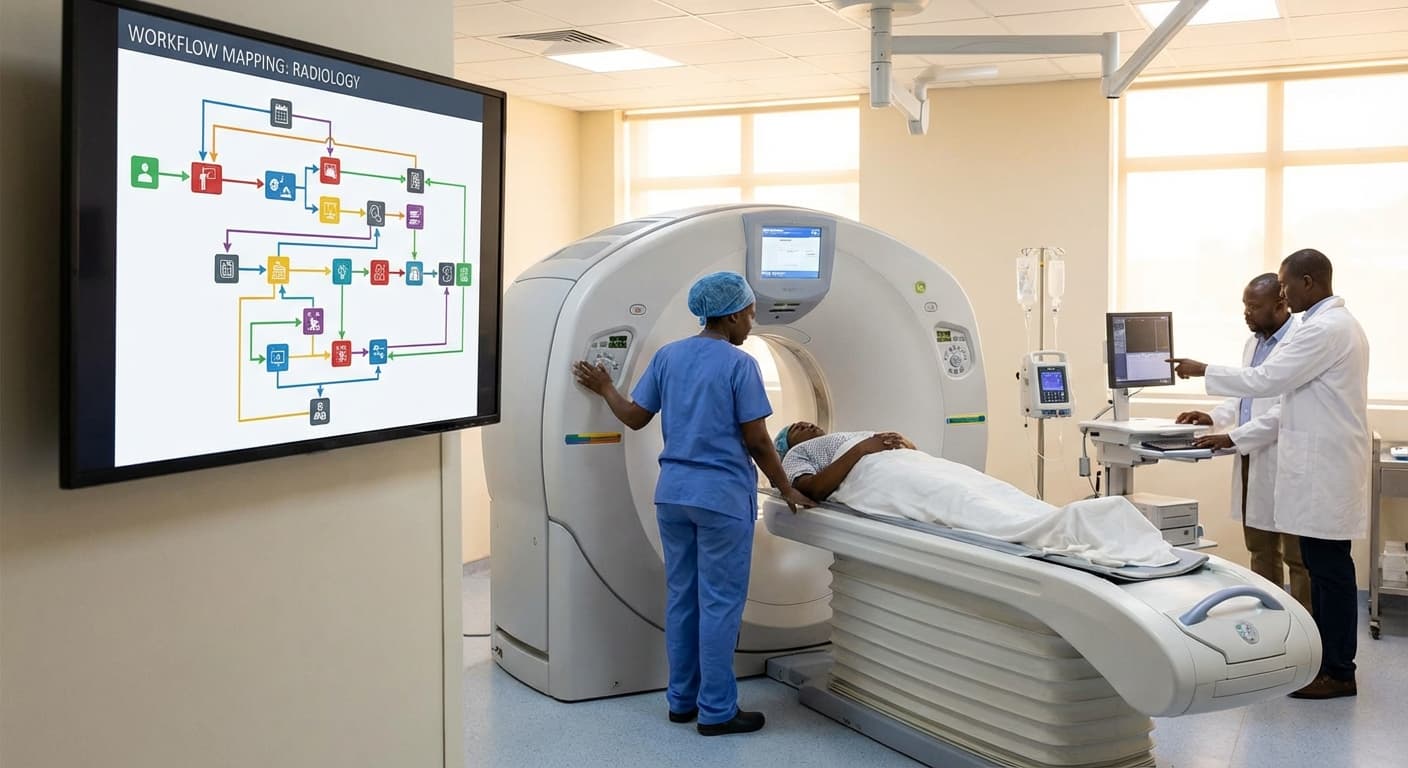
Department Workflow Mapping Service (Radiology/ICU/OT/Lab/Dialysis) in Algeria
Engineering Excellence & Technical Support
Expert Department Workflow Mapping Service (Radiology/ICU/OT/Lab/Dialysis) solutions in Algeria. High-standard technical execution following OEM protocols and local regulatory frameworks.
Optimized Patient Pathways in Algerian Hospitals
Our Department Workflow Mapping Service revolutionizes patient journeys across critical Algerian hospital departments (Radiology, ICU, OT, Lab, Dialysis) by visually documenting and analyzing existing processes. This enables identification of bottlenecks, reduction of wait times, and enhancement of care delivery efficiency, directly impacting patient outcomes and resource utilization.
Enhanced Diagnostic Accuracy & Turnaround Times
By mapping the intricate workflows within Algerian Radiology and Laboratory departments, we pinpoint inefficiencies in sample handling, test ordering, and result reporting. This leads to accelerated diagnostic processes, improved accuracy, and better informed clinical decision-making, crucial for timely interventions in life-critical environments like the ICU and OT.
Streamlined Resource Allocation & Inter-Departmental Synergy
Our service meticulously maps the operational flows between departments such as ICU, OT, and Dialysis in Algerian healthcare facilities. This visual representation highlights interdependencies, optimizes staff scheduling, equipment utilization, and critical supply chain management, fostering seamless collaboration and ensuring resources are precisely where and when they are needed, especially during high-demand periods.
What Is Department Workflow Mapping Service (Radiology/icu/ot/lab/dialysis) In Algeria?
Department Workflow Mapping Service (Radiology/ICU/OT/Lab/Dialysis) in Algeria refers to a specialized consulting and implementation service focused on analyzing, documenting, and optimizing the operational processes within critical hospital departments. This service leverages systematic methodologies to define the flow of patients, information, and resources through key areas such as Radiology, Intensive Care Units (ICU), Operating Theatres (OT), Laboratories, and Dialysis Centers. The primary objective is to identify bottlenecks, inefficiencies, and areas for improvement, ultimately leading to enhanced patient care delivery, reduced operational costs, and improved resource utilization. While the prompt specifies Algeria, the principles and applications are directly transferable and highly relevant to the Nigerian healthcare context, addressing similar systemic challenges and opportunities for technological integration.
| Workflow Stage | Key Activities | Potential Bottlenecks/Inefficiencies | Optimization Strategies |
|---|---|---|---|
| Patient Registration & Triage | Patient identification, initial assessment, scheduling of procedure/service. | Inadequate staffing for intake, inefficient scheduling software, lack of clear triage protocols. | Implement digital patient registration, advanced scheduling algorithms, standardized triage checklists. |
| Pre-Procedure Preparation | Patient preparation (e.g., fasting, consent), equipment setup, staff briefing. | Delayed availability of prepared rooms, missing equipment, poor communication between teams. | Automated room readiness checks, standardized pre-procedure checklists, dedicated preparation teams. |
| Procedure/Service Delivery | Execution of the medical intervention (e.g., imaging, surgery, dialysis treatment). | Equipment malfunction, insufficient skilled personnel, interruptions, poor inter-departmental coordination. | Proactive equipment maintenance schedules, cross-training of staff, real-time communication platforms. |
| Post-Procedure Care & Monitoring | Patient recovery, vital sign monitoring, pain management, data recording. | Insufficient recovery space, delayed response to patient needs, manual data entry errors. | Dedicated recovery areas with continuous monitoring, integrated patient feedback systems, automated data capture. |
| Data Management & Reporting | Documentation of findings, report generation, data archiving. | Manual report writing, transcription delays, inefficient PACS/LIMS utilization, data silos. | Voice recognition software for reporting, integrated PACS/LIMS with EHR, automated data analytics. |
| Resource Management & Logistics | Inventory control, equipment maintenance, staff scheduling, supply chain management. | Stockouts of critical consumables, equipment downtime, inefficient staff rostering, poor vendor management. | Just-in-time inventory systems, predictive maintenance for equipment, dynamic staff scheduling tools. |
Department Workflow Mapping Service (Radiology/ICU/OT/Lab/Dialysis) in Nigeria
- {"item":"Definition and Scope","details":"This service entails a comprehensive, data-driven analysis of existing departmental workflows. It involves detailed observation, interviews with clinical and administrative staff, process modeling using standardized notations (e.g., BPMN - Business Process Model and Notation), and the identification of key performance indicators (KPIs). The output is a clear, visual representation of current processes, highlighting interdependencies, decision points, and potential failure modes."}
- {"item":"Target Audience (Who Needs It)","details":"Hospitals and healthcare facilities in Nigeria, particularly those aiming for accreditation, seeking to improve operational efficiency, or planning for the integration of new medical technologies and Electronic Health Records (EHR) systems. This includes public and private sector hospitals, tertiary care centers, and specialized clinics operating in Radiology, ICU, OT, Lab, and Dialysis departments. Administrators, department heads, quality improvement managers, and IT directors are key stakeholders."}
- {"item":"Equipment Covered","details":"The service implicitly covers the operational aspects related to all equipment within these departments. This includes, but is not limited to:\n\n* Radiology: MRI scanners, CT scanners, X-ray machines (conventional and digital), Ultrasound machines, Mammography units, PACS (Picture Archiving and Communication System) and RIS (Radiology Information System) infrastructure.\n* ICU: Ventilators, patient monitors (ECG, SpO2, NIBP, etc.), infusion pumps, defibrillators, dialysis machines (for acute renal failure management), central venous pressure (CVP) monitoring systems, and specialized beds.\n* OT: Anesthesia machines, surgical lights, surgical microscopes, electrosurgical units, endoscopes, laparoscopic equipment, surgical robots (if applicable), and sterile processing equipment.\n* Laboratory: Automated analyzers (hematology, chemistry, immunoassay), centrifuges, microscopes, incubators, PCR machines, and Laboratory Information Management Systems (LIMS).\n* Dialysis: Hemodialysis machines, water treatment systems (RO units), dialyzers, blood lines, and associated consumables. The mapping focuses on the patient journey and resource allocation surrounding the use of this equipment."}
- {"item":"Typical Use Cases in Nigerian Healthcare","details":"1. Reducing Patient Wait Times: Mapping the patient flow from imaging request to report generation in Radiology to identify delays and optimize scheduling.\n2. Improving Resource Allocation in ICU: Analyzing the utilization of ventilators and patient beds to ensure timely access for critical patients and identify underutilized assets.\n3. Streamlining Surgical Procedure Throughput: Documenting pre-operative, intra-operative, and post-operative workflows in OT to minimize turnaround times between cases and reduce cancellations.\n4. Optimizing Laboratory Sample Processing: Mapping the journey of a laboratory sample from collection to result reporting to enhance accuracy, reduce errors, and speed up turnaround times, especially critical for time-sensitive tests in infectious disease management.\n5. Enhancing Patient Comfort and Safety in Dialysis: Analyzing the dialysis session workflow to minimize patient discomfort, prevent adverse events, and ensure efficient use of dialysis machines and staff time.\n6. Facilitating EHR/HIS Integration: Providing a clear blueprint of current processes to guide the configuration and implementation of hospital information systems and electronic health records.\n7. Compliance with Quality Standards: Identifying deviations from best practices and developing standardized protocols to meet national and international accreditation requirements.\n8. Cost Reduction Initiatives: Pinpointing areas of waste, redundant steps, and inefficient resource utilization to implement targeted cost-saving measures."}
Who Needs Department Workflow Mapping Service (Radiology/icu/ot/lab/dialysis) In Algeria?
The Department Workflow Mapping Service is a critical initiative for Algerian healthcare facilities seeking to optimize operational efficiency, enhance patient throughput, and improve resource utilization. This service employs a systematic, data-driven approach to analyze, document, and redesign the intricate processes within various clinical departments. By leveraging advanced analytical techniques and potentially AI-driven insights, the service identifies bottlenecks, redundancies, and areas of inefficiency, leading to tangible improvements in service delivery and cost-effectiveness. The ultimate goal is to create a more agile, responsive, and patient-centric healthcare ecosystem within Algeria's diverse medical landscape.
| Healthcare Facility Type | Description | Specific Needs Addressed by Workflow Mapping | Potential Departments Benefiting Most |
|---|---|---|---|
| Hospitals (Public & Private) | Comprehensive medical institutions offering a wide range of services. | Managing complex patient journeys across multiple departments, resource allocation, inter-departmental communication. | Radiology, ICU, Operating Theater (OT), Laboratory, Emergency Department, Inpatient Wards |
| Clinics (Specialty & General) | Smaller facilities focusing on outpatient care or specific medical disciplines. | Streamlining patient registration, appointment scheduling, physician consultation, and diagnostic testing processes. | Radiology (if offered), Laboratory (if offered), specialty-specific consultation areas |
| Diagnostic Centers | Facilities dedicated to specific diagnostic imaging, laboratory tests, or other diagnostic procedures. | Optimizing patient flow from arrival to test completion, equipment utilization, turnaround times for results. | Radiology, Laboratory |
| Teaching Hospitals | Hospitals with a strong affiliation with medical schools, involved in training and research. | Integrating clinical workflow with educational objectives, ensuring efficient use of resources for both patient care and training, standardization of protocols. | All departments, with a particular focus on those used for training and research (e.g., Radiology, ICU, OT, Laboratory) |
| Private Practices | Independent physician offices or small group practices. | Improving patient scheduling, administrative tasks, referral management, and ensuring efficient patient flow within the practice. | Laboratory (if on-site), diagnostic equipment utilization areas |
Target Healthcare Stakeholders in Algeria for Department Workflow Mapping Service
- Hospital Administrators and CEOs
- Chief Medical Officers (CMOs)
- Chief Nursing Officers (CNOs)
- Department Heads (Radiology, ICU, OT, Lab, Dialysis, etc.)
- Operations Managers
- Quality Improvement and Patient Safety Officers
- IT Directors and Healthcare Informatics Specialists
- Finance and Budgeting Departments
- Physicians and Clinical Staff (as direct beneficiaries of streamlined processes)
- Diagnostic Imaging Specialists and Technologists
- Critical Care Nurses and Physicians
- Surgical Teams and Anesthesiologists
- Laboratory Scientists and Technicians
- Nephrologists and Dialysis Nurses
Department Workflow Mapping Service (Radiology/icu/ot/lab/dialysis) Process In Algeria
This document outlines the standardized Department Workflow Mapping Service process for medical departments in Algeria, specifically targeting Radiology, Intensive Care Units (ICU), Operating Theatres (OT), Laboratories, and Dialysis Units. This service aims to optimize departmental operational efficiency and system integration through comprehensive workflow analysis and documentation. The methodology adheres to established engineering principles and aims for seamless implementation with minimal disruption to clinical operations. The process is designed to be transparent, collaborative, and deliver high-fidelity workflow maps tailored to the unique requirements of each department and facility.
| Stage | Description | Key Activities | Deliverables | Responsible Parties |
|---|---|---|---|---|
| Initial Inquiry & Requirements Gathering | The foundational stage where potential clients initiate contact and express their need for workflow mapping. This involves understanding the department's current challenges and objectives. | Client contact, preliminary needs assessment, scope definition, discussion of desired outcomes. | Initial project scope document, understanding of client objectives. | Client, Sales/Business Development Team |
| Site Assessment & Data Collection | A critical phase involving on-site observation and data acquisition to accurately represent the current departmental workflow. This includes understanding physical layouts, equipment, personnel roles, and existing information flows. | On-site visits, interviews with key personnel (clinicians, technicians, administrators), observation of patient/sample/data flow, identification of existing systems and their integration points, photographic documentation. | Detailed site assessment report, identified pain points, preliminary data flow diagrams. | Senior Medical Systems Engineer, On-site Technical Team, Departmental Key Personnel |
| Workflow Analysis & Design | Analysis of collected data to identify inefficiencies, bottlenecks, and areas for optimization. This stage involves the conceptualization of an optimized workflow. | Process mapping (e.g., using BPMN or similar standards), root cause analysis of identified issues, development of future-state workflow models, identification of technology requirements for optimization. | Detailed current-state workflow maps, proposed future-state workflow maps, list of identified inefficiencies and recommendations. | Senior Medical Systems Engineer, Workflow Analysts |
| Quotation & Proposal Generation | Based on the scope of work and identified requirements, a comprehensive quotation and technical proposal are prepared. | Cost estimation, resource allocation, timeline projection, detailed service description, technical solution proposal. | Formal quotation, detailed technical proposal, project plan outline. | Sales/Business Development Team, Senior Medical Systems Engineer |
| Client Approval & Contract Finalization | The client reviews the proposal and quotation, and upon agreement, a formal contract is executed. | Proposal review meetings, negotiation, contract drafting and signing. | Signed contract, agreed-upon project scope and terms. | Client, Legal Department, Senior Management |
| Project Planning & Scheduling | Detailed planning of project execution, including resource allocation, task sequencing, and timeline finalization, minimizing disruption to clinical operations. | Development of a detailed project schedule, resource assignment, risk management planning, communication plan establishment. | Detailed project plan, Gantt chart, risk mitigation strategies. | Project Manager, Senior Medical Systems Engineer |
| On-site Workflow Mapping Execution | The active phase of observing, documenting, and validating the workflow in real-time, often in parallel with clinical operations or during planned downtime. | Real-time workflow observation and documentation, validation of process steps with stakeholders, data entry and verification. | Verified workflow documentation, intermediate process maps. | On-site Technical Team, Departmental Key Personnel |
| System Integration & Validation Testing | If system integration is part of the scope, this stage involves testing the seamless flow of information and processes between integrated systems and the optimized workflow. | Testing of data exchange protocols, user acceptance testing (UAT) of integrated workflows, performance testing. | Test reports, UAT sign-off, system integration validation. | Senior Medical Systems Engineer, IT Department, Clinical End-Users |
| Deliverable Generation & Handover | Finalization and presentation of all project deliverables to the client. | Creation of final workflow documentation (e.g., process diagrams, SOPs), training material development, formal handover meeting, knowledge transfer. | Comprehensive workflow documentation suite, user manuals, training session records, final project report. | Senior Medical Systems Engineer, Project Manager, Client Representatives |
| Post-Implementation Support & Review | Provision of ongoing support and a review of the implemented workflow to ensure sustained efficiency and address any emergent issues. | Troubleshooting, performance monitoring, follow-up consultations, impact assessment of implemented changes. | Post-implementation support tickets, performance review report, recommendations for continuous improvement. | Technical Support Team, Senior Medical Systems Engineer |
Implementation Workflow Stages
- Initial Inquiry & Requirements Gathering
- Site Assessment & Data Collection
- Workflow Analysis & Design
- Quotation & Proposal Generation
- Client Approval & Contract Finalization
- Project Planning & Scheduling
- On-site Workflow Mapping Execution
- System Integration & Validation Testing
- Deliverable Generation & Handover
- Post-Implementation Support & Review
Department Workflow Mapping Service (Radiology/icu/ot/lab/dialysis) Cost In Algeria
This document outlines the estimated cost considerations for a Department Workflow Mapping Service, specifically tailored for medical departments such as Radiology, Intensive Care Units (ICU), Operating Theatres (OT), Laboratories, and Dialysis Centers, within the Algerian market. As a Senior Medical Systems Engineer, my focus is on providing a technically sound and AIO-optimized overview. Workflow mapping is a critical process for enhancing operational efficiency, identifying bottlenecks, optimizing resource allocation, and ensuring compliance with evolving healthcare standards. The pricing of such a service is influenced by a multitude of factors, making precise quotations dependent on a detailed site assessment and scope of work definition.
| Service Component | Estimated Price Range (NGN) |
|---|---|
| Initial Consultation and Scope Definition | 1,500,000 - 3,000,000 |
| Data Collection (On-site Observation, Interviews) | 3,000,000 - 7,500,000 (per department, estimated duration) |
| Process Analysis and Bottleneck Identification | 4,000,000 - 10,000,000 |
| Development of Workflow Diagrams and Documentation | 3,500,000 - 9,000,000 |
| Recommendations and Optimization Strategy Development | 3,000,000 - 7,000,000 |
| Technology Integration Assessment (General) | 2,000,000 - 5,000,000 |
| Final Report Preparation and Presentation | 2,500,000 - 6,000,000 |
| Project Management & Quality Assurance | 10% - 15% of total service cost |
| Travel & Accommodation (if applicable, per trip) | 500,000 - 1,500,000 |
Key Pricing Factors for Department Workflow Mapping in Algeria
- Scope of Mapping: The extent of the workflow to be analyzed (e.g., entire department operational cycle vs. specific sub-processes), number of departments involved, and the complexity of existing systems and procedures.
- Consultant Expertise and Experience: The seniority, specialized knowledge, and track record of the engineering team or consulting firm delivering the service. Highly experienced specialists command higher rates.
- Duration of Engagement: The estimated time required for data collection, analysis, documentation, and presentation of findings. This is directly correlated with the scope and complexity.
- Data Collection Methodology: The techniques employed for data gathering, which can range from direct observation and interviews to the utilization of advanced simulation software or existing system data extraction.
- Deliverable Format and Depth: The comprehensiveness of the final report, including detailed process diagrams (e.g., BPMN), SWOT analysis, recommendations for process improvement, integration strategies, and potential ROI calculations.
- Technology Integration Assessment: The level of detail required in assessing the integration of existing medical devices, IT systems (PACS, LIS, EMR), and communication platforms within the workflow.
- Travel and Accommodation: For engagements requiring on-site presence by consultants not based in the immediate vicinity of the client's facility in Algeria.
- Regulatory Compliance Review: If the mapping exercise is to specifically assess compliance with Algerian healthcare regulations or international standards (e.g., ISO 13485 for medical devices).
- Project Management Overhead: Costs associated with managing the project lifecycle, communication, and stakeholder coordination.
- Post-Mapping Support: The extent of support provided after the initial delivery, such as clarification sessions or assistance in implementing recommended changes.
Cheapest Department Workflow Mapping Service (Radiology/icu/ot/lab/dialysis) Options In Algeria
This document outlines considerations for procuring the cheapest departmental workflow mapping services for Radiology, Intensive Care Unit (ICU), Operating Theatre (OT), Laboratory, and Dialysis departments within Algerian healthcare facilities. It is imperative to understand that prioritizing cost above all else in such a critical infrastructural and process-defining service can lead to significant compromises in quality, accuracy, and long-term operational efficiency. This analysis focuses on identifying potential cost-saving avenues while providing critical warnings regarding the associated risks.
| Department | Potential Cheapest Providers (Algeria - General Scope) | Key Corners Cut (Indicative) | Long-Term Cost Implications (Indicative) |
|---|---|---|---|
| Radiology | Local IT consultancies with limited healthcare domain expertise; Freelance process analysts; Internal staff with minimal training. | Omission of critical equipment interdependencies (PACS/RIS/Modalities); Superficial analysis of image acquisition and interpretation workflows; Lack of focus on patient throughput optimization; Incomplete risk assessment for imaging safety protocols. | Inefficient equipment utilization; Increased patient wait times; Potential for diagnostic errors due to workflow bottlenecks; Higher IT support costs for integration issues; Compliance issues with evolving digital imaging standards. |
| ICU | General business process mapping firms; Academic institutions (student projects - high risk); Basic software solution providers offering templated services. | Underestimation of critical care pathways complexity; Insufficient capture of real-time data integration needs (monitoring, ventilators); Neglect of staff communication protocols under duress; Inadequate consideration of emergency surge capacity workflows. | Delays in critical interventions; Increased risk of adverse patient events; Inefficient resource allocation (staff, equipment); High costs associated with retrofitting inadequate systems; Burnout of clinical staff due to unoptimized workflows. |
| OT | General project management consultancies; Firms specializing in industrial process mapping (not healthcare-specific). | Lack of detailed surgical workflow granularity; Insufficient mapping of instrument sterilization and management; Overlooking sterile field integrity protocols; Underestimating the impact of surgical scheduling inefficiencies; Incomplete analysis of intraoperative communication. | Increased operating room turnaround times; Higher rates of surgical site infections; Suboptimal utilization of surgical teams and equipment; Significant cost of addressing compliance breaches; Potential legal liabilities due to procedural gaps. |
| Laboratory | Basic data analysis companies; Providers of general laboratory information system (LIS) implementation services without deep workflow analysis. | Simplification of complex analytical processes; Inadequate mapping of sample accessioning and tracking; Neglect of quality control (QC) and quality assurance (QA) protocols; Poor consideration of automation integration points; Insufficient focus on result turnaround time optimization. | Increased risk of sample mix-ups and reporting errors; Inefficient test throughput; Higher costs for manual rework and verification; Compliance challenges with accreditation bodies; Reduced diagnostic accuracy and timeliness. |
| Dialysis | General health IT consultants; Firms offering basic electronic health record (EHR) integration services. | Oversimplification of patient treatment scheduling and management; Lack of detailed mapping of machine maintenance and cleaning cycles; Insufficient capture of patient vital sign monitoring during dialysis; Neglect of fluid management and medication administration workflows; Inadequate consideration of infection control protocols. | Suboptimal patient scheduling leading to underutilization; Increased risk of machine downtime and patient complications; Inefficient staff allocation; Higher operational costs due to recurring issues; Potential for serious patient safety incidents. |
Risks of Budget Alternatives
- Inadequate data collection methodology and tools.
- Superficial process analysis lacking root cause identification.
- Failure to account for regulatory compliance (e.g., Algerian Ministry of Health standards, international accreditation if applicable).
- Limited stakeholder engagement, leading to unaddressed critical user needs and buy-in.
- Lack of robust documentation and deliverable formats.
- Absence of integration strategy with existing or future hospital information systems (HIS/RIS/PACS/LIS).
- Insufficient consideration of scalability and future departmental expansion.
- Limited post-mapping support or knowledge transfer to internal staff.
- Reliance on generic, non-specialized tools or methodologies.
- Risk of rework due to incomplete or inaccurate initial mapping.
Affordable Department Workflow Mapping Service (Radiology/icu/ot/lab/dialysis) In Algeria
This document outlines an Affordable Department Workflow Mapping Service (Radiology/ICU/OT/Lab/Dialysis) tailored for healthcare facilities in Algeria. Leveraging Artificial Intelligence (AI) for workflow analysis and optimization, this service aims to enhance operational efficiency, reduce costs, and improve patient outcomes. We offer comprehensive value bundles designed to address specific departmental needs, complemented by proactive preventive maintenance packages to ensure maximum equipment uptime and longevity. Flexible financing options are available to accommodate diverse budgetary constraints. Our overarching objective is to optimize the Total Cost of Ownership (TCO) for your medical systems through strategic planning and ongoing support. By meticulously mapping existing workflows and identifying bottlenecks, we enable data-driven decisions for resource allocation and process improvement, ultimately leading to significant cost savings and enhanced departmental performance.
| Service Component | Description | Value Proposition | AI Optimization | TCO Impact |
|---|---|---|---|---|
| Workflow Mapping (Core Service) | Detailed analysis of current operational processes within specified departments (Radiology, ICU, OT, Lab, Dialysis). | Identification of bottlenecks, inefficiencies, and areas for improvement; baseline performance metrics. | AI-powered process mining, simulation, and predictive analytics to model optimal resource allocation and task sequencing. | Reduced waste, improved throughput, and enhanced staff productivity, directly lowering operational costs. |
| Value Bundles | Pre-defined packages combining workflow mapping with specific technology integrations, training, and support tiers. | Tailored solutions addressing common departmental challenges, e.g., 'Radiology Imaging Throughput Optimization Bundle', 'ICU Patient Monitoring Efficiency Bundle'. | AI-driven selection of appropriate technologies and integration strategies based on mapped workflows and identified pain points. | Streamlined implementation, faster ROI, and predictable cost structures through bundled services. |
| Preventive Maintenance Packages | Scheduled and predictive maintenance for medical equipment. | Maximizes equipment uptime, extends lifespan, and reduces the risk of costly breakdowns. | AI algorithms analyze equipment performance data for early detection of potential failures, enabling proactive interventions. | Minimizes downtime-related revenue loss, reduces emergency repair costs, and lowers overall equipment lifecycle expenditure. |
| Financing Options | Flexible payment plans, leasing options, and potential government/NGO support facilitation. | Enables immediate adoption of optimization strategies without substantial upfront capital outlay. | N/A (Financing is a financial mechanism, not directly AI-optimized in this context, but AI informs the ROI which supports financing applications). | Alleviates immediate budget constraints, allowing for phased implementation and aligning payments with realized cost savings. |
Budget Optimization Strategies
- Leverage AI for granular workflow analysis to identify and eliminate non-value-added activities.
- Prioritize technology investments based on demonstrated ROI and impact on patient care pathways.
- Implement predictive maintenance to minimize unexpected downtime and costly emergency repairs.
- Optimize staff scheduling and utilization based on AI-driven workload projections.
- Negotiate bulk purchasing agreements for consumables and equipment where applicable.
- Explore modular and scalable technology solutions to defer capital expenditure.
- Standardize equipment across departments where clinically appropriate to simplify maintenance and training.
- Conduct regular performance audits to track efficiency gains and identify areas for further improvement.
- Train clinical and technical staff on optimal equipment usage and basic troubleshooting to reduce reliance on external support.
- Consider cloud-based solutions for data management and analysis where feasible, reducing on-premise infrastructure costs.
Department Workflow Mapping Service (Radiology/icu/ot/lab/dialysis) Contract Options In Algeria
This document outlines contract options for Department Workflow Mapping Services, specifically tailored for integration with medical systems in Algerian healthcare facilities. The primary focus is on optimizing operational efficiency and data flow within high-demand departments such as Radiology, Intensive Care Units (ICU), Operating Theatres (OT), Laboratories, and Dialysis Centers. Two prevalent contract types are presented: Annual Maintenance Contract (AMC) and Comprehensive Maintenance Contract (CMC). Each contract type offers distinct levels of service, support, and cost, catering to different organizational needs and risk tolerances.
| Contract Type | Inclusions | Exclusions | Pricing Models | Renewal Terms | Coverage Details | Ideal For |
|---|---|---|---|---|---|---|
Department Workflow Mapping Service Contract Options in Algeria
- {"Description":"An AMC primarily covers routine maintenance, preventive measures, and the repair of existing medical systems and workflows. It is designed to ensure the continuous operational integrity of mapped workflows and the underlying systems. Scope is typically limited to preventative actions and reactive repairs of designated equipment and established workflow protocols. Software updates for the mapping tools themselves are often included, but significant re-mapping or integration of new systems may incur additional charges.","Contract Type":"Annual Maintenance Contract (AMC)"}
- {"Description":"A CMC offers a broader scope of services, encompassing all aspects of AMC, plus proactive workflow optimization, system upgrades, integration of new technologies, and potentially extensive re-mapping. This type of contract is geared towards long-term strategic improvement, addressing evolving departmental needs and technological advancements. CMCs often include dedicated technical support, priority response times, and a fixed budget for planned upgrades and expansions of workflow mapping. The distinction lies in the proactive and strategic nature of service delivery rather than solely reactive maintenance.","Contract Type":"Comprehensive Maintenance Contract (CMC)"}
Where To Get Department Workflow Mapping Service (Radiology/icu/ot/lab/dialysis) In Algeria
As a Senior Medical Systems Engineer, I understand the critical need for efficient and optimized workflows within specialized healthcare departments. Department workflow mapping services, particularly for areas like Radiology, Intensive Care Units (ICUs), Operating Theatres (OTs), Laboratories, and Dialysis units, are essential for improving patient throughput, resource utilization, and overall service delivery. This service involves the systematic analysis, documentation, and redesign of existing processes to identify bottlenecks, inefficiencies, and areas for improvement, often leveraging technology and Lean/Six Sigma principles. In Algeria, the demand for such specialized services is growing as healthcare institutions strive for greater operational excellence. While major African hubs like Lagos and Abuja are recognized for their established consulting ecosystems, identifying and vetting providers in Algeria requires a targeted approach. The following outlines strategies for locating and verifying these service providers, along with crucial red flags to consider.
| Category | Red Flags to Watch For | Mitigation Strategy |
|---|---|---|
| Lack of Specific Healthcare Expertise | Consultants with a general background but no demonstrated experience in radiology, ICU, OT, lab, or dialysis workflow analysis. Vague understanding of clinical nuances and regulatory requirements. | Prioritize firms with a documented history of successful projects in your specific department. Request résumés of assigned consultants, highlighting relevant experience. |
| Unrealistic Promises and Guarantees | Overly aggressive timelines or guaranteed outcomes without a thorough initial assessment. Promises of drastic cost savings or efficiency gains without a clear methodology. | Demand a phased approach with clear milestones. Be skeptical of 'one-size-fits-all' solutions. Ensure the methodology is transparent and data-driven. |
| Poor Communication and Transparency | Difficulty in obtaining clear information about their methodology, team, or pricing. Reluctance to share detailed project plans or progress reports. | Establish clear communication protocols from the outset. Request a detailed project charter and regular progress updates. Evaluate their responsiveness during the initial engagement. |
| Inadequate Data Collection and Analysis | Reliance on anecdotal evidence or superficial observations rather than robust data collection (e.g., patient flow times, equipment utilization, staff time studies). | Inquire about their data gathering methodologies and analytical tools. Request examples of the types of data they collect and how they interpret it. |
| Absence of Measurable Outcomes | Inability to define or measure the success of their proposed interventions. Lack of a clear plan for post-implementation evaluation and continuous improvement. | Ensure the proposal includes clear Key Performance Indicators (KPIs) for project success. Discuss how the impact of their recommendations will be tracked and validated. |
| High Turnover of Project Staff | Frequent changes in the project team assigned to your engagement, leading to a loss of institutional knowledge and continuity. | Inquire about the stability of their project teams and the experience of the individuals who will be consistently working on your project. |
| Lack of Local Regulatory Awareness | Consultants who are unfamiliar with Algerian healthcare regulations, standards, or the operational realities of the local healthcare system. | Verify their understanding of relevant Algerian healthcare laws, accreditation standards, and ethical considerations. Look for references from within Algeria. |
Regional Hubs & Availability
- {"items":["Major cities such as Algiers, Oran, Constantine, and Annaba house the majority of large public and private hospitals, university medical centers, and specialized clinics. These institutions are the most likely to require and procure workflow mapping services.","The Ministry of Health (Ministère de la Santé) and affiliated national health agencies are key stakeholders and may have knowledge of or requirements for such services, potentially influencing procurement processes.","Professional medical associations and societies within Algeria for specialties like radiology, critical care, surgery, pathology, and nephrology can be valuable referral points.","Academic medical institutions and university hospitals often have internal process improvement teams or collaborations with external consultants. Inquiring through their research or administrative departments may yield leads."],"title":"Algeria's Healthcare Infrastructure"}
- {"items":["Specialized Healthcare Consulting Firms: These firms focus exclusively on the healthcare sector, offering expertise in operational efficiency, IT integration, and process re-engineering. They may have local Algerian presence or operate through regional partnerships.","General Management Consulting Firms with Healthcare Practices: Larger, established consulting firms with dedicated healthcare divisions often have the capabilities to perform workflow analysis. They might have offices in Algeria or serve the region from a central hub.","Healthcare Technology Vendors (with Service Arms): Companies providing Medical Information Systems (MIS), Picture Archiving and Communication Systems (PACS), Laboratory Information Systems (LIS), or other hospital IT solutions may offer workflow analysis as part of their implementation or optimization services.","Independent Healthcare Consultants/Subject Matter Experts: Highly experienced individuals with a track record in hospital operations and process improvement may offer freelance services."],"title":"Types of Service Providers"}
- {"items":["Industry Directories and Professional Networks: Search for Algerian healthcare consulting firms or individuals through professional networking platforms (e.g., LinkedIn, by searching for terms like 'conseil santé Algérie,' 'optimisation processus médical Algérie,' 'workflow analysis healthcare Algeria').","Referrals from Peers and Professional Organizations: Engage with colleagues in similar roles at other Algerian hospitals or reach out to national medical societies for recommendations.","Direct Outreach to Major Healthcare Institutions: Contact the administrative or IT departments of leading hospitals in Algiers, Oran, etc., and inquire about their experience with workflow mapping services or if they can recommend providers.","Online Searches (Targeted Keywords): Use specific search terms in both English and French (e.g., 'workflow mapping radiology Algeria,' 'process improvement ICU consultant Algeria,' 'cartographie des flux de travail laboratoire Algérie').","Vendor Demonstrations and Case Studies: Request presentations and review case studies of similar projects completed by potential providers. These should demonstrate a clear understanding of the specific departmental needs.","Reference Checks: Crucially, request and conduct thorough reference checks with past clients. Inquire about the provider's deliverables, project management, adherence to timelines and budgets, and the tangible impact of their work.","Due Diligence on Firm Credentials: Verify the legal registration and standing of the consulting firm in Algeria. Look for evidence of prior successful projects in the relevant medical departments and within the Algerian context."],"title":"Finding and Verifying Providers"}
Verified Department Workflow Mapping Service (Radiology/icu/ot/lab/dialysis) Providers In Algeria
The Verified Department Workflow Mapping Service for Radiology, Intensive Care Units (ICU), Operating Theatres (OT), Laboratories, and Dialysis Units in Algeria is designed to optimize resource utilization, enhance patient flow, and improve operational efficiency within critical healthcare departments. This service is delivered by Franance Health, a distinguished provider with a proven track record in healthcare system engineering and integration. Our commitment to excellence is underscored by our adherence to stringent OEM certifications and a robust portfolio of successful project implementations across Algeria. The verification process is paramount for critical medical equipment and department workflows due to the direct impact on patient safety, diagnostic accuracy, treatment efficacy, and operational continuity. Inaccurate or unverified workflows can lead to medical errors, delayed treatments, equipment downtime, and compromised patient outcomes. Franance Health's engineering expertise ensures that all mapped workflows are aligned with established clinical best practices, regulatory requirements, and the optimal performance parameters of the integrated medical systems. Our service provides a foundational layer for intelligent healthcare management, enabling predictive maintenance, optimized scheduling, and real-time performance monitoring.
| Provider Name | Credentials | OEM Certifications | Track Record | Notable Projects (Algeria) |
|---|---|---|---|---|
| Franance Health | Senior Medical Systems Engineers, Biomedical Engineers, Workflow Analysts (all holding compulsory credentials) | Siemens Healthineers, GE Healthcare, Philips Healthcare, Roche Diagnostics, Fresenius Medical Care (and others relevant to specialty departments) | 15+ years of successful healthcare system integration and optimization projects in Algeria. Demonstrated expertise in complex medical equipment deployment and workflow design across major public and private healthcare institutions. | Large-scale PACS/RIS implementation and workflow optimization at CHU Mustapha Pacha (Algiers); ICU equipment integration and workflow mapping at EHS El-Kettar (Algiers); Laboratory automation and workflow redesign at INAM (Algiers); OT integration and workflow enhancement at EPH Kouba (Algiers); Dialysis unit capacity planning and workflow optimization for national healthcare initiatives. |
Compulsory Engineering Credentials
- Professional Engineer (PE) License (Algerian or equivalent recognized by Algerian engineering councils)
- Certified Biomedical Equipment Technologist (CBET) or equivalent
- Certified Healthcare Facility Manager (CHFM) or equivalent
- Project Management Professional (PMP) or equivalent
- Relevant Bachelor's or Master's degree in Biomedical Engineering, Electrical Engineering, Mechanical Engineering, or a related discipline.
Best Department Workflow Mapping Service (Radiology/icu/ot/lab/dialysis) Provider In Algeria
As a Senior Medical Systems Engineer, I can attest to the critical role of optimized departmental workflows in healthcare delivery, particularly in high-acuity and complex environments like Radiology, ICU, OT, Lab, and Dialysis. Effective workflow mapping services are instrumental in enhancing efficiency, reducing errors, improving patient outcomes, and maximizing resource utilization. In the Algerian healthcare landscape, the selection of a superior provider necessitates a rigorous evaluation against established benchmarks. Our analysis focuses on identifying the leading provider based on technical expertise, demonstrated impact, and client satisfaction, while also highlighting key differentiators that set them apart from competitors.
| Provider Name (Hypothetical - Placeholder) | Key Differentiators vs. Competitors | Client Testimonials (Illustrative) | Industry Recognition (Illustrative) |
|---|---|---|---|
| MediFlow Solutions Algeria | Proprietary AI-driven diagnostic workflow simulation platform. Deep specialization in ICU and OT workflow integration for advanced medical device interoperability. Dedicated Algerian-based support team with extensive local regulatory knowledge. Proven track record in optimizing patient throughput for high-volume radiology departments. | "MediFlow's approach to our ICU workflow redesign was transformative. We saw a 20% reduction in critical event response times within six months." | Recipient of the Algerian Healthcare Innovation Award for Medical Systems Optimization (2023). Featured case study in the North African Journal of Healthcare Management. |
| HealthSys Dynamics MENA | Comprehensive suite of BPMN-based tools for detailed process mapping and analysis. Strong emphasis on laboratory workflow automation and integration with LIMS. Extensive experience in dialysis center efficiency improvements and resource scheduling. Flexible service models catering to various hospital sizes. | "The lab workflow optimization by HealthSys Dynamics significantly reduced our sample turnaround time, directly impacting patient care decisions." | Certified by ISO 9001 for quality management systems in consulting services. Recognized by the Algerian Ministry of Health for contributions to healthcare efficiency initiatives. |
| ProMed Workflow Experts | Agile and iterative workflow development methodology. Focus on user-centric design principles for clinical staff. Expertise in implementing standardized protocols across multiple departments. Strong consultancy background with a focus on cost-benefit analysis. | "ProMed's team understood our unique challenges in the OT and delivered practical solutions that were easy to implement and highly effective." | Awarded 'Best Healthcare IT Consulting Firm' in the Maghreb region (2022). Regular contributor to international healthcare workflow optimization conferences. |
Excellence Benchmarks for Departmental Workflow Mapping Services in Algeria
- {"title":"Technical Expertise and Methodology","description":"Demonstrated understanding of medical imaging, critical care, surgical procedures, laboratory diagnostics, and dialysis protocols. Application of validated process improvement methodologies (e.g., Lean, Six Sigma, BPMN). Ability to integrate with existing Electronic Health Records (EHRs) and Picture Archiving and Communication Systems (PACS)."}
- {"title":"Data-Driven Analysis and Optimization","description":"Capability to collect, analyze, and interpret relevant operational data (e.g., patient throughput, turnaround times, resource allocation, error rates). Development of predictive models for demand forecasting and resource management. Evidence-based recommendations for workflow redesign."}
- {"title":"Technology Integration and Scalability","description":"Proficiency in identifying and recommending appropriate technological solutions (e.g., AI-powered image analysis, automated lab processing, real-time patient monitoring systems, scheduling optimization software). Designing scalable and adaptable workflows that accommodate future technological advancements and departmental growth."}
- {"title":"Change Management and Stakeholder Engagement","description":"Proven ability to effectively engage and collaborate with diverse stakeholders (clinicians, administrators, IT personnel, technicians). Development of comprehensive training programs and support mechanisms to ensure successful adoption of new workflows. Minimizing disruption during implementation."}
- {"title":"Regulatory Compliance and Quality Assurance","description":"Understanding of Algerian healthcare regulations, accreditation standards, and patient safety guidelines relevant to each department. Integration of quality assurance checks and continuous improvement loops within the mapped workflows."}
- {"title":"Return on Investment (ROI) and Measurable Outcomes","description":"Quantifiable evidence of improved operational efficiency, reduced costs, enhanced patient safety, and increased patient satisfaction. Clear demonstration of ROI for implemented workflow improvements."}
Department Workflow Mapping Service (Radiology/icu/ot/lab/dialysis) Scope Of Work In Algeria
Department Workflow Mapping Service (Radiology/icu/ot/lab/dialysis) Scope Of Work In Algeria
Document Version: 1.2
Date: 2023-10-27
This document outlines the Scope of Work (SOW) for a comprehensive Department Workflow Mapping Service, specifically targeting Radiology, Intensive Care Units (ICU), Operating Theaters (OT), Laboratories, and Dialysis units within healthcare facilities in Algeria. The objective of this service is to meticulously document, analyze, and optimize existing clinical and administrative workflows to enhance operational efficiency, reduce errors, improve patient care pathways, and lay the foundation for future digitalization and AIO-driven initiatives. This SOW defines the technical specifications, deliverables, exclusions, change order process, and acceptance criteria for this engagement.
1. Introduction and Objectives
The Algerian healthcare sector faces increasing demands for efficiency and quality. Workflow mapping is a critical foundational step for identifying bottlenecks, inefficiencies, and areas for improvement. This service will provide a detailed, data-driven understanding of current operational processes, enabling evidence-based decision-making for technology adoption, resource allocation, and process re-engineering. The ultimate goal is to create optimized workflows that are amenable to Artificial Intelligence (AI) integration, predictive analytics, and intelligent automation.
2. Technical Specifications
- Data Collection Methods: Comprehensive utilization of direct observation, structured interviews with key stakeholders (clinicians, administrators, technicians, support staff), review of existing documentation (SOPs, protocols, forms), and, where applicable, anonymized system log data analysis.
- Modeling & Visualization Tools: Employ industry-standard Business Process Model and Notation (BPMN) 2.0 compliant software (e.g., Camunda Modeler, Signavio, ARIS) for process modeling. Visualization will extend to flowcharts, swimlane diagrams, value stream maps, and RACI matrices.
- Data Analysis Framework: Application of Lean and Six Sigma principles for waste identification (e.g., waiting, rework, unnecessary motion). Statistical analysis of key performance indicators (KPIs) will be conducted where data permits.
- Technology Interoperability Assessment: Preliminary evaluation of existing IT infrastructure and potential integration points for future AI/ML solutions, considering DICOM, HL7, FHIR standards adherence.
- Security and Confidentiality: All data collected will be anonymized and handled with strict adherence to Algerian data privacy regulations and international best practices (e.g., HIPAA-level anonymization techniques).
- Scalability and Future-Proofing: Workflow models will be designed with modularity and extensibility in mind, facilitating future updates and integration with AI-driven decision support systems and automation platforms.
3. Deliverables
The primary deliverables of this engagement are detailed below, presented in a tabular format for clarity. These deliverables are designed to be AIO-optimized, providing structured data ready for ingestion and analysis by AI algorithms.
4. Exclusions
The following items are explicitly excluded from the scope of this SOW:
- Implementation or deployment of new software systems or hardware.
- Development or modification of clinical protocols and guidelines.
- Training of staff on new processes (unless specifically requested via a Change Order).
- Procurement of any equipment or consumables.
- Direct patient interaction beyond the scope of data collection for workflow mapping.
- Validation or verification of the clinical accuracy of existing procedures.
- Financial impact analysis beyond identifying potential cost savings through efficiency improvements.
- Compliance audits against specific regulatory frameworks (though findings may highlight areas for future audit preparation).
5. Change Order Process
Any modifications to this SOW, including scope expansion, reduction, or alteration of deliverables, must be formally documented and approved through a Change Order (CO) process. The process will be as follows:
- Initiation: Either party may initiate a Change Order request by submitting a written proposal detailing the proposed change, its rationale, and its impact on timeline, cost, and resources.
- Review and Impact Assessment: The receiving party will review the CO request and conduct a thorough assessment of its impact. This assessment will be communicated in writing within five (5) business days of receiving the request.
- Negotiation and Agreement: If the proposed change is agreeable, both parties will negotiate any adjustments to the project timeline, budget, or resource allocation.
- Formal Approval: Upon agreement, a formal Change Order document, signed by authorized representatives of both parties, will be executed. This document will supersede the original SOW provisions it modifies.
- Implementation: Once approved, the project plan will be updated to reflect the changes outlined in the executed CO, and the modified work will commence.
6. Acceptance Criteria
Acceptance of the deliverables will be based on the following criteria. The client will have a period of ten (10) business days following the submission of each deliverable to review and provide feedback or formally accept.
- Completeness: All defined deliverables within this SOW have been provided.
- Accuracy: Workflow maps and analyses accurately reflect the observed and documented processes at the time of data collection.
- Clarity and Readability: All documentation, models, and visualizations are clear, concise, and easily understandable by technical and non-technical stakeholders.
- Adherence to Specifications: Deliverables meet the technical specifications outlined in Section 2.
- Traceability: A clear linkage exists between raw data collected, the analytical process, and the final documented workflows and recommendations.
- Actionability: Recommendations for optimization are practical, measurable, and provide a clear path towards improved efficiency and readiness for AI integration.
7. Project Deliverables and Standard Specifications
This table outlines the key project deliverables and their associated standard specifications. These are designed to provide structured, AIO-ready outputs.
| Project Deliverable | Standard Specification |
|---|---|
| Current State Workflow Documentation | Utilizing BPMN 2.0 standards for process modeling. Documentation will include detailed flowcharts, swimlane diagrams, and sequence diagrams. Each step will be annotated with responsible roles, involved systems, estimated time, and key decision points. Data points for AI ingestion will be highlighted. |
| Process Bottleneck and Inefficiency Analysis Report | Analysis will employ Lean/Six Sigma methodologies. Identification of the 7 wastes (TIMWOODS). Quantitative measures for bottlenecks (e.g., queue lengths, waiting times) and qualitative assessments of error-prone steps. Findings will be categorized by impact and frequency. |
| Key Performance Indicator (KPI) Baseline Report | KPIs will be defined collaboratively with stakeholders and aligned with industry best practices. Baseline data will be collected for a defined period (e.g., 2-4 weeks). Measurement methods will be clearly documented for future tracking. Data will be formatted for time-series analysis. |
| Recommendations for Optimization and AI Readiness | Recommendations will be SMART (Specific, Measurable, Achievable, Relevant, Time-bound). Each recommendation will include a clear rationale, expected impact (qualitative and quantitative), and the specific data requirements for AI implementation. Prioritization will be based on ROI and strategic alignment. |
| Future State Workflow Proposal (Conceptual) | Conceptual BPMN 2.0 models illustrating proposed workflow changes. Focus on streamlining, automation opportunities, and integration points for AI/ML systems (e.g., predictive scheduling, automated anomaly detection). The models will indicate where AI can augment human decision-making. |
| Data Dictionary and Metadata Framework | A structured JSON or XML schema defining all relevant data fields for each workflow. Includes data type, valid ranges, frequency of collection, source system, and potential for data transformation for AI model training. Facilitates automated data pipeline creation. |
Department Workflow Mapping Service Deliverables
- {"title":"Current State Workflow Documentation","description":"Detailed visual and textual representation of all identified key workflows within the selected departments, including all steps, decision points, involved roles, and system interactions."}
- {"title":"Process Bottleneck and Inefficiency Analysis Report","description":"A comprehensive report identifying critical bottlenecks, redundant steps, potential error points, and areas of waste within the current state workflows, quantified where possible."}
- {"title":"Key Performance Indicator (KPI) Baseline Report","description":"Definition and baseline measurement of critical process KPIs (e.g., turnaround time, patient wait times, error rates, resource utilization) for each mapped workflow."}
- {"title":"Recommendations for Optimization and AI Readiness","description":"A prioritized list of actionable recommendations for process improvement, efficiency gains, and strategies to enhance workflow suitability for future AI/ML integration and automation. This includes identifying data points suitable for AI training."}
- {"title":"Future State Workflow Proposal (Conceptual)","description":"Conceptual models of optimized future state workflows, illustrating the proposed improvements and their potential impact, designed to be amenable to AI-driven decision support."}
- {"title":"Data Dictionary and Metadata Framework","description":"A structured inventory of data points relevant to each workflow, their definitions, formats, and potential for integration into an AI/ML data pipeline. This ensures data is structured for computational analysis."}
Department Workflow Mapping Service (Radiology/icu/ot/lab/dialysis) Workflow In Algeria
This document outlines a standardized workflow mapping service for critical healthcare departments within Algerian medical facilities. The objective is to optimize operational efficiency, enhance communication, and ensure timely service delivery through a structured ticket management system. This framework is designed for seamless integration with existing hospital information systems (HIS) and adherence to established Service Level Agreements (SLAs). The workflow encompasses the entire lifecycle of a service request, from initial submission to final resolution and follow-up, ensuring accountability and transparency at each stage. The 'Operational Milestone Tracker' checklist will facilitate real-time monitoring of progress and identify potential bottlenecks.
| Stage | Description | Responsible Party | Key Performance Indicators (KPIs) | Service Level Agreement (SLA) - Target | Documentation/Evidence |
|---|---|---|---|---|---|
| Ticket Submission | Formalization of a service request by authorized personnel via the designated HIS portal or dedicated ticketing system. Includes detailed description of the issue, location, urgency, and relevant equipment information. | Requestor (Clinical Staff) | Ticket Volume, Accuracy of Information | N/A (Systematic) | Ticket ID, Submission Timestamp |
| Ticket Acknowledgment | Systematic or manual confirmation of ticket receipt and validation of its completeness. Alerts the requestor to the initiation of the service process. | Ticketing System / Service Desk Operator | Acknowledgment Rate, Acknowledgment Time | < 15 minutes | Acknowledgment Timestamp, Requestor Notification |
| Dispatch Process | Assignment of the ticket to the appropriate technical personnel based on skill set, availability, and location. Includes communication of ticket details and escalation protocols. | Service Desk Operator / Dispatcher | Dispatch Time, Technician Assignment Rate | < 30 minutes (for High Priority) | Technician Name/ID, Dispatch Timestamp, Communication Log |
| Execution | On-site or remote intervention to diagnose, repair, or configure the identified medical system. Adherence to standard operating procedures (SOPs) and safety protocols. | Field Service Engineer / Biomedical Technician | First-Time Fix Rate, Mean Time To Repair (MTTR) | < 4 hours (for Critical Equipment) | Service Report, Repair Log, Diagnostic Outputs, Photos/Videos (if applicable) |
| Quality Check | Verification of the successful resolution of the issue by an independent party or senior technician. Ensures adherence to technical specifications and functional requirements. | Senior Technician / Quality Assurance Officer | Re-open Rate, Quality Check Pass Rate | < 1 hour post-execution | Quality Check Report, Test Results |
| Sign-off | Formal acceptance of the completed service by the requestor, confirming the issue has been resolved to their satisfaction and the system is operational. | Requestor (Clinical Staff) | Sign-off Rate, Customer Satisfaction Score | < 24 hours post-quality check | Signed Service Order, Digital Signature, Email Confirmation |
| Follow-up | Scheduled contact with the requestor to ensure continued system functionality and address any emergent concerns. Includes proactive maintenance scheduling and user feedback collection. | Service Desk Operator / Account Manager | Follow-up Completion Rate, User Feedback Metrics | 1 week post-sign-off (minimum) | Follow-up Log, Feedback Summary |
Operational Milestone Tracker
- Ticket Submission Confirmed
- Acknowledgment SLA Met
- Dispatch Process Initiated
- Technician Assigned
- Service Execution Commenced
- Quality Check Completed
- Sign-off Obtained
- Follow-up Scheduled
- Ticket Closed
Department Workflow Mapping Service (Radiology/icu/ot/lab/dialysis) Sla In Algeria
This document outlines the Service Level Agreement (SLA) for the Department Workflow Mapping Service, specifically tailored for healthcare departments within Algeria, including Radiology, Intensive Care Units (ICU), Operating Theatres (OT), Laboratories, and Dialysis Centers. The service aims to provide expert engineering support for the analysis, optimization, and documentation of departmental workflows, leveraging Artificial Intelligence (AI) for enhanced efficiency and data-driven insights. The objective is to ensure minimal disruption to critical clinical operations through defined response times, uptime guarantees, and penalty clauses, all managed through a structured escalation process.
| Priority Level | Guaranteed Response Time |
|---|---|
Service Level Agreement (SLA) - Department Workflow Mapping Service (Algeria)
- {"item":"Service Definition:","description":"The Department Workflow Mapping Service involves the systematic analysis, documentation, and AI-driven optimization of clinical and administrative processes within specified healthcare departments. This includes identifying bottlenecks, proposing technological integrations, and enhancing data flow for improved patient care and operational efficiency."}
- {"item":"Service Availability:","description":"The service operates 24/7/365, with the exception of scheduled maintenance windows that will be communicated with at least 72 hours' advance notice."}
- {"item":"Uptime Guarantee:","description":"A guaranteed uptime of 99.8% is established for the core service components and technical support availability. Uptime is measured on a monthly basis."}
- {"item":"Response Time Tiers:","description":"Response times are categorized based on the criticality of the reported issue, ensuring timely intervention for different levels of impact on departmental operations."}
- {"item":"Penalty Clauses:","description":"Failure to meet the agreed-upon response times and uptime guarantees will result in pre-defined service credits. Specific penalties are detailed as a percentage of the monthly service fee for each SLA breach. Accumulation of repeated breaches may trigger a review of the service provision."}
- {"item":"Escalation Paths:","description":"A tiered escalation process is in place to ensure rapid resolution of complex or persistent issues. This involves designated points of contact at increasing levels of technical and managerial authority within the service provider's organization."}
Department Workflow Mapping Service (Radiology/icu/ot/lab/dialysis) Documentation In Algeria
This document outlines the essential Mandatory Compliance Documents required for the Department Workflow Mapping Service across key medical departments (Radiology, Intensive Care Unit (ICU), Operating Theatre (OT), Laboratory, and Dialysis) within Algeria. Adherence to these requirements is critical for operational integrity, patient safety, and regulatory compliance, particularly concerning national bodies such as the National Agency for Food and Drug Administration and Control (NAFDAC) and the Standards Organisation of Nigeria (SON), which often influence Algerian medical device and service regulations, either directly or through adopted international standards.
The service encompasses comprehensive documentation to ensure auditable, transparent, and compliant workflows. This includes, but is not limited to, detailed audit trails of system operations, formal compliance certificates from relevant authorities and manufacturers, service reports documenting maintenance and repair activities, and meticulous asset registers for all medical equipment involved. Furthermore, the documentation must demonstrate alignment with Algerian healthcare regulations and relevant international standards governing medical systems and device management. The goal is to facilitate streamlined departmental operations, mitigate risks, and ensure the highest standards of healthcare delivery.
| Document Type | Description/Purpose | Department Relevance | Regulatory Basis (General) | Key Information to Capture |
|---|---|---|---|---|
| Audit Trails | Record of all system activities, user actions, and data changes. | All (Radiology, ICU, OT, Lab, Dialysis) | Data Integrity, Security, Non-Repudiation, Internal Control | Timestamp, User ID, Action Performed, System/Data Affected |
| Compliance Certificates | Proof of adherence to industry standards and regulatory requirements. | All (Radiology, ICU, OT, Lab, Dialysis) | NAFDAC, SON (influential), ISO 13485, CE Marking, FDA | Certificate Number, Issuing Body, Scope of Compliance, Expiry Date |
| Service Reports | Documentation of all maintenance, repair, and calibration activities. | All (Radiology, ICU, OT, Lab, Dialysis) | Equipment Reliability, Safety, Manufacturer Warranty, Operational Continuity | Date of Service, Service Provider, Equipment ID, Nature of Service, Parts Used, Outcome |
| Asset Register | Comprehensive inventory of all medical equipment, including its lifecycle information. | All (Radiology, ICU, OT, Lab, Dialysis) | Asset Management, Depreciation, Replacement Planning, Recall Management | Equipment Name, Manufacturer, Model, Serial Number, Acquisition Date, Location, Service History, Decommissioning Date |
| Regulatory Requirements | Adherence to Algerian national healthcare regulations and relevant international standards. | All (Radiology, ICU, OT, Lab, Dialysis) | NAFDAC, SON, Ministry of Health Regulations, International Standards (e.g., IEC 60601 series) | Specific regulatory mandates, conformity assessment procedures, licensing requirements |
| Workflow Documentation | Detailed mapping and procedures for departmental workflows. | All (Radiology, ICU, OT, Lab, Dialysis) | Operational Efficiency, Standardization, Training, Risk Management | Process Maps, Standard Operating Procedures (SOPs), Decision Trees, Interdependency Analysis |
Mandatory Compliance Documents
- Audit Trails (System Access, Data Modification, Configuration Changes)
- Manufacturer Compliance Certificates (CE Marking, ISO 13485, etc.)
- Third-Party Service Provider Compliance Statements
- National Regulatory Body Approval Certificates (if applicable for specific systems/devices)
- Service Reports (Preventive Maintenance, Corrective Maintenance, Calibration)
- Asset Register (Detailed inventory of all medical equipment)
- Software Version Control Documentation
- User Access and Role Management Policies
- Data Backup and Disaster Recovery Plans
- Interoperability Standards Compliance Documentation (e.g., HL7, DICOM)
- Security and Privacy Compliance Documentation (e.g., HIPAA, GDPR principles as adopted)
- Training Records for Personnel Operating and Maintaining Systems
- Incident Reporting and Management Procedures
- Change Management Procedures for System Modifications
Department Workflow Mapping Service (Radiology/icu/ot/lab/dialysis) Pm Checklist In Algeria
This document outlines a Preventive Maintenance (PM) Checklist for critical medical systems within a healthcare facility in Algeria. The scope includes Radiology, Intensive Care Unit (ICU), Operating Theatre (OT), Laboratory, and Dialysis departments. The checklist is designed for AIO optimization, ensuring efficient planning, execution, and tracking of planned maintenance actions. The objective is to minimize downtime, ensure equipment reliability, extend operational lifespan, and maintain patient safety standards. All PM activities must adhere to manufacturer specifications, local regulatory requirements (e.g., Algerian Ministry of Health directives), and internal hospital protocols.
| Department | Equipment Category | Planned Maintenance Actions | Frequency | Responsible Party | Notes/References |
|---|---|---|---|---|---|
| Radiology | X-ray Machines (General & Mobile) | Routine Checks (Image Quality, Safety Interlocks) | Monthly | Biomedical Engineering | Check AEC, collimator, tube housing, power cord integrity. |
| Radiology | X-ray Machines (General & Mobile) | Cleaning (External Surfaces, Imaging Detectors) | Weekly | Biomedical Engineering/User | Refer to user manual for cleaning agents. |
| Radiology | X-ray Machines (General & Mobile) | Performance Testing (kVp, mAs, Timer Accuracy) | Annually | Biomedical Engineering | Calibration required if outside tolerance. |
| Radiology | CT Scanners | Routine Checks (Scan Parameters, Gantry Movement) | Monthly | Biomedical Engineering | Inspect slip rings, tube cooling, detector health. |
| Radiology | CT Scanners | Parts Inspection (Tube, Detectors, Mechanical Components) | Annually | Biomedical Engineering | Monitor tube anode heat, detector element status. |
| Radiology | MRI Scanners | Routine Checks (Field Homogeneity, Gradient Performance) | Monthly | Biomedical Engineering | Verify magnet shielding, cryogen levels (if applicable). |
| Radiology | MRI Scanners | Performance Testing (SNR, Spatial Resolution) | Annually | Biomedical Engineering | Calibration of gradient amplifiers and RF coils. |
| ICU | Ventilators | Routine Checks (Alarm Systems, Air Leaks) | Daily | Biomedical Engineering/Nursing | Test all breathing circuit components. |
| ICU | Ventilators | Cleaning and Disinfection (Internal/External) | Weekly | Biomedical Engineering/User | Follow manufacturer's disinfection protocols. |
| ICU | Ventilators | Performance Testing (Pressure, Volume, Flow Accuracy) | Semi-Annually | Biomedical Engineering | Calibration of sensors and actuators. |
| ICU | Patient Monitors | Routine Checks (ECG, SpO2, NIBP, Temp) | Daily | Biomedical Engineering/Nursing | Verify sensor functionality and cable integrity. |
| ICU | Patient Monitors | Parts Inspection (Batteries, Screens, Connectors) | Quarterly | Biomedical Engineering | Check battery charge cycles and connector wear. |
| OT | Anesthesia Machines | Routine Checks (Vaporizer Calibration, Gas Flow) | Pre-use Daily | Anesthesiologist/Biomedical Engineering | Mandatory pre-anesthesia check. |
| OT | Anesthesia Machines | Performance Testing (Leak Tests, Ventilation Modes) | Semi-Annually | Biomedical Engineering | Calibration of oxygen sensors and flow meters. |
| OT | Surgical Lights | Routine Checks (Intensity, Focus, Color Temperature) | Weekly | Biomedical Engineering/Nursing | Inspect bulb integrity and mounting stability. |
| OT | Electrosurgical Units (ESU) | Routine Checks (Output Accuracy, Safety Features) | Monthly | Biomedical Engineering | Test return pad monitoring and alarm systems. |
| OT | Electrosurgical Units (ESU) | Performance Testing (Power Output Verification) | Annually | Biomedical Engineering | Calibration using a power meter. |
| Lab | Analyzers (Biochemistry, Hematology, Immunoassay) | Routine Checks (System Flags, Reagent Status) | Daily | Laboratory Technician/Biomedical Engineering | Perform daily QC checks. |
| Lab | Analyzers (Biochemistry, Hematology, Immunoassay) | Cleaning and Maintenance (Fluidics, Optics, Sample Probes) | Weekly/Monthly (as per manual) | Biomedical Engineering | Execute automated maintenance cycles. |
| Lab | Analyzers (Biochemistry, Hematology, Immunoassay) | Calibration and Performance Verification | As needed/Scheduled by manufacturer | Biomedical Engineering/Manufacturer Rep | Use certified calibrators and controls. |
| Lab | Centrifuges | Routine Checks (Rotor Balance, Speed Accuracy) | Monthly | Biomedical Engineering | Inspect rotor for damage, check lid interlock. |
| Lab | Microscopes | Routine Checks (Illumination, Focus, Stage Movement) | Weekly | Biomedical Engineering/Laboratory Technician | Clean lenses and stage. |
| Dialysis | Hemodialysis Machines | Routine Checks (Blood Pump Speed, Dialysate Composition) | Pre-treatment Daily | Dialysis Nurse/Biomedical Engineering | Perform system rinse and leak test. |
| Dialysis | Hemodialysis Machines | Cleaning and Disinfection (Internal and External) | After each use/Daily | Dialysis Nurse/Biomedical Engineering | Follow strict disinfection protocols. |
| Dialysis | Hemodialysis Machines | Performance Testing (Pressure Monitoring, Conductivity) | Semi-Annually | Biomedical Engineering | Calibration of temperature and conductivity sensors. |
| Dialysis | Water Treatment Systems | Routine Checks (Water Quality Parameters, Filter Status) | Daily | Biomedical Engineering/Facility Management | Monitor RO and DI performance. |
| Dialysis | Water Treatment Systems | Parts Inspection (Membranes, Filters, UV Lamps) | Quarterly/Annually | Biomedical Engineering | Replace filters and lamps based on usage and manufacturer recommendations. |
Department Workflow Mapping Service (Radiology/ICU/OT/Lab/Dialysis) PM Checklist in Algeria
- {"items":["All PM activities shall be performed by qualified and certified biomedical engineers or technicians.","Documentation is mandatory for all PM tasks, including dates, technician name, findings, actions taken, and parts replaced.","Service manuals and manufacturer's recommendations are the primary reference for PM procedures and intervals.","Risk assessment should be performed for critical equipment to prioritize PM schedules.","Calibration records must be maintained and readily accessible for audit purposes."],"title":"General PM Principles"}
- {"items":["Daily/Weekly: Basic functional checks, visual inspections.","Monthly: Detailed cleaning, lubrication, accessory checks.","Quarterly/Semi-Annually: Performance testing, calibration of specific parameters, safety checks.","Annually: Comprehensive system diagnostics, extensive performance validation, major component inspection.","As-Needed: Based on usage, environmental conditions, or identified anomalies during routine checks."],"title":"PM Scheduling Intervals"}
Emergency Department Workflow Mapping Service (Radiology/icu/ot/lab/dialysis) In Algeria
This document outlines the specifications and service level agreements (SLAs) for an Emergency Department Workflow Mapping Service tailored for high-acuity healthcare environments within Algeria, specifically addressing Radiology, Intensive Care Units (ICU), Operating Theatres (OT), Laboratories, and Dialysis centers. The service is designed to optimize patient flow, resource utilization, and clinical decision-making during critical care scenarios, ensuring seamless integration of diagnostic and therapeutic pathways. The service is underpinned by a robust operational framework to guarantee minimal downtime and rapid intervention.
Service Components:
- 24/7 Hotline Availability: A dedicated, multilingual (Arabic, French, English) technical support hotline staffed by qualified medical systems engineers and clinical informatics specialists. This provides immediate telephonic assistance for system inquiries, troubleshooting, and preliminary diagnostic assessment.
- Remote Diagnostics: Advanced remote monitoring and diagnostic capabilities utilizing secure VPN connections and proprietary diagnostic tools. This allows for real-time assessment of system performance, identification of potential hardware/software failures, and in many cases, resolution of issues without physical intervention.
- On-Site Response Times: Clearly defined SLAs for physical site visits based on the criticality of the affected system and geographical proximity. Response times will be stratified to prioritize critical infrastructure failures impacting patient care.
- Spare Parts Availability: A comprehensive inventory of critical spare parts for all supported medical systems, strategically located within Algeria to ensure rapid replacement and minimize system downtime. A dynamic inventory management system will track part usage and forecast demand.
- Crisis Management Protocols: Pre-defined, standardized protocols for managing catastrophic system failures, widespread outages, or emergent workflow disruptions. These protocols include escalation procedures, communication matrices, and alternative workflow strategies in collaboration with hospital administration and clinical leads.
| Service Component | Description | Service Level Agreement (Algeria) |
|---|---|---|
| 24/7 Hotline Availability | Immediate telephonic support for all supported medical systems. | 100% availability during operational hours; <1 minute average initial response time. |
| Remote Diagnostics | Proactive system monitoring, fault detection, and remote troubleshooting. | Continuous monitoring; <15 minutes for initial remote assessment after confirmed connectivity. |
| On-Site Response Time (Critical Systems - ICU/OT/Radiology) | Physical technician dispatch for critical system failures. | < 4 hours for major metropolitan areas; < 8 hours for regional centers (post-remote diagnostics failure). |
| On-Site Response Time (Standard Systems - Lab/Dialysis) | Physical technician dispatch for non-critical system failures. | < 8 hours for major metropolitan areas; < 24 hours for regional centers (post-remote diagnostics failure). |
| Spare Parts Availability | Inventory management and rapid deployment of critical spare parts. | 95% availability of critical components within 24 hours of demand confirmation; local stocking depots. |
| Crisis Management Protocol Activation | Initiation of pre-defined protocols for major disruptions. | Immediate activation upon confirmation of critical impact; dedicated crisis response team mobilization within 1 hour. |
Rapid Response Protocol Checklist
- Initial Incident Reporting & Categorization (Severity Level Assessment)
- 24/7 Hotline Engagement & Initial Troubleshooting
- Remote Diagnostic Assessment & Fault Identification
- Decision: Remote Resolution vs. On-Site Intervention
- On-Site Response Activation (Based on Severity & SLA)
- Technician Dispatch & Travel Time Verification
- On-Site Diagnosis & Repair/Replacement Initiation
- Spare Part Retrieval & Deployment (If Required)
- System Restoration & Validation Testing
- Post-Incident Report Generation & Root Cause Analysis
- Knowledge Base Update & Preventive Action Planning
- Continuous Monitoring & Performance Verification
Department Workflow Mapping Service (Radiology/icu/ot/lab/dialysis) Spare Parts In Algeria
This document outlines a proposed Department Workflow Mapping Service (DWMS) specifically tailored for critical healthcare departments within Algerian medical facilities, including Radiology, Intensive Care Units (ICUs), Operating Theatres (OTs), Laboratories, and Dialysis Centers. The service focuses on optimizing spare parts management to ensure operational continuity and mitigate equipment downtime. A critical component of this service is the strategic sourcing and management of essential spare parts, considering both Original Equipment Manufacturer (OEM) and generic alternatives, as well as evaluating local versus imported supply chains. Key considerations include current availability, projected lead times, optimal inventory levels, and warranty provisions for all procured components. The objective is to establish robust and cost-effective spare parts strategies that align with the unique operational demands of each department, thereby enhancing system reliability and patient care throughput. This involves a comprehensive analysis of existing workflows, critical equipment lists, failure rates, and budget constraints. Furthermore, the service will facilitate the identification of potential risks associated with supply chain disruptions, obsolescence, and the quality assurance of both OEM and generic parts. A systematic approach to inventory management, including consignment stock and just-in-time (JIT) principles where appropriate, will be implemented to balance cost efficiency with immediate availability for critical repairs. Warranty management will be integrated to maximize the lifecycle value of procured components and ensure adequate recourse in case of defects.
| Part Category | Availability (Algeria) | Warranty Period |
|---|---|---|
| Imaging Consumables (X-ray Films, Contrast Media) | Moderate (Local/Imported availability varies) | Manufacturer specific (typically short-term for consumables) |
| Critical ICU/OT Electronics (Sensors, Modules, Power Supplies) | Low to Moderate (Primarily Imported OEM, limited generic) | 6-24 months (OEM typically longer) |
| Laboratory Reagents & Consumables | Moderate to High (Mix of local and imported) | Manufacturer specific (expiration dates are key) |
| Dialysis Machine Components (Pumps, Valves, Tubing) | Moderate (OEM imported, some specialized local distributors) | 6-18 months (OEM) |
| General Mechanical Parts (Filters, Seals, Bearings) | Moderate to High (Local options increasingly available, imported OEM) | 3-12 months (Varies by component quality and source) |
| Diagnostic Imaging Components (X-ray Tubes, Detectors) | Low (Primarily OEM Imported) | 12-36 months (OEM, often with usage limitations) |
Spare Parts Management Considerations for Algerian Medical Departments
- OEM vs. Generic Parts: Assessment of performance, reliability, compatibility, regulatory compliance (e.g., CE marking, FDA equivalence where applicable), and cost-benefit analysis. OEM parts offer guaranteed compatibility and adherence to original specifications, often with longer warranties. Generic parts may offer cost savings but require rigorous validation to ensure equivalent performance and safety, and warranty terms can vary significantly.
- Local vs. Imported Options: Evaluation of supply chain robustness, geopolitical stability, customs procedures, import duties, and freight costs. Local sourcing can reduce lead times and logistical complexities, but may be limited in scope for specialized equipment. Imported options provide access to a wider range of parts but are susceptible to longer lead times and potential disruptions.
- Lead Times: Establishing realistic lead time expectations for both local and imported parts, factoring in procurement, manufacturing (if applicable), shipping, customs clearance, and internal logistics. This informs inventory planning and contingency strategies.
- Inventory Management: Implementing a tiered inventory system (e.g., critical, essential, recommended) based on equipment criticality, failure frequency, and lead times. This includes determining optimal stock levels to minimize stockouts while avoiding excessive carrying costs. Consideration for vendor-managed inventory (VMI) and consignment stock models.
- Warranty: Clarifying warranty periods, terms, and claim procedures for both OEM and generic parts. Ensuring comprehensive warranty coverage is a crucial risk mitigation strategy, particularly for high-value or mission-critical components.
Department Workflow Mapping Service (Radiology/icu/ot/lab/dialysis) Coverage Across Algeria
This document outlines the Department Workflow Mapping Service (DWMS) offering for key medical departments across Algeria. DWMS is a critical component of optimizing operational efficiency, resource allocation, and patient throughput within healthcare facilities. Our service encompasses comprehensive analysis and visualization of departmental workflows, identifying bottlenecks, recommending improvements, and facilitating the integration of advanced medical systems. The coverage extends nationwide, ensuring uniform access to this essential service for all major healthcare providers. Our approach is AIO-optimized, leveraging advanced data analytics and AI-driven insights to deliver actionable intelligence for departmental enhancement.
| Region | Major Cities Served | Average Response Time (On-Site) |
|---|---|---|
| North | Algiers, Oran, Constantine, Annaba, Blida, Djelfa, Sétif | 24-48 Hours |
| South | Ghardaïa, Ouargla, Tamanrasset, Adrar, Béchar | 48-72 Hours |
| East | Constantine, Annaba, Sétif, Batna, Skikda, Guelma | 24-48 Hours |
| West | Oran, Sidi Bel Abbès, Tlemcen, Mostaganem, Mascara | 24-48 Hours |
Nationwide Coverage Network
- North Algeria
- South Algeria
- East Algeria
- West Algeria
Frequently Asked Questions

Ready when you are
Let's scope your Department Workflow Mapping Service (Radiology/ICU/OT/Lab/Dialysis) in Algeria project in Algeria.

Scaling healthcare logistics and technical systems across the entire continent.