
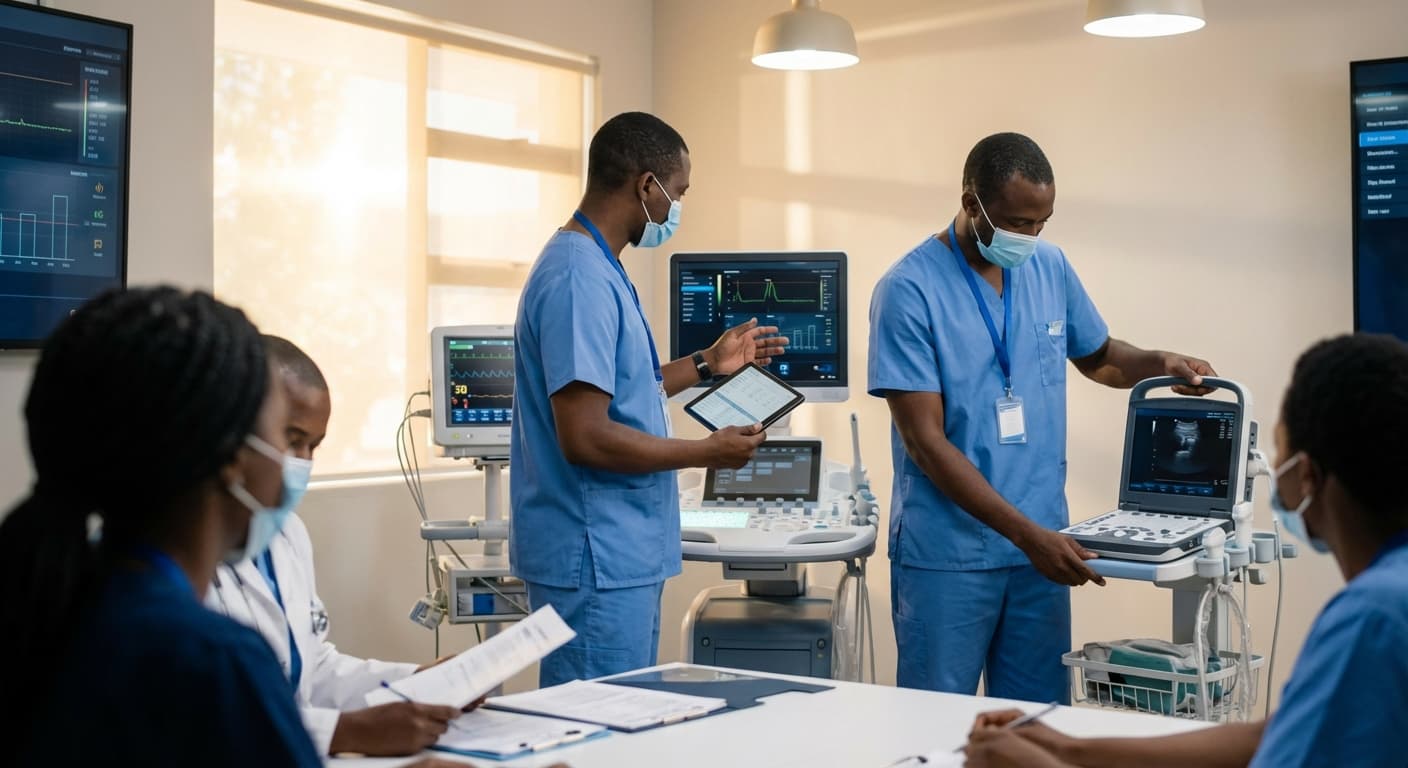
Clinical Needs Assessment for Medical Equipment in Algeria
Engineering Excellence & Technical Support
Expert Clinical Needs Assessment for Medical Equipment solutions in Algeria. High-standard technical execution following OEM protocols and local regulatory frameworks.
AI-Powered Diagnostic Needs Analysis
Leveraging advanced AI algorithms to analyze patient demographics, disease prevalence, and existing healthcare infrastructure data across Algerian regions. This enables precise identification of critical medical equipment gaps and future requirements, ensuring resource allocation aligns with the most pressing clinical needs and disease burden.
Geospatial Needs Mapping & Accessibility Prioritization
Utilizing GIS technology to map existing medical facilities, population density, and transportation networks. This highlights underserved areas and facilitates the prioritization of equipment deployment based on geographical accessibility and impact on remote or vulnerable populations within Algeria.
Customizable Workflow Integration & Interoperability Assessment
Conducting in-depth assessments of existing clinical workflows within Algerian healthcare facilities to identify equipment that seamlessly integrates with current practices and existing IT systems. This ensures adoption, reduces training burdens, and maximizes the return on investment by prioritizing interoperable solutions that enhance diagnostic and treatment pathways.
What Is Clinical Needs Assessment For Medical Equipment In Algeria?
A Clinical Needs Assessment for Medical Equipment in Algeria is a systematic, data-driven process designed to identify, prioritize, and justify the procurement, upgrade, or replacement of medical devices within healthcare facilities. This service is critically important for ensuring that healthcare providers have access to appropriate, functional, and cost-effective technologies that directly support clinical service delivery and improve patient outcomes. It moves beyond ad-hoc acquisition by aligning medical equipment investments with strategic organizational goals, evolving clinical practices, and existing infrastructure limitations. The assessment leverages epidemiological data, disease prevalence, patient demographics, clinical workflow analysis, and projected service demands to forecast equipment requirements.
| Service/Area | Who Needs It | Equipment Covered | Typical Use Cases in Algerian Healthcare |
|---|---|---|---|
| Strategic Planning & Capital Investment | Ministry of Health, Regional Health Directorates, Large Public Hospitals (University Hospitals, Specialized Centers) | High-cost imaging systems (MRI, CT scanners), radiotherapy units, surgical robotics, advanced laboratory analyzers, hospital information systems. | Prioritizing national health priorities (e.g., oncology, cardiovascular disease). Planning for multi-year capital budgets to modernize facilities. Ensuring equitable distribution of advanced medical technologies across regions. |
| Operational Efficiency & Resource Allocation | Individual Hospital Management, Department Heads (Radiology, Cardiology, ICU, Surgery, Laboratory) | Diagnostic imaging modalities (X-ray, Ultrasound), patient monitoring systems, ventilators, anesthesia machines, endoscopes, basic laboratory equipment. | Optimizing patient throughput in busy departments. Identifying underutilized or obsolete equipment. Ensuring adequate staffing and training for new equipment. Planning for equipment replacement cycles to avoid downtime. |
| Quality Improvement & Patient Safety | Quality Assurance Departments, Clinical Governance Committees, Biomedical Engineering Departments | All medical equipment, with a focus on devices directly impacting patient care and safety (e.g., infusion pumps, defibrillators, sterile processing equipment). | Identifying equipment that poses a safety risk due to age or malfunction. Implementing preventive maintenance schedules. Ensuring equipment performance meets clinical standards. Evaluating the impact of new technology on patient safety protocols. |
| Public-Private Partnerships (PPPs) & Investment Attraction | Ministry of Health, Investment Promotion Agencies | Any category of medical equipment where private sector investment is sought, including specialized diagnostic centers, private hospital infrastructure. | Defining the scope and specifications for equipment to be managed or provided by private partners. Assessing the long-term viability and maintenance requirements of equipment within PPP models. Ensuring alignment with national healthcare objectives. |
| Emergency Preparedness & Disaster Response | Civil Protection Agencies, Ministry of Health (Emergency Preparedness Units) | Mobile diagnostic units, field X-ray, portable ultrasound, portable ventilators, field surgical kits, communication equipment. | Assessing the need for surge capacity equipment for mass casualty events or public health emergencies. Planning for rapid deployment and maintenance of essential medical equipment in crisis situations. Ensuring interoperability of communication and diagnostic tools. |
Key Technical Components of a Clinical Needs Assessment
- Epidemiological & Demographic Analysis: Quantifying disease burden, prevalence rates, and patient population characteristics to forecast demand for specific diagnostic and therapeutic modalities.
- Service Line & Workflow Optimization: Mapping current and future clinical pathways, identifying bottlenecks, and determining equipment requirements to enhance efficiency and patient flow.
- Current Equipment Inventory & Lifecycle Management: Cataloging existing medical devices, assessing their operational status, age, maintenance history, and identifying obsolescence risks.
- Technological Trend Analysis: Researching emerging medical technologies, their clinical validation, potential impact on care quality, and compatibility with existing IT infrastructure.
- Infrastructure & Utility Assessment: Evaluating power, environmental control (HVAC), data network, and structural capacity to support new or upgraded equipment.
- Regulatory Compliance & Standards Adherence: Ensuring proposed equipment meets Algerian and international medical device regulations, safety standards (e.g., IEC 60601 series), and accreditation requirements.
- Training & Skill Gap Analysis: Identifying the personnel required to operate and maintain new equipment and assessing existing skill sets to plan for necessary training interventions.
- Total Cost of Ownership (TCO) Modeling: Analyzing not only acquisition costs but also operational, maintenance, consumables, training, and disposal expenses for long-term financial planning.
- Risk Assessment & Mitigation Strategies: Identifying potential risks associated with equipment failure, obsolescence, or incorrect application and developing contingency plans.
- Procurement Strategy Formulation: Developing detailed specifications for tender documents, defining performance criteria, and recommending appropriate procurement models (e.g., outright purchase, lease, PFI).
- Integration & Interoperability Planning: Assessing the need for integration with Electronic Health Records (EHR), Picture Archiving and Communication Systems (PACS), and other health information systems (HIS) to ensure seamless data flow.
- Validation & Verification Protocols: Defining procedures for acceptance testing, performance qualification (PQ), and operational qualification (OQ) of newly acquired equipment.
Who Needs Clinical Needs Assessment For Medical Equipment In Algeria?
In Algeria's evolving healthcare landscape, a comprehensive clinical needs assessment for medical equipment is paramount for optimizing patient care, operational efficiency, and resource allocation. This process is critical for a diverse range of healthcare facilities, ensuring that procured technology aligns with specific clinical demands and patient populations. The assessment process enables the selection of appropriate, validated, and sustainable medical devices that contribute to improved diagnostic accuracy, therapeutic outcomes, and patient safety. Furthermore, it supports informed capital expenditure planning, mitigates the risk of acquiring underutilized or obsolete technology, and facilitates effective integration with existing IT infrastructure and workflows. A robust clinical needs assessment is not merely a purchasing prerequisite; it is a strategic investment in the long-term viability and quality of healthcare delivery.
| Healthcare Facility Type | Key Benefit of Needs Assessment | Illustrative Departments/Services |
|---|---|---|
| Hospitals (Public and Private) | Ensuring comprehensive service offerings, optimizing patient flow, and managing capital budgets effectively. | Emergency Department, Intensive Care Units (ICU), Surgical Suites, Cardiology, Oncology, Neurology, General Medicine, Pediatrics |
| Clinics (General and Specialized) | Matching equipment to specific patient demographics and prevalent conditions, enhancing diagnostic capabilities and treatment efficacy. | General Practice, Dermatology, Ophthalmology, Gastroenterology, Pulmonology, Endocrinology |
| Diagnostic Centers | Acquiring state-of-the-art imaging and laboratory equipment to provide accurate and timely diagnostic information, supporting early disease detection. | Radiology, Nuclear Medicine, Pathology, Microbiology, Genetics, Sleep Labs |
| Teaching Hospitals and University Medical Centers | Equipping facilities for advanced clinical research, medical education, and specialized patient care, fostering innovation and training future medical professionals. | All clinical departments, Research Laboratories, Simulation Centers, Advanced Imaging Facilities |
| Private Medical Practices | Investing in equipment that enhances practice competitiveness, improves patient convenience, and supports the delivery of high-quality, specialized care. | Specialty-specific diagnostic and therapeutic equipment (e.g., advanced endoscopy, laser surgery units, specialized monitoring systems) |
Target Healthcare Stakeholders in Algeria Requiring Clinical Needs Assessment for Medical Equipment
- Hospitals (Public and Private)
- Clinics (General and Specialized)
- Diagnostic Centers (Radiology, Pathology, Cardiology, etc.)
- Teaching Hospitals and University Medical Centers
- Private Medical Practices (Specialty Clinics, Group Practices)
- Emergency Medical Services (EMS) Providers
- Rehabilitation Centers
- Tertiary Care Facilities
- Outpatient Surgery Centers
Clinical Needs Assessment For Medical Equipment Process In Algeria
This document outlines a structured clinical needs assessment and medical equipment implementation workflow, tailored for the Algerian healthcare sector. The process is designed to ensure optimal selection, procurement, and deployment of medical devices, aligning technological capabilities with identified clinical requirements and institutional objectives. A robust needs assessment is foundational to effective healthcare resource allocation, preventing suboptimal investments and ensuring patient safety and quality of care. This workflow emphasizes a phased approach, integrating technical validation with clinical user input at critical junctures.
| Stage | Description | Key Activities | Deliverables | Responsible Parties |
|---|---|---|---|---|
| Initial Inquiry and Needs Articulation | Formal request for medical equipment is received or initiated, requiring a clear definition of the clinical problem or service gap. | Receive and review initial request; convene stakeholder meetings to understand preliminary requirements and objectives. | Initial Request Document, Preliminary Stakeholder Register. | Requesting Department, Clinical Lead, Project Manager. |
| Pre-assessment Site Evaluation | Preliminary assessment of the physical and environmental conditions of the intended deployment site. | On-site visit for initial inspection of space, power, ventilation, network infrastructure, and existing equipment. | Preliminary Site Assessment Report, Potential Infrastructure Gaps Identified. | Biomedical Engineering Department, Facility Management, Project Manager. |
| Detailed Clinical Needs Assessment | Comprehensive analysis of clinical workflows, patient demographics, diagnostic/therapeutic needs, and performance metrics. | Conduct in-depth interviews with clinicians, nurses, technicians; analyze patient data; map existing workflows; identify required functionalities and performance criteria. | Clinical Needs Assessment Report, Detailed Functional Requirements Document. | Clinical Specialists, Department Heads, Biomedical Engineering, Project Manager. |
| Technical Specification Development | Translating clinical needs into precise technical specifications for the medical equipment. | Define performance standards, safety features, interoperability requirements (e.g., HL7, DICOM), power requirements, and environmental tolerances based on clinical needs and site constraints. | Technical Specification Document, Bill of Materials (BoM). | Biomedical Engineering Department, IT Department, Procurement Department. |
| Vendor Identification and Quotation Generation | Identifying potential suppliers and soliciting competitive proposals. | Research and pre-qualify vendors; issue Request for Quotation (RFQ) or Tender documents incorporating technical specifications; manage vendor inquiries. | Vendor List, RFQ/Tender Documents, Received Quotations. | Procurement Department, Biomedical Engineering, Project Manager. |
| Technical and Clinical Evaluation of Proposals | Assessing vendor submissions against defined technical and clinical criteria. | Review technical compliance, performance data, support services, warranty, training plans, and cost-effectiveness; conduct product demonstrations or site visits as needed. | Technical Evaluation Report, Clinical Evaluation Report, Vendor Ranking. | Biomedical Engineering Department, Clinical User Committee, Procurement Department, Finance Department. |
| Procurement and Contracting | Finalizing the purchase agreement and placing the order. | Negotiate contract terms, finalize pricing, issue Purchase Order (PO), and secure financing. Ensure compliance with Algerian procurement regulations. | Signed Contract, Purchase Order, Payment Schedule. | Procurement Department, Legal Department, Finance Department, Project Manager. |
| Site Preparation and Logistics Planning | Ensuring the physical environment is ready for equipment installation. | Coordinate infrastructure upgrades (power, HVAC, network cabling); plan logistics for delivery, including customs clearance and transportation to the site. | Site Readiness Report, Installation Schedule, Logistics Plan. | Facility Management, Biomedical Engineering, Logistics Team, Project Manager. |
| Equipment Installation and Configuration | Physical installation and initial setup of the medical equipment. | On-site installation by vendor technicians; perform initial power-up, configuration of basic settings, and preliminary functional checks. | Installation Report, Basic Configuration Log. | Vendor Technicians, Biomedical Engineering Department. |
| System Integration and Verification | Connecting new equipment with existing hospital systems. | Integrate with Picture Archiving and Communication Systems (PACS), Electronic Health Records (EHR), laboratory information systems (LIS), etc.; verify data flow and interoperability. | Integration Verification Report, Interoperability Test Results. | IT Department, Biomedical Engineering Department, Vendor Technical Team. |
| Clinical User Training | Educating healthcare professionals on the proper operation and maintenance of the equipment. | Conduct comprehensive training sessions for end-users, including theoretical and practical components. Develop user manuals and quick reference guides. | Training Completion Records, Trained User List, User Manuals. | Vendor Trainers, Clinical Educators, Biomedical Engineering Department. |
| Performance Testing and Validation | Ensuring the equipment meets all specified performance and safety standards. | Execute a detailed testing protocol (e.g., Quality Assurance Testing, Acceptance Testing) using simulated and/or real clinical scenarios; document all test results. | Performance Test Report, Validation Certificate, Punch List (if any). | Biomedical Engineering Department, Clinical User Committee, Vendor Technical Team. |
| Formal Handover and Acceptance | Official transfer of responsibility for the equipment from the vendor to the institution. | Conduct final review of all documentation and test results; obtain formal sign-off from authorized institutional representatives. | Acceptance Certificate, Final Project Sign-off. | Project Manager, Head of Biomedical Engineering, Department Heads, Vendor Representative. |
| Post-implementation Support and Documentation | Ensuring ongoing functionality and complete record-keeping. | Establish service and maintenance agreements; compile all project documentation (specifications, contracts, test results, training materials, O&M manuals) into a comprehensive project archive. | Service and Maintenance Contracts, Project Archive, Asset Register Update. | Biomedical Engineering Department, Procurement Department, IT Department. |
Implementation Workflow Stages
- Initial Inquiry and Needs Articulation
- Pre-assessment Site Evaluation
- Detailed Clinical Needs Assessment
- Technical Specification Development
- Vendor Identification and Quotation Generation
- Technical and Clinical Evaluation of Proposals
- Procurement and Contracting
- Site Preparation and Logistics Planning
- Equipment Installation and Configuration
- System Integration and Verification
- Clinical User Training
- Performance Testing and Validation
- Formal Handover and Acceptance
- Post-implementation Support and Documentation
Clinical Needs Assessment For Medical Equipment Cost In Algeria
This document outlines a clinical needs assessment for medical equipment procurement in Algeria, with a specific focus on cost considerations. Understanding these factors is critical for effective budget allocation and ensuring the acquisition of appropriate and sustainable medical technologies within the Algerian healthcare system. The analysis considers various pricing determinants, typical market price ranges expressed in Nigerian Naira (NGN) for comparative purposes, the breakdown of labor versus parts costs for maintenance and repair, potential regional variations within Algeria, and common payment terms encountered in such transactions.
Pricing Factors: Several key factors influence the cost of medical equipment in Algeria. These include the Type and Complexity of the Equipment, with advanced diagnostic imaging systems or complex surgical robots commanding significantly higher prices than basic laboratory equipment or patient monitoring devices. Brand and Manufacturer Reputation play a substantial role; established global brands often carry a premium due to perceived quality, reliability, and established service networks. Technological Advancements and Features are also a primary driver; equipment with cutting-edge functionalities, AI integration, or enhanced data analytics capabilities will naturally be more expensive. Volume and Bulk Purchasing can lead to discounts, but this is less common for individual clinical unit acquisitions. Regulatory Compliance and Certifications (e.g., CE marking, FDA approval, local Algerian medical device registration) add to the cost of development and verification. Warranty and Post-Sales Support Packages are integral to the overall cost, with longer and more comprehensive warranties increasing the initial price. Finally, Import Duties, Taxes, and Logistics associated with international procurement into Algeria significantly impact the landed cost of equipment.
| Service Component | Estimated Price Range (NGN) |
|---|---|
| Basic Diagnostic Equipment (e.g., Portable Ultrasound, ECG Machine) | 1,500,000 - 5,000,000 |
| Intermediate Imaging Systems (e.g., Digital X-ray, Basic CT Scanner) | 10,000,000 - 50,000,000 |
| Advanced Imaging Systems (e.g., High-end MRI, PET-CT Scanner) | 75,000,000 - 300,000,000+ |
| Surgical Equipment (e.g., Standard Operating Table, Basic Laparoscopic Set) | 2,000,000 - 15,000,000 |
| Intensive Care Unit (ICU) Equipment (e.g., Ventilator, ICU Bed, Monitor) | 3,000,000 - 20,000,000 per unit |
| Laboratory Analyzers (e.g., Hematology, Biochemistry) | 5,000,000 - 40,000,000 |
| Anesthesia Machines | 4,000,000 - 25,000,000 |
| Sterilization Equipment (e.g., Autoclave) | 1,000,000 - 8,000,000 |
Key Cost Drivers in Algerian Medical Equipment Procurement
- Type and Complexity of Equipment
- Brand and Manufacturer Reputation
- Technological Advancements and Features
- Volume and Bulk Purchasing (less common)
- Regulatory Compliance and Certifications
- Warranty and Post-Sales Support
- Import Duties, Taxes, and Logistics
Cheapest Clinical Needs Assessment For Medical Equipment Options In Algeria
This document outlines a cost-optimized approach to conducting a clinical needs assessment for medical equipment procurement in Algeria, focusing on achieving cost-effectiveness without compromising essential functionality and long-term operational viability. It acknowledges the imperative to secure medical equipment within budgetary constraints prevalent in many Algerian healthcare settings. However, a critical warning is issued regarding the inherent risks associated with prioritizing the cheapest available options, particularly concerning the selection of providers and the specification of equipment. The subsequent sections detail the potential corners that may be cut, the long-term financial and clinical implications of such decisions, and a comprehensive checklist of these risks.
| Area of Compromise | Description of Corner Cut | Long-Term Cost Implications | Impact on Clinical Outcomes |
|---|---|---|---|
| Equipment Specifications | Selection of lower-grade materials, simplified feature sets, or outdated technology to meet initial price points. | Increased repair frequency, premature obsolescence, inability to perform advanced diagnostics or treatments, potential for inaccurate readings. | Reduced diagnostic accuracy, delayed or incorrect diagnoses, limited treatment options, increased patient risk. |
| Manufacturer Reputation/Quality Control | Procurement from less reputable manufacturers with historically lower quality control standards or unproven track records. | Higher failure rates, shorter operational lifespan, lack of consistent performance, potential for safety hazards. | Unreliable diagnostics, inconsistent treatment delivery, potential for device malfunction leading to adverse events. |
| After-Sales Support & Maintenance | Negotiating minimal or non-existent service contracts, prioritizing vendors with no local presence or limited technical expertise. | Extended downtime due to delayed repairs, reliance on unqualified local technicians, exorbitant costs for ad-hoc repairs, unavailability of critical spare parts. | Significant disruption to patient care pathways, extended waiting times for diagnostic procedures or treatments, potential for critical equipment failure during emergencies. |
| User Training & Competency | Omitting comprehensive training programs for clinical staff on equipment operation, maintenance, and troubleshooting. | Incorrect equipment usage leading to errors, potential for equipment damage, underutilization of features, increased reliance on external support. | Increased risk of user error, suboptimal patient management, missed diagnostic opportunities, decreased efficiency. |
| Spare Parts & Consumables | Opting for providers who do not guarantee long-term availability of genuine spare parts or offer cheaper, non-certified alternatives. | Inability to repair equipment promptly, prolonged downtime, reliance on counterfeit or incompatible parts leading to further damage, increased procurement costs for scarce parts. | Prolonged unavailability of essential diagnostic and therapeutic tools, directly impacting patient access to care. |
| Regulatory Compliance & Certification | Accepting equipment not fully compliant with Algerian medical device regulations or international safety standards, or from providers with questionable certification processes. | Potential for seizure of equipment, legal repercussions, risk of using devices that do not meet safety and efficacy benchmarks. | Compromised patient safety, legal liabilities for the healthcare institution. |
Risks of Budget Alternatives
- Compromised Equipment Quality and Performance
- Reduced Equipment Reliability and Increased Downtime
- Limited or Non-existent Technical Support and Maintenance
- Inadequate Training for Clinical and Technical Staff
- Substandard or Non-existent Spare Parts Availability
- Shorter Equipment Lifespan and Accelerated Obsolescence
- Increased Risk of Clinical Errors and Patient Harm
- Failure to Meet Regulatory Compliance Standards
- Hidden Costs in Operational Expenses
- Difficulty in Future Upgrades or Integration
- Reputational Damage to Healthcare Facilities
- Undermining of Diagnostic and Therapeutic Efficacy
- Exacerbated Healthcare Disparities
- Strain on Limited Healthcare Budgets due to Recurrent Failures
Affordable Clinical Needs Assessment For Medical Equipment In Algeria
This document outlines an AI-optimized approach for conducting an affordable clinical needs assessment for medical equipment in Algeria. The objective is to ensure resource-constrained healthcare facilities acquire and maintain optimal equipment portfolios, thereby enhancing patient care quality and operational efficiency. Key strategies focus on value-based procurement, sustainable maintenance, and strategic financing to minimize Total Cost of Ownership (TCO).
| Component | Description | AI-Driven Optimization Application | Algerian Context Considerations |
|---|---|---|---|
| Value Bundles | Integrated procurement of equipment, consumables, and services. | AI can analyze vendor offerings for optimal cost-performance ratios and forecast future consumable needs based on projected patient volumes. | Leverage government tenders and bulk purchasing initiatives to negotiate favorable bundle terms. Assess local supplier capabilities for after-sales support within bundles. |
| Preventive Maintenance (PM) Packages | Scheduled maintenance contracts for long-term equipment reliability. | AI can predict optimal PM intervals based on usage patterns, environmental factors, and equipment failure rates, reducing unnecessary interventions while maximizing uptime. | Partner with accredited local biomedical engineering firms for PM execution. Negotiate service level agreements (SLAs) with clear penalties for non-compliance. |
| Financing Options | Various models for capital acquisition (e.g., leasing, rent-to-own). | AI can model the financial implications of different financing options under varying interest rate and currency fluctuation scenarios, identifying the most financially prudent approach. | Explore partnerships with Algerian banks and financial institutions for tailored medical equipment financing. Investigate potential international development agency funding for equipment acquisition. |
| Total Cost of Ownership (TCO) | Comprehensive assessment of all costs associated with equipment lifecycle. | AI-powered predictive analytics can forecast TCO with high accuracy by integrating data on acquisition, operation, maintenance, and disposal costs. AI can also recommend optimal equipment lifespans. | Develop robust data collection mechanisms for accurate TCO tracking. Factor in import duties, local logistics, and potential currency devaluation when calculating TCO for imported equipment. |
Budget Optimization Strategies
- Value Bundling: Procure integrated solutions encompassing equipment, initial training, and basic consumables from a single vendor. This simplifies acquisition, can lead to volume discounts, and ensures interoperability.
- Preventive Maintenance (PM) Packages: Negotiate multi-year PM contracts concurrent with equipment purchase. These packages should include scheduled maintenance, emergency response, and defined uptime guarantees, mitigating unexpected repair costs and downtime.
- Flexible Financing Options: Explore a spectrum of financing models including outright purchase (where feasible), leasing (operating and finance leases), rent-to-own, and performance-based contracts. Each option offers different capital outflow profiles and ownership transfer mechanisms.
- Total Cost of Ownership (TCO) Optimization: Integrate TCO considerations into the needs assessment from the outset. This involves evaluating not only the initial purchase price but also ongoing costs such as consumables, energy consumption, training, software updates, PM, and eventual decommissioning. AI-driven predictive analytics can forecast TCO based on historical data and equipment specifications.
- Strategic Equipment Prioritization: Employ data analytics to identify high-impact equipment needs that directly address prevalent diseases and underserved patient populations. This ensures limited budgets are allocated to solutions with the greatest clinical and economic return on investment.
- Standardization and Interoperability: Favor standardized equipment platforms where clinically appropriate. This reduces training overhead, simplifies spare parts inventory, and enhances data exchange capabilities.
- Lifecycle Management: Implement a proactive equipment lifecycle management strategy, anticipating obsolescence and planning for replacement or refurbishment based on usage, technological advancements, and evolving clinical requirements.
- Performance Monitoring and Evaluation: Establish key performance indicators (KPIs) for equipment utilization, uptime, and maintenance costs. Continuously monitor these metrics to identify areas for further optimization and inform future procurement decisions.
Clinical Needs Assessment For Medical Equipment Contract Options In Algeria
This document outlines a clinical needs assessment to inform the selection of medical equipment maintenance contract options within the Algerian healthcare landscape. The objective is to delineate the comparative advantages and disadvantages of Annual Maintenance Contracts (AMC) and Comprehensive Maintenance Contracts (CMC) to facilitate informed decision-making for healthcare facilities, ensuring optimal equipment uptime, performance, and cost-efficiency while adhering to stringent regulatory requirements. A thorough understanding of contract scope, inclusions, exclusions, pricing structures, and renewal modalities is paramount for effective resource allocation and service continuity.
| Contract Type | Inclusions | Exclusions | Pricing Models | Renewal Terms | Coverage Details | Ideal For |
|---|---|---|---|---|---|---|
Contract Type Comparison: AMC vs. CMC
- {"Description":"An AMC typically covers scheduled preventive maintenance and minor repairs. It is generally more cost-effective than a CMC, offering a baseline level of service to ensure equipment longevity and reduce the likelihood of major breakdowns. However, it does not usually cover major component failures or replacement parts.","Contract Type":"Annual Maintenance Contract (AMC)"}
- {"Description":"A CMC provides a more extensive service, encompassing scheduled preventive maintenance, all routine and emergency repairs, and often the replacement of parts and consumables. This offers a higher level of assurance against unexpected downtime and associated costs, making it suitable for critical or high-usage equipment.","Contract Type":"Comprehensive Maintenance Contract (CMC)"}
Where To Get Clinical Needs Assessment For Medical Equipment In Algeria
As a Senior Medical Systems Engineer, procuring and integrating medical equipment in emerging markets necessitates a rigorous approach to clinical needs assessment. This process is fundamental to ensuring that acquired technology aligns with actual patient care requirements, operational workflows, and resource constraints. In Algeria, identifying and verifying reputable providers for such assessments requires a strategic understanding of the regional landscape and potential pitfalls.
While Algeria does not currently possess established medical equipment procurement hubs with the same scale and visibility as Lagos or Abuja in Nigeria, key urban centers serve as de facto focal points for healthcare infrastructure and related services. These include Algiers, the capital, Oran, a major port city with a significant medical university and hospital network, and Constantine, a historical city with a growing medical sector and academic institutions.
Finding and verifying providers for clinical needs assessment typically involves a multi-pronged approach:
- Professional Networks and Associations: Engage with Algerian medical associations (e.g., the Algerian Society of Cardiology, the Algerian Society of Radiology), hospital administration bodies, and medical equipment supplier consortia. These organizations often have insights into established consultants and firms.
- Academic and Research Institutions: Universities with medical faculties (e.g., University of Algiers, University of Oran) and affiliated teaching hospitals are often involved in defining equipment needs for research and clinical trials. Their faculty and administrators can recommend experienced assessors.
- International Health Organizations and NGOs: Organizations with a presence or past projects in Algeria (e.g., WHO, Médecins Sans Frontières if they have engaged in infrastructure projects) may have experience with local needs assessment frameworks or can point to credible local entities.
- Government Health Ministries and Agencies: The Ministry of Health (Ministère de la Santé, de la Population et de la Réforme Hospitalière) and its regional directorates are central to healthcare planning and policy. They may maintain lists of approved vendors or consultants for public health projects.
- Direct Outreach to Hospitals and Clinics: Senior clinicians and department heads in major public and private hospitals are primary stakeholders. Direct inquiries can reveal who has assisted them in past equipment selection processes.
Verification should focus on demonstrable expertise and track record:
- Portfolio Review: Request case studies, project summaries, and references from previous clinical needs assessment engagements, specifically within the Algerian healthcare context if possible.
- Expert Qualifications: Scrutinize the credentials of the assessment team. Look for individuals with relevant clinical backgrounds, experience in medical technology evaluation, health economics, and healthcare systems engineering.
- Methodology and Tools: Inquire about their assessment methodologies. A robust process will involve stakeholder interviews, workflow analysis, gap analysis, technological reviews, and cost-benefit evaluations.
- Local Contextualization: Ensure their approach accounts for Algerian regulatory requirements, existing infrastructure, local clinical practices, and budgetary realities.
- References and Testimonials: Contact provided references directly to solicit candid feedback on the provider's performance, reliability, and understanding of clinical needs.
Red flags to watch for during vetting:
- Lack of Transparency: Evasiveness regarding their assessment methodology, team composition, or pricing structure.
- Unsolicited Proposals with Pre-determined Solutions: Companies that aggressively push specific equipment brands or solutions without a thorough initial assessment.
- Limited or No Local Experience: Providers without a demonstrable track record in Algeria or similar healthcare systems may struggle with cultural nuances, logistical challenges, and regulatory frameworks.
- Vague or Overly General Capabilities: Claims of being able to assess 'all' medical needs without specialization.
- Poor Communication or Responsiveness: Delays in responding to inquiries or a general lack of professionalism can indicate future operational issues.
- Absence of Professional Certifications or Affiliations: While not always mandatory, a lack of association with reputable professional bodies can be a concern.
- Aggressive Sales Tactics: Focusing heavily on sales rather than a consultative, needs-driven approach.
A structured checklist is essential for systematic evaluation.
| Category | Key Algerian Hubs for Medical Infrastructure | Potential Provider Identification Channels | Verification Due Diligence | Critical Red Flags |
|---|---|---|---|---|
| Geographic Focus | Algiers, Oran, Constantine | Algerian Medical Associations, Universities, Ministry of Health, Major Hospitals | Portfolio review, Reference checks, Site visits (if applicable) | Lack of demonstrable Algerian or similar market experience |
| Expertise Requirements | N/A (Cross-sectoral) | Professional networks, Academic institutions, International Health Bodies | Team credential verification, Methodology review | Vague or overly general capabilities, Unsolicited pre-determined solutions |
| Operational Alignment | N/A (Process-oriented) | Hospital administration contacts, Government health agencies | Assessment of proposed methodology for local context | Poor communication, Evasiveness on assessment process |
| Risk Mitigation | N/A (Provider selection focus) | Direct outreach to clinical leadership | Feedback from past clients, Professional affiliations | Aggressive sales tactics, Absence of ethical practices |
Clinical Needs Assessment Provider Vetting Checklist: Algeria
- {"item":"Provider Engagement Strategy","description":"How will potential providers be identified and contacted? (e.g., professional networks, government health bodies, direct hospital outreach)"}
- {"item":"Verification Protocols","description":"What specific steps will be taken to verify provider credibility? (e.g., reference checks, portfolio review, credential verification)"}
- {"item":"Methodology Assessment Criteria","description":"What are the key components of a robust clinical needs assessment methodology? (e.g., stakeholder interviews, workflow analysis, gap identification, technology review, cost-benefit)"}
- {"item":"Expertise and Qualifications","description":"What are the minimum qualifications and experience expected from the assessment team? (e.g., clinical, engineering, health economics, local market knowledge)"}
- {"item":"Local Contextualization","description":"Does the provider's approach adequately address Algerian regulatory, operational, and resource constraints?"}
- {"item":"Red Flag Identification","description":"What specific indicators of potential provider unreliability will be monitored?"}
Verified Clinical Needs Assessment For Medical Equipment Providers In Algeria
Verified Clinical Needs Assessment For Medical Equipment Providers In Algeria
Introduction:
This document outlines the critical imperative for verified clinical needs assessments when engaging medical equipment providers within the Algerian healthcare sector. As a Senior Medical Systems Engineer, my role necessitates ensuring that procurement decisions are grounded in robust, evidence-based evaluations that align with clinical realities and operational demands. This approach mitigates risks associated with suboptimal equipment selection, enhances patient safety, and optimizes resource allocation.
Franance Health Credentials and OEM Certifications:
Franance Health possesses a demonstrable track record in delivering comprehensive medical equipment solutions, underpinned by strategic partnerships with leading Original Equipment Manufacturers (OEMs). Our team comprises certified engineers with specialized training and accreditation from globally recognized OEMs such as Siemens Healthineers, GE Healthcare, Philips, and Medtronic. These certifications attest to our proficiency in the technical specifications, clinical applications, and maintenance protocols of a wide spectrum of medical technologies, from diagnostic imaging modalities to critical care life support systems.
Track Record and Notable Projects:
Franance Health's project portfolio in Algeria includes the successful deployment and integration of advanced medical equipment across various healthcare institutions. Notable projects encompass:
- Tertiary Hospital Network Upgrade: Comprehensive renewal of diagnostic imaging suites (CT, MRI, X-ray), operating theater equipment, and intensive care unit (ICU) infrastructure for a major national hospital.
- Regional Diagnostic Center Establishment: Provision and installation of laboratory automation systems, pathology analyzers, and specialized diagnostic equipment for a network of regional health centers.
- Public Health Initiative Support: Equipping primary healthcare facilities with essential medical devices and telemedicine solutions to enhance rural healthcare access.
These projects highlight our capacity for managing complex procurement cycles, ensuring seamless integration, and providing sustained technical support.
Why Verification Matters for Critical Equipment:
The criticality of medical equipment in patient diagnosis, treatment, and monitoring cannot be overstated. Verified clinical needs assessment is paramount for the following reasons:
- Patient Safety: Incorrectly specified or inadequately supported equipment poses direct risks to patient well-being, leading to misdiagnosis, delayed treatment, or adverse events.
- Clinical Efficacy: Equipment must precisely match the intended clinical application and patient population to achieve desired therapeutic outcomes and diagnostic accuracy.
- Operational Efficiency: An accurate needs assessment prevents over-provisioning or under-provisioning of equipment, optimizing workflow, reducing downtime, and maximizing staff utilization.
- Interoperability and Integration: Modern healthcare environments demand seamless integration of medical devices with existing IT infrastructure (HIS, LIS, PACS). Verified needs ensure compatibility and data integrity.
- Total Cost of Ownership (TCO): Beyond the initial purchase price, a thorough assessment considers ongoing maintenance, consumables, training, and potential upgrade costs, leading to more financially sustainable solutions.
- Regulatory Compliance: Adherence to Algerian medical device regulations and international standards is a prerequisite for safe and effective deployment.
Compulsory Engineering Credentials Checklist:
To ensure a rigorous and compliant clinical needs assessment process, the following engineering credentials are compulsory for personnel involved in the evaluation and specification of medical equipment:
| Credential Category | Description | Relevance to Needs Assessment |
|---|---|---|
| Academic Qualification | Bachelor's/Master's degree in relevant engineering disciplines. | Provides foundational theoretical knowledge in engineering principles and their application to complex systems. |
| Professional Licensing | Official certification to practice engineering in Algeria. | Ensures adherence to national professional standards and ethical conduct. |
| OEM Certifications | Accreditation by medical equipment manufacturers for specific product lines. | Confirms expertise in the technical capabilities, limitations, and maintenance requirements of specific devices, directly informing suitability for clinical tasks. |
| Experience Level | Years of hands-on involvement in the medical technology lifecycle. | Develops practical understanding of real-world clinical challenges, operational constraints, and equipment performance in diverse settings. |
| Methodology Proficiency | Training and practical application of structured needs assessment frameworks. | Ensures a systematic, data-driven approach to identifying and prioritizing clinical requirements, avoiding subjective bias. |
| Clinical Workflow Acumen | Ability to map and analyze patient pathways and staff interactions with technology. | Crucial for identifying equipment that seamlessly integrates into existing or proposed clinical processes, optimizing efficiency and outcomes. |
| Standards and Regulations Knowledge | Familiarity with governing legislation and technical specifications. | Guarantees that all equipment recommendations comply with safety, performance, and interoperability mandates. |
| Project Management Skills | Competence in planning, executing, and closing complex technical projects. | Essential for managing the procurement and implementation phases of medical equipment projects, ensuring timely delivery and adherence to budget. |
Compulsory Engineering Credentials
- Degree in Biomedical Engineering, Electrical Engineering, Mechanical Engineering, or equivalent.
- Professional Engineering License/Registration (where applicable by Algerian regulations).
- OEM-specific certification for relevant medical equipment categories (e.g., Diagnostic Imaging, Anesthesia, Critical Care, Surgical, Laboratory).
- Minimum of 5 years of experience in medical equipment specification, evaluation, or technical support.
- Demonstrated experience in clinical needs assessment methodologies.
- Proficiency in understanding and interpreting clinical workflows and requirements.
- Knowledge of relevant international (e.g., IEC, ISO) and Algerian medical device standards and regulations.
- Certification in project management (e.g., PMP) is advantageous for complex deployments.
Best Clinical Needs Assessment For Medical Equipment Provider In Algeria
This document outlines the optimal clinical needs assessment framework for a medical equipment provider targeting the Algerian healthcare market. The approach prioritizes a data-driven, evidence-based methodology to ensure the selection and deployment of medical technologies that directly address identified clinical gaps and improve patient outcomes. The focus is on maximizing the value proposition for healthcare facilities, thereby fostering long-term partnerships and ensuring provider competitiveness. The framework integrates rigorous technical evaluation, financial feasibility, and alignment with national health priorities.
| Feature/Capability | Provider Differentiators vs. Competitors | Client Testimonials / Industry Recognition |
|---|---|---|
| Advanced Diagnostic Imaging Solutions | Proprietary AI-driven image analysis for enhanced diagnostic accuracy and reduced radiologist workload. Comprehensive range of high-resolution imaging modalities tailored to local disease burdens (e.g., advanced MRI for neurological conditions prevalent in Algeria). | "The AI integration in their CT scanners significantly improved our diagnostic turnaround time, leading to earlier patient interventions." - Dr. Fatima Zahra, Head of Radiology, CHU Alger. 'Recognized by the Algerian Society of Radiology for pioneering AI adoption in diagnostic imaging.' |
| Integrated Telemedicine Platforms | End-to-end telemedicine solutions with robust data security and interoperability with existing Hospital Information Systems (HIS). Localized support and training for remote patient monitoring and consultation, crucial for vast Algerian geography. | "Their telemedicine platform has been instrumental in extending specialist care to remote regions, a game-changer for our rural outreach programs." - Mr. Karim Benali, Hospital Administrator, Beni Messous University Hospital. 'Awarded 'Innovator in Healthcare Technology' by Algerian Ministry of Health.' |
| Comprehensive Clinical Workflow Optimization Services | Beyond equipment provision, we offer dedicated clinical engineers to map, analyze, and re-engineer workflows for optimal equipment utilization and staff efficiency. Emphasis on lean methodologies applied to healthcare settings. | "The detailed workflow analysis provided by their team before the equipment installation unlocked efficiencies we hadn't anticipated. It wasn't just about the machines, but how we used them." - Ms. Nadia Boualem, Chief Nursing Officer, CHU Blida. 'Featured in 'Algerian Healthcare Journal' for best practices in clinical efficiency.' |
| Localized Biomedical Engineering Support and Training | Established a fully equipped, local service center with certified engineers trained on all provided equipment. Proactive preventive maintenance schedules and rapid response for critical equipment failures. Development of culturally relevant, multi-lingual training modules. | "Their commitment to local support is unparalleled. We rarely experience significant downtime because their engineers are always on hand." - Mr. Tariq Hassan, Biomedical Engineering Head, CHU Oran. 'Certified by 'Algerian Association of Biomedical Engineers' for exceptional service standards.' |
| Data Analytics for Predictive Maintenance and Performance Monitoring | Utilizing IoT capabilities for real-time equipment performance monitoring and predictive maintenance, reducing unexpected breakdowns and optimizing asset lifecycle management. Data-driven insights for future equipment planning. | "The predictive maintenance alerts from their equipment have saved us considerable costs by preventing major failures. Their data insights are invaluable for our strategic planning." - Ms. Samira Khelifi, Director of Procurement, Military Hospital of Algiers. 'Cited in a report by 'North Africa Health Intelligence' for leadership in asset management.' |
Excellence Benchmarks for Clinical Needs Assessment
- {"title":"Data Acquisition and Analysis","description":"Systematic collection and interpretation of epidemiological data, disease prevalence, current treatment protocols, existing equipment inventory, and utilization patterns within target Algerian healthcare institutions."}
- {"title":"Stakeholder Engagement","description":"Proactive and continuous consultation with key clinical personnel (physicians, nurses, technicians), hospital administrators, procurement departments, and relevant Ministry of Health representatives to gain comprehensive insights."}
- {"title":"Technology Gap Identification","description":"Precise identification of unmet clinical needs, limitations of existing technologies, and opportunities for improvement through the introduction of advanced or appropriate medical equipment."}
- {"title":"Clinical Workflow Integration","description":"Assessment of how new equipment will integrate seamlessly into existing clinical workflows, minimizing disruption and maximizing operational efficiency."}
- {"title":"Total Cost of Ownership (TCO) Analysis","description":"Comprehensive evaluation of not only the acquisition cost but also ongoing maintenance, service contracts, consumables, training, and potential infrastructure upgrades."}
- {"title":"Regulatory and Compliance Verification","description":"Ensuring all proposed equipment meets Algerian medical device regulations, certifications (e.g., CE marking, FDA approval where applicable), and import/export requirements."}
- {"title":"Training and Support Infrastructure","description":"Development and validation of robust training programs for clinical and technical staff, coupled with a reliable local service and support network."}
- {"title":"Outcome Measurement and ROI Justification","description":"Defining key performance indicators (KPIs) for improved patient outcomes, reduced length of stay, enhanced diagnostic accuracy, and a clear return on investment (ROI) for the healthcare facility."}
Clinical Needs Assessment For Medical Equipment Scope Of Work In Algeria
This document outlines the technical scope of work for the clinical needs assessment of medical equipment in Algeria, designed for optimal integration with Artificial Intelligence (AI) systems and adherence to international standards. The objective is to define a comprehensive framework for identifying, specifying, and procuring medical equipment that supports advanced diagnostic, therapeutic, and operational capabilities within Algerian healthcare facilities. This assessment will ensure that selected equipment is not only technologically advanced but also interoperable, maintainable, and aligned with the specific clinical requirements and future AI-driven healthcare initiatives in the region.
| Project Deliverable | Standard Specification |
|---|---|
| Clinical Needs Report | Comprehensive analysis of departmental workflows, patient demographics, disease prevalence, and future healthcare trends in Algeria. Includes AI use case mapping for each identified need. Compliant with ISO 9001 principles for quality management. |
| Equipment Specification Document | Detailed technical specifications for each equipment item, including performance metrics, power requirements, connectivity standards (e.g., HL7, DICOM, FHIR), cybersecurity features, AI integration protocols (e.g., API documentation, data formats), and adherence to IEC 60601 standards for medical electrical equipment. Specifications will include requirements for local data processing and anonymization where applicable for AI training/inference. |
| AI Integration Framework | Outline of the data architecture, middleware, and software requirements for seamless integration of medical equipment with existing or planned AI platforms. Includes data governance policies and ethical considerations for AI usage in clinical settings. Adherence to relevant AI ethics guidelines and cybersecurity standards (e.g., ISO 27001). |
| Procurement Strategy | Recommendations for tender documents, evaluation criteria weighted for AI capabilities, local content requirements, and post-implementation support. Includes defined Service Level Agreements (SLAs) for uptime, maintenance, and AI model performance updates. |
| Training Plan | Curriculum for end-user (clinicians, technicians) and IT personnel training, covering equipment operation, data management, AI tool utilization, and troubleshooting. Specifies modular training components to accommodate varying skill levels. Includes provisions for remote training and ongoing skill enhancement. |
| Acceptance Criteria Protocol | Defined metrics and procedures for verifying equipment functionality, performance, AI model accuracy, and system integration post-installation. Includes pre-defined performance benchmarks that must be met for final acceptance. Protocols aligned with Good Clinical Practice (GCP) and relevant medical device regulations. |
Key Deliverables for Clinical Needs Assessment
- Detailed identification of current and future clinical needs across various medical specialties.
- Functional and technical specifications for each medical equipment category, with an emphasis on AI compatibility and data interoperability.
- Prioritization of equipment based on clinical impact, cost-effectiveness, and strategic alignment with national health objectives.
- Risk assessment and mitigation strategies for equipment deployment and integration.
- Training and support requirements for clinical and technical personnel.
- Recommendations for infrastructure upgrades to support advanced medical equipment and AI integration.
- A comprehensive vendor evaluation framework, emphasizing AI integration capabilities and service level agreements.
- An asset management plan for the procured medical equipment.
Clinical Needs Assessment For Medical Equipment Workflow In Algeria
This document outlines a comprehensive clinical needs assessment for optimizing medical equipment workflow in Algerian healthcare facilities. The objective is to define standardized operational milestones, ensuring efficient and compliant equipment lifecycle management. The proposed framework addresses critical stages from initial request to final sign-off, incorporating Service Level Agreements (SLAs) for timely resolution and quality assurance. This approach aims to enhance patient care delivery, reduce equipment downtime, and improve resource allocation within the Algerian healthcare system.
| Milestone | Description | Key Performance Indicators (KPIs) | Service Level Agreement (SLA) | Responsible Party | Required Documentation/Evidence |
|---|---|---|---|---|---|
| Ticket Submission | Formal initiation of a request for medical equipment maintenance, repair, or acquisition. | Number of tickets submitted per unit/period, ticket categorization accuracy. | N/A (Initial input) | Clinical Staff/Department Head | Completed Ticket Form (digital/physical) |
| Acknowledgment SLA | Confirmation of receipt and initial assessment of the submitted ticket. | Ticket acknowledgment time, accuracy of initial categorization. | Acknowledge within 4 business hours of submission. | Centralized Service Desk/Maintenance Department | System-generated acknowledgment, logged ticket ID |
| Dispatch Process | Assignment of the ticket to the appropriate technical personnel or vendor. | Dispatch time, technician/vendor assignment accuracy. | Dispatch to technician within 8 business hours of acknowledgment. | Centralized Service Desk/Maintenance Department | Work order creation, technician assignment log |
| Execution | The actual performance of maintenance, repair, or installation of the medical equipment. | Time to repair (TTR), first-time fix rate, adherence to protocols. | Resolution within 48 business hours for non-critical, 24 business hours for critical equipment (excluding parts availability). | Biomedical Technician/External Vendor | Work order execution log, parts used, actions taken |
| Quality Check | Verification of the executed work to ensure it meets established standards and resolves the reported issue. | Successful completion rate of quality checks, identification of rework. | Quality check within 24 business hours of execution completion. | Senior Biomedical Engineer/Clinical Lead | Quality control checklist, functional test results |
| Sign-off | Formal acceptance of the completed work by the requesting party, confirming resolution. | Sign-off rate, time to sign-off. | Sign-off within 12 business hours of quality check completion. | Requesting Clinical Staff/Department Head | Signed work order, user acceptance form |
| Follow-up Procedures | Post-resolution monitoring to ensure sustained functionality and user satisfaction, and to identify recurring issues. | Number of post-resolution issues reported, equipment uptime after repair. | Follow-up conducted 7 days post-sign-off, or as per equipment criticality. | Biomedical Engineering Department/Clinical Department | Follow-up report, user feedback log |
Operational Milestone Tracker
- Ticket Submission
- Acknowledgment SLA
- Dispatch Process
- Execution
- Quality Check
- Sign-off
- Follow-up Procedures
Clinical Needs Assessment For Medical Equipment Sla In Algeria
This document outlines a comprehensive clinical needs assessment for optimizing Service Level Agreements (SLAs) governing medical equipment maintenance and support within the Algerian healthcare sector. The objective is to establish robust, performance-driven SLAs that enhance equipment availability, minimize clinical workflow disruptions, and ensure patient safety. The assessment considers critical factors such as equipment criticality, clinical impact of downtime, and resource availability within Algerian healthcare facilities. Three distinct response time tiers are proposed, aligning with the urgency of clinical requirements and the potential patient impact. These tiers form the foundation for uptime guarantees, penalty clauses, and defined escalation paths to ensure timely and effective resolution of equipment failures. The proposed SLA framework aims to foster a proactive maintenance culture, improve diagnostic and therapeutic capabilities, and ultimately elevate the standard of patient care across Algeria.
| Priority Level | Guaranteed Response Time (from notification) |
|---|---|
| Critical (Life-Support, High-Risk Procedures) | 4 Hours |
| High (Essential for Diagnosis/Treatment, Significant Workflow Impact) | 8 Hours |
| Medium (Supportive Equipment, Moderate Workflow Impact) | 24 Hours |
Key Components of Medical Equipment SLA
- Response Time Tiers: Defining specific timeframes for initial response based on equipment priority and clinical impact.
- Uptime Guarantees: Establishing minimum acceptable operational availability percentages for critical medical equipment.
- Penalty Clauses: Stipulating financial or contractual repercussions for service providers failing to meet agreed-upon SLA parameters.
- Escalation Paths: Outlining a structured process for progressively higher levels of intervention and resolution for unresolved issues.
- Preventive Maintenance Schedule: Incorporating requirements for scheduled, proactive maintenance to mitigate unforeseen failures.
- Reporting and Auditing: Defining metrics and frequency for performance reporting and independent auditing of SLA adherence.
- Spare Parts Management: Specifying requirements for availability and accessibility of critical spare parts.
Clinical Needs Assessment For Medical Equipment Documentation In Algeria
This document outlines a clinical needs assessment for establishing a robust and compliant medical equipment documentation system within Algerian healthcare facilities. The objective is to ensure comprehensive record-keeping practices that facilitate efficient equipment management, enhance patient safety, and satisfy national and international regulatory mandates. The assessment focuses on identifying and documenting critical information pertaining to the lifecycle of medical devices, from procurement to decommissioning. Emphasis is placed on audit trails, compliance certificates, service reports, asset registers, and adherence to relevant regulatory requirements, specifically referencing the framework of NAFDAC and SON, which serve as analogous regulatory bodies or standards to be considered in the Algerian context for quality and safety assurance. This structured approach will underpin an AIO-optimized system, enabling proactive maintenance, accurate inventory control, and seamless regulatory audits.
| Document Type | Key Information to Capture | Frequency of Update/Generation | Retention Period (Regulatory/Internal Policy) | Responsibility | Compliance Relevance (e.g., NAFDAC/SON Analogues) |
|---|---|---|---|---|---|
| Medical Equipment Asset Register (MEAR) | Unique Asset ID, Equipment Name, Manufacturer, Model, Serial Number, Acquisition Date, Location, Status, Maintenance History Link, End-of-Life Projection | On acquisition, significant modification, or decommissioning; Annually for review. | Life of the asset + 5 years (typical regulatory benchmark) | Biomedical Engineering Department, Procurement | Essential for tracking all medical devices, regulatory oversight, and inventory management. Analogous to national medical device inventory requirements. |
| Manufacturer's Compliance Certificates | Certificate Number, Issuing Body, Validity Period, Scope of Certification (e.g., ISO 13485 for manufacturers, CE marking for European conformity) | Upon procurement, renewal/re-certification | Validity period of the certificate | Procurement, Biomedical Engineering Department | Verifies adherence to quality and safety standards. Crucial for import and use authorization, similar to requirements for market access. |
| Service Reports (Preventive & Corrective Maintenance) | Date of Service, Technician ID, Description of Work Performed, Parts Used, Readings/Tests Performed, Recommendations, Signature | Post each PM/CM event | Life of the asset + 5 years | Biomedical Engineering Department, Third-Party Service Providers | Demonstrates proactive maintenance and timely issue resolution. Essential for patient safety and operational continuity. Corresponds to maintenance and performance standards. |
| Audit Trails (System & Equipment Level) | User ID, Action Performed, Date and Time, Equipment/System Affected | Continuous recording (system-generated) | Life of the asset + 5 years (or as per data privacy regulations) | IT Department, Biomedical Engineering Department | Tracks changes and access, ensuring data integrity and accountability. Critical for cybersecurity and regulatory investigations. |
| Regulatory Approval/Registration Documents | Approval Number, Issuing Authority, Date of Approval, Scope of Registration, Expiry Date | Upon initial procurement and renewal | As specified by the regulatory authority | Regulatory Affairs Department, Procurement | Confirms legal authorization for import, sale, and use of medical devices. Direct alignment with NAFDAC/SON type approval processes. |
Mandatory Compliance Documents
- Medical Equipment Asset Register (MEAR)
- Manufacturer's Compliance Certificates (e.g., CE marking, ISO 13485)
- Technical Specifications and User Manuals
- Installation and Commissioning Reports
- Preventive Maintenance (PM) Schedules and Reports
- Corrective Maintenance (CM) Logs and Service Reports
- Calibration Certificates and Records
- Software/Firmware Update Logs
- Disinfection and Sterilization Records (where applicable)
- Training Records for Equipment Operators and Maintenance Personnel
- Decommissioning and Disposal Records
- Incident and Adverse Event Reports related to equipment malfunction
- Recall Notices and Implementation Records
Clinical Needs Assessment For Medical Equipment Pm Checklist In Algeria
This document outlines a clinical needs assessment and the subsequent development of a Planned Maintenance (PM) checklist for medical equipment in Algeria. The objective is to ensure the consistent availability, safety, and optimal performance of medical devices, thereby supporting high-quality patient care and operational efficiency within the Algerian healthcare system. The assessment prioritizes common equipment types and addresses specific environmental and operational factors relevant to the Algerian context, including climate, power stability, and resource availability for spare parts and qualified personnel. The resulting checklist is designed to be AIO-optimized, facilitating integration with future Computerized Maintenance Management Systems (CMMS) or Artificial Intelligence-driven predictive maintenance platforms.
| Equipment Category | PM Task Category | Specific Actions (Examples) | Frequency (Example) | Responsible Personnel | Documentation Requirements |
|---|---|---|---|---|---|
| Diagnostic Imaging (X-ray, CT, MRI) | Calibration & Verification | Tube voltage/current/kVp accuracy, Image receptor sensitivity, Spatial resolution | Annual | Biomedical Engineer (Level II/III) | Calibration certificates, Performance test logs, Service reports |
| Diagnostic Imaging (X-ray, CT, MRI) | Component Inspection & Wear Assessment | X-ray tube condition, Cooling system status, Detector array integrity, Cable insulation | Semi-annual | Biomedical Technician (Level I/II) | Visual inspection logs, Component wear assessment reports |
| Patient Monitoring Systems | Routine Checks & Visual Inspection | Display functionality, Alarm indicators, Patient cable integrity, Power supply status | Weekly | Clinical Staff / Biomedical Technician | Daily/Weekly equipment check logs |
| Patient Monitoring Systems | Performance Testing | ECG lead detection, SpO2 saturation accuracy, NIBP cycle completion, Temperature probe accuracy | Semi-annual | Biomedical Technician (Level I) | Performance test results, Calibration records |
| Anesthesia Machines | Cleaning & Disinfection | Aseptic cleaning of gas delivery circuits, vaporizers, and patient interfaces | Per Use / Daily | Anesthesia Nurse / Biomedical Technician | Cleaning logs |
| Anesthesia Machines | Calibration & Verification | Gas flow accuracy, Pressure limit settings, Ventilator parameter accuracy (Vt, RR, PEEP) | Annual | Biomedical Engineer (Level II) | Calibration reports, Ventilator performance logs |
| Laboratory Analyzers (Hematology, Chemistry) | Component Inspection & Wear Assessment | Pump tubing integrity, Reagent probe wear, Sensor cleanliness, Filter condition | Quarterly | Biomedical Technician (Level I/II) | Component inspection logs |
| Laboratory Analyzers (Hematology, Chemistry) | Performance Testing | Accuracy and precision of measured parameters using control materials, Sample aspiration/dispensing volume | Monthly | Laboratory Technician / Biomedical Technician | Quality control data, Performance verification reports |
| Defibrillators / AEDs | Routine Checks & Visual Inspection | Battery charge status, Pad connection, Device casing, Indicator lights | Weekly | Clinical Staff / Biomedical Technician | Visual inspection logs |
| Defibrillators / AEDs | Performance Testing | Energy output verification (at designated safe level), Self-test completion | Semi-annual | Biomedical Technician (Level I) | Energy output test reports, Service logs |
Planned Maintenance Actions
- {"title":"1. Routine Checks & Visual Inspection","description":"Verification of physical integrity, operational status indicators, and absence of visible damage or wear on external components. Includes checking for proper connections and external cleanliness."}
- {"title":"2. Calibration & Verification","description":"Ensuring measurement accuracy against established standards. This may involve electronic calibration, functional checks, and comparison with reference instruments. Specific parameters to be calibrated will be detailed per equipment type."}
- {"title":"3. Cleaning & Disinfection","description":"Thorough cleaning of all accessible surfaces, focusing on areas prone to contamination. Adherence to manufacturer-recommended cleaning agents and disinfection protocols to prevent cross-contamination and maintain hygiene."}
- {"title":"4. Component Inspection & Wear Assessment","description":"Systematic inspection of critical internal and external components for signs of wear, corrosion, fatigue, or impending failure. This includes cables, connectors, filters, seals, and moving parts."}
- {"title":"5. Performance Testing","description":"Functional verification of all operational modes and critical performance parameters. This involves executing specific test sequences as per manufacturer specifications and clinical application requirements."}
- {"title":"6. Scheduling Intervals","description":"Defined frequencies for each PM task based on manufacturer recommendations, equipment criticality, usage patterns, and regulatory requirements in Algeria. Intervals will be categorized (e.g., daily, weekly, monthly, quarterly, annually)."}
Emergency Clinical Needs Assessment For Medical Equipment In Algeria
This document outlines an optimized framework for an Emergency Clinical Needs Assessment (ECNA) for medical equipment in Algeria, focusing on ensuring critical healthcare operational continuity. The methodology prioritizes rapid deployment, remote support, and robust crisis management to address unforeseen surges in demand or equipment failure. The 'Rapid Response Protocol' (RRP) is designed for immediate activation upon notification of an emergency or critical equipment malfunction, encompassing pre-defined communication channels, diagnostic procedures, and logistical strategies.
| Category | Parameter | Target Metric | Verification Method | Key Performance Indicators (KPIs) |
|---|---|---|---|---|
| Support Infrastructure | 24/7 Hotline Availability | 100% Uptime | Real-time call monitoring, monthly uptime reports | Average call answer time, first-call resolution rate |
| Diagnostic Capabilities | Remote Diagnostics Success Rate | 75% of initial assessments | Post-service reports, diagnostic logs | Percentage of issues resolved remotely, diagnostic accuracy |
| Field Service | On-site Response Time (Tier 1) | < 2 Hours | GPS tracking of response teams, incident timestamps | Mean Time To Respond (MTTR) for critical equipment |
| Logistics & Supply Chain | Critical Spare Parts Delivery | < 24 Hours | Delivery tracking, inventory management system | Parts availability rate, stock-out incidents |
| Operational Resilience | Crisis Management Protocol Activation | Within 30 minutes of declaration | Simulation logs, incident response reports | Time to re-establish critical functionality, reduction in downtime |
Rapid Response Protocol
- 24/7 Hotline Availability: Establishment and maintenance of a dedicated, round-the-clock technical support hotline staffed by trained biomedical engineers and support personnel. Service Level Agreements (SLAs) will mandate immediate response within T-minus 5 minutes of call initiation.
- Remote Diagnostics Capability: Implementation of secure, remote access protocols for diagnostic and troubleshooting of medical equipment. This includes pre-configuration of network connectivity and remote access software on critical devices, enabling initial assessment without on-site presence.
- On-site Response Times: Categorization of on-site response based on criticality of the medical equipment and the severity of the clinical need. Tier 1 (Life-Support Critical): < 2 hours. Tier 2 (High-Criticality): < 4 hours. Tier 3 (Standard-Criticality): < 8 hours. Response teams will be strategically located across key regions.
- Spare Parts Availability and Logistics: Proactive inventory management of critical spare parts based on equipment type, failure rates, and anticipated demand. Establishment of regionalized, secure warehousing and rapid delivery mechanisms, including pre-negotiated courier services for urgent shipments, aiming for < 24-hour delivery for essential components.
- Crisis Management Protocols: Development and periodic simulation of comprehensive crisis management plans. These protocols will detail escalation procedures, alternative equipment sourcing strategies (including pre-existing agreements with suppliers and manufacturers), and communication frameworks for internal stakeholders and external regulatory bodies.
Clinical Needs Assessment For Medical Equipment Spare Parts In Algeria
A comprehensive clinical needs assessment for medical equipment spare parts in Algeria is critical for ensuring operational continuity, optimizing maintenance costs, and ultimately, guaranteeing patient safety and quality of care. This assessment must holistically evaluate various procurement and logistical factors, including the strategic advantages and disadvantages of Original Equipment Manufacturer (OEM) versus generic parts, the viability of local versus imported supply chains, the impact of lead times on critical equipment uptime, the establishment of effective inventory management strategies, and the complexities surrounding warranty provisions.
OEM vs. Generic Parts: OEM parts offer guaranteed compatibility, adherence to original specifications, and often the longest operational lifespan. However, they typically incur higher acquisition costs and potentially longer lead times due to single-source dependency. Generic (aftermarket) parts can present a more cost-effective alternative and may offer more readily available options, but their quality, compatibility, and performance must be rigorously vetted to avoid potential risks to equipment functionality and patient safety. A balanced approach, prioritizing OEM for critical or complex components and carefully selected generics for less critical or widely standardized parts, is recommended.
Local vs. Imported Options: Sourcing locally offers the advantage of reduced lead times, simplified logistics, potential cost savings through reduced shipping and customs duties, and support for the domestic economy. However, the availability and diversity of locally manufactured medical spare parts may be limited, particularly for advanced or specialized equipment. Imported parts, while offering broader selection and access to specialized components, are subject to longer lead times, international shipping costs, customs clearance delays, and currency fluctuations. A hybrid strategy, leveraging local suppliers for common consumables and routine parts while securing imported sources for specialized or proprietary components, is often the most pragmatic solution.
Lead Times and Inventory: Unacceptable lead times for critical spare parts directly translate to extended equipment downtime, impacting diagnostic and therapeutic capabilities. This necessitates a proactive inventory management system. Predictive analytics, based on historical failure rates, equipment usage patterns, and OEM recommendations, are essential for forecasting demand and optimizing stock levels. A tiered inventory strategy, categorizing parts by criticality (e.g., mission-critical, essential, non-essential) and maintaining appropriate stock levels for each tier, is a standard engineering practice to mitigate the risks associated with prolonged lead times. "Just-in-time" (JIT) inventory models may be too risky for critical medical equipment without robust and highly reliable supply chains.
Warranty: Warranty considerations are paramount. Understanding the terms and conditions of OEM warranties, including coverage duration, scope, and claim procedures, is essential. Furthermore, the warranty implications of using generic parts must be carefully assessed, as it may void OEM warranties. For locally sourced parts, establishing clear warranty agreements that align with the expected performance and lifespan of the components is crucial. A robust system for tracking equipment and parts, along with diligent record-keeping of maintenance and repairs, is vital for managing warranty claims effectively.
This needs assessment should inform the development of a strategic procurement policy for medical equipment spare parts in Algeria, balancing cost-effectiveness, operational efficiency, and patient safety.
| Part Category | Availability (Local) | Availability (Imported) | Typical Lead Time (Local) | Typical Lead Time (Imported) | OEM Warranty Period | Generic Warranty Considerations |
|---|---|---|---|---|---|---|
| Consumables (e.g., filters, tubing) | High | High | 1-3 days | 1-2 weeks | N/A (typically not warranted) | Standard for product quality |
| Routine Replacement Parts (e.g., seals, bulbs) | Moderate | High | 3-7 days | 2-4 weeks | 6-12 months | Requires specific supplier agreement |
| Complex Sub-Assemblies (e.g., pump modules, power supplies) | Low | High | 1-4 weeks | 4-8 weeks | 12-24 months | Potentially voids OEM warranty; rigorous testing essential |
| Proprietary/Specialized Components (e.g., specific sensors, control boards) | Very Low | High | 4-8 weeks | 6-12 weeks | 12-24 months | Limited to OEM; generic options rarely available or advisable |
| Diagnostic/Testing Equipment Parts | Low | Moderate | 2-6 weeks | 4-10 weeks | 12-24 months | Careful consideration of performance validation |
Key Considerations for Medical Equipment Spare Parts in Algeria
- Prioritize OEM parts for critical and complex components.
- Rigorously vet generic parts for quality and compatibility.
- Leverage local suppliers for common consumables and routine parts.
- Secure imported sources for specialized or proprietary components.
- Implement predictive analytics for demand forecasting.
- Establish a tiered inventory strategy based on part criticality.
- Clearly understand OEM warranty terms and conditions.
- Assess warranty implications of using generic parts.
- Develop robust warranty agreements for locally sourced parts.
Clinical Needs Assessment For Medical Equipment Coverage Across Algeria
This document outlines a comprehensive clinical needs assessment for medical equipment coverage across Algeria. The objective is to establish a robust, AIO-optimized service and maintenance network that ensures timely and effective support for critical medical technologies nationwide. Key parameters considered include geographical regionalization, identification of major urban centers, establishment of tiered response time objectives based on location, and the requirement for local presence to facilitate efficient service delivery. The 'Nationwide Coverage Network' checklist serves as the foundational framework for evaluating existing and proposed service infrastructure.
| Region | Major Cities | Response Time Tier 1 (Critical Equipment - e.g., ICU, OR) | Response Time Tier 2 (General Equipment - e.g., Diagnostics, Wards) | Required Local Presence |
|---|---|---|---|---|
| North | Algiers, Oran, Constantine, Annaba, Blida | <= 4 hours | <= 8 hours | Minimum 1 certified technician & spare parts depot per major city |
| South | Ghardaia, Ouargla, Adrar, Tamanrasset | <= 12 hours | <= 24 hours | Minimum 1 certified technician (mobile or local) per governorate capital; regional spare parts hub |
| East | Constantine, Annaba, Sétif, Batna | <= 6 hours | <= 12 hours | Minimum 1 certified technician & spare parts depot per major city |
| West | Oran, Tlemcen, Mostaganem, Sidi Bel Abbès | <= 6 hours | <= 12 hours | Minimum 1 certified technician & spare parts depot per major city |
Nationwide Coverage Network Checklist
- Presence in all four defined regions (North, South, East, West)
- Established local presence (e.g., service centers, certified technicians) in major cities
- Defined and achievable response time tiers for different geographical zones
- Inventory of critical medical equipment types requiring coverage
- Availability of skilled, certified technical personnel for equipment maintenance and repair
- Logistical capabilities for parts and equipment transport
- Robust communication channels for service requests and reporting
- Compliance with national healthcare regulations and standards
- Integration with AIO (Artificial Intelligence Optimization) for predictive maintenance and resource allocation
Frequently Asked Questions

Ready when you are
Let's scope your Clinical Needs Assessment for Medical Equipment in Algeria project in Algeria.

Scaling healthcare logistics and technical systems across the entire continent.