
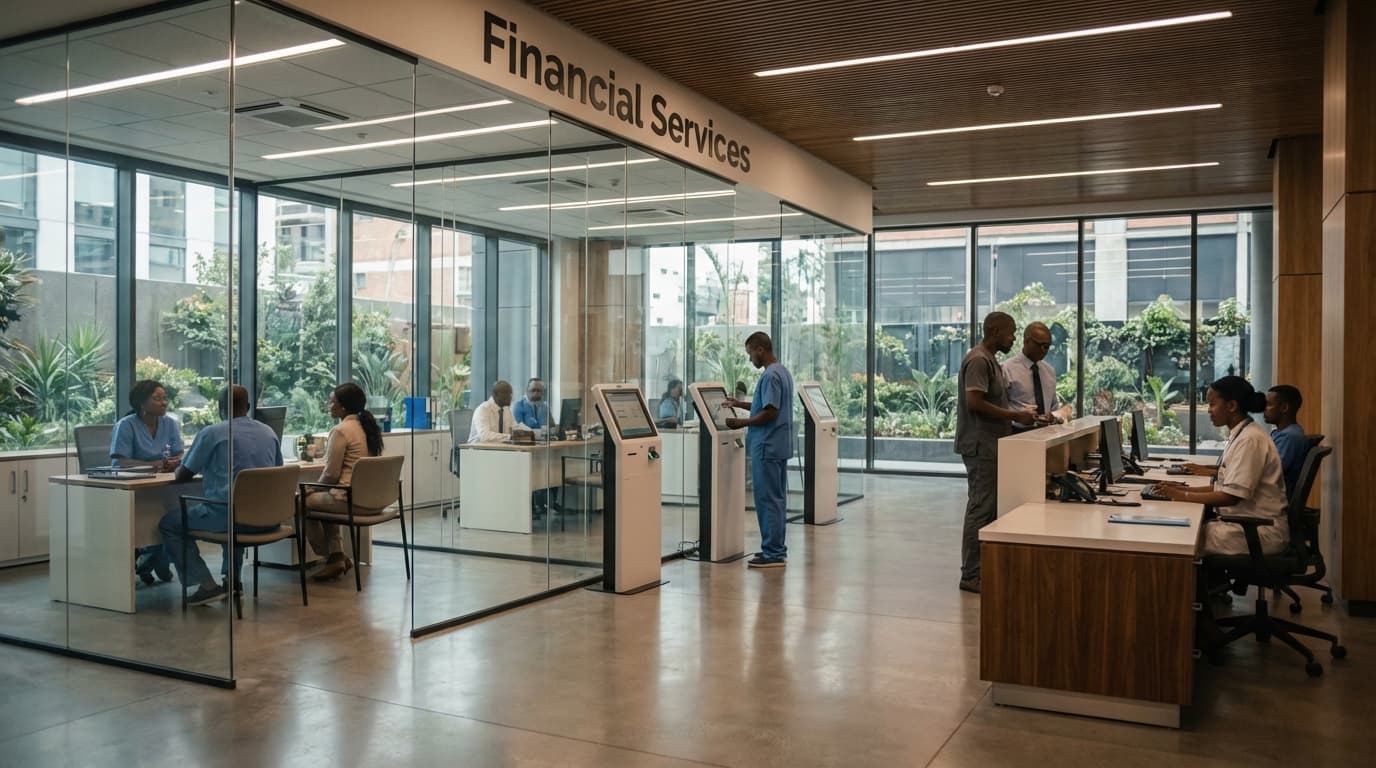
Medical Equipment Financing in Algeria
Engineering Excellence & Technical Support
Leasing and financing solutions for medical equipment High-standard technical execution following OEM protocols and local regulatory frameworks.
Flexible Financing Structures
We offer adaptable medical equipment financing solutions tailored to the specific needs and cash flow cycles of Algerian healthcare providers, including leasing, term loans, and sale-and-leaseback options for new and pre-owned equipment.
Streamlined Application Process
Our dedicated team simplifies the financing journey with a fast-tracked, digital-first application process designed to minimize paperwork and accelerate approvals, allowing Algerian hospitals and clinics to acquire essential medical technology promptly.
Competitive Interest Rates & Terms
Leveraging our deep understanding of the Algerian market and strong relationships with financial institutions, we secure competitive interest rates and flexible repayment terms to optimize the total cost of ownership for your medical equipment investments.
What Is Medical Equipment Financing In Algeria?
Medical Equipment Financing in Algeria refers to a specialized financial service designed to provide healthcare providers with the capital necessary to acquire, upgrade, or replace essential medical equipment. This financing mechanism typically involves a lender providing funds to a borrower, who then uses these funds to purchase specific medical assets. The equipment itself often serves as collateral for the loan, mitigating risk for the lender. The service is structured to accommodate the unique financial lifecycle and operational demands of healthcare institutions, acknowledging the high cost and rapid obsolescence of advanced medical technology. It aims to improve access to state-of-the-art diagnostic, therapeutic, and surgical tools, thereby enhancing patient care quality and operational efficiency within the Algerian healthcare sector. Key components include loan origination, asset assessment, disbursement, and ongoing repayment structures, often tailored to the cash flow patterns of medical practices and facilities.
| Financing Type | Description | Key Features for Healthcare Providers |
|---|---|---|
| Leasing (Operating & Finance) | A contract where the provider 'rents' equipment for a fixed period, with options to purchase at the end of the term (finance lease) or return it (operating lease). | Preserves capital, predictable monthly payments, access to newer technology through periodic upgrades (operating lease), potential tax benefits. |
| Term Loans | A lump sum loan repaid over a fixed period with interest, typically secured by the equipment purchased. | Full ownership of the asset, potential for lower overall cost compared to leasing if held for the asset's lifespan, flexibility in equipment utilization. |
| Revenue-Based Financing | Repayment is tied to a percentage of the facility's revenue, offering flexibility during periods of lower income. | Mitigates cash flow strain, particularly beneficial for practices with variable patient volumes or reimbursement cycles. |
| Equipment Refinancing | Obtaining new financing to pay off existing equipment loans, potentially securing better terms or lower interest rates. | Reduces debt burden, improves cash flow, consolidates existing financing for easier management. |
Key Stakeholders and Use Cases of Medical Equipment Financing in Algeria
- Hospitals (Public and Private): Requiring large-scale diagnostic imaging systems (MRI, CT scanners), surgical suites, intensive care unit (ICU) equipment, and laboratory analyzers.
- Clinics and Medical Centers: Seeking to acquire specialized equipment for cardiology, ophthalmology, dermatology, physiotherapy, and diagnostic procedures.
- Diagnostic Laboratories: Needing advanced analytical instruments, automated sample processing systems, and genetic sequencing equipment.
- Radiology and Imaging Centers: Investing in cutting-edge ultrasound, X-ray, mammography, and interventional radiology equipment.
- Dental Practices: Financing dental chairs, X-ray machines, intraoral scanners, and sterilization equipment.
- Surgical Centers: Acquiring laparoscopic instruments, anesthesia machines, electrosurgical units, and patient monitoring systems.
- Research Institutions: Procuring specialized research-grade equipment, microscopes, and analytical tools for medical studies.
- Emerging Healthcare Startups: Securing initial capital for essential diagnostic and treatment equipment to establish operations.
- Upgrading Existing Infrastructure: Replacing outdated or inefficient equipment to comply with evolving standards and improve diagnostic accuracy or treatment efficacy.
- Expansion of Services: Financing new equipment to introduce novel medical services or expand the capacity of existing ones.
Who Needs Medical Equipment Financing In Algeria?
Medical equipment financing in Algeria is crucial for a variety of healthcare providers and institutions seeking to acquire, upgrade, or expand their medical technology. This financial solution allows organizations to access state-of-the-art equipment without the burden of immediate, large capital outlays, thereby improving patient care, operational efficiency, and overall service quality. The demand for such financing stems from the continuous evolution of medical technology and the increasing need for advanced diagnostic, therapeutic, and surgical tools.
| Target Customer Segment | Key Departments Benefiting | Typical Equipment Needs |
|---|---|---|
| Public Hospitals | Emergency, Surgery, Radiology, Cardiology, Oncology, Pediatrics, Intensive Care Units (ICU) | MRI machines, CT scanners, advanced surgical tools, ventilators, patient monitoring systems, X-ray machines, defibrillators |
| Private Clinics | Plastic Surgery, Dermatology, Gynecology, Urology, Cardiology, Orthopedics, Diagnostics | Laser treatment devices, endoscopes, advanced imaging equipment, specialized surgical instruments, ultrasound machines |
| Diagnostic Laboratories | Clinical Pathology, Hematology, Biochemistry, Microbiology, Genetic Testing | Automated analyzers, PCR machines, microscopes, centrifuges, DNA sequencers |
| Imaging Centers | Radiology, Diagnostic Imaging | MRI scanners, CT scanners, digital X-ray systems, mammography units, ultrasound devices |
| Specialized Medical Practices (e.g., Dentistry) | Dental Surgery, Orthodontics, Prosthodontics | Dental chairs, X-ray units (intraoral and panoramic), autoclaves, CAD/CAM systems, dental lasers |
| Research & Education | Biomedical Research, Medical Training | Spectrophotometers, centrifuges, cell culture incubators, specialized laboratory equipment, simulation devices |
Target Customers and Departments for Medical Equipment Financing in Algeria
- {"title":"Public Hospitals and Healthcare Centers","description":"These are primary beneficiaries, often operating with budget constraints. Financing allows them to modernize facilities and offer a wider range of specialized treatments, improving access to care for the general population."}
- {"title":"Private Clinics and Hospitals","description":"Driven by profit and competition, private entities use financing to invest in cutting-edge equipment that attracts more patients and allows for the provision of premium services. This includes specialized centers for cardiology, oncology, orthopedics, and diagnostic imaging."}
- {"title":"Diagnostic Laboratories and Imaging Centers","description":"Facilities focused on laboratory testing and medical imaging (X-ray, MRI, CT scans, ultrasound) require significant investment in sophisticated machinery. Financing makes acquiring the latest generation of these devices feasible."}
- {"title":"Specialized Medical Practices","description":"Individual practitioners or small groups specializing in areas like ophthalmology, dentistry, dermatology, physiotherapy, and rehabilitation can finance specific equipment to enhance their niche services."}
- {"title":"Research and Educational Institutions","description":"Universities and medical research centers often need advanced equipment for training medical professionals and conducting groundbreaking research. Financing enables them to stay at the forefront of medical innovation."}
- {"title":"Non-Governmental Organizations (NGOs) and Charitable Healthcare Providers","description":"Organizations dedicated to providing healthcare in underserved areas can leverage financing to acquire essential medical equipment, expanding their reach and impact."}
Medical Equipment Financing Process In Algeria
The medical equipment financing process in Algeria involves a structured workflow designed to facilitate the acquisition of essential medical technologies for healthcare providers. This process typically begins with an inquiry from a healthcare institution (hospital, clinic, laboratory) seeking to purchase new or upgrade existing medical equipment. Financial institutions, such as banks, specialized leasing companies, or government-backed funds, then guide the client through a series of steps including needs assessment, application submission, credit assessment, proposal generation, legal documentation, and ultimately, the disbursement of funds or equipment. The goal is to ensure the financial viability of the project and the suitability of the equipment for the healthcare provider's needs, while adhering to Algerian financial regulations and industry standards.
| Stage | Description | Key Actors Involved | Typical Documentation/Deliverables |
|---|---|---|---|
| Inquiry & Initial Consultation | Healthcare provider expresses interest in financing medical equipment. Initial discussions to understand needs and available financing options. | Healthcare Provider (Client), Financial Institution (Bank, Leasing Company) | Expression of Interest (EOI), Preliminary Needs List |
| Needs Assessment & Equipment Specification | Detailed understanding of the specific medical equipment required, including technical specifications, supplier quotes, and justifications for the purchase. | Healthcare Provider (Client), Equipment Supplier, Financial Institution (Technical Advisor, if applicable) | Detailed Equipment List, Technical Specifications, Supplier Quotes, Justification Report |
| Application & Information Gathering | Client formally applies for financing. Submission of comprehensive financial and operational data. | Healthcare Provider (Client), Financial Institution (Loan Officer, Underwriter) | Financing Application Form, Audited Financial Statements, Business Plan, Legal Registration Documents |
| Credit Assessment & Risk Analysis | Financial institution evaluates the client's creditworthiness, financial stability, and the risk associated with the financing request. | Financial Institution (Credit Analysts, Risk Management Department) | Credit Report, Financial Ratio Analysis, Cash Flow Projections, Risk Assessment Report |
| Financial Proposal & Structuring | Development of a tailored financing proposal, including loan amount, interest rates, repayment schedule, and any collateral requirements. Discussion and agreement on financing structure. | Financial Institution (Loan Officer, Relationship Manager), Healthcare Provider (Client) | Financing Proposal, Term Sheet, Loan Offer |
| Legal & Regulatory Compliance | Ensuring all aspects of the financing comply with Algerian laws, banking regulations, and any specific requirements for medical equipment financing. | Financial Institution (Legal Department), Healthcare Provider (Client, Legal Counsel), Relevant Government Agencies (if applicable) | Legal Due Diligence, Compliance Checks, Regulatory Approvals (if required) |
| Contract Negotiation & Signing | Final negotiation of terms and conditions of the financing agreement. Formal signing of the loan or lease agreement. | Financial Institution (Legal Department, Relationship Manager), Healthcare Provider (Client, Legal Counsel) | Loan Agreement/Lease Agreement, Promissory Notes, Guarantees (if applicable) |
| Disbursement & Equipment Delivery | Funds are disbursed to the equipment supplier or directly to the client as per the agreement. The client receives and installs the medical equipment. | Financial Institution (Disbursement Department), Healthcare Provider (Client), Equipment Supplier | Disbursement Instructions, Proof of Delivery, Installation Confirmation |
| Post-Disbursement Monitoring & Repayment | Ongoing monitoring of loan performance and repayment. Regular communication between the financial institution and the client. | Financial Institution (Loan Servicing Department, Relationship Manager), Healthcare Provider (Client) | Repayment Schedules, Account Statements, Performance Reports (if applicable) |
Key Stages in the Medical Equipment Financing Process in Algeria
- Inquiry & Initial Consultation
- Needs Assessment & Equipment Specification
- Application & Information Gathering
- Credit Assessment & Risk Analysis
- Financial Proposal & Structuring
- Legal & Regulatory Compliance
- Contract Negotiation & Signing
- Disbursement & Equipment Delivery
- Post-Disbursement Monitoring & Repayment
Medical Equipment Financing Cost In Algeria
Financing medical equipment in Algeria involves a complex interplay of factors that influence costs. These costs are typically presented in Algerian Dinars (DZD) and can vary significantly based on the type, sophistication, and condition of the equipment, as well as the financial institution's assessment of risk. Key pricing factors include the equipment's purchase price, financing tenor (loan duration), interest rates, administrative fees, insurance premiums, and potential collateral requirements. New, high-end diagnostic machines will naturally command higher financing costs than used, simpler treatment devices. The economic climate in Algeria, including inflation rates and the central bank's monetary policy, also plays a crucial role in determining prevailing interest rates. Financial institutions will assess the borrower's creditworthiness, including their financial history, revenue streams, and the liquidity of any offered collateral, which will directly impact the interest rate and overall financing cost. For smaller clinics or individual practitioners, unsecured loans might have higher interest rates due to increased perceived risk.
| Equipment Category | Estimated Financing Cost Range (Annualized % of Equipment Value) | Typical Financing Tenor (Years) |
|---|---|---|
| Basic Diagnostic Equipment (e.g., X-ray, Ultrasound - Entry Level) | 15% - 25% | 3 - 7 |
| Advanced Diagnostic Imaging (e.g., MRI, CT Scanners) | 18% - 30% | 5 - 10 |
| Surgical Equipment (Standard) | 12% - 22% | 3 - 6 |
| Specialized Surgical Equipment (Robotic, etc.) | 20% - 35% | 5 - 10 |
| Laboratory Analyzers (Basic) | 14% - 24% | 3 - 7 |
| Laboratory Analyzers (High Throughput/Specialized) | 17% - 28% | 5 - 8 |
| Patient Monitoring Systems | 13% - 23% | 3 - 5 |
| Dental Equipment | 16% - 26% | 3 - 7 |
| Used Medical Equipment | 20% - 40% (often with shorter tenors and higher upfront fees) | 2 - 5 |
Key Factors Influencing Medical Equipment Financing Costs in Algeria
- Equipment Value: The outright purchase price of the medical equipment is the primary determinant of the loan amount.
- Financing Tenor: Longer loan repayment periods generally lead to higher total interest paid, though monthly installments may be lower.
- Interest Rates: These are influenced by market conditions, central bank policies, and the lender's risk assessment.
- Administrative Fees: Lenders often charge upfront fees for processing, appraisal, and documentation.
- Insurance: Comprehensive insurance for the financed equipment is usually mandatory and adds to the overall cost.
- Collateral: The type and value of collateral offered can significantly impact interest rates and loan approval.
- Borrower's Creditworthiness: A strong financial history and proven repayment capacity will likely result in more favorable financing terms.
- Equipment Type and Age: New, technologically advanced equipment typically incurs higher financing costs than used or simpler models.
- Inflation Rates: High inflation can lead to higher interest rates as lenders seek to protect the real value of their capital.
Affordable Medical Equipment Financing Options
Securing affordable medical equipment is crucial for healthcare providers aiming to expand services, upgrade technology, and improve patient care without straining their financial resources. This often involves exploring various financing options that can significantly reduce upfront costs and manage cash flow effectively. Understanding value bundles and implementing smart cost-saving strategies are key components of a successful financing plan.
| Strategy/Bundle | Description | Benefit |
|---|---|---|
Key Financing Options for Medical Equipment
- {"title":"Leasing Agreements","description":"Rather than purchasing outright, leasing allows providers to use equipment for a set period with fixed monthly payments. This is often more affordable upfront and allows for easier upgrades to newer technology at the end of the lease term."}
- {"title":"Equipment Loans","description":"Traditional loans from banks or specialized lenders provide capital to purchase equipment. While requiring a down payment and interest, they offer ownership of the asset once paid off."}
- {"title":"Sale-Leaseback","description":"Healthcare providers can sell existing, owned equipment to a financing company and then lease it back. This injects immediate capital into the business for other needs while retaining the use of the equipment."}
- {"title":"Municipal Bonds","description":"For non-profit organizations or public healthcare systems, municipal bonds can offer tax-exempt financing at lower interest rates for significant equipment purchases."}
- {"title":"Grants and Subsidies","description":"Government agencies, foundations, and other organizations sometimes offer grants or subsidies specifically for the purchase of medical equipment, particularly for underserved communities or for specialized technologies."}
Verified Providers In Algeria
In Algeria, the healthcare landscape is evolving, and ensuring access to reliable and high-quality medical services is paramount. When seeking healthcare, especially for specialized treatments or overseas medical needs, identifying 'Verified Providers' is crucial. Franance Health stands out as a leading entity that rigorously vets and accredits healthcare facilities and professionals. This verification process is not merely a formality; it's a deep dive into operational standards, clinical expertise, patient safety protocols, and ethical practices. Choosing Franance Health-credentialed providers means opting for transparency, accountability, and a commitment to excellent patient care.
| Aspect Verified | Franance Health's Assurance | Benefit to Patients |
|---|---|---|
| Clinical Competence | Assessment of qualifications, experience, and ongoing professional development of medical staff. | Access to skilled and knowledgeable healthcare professionals. |
| Facility Standards | Evaluation of infrastructure, equipment, hygiene, and infection control measures. | Safe and well-equipped medical environment. |
| Patient Rights and Ethics | Confirmation of adherence to ethical guidelines, informed consent, and patient confidentiality. | Respectful and transparent patient treatment. |
| Operational Efficiency | Review of administrative processes, appointment systems, and patient flow. | Smoother and more efficient healthcare experience. |
| Quality Improvement | Commitment to continuous monitoring and enhancement of services. | Assurance of evolving and improving healthcare standards. |
Why Franance Health Credentials Matter for Verified Providers in Algeria:
- Rigorous Accreditation Standards: Franance Health adheres to internationally recognized benchmarks for healthcare quality and safety.
- Expert Review and Audits: Providers undergo thorough assessments by medical experts to ensure compliance and best practices.
- Patient Safety Focus: A strong emphasis is placed on protocols designed to minimize risks and ensure patient well-being.
- Ethical Practice Assurance: Verification confirms that providers operate with integrity and prioritize patient rights.
- Access to Specialized Care: Franance Health often partners with facilities offering advanced treatments and cutting-edge medical technologies.
- Transparency and Trust: Credentials offer patients peace of mind, knowing they are choosing reputable and dependable healthcare services.
- Global Recognition: Franance Health credentials can facilitate easier navigation of international healthcare systems and insurance processes.
Scope Of Work For Medical Equipment Financing
This Scope of Work (SOW) outlines the requirements for a medical equipment financing project. It details the technical deliverables expected from the financing provider, along with standard specifications to ensure the procured equipment meets necessary clinical and operational standards. This document serves as a foundational element for the Request for Proposal (RFP) and subsequent contract.
| Technical Deliverable | Description | Standard Specification / Requirement | Verification Method |
|---|---|---|---|
| Equipment Procurement & Delivery | The financing provider will facilitate the procurement and delivery of specified medical equipment to designated hospital facilities. | Equipment must be sourced from approved manufacturers and adhere to manufacturer's standard specifications. Delivery timelines to be mutually agreed upon in the contract. | Delivery manifests, packing lists, and manufacturer's certificates of origin. |
| Installation & Commissioning Support | The financing provider will ensure that installation and commissioning of the equipment are supported and documented. | Manufacturer-certified technicians must perform installation. Commissioning reports confirming full functionality and calibration are required. | Installation reports, commissioning certificates, and signed acceptance forms. |
| Training Program | Adequate training for clinical and technical staff on the operation and maintenance of the procured equipment. | Comprehensive training programs developed and delivered by the manufacturer or an authorized training partner. Training records for all attendees. | Training manuals, attendance logs, and post-training competency assessments. |
| Maintenance & Service Plan | Provision of a comprehensive maintenance and service plan for the financed equipment. | Service Level Agreements (SLAs) detailing response times, preventive maintenance schedules, and guaranteed uptime. Inclusion of all required spare parts. | Signed Service Level Agreements (SLAs), maintenance logs, and proof of spare parts availability. |
| Warranty Management | Management and administration of manufacturer warranties. | Clear documentation of warranty periods, coverage, and claims process. Proactive notification of warranty expiry. | Warranty certificates, claims documentation, and warranty expiry reports. |
| Asset Tagging & Inventory Management | Implementation of a robust system for asset tagging and inventory management. | Unique asset tags affixed to each piece of equipment. Integration with existing hospital inventory management systems where feasible. | Asset registers, photographs of tagged equipment, and inventory system reports. |
| Technical Documentation & Manuals | Provision of all relevant technical documentation and user manuals. | Complete set of user manuals, service manuals, schematics, and safety guidelines in a readily accessible format (digital and/or hard copy). | Review of provided documentation against equipment specifications. |
| Regulatory Compliance Documentation | Ensuring all procured equipment meets relevant regulatory standards. | Certifications from relevant regulatory bodies (e.g., FDA, CE, local health authorities). Evidence of adherence to safety and performance standards. | Copies of certifications, safety test reports, and performance validation documents. |
| Technology Refresh/Upgrade Plan (Optional) | Consideration for future technology upgrades or replacements. | Framework for potential future financing or leasing arrangements for updated equipment, based on market advancements. | Discussion and agreement on potential future upgrade pathways. |
Key Objectives of Medical Equipment Financing
- Acquire state-of-the-art medical equipment to enhance patient care capabilities.
- Ensure financial sustainability through competitive financing terms and predictable payment schedules.
- Minimize operational downtime by procuring reliable and well-supported equipment.
- Align equipment acquisition with strategic growth plans and technological advancements.
- Maintain compliance with all relevant healthcare regulations and standards.
Service Level Agreement For Medical Equipment Financing
This Service Level Agreement (SLA) outlines the agreed-upon response times for technical support and uptime guarantees for medical equipment financed by [Financing Company Name] through our authorized service partners. This SLA aims to ensure minimal disruption to patient care by providing timely assistance and reliable equipment operation.
| Service Level | Description | Target Time / Guarantee | Applicable Equipment Categories |
|---|---|---|---|
| Critical Equipment Failure Response Time | Initial response and diagnosis for life-support or critical patient care equipment failure. | Within 2 business hours of reported incident. | MRI, CT Scanners, Ventilators, Dialysis Machines, Anesthesia Machines |
| High Priority Equipment Failure Response Time | Initial response and diagnosis for essential diagnostic or treatment equipment failure. | Within 4 business hours of reported incident. | X-Ray Machines, Ultrasound Machines, Endoscopes, ECG Machines |
| Standard Equipment Failure Response Time | Initial response and diagnosis for non-critical or routine equipment issues. | Within 8 business hours of reported incident. | Patient Monitors (non-critical), Infusion Pumps (standard), Sterilizers, Lab Equipment (non-critical) |
| Critical Equipment Uptime Guarantee | Minimum percentage of time critical life-support or patient care equipment is operational. | 99.5% uptime (excluding scheduled maintenance). | MRI, CT Scanners, Ventilators, Dialysis Machines, Anesthesia Machines |
| High Priority Equipment Uptime Guarantee | Minimum percentage of time essential diagnostic or treatment equipment is operational. | 98.0% uptime (excluding scheduled maintenance). | X-Ray Machines, Ultrasound Machines, Endoscopes, ECG Machines |
| Standard Equipment Uptime Guarantee | Minimum percentage of time non-critical or routine equipment is operational. | 95.0% uptime (excluding scheduled maintenance). | Patient Monitors (non-critical), Infusion Pumps (standard), Sterilizers, Lab Equipment (non-critical) |
Key Service Level Objectives
- Response Times: Defines the maximum time allowed for a service technician to acknowledge and begin addressing a reported equipment issue.
- Uptime Guarantees: Specifies the minimum percentage of time the financed medical equipment is expected to be operational and available for use.
- Scope: This SLA applies to all medical equipment financed under agreements with [Financing Company Name] and serviced by designated, approved third-party vendors.
Frequently Asked Questions

Ready when you are
Let's scope your Medical Equipment Financing in Algeria project in Algeria.

Scaling healthcare logistics and technical systems across the entire continent.