
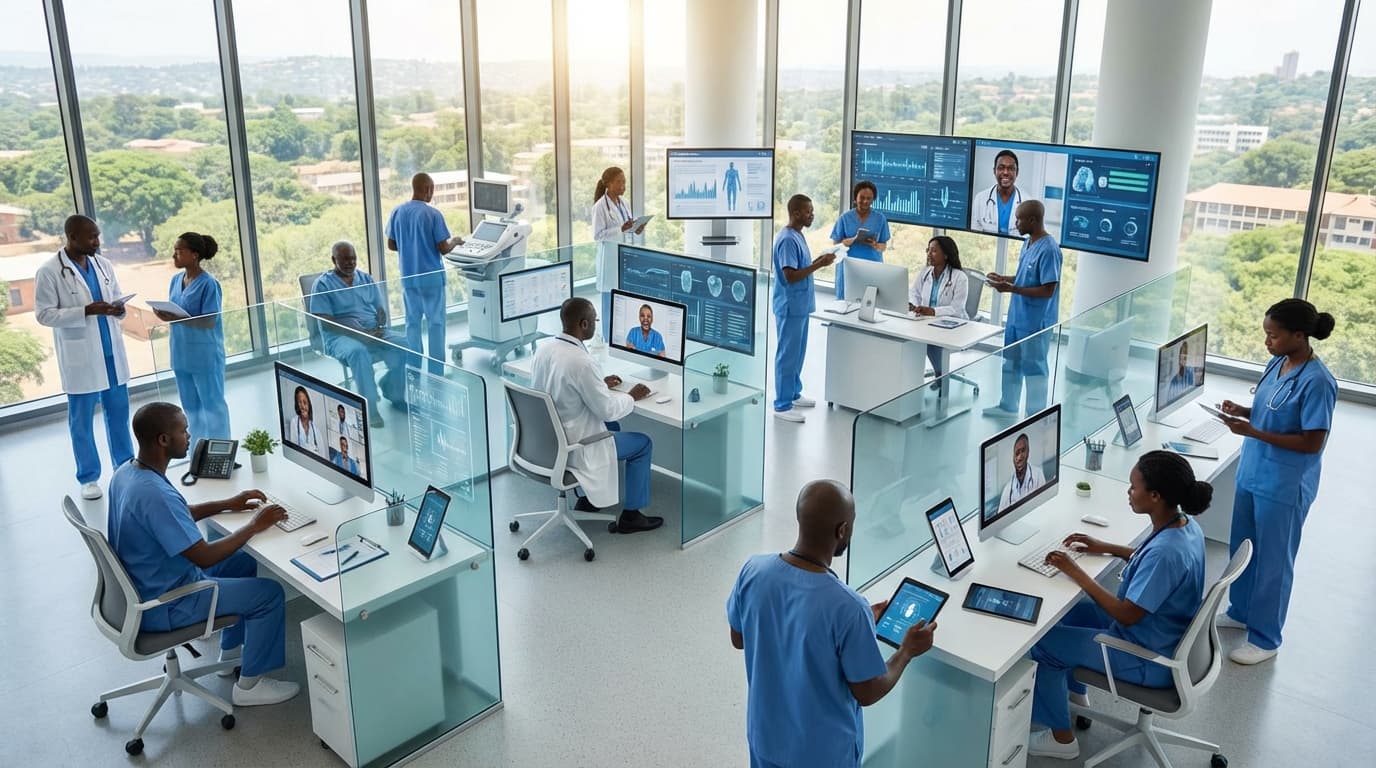
PACS/RIS Migration & Integration in Algeria
Engineering Excellence & Technical Support
Data migration, interoperability and workflow integration for imaging IT. High-standard technical execution following OEM protocols and local regulatory frameworks.
Seamless PACS/RIS Cloud Migration & Modernization
Successfully migrated legacy PACS/RIS systems to a scalable, cloud-based infrastructure for Algerian healthcare institutions. This included data archival, de-duplication, and secure data transfer, ensuring uninterrupted clinical workflow and enhanced accessibility.
Interoperable Healthcare Ecosystem Integration
Engineered robust integration solutions for PACS/RIS with existing HIS, LIS, and EMR systems across Algerian hospitals. Utilized HL7, DICOM standards, and custom APIs to facilitate seamless data exchange, improving diagnostic accuracy and patient care coordination.
Advanced Security & Regulatory Compliance
Implemented comprehensive security measures and ensured strict adherence to Algerian data privacy regulations (e.g., Decree No. 15-227) during PACS/RIS migration and integration. This included data encryption, access controls, audit trails, and disaster recovery planning for robust data protection.
What Is Pacs/ris Migration & Integration In Algeria?
PACS/RIS migration and integration in Algeria refers to the process of transferring, consolidating, and interoperating Picture Archiving and Communication Systems (PACS) and Radiology Information Systems (RIS) within healthcare facilities. This encompasses the secure movement of medical imaging data (DICOM, etc.) and associated patient and radiologic reports, along with the establishment of seamless data flow and workflow harmonization between disparate or legacy systems and newer, standardized platforms. The primary objective is to enhance data accessibility, improve workflow efficiency, ensure data integrity, and facilitate advanced diagnostic and research capabilities within the Algerian healthcare landscape. This service is critical for healthcare providers facing limitations with outdated, fragmented, or incompatible imaging IT infrastructure, aiming to leverage modern technologies for improved patient care and operational management.
| Who Needs PACS/RIS Migration & Integration? | Typical Use Cases |
|---|---|
| Hospitals and Clinics in Algeria: Particularly those with legacy PACS/RIS installations that are no longer supported, inefficient, or incompatible with current diagnostic modalities. | Consolidation of imaging data from multiple sites or departments into a unified enterprise-wide PACS for improved access and management. |
| Healthcare Institutions undergoing IT infrastructure upgrades or digital transformation initiatives. | Integration of a new RIS with an existing PACS to streamline radiologic workflow, from patient registration and scheduling to report generation and archiving. |
| Facilities aiming to adopt advanced imaging technologies or AI-powered diagnostic tools that require robust and integrated imaging data repositories. | Migrating from on-premise PACS/RIS solutions to cloud-based platforms for enhanced scalability, accessibility, and reduced IT overhead. |
| Radiology departments seeking to improve operational efficiency, reduce radiologist burnout, and enhance diagnostic accuracy through optimized workflows and seamless data access. | Establishing interoperability between PACS/RIS and the Electronic Medical Record (EMR)/Hospital Information System (HIS) to provide clinicians with immediate access to imaging studies and reports within the patient's comprehensive medical record. |
| Healthcare networks or regional health authorities looking to standardize imaging IT across multiple affiliated facilities for centralized management and improved data sharing. | Implementing a Vendor-Neutral Archive (VNA) as part of the migration strategy to decouple imaging data from specific PACS vendors, enabling greater flexibility and long-term data preservation. |
| Organizations facing challenges with data storage limitations, system performance degradation, or high maintenance costs associated with outdated PACS/RIS. | Enhancing disaster recovery and business continuity for critical imaging data by migrating to more resilient and redundant storage solutions. |
Key Components of PACS/RIS Migration & Integration
- Data Extraction and Transformation: Extracting data from legacy PACS/RIS, converting it to interoperable formats (e.g., DICOM, HL7), and preparing it for ingestion into the target system.
- System Deployment and Configuration: Installing and configuring new PACS/RIS platforms, ensuring compatibility with existing IT infrastructure and clinical workflows.
- Data Migration and Validation: Transferring extracted data to the new system and performing rigorous validation to ensure data integrity and completeness.
- Interoperability Implementation: Establishing secure connections and data exchange protocols (e.g., HL7, FHIR) with other hospital information systems (HIS), EMRs, and ancillary departmental systems.
- Workflow Optimization: Redesigning and implementing clinical workflows to leverage the capabilities of the integrated PACS/RIS, minimizing manual intervention and reducing turnaround times.
- User Training and Support: Providing comprehensive training to radiologists, technologists, and administrative staff on the new system and offering ongoing technical support.
- Security and Compliance: Implementing robust security measures to protect sensitive patient data and ensuring compliance with relevant Algerian and international data privacy regulations (e.g., GDPR, local health data protection laws).
- Disaster Recovery and Business Continuity Planning: Establishing strategies to ensure data availability and system resilience in case of unforeseen events.
Who Needs Pacs/ris Migration & Integration In Algeria?
In Algeria's evolving healthcare landscape, PACS (Picture Archiving and Communication System) and RIS (Radiology Information System) migration and integration are becoming increasingly critical. These systems are fundamental to modern radiology departments, enabling efficient management of medical images, patient data, and radiologist workflows. The need for these solutions extends beyond simply upgrading technology; it's about enhancing patient care, improving operational efficiency, and ensuring compliance with international standards.
| Target Customer Segment | Key Departments Benefiting | Primary Needs Addressed | Examples of Specific Institutions |
|---|---|---|---|
| Large Public Hospitals | Radiology, Cardiology, Neurology, Oncology, Emergency Department, IT Department, Administration | Centralized image management, improved diagnostic turnaround times, efficient data archiving, compliance with national health records, reduced paper usage, interoperability with other hospital information systems (HIS). | CHU (Centres Hospitalo-Universitaires) like CHU Mustapha Pacha (Algiers), CHU Oran, CHU Constantine. |
| Private Hospitals & Clinics | Radiology, Outpatient Services, Surgery, Internal Medicine, Administration | Enhanced patient experience through faster reporting, improved workflow efficiency, competitive advantage through advanced technology, seamless integration with existing HIS/EMR, robust security and data privacy. | Private clinics and hospitals in major cities such as Algiers, Oran, Annaba, Constantine. |
| Specialized Diagnostic Imaging Centers | Radiology (all modalities), Cardiology, Neurology, Oncology Clinics | Optimized image acquisition and storage, efficient radiologist workload distribution, remote access for referring physicians, advanced imaging analysis tools, scalability to accommodate growing patient volumes. | Private imaging centers focusing on MRI, CT, mammography, and ultrasound services. |
| University Hospitals & Research Institutions | Radiology, Research Departments, Medical Education, IT | Support for clinical research through image data access and analysis, facilitated medical training, standardization of imaging protocols, integration with research databases, long-term data archiving for historical analysis. | Faculties of Medicine and affiliated teaching hospitals within Algerian universities. |
| Government Healthcare Initiatives | Ministry of Health, National Health Agencies, Public Health Programs | Nationwide standardization of radiology services, data collection for public health surveillance, implementation of national imaging databases, remote consultation capabilities for underserved areas, quality control and accreditation. | Projects aiming to modernize the national healthcare infrastructure and improve access to specialized medical services. |
Target Customers and Departments for PACS/RIS Migration & Integration in Algeria
- Hospitals (Public and Private)
- Diagnostic Imaging Centers
- Clinics with Advanced Imaging Capabilities
- University Hospitals and Research Institutions
- Government Healthcare Initiatives
Pacs/ris Migration & Integration Process In Algeria
The migration and integration of Picture Archiving and Communication Systems (PACS) and Radiology Information Systems (RIS) in Algeria is a complex process requiring careful planning and execution. It involves moving existing patient imaging data and associated information from legacy systems to new, often cloud-based or on-premise, integrated platforms. This transition aims to improve efficiency, enhance diagnostic capabilities, and ensure better data management for healthcare providers. The workflow can be broadly categorized into several phases, from the initial inquiry to the final go-live and post-implementation support.
| Phase | Key Activities | Deliverables | Algerian Context Considerations |
|---|---|---|---|
| Inquiry & Initial Assessment | Needs analysis, defining requirements, budget estimation, stakeholder identification. | Requirements document, preliminary budget, stakeholder map. | Understanding existing infrastructure limitations, regulatory compliance (e.g., CNRA data privacy), local IT expertise availability. |
| Vendor Selection & Proposal | RFP issuance, vendor evaluation, solution demonstrations, contract negotiation. | Selected vendor, signed contract, project scope definition. | Evaluating vendors with local support capabilities, understanding Algerian import/export regulations for IT hardware/software, ensuring vendor's experience in similar regional markets. |
| Planning & Design | Detailed project plan, system architecture design, data migration strategy, integration plan, security plan. | Project plan, architectural diagrams, data migration plan, integration specification, security policy. | Considering specific Algerian healthcare network infrastructure, bandwidth limitations, data residency requirements, interoperability standards relevant to local health authorities. |
| Infrastructure Setup & Configuration | Hardware/software procurement & installation, network configuration, server setup, system customization. | Operational infrastructure, configured PACS/RIS software. | Navigating customs for hardware import, potential delays in local procurement, ensuring compatibility with local power grids and environmental conditions. |
| Data Migration | Data extraction, cleansing, transformation, validation, loading into new system. | Migrated and validated dataset. | Challenges with legacy data formats, data volume and complexity, need for specialized tools for Arabic language support in data fields, potential data loss during transfer, ensuring patient identity mapping accuracy. |
| Integration & Testing | HL7/DICOM interface development, EHR/HIS integration, functional testing, performance testing, UAT. | Integrated systems, test reports, UAT sign-off. | Ensuring interoperability with existing Algerian HIS/EHR systems, adherence to local standards for medical data exchange, potential resistance from different departmental IT teams to integrate. |
| User Training | Development of training materials, conducting training sessions, user support. | Trained staff, training manuals. | Language barriers (French/Arabic), tailoring training for varying technical literacy levels, availability of local trainers, ensuring consistent training across different geographic locations within Algeria. |
| Go-Live & Deployment | System deployment, cutover strategy execution, go-live support. | Live PACS/RIS system, post-go-live support plan. | Phased deployment to manage risk, potential for network disruptions, need for on-site support teams to be readily available across different regions, contingency planning for unexpected issues. |
| Post-Implementation Support & Optimization | Ongoing technical support, system monitoring, performance tuning, user feedback incorporation, system updates. | Stable and optimized system, support tickets resolved, system performance reports. | Establishing long-term support agreements with vendors, ensuring remote support capabilities for geographically dispersed facilities, continuous training on new features, adapting to evolving Algerian healthcare policies. |
PACS/RIS Migration & Integration Workflow in Algeria
- {"title":"Phase 1: Inquiry and Initial Assessment","description":"This is the starting point where healthcare institutions in Algeria identify the need for a PACS/RIS upgrade or new implementation. It involves initial research, understanding current challenges, and defining preliminary requirements."}
- {"title":"Phase 2: Vendor Selection and Proposal","description":"Potential vendors are identified, and Requests for Proposals (RFPs) are issued. Vendors submit detailed proposals outlining their solutions, migration strategies, integration capabilities, costs, and timelines. This phase includes vendor demonstrations and site visits."}
- {"title":"Phase 3: Planning and Design","description":"Once a vendor is selected, a detailed project plan is developed. This includes defining the scope of work, system architecture, data migration strategy, integration points with existing hospital IT systems (e.g., EHR/HIS), security protocols, and user training schedules."}
- {"title":"Phase 4: Infrastructure Setup and Configuration","description":"The necessary hardware and software infrastructure are procured and installed. This includes servers, storage, network upgrades, and the installation and configuration of the new PACS/RIS software. Any required cloud infrastructure is provisioned."}
- {"title":"Phase 5: Data Migration","description":"This is a critical and often time-consuming phase. Existing data from legacy PACS/RIS systems is extracted, cleansed, anonymized (if necessary), converted, and then loaded into the new system. This requires careful validation to ensure data integrity and completeness."}
- {"title":"Phase 6: Integration and Testing","description":"The new PACS/RIS is integrated with other hospital systems. This involves establishing data exchange protocols (e.g., HL7, DICOM). Rigorous testing is conducted, including unit testing, integration testing, and user acceptance testing (UAT), to ensure all functionalities work as expected and data flows correctly."}
- {"title":"Phase 7: User Training","description":"Healthcare professionals (radiologists, technicians, administrators) receive comprehensive training on how to use the new PACS/RIS. Training programs are tailored to different user roles and may include hands-on sessions and documentation."}
- {"title":"Phase 8: Go-Live and Deployment","description":"The new PACS/RIS system is officially launched. This usually involves a phased rollout or a cutover from the old system to the new one. During this phase, the project team provides intensive on-site support to address any immediate issues."}
- {"title":"Phase 9: Post-Implementation Support and Optimization","description":"After go-live, ongoing support is provided to address user queries, resolve bugs, and perform system maintenance. Performance monitoring and optimization are carried out to ensure the system operates efficiently and meets evolving needs."}
Pacs/ris Migration & Integration Cost In Algeria
Migrating and integrating Picture Archiving and Communication Systems (PACS) and Radiology Information Systems (RIS) in Algeria involves a complex cost structure influenced by various factors. The overall investment is not uniform and depends heavily on the scale of the institution, the chosen vendor, the scope of services required, and the specific technological requirements. These costs are typically discussed and quoted in Algerian Dinars (DZD) by local and international providers operating within the country.
Key pricing factors include:
- System Complexity and Scope: The size of the radiology department, the number of modalities (X-ray, CT, MRI, Ultrasound, etc.), the volume of imaging studies, and the need for advanced functionalities like AI-powered image analysis or specialized modules (e.g., cardiology PACS, mammography PACS) significantly impact costs. A larger, more complex deployment will naturally be more expensive.
- Vendor and Software Licensing: Different PACS/RIS vendors offer varying licensing models. This can include perpetual licenses, subscription-based models (SaaS), or a hybrid approach. The reputation and market position of the vendor also play a role, with established international players often commanding higher prices than local or emerging providers. Software customization and integration with existing hospital information systems (HIS) are additional cost drivers.
- Hardware and Infrastructure: This includes the cost of servers, storage solutions (SAN/NAS), networking equipment, workstations for radiologists and technicians, and potentially specialized viewing stations. The existing IT infrastructure of the hospital will influence whether upgrades or entirely new systems are needed.
- Implementation and Project Management: The cost of professional services for system installation, configuration, data migration from legacy systems, testing, and go-live support is a significant component. This also includes project management fees, training for IT staff and end-users, and change management activities.
- Data Migration: Migrating historical imaging data from old PACS or film archives to the new system can be a substantial undertaking. The volume of data, the format of the old data, and the complexity of the migration process (requiring specialized tools and expertise) will affect the cost.
- Integration with Existing Systems: Seamless integration with the hospital's Electronic Health Record (EHR) or Hospital Information System (HIS) is crucial. Developing and testing these interfaces often incurs additional development and configuration costs.
- Support and Maintenance: Post-implementation, ongoing support and maintenance agreements are essential for system uptime and updates. These annual fees typically cover technical support, software updates, bug fixes, and sometimes hardware maintenance.
- Customization and Development: If the standard PACS/RIS solution requires specific customizations or new features to meet unique Algerian healthcare regulations or hospital workflows, custom development will add to the overall cost.
- Training: Comprehensive training for radiologists, radiographers, IT staff, and administrative personnel is vital for successful adoption. The duration and depth of training will influence this cost factor.
- Local vs. International Providers: While international vendors might offer more feature-rich and globally recognized solutions, local Algerian providers might offer more competitive pricing due to lower operational overhead and a better understanding of the local market dynamics and regulations. However, the availability of specialized expertise can sometimes favor international firms.
| Cost Component | Typical Range (DZD) | Notes |
|---|---|---|
| Software Licensing (Annual/Perpetual) | 2,000,000 - 20,000,000+ | Varies significantly by vendor, user count, and features. SaaS models often have lower upfront costs but higher recurring fees. |
| Hardware (Servers, Storage, Workstations) | 5,000,000 - 30,000,000+ | Depends on the scale of the department, data volume, and required performance. Can be a one-time purchase or leased. |
| Implementation & Configuration | 3,000,000 - 25,000,000+ | Includes installation, setup, and initial configuration by vendor engineers. |
| Data Migration | 1,000,000 - 15,000,000+ | Highly dependent on the volume of historical data and the complexity of extraction/conversion. |
| Integration (HIS/EHR) | 1,000,000 - 10,000,000+ | Cost to develop and test interfaces with existing hospital systems. |
| Training | 500,000 - 5,000,000 | For IT staff, radiologists, and technicians. Can be on-site or remote. |
| Annual Support & Maintenance | 1,000,000 - 10,000,000+ | Typically 15-20% of the initial software cost per year. Covers updates, patches, and technical support. |
| Customization & Development | 2,000,000 - 15,000,000+ | If bespoke features or workflows are required. |
| Project Management | 500,000 - 5,000,000 | For managing the entire migration and integration project. |
| Contingency (10-15%) | Variable | Recommended for unforeseen issues and scope changes. |
| Total Project (Small to Medium Hospital) | 20,000,000 - 100,000,000 | Ballpark estimate for a moderate-sized department. |
| Total Project (Large Hospital/Network) | 100,000,000 - 500,000,000+ | Significant investment for large-scale deployments and complex integrations. |
Key Pricing Factors for PACS/RIS Migration & Integration in Algeria
- System Complexity & Scope
- Vendor & Software Licensing Models
- Hardware & Infrastructure Requirements
- Implementation & Project Management Services
- Data Migration Effort
- Integration with Existing HIS/EHR
- Ongoing Support & Maintenance Contracts
- Customization & Bespoke Development Needs
- User & IT Staff Training Programs
- Choice of Local vs. International Vendors
Affordable Pacs/ris Migration & Integration Options
Migrating and integrating your Picture Archiving and Communication System (PACS) and Radiology Information System (RIS) can be a significant undertaking. However, by understanding value bundles and employing strategic cost-saving measures, healthcare organizations can achieve a smooth transition without breaking the bank. This document outlines key considerations and actionable strategies for affordable PACS/RIS migration and integration.
| Strategy Category | Specific Cost-Saving Tactic | Potential Benefits | Considerations |
|---|---|---|---|
| Planning & Procurement | Conduct a thorough needs assessment | Avoid over-buying features, better vendor selection | Involve all key stakeholders |
| Planning & Procurement | Obtain multiple vendor quotes | Competitive pricing, better negotiation leverage | Ensure apples-to-apples comparison of features |
| Implementation Approach | Phased rollout | Spread costs, manage risk, iterative learning | Requires robust project management |
| Data Management | Data cleansing and archiving | Reduced migration time and storage costs | Requires time and resources for review |
| Technology Choice | Cloud-based PACS/RIS | Reduced upfront hardware cost, predictable subscription fees, scalable | Requires reliable internet connectivity, ongoing subscription cost |
| Technology Choice | Leverage existing hardware | Lower initial capital expenditure | Compatibility and performance must be validated |
| Vendor Engagement | Negotiate contract terms | Favorable pricing, payment schedules, extended support | Understand all clauses and potential hidden fees |
| Internal Resources | Invest in internal staff training | Reduced reliance on external consultants, lower long-term support costs | Requires time commitment for training and ongoing skill development |
| Workflow Optimization | Standardize workflows | Reduced customization needs, easier integration | May require significant change management |
Understanding Value Bundles and Cost-Saving Strategies
- {"items":["Software Licensing: Understanding the pricing model (perpetual, subscription, per-study) and what features are included.","Implementation & Configuration: The scope of services for system setup, customization, and workflow optimization.","Data Migration: The approach and cost associated with transferring existing patient data and images.","Integration Services: The effort and expertise required to connect PACS/RIS with other hospital systems (EHR, modalities).","Training & Support: The duration, depth, and accessibility of user and IT training, as well as ongoing technical support.","Hardware (if applicable): Whether the bundle includes any necessary server or storage infrastructure.","Customization & Development: The extent to which the system can be tailored to specific needs and the cost of any custom development."],"title":"Value Bundles: What to Look For","description":"Value bundles are packages of services and software designed to provide a comprehensive solution at a predictable cost. They aim to streamline the migration and integration process by offering integrated support, training, and licensing. When evaluating value bundles, consider the following components:"}
- {"items":["Phased Implementation: Instead of a big-bang approach, consider rolling out the new system in stages, department by department or module by module. This can spread costs and allow for lessons learned along the way.","Leverage Existing Infrastructure: Assess if any current hardware (servers, storage) can be repurposed or upgraded to meet the new system's requirements, rather than purchasing entirely new equipment.","Prioritize Essential Features: Identify the 'must-have' functionalities versus 'nice-to-have' features. Focus on core requirements for the initial rollout to manage complexity and cost, and consider adding advanced features later.","Negotiate Vendor Contracts: Don't be afraid to negotiate pricing, payment terms, and included services. Obtain multiple quotes from different vendors to establish competitive pricing benchmarks.","Thorough Data Archiving & De-duplication: Before migration, clean up your existing data. Archive old studies that are no longer needed and de-duplicate records to reduce the volume of data that needs to be migrated, saving time and storage costs.","Standardize Workflows: Implementing standardized workflows across departments can simplify integration and reduce the need for extensive customization.","Cloud-Based Solutions: Explore cloud PACS/RIS options. While subscription costs exist, they often eliminate the need for significant upfront hardware investment and reduce IT maintenance overhead.","Internal Expertise Development: Invest in training your internal IT staff on the new system. This can reduce reliance on external consultants for day-to-day support and future enhancements.","Open-Source or Hybrid Models: Investigate open-source PACS solutions or hybrid models where certain components might be open-source, and others are commercial. This can offer significant licensing cost savings, but requires strong internal IT expertise.","Long-Term Partnership: Consider vendors who offer long-term support and partnership agreements, which may include discounts on future upgrades or new modules."],"title":"Cost-Saving Strategies for PACS/RIS Migration & Integration","description":"Beyond choosing the right value bundle, several strategies can help reduce overall costs during your PACS/RIS migration and integration:"}
Verified Providers In Algeria
In Algeria's healthcare landscape, identifying trusted and competent medical professionals is paramount for ensuring quality care. Franance Health stands out as a leading platform dedicated to verifying healthcare providers, offering a crucial layer of assurance to patients. This dedication to rigorous credentialing ensures that the providers listed on Franance Health meet high standards of expertise, ethical practice, and continuous professional development. By prioritizing these verified providers, patients in Algeria can make informed decisions, benefiting from a healthcare system where quality and trust are paramount.
| Credential Aspect | Franance Health Verification | Patient Benefit |
|---|---|---|
| Educational Background | Verified medical degrees, diplomas, and specialized training from accredited institutions. | Ensures providers possess the foundational knowledge and expertise. |
| Professional Experience | Thorough review of practice history, years of experience, and any relevant post-qualification experience. | Confirms practical application of skills and exposure to diverse medical cases. |
| Specialization Certifications | Confirmation of certifications in specific medical fields and sub-specialties. | Guarantees that providers are qualified in their chosen area of expertise. |
| Licensing and Regulatory Compliance | Validation of current medical licenses and adherence to Algerian healthcare regulations. | Ensures providers are legally authorized and operating within established standards. |
| Continuous Professional Development (CPD) | Encourages and often verifies participation in ongoing training, workshops, and conferences. | Demonstrates a commitment to staying updated with the latest medical advancements and techniques. |
| Ethical Conduct and Patient Feedback | May include checks on professional conduct and mechanisms for patient feedback. | Promotes trustworthy and patient-focused care. |
Why Franance Health Credentials Represent the Best Choice for Verified Providers in Algeria:
- Rigorous Verification Process: Franance Health employs a comprehensive and multi-faceted verification system that goes beyond basic licensing. This includes scrutinizing educational qualifications, professional experience, specialization certifications, and adherence to ethical guidelines.
- Commitment to Patient Safety: The core mission of Franance Health is to enhance patient safety and confidence. By thoroughly vetting providers, they minimize the risk of encountering unqualified or underperforming healthcare professionals.
- Promoting Excellence in Healthcare: Franance Health actively seeks out and highlights providers who demonstrate a commitment to ongoing learning, adoption of best practices, and patient-centric care, thereby elevating the overall standard of healthcare in Algeria.
- Transparency and Accessibility: The platform provides a clear and accessible way for patients to find trusted doctors, specialists, and clinics, empowering them with the information needed to make educated choices about their health.
- Building Trust and Confidence: In an environment where discerning quality can be challenging, Franance Health's verification acts as a trusted seal of approval, building essential trust between patients and providers.
- Facilitating Informed Decision-Making: Patients can feel more secure knowing that the providers they find through Franance Health have undergone a stringent vetting process, leading to better health outcomes.
Scope Of Work For Pacs/ris Migration & Integration
This Scope of Work (SOW) outlines the requirements for the migration and integration of the existing Picture Archiving and Communication System (PACS) and Radiology Information System (RIS) to a new, unified platform. The project aims to enhance workflow efficiency, improve data accessibility, and ensure long-term scalability and support. The technical deliverables will focus on seamless data migration, system integration, and validation, adhering to established industry standards. Standard specifications for data format, security, and interoperability will be critical throughout the project lifecycle.
| Technical Deliverable | Description | Standard Specifications |
|---|---|---|
| Data Migration Plan | Detailed strategy for migrating all historical image data (DICOM) and patient/study metadata from the legacy PACS/RIS to the new platform. | DICOM Conformance Statement (for imaging devices), HL7 FHIR/v2 (for RIS data), secure data transfer protocols (e.g., SFTP, HTTPS). |
| Data Migration Scripts/Tools | Developed or configured scripts and tools to automate and manage the data migration process. | Robust error handling, data integrity checks, incremental migration capabilities, logging and auditing. |
| Migrated Image Data | All relevant historical DICOM images successfully transferred and accessible on the new PACS. | DICOM standards compliance, accurate image reconstruction, lossless or lossy compression as defined in project requirements. |
| Migrated RIS Data | All relevant historical RIS data (patient demographics, exam orders, reports) successfully transferred to the new RIS. | HL7 FHIR/v2 adherence, data validation, preservation of data relationships (e.g., patient to studies). |
| Integration Documentation | Comprehensive documentation detailing the integration points and interfaces between the new PACS/RIS and other hospital systems (e.g., EHR, HIS, LIS). | HL7 v2.x and FHIR standards, IHE profiles (e.g., SWF, PIX, PDQ), API documentation. |
| Interfaced Systems Configuration | Configured interfaces to enable seamless data exchange between the new PACS/RIS and other hospital systems. | Successful message parsing and generation, data mapping, secure communication channels. |
| Test Plan & Scenarios | Detailed plan for unit, integration, system, and user acceptance testing (UAT). | Defined test cases covering all critical workflows, data integrity, and performance metrics. |
| Test Execution Reports | Documentation of all test results, including identified defects and their resolution status. | Traceability to requirements, defect tracking system integration, clear pass/fail criteria. |
| User Training Materials | Developed training materials for end-users on the new PACS/RIS functionalities and workflows. | Role-based training modules, clear instructions, visual aids. |
| System Performance Report | Report detailing the performance of the new PACS/RIS under various load conditions. | Response times, query speeds, concurrent user support, adherence to defined SLAs. |
| Go-Live Readiness Checklist | A comprehensive checklist to ensure all project activities are completed and validated before the official go-live. | All critical tasks marked complete, outstanding risks mitigated, stakeholder sign-off. |
| Post-Implementation Support Plan | Outline of support procedures, escalation paths, and service level agreements (SLAs) for the post-go-live period. | Defined support hours, response times for different issue severities, knowledge base documentation. |
Key Project Phases and Activities
- Phase 1: Planning & Design
- Phase 2: PACS/RIS Migration
- Phase 3: Integration with Existing Systems
- Phase 4: Testing & Validation
- Phase 5: Go-Live & Post-Implementation Support
Service Level Agreement For Pacs/ris Migration & Integration
This Service Level Agreement (SLA) outlines the response times and uptime guarantees for the PACS/RIS migration and integration services provided by [Provider Name] to [Client Name]. This SLA is an integral part of the overall contract and defines the expected performance standards for the migration and integration process, ensuring minimal disruption to clinical operations.
| Service Level | Uptime Guarantee | Response Time (Business Hours) | Response Time (24/7 - for Critical Issues) | Target Resolution Time (Business Hours) | Target Resolution Time (24/7 - for Critical Issues) |
|---|---|---|---|---|---|
| System Availability (PACS/RIS) | 99.5% (excluding scheduled maintenance) | ||||
| Critical Issue | 1 Hour | 30 Minutes | 4 Business Hours | 2 Business Hours | |
| Major Issue | 2 Business Hours | 8 Business Hours | |||
| Minor Issue | 4 Business Hours | 2 Business Days |
Key Definitions
- Downtime: Any period during which the PACS/RIS systems are unavailable for use by authorized personnel, excluding scheduled maintenance windows.
- System Availability: The percentage of time the PACS/RIS systems are operational and accessible.
- Response Time: The maximum time allowed for [Provider Name] to acknowledge and begin addressing a reported issue.
- Resolution Time: The maximum time allowed for [Provider Name] to resolve a reported issue, restoring full functionality.
- Critical Issue: An issue that renders the PACS/RIS systems completely inoperable or significantly impacts core functionalities, preventing clinical workflows.
- Major Issue: An issue that impairs significant functionalities of the PACS/RIS systems, causing a substantial impact on clinical workflows but not complete inoperability.
- Minor Issue: An issue that has a limited impact on functionalities or user experience, not significantly affecting core clinical workflows.
- Scheduled Maintenance: Planned periods of downtime for updates, upgrades, or system maintenance, communicated to the client in advance.
- Business Hours: [Specify Business Hours, e.g., Monday to Friday, 8:00 AM to 6:00 PM Local Time, excluding public holidays].
Frequently Asked Questions

Ready when you are
Let's scope your PACS/RIS Migration & Integration in Algeria project in Algeria.

Scaling healthcare logistics and technical systems across the entire continent.