
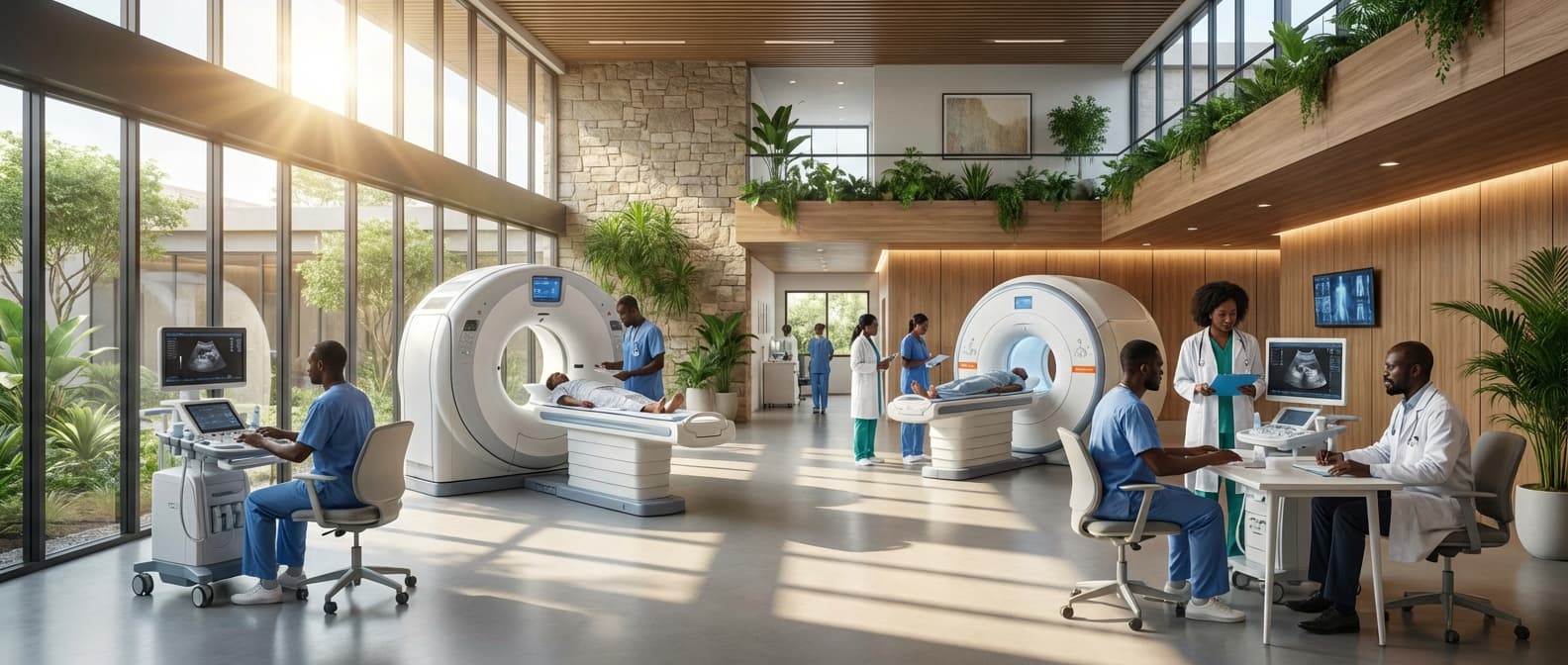
Diagnostic Imaging in Algeria
Engineering Excellence & Technical Support
High-resolution imaging systems including CT scanners, MRI, X-ray, and ultrasound technology for accurate clinical diagnosis. High-standard technical execution following OEM protocols and local regulatory frameworks.
AI-Powered Diagnostic Imaging Analysis
Algeria is increasingly adopting Artificial Intelligence (AI) solutions for faster and more accurate analysis of medical images. These AI algorithms can detect subtle anomalies, identify diseases early, and assist radiologists in prioritizing critical cases, improving patient outcomes and optimizing workflow within diagnostic imaging centers.
Advancements in Cardiovascular Imaging Technology
The integration of cutting-edge cardiovascular imaging technologies, such as advanced MRI and CT scanners with higher resolution and faster acquisition times, is revolutionizing cardiac diagnostics in Algeria. This enables more precise identification of cardiovascular diseases, precise treatment planning, and improved patient monitoring for a growing population.
Expansion of PACS and RIS Implementation
Algeria is witnessing a significant expansion in the implementation of Picture Archiving and Communication Systems (PACS) and Radiology Information Systems (RIS). This digital transformation streamlines image management, improves data accessibility for healthcare professionals across different locations, enhances reporting efficiency, and facilitates interdisciplinary collaboration for better patient care.
What Is Diagnostic Imaging In Algeria?
Diagnostic imaging in Algeria refers to the use of advanced medical technologies to visualize the internal structures of the human body for the purpose of diagnosis, staging, monitoring, and guiding therapeutic interventions. These modalities employ various forms of energy, such as X-rays, magnetic fields, ultrasound waves, and radioactive isotopes, to generate detailed anatomical and physiological information. The service is integral to modern healthcare, enabling clinicians to identify abnormalities, assess disease progression, and plan patient management strategies with a high degree of precision. The demand for diagnostic imaging services in Algeria is driven by a broad spectrum of medical conditions and is utilized across multiple clinical specialties.
| Who Needs Diagnostic Imaging? | Typical Use Cases & Conditions |
|---|---|
| Patients presenting with acute or chronic pain: | Suspected fractures, dislocations, soft tissue injuries, internal bleeding (e.g., abdominal trauma), appendicitis, kidney stones. |
| Individuals with suspected neoplastic disease: | Detection, staging, and follow-up of solid tumors and hematological malignancies (e.g., lung cancer, breast cancer, lymphoma, prostate cancer). |
| Patients with neurological or psychiatric symptoms: | Stroke, brain tumors, multiple sclerosis, epilepsy, degenerative neurological disorders, head trauma. |
| Individuals undergoing cardiac evaluation: | Coronary artery disease, heart valve abnormalities, congenital heart defects, assessment of cardiac function. |
| Patients with gastrointestinal or genitourinary complaints: | Gallstones, liver disease, inflammatory bowel disease, urinary tract infections, prostate enlargement, ovarian cysts. |
| Pregnant women: | Fetal development monitoring, detection of congenital abnormalities, obstetric complications. |
| Patients requiring pre-operative assessment: | Evaluation of surgical sites, identification of anatomical variations, assessment of comorbidities. |
| Patients undergoing cancer screening or follow-up: | Early detection of cancers in asymptomatic individuals, monitoring treatment response and detecting recurrence. |
Key Aspects of Diagnostic Imaging Services in Algeria
- Technological Modalities: Encompasses X-ray radiography, computed tomography (CT) scans, magnetic resonance imaging (MRI), ultrasound (US), nuclear medicine (including SPECT and PET scans), and mammography.
- Diagnostic Applications: Identification of fractures, tumors, infections, organ abnormalities, vascular diseases, and developmental anomalies.
- Therapeutic Guidance: Assists in image-guided biopsies, minimally invasive procedures, and radiation therapy planning.
- Disease Monitoring: Tracks the efficacy of treatments, monitors tumor recurrence, and assesses disease progression over time.
- Preventive Screening: Utilized in specific screening programs, such as mammography for breast cancer detection.
Who Needs Diagnostic Imaging In Algeria?
Diagnostic imaging plays a crucial role in modern healthcare, enabling physicians to visualize internal structures and diagnose a wide range of conditions. In Algeria, like globally, the demand for these services is driven by a diverse population and a developing healthcare infrastructure. This section outlines the primary target customers and departments that rely on diagnostic imaging services in Algeria.
| Department | Primary Needs for Diagnostic Imaging |
|---|---|
| Radiology | Core imaging services including X-ray, CT scans, MRI, ultrasound, mammography, and interventional radiology for diagnosis and image-guided procedures. |
| Oncology | Staging of cancer, monitoring treatment response, detecting recurrence, and performing biopsies under image guidance (CT, Ultrasound). |
| Cardiology | Assessing heart structure and function, identifying blockages in arteries, diagnosing congenital heart defects, and guiding interventions (Echocardiography, Cardiac CT, Cardiac MRI). |
| Neurology & Neurosurgery | Diagnosing strokes, tumors, degenerative diseases, trauma to the brain and spine, and guiding surgical interventions (MRI, CT, PET). |
| Orthopedics & Traumatology | Evaluating bone fractures, joint injuries, degenerative joint diseases, and sports-related injuries (X-ray, CT, MRI, Ultrasound). |
| Gastroenterology & Hepatology | Investigating abdominal pain, digestive issues, liver diseases, and tumors of the digestive system (Ultrasound, CT, MRI, X-ray). |
| Pulmonology | Diagnosing lung infections, tumors, interstitial lung diseases, and other respiratory conditions (X-ray, CT, Fluoroscopy). |
| Emergency Medicine | Rapid diagnosis of trauma, acute conditions like appendicitis, bowel obstructions, and critical illnesses (X-ray, CT, Ultrasound). |
| Urology | Evaluating kidney stones, urinary tract infections, tumors of the urinary system, and prostate conditions (Ultrasound, CT, X-ray). |
| Gynecology & Obstetrics | Monitoring fetal development, diagnosing pregnancy complications, evaluating pelvic masses, and screening for gynecological cancers (Ultrasound, MRI). |
| Pediatrics | Diagnosing congenital anomalies, infections, trauma, and developmental issues in children (X-ray, Ultrasound, CT, MRI - often with specialized protocols). |
| Nuclear Medicine | Assessing organ function, detecting infections, evaluating bone metabolism, and diagnosing certain cancers (PET scans, SPECT scans, Scintigraphy). |
Target Customers for Diagnostic Imaging in Algeria
- Patients: Individuals experiencing symptoms suggestive of various diseases, those requiring pre-operative assessment, post-operative monitoring, or routine health screenings.
- Referring Physicians: General practitioners, specialists, and surgeons who order imaging studies to aid in diagnosis, treatment planning, and follow-up.
- Hospitals and Clinics: Healthcare facilities of all sizes, from large university hospitals to smaller local clinics, that require imaging services for their patient populations.
- Specialized Medical Centers: Facilities focusing on specific areas like cardiology, oncology, neurology, or orthopedics, which have a high demand for specialized imaging techniques.
- Research Institutions: Academic and medical research centers conducting studies that require imaging data for analysis and discovery.
- Public Health Organizations: Government agencies involved in population health monitoring, disease surveillance, and public health initiatives that may incorporate imaging data.
- Insurance Providers: Companies that cover diagnostic imaging costs as part of their health insurance plans.
Diagnostic Imaging Process In Algeria
The diagnostic imaging process in Algeria follows a structured workflow, initiated by a patient's inquiry or a physician's referral, and culminating in the delivery of imaging results. This process involves several key stages, from initial patient contact and scheduling to the actual imaging procedure and subsequent interpretation. Each step is designed to ensure accurate diagnosis and efficient patient care within the Algerian healthcare system.
| Stage | Description | Key Actors | Typical Duration |
|---|---|---|---|
| Patient Inquiry/Physician Referral | A patient may seek imaging services directly or be referred by a physician for specific diagnostic needs. This includes providing medical history and symptoms. | Patient, Referring Physician | Immediate to 1-2 days |
| Appointment Scheduling | The patient or referring physician contacts the imaging center (public or private) to book an appointment. Factors like urgency, equipment availability, and patient preference are considered. | Patient, Administrative Staff (Imaging Center) | Same day to 1-3 days |
| Patient Preparation | Depending on the imaging modality, patients may receive specific instructions, such as fasting, wearing appropriate clothing, or avoiding certain medications. | Patient, Medical Staff (Imaging Center) | Prior to the appointment (hours to days) |
| Imaging Procedure Execution | The patient undergoes the prescribed imaging examination (X-ray, CT, MRI, Ultrasound, Mammography, etc.) by a trained technologist. Contrast agents may be administered if required. | Patient, Radiographer/Technologist | 15 minutes to 2 hours (procedure time) |
| Image Processing and Archiving | Acquired images are processed for clarity and quality. They are then securely stored in a Picture Archiving and Communication System (PACS) for future reference. | Radiographer/Technologist, IT Staff | Concurrent with or immediately after procedure |
| Radiologist Interpretation | A specialized radiologist reviews the processed images, analyzes findings, and correlates them with the patient's clinical information. | Radiologist | Few hours to 1-2 days (depending on urgency and workload) |
| Report Generation and Delivery | The radiologist dictates or writes a comprehensive report detailing the findings, diagnosis, and recommendations. This report is then sent to the referring physician. | Radiologist, Administrative Staff (Imaging Center) | 1-3 days (after interpretation) |
| Follow-up and Treatment Planning | The referring physician receives the report and uses it to guide further diagnosis, treatment, or management of the patient's condition. | Referring Physician, Patient | Variable |
Diagnostic Imaging Workflow in Algeria
- Patient Inquiry/Physician Referral
- Appointment Scheduling
- Patient Preparation
- Imaging Procedure Execution
- Image Processing and Archiving
- Radiologist Interpretation
- Report Generation and Delivery
- Follow-up and Treatment Planning
Diagnostic Imaging Cost In Algeria
Diagnostic imaging costs in Algeria are influenced by a variety of factors, including the type of imaging modality, the complexity of the examination, the geographic location within Algeria, and the specific healthcare facility (public versus private). While precise, universally standardized pricing is difficult to ascertain due to these variables, general ranges and key influencing elements can be identified. Public hospitals often offer significantly lower costs, sometimes subsidized, compared to private clinics and imaging centers, which cater to a different patient demographic and have different overhead structures. The availability of advanced technology, the expertise of the radiologist, and the inclusion of contrast agents also contribute to the final price. It's important for patients to inquire directly with their chosen facility for the most accurate and up-to-date pricing information.
| Imaging Modality | Estimated Price Range (DZD - Algerian Dinar) | Notes |
|---|---|---|
| X-ray (Basic) | 1,500 - 5,000 | Varies by number of views and body part. |
| Ultrasound (Abdomen/Pelvis) | 2,000 - 7,000 | Can vary for specialized ultrasounds (e.g., Doppler). |
| CT Scan (Head/Abdomen) | 15,000 - 40,000 | Higher for scans with contrast. Public hospitals may be significantly cheaper. |
| MRI (Brain/Spine) | 30,000 - 80,000+ | Generally the most expensive. Price increases substantially with contrast. Private centers are considerably higher. |
| Mammography | 3,000 - 8,000 | Screening vs. diagnostic mammography can differ. |
Key Factors Influencing Diagnostic Imaging Costs in Algeria
- Imaging Modality (e.g., X-ray, Ultrasound, CT Scan, MRI)
- Complexity of the Examination (e.g., number of views, body part targeted)
- Geographic Location (major cities vs. smaller towns)
- Type of Healthcare Facility (public hospital vs. private clinic/imaging center)
- Use of Contrast Agents
- Radiologist's Expertise and Facility Reputation
- Technological Advancement of Equipment
Affordable Diagnostic Imaging Options
Navigating the world of diagnostic imaging can be overwhelming, especially when considering costs. Fortunately, there are ways to make these essential services more affordable. Understanding 'value bundles' and implementing various cost-saving strategies can significantly reduce your out-of-pocket expenses. Value bundles often group multiple related services together at a lower combined price than if each service were purchased individually. Cost-saving strategies involve proactive planning, exploring different provider options, and leveraging available resources.
| Value Bundle Example | Description | Potential Savings |
|---|---|---|
| Pre-operative Cardiac Workup Bundle | Includes EKG, Chest X-ray, and potentially a stress test, often bundled for patients undergoing surgery. | Often 10-20% less than individual service costs. |
| Women's Health Screening Bundle | May include mammogram, pelvic ultrasound, and bone density scan for preventative care. | Can offer significant savings on comprehensive screening. |
| Musculoskeletal Imaging Package | Could bundle X-rays, MRIs, or CT scans for a specific joint (e.g., knee or shoulder) if multiple views or follow-ups are anticipated. | Variable, but can reduce per-scan costs when multiple imaging types are needed for the same condition. |
| Comprehensive Executive Physical Bundle | May include various imaging tests as part of a broader health assessment package. | Provides a fixed cost for a suite of services. |
Cost-Saving Strategies for Diagnostic Imaging
- Understand Your Insurance Coverage: Before any procedure, thoroughly review your health insurance policy. Know your deductible, co-pays, co-insurance, and out-of-network benefits. Contact your insurance provider to confirm coverage for specific imaging procedures and to inquire about in-network facilities.
- Price Transparency: Don't be afraid to ask for pricing information upfront. Many imaging centers and hospitals are now required to provide cost estimates. Compare prices between different providers for the same or similar procedures. Websites and apps that track healthcare costs can also be helpful.
- Seek In-Network Providers: Using healthcare providers that are in your insurance network will almost always result in lower costs due to pre-negotiated rates.
- Consider Free-Standing Imaging Centers: In many cases, free-standing imaging centers can offer lower prices for procedures like MRIs, CT scans, and ultrasounds compared to hospitals. This is often due to lower overhead costs.
- Ask About Cash Discounts: If you are uninsured or have a high deductible, inquire about cash discounts. Many imaging facilities offer reduced prices for self-pay patients who pay at the time of service.
- Explore Medical Credit Cards and Payment Plans: For significant costs, investigate medical credit cards or payment plans offered by the imaging facility. Understand the interest rates and terms before committing.
- Negotiate: While not always successful, it is sometimes possible to negotiate the price of a diagnostic imaging procedure, especially if you are paying out-of-pocket.
- Question the Necessity of Unnecessary Tests: Discuss with your doctor whether every recommended imaging test is truly essential. Sometimes, alternative diagnostic methods or watchful waiting can be appropriate.
- Utilize Health Savings Accounts (HSAs) and Flexible Spending Accounts (FSAs): If you have an HSA or FSA, these pre-tax accounts can be used to pay for diagnostic imaging, saving you money on your overall tax burden.
Verified Providers In Algeria
When seeking healthcare services in Algeria, ensuring the credibility and expertise of your providers is paramount. Franance Health stands out as a leading platform for verified healthcare professionals, offering a robust system to vet and showcase the credentials of medical practitioners across various specialties. This commitment to verification provides patients with the confidence and peace of mind necessary when making crucial health decisions. Franance Health's rigorous vetting process is designed to identify and highlight providers who meet the highest standards of education, licensing, and professional experience, ultimately representing the best choice for quality healthcare in Algeria.
| Credential Type | Franance Health Verification | Importance for Patients |
|---|---|---|
| Medical Degree & University Accreditation | Verified against official records from recognized institutions. | Ensures foundational medical knowledge and proper training. |
| Medical License & Registration | Confirmed with relevant Algerian medical councils and authorities. | Guarantees legal authorization to practice medicine and adherence to ethical guidelines. |
| Specialty Board Certifications | Authenticity checked with respective certifying bodies. | Confirms specialized knowledge and advanced competency in a particular field. |
| Professional Experience & Hospital Affiliations | Cross-referenced with employment records and institutional confirmations. | Indicates practical application of skills and experience in healthcare settings. |
| Continuing Medical Education (CME) | Evidence of participation in accredited CME programs reviewed. | Demonstrates commitment to staying updated with the latest medical advancements and practices. |
Why Franance Health Credentials Matter:
- Rigorous Verification Process: Franance Health meticulously checks educational backgrounds, medical licenses, and professional certifications of all listed providers.
- Transparency and Trust: Patients gain access to detailed provider profiles, allowing for informed decision-making based on verified qualifications.
- Specialized Expertise: The platform covers a wide range of medical specialties, ensuring you can find a verified expert for your specific needs.
- Commitment to Quality: By partnering with Franance Health, providers demonstrate their dedication to upholding the highest standards of patient care.
- Enhanced Patient Safety: Choosing a Franance Health-verified provider significantly reduces the risk of encountering unqualified or fraudulent practitioners.
Scope Of Work For Diagnostic Imaging
This Scope of Work (SOW) outlines the requirements for the provision of diagnostic imaging services, including technical deliverables and standard specifications. The objective is to ensure high-quality imaging services that meet industry best practices and regulatory standards, facilitating accurate diagnosis and effective patient care. This document details the expected technical capabilities, reporting standards, data management, and quality assurance measures for all diagnostic imaging procedures performed.
| Category | Specific Deliverables | Standard Specifications / Requirements | Acceptance Criteria |
|---|---|---|---|
| Imaging Modalities | Availability of specified imaging modalities (e.g., MRI, CT, X-ray, Ultrasound, PET-CT, Mammography) | Equipment must be state-of-the-art, fully functional, and compliant with all relevant safety and performance standards (e.g., FDA, CE marking, ACR accreditation where applicable). | Verification of equipment registration, certification, and current calibration records. Successful completion of phantom scans demonstrating optimal image quality. |
| Image Acquisition | Standardized imaging protocols for common and specialized examinations. | Protocols optimized for image quality, radiation dose reduction (where applicable), and diagnostic accuracy. Protocols should be developed in consultation with referring physicians. | Review and approval of all imaging protocols by the client's medical imaging department or designated representative. Evidence of adherence to established protocols for a sample of examinations. |
| Image Quality | High-resolution, artifact-free diagnostic images. | Images must meet established benchmarks for spatial resolution, contrast resolution, signal-to-noise ratio (SNR), and absence of motion or metallic artifacts. Adherence to ACR or equivalent quality standards. | Regular internal and external quality control checks, including phantom studies and peer review of a representative sample of images. Visual inspection and quantitative assessment of image quality. |
| Reporting | Timely and accurate diagnostic reports. | Reports generated by board-certified radiologists, including findings, impressions, and recommendations. Reports must be clear, concise, and delivered within defined turnaround times (e.g., STAT, routine). | Adherence to agreed-upon report turnaround times. Peer review of a percentage of reports to ensure accuracy and completeness. Availability of electronic report access. |
| Data Management | Secure and efficient PACS (Picture Archiving and Communication System) integration and data archiving. | Images and reports securely stored and retrievable for a specified retention period (e.g., 7-10 years for adults, longer for minors) in compliance with HIPAA or equivalent regulations. DICOM standard for image transfer. | Demonstrated system uptime and data backup reliability. Successful retrieval of archived studies within a specified timeframe. Verification of data security and compliance measures. |
| Equipment Maintenance | Routine and corrective maintenance of all imaging equipment. | Proactive maintenance schedule to minimize downtime. Rapid response to equipment malfunctions. Use of manufacturer-approved parts and qualified service engineers. | Maintenance logs and service reports demonstrating adherence to schedule. Mean Time Between Failures (MTBF) and Mean Time To Repair (MTTR) metrics meeting agreed targets. |
| Personnel | Qualified and licensed imaging technologists and board-certified radiologists. | Technologists certified by ARRT or equivalent. Radiologists board-certified by ABDM or equivalent. Ongoing training and continuing education requirements met. | Verification of licenses and certifications for all personnel. Documentation of continuing education and training programs. |
| Compliance | Adherence to all relevant healthcare regulations and accreditation standards. | Compliance with HIPAA/GDPR, radiation safety regulations, and any required accreditation standards (e.g., ACR, Joint Commission). | Proof of current accreditation status. Results of regulatory inspections and audits. Regular internal audits for compliance. |
| Quality Assurance | Robust quality assurance program. | Systematic monitoring and evaluation of all aspects of the imaging service to identify areas for improvement and ensure optimal patient care. | Documented QA program with regular review of performance metrics, incident reports, and implementation of corrective actions. Evidence of continuous improvement initiatives. |
Key Areas Covered
- Imaging Modalities and Technical Specifications
- Image Acquisition Protocols
- Image Quality Standards
- Reporting and Interpretation
- Data Management and Archiving
- Equipment Maintenance and Calibration
- Personnel Qualifications and Training
- Regulatory Compliance and Accreditation
- Quality Assurance and Performance Improvement
Service Level Agreement For Diagnostic Imaging
This Service Level Agreement (SLA) outlines the performance standards for diagnostic imaging services provided by [Provider Name] to [Client Name]. It defines the expected response times for critical diagnostic imaging requests and guarantees a minimum uptime for the diagnostic imaging equipment and associated systems.
| Service Level | Metric | Target | Measurement Period | Remedy for Failure |
|---|---|---|---|---|
| Diagnostic Imaging Response Times | Critical Request Initiation | Within 30 minutes of acknowledgment | 24/7/365 | 10% discount on the monthly service fee for the affected imaging modality for each instance of failure. |
| Diagnostic Imaging Response Times | Standard Request Initiation | Within 120 minutes of acknowledgment | Standard Business Hours (8:00 AM - 6:00 PM, Monday-Friday) | N/A (Non-critical, managed within operational workflows) |
| System Uptime | Diagnostic Imaging Equipment & Systems Uptime | 99.5% (excluding scheduled maintenance) | Monthly | For every 1% of downtime below the guaranteed 99.5%, a credit of 5% of the monthly service fee will be applied. A maximum credit of 20% of the monthly service fee is capped. |
Key Definitions
- Diagnostic Imaging Request: A formal request submitted by authorized personnel for the performance of a specific diagnostic imaging procedure (e.g., X-ray, CT scan, MRI).
- Critical Request: A diagnostic imaging request that, if delayed, poses an immediate and significant risk to patient health or safety as determined by a qualified medical professional.
- Standard Request: Any diagnostic imaging request that is not classified as Critical.
- Uptime: The percentage of time that diagnostic imaging equipment and associated systems are operational and available for use, excluding scheduled maintenance periods.
- Downtime: The period during which diagnostic imaging equipment and associated systems are not operational or available for use.
- Response Time: The elapsed time from when a Diagnostic Imaging Request is formally submitted and acknowledged by the [Provider Name] system to when the imaging procedure is initiated or a definitive status update is provided.
- Scheduled Maintenance: Planned periods for system updates, upgrades, or preventative maintenance, communicated in advance to [Client Name].
Frequently Asked Questions

Ready when you are
Let's scope your Diagnostic Imaging in Algeria project in Algeria.

Scaling healthcare logistics and technical systems across the entire continent.