
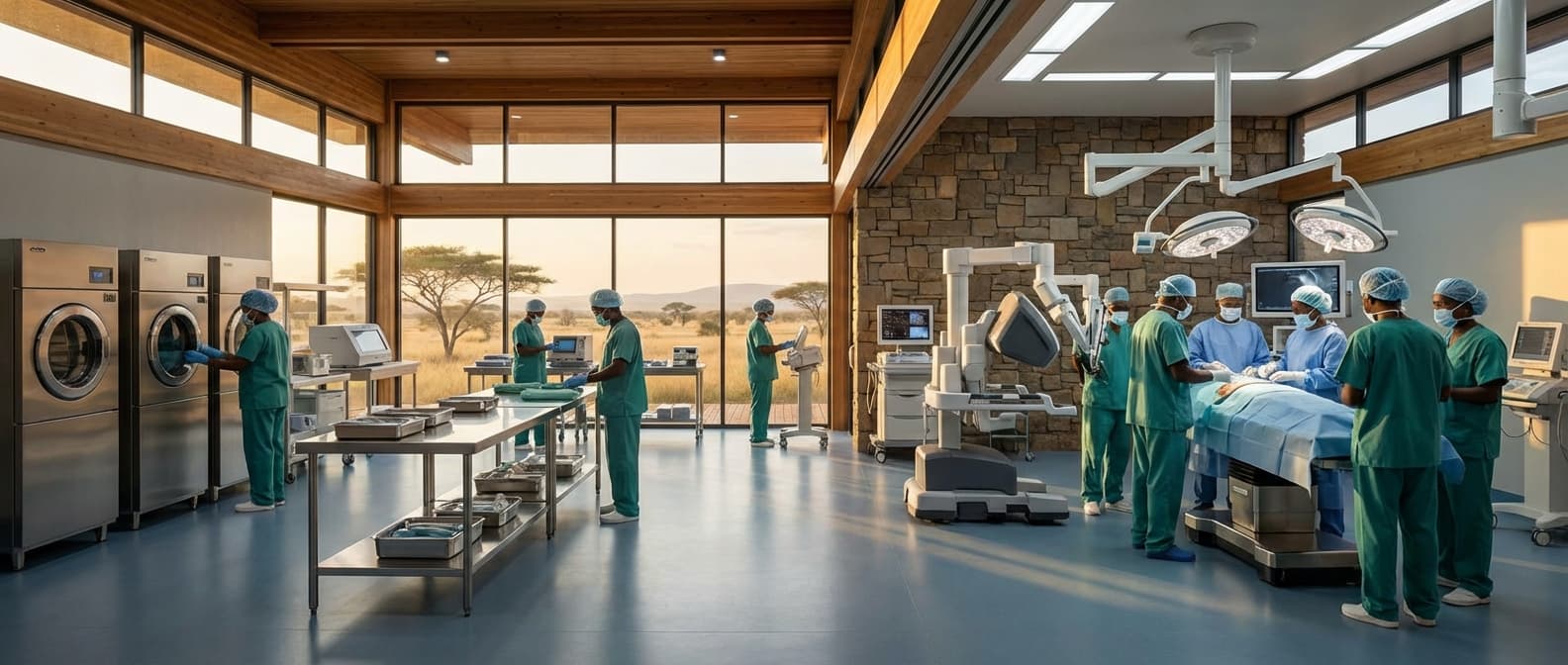
CSSD Design & Validation in Algeria
Engineering Excellence & Technical Support
CSSD workflow design, validation and process development High-standard technical execution following OEM protocols and local regulatory frameworks.
ISO 13485 Certified CSSD Design
We specialize in designing Central Sterile Supply Departments (CSSDs) that strictly adhere to ISO 13485 standards, ensuring the highest levels of quality management and patient safety for healthcare facilities across Algeria. Our validation processes guarantee compliance and operational excellence.
Advanced Workflow Optimization & Validation
Leveraging cutting-edge simulation and process mapping, we meticulously analyze and optimize CSSD workflows. Our validation protocols ensure efficient material flow, minimized contamination risks, and maximized instrument turnaround times, specifically tailored to the Algerian healthcare context.
State-of-the-Art Sterilization Equipment Validation
Our expertise extends to the rigorous validation of all sterilization equipment (autoclaves, washer-disinfectors, etc.) within Algerian CSSDs. We implement comprehensive testing and documentation to guarantee equipment efficacy, compliance with international standards, and optimal performance for sterile processing.
What Is Cssd Design & Validation In Algeria?
Central Sterilization Supply Departments (CSSDs), often referred to as sterile processing departments, are critical healthcare facilities responsible for the decontamination, sterilization, and reprocessing of medical devices. CSSD design and validation in Algeria, as elsewhere, encompasses the meticulous planning, engineering, and verification of these departments to ensure they meet stringent international standards for infection control and patient safety. This process is integral to healthcare infrastructure development and upgrade projects within Algeria, aiming to establish or enhance the capacity for safe and effective surgical instrument reprocessing.
| Who Needs CSSD Design & Validation? | Typical Use Cases in Algeria | |||||||
|---|---|---|---|---|---|---|---|---|
| Hospitals and Healthcare Facilities: Public and private hospitals, university hospitals, and specialized medical centers that perform surgical procedures and require sterile instruments. | New Hospital Construction: Integrating CSSD design from the initial architectural planning stages for new medical facilities being developed in Algeria. | Existing Hospital Renovations/Expansions: Upgrading or expanding existing CSSD facilities to meet increased demand, incorporate new technologies, or comply with updated standards. | Dialysis Centers: Requiring sterile accessories and equipment for patient treatment. | Dental Clinics (Larger Practices): For sterilization of dental instruments. | Veterinary Clinics (Specialized): For surgical instrument sterilization in animal healthcare. | **Medical Device Manufacturers (for validation of their sterilization processes/equipment). | Government Health Authorities and Regulatory Bodies: For setting standards and overseeing compliance of healthcare facilities. | Healthcare Infrastructure Development Projects: Including those funded by government initiatives or international aid organizations aimed at improving healthcare delivery in Algeria. |
Key Components of CSSD Design & Validation
- Facility Layout and Workflow Optimization: Designing the physical space to facilitate a unidirectional flow of contaminated to sterile items, minimizing the risk of cross-contamination. This includes defining distinct zones for decontamination, inspection/assembly, sterilization, and sterile storage.
- Equipment Selection and Integration: Specifying appropriate sterilization technologies (e.g., autoclaves, low-temperature sterilizers), washer-disinfectors, ultrasonic cleaners, and material handling systems, ensuring compatibility and optimal performance within the designed workflow.
- Environmental Control Systems: Implementing robust HVAC systems for temperature, humidity, and air pressure control in different zones, along with appropriate filtration (HEPA filters) to maintain aseptic conditions.
- Material and Finishes: Selecting durable, non-porous, and easily cleanable materials for floors, walls, and work surfaces that can withstand harsh cleaning agents and the demanding operational environment.
- Information Management Systems: Integrating systems for tracking instruments, managing sterilization cycles, documenting compliance, and facilitating inventory control.
- Validation Protocols: Developing and executing comprehensive validation protocols (Installation Qualification - IQ, Operational Qualification - OQ, Performance Qualification - PQ) for all equipment and processes to demonstrate consistent and effective sterilization.
- Regulatory Compliance: Ensuring adherence to national and international standards and guidelines relevant to CSSD operations and medical device reprocessing (e.g., ISO 13485, AAMI ST series, WHO guidelines).
- Staff Training and Competency Assessment: Designing training programs and assessment methodologies to ensure personnel possess the necessary skills and knowledge for effective CSSD operation.
Who Needs Cssd Design & Validation In Algeria?
Central Sterile Services Departments (CSSDs) are the backbone of infection control in healthcare. Proper design and rigorous validation are not optional; they are critical for ensuring patient safety, operational efficiency, and regulatory compliance. While all healthcare facilities with surgical or invasive procedures benefit, specific entities in Algeria are particularly in need of expert CSSD design and validation services. This includes understanding the unique challenges and regulatory landscape within Algeria.
| Customer Type | Key Departments Benefiting | Primary Needs |
|---|---|---|
| Public Hospitals | Surgical Wards, Intensive Care Units (ICUs), Emergency Departments, Operating Rooms (ORs) | Modernization of existing infrastructure, improving workflow efficiency, meeting patient demand, ensuring safety standards |
| Private Hospitals & Clinics | Operating Rooms (ORs), Procedure Rooms, Outpatient Surgery Centers, Maternity Wards | Implementing international best practices, enhancing reputation, specialized equipment reprocessing, patient satisfaction |
| University Teaching Hospitals | Operating Theaters, Surgical Simulation Labs, Research Labs, Clinical Departments | Safe learning environment, training of medical staff, advanced research support, high-volume sterilization |
| Specialty Medical Centers | Interventional Cardiology Suites, Endoscopy Units, Dialysis Centers, Ophthalmic Surgery Units | Reprocessing of specific and sensitive instruments, maintaining sterility for complex procedures, minimizing contamination risks |
| Government Health Agencies | Ministry of Health Departments, National Health Inspectorates, Quality Assurance Boards | Establishing and enforcing standards, ensuring nationwide compliance, risk management, public health protection |
| New Healthcare Facility Developers | Project Planning Teams, Architectural & Engineering Firms, Hospital Management | Integrated design from concept, optimized space utilization, compliance with building codes and health regulations, future-proofing |
| Existing Facilities (Renovations/Expansions) | All departments with sterile instrument needs, Facilities Management | Addressing bottlenecks, upgrading technology, improving ergonomic design, meeting increased capacity needs |
Target Customers & Departments in Algeria Requiring CSSD Design & Validation
- Public Hospitals: These are often the largest facilities, serving a significant portion of the population. Many may have older infrastructure that requires modernization or expansion to meet current standards. They are particularly susceptible to the financial pressures that can lead to under-resourced CSSD operations, making efficient design and robust validation crucial.
- Private Hospitals & Clinics: While often better funded, private facilities still require specialized expertise to design and validate CSSDs that meet international best practices and attract discerning clientele. They may also be seeking to differentiate themselves through superior infection control. This includes standalone surgical centers, maternity clinics, and specialized treatment facilities.
- University Teaching Hospitals: These institutions have a dual role of patient care and medical education. A well-designed and validated CSSD is essential for providing a safe learning environment for future healthcare professionals and ensuring high-quality patient outcomes during complex procedures.
- Specialty Medical Centers: Facilities focusing on specific areas like ophthalmology, cardiology, or oncology often perform intricate procedures requiring highly sterilized instruments. Their CSSD design must cater to the unique reprocessing needs of specialized equipment.
- Government Health Agencies & Regulatory Bodies: While not direct users of the CSSD itself, these entities are responsible for setting and enforcing standards. They require clear, validated designs to ensure compliance across the healthcare sector and can benefit from expert consultation to develop or update guidelines.
- New Healthcare Facility Developers & Investors: For any new hospital or clinic being planned or constructed in Algeria, incorporating expert CSSD design from the outset is far more cost-effective and efficient than retrofitting later. This ensures a facility starts with optimal infection control capabilities.
- Existing Facilities Undertaking Renovations or Expansions: When an existing hospital or clinic is undergoing significant changes, it presents an opportune moment to reassess and upgrade the CSSD's design and functionality to meet evolving needs and standards.
Cssd Design & Validation Process In Algeria
The CSSD (Central Sterile Services Department) design and validation process in Algeria follows a structured workflow to ensure the successful establishment and operational readiness of sterile processing facilities. This process is crucial for healthcare institutions to maintain infection control standards and comply with national regulations. The workflow begins with an initial inquiry and culminates in comprehensive validation and handover, guaranteeing the CSSD meets all functional and safety requirements.
| Stage | Key Activities | Deliverables | Algerian Regulatory Considerations |
|---|---|---|---|
| Inquiry & Initial Consultation | Client expresses interest, preliminary discussions on scope and objectives. | Project brief, initial understanding of client needs. | Understanding of Algerian Ministry of Health (MoH) guidelines for healthcare facilities. |
| Needs Assessment & Feasibility Study | Detailed analysis of instrument processing volume, types of procedures, staff requirements, budget, and existing infrastructure. | Feasibility report, preliminary budget, operational requirements. | Compliance with Algerian healthcare infrastructure standards. |
| Conceptual Design & Space Planning | Developing preliminary layouts based on workflow, infection control principles (clean/dirty separation), and regulatory requirements. Identifying key zones. | Conceptual layout drawings, space allocation, initial equipment placement. | Adherence to MoH recommendations for CSSD layout and zoning. |
| Detailed Design & Engineering | Developing comprehensive architectural, mechanical, electrical, and plumbing (MEP) drawings. Incorporating detailed specifications for finishes, ventilation, and utilities. | Detailed design drawings, technical specifications, bill of quantities (BOQ). | Compliance with Algerian building codes and healthcare facility design standards. |
| Equipment Specification & Procurement | Defining precise technical specifications for all CSSD equipment (sterilizers, washer-disinfectors, instrument sets, etc.). Tender process and vendor selection. | Equipment specifications, tender documents, purchase orders. | Ensuring equipment meets international standards (e.g., EN ISO) and local MoH approval if required. |
| Construction & Installation | Building the CSSD space according to detailed drawings. Installation of utilities, finishes, and integration of equipment. | Completed CSSD facility, installed infrastructure. | Site inspections by authorized bodies, adherence to safety regulations during construction. |
| Commissioning | Testing of all installed systems (HVAC, water, electricity, drainage) to ensure they function as designed before equipment installation. | Commissioning reports for all building systems. | Verification of compliance with building and safety codes. |
| Validation | IQ (Installation Qualification), OQ (Operational Qualification), and PQ (Performance Qualification) of all equipment and processes. Ensuring the CSSD can consistently produce sterile products. | IQ, OQ, PQ reports, validation protocols, validation certificates. | Validation must adhere to international standards (e.g., EN ISO 17665, EN ISO 15883) and any specific Algerian guidelines for validation of medical devices and facilities. |
| Training & Handover | Comprehensive training for CSSD staff on equipment operation, maintenance, infection control protocols, and quality management systems. Formal handover of the facility. | Training materials, trained staff, handover documentation, operational manuals. | Ensuring staff competency and adherence to national infection control policies. |
| Post-Validation Support & Audits | Ongoing technical support, preventive maintenance, and periodic audits to ensure continued compliance and optimal performance. Refresher training as needed. | Maintenance schedules, audit reports, performance monitoring data. | Regular MoH inspections or accreditation processes may occur. |
CSSD Design & Validation Process Workflow
- Inquiry & Initial Consultation
- Needs Assessment & Feasibility Study
- Conceptual Design & Space Planning
- Detailed Design & Engineering
- Equipment Specification & Procurement
- Construction & Installation
- Commissioning
- Validation
- Training & Handover
- Post-Validation Support & Audits
Cssd Design & Validation Cost In Algeria
Designing and validating a Central Sterile Services Department (CSSD) in Algeria involves a multifaceted cost structure, influenced by several key pricing factors. These factors directly impact the overall investment required for establishing a compliant and efficient CSSD. The cost ranges provided are estimates in Algerian Dinars (DZD) and can vary significantly based on the scale of the facility, the specific equipment chosen, the complexity of the design, and the chosen validation service providers.
| Cost Component | Estimated Range (DZD) | Notes |
|---|---|---|
| CSSD Design Consultancy Fees | 1,000,000 - 5,000,000+ | Based on the size, complexity, and the consultant's reputation. Can be a fixed fee or a percentage of the total project cost. |
| Equipment Qualification (IQ, OQ, PQ) Services | 2,500,000 - 10,000,000+ | Depends on the number and type of equipment. Covers installation, operational, and performance qualification for all sterilization and disinfection units. |
| Process Validation Services | 1,000,000 - 4,000,000+ | Validation of sterilization cycles for different instrument types and materials. Includes documentation and reporting. |
| Environmental Monitoring and Validation | 500,000 - 2,000,000 | Validation of air quality, water quality, and surface microbial load. Ongoing monitoring may also be included. |
| Project Management & Procurement Support | 500,000 - 2,500,000 | If external project managers or procurement specialists are engaged. |
| Initial Training of Staff | 200,000 - 800,000 | Training on equipment operation, sterile processing techniques, and quality control. |
Key Pricing Factors for CSSD Design & Validation in Algeria
- Facility Size and Scope: Larger hospitals or facilities with higher patient throughput will require more extensive infrastructure, larger equipment capacities, and therefore higher design and validation costs. The number of surgical suites and the types of procedures performed are major determinants.
- Equipment Selection and Technology: The choice of sterilization equipment (autoclaves, washer-disinfectors, sterilizers for specific instruments like low-temperature sterilizers), material handling systems, and other ancillary devices significantly impacts the budget. High-end, automated systems are more expensive.
- Design Complexity and Customization: A standard, off-the-shelf design will be less costly than a highly customized layout tailored to specific architectural constraints or workflow requirements. Integration with existing hospital infrastructure also adds complexity.
- Regulatory Compliance and Standards: Adherence to Algerian national health regulations, as well as international standards (e.g., ISO 13485, EN 285), necessitates rigorous design considerations and validation protocols, which contribute to the overall cost.
- Validation Scope and Methodology: The extent of validation required, including equipment qualification (IQ, OQ, PQ - Installation, Operational, and Performance Qualification), process validation, and environmental monitoring, will influence the fees charged by validation companies.
- Service Provider Expertise and Reputation: The experience, reputation, and geographical location of the design consultants and validation service providers will affect their pricing. Established firms with a proven track record may command higher fees.
- Geographical Location within Algeria: While less impactful than other factors, regional variations in labor costs and the availability of specialized services might lead to minor price differences across different provinces.
- Project Management and Consultancy Fees: Beyond the core design and validation, fees for project management, procurement assistance, and ongoing consultancy can add to the total cost.
Affordable Cssd Design & Validation Options
Designing and validating a Central Sterile Services Department (CSSD) is crucial for patient safety and operational efficiency. However, the costs associated with these processes can be a significant barrier for many healthcare facilities. This guide explores affordable CSSD design and validation options, focusing on value bundles and cost-saving strategies that deliver high-quality results without breaking the bank.
| Value Bundle Category | Components Included | Cost-Saving Benefit | Ideal For |
|---|---|---|---|
| Basic Design & Layout Consultation | Initial space planning, workflow analysis, equipment placement recommendations, basic regulatory compliance review. | Reduces costly design revisions and ensures fundamental efficiency from the outset. | New facilities or minor renovations with budget constraints. |
| Standard Equipment Package | Selection of a pre-defined set of essential, industry-standard sterilizers, washers, and drying cabinets from a reputable manufacturer. | Bulk purchasing power, simplified decision-making, and potentially negotiated pricing. | Facilities prioritizing reliable, proven technology at a predictable cost. |
| Lean Workflow Optimization Bundle | Workflow mapping, process improvement recommendations, implementation of lean principles in decontamination, packaging, and sterilization areas. | Reduces bottlenecks, minimizes instrument turnaround time, and lowers labor costs through efficient processes. | Existing CSSDs looking to improve efficiency and reduce waste. |
| Initial Validation & Training Package | Basic Installation Qualification (IQ), Operational Qualification (OQ), and Performance Qualification (PQ) for standard equipment, coupled with core staff training on SOPs and equipment operation. | Ensures initial compliance and competency, reducing the need for extensive external validation services and ongoing retraining. | Facilities requiring essential validation and staff competency at a defined price point. |
| Digital Integration Starter Pack | Implementation of a basic instrument tracking system, digital record-keeping for sterilization cycles, and initial cybersecurity review. | Improves traceability, reduces manual errors, enhances compliance documentation, and prepares for future digital enhancements. | Facilities looking to modernize operations and improve data management with a limited upfront investment. |
Key Cost-Saving Strategies for CSSD Design & Validation
- Phased Implementation: Break down large projects into smaller, manageable phases to spread costs over time and prioritize essential upgrades.
- Modular Design Elements: Utilize pre-fabricated or modular components for faster installation and reduced on-site construction labor, lowering overall design and build expenses.
- Leveraging Existing Infrastructure: Maximize the use of current building layouts and utilities wherever feasible, minimizing the need for extensive renovations and new installations.
- Standardized Equipment Selection: Opt for widely available, reliable, and standardized equipment. This often leads to better pricing, easier maintenance, and readily available spare parts.
- Digital Workflow Integration: Implement digital tracking and management systems for instruments and processes. While an initial investment, it reduces manual labor, minimizes errors, and streamlines validation documentation.
- Consultant Collaboration: Work with experienced CSSD consultants who offer bundled services, combining design, validation, and training to provide a more cost-effective package.
- In-House Training & Validation: Develop internal expertise for certain validation tasks or training, reducing reliance on external third-party services where appropriate and safe.
- Strategic Outsourcing: Identify non-core or highly specialized validation tasks that can be outsourced cost-effectively, allowing internal teams to focus on critical in-house operations.
- Energy-Efficient Equipment: Invest in energy-efficient sterilization and cleaning equipment. While potentially having a slightly higher upfront cost, they offer significant long-term savings on utility bills.
- Data-Driven Decision Making: Utilize data analytics to identify areas of inefficiency or overspending in current operations, informing design choices and validation protocols that target these issues.
Verified Providers In Algeria
In Algeria's burgeoning healthcare sector, identifying trusted and reliable healthcare providers is paramount for individuals seeking quality medical services. "Verified Providers in Algeria" aims to shed light on those who consistently meet rigorous standards of care, expertise, and ethical practice. This guide specifically highlights the credentials of Franance Health, explaining why their commitment to excellence makes them a standout choice for patients in Algeria.
| Credential/Aspect | Franance Health's Commitment | Why it Matters for Patients |
|---|---|---|
| Medical Expertise | Employs highly skilled and experienced medical professionals across all specialties. | Ensures patients receive accurate diagnoses and effective, evidence-based treatments from top-tier doctors. |
| Infrastructure & Technology | Utilizes advanced medical equipment and modern facilities. | Facilitates precise diagnostics, minimally invasive procedures, and efficient recovery times. |
| Patient Safety | Adheres to strict protocols for infection control and patient safety measures. | Minimizes risks of complications and ensures a secure healing environment. |
| Ethical Practice | Upholds the highest ethical standards in patient care and medical decision-making. | Guarantees transparent communication, informed consent, and respectful treatment for all patients. |
| Comprehensive Care | Offers a wide spectrum of medical services, from routine check-ups to complex surgeries. | Provides a convenient and integrated healthcare experience, often minimizing the need to seek care elsewhere. |
Key Credentials of Franance Health:
- Accreditation and Certifications: Franance Health facilities undergo stringent accreditation processes by recognized national and international bodies, ensuring adherence to the highest safety and quality benchmarks.
- Highly Qualified Medical Staff: Their team comprises board-certified physicians, specialist surgeons, experienced nurses, and allied health professionals with extensive training and a commitment to continuous professional development.
- Advanced Medical Technology: Franance Health invests in state-of-the-art diagnostic and therapeutic equipment, enabling precise diagnosis and effective treatment for a wide range of medical conditions.
- Patient-Centric Approach: A core principle of Franance Health is their dedication to patient well-being, evident in their personalized care plans, transparent communication, and emphasis on patient comfort and satisfaction.
- Specialized Centers of Excellence: The organization often boasts specialized departments or centers focusing on areas such as cardiology, oncology, neurology, and maternity, offering in-depth expertise and comprehensive treatment pathways.
- Commitment to Research and Innovation: Franance Health actively participates in medical research and embraces innovative treatment modalities, ensuring patients benefit from the latest advancements in healthcare.
- International Standards and Best Practices: They consistently align their protocols and procedures with global healthcare best practices, guaranteeing a high level of care comparable to leading international medical institutions.
- Robust Quality Assurance Programs: Continuous monitoring and evaluation of all services, coupled with feedback mechanisms, ensure ongoing improvement and maintenance of exceptional standards.
Scope Of Work For Cssd Design & Validation
This Scope of Work (SOW) outlines the design and validation of a Central Sterile Supply Department (CSSD). It details the technical deliverables and applicable standard specifications required to ensure a safe, efficient, and compliant sterile processing environment. The SOW is divided into two main phases: Design and Validation. Each phase includes specific tasks, deliverables, and associated standards.
| Phase | Key Activities | Technical Deliverables | Applicable Standard Specifications |
|---|---|---|---|
Key Phases and Objectives
- {"item":"Phase 1: Design","description":"To develop a comprehensive and functional CSSD design that meets all operational, regulatory, and safety requirements, including space planning, equipment selection, workflow optimization, and infection control measures."}
- {"item":"Phase 2: Validation","description":"To rigorously test and verify that the designed CSSD and its installed equipment function as intended, meet performance specifications, and comply with all relevant standards and regulations, ensuring the safety and efficacy of sterilized medical devices."}
Service Level Agreement For Cssd Design & Validation
This Service Level Agreement (SLA) outlines the expected response times and uptime guarantees for CSSD (Central Sterile Supply Department) design and validation services. It is intended to ensure clarity and accountability between the service provider and the client for critical support during the lifecycle of CSSD facilities and processes.
| Service Component | Response Time (Business Hours) | Uptime Guarantee |
|---|---|---|
| Critical Design Issues (e.g., impacting safety or regulatory compliance) | 4 Business Hours | N/A (Focus on rapid resolution) |
| Standard Design Support Requests (e.g., clarification, minor adjustments) | 8 Business Hours | N/A (Focus on efficient resolution) |
| Validation Protocol Development (initial draft submission) | 3 Business Days | N/A (Project-dependent timeline) |
| Validation Execution Support (on-site or remote assistance) | Within 24 Business Hours of confirmed scheduling | N/A (Project-dependent timeline) |
| Post-Validation Troubleshooting (critical system failures) | 4 Business Hours (for initial assessment and mitigation plan) | N/A (Focus on rapid resolution) |
| Post-Validation Troubleshooting (non-critical issues) | 12 Business Hours (for initial assessment and resolution plan) | N/A (Focus on efficient resolution) |
| Design Modification / Update Requests (minor changes) | 2 Business Days | N/A (Project-dependent timeline) |
| General Consultation / Inquiry | 24 Business Hours | N/A (Focus on efficient response) |
Key Service Areas Covered
- Initial CSSD design consultation and conceptualization.
- Detailed engineering design for CSSD workflows, equipment, and infrastructure.
- Validation protocol development and execution (IQ, OQ, PQ).
- Post-validation support and troubleshooting.
- Design modifications and updates.
- Ongoing consultation related to CSSD operational efficiency and compliance.
Frequently Asked Questions

Ready when you are
Let's scope your CSSD Design & Validation in Algeria project in Algeria.

Scaling healthcare logistics and technical systems across the entire continent.