
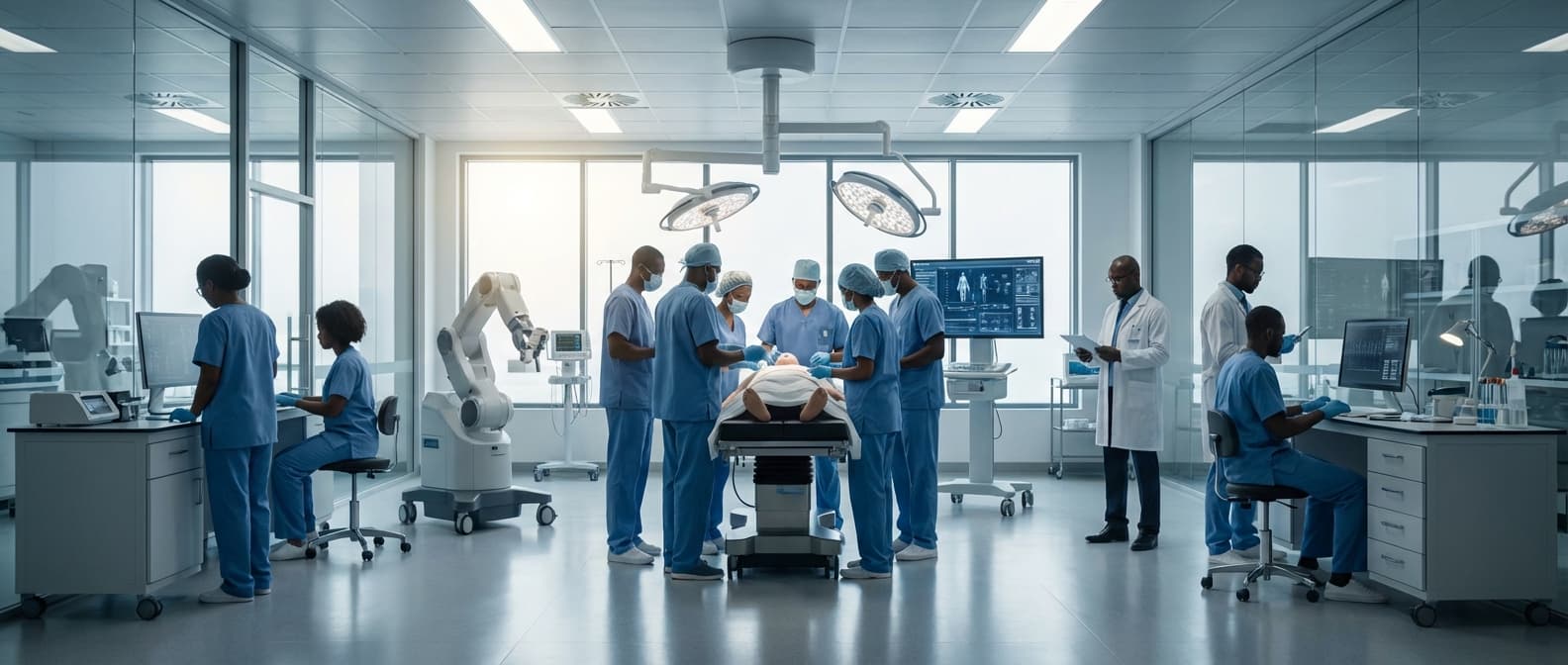
Managed Equipment Service (MES) in Algeria
Engineering Excellence & Technical Support
Long‑term equipment provision with uptime SLAs and lifecycle management. High-standard technical execution following OEM protocols and local regulatory frameworks.
Rapid Response Maintenance for Critical Healthcare Infrastructure
Our MES in Algeria provides 24/7 on-site technical support and rapid deployment of certified technicians to minimize downtime for essential medical equipment, ensuring continuous patient care even in remote locations. Leveraging advanced diagnostics and local stock of critical spare parts, we guarantee swift resolution of issues impacting life-saving devices.
Predictive Maintenance & Performance Optimization for Industrial Assets
We deploy cutting-edge IoT sensors and data analytics platforms to proactively monitor the performance of industrial machinery across Algeria. Our MES identifies potential failures before they occur, enabling scheduled maintenance that significantly reduces unexpected breakdowns, optimizes energy consumption, and extends equipment lifespan, thereby enhancing operational efficiency and cost-effectiveness.
End-to-End Security & Compliance for IT Infrastructure
Our MES for IT infrastructure in Algeria offers comprehensive security management, including vulnerability assessments, patch management, and incident response. We ensure strict adherence to local and international regulatory compliance standards, providing robust data protection and network integrity for your critical business operations, giving you peace of mind and safeguarding sensitive information.
What Is Managed Equipment Service (Mes) In Algeria?
Managed Equipment Service (MES) in Algeria refers to a comprehensive outsourcing model where a third-party provider assumes responsibility for the acquisition, deployment, maintenance, and lifecycle management of specialized equipment for client organizations. This service is designed to optimize the utilization and performance of critical assets while mitigating associated operational risks and capital expenditure burdens. MES typically encompasses a service level agreement (SLA) that defines the scope of services, performance metrics, uptime guarantees, and cost structures.
| Who Needs MES in Algeria? | Typical Use Cases | ||||
|---|---|---|---|---|---|
| Industries with high capital investment in specialized machinery (e.g., Oil & Gas, Mining, Manufacturing, Healthcare, Telecommunications). | Organizations seeking to reduce upfront capital expenditure and shift to an operational expenditure (OpEx) model. | Businesses requiring specialized technical expertise for equipment operation and maintenance. | Companies looking to improve equipment uptime and reliability. | Entities aiming to streamline procurement and asset management processes. | Organizations in remote or challenging operational environments where localized support is difficult to establish. |
| Oil & Gas: Management of drilling rigs, seismic equipment, pumps, and processing units. | Mining: Outsourcing of heavy machinery (excavators, haul trucks), crushing and screening equipment, and geological survey tools. | Manufacturing: Service contracts for complex production lines, CNC machines, automated assembly systems, and industrial robots. | Healthcare: Service agreements for advanced medical imaging equipment (MRI, CT scanners), laboratory analyzers, and surgical instruments. | Telecommunications: Management of network infrastructure equipment, base stations, and fiber optic deployment tools. | Logistics & Transportation: Maintenance and management of specialized handling equipment, fleet vehicles, and warehouse automation systems. |
Key Components of Managed Equipment Service (MES) in Algeria:
- Equipment Procurement and Financing: Sourcing, purchasing, or leasing of required equipment, often with flexible financing options.
- Installation and Configuration: Professional deployment, setup, and integration of equipment into existing infrastructure.
- Routine Maintenance and Servicing: Scheduled preventative maintenance, calibration, and on-demand repairs to ensure optimal functionality.
- Technical Support and Troubleshooting: Provision of expert technical assistance and rapid response to operational issues.
- Spare Parts Management: Inventory control and timely availability of necessary spare parts to minimize downtime.
- Performance Monitoring and Optimization: Continuous tracking of equipment performance against SLAs, with proactive adjustments for efficiency.
- Lifecycle Management and End-of-Life Services: Planning for equipment upgrades, replacements, and environmentally responsible disposal.
- Reporting and Analytics: Providing detailed reports on equipment utilization, performance, and maintenance history.
Who Needs Managed Equipment Service (Mes) In Algeria?
Managed Equipment Service (MES) offers a comprehensive solution for organizations in Algeria that rely heavily on sophisticated medical or industrial equipment. MES providers take on the responsibility of managing the entire lifecycle of these assets, from acquisition and installation to maintenance, repair, and eventual replacement. This allows organizations to focus on their core operations without the burden of complex equipment management, ensuring optimal performance, cost efficiency, and compliance with regulatory standards.
| Department/Sector | Key Equipment Types Managed by MES | Benefits of MES |
|---|---|---|
| Radiology | MRI scanners, CT scanners, X-ray machines, Ultrasound devices | Ensured uptime, improved diagnostic accuracy, reduced maintenance costs, extended equipment lifespan, compliance with safety standards. |
| Surgery | Surgical robots, anesthesia machines, operating tables, laparoscopic equipment | High availability for critical procedures, reduced risk of equipment failure during surgery, streamlined sterilization and maintenance processes. |
| Intensive Care Units (ICU) | Ventilators, patient monitors, infusion pumps, dialysis machines | Continuous operational readiness, critical patient safety, predictable maintenance schedules, efficient inventory management of consumables. |
| Laboratory & Diagnostics | Spectrophotometers, centrifuges, PCR machines, blood analyzers | Precise and reliable results, minimized downtime for research and testing, cost-effective calibration and servicing. |
| Manufacturing & Production | Automated assembly lines, specialized processing machinery, quality control equipment | Maximized production output, minimized unplanned downtime, enhanced operational efficiency, reduced capital expenditure on immediate replacements. |
| Pharmaceutical Production | Bioreactors, tablet presses, packaging machinery, sterile filtration systems | Consistent product quality, adherence to GMP regulations, efficient maintenance for sterile environments, extended equipment lifespan. |
Target Customers and Departments for MES in Algeria
- {"title":"Hospitals and Healthcare Facilities","description":"The primary beneficiaries of MES in Algeria. These institutions operate critical medical equipment that demands constant uptime and adherence to strict safety and efficacy regulations."}
- {"title":"Clinics and Diagnostic Centers","description":"Smaller healthcare providers that may lack in-house expertise or resources for managing specialized diagnostic and treatment machinery."}
- {"title":"Industrial Manufacturing Plants","description":"Sectors like petrochemicals, pharmaceuticals, food processing, and heavy manufacturing that depend on advanced machinery for production. Downtime in these industries can lead to significant financial losses."}
- {"title":"Research and Development Laboratories","description":"Institutions and companies conducting scientific research, requiring access to and maintenance of high-precision analytical and experimental equipment."}
- {"title":"Public Sector and Government Agencies","description":"Government bodies responsible for public health services, defense, or scientific initiatives that utilize specialized equipment and require cost-effective, reliable management."}
Managed Equipment Service (Mes) Process In Algeria
The Managed Equipment Service (MES) process in Algeria, like in many other regions, follows a structured workflow designed to efficiently procure, implement, and manage specialized equipment for clients, often within healthcare or industrial sectors. This process emphasizes a partnership approach where the service provider takes responsibility for the entire lifecycle of the equipment, from initial inquiry to ongoing maintenance and eventual replacement. The workflow can be broadly categorized into several key stages, each with specific steps and considerations relevant to the Algerian context, which may include regulatory compliance, local supplier engagement, and specific client needs.
| Stage | Description | Key Activities | Algerian Considerations |
|---|---|---|---|
| Inquiry & Needs Assessment | The initial phase where a potential client expresses interest in MES and the provider understands their specific equipment requirements and operational needs. | Client consultation, site visits, identification of required equipment, understanding budget constraints, defining service level agreements (SLAs). | Understanding specific Algerian healthcare/industrial standards, existing infrastructure limitations, and client's long-term strategic goals. |
| Proposal Development & Negotiation | The MES provider develops a comprehensive proposal outlining the scope of services, equipment list, pricing, and implementation plan. | Costing, equipment selection and sourcing, service package definition, risk assessment, preparation of technical and financial proposals. | Local market pricing analysis, potential for partnerships with Algerian suppliers, currency exchange rate considerations, compliance with Algerian tender processes if applicable. |
| Contracting & Legal Framework | Formalizing the agreement between the client and the MES provider through a legally binding contract. | Contract drafting, legal review, negotiation of terms and conditions, ensuring compliance with Algerian contract law and relevant regulations. | Adherence to Algerian legal requirements for service contracts, potential need for local legal counsel, understanding of intellectual property rights and data protection laws. |
| Procurement & Logistics | Sourcing, purchasing, and transporting the agreed-upon equipment to the client's site. | Supplier selection, order placement, quality control, customs clearance, import duties and taxes, transportation and warehousing. | Navigating Algerian import regulations, potential delays at customs, working with local freight forwarders and logistics partners, managing import permits. |
| Installation & Commissioning | Setting up and testing the equipment to ensure it meets specifications and is ready for operation. | Site preparation, equipment installation, calibration, initial testing, integration with existing systems. | Ensuring qualified local technicians are available for installation, compliance with local building codes and safety regulations, potential need for site-specific adaptations. |
| Training & Handover | Educating the client's personnel on the proper operation, maintenance, and safety procedures for the new equipment. | Developing training materials, conducting on-site or off-site training sessions, competency assessment, formal handover of equipment and documentation. | Tailoring training to the literacy levels and technical backgrounds of Algerian staff, providing materials in Arabic and/or French as needed, ongoing support during the initial operational phase. |
| Operations & Maintenance | The ongoing management of the equipment, including routine maintenance, repairs, and troubleshooting. | Preventive maintenance schedules, reactive maintenance for breakdowns, spare parts management, on-call support, technical assistance. | Establishing a reliable network of local maintenance technicians and service centers, ensuring availability of critical spare parts within Algeria, rapid response to service requests. |
| Performance Monitoring & Reporting | Tracking the equipment's performance against agreed-upon SLAs and providing regular reports to the client. | Data collection (usage, uptime, service history), performance analysis, generation of regular reports, key performance indicator (KPI) tracking. | Establishing clear reporting formats and frequencies acceptable to Algerian clients, adapting reporting to local business practices, ensuring transparency in performance metrics. |
| Equipment Upgrade & Replacement | Planning for the eventual upgrade or replacement of equipment as it ages, becomes obsolete, or client needs change. | Technology scouting, needs re-evaluation, end-of-life assessment, planning for new equipment procurement and disposal of old equipment. | Considering the latest technological advancements relevant to the Algerian market, budgeting for future upgrades, managing the disposal of old equipment in an environmentally responsible manner according to local regulations. |
| Contract Closure & Review | Concluding the MES contract, evaluating the overall success of the service, and planning for future engagements. | Final performance review, financial reconciliation, client feedback collection, lessons learned documentation, potential for contract renewal or new service agreements. | Formal contract closure procedures as per Algerian law, documenting client satisfaction and any challenges encountered, building long-term relationships for future business opportunities. |
Managed Equipment Service (MES) Workflow in Algeria
- Inquiry & Needs Assessment
- Proposal Development & Negotiation
- Contracting & Legal Framework
- Procurement & Logistics
- Installation & Commissioning
- Training & Handover
- Operations & Maintenance
- Performance Monitoring & Reporting
- Equipment Upgrade & Replacement
- Contract Closure & Review
Managed Equipment Service (Mes) Cost In Algeria
Managed Equipment Service (MES) in Algeria involves a comprehensive outsourcing model for healthcare facilities to manage their medical equipment lifecycle. This includes procurement, installation, maintenance, repair, calibration, and eventual replacement of medical devices. The cost of MES in Algeria is influenced by a multitude of factors, leading to a broad range in pricing. Understanding these factors is crucial for healthcare providers when budgeting and negotiating MES contracts.
| Equipment Category | Typical MES Cost Range (DA/Year) | Key Considerations |
|---|---|---|
| Basic Patient Monitoring & Diagnostic (e.g., ECG, BP Monitors, Basic Ultrasound) | 200,000 - 750,000 | Focus on routine maintenance, calibration, and basic repairs. Lower complexity. |
| Laboratory Equipment (e.g., Analyzers, Microscopes) | 300,000 - 1,200,000 | Includes calibration, reagent management (sometimes), and specialized technical support. |
| Imaging Equipment (e.g., X-ray, Mammography, Basic CT/MRI) | 1,000,000 - 5,000,000+ | Higher cost due to complexity, specialized parts, and need for highly skilled technicians. Uptime is critical. |
| Advanced Imaging (e.g., High-end CT/MRI, PET-CT) | 5,000,000 - 20,000,000+ | Significant investment due to cutting-edge technology, expensive parts, and specialized maintenance protocols. Full lifecycle management often included. |
| Surgical Equipment (e.g., Endoscopy, Electrosurgical Units, Basic Laparoscopic) | 400,000 - 2,500,000 | Requires sterile environment handling, precise calibration, and frequent checks for safety and efficacy. |
| Robotic Surgery Systems | 15,000,000 - 50,000,000+ (Annually) | Extremely high cost due to advanced robotics, software, and the need for specialized OEM-trained technicians. Often includes comprehensive proactive maintenance and remote diagnostics. |
| General Hospital Furniture & Non-Medical Equipment (if bundled) | Negotiable (often a percentage of acquisition cost or per-item fee) | Less common for core MES but can be part of a broader facilities management package. |
Key Pricing Factors for MES in Algeria
- Scope of Services: The breadth and depth of services included in the MES agreement significantly impact cost. A basic maintenance and repair contract will be less expensive than a full-lifecycle management solution encompassing strategic planning, technology upgrades, and asset management.
- Type and Volume of Equipment: The quantity, complexity, and technological sophistication of the medical equipment managed are primary drivers of cost. High-end imaging equipment (MRI, CT scanners) or specialized surgical robots will command higher service fees than standard patient monitors or basic laboratory equipment.
- Service Level Agreements (SLAs): The guaranteed response times for repairs, uptime percentages, and availability of spare parts defined in the SLA directly affect pricing. More stringent SLAs with faster response times and higher guaranteed uptime will be more costly.
- Contract Duration: Longer-term MES contracts often come with discounted pricing compared to shorter-term agreements, reflecting the provider's commitment and the client's long-term reliance.
- Provider Reputation and Expertise: Established MES providers with a proven track record, extensive technical expertise, and a strong network of certified engineers may charge a premium for their services.
- Geographic Location and Accessibility: The accessibility of the healthcare facility to the MES provider's service centers and the logistical challenges in reaching remote areas can influence pricing due to travel and operational costs.
- Original Equipment Manufacturer (OEM) Involvement: Whether the MES provider is an OEM or a third-party provider can impact pricing. OEM-backed services might offer advantages in terms of parts availability and original specifications but could be more expensive.
- Included Consumables and Spare Parts: Agreements that include the provision of specific consumables or a certain level of spare parts inventory will naturally be priced higher.
- Technology Updates and Upgrades: Contracts that incorporate provisions for regular technology assessments and proactive upgrades to newer, more efficient equipment will have a higher cost component.
- Training and Support for Staff: If the MES contract includes training for hospital staff on the operation and basic maintenance of equipment, this will add to the overall cost.
Affordable Managed Equipment Service (Mes) Options
Managed Equipment Service (MES) offers a comprehensive solution for organizations to outsource the management of their critical equipment, from procurement and maintenance to disposal. This allows businesses to focus on their core competencies while ensuring their equipment infrastructure remains reliable, efficient, and cost-effective. Affordable MES options are crucial for small to medium-sized businesses (SMBs) and even larger enterprises looking to optimize their operational expenses. Key to achieving affordability are understanding value bundles and implementing smart cost-saving strategies.
| Cost-Saving Strategy | Description | Potential Impact |
|---|---|---|
| Lease vs. Purchase Analysis | Evaluating whether leasing equipment through the MES provider is more cost-effective than outright purchasing, considering maintenance and upgrade costs. | Reduced upfront capital expenditure, predictable monthly costs. |
| Predictive Maintenance Optimization | Leveraging MES provider's advanced analytics and monitoring to anticipate and prevent equipment failures, thus avoiding costly downtime and emergency repairs. | Lower unscheduled maintenance costs, increased equipment lifespan, reduced operational disruptions. |
| Bulk Purchasing Power | MES providers, due to their scale, often negotiate better pricing on equipment and parts, passing some savings onto their clients. | Lower acquisition costs for new equipment and replacement parts. |
| Standardization of Equipment | Working with the MES provider to standardize on fewer types of equipment, simplifying maintenance, training, and spare parts inventory. | Reduced inventory costs, simplified training, faster repair times. |
| Energy Efficiency Initiatives | Partnering with MES providers to select and maintain energy-efficient equipment, leading to reduced utility bills. | Lower operational expenses through reduced energy consumption. |
| Flexible Service Level Agreements (SLAs) | Negotiating SLAs that align with actual business needs, avoiding overpaying for services that aren't critical. | Optimized service costs by paying only for necessary uptime and support levels. |
| Consolidated Vendor Management | Having a single point of contact for all equipment-related needs reduces administrative overhead and streamlines communication. | Reduced administrative costs, improved vendor relationship management. |
| End-of-Life Asset Management | Utilizing MES providers for responsible and cost-effective disposal or recycling of old equipment, often with data security compliance. | Avoidance of disposal fees, potential for resale or recycling credits, compliance assurance. |
Understanding Value Bundles in MES
- {"title":"Core Service Bundle","description":"This foundational bundle typically includes essential services like equipment sourcing, installation, preventative maintenance, and basic troubleshooting. It's designed to cover the fundamental operational needs of most organizations."}
- {"title":"Advanced Support Bundle","description":"Expands on the core bundle by adding features like 24/7 on-site support, rapid response times for critical issues, advanced diagnostics, and proactive monitoring. This is ideal for businesses with high uptime requirements."}
- {"title":"Lifecycle Management Bundle","description":"Encompasses the entire equipment lifecycle, including planning, procurement, deployment, maintenance, upgrades, and eventual decommissioning and environmentally responsible disposal. This offers a holistic approach to asset management."}
- {"title":"Customizable Bundles","description":"Many MES providers allow for tailored bundles, letting clients pick and choose specific services to meet their unique needs and budget constraints. This offers the most flexibility and potential for cost optimization."}
- {"title":"Technology Integration Bundle","description":"Focuses on integrating new technologies, software updates, and ensuring compatibility across the existing equipment landscape. This is essential for businesses undergoing digital transformation."}
Verified Providers In Algeria
In Algeria, finding reliable and trustworthy healthcare providers is paramount for ensuring quality care and peace of mind. Franance Health has emerged as a leading platform, distinguishing itself by rigorously vetting and verifying its network of healthcare professionals. This commitment to credentialing not only builds trust but also guarantees that patients are connected with experienced, qualified, and ethical practitioners. Understanding Franance Health's verification process and why it sets a benchmark for excellence is crucial for anyone seeking healthcare services in Algeria.
| Why Franance Health is the Best Choice | Key Benefits for Patients |
|---|---|
| Uncompromising Quality Assurance: Our rigorous verification ensures you access only the most qualified and reputable doctors, specialists, and clinics. | Access to the Best Talent: Connect with highly experienced professionals with proven track records in their respective fields. |
| Enhanced Patient Safety: Reduced risk of encountering unqualified or unethical practitioners, leading to a safer healthcare experience. | Peace of Mind: Knowing that your healthcare provider has been thoroughly vetted allows for greater confidence and reduced anxiety. |
| Ethical and Professional Standards: We prioritize providers who demonstrate a strong commitment to patient care and ethical medical practices. | Streamlined Access to Care: Our platform simplifies the process of finding and booking appointments with verified professionals. |
| Continuous Improvement: The ongoing monitoring system ensures that our network consistently meets and exceeds healthcare expectations. | Informed Decision-Making: Detailed provider profiles and verified credentials empower you to make informed choices about your health. |
Franance Health's Verification Process: A Deep Dive
- Comprehensive Background Checks: Franance Health goes beyond basic checks, meticulously examining the professional history, past performance, and any disciplinary actions against potential providers.
- Licensing and Certification Validation: All medical licenses, specialist certifications, and accreditations are thoroughly reviewed and confirmed with the relevant Algerian authorities.
- Educational and Experiential Review: The educational qualifications and years of practical experience of each healthcare professional are rigorously assessed to ensure they meet stringent standards.
- Peer Reviews and Reputation Analysis: Franance Health actively seeks and analyzes feedback from peers and patients to gauge a provider's reputation for competence, bedside manner, and ethical conduct.
- Ongoing Monitoring: The verification process isn't a one-time event. Franance Health maintains ongoing monitoring of its providers to ensure continued adherence to quality and ethical standards.
Scope Of Work For Managed Equipment Service (Mes)
This document outlines the Scope of Work (SOW) for a Managed Equipment Service (MES), detailing the technical deliverables and standard specifications required for its successful implementation and ongoing management. The MES aims to provide a comprehensive and efficient solution for managing a specific set of medical equipment, ensuring optimal performance, compliance, and cost-effectiveness.
| Deliverable | Standard Specifications / Key Requirements | Metrics for Success | |||
|---|---|---|---|---|---|
| Equipment Inventory and Asset Management System | Centralized database with unique asset tags, manufacturer, model, serial number, acquisition date, location, service history, warranty information. System accessible by authorized personnel via a secure web portal. Integration with existing hospital asset management systems (if applicable). | 100% of managed equipment accurately inventoried. Data accuracy rate > 98%. System uptime > 99.9%. | |||
| Preventive Maintenance Program | Scheduled PMs based on manufacturer recommendations, regulatory requirements, and usage data. Standardized PM checklists and procedures for each equipment type. Completion of scheduled PMs within defined timeframes (e.g., +/- 10% of scheduled date). | PM completion rate > 95%. Reduction in unplanned downtime for PM-related equipment by 20% within the first year. | Corrective Maintenance and Repair Services | 24/7 availability of qualified technicians. Response times: Critical equipment < 2 hours (on-site), High-priority < 4 hours (on-site), Standard < 8 hours (on-site). First-time fix rate > 85%. Use of OEM-approved parts or equivalent. | Mean Time To Repair (MTTR) for critical equipment < 4 hours. Uptime for critical equipment > 98%. Customer satisfaction score for repair services > 4.0/5.0. |
| Calibration and Performance Verification | Regular calibration and performance verification as per manufacturer and regulatory standards. Traceable calibration certificates provided. Scheduled calibration dates adhered to. | Calibration adherence rate > 98%. No failed regulatory inspections related to equipment calibration. | |||
| Equipment Decommissioning and Disposal | Safe and environmentally compliant decommissioning and disposal of end-of-life equipment. Secure data erasure for all equipment with data storage capabilities. Certificates of destruction provided. | 100% of decommissioned equipment processed according to environmental regulations. No data breaches associated with decommissioning. | |||
| Regulatory Compliance and Documentation | Adherence to all relevant local, national, and international medical device regulations (e.g., FDA, MDR, HIPAA). Comprehensive documentation of all service activities, including PMs, repairs, calibrations, and training. Auditable records maintained. | Zero non-compliance findings in regulatory audits. All required documentation available within 24 hours of request. | |||
| Performance Reporting and Analytics | Monthly and quarterly reports on equipment uptime, MTTR, PM completion, repair costs, spare parts usage, and overall service performance. Actionable insights for continuous improvement. | Delivery of reports by the 5th business day of the following month. Identification and implementation of at least 3 process improvements annually based on report analysis. | |||
| Training and Competency Assessment | Training for hospital clinical and technical staff on the proper use, basic troubleshooting, and safety of managed equipment. Regular competency assessments for service personnel. | Training completion rate for staff > 90%. Competency assessment pass rate for technicians > 95%. | |||
| Technical Support and Helpdesk | 24/7 technical support via phone and email for basic inquiries and initial troubleshooting. Escalation procedures clearly defined. | First contact resolution rate > 70%. Average response time for helpdesk inquiries < 1 hour. | |||
| Spare Parts Management | Maintenance of an adequate inventory of critical spare parts to support timely repairs. Just-in-time (JIT) inventory management for non-critical parts. Minimization of part obsolescence. | Availability of critical spare parts on-site or within 24 hours. Reduction in stock-outs of critical parts by 15%. | |||
| Cybersecurity Management for Connected Devices | Implementation of robust cybersecurity measures for all networked medical devices. Regular vulnerability assessments and patching. Incident response plan for cybersecurity breaches. | Zero critical cybersecurity incidents. All connected devices compliant with organizational cybersecurity policies. | |||
| Contingency and Business Continuity Planning | Development and regular review of contingency plans for major equipment failures or widespread service disruptions. Identification of alternative equipment or service providers. | Contingency plan reviewed and updated annually. Successful execution of contingency plan during a simulated disruption. |
Key Technical Deliverables
- Equipment Inventory and Asset Management System
- Preventive Maintenance Program
- Corrective Maintenance and Repair Services
- Calibration and Performance Verification
- Equipment Decommissioning and Disposal
- Regulatory Compliance and Documentation
- Performance Reporting and Analytics
- Training and Competency Assessment
- Technical Support and Helpdesk
- Spare Parts Management
- Cybersecurity Management for Connected Devices
- Contingency and Business Continuity Planning
Service Level Agreement For Managed Equipment Service (Mes)
This Service Level Agreement (SLA) outlines the performance standards for the Managed Equipment Service (MES) provided by [Your Company Name] to [Client Company Name]. It details the agreed-upon response times for incidents and the guaranteed uptime for the managed equipment.
| Service Component | Response Time (Business Hours) | Resolution Time Target (Business Hours) | Guaranteed Uptime |
|---|---|---|---|
| Critical Incidents (Complete Service Outage) | 1 Hour | 4 Business Hours | 99.9% |
| High Priority Incidents (Significant Performance Degradation) | 2 Business Hours | 8 Business Hours | 99.5% |
| Medium Priority Incidents (Minor Performance Issues/Degradation) | 4 Business Hours | 24 Business Hours | 99.0% |
| Low Priority Incidents (Information Requests/Non-Urgent) | 8 Business Hours | 48 Business Hours | N/A |
Scope of Service
- This SLA applies to all equipment designated as 'Managed Equipment' under the MES contract between [Your Company Name] and [Client Company Name].
- The scope includes maintenance, monitoring, and incident response for the specified equipment.
- This SLA does not cover consumables, end-user software issues, or damage caused by misuse or external factors not related to the equipment's operational functionality.
Frequently Asked Questions

Ready when you are
Let's scope your Managed Equipment Service (MES) in Algeria project in Algeria.

Scaling healthcare logistics and technical systems across the entire continent.