
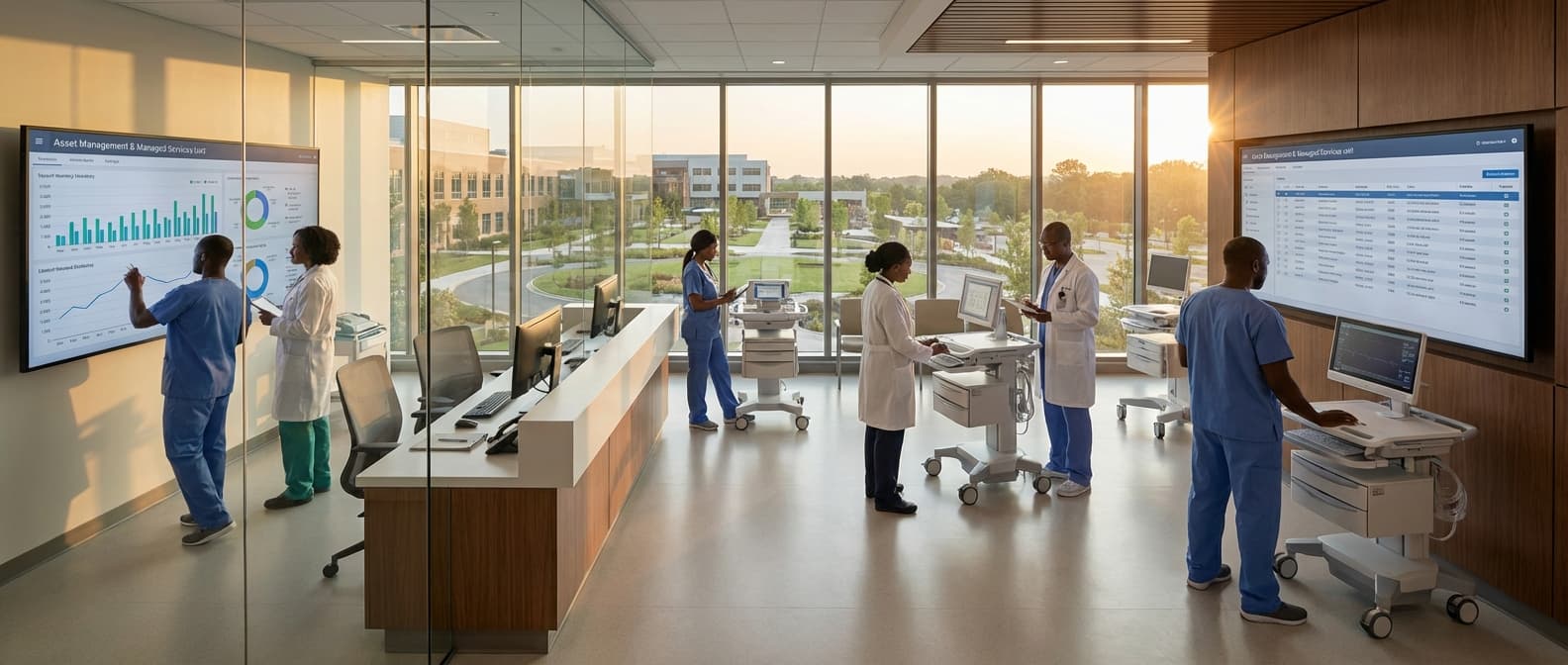
Maintenance KPI Reporting Service (Uptime/MTBF/MTTR) in Algeria
Engineering Excellence & Technical Support
Maintenance KPI Reporting Service (Uptime/MTBF/MTTR) High-standard technical execution following OEM protocols and local regulatory frameworks.
Maximized Uptime with Predictive Analytics in Algeria
Leverage our advanced AI-powered platform to gain real-time visibility into asset performance across your Algerian operations. Our service proactively identifies potential failures and triggers preventative maintenance, drastically reducing unplanned downtime and ensuring mission-critical systems remain operational.
Optimized MTBF for Enhanced Algerian Asset Longevity
Our Maintenance KPI Reporting Service empowers Algerian businesses to understand and improve Mean Time Between Failures (MTBF). Through detailed historical data analysis and root cause identification, we help you implement targeted strategies that extend the lifespan of your valuable assets, leading to significant cost savings.
Accelerated MTTR with Streamlined Algerian Maintenance Workflows
Reduce Mean Time To Repair (MTTR) across your Algerian facilities with our intelligent reporting and workflow optimization tools. We provide actionable insights into repair bottlenecks, enable faster diagnosis, and facilitate efficient resource allocation, ensuring your maintenance teams resolve issues swiftly and minimize operational disruption.
What Is Maintenance Kpi Reporting Service (Uptime/mtbf/mttr) In Algeria?
Maintenance KPI Reporting Service (Uptime/MTBF/MTTR) in Algeria refers to the provision of a structured and data-driven approach to monitor, analyze, and report on key performance indicators (KPIs) related to asset maintenance and operational availability within organizations operating in Algeria. This service focuses on quantifying the effectiveness and efficiency of maintenance strategies through the lens of uptime, Mean Time Between Failures (MTBF), and Mean Time To Repair (MTTR). It involves the collection, aggregation, and analysis of maintenance data to generate actionable insights, enabling organizations to optimize their maintenance programs, reduce downtime, and improve overall asset lifecycle performance. The service typically leverages specialized software platforms, data analytics capabilities, and expert interpretation to deliver comprehensive reports and recommendations.
| Stakeholder Group | Needs and Benefits | Typical Use Cases |
|---|---|---|
| Manufacturing Facilities | Maximize production output, minimize unplanned downtime, optimize spare parts inventory, improve equipment reliability, reduce operational costs. | Monitoring production line availability, identifying critical equipment failure points, assessing the effectiveness of preventative maintenance schedules, analyzing root causes of frequent breakdowns. |
| Energy Sector (Oil & Gas, Power Generation) | Ensure continuous energy supply, enhance safety of operations, optimize asset lifespan, reduce maintenance expenditures, comply with regulatory requirements. | Tracking generator uptime, analyzing failure frequency of critical turbines, measuring repair times for pipeline leaks, assessing the impact of weather on asset performance. |
| Transportation and Logistics | Ensure fleet availability, minimize transit delays, optimize vehicle maintenance schedules, reduce operational disruptions, improve safety. | Monitoring truck fleet uptime, analyzing breakdown frequency of key vehicles, measuring repair turnaround times for critical components, assessing the impact of mileage on component failure. |
| Telecommunications Providers | Maintain network service availability, minimize service interruptions, optimize repair response times, enhance customer satisfaction, reduce network downtime costs. | Tracking base station uptime, analyzing failure rates of network equipment, measuring time to restore service after an outage, assessing the performance of maintenance teams. |
| Facility Management (Large Buildings, Industrial Complexes) | Ensure operational continuity of building systems (HVAC, electrical, plumbing), minimize occupant disruption, optimize maintenance budgets, extend asset life. | Monitoring HVAC system availability, analyzing elevator failure rates, measuring repair times for electrical faults, assessing the effectiveness of janitorial equipment maintenance. |
Key Components of Maintenance KPI Reporting Service
- Data Acquisition & Integration: Establishing mechanisms to collect raw maintenance data from various sources (e.g., CMMS, SCADA, sensor data, operator logs).
- KPI Calculation & Definition: Implementing standardized calculations for Uptime (availability), MTBF (reliability), and MTTR (maintainability) based on industry best practices or specific organizational requirements.
- Data Analysis & Trend Identification: Employing statistical methods and analytical tools to identify trends, patterns, and root causes of failures and downtime.
- Reporting & Visualization: Generating clear, concise, and visually intuitive reports and dashboards that highlight key performance metrics, deviations, and areas for improvement.
- Actionable Insights & Recommendations: Translating data analysis into practical recommendations for proactive maintenance, resource allocation, spare parts management, and process optimization.
- Benchmarking & Performance Tracking: Facilitating comparison of performance against historical data, industry benchmarks, or internal targets.
- Continuous Improvement Loop: Establishing a feedback mechanism to integrate reporting insights into ongoing maintenance planning and execution.
Who Needs Maintenance Kpi Reporting Service (Uptime/mtbf/mttr) In Algeria?
This service is crucial for any organization in Algeria that relies on the consistent and efficient operation of its assets and machinery. By providing robust KPI reporting for uptime, Mean Time Between Failures (MTBF), and Mean Time To Repair (MTTR), businesses can proactively identify issues, optimize maintenance strategies, reduce operational costs, and ultimately enhance their overall productivity and profitability.
| Target Customer Segment | Key Departments Benefiting | Specific Needs & Benefits |
|---|---|---|
| Manufacturing Plants | Operations, Maintenance, Production Planning, Quality Control | Maximize equipment uptime, minimize unplanned downtime, improve production efficiency, reduce spare parts inventory, identify root causes of failures for continuous improvement. |
| Oil & Gas Companies | Drilling Operations, Production Facilities, Refinery Maintenance, Pipeline Integrity, HSE | Ensure continuous production, minimize risk of costly shutdowns, optimize scheduled maintenance, improve safety by reducing equipment failures, track MTBF for critical equipment. |
| Energy Production Facilities | Plant Operations, Maintenance & Engineering, Asset Management | Guarantee reliable energy supply, reduce downtime for power generation, optimize maintenance schedules for turbines, generators, and other critical assets, ensure regulatory compliance. |
| Telecommunications Providers | Network Operations Center (NOC), Field Maintenance, Infrastructure Management | Maintain network availability and service continuity, minimize customer impact from outages, optimize technician dispatch and repair times, forecast maintenance needs for network equipment. |
| Transportation & Logistics | Fleet Management, Operations, Maintenance Workshops, Safety & Compliance | Ensure timely delivery of goods and services, minimize vehicle downtime, optimize maintenance schedules for fleets, reduce operational costs through efficient repairs, improve safety records. |
| Mining & Extractive Industries | Mine Operations, Equipment Maintenance, Asset Management | Maximize extraction efficiency, minimize downtime of heavy machinery (excavators, trucks, crushers), optimize preventative maintenance programs, reduce operational expenditures. |
Target Customers in Algeria:
- Manufacturing Plants (e.g., automotive, food & beverage, pharmaceuticals, textiles, heavy industry)
- Oil & Gas Companies (upstream, midstream, and downstream operations)
- Energy Production Facilities (power plants, renewable energy installations)
- Telecommunications Providers
- Transportation & Logistics Companies (airlines, shipping, rail, trucking)
- Mining & Extractive Industries
- Infrastructure Management (water treatment, waste management)
- Large Commercial Facilities & Real Estate (hospitals, airports, shopping malls)
- Government Agencies with significant asset management responsibilities
Maintenance Kpi Reporting Service (Uptime/mtbf/mttr) Process In Algeria
This document outlines the workflow for the Maintenance KPI Reporting Service (Uptime/MTBF/MTTR) in Algeria. The service aims to provide clients with accurate and actionable insights into their equipment's maintenance performance through the systematic collection, analysis, and reporting of key performance indicators (KPIs) like Uptime, Mean Time Between Failures (MTBF), and Mean Time To Repair (MTTR). The process is designed to be transparent, efficient, and tailored to the specific needs of businesses operating in Algeria.
| Stage | Description | Key Activities | Deliverables | Responsible Party |
|---|---|---|---|---|
| Inquiry & Scoping | Initial contact from a potential client seeking maintenance KPI reporting services. | Initial consultation, understanding client needs, identifying specific equipment/assets to monitor, defining service scope, providing initial proposal and quotation. | Service Proposal, Quotation, Service Level Agreement (SLA) draft. | Sales/Business Development Team, Client. |
| Data Collection Strategy Development | Designing the optimal approach for gathering relevant maintenance data. | Collaborating with the client to understand existing data sources (e.g., CMMS, logbooks, sensor data), defining data fields required for KPI calculation, determining data collection methods (manual, automated, integration), establishing data validation rules. | Data Collection Plan, Data Dictionary, Validation Rules document. | Technical Team, Client IT/Maintenance Department. |
| Data Collection & Validation | The systematic gathering and verification of maintenance data. | Implementing the data collection plan (e.g., deploying agents, setting up data feeds, conducting site visits for manual data entry), performing initial data quality checks, resolving data discrepancies, ensuring data accuracy and completeness. | Raw Maintenance Data, Validated Data Set. | Data Collection Team, Technical Team. |
| Data Analysis & KPI Calculation | Processing the validated data to compute the agreed-upon maintenance KPIs. | Applying statistical methods to calculate Uptime, MTBF, MTTR, and other agreed-upon KPIs. Identifying trends, anomalies, and root causes of failures. | Calculated KPI values, Preliminary Analysis Findings. | Data Analysts, Technical Team. |
| Report Generation & Delivery | Creating and presenting the comprehensive maintenance KPI report to the client. | Designing and generating visual reports (dashboards, charts, tables) that clearly present KPI trends, performance against benchmarks, and actionable insights. Delivering the report in the agreed format (e.g., PDF, online dashboard). | Maintenance KPI Report (e.g., Uptime Report, MTBF Analysis, MTTR Report), Executive Summary. | Reporting Team, Technical Team. |
| Review & Feedback | Discussing the generated report with the client and gathering their input. | Presenting the report to the client, explaining the findings, answering questions, soliciting feedback on the report's clarity, accuracy, and usefulness. | Client Feedback, Actionable Recommendations list. | Account Manager, Technical Team, Client. |
| Continuous Improvement | Utilizing feedback and ongoing analysis to refine the reporting process and enhance client value. | Implementing feedback for process adjustments, updating data collection methods or validation rules, exploring new KPIs or analytical techniques, providing ongoing support and trend monitoring. | Updated Service Processes, Enhanced Reporting Modules, Performance Improvement Recommendations. | Service Delivery Team, Technical Team. |
Service Workflow Stages
- Inquiry & Scoping
- Data Collection Strategy Development
- Data Collection & Validation
- Data Analysis & KPI Calculation
- Report Generation & Delivery
- Review & Feedback
- Continuous Improvement
Maintenance Kpi Reporting Service (Uptime/mtbf/mttr) Cost In Algeria
The cost of a Maintenance KPI Reporting Service, specifically focusing on Uptime, Mean Time Between Failures (MTBF), and Mean Time To Repair (MTTR), in Algeria can vary significantly based on several factors. These services are crucial for optimizing operational efficiency, minimizing downtime, and improving overall asset management. Pricing is typically influenced by the complexity of the reporting required, the volume of assets monitored, the level of integration with existing systems, and the chosen service provider's expertise and infrastructure.
| Service Scope & Complexity | Estimated Price Range (DA - Algerian Dinar) | Notes |
|---|---|---|
| Basic Reporting (Manual Data Input/Limited Assets) | 20,000 - 80,000 DA/month | Suitable for small businesses or limited asset portfolios, often involves manual data entry or basic integration. |
| Standard Reporting (Automated Data Collection/Moderate Assets) | 80,000 - 250,000 DA/month | Includes automated data streams from sensors or existing systems, for a moderate number of assets, with standard dashboarding. |
| Advanced Reporting (Real-time Monitoring/Extensive Assets/Predictive Insights) | 250,000 - 1,000,000+ DA/month | Comprehensive real-time tracking, advanced analytics, predictive capabilities, integration with multiple systems, and extensive asset coverage. Costs can escalate significantly for large industrial operations. |
| One-time Setup & Integration Fee | 50,000 - 500,000+ DA | Applicable for complex integrations or initial system setup, depending on the technical effort involved. |
| Custom Report Development | 20,000 - 150,000 DA (per report/module) | Charges for specific, highly tailored reporting features beyond standard offerings. |
Key Pricing Factors for Maintenance KPI Reporting Services in Algeria:
- Scope of Services: Whether the service includes real-time monitoring, historical data analysis, predictive maintenance insights, or only basic reporting.
- Number of Assets/Machines Monitored: A higher volume of assets will generally increase the cost due to the increased data processing and analysis required.
- Data Integration Complexity: The effort needed to integrate the reporting service with existing ERP, CMMS (Computerized Maintenance Management System), or SCADA systems.
- Customization Requirements: The need for bespoke dashboards, reports, or specific alert configurations.
- Level of Support: The availability and responsiveness of technical support, including on-site assistance or specialized troubleshooting.
- Service Provider Expertise and Reputation: Established providers with a proven track record may command higher prices.
- Data Storage and Security: Requirements for on-premise vs. cloud-based solutions, and the level of data security protocols needed.
- Reporting Frequency and Granularity: Daily, weekly, monthly reports, or more frequent, detailed breakdowns.
- Training and Onboarding: The level of training provided to your internal team to effectively utilize the reporting platform.
Affordable Maintenance Kpi Reporting Service (Uptime/mtbf/mttr) Options
Our Affordable Maintenance KPI Reporting Service provides crucial insights into your operational performance through the tracking and reporting of key metrics like Uptime, Mean Time Between Failures (MTBF), and Mean Time To Repair (MTTR). These KPIs are vital for understanding equipment reliability, maintenance effectiveness, and overall production efficiency. We offer flexible value bundles designed to cater to businesses of all sizes, along with proven cost-saving strategies to maximize your return on investment.
| Feature/Bundle | Essential Insights | Performance Optimization | Enterprise Reliability |
|---|---|---|---|
| Monthly KPI Reports (Uptime, MTBF, MTTR) | ✓ | ✓ | ✓ |
| Basic Trend Analysis | ✓ | ✓ | ✓ |
| Visual Dashboards | ✓ | ✓ | ✓ |
| Weekly Reporting | ✓ | ✓ | |
| Root Cause Analysis Support | ✓ | ✓ | |
| Preventative Maintenance Recommendations | ✓ | ✓ | |
| Daily Real-time Dashboards | ✓ | ||
| Predictive Analytics (MTBF Forecasting) | ✓ | ||
| Detailed Failure Mode Analysis | ✓ | ||
| Dedicated Account Management | ✓ |
Value Bundles Explained
- Essential Insights Bundle: Ideal for smaller operations or those new to KPI tracking. Includes monthly reporting on Uptime, MTBF, and MTTR, with basic trend analysis and visual dashboards.
- Performance Optimization Bundle: Geared towards growing businesses looking to proactively improve maintenance. Builds upon the Essential bundle with weekly reporting, root cause analysis support for recurring failures, and personalized recommendations for preventative maintenance schedules.
- Enterprise Reliability Bundle: Our most comprehensive offering for large-scale operations focused on achieving peak performance and minimizing downtime. Features daily real-time dashboards, advanced predictive analytics for MTBF forecasting, detailed failure mode analysis, and dedicated account management for strategic insights and custom reporting solutions.
Verified Providers In Algeria
In the dynamic landscape of Algerian healthcare, identifying reliable and accredited medical service providers is paramount for patient well-being. Franance Health stands out as a beacon of trust and excellence, meticulously vetting its network of providers to ensure the highest standards of care. This commitment to verification not only safeguards patients but also elevates the quality of healthcare services available across Algeria. Discover why partnering with Franance Health-credentialed providers is the definitive choice for your medical needs.
| Provider Type | Franance Health Verification Criteria | Benefits for Patients |
|---|---|---|
| Hospitals | Medical staff qualifications, accreditation by national/international bodies, patient safety protocols, advanced equipment, specialized departments. | Access to comprehensive care, advanced diagnostics and treatments, emergency services, specialized surgical procedures. |
| Clinics | Qualified medical professionals, adherence to hygiene standards, patient record management, scope of services, referral networks. | Outpatient consultations, diagnostic tests, minor surgical procedures, preventative care, specialized treatments. |
| Laboratories | Certified technicians and pathologists, quality control measures, adherence to testing standards, use of calibrated equipment, rapid and accurate results. | Reliable diagnostic testing, accurate disease identification, monitoring of treatment efficacy. |
| Specialist Centers (e.g., Cardiology, Oncology) | Highly specialized medical staff, state-of-the-art diagnostic and therapeutic equipment, research and development involvement, patient support services. | Expert diagnosis and treatment for complex conditions, access to cutting-edge therapies, personalized care plans. |
Why Franance Health Credentials Matter:
- Rigorous Accreditation Processes: Franance Health employs a comprehensive and multi-faceted accreditation system that goes beyond basic licensing. This includes evaluations of medical expertise, infrastructure, adherence to international best practices, and patient safety protocols.
- Unwavering Commitment to Quality: We prioritize providers who demonstrate a consistent dedication to delivering superior medical outcomes, utilizing advanced technologies, and fostering a patient-centric approach.
- Enhanced Patient Safety: Franance Health's verification process includes stringent checks on hygiene, infection control, and emergency preparedness, ensuring a secure environment for all patients.
- Access to Specialized Expertise: Our network comprises specialists across a wide range of medical disciplines, guaranteeing access to top-tier talent for even the most complex conditions.
- Improved Healthcare Accessibility: By identifying and promoting verified providers, Franance Health helps streamline the process of finding quality healthcare, making it more accessible to the Algerian population.
- Peace of Mind for Patients: Choosing a Franance Health-credentialed provider offers unparalleled reassurance, knowing that you are entrusting your health to institutions that have met the most exacting standards.
Scope Of Work For Maintenance Kpi Reporting Service (Uptime/mtbf/mttr)
This Scope of Work (SOW) outlines the services for establishing and maintaining a comprehensive Maintenance Key Performance Indicator (KPI) Reporting Service focused on Uptime, Mean Time Between Failures (MTBF), and Mean Time To Repair (MTTR). The service aims to provide accurate, timely, and actionable insights into asset reliability and maintenance efficiency, enabling data-driven decision-making for operational improvements.
| Technical Deliverable | Description | Standard Specifications / Format |
|---|---|---|
| KPI Data Collection Framework | Definition and implementation of standardized data fields and collection methods for Uptime, MTBF, and MTTR. This includes identifying data sources (e.g., CMMS, SCADA, sensor data) and defining data validation rules. | Data fields to include: Asset ID, Asset Type, Failure Event Timestamp, Repair Start Timestamp, Repair Complete Timestamp, Downtime Duration, Cause of Failure, Repair Action Taken. Data to be collected in a structured format (e.g., CSV, JSON, direct database integration). |
| Uptime Calculation Methodology | Definition and implementation of the methodology for calculating Uptime. This typically involves measuring the total operational time versus total scheduled/available time. | Formula: Uptime (%) = (Total Available Time - Downtime Duration) / Total Available Time * 100. Clear definition of 'Available Time' (e.g., excluding planned maintenance, scheduled breaks). |
| MTBF Calculation Methodology | Definition and implementation of the methodology for calculating Mean Time Between Failures. This measures the average time between successive failures of an asset. | Formula: MTBF = Total Uptime / Number of Failures. Requires consistent tracking of failure events and their timestamps. |
| MTTR Calculation Methodology | Definition and implementation of the methodology for calculating Mean Time To Repair. This measures the average time it takes to repair a failed asset. | Formula: MTTR = Total Downtime Duration / Number of Failures. Requires accurate timestamps for repair initiation and completion. |
| Standardized KPI Reports | Regularly generated reports summarizing Uptime, MTBF, and MTTR performance across various asset categories, individual assets, and operational periods. | Report frequency: Weekly, Monthly, Quarterly. Report format: PDF, Interactive Dashboard (e.g., Tableau, Power BI), CSV. Report content to include: KPI values, trend analysis, comparison to targets, identification of outliers. |
| Trend Analysis and Visualization | Analysis of historical KPI data to identify trends, patterns, and anomalies. Visual representation of these trends for easier comprehension. | Graphical representations such as line charts for historical trends, bar charts for comparisons, and heatmaps for identifying problem areas. Statistical analysis to identify significant trends. |
| Root Cause Analysis Support | Assistance in identifying potential root causes for significant negative deviations in KPI performance. This involves data correlation and analysis. | Support includes providing detailed event logs, failure cause data, and cross-referencing with other operational data. Facilitation of review sessions (optional). |
| Data Quality Assurance Procedures | Processes to ensure the accuracy, completeness, and consistency of the collected maintenance data. | Includes data validation rules, anomaly detection, and periodic data audits. Automated checks for missing or erroneous data. |
| Recommendations for Improvement | Actionable recommendations derived from KPI analysis to enhance asset reliability, optimize maintenance strategies, and reduce downtime. | Recommendations to be specific, measurable, achievable, relevant, and time-bound (SMART). Focus on predictive maintenance opportunities, spare parts optimization, and training needs. |
| Reporting Platform/Tool Integration | Integration with existing or new reporting platforms and tools to facilitate efficient report generation and dashboarding. | Compatibility with common BI tools (Tableau, Power BI, QlikView), CMMS reporting modules, or custom-built solutions. API access or secure data export capabilities. |
Service Objectives
- Establish a standardized framework for collecting, processing, and reporting on Uptime, MTBF, and MTTR metrics.
- Provide regular, scheduled reports detailing KPI performance.
- Identify trends and deviations in KPI performance.
- Support root cause analysis for significant deviations.
- Offer recommendations for improving asset reliability and maintenance effectiveness.
- Ensure data integrity and accuracy throughout the reporting process.
Service Level Agreement For Maintenance Kpi Reporting Service (Uptime/mtbf/mttr)
This Service Level Agreement (SLA) outlines the key performance indicators (KPIs), response times, and uptime guarantees for the Maintenance KPI Reporting Service. This service provides critical metrics such as Uptime, Mean Time Between Failures (MTBF), and Mean Time To Repair (MTTR) to ensure efficient maintenance operations and minimize operational disruptions.
| KPI | Service Level Objective (SLO) | Measurement Method |
|---|---|---|
| Uptime | 99.9% | Calculated as (Total Available Time - Downtime) / Total Available Time over a calendar month. Downtime is defined as any period during which the reporting service is unavailable or not functioning as intended. Scheduled maintenance is excluded. |
| MTBF | Minimum 1500 hours | Calculated as Total Uptime / Number of Failures over a calendar month. A 'failure' is defined as an incident that results in the reporting service being unavailable for more than 30 consecutive minutes. |
| MTTR | Maximum 4 hours | Calculated as Total Downtime / Number of Failures over a calendar month. This metric measures the time from the initial detection of a failure to its complete resolution and restoration of service. |
Key Performance Indicators (KPIs)
- {"item":"Uptime: The percentage of time the reporting service is available and functioning as expected."}
- {"item":"Mean Time Between Failures (MTBF): The average time elapsed between inherent failures of a system or component during normal operation. For this service, it refers to the average time the reporting system operates without an incident causing data unavailability or significant reporting delays."}
- {"item":"Mean Time To Repair (MTTR): The average time required to repair a failed system or component and restore it to operational status. For this service, it refers to the average time taken to resolve an incident that affects the reporting service's availability or accuracy."}
Frequently Asked Questions

Ready when you are
Let's scope your Maintenance KPI Reporting Service (Uptime/MTBF/MTTR) in Algeria project in Algeria.

Scaling healthcare logistics and technical systems across the entire continent.