
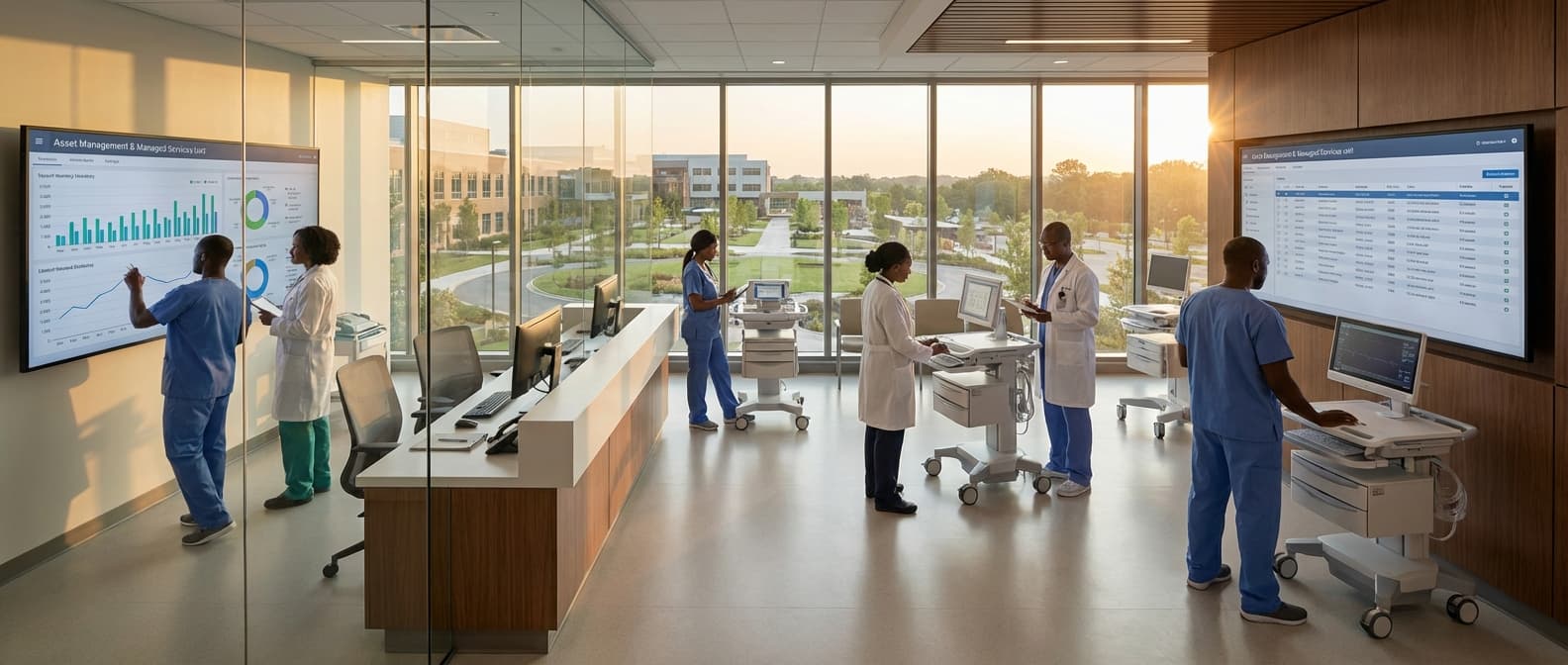
Equipment Fleet Standardization Consulting Service in Algeria
Engineering Excellence & Technical Support
Equipment Fleet Standardization Consulting Service High-standard technical execution following OEM protocols and local regulatory frameworks.
Optimized Asset Utilization & Cost Reduction
Leverage data-driven analysis to identify underutilized or redundant equipment across your Algerian operations. We'll implement standardization strategies to consolidate fleets, reduce maintenance overhead, minimize spare parts inventory, and achieve significant cost savings through bulk purchasing and streamlined operations.
Enhanced Operational Efficiency & Reduced Downtime
Standardize your equipment across Algerian sites to simplify maintenance, training, and repair processes. This leads to faster troubleshooting, reduced downtime due to part compatibility, and improved technician proficiency, ensuring your fleet operates at peak performance and supports your business continuity.
Streamlined Procurement & Lifecycle Management
Develop and implement a standardized equipment procurement policy tailored to the Algerian market. This ensures consistent quality, simplifies vendor management, and facilitates efficient lifecycle management from acquisition to disposal, leading to predictable capital expenditure and optimized return on investment.
What Is Equipment Fleet Standardization Consulting Service In Algeria?
Equipment Fleet Standardization Consulting Service in Algeria refers to specialized advisory engagements focused on optimizing the composition, management, and lifecycle of an organization's mobile assets within the Algerian operational context. This service aims to reduce complexity, enhance operational efficiency, mitigate risks, and improve cost-effectiveness through the adoption of a uniform or highly compatible set of equipment across various functional domains. It involves the analysis of existing fleet configurations, identification of common operational requirements, and the development of strategic roadmaps for fleet rationalization and alignment with organizational objectives. The process typically encompasses data collection, needs assessment, vendor evaluation, acquisition strategy formulation, maintenance protocol development, and disposal planning, all tailored to the specific regulatory, logistical, and economic landscape of Algeria.
| Stakeholder Group | Need for Standardization | Typical Use Cases |
|---|---|---|
| Oil and Gas Companies | Diverse operational environments (offshore, desert, processing plants), need for specialized and reliable equipment, stringent safety and environmental regulations. | Standardized drilling rigs, exploration vehicles, heavy-duty transport, maintenance equipment for remote sites. |
| Construction and Infrastructure Development Firms | Large-scale projects, demand for heavy machinery, need for efficient deployment and maintenance across multiple sites, cost control. | Standardized excavators, bulldozers, cranes, concrete mixers, site utility vehicles. |
| Logistics and Transportation Providers | Extensive road networks, fuel efficiency requirements, driver safety, compliance with national transport laws, optimization of delivery routes. | Standardized commercial trucks, delivery vans, specialized cargo vehicles, refrigerated units. |
| Mining and Resources Sector | Harsh operating conditions, specialized heavy equipment, significant capital investment, requirement for robust maintenance and parts availability. | Standardized haul trucks, loaders, drills, underground mining vehicles, processing plant machinery. |
| Public Sector and Government Agencies | Public service delivery, budget constraints, fleet uptime, maintenance accessibility, standardized fleet for uniform service provision. | Standardized emergency vehicles (ambulances, fire trucks), municipal waste management vehicles, public transport buses, administrative vehicles. |
| Telecommunications and Utilities Companies | Field service operations, network maintenance, need for reliable vehicles for technicians, specialized equipment for infrastructure repair. | Standardized service vans, utility trucks, aerial platforms, specialized diagnostic equipment. |
Key Components of Equipment Fleet Standardization Consulting in Algeria
- Fleet Inventory and Analysis: Comprehensive audit of current equipment assets, including type, age, utilization, maintenance history, and operational costs.
- Operational Requirements Definition: Detailed assessment of the functional needs and performance benchmarks across different business units and operational sites within Algeria.
- Standardization Strategy Development: Formulation of a phased approach to reduce fleet diversity, identifying ideal equipment models, specifications, and preferred vendors.
- Total Cost of Ownership (TCO) Modeling: Analysis of all associated costs, including acquisition, operation, maintenance, fuel, and disposal, to justify standardization benefits.
- Procurement and Vendor Management: Assistance in developing procurement strategies, negotiating with suppliers, and establishing long-term vendor relationships.
- Maintenance and Repair Optimization: Design and implementation of standardized maintenance procedures, training programs, and spare parts management systems.
- Technology Integration: Assessment and integration of telematics, GPS tracking, and other fleet management technologies to enhance visibility and control.
- Training and Change Management: Development of programs to train personnel on new equipment and standardized operational protocols, facilitating smooth adoption.
- Regulatory Compliance and Safety Assurance: Ensuring all standardized equipment and operational practices adhere to Algerian safety regulations and environmental standards.
Who Needs Equipment Fleet Standardization Consulting Service In Algeria?
Equipment fleet standardization consulting services in Algeria are crucial for organizations that manage a significant number of vehicles and heavy machinery. Standardization offers numerous benefits, including cost reduction, improved operational efficiency, enhanced safety, simplified maintenance, and better resource allocation. These services help businesses align their fleet acquisition, management, and disposal strategies with their operational goals and industry best practices.
| Target Customer Segment | Key Departments Involved | Primary Needs/Challenges |
|---|---|---|
| Construction & Civil Engineering | Fleet Management, Procurement, Operations, Maintenance, Finance | Optimizing asset utilization, reducing downtime, managing diverse equipment types, cost control for large projects. |
| Oil & Gas | Fleet Management, HSE (Health, Safety, Environment), Procurement, Operations, Maintenance | Ensuring equipment suitability for harsh conditions, compliance with safety regulations, minimizing operational risks, logistics in remote areas. |
| Mining & Quarrying | Fleet Management, Operations, Maintenance, Safety, Procurement | Managing heavy-duty and specialized equipment, maximizing uptime, ensuring operator safety, cost-effective procurement and maintenance. |
| Logistics & Transportation | Fleet Management, Operations, Maintenance, Procurement, Finance, Dispatch | Optimizing fuel efficiency, route planning, vehicle lifecycle management, reducing maintenance costs, ensuring driver safety. |
| Agriculture | Farm Management, Operations, Maintenance, Procurement | Selecting appropriate machinery for crop cycles, minimizing downtime during peak seasons, efficient use of resources, managing older vs. newer equipment. |
| Government & Public Sector | Fleet Management, Procurement, Operations, Finance, Maintenance | Budgetary constraints, compliance with public procurement rules, ensuring service delivery, fleet utilization for public good, long-term planning. |
| Equipment Rental Companies | Fleet Management, Operations, Maintenance, Sales, Finance | Maximizing asset utilization, diverse fleet management, optimizing maintenance schedules, managing rental contracts, profitability. |
| Manufacturing & Industrial | Logistics, Operations, Maintenance, Procurement, Safety | Efficient material handling, reducing internal transportation costs, ensuring workplace safety, optimizing equipment for specific industrial processes. |
Target Customers for Equipment Fleet Standardization Consulting in Algeria
- Large-scale construction companies and civil engineering firms involved in infrastructure projects.
- Oil and gas exploration and production companies operating in remote and challenging environments.
- Mining and quarrying operations requiring heavy-duty vehicles and specialized equipment.
- Logistics and transportation companies with extensive fleets of trucks, vans, and specialized carriers.
- Agricultural enterprises managing large fleets of tractors, harvesters, and other farm machinery.
- Government agencies and public sector organizations responsible for managing fleets for public services (e.g., utilities, municipal services, emergency response).
- Rental companies that own and manage diverse fleets of construction equipment, vehicles, and machinery.
- Manufacturing and industrial companies with on-site logistics and material handling fleets.
Equipment Fleet Standardization Consulting Service Process In Algeria
This document outlines the typical workflow for an Equipment Fleet Standardization Consulting Service in Algeria, from the initial client inquiry to the successful execution and closure of the project. The process is designed to be comprehensive, ensuring client needs are met efficiently and effectively within the Algerian business context.
| Stage | Description | Key Activities | Deliverables/Outcomes | Algerian Context Considerations |
|---|---|---|---|---|
| The client expresses interest in fleet standardization services. | Receive and acknowledge inquiry, schedule initial meeting, understand high-level client goals. | Understanding of client's current situation and initial interest. | Language proficiency (French/Arabic), awareness of local business etiquette and potential initial communication barriers. |
| Detailed understanding of the client's current fleet, operational challenges, and standardization objectives. | Conduct site visits, interviews with key personnel, review existing fleet data, define project scope and objectives. | Detailed needs assessment report, clearly defined project scope, identified key stakeholders. | Understanding of specific Algerian industrial sectors (e.g., oil & gas, construction, mining), local regulations impacting fleet usage and acquisition, availability of local data. |
| Crafting a tailored proposal outlining the consulting approach, methodology, timeline, and costs. | Develop detailed work plan, cost breakdown, team structure, risk assessment. Present proposal to client, negotiate terms and pricing. | Comprehensive consulting proposal, agreed-upon scope of work, timeline, and budget. | Negotiation styles in Algeria, common contract clauses, potential for payment terms negotiation. |
| Formalizing the agreement and initiating the project. | Finalize and sign contract/service agreement. Onboard consulting team and client stakeholders. Establish communication protocols. | Signed contract, project kick-off meeting, established communication channels. | Algerian legal framework for contracts, ensuring clarity on intellectual property and confidentiality, visa/work permit considerations for international consultants. |
| Gathering all relevant data on the client's existing fleet. | Collect data on vehicle types, age, maintenance history, fuel consumption, operational costs, usage patterns, driver data. | Cleaned and organized fleet database, initial data analysis report identifying trends and inefficiencies. | Data privacy laws in Algeria, availability and reliability of historical fleet data from local sources, potential challenges in accessing information from decentralized operations. |
| Developing a strategic roadmap for fleet standardization. | Analyze data to identify optimal fleet mix, recommend specific vehicle models, define maintenance strategies, propose procurement policies, develop TCO (Total Cost of Ownership) models. | Fleet standardization strategy document, recommended fleet composition, procurement guidelines, maintenance plan. | Market availability of specific vehicle brands and models in Algeria, local dealership and service network capabilities, import duties and taxes, alignment with national industrial policies. |
| Creating a detailed plan for putting the standardization strategy into action. | Develop phased implementation plan, define pilot projects, outline change management strategies, create training programs for staff, establish KPIs. | Detailed implementation roadmap, change management plan, training materials outline, defined KPIs. | Logistics of implementing changes across geographically dispersed operations, training methodologies suited to local workforce, potential for resistance to change and strategies to address it. |
| Implementing the agreed-upon standardization strategy with ongoing support. | Oversee procurement of new vehicles, manage disposal of old assets, implement new maintenance procedures, conduct training, provide ongoing technical and operational support. | Successfully integrated standardized fleet, trained personnel, improved operational efficiency. | Navigating local customs and bureaucracy for vehicle registration and import/export, managing relationships with local suppliers and service providers, ensuring smooth transition and minimizing disruption to ongoing operations. |
| Tracking the effectiveness of the standardization strategy. | Regularly monitor KPIs, collect feedback from stakeholders, conduct periodic reviews of fleet performance against objectives, identify areas for further optimization. | Performance reports, evaluation of ROI, recommendations for continuous improvement. | Establishing realistic performance benchmarks considering local operating conditions, ensuring ongoing data collection for effective monitoring. |
| Concluding the consulting engagement and ensuring knowledge transfer. | Final project report, knowledge transfer sessions, handover of all documentation and tools, post-implementation review. | Completed project, satisfied client, recommendations for future fleet management. | Ensuring long-term sustainability of the standardized fleet, providing ongoing relationship management for potential future engagements, addressing any lingering issues. |
Key Stages of the Consulting Service Process
- Inquiry & Initial Contact
- Needs Assessment & Scoping
- Proposal Development & Negotiation
- Contracting & Onboarding
- Data Collection & Analysis
- Standardization Strategy Development
- Implementation Planning
- Execution & Support
- Performance Monitoring & Evaluation
- Project Closure & Follow-up
Equipment Fleet Standardization Consulting Service Cost In Algeria
Consulting services for equipment fleet standardization in Algeria involve a range of factors that influence the overall cost. These services aim to optimize fleet efficiency, reduce operational expenses, and improve asset management through the adoption of uniform equipment types and specifications. The pricing structure is typically project-based, taking into account the scope of work, the expertise of the consultants, and the complexity of the client's existing fleet and operational environment. Factors like the number of vehicles, types of equipment (e.g., construction machinery, transport vehicles, specialized units), geographical spread of operations, and the desired level of standardization (e.g., brand, model, technology integration) all play a significant role. The Algerian market also sees variations in pricing based on the consultant's reputation, experience, and the duration of the engagement. Smaller projects might involve a few weeks of analysis, while comprehensive fleet overhauls can extend over several months. Local economic conditions, inflation rates, and the perceived value of the standardization benefits also contribute to the final cost. Consultants often offer tiered service packages, from initial assessment and recommendations to full implementation support and ongoing fleet management strategy development.
| Service Component | Estimated Price Range (DZD - Algerian Dinar) | Notes |
|---|---|---|
| Initial Fleet Assessment & Analysis | 500,000 - 1,500,000 | Covers data collection, current state evaluation, and identification of standardization opportunities. |
| Standardization Strategy Development | 800,000 - 2,500,000 | Includes defining optimal equipment types, brands, specifications, and replacement cycles. |
| Implementation Planning & Roadmap | 700,000 - 2,000,000 | Detailed plan for phased implementation, procurement guidelines, and change management. |
| Vendor Evaluation & Selection Support | 400,000 - 1,200,000 | Assisting in identifying and evaluating potential equipment suppliers and negotiating terms. |
| Full Project Management (Implementation Phase) | 1,500,000 - 5,000,000+ | Ongoing support during the actual fleet overhaul, procurement, and deployment. |
| Training & Change Management | 300,000 - 800,000 | Developing and delivering training programs for fleet operators and maintenance staff. |
| Ongoing Fleet Management Advisory | 200,000 - 600,000 per month | Periodic review and optimization of the standardized fleet post-implementation. |
Key Pricing Factors for Equipment Fleet Standardization Consulting in Algeria:
- Scope of Work: The depth and breadth of the analysis and recommendations.
- Fleet Size and Complexity: Number of vehicles, diverse types of equipment, and their interdependencies.
- Geographical Distribution: Operations across multiple sites or regions within Algeria.
- Desired Level of Standardization: Specificity of required uniformity (e.g., make, model, technology, fuel type).
- Consultant's Expertise and Reputation: Experience and track record of the consulting firm or individual.
- Project Duration: Time required for assessment, planning, and potential implementation support.
- Data Availability and Quality: Ease of accessing and analyzing existing fleet data.
- Client's Operational Environment: Industry-specific needs and regulatory requirements.
- Technology Integration: Requirement for implementing new fleet management software or tracking systems.
- Reporting and Deliverables: Complexity and detail of the final reports and strategic plans.
Affordable Equipment Fleet Standardization Consulting Service Options
Our Affordable Equipment Fleet Standardization Consulting Service helps businesses optimize their equipment operations by creating a unified and efficient fleet. Standardization reduces complexity, improves maintenance efficiency, enhances operator familiarity, and drives down overall costs. We offer flexible value bundles designed to meet diverse business needs and budgets, coupled with expert cost-saving strategies.
| Cost-Saving Strategy | Description | Bundle Applicability |
|---|---|---|
| Bulk Purchasing Power | Leveraging standardized equipment models allows for negotiation of better prices and terms with fewer suppliers. | Core Standardization, Comprehensive Fleet Optimization, Enterprise-Wide Standardization & Integration |
| Reduced Maintenance Costs | Fewer parts and specialized tools are needed for a standardized fleet, simplifying training and inventory management for maintenance staff. | Core Standardization, Comprehensive Fleet Optimization, Enterprise-Wide Standardization & Integration |
| Lower Training Expenses | Operators require less time and resources to become proficient on a limited range of equipment, improving productivity and reducing errors. | Core Standardization, Comprehensive Fleet Optimization, Enterprise-Wide Standardization & Integration |
| Streamlined Parts Inventory | Minimizing the variety of spare parts significantly reduces inventory holding costs, waste, and the risk of obsolescence. | Core Standardization, Comprehensive Fleet Optimization, Enterprise-Wide Standardization & Integration |
| Improved Resale Value | Well-maintained, standardized equipment often commands a higher resale value due to broader market appeal and easier servicing. | Comprehensive Fleet Optimization, Enterprise-Wide Standardization & Integration |
| Optimized Fuel Efficiency | Selecting standardized models with a focus on fuel efficiency across your fleet can lead to substantial operational savings. | Comprehensive Fleet Optimization, Enterprise-Wide Standardization & Integration |
| Reduced Downtime | Predictable maintenance and readily available parts for standardized equipment minimize unexpected breakdowns and operational interruptions. | Core Standardization, Comprehensive Fleet Optimization, Enterprise-Wide Standardization & Integration |
Our Value Bundles
- {"title":"Core Standardization Package","description":"Ideal for smaller fleets or businesses beginning their standardization journey. Focuses on essential analysis and recommendations for a selected equipment category."}
- {"title":"Comprehensive Fleet Optimization","description":"Suitable for mid-sized to larger fleets. Includes in-depth analysis across multiple equipment types, detailed cost-benefit modeling, and implementation roadmap."}
- {"title":"Enterprise-Wide Standardization & Integration","description":"Designed for large organizations with complex operations. Covers the entire equipment lifecycle, integration with existing systems, and long-term strategic planning."}
- {"title":"Customizable Solutions","description":"We tailor our services to your specific challenges, budget, and desired outcomes. Contact us for a personalized quote."}
Verified Providers In Algeria
When seeking healthcare services in Algeria, it is paramount to prioritize providers who have undergone rigorous verification processes. Franance Health stands out as a premier organization dedicated to ensuring the highest standards of medical care through its comprehensive credentialing of healthcare professionals and facilities. This commitment to verification not only guarantees the competence and qualifications of practitioners but also provides patients with the essential peace of mind that they are receiving safe, effective, and ethically sound treatment. Franance Health's rigorous evaluation methodology is designed to identify and endorse providers who consistently demonstrate excellence in their practice, adherence to international best practices, and a patient-centered approach to healthcare. By choosing Franance Health verified providers, individuals are making an informed decision to access a network of healthcare professionals committed to quality, integrity, and the well-being of their patients. Their credentialing process is a testament to their dedication to upholding the highest benchmarks in the Algerian healthcare landscape, making them the most reliable and advantageous choice for all your medical needs.
| Credentialing Area | Franance Health's Verification Focus | Benefits for Patients |
|---|---|---|
| Medical Licensing & Education | Confirmation of valid medical licenses, degrees, and specialized training from accredited institutions. | Assurance of foundational medical knowledge and expertise. |
| Clinical Experience | Evaluation of practical experience, surgical volumes (where applicable), and career history. | Confidence in providers with proven track records in managing various medical conditions. |
| Professional Reputation & Background Checks | Thorough review of professional standing, absence of disciplinary actions, and background screening. | Trust in ethically sound practitioners with a clean professional record. |
| Facility Standards & Equipment | Assessment of medical facilities, technology, hygiene protocols, and safety measures. | Access to safe, well-equipped, and modern healthcare environments. |
| Patient Feedback & Outcomes | Consideration of patient satisfaction surveys and, where appropriate, analysis of treatment outcomes. | Insight into providers known for excellent patient care and positive results. |
| Continuing Medical Education (CME) | Verification of ongoing professional development and commitment to staying current with medical advancements. | Assurance that providers are up-to-date with the latest medical knowledge and techniques. |
Why Choose Franance Health Verified Providers in Algeria?
- Ensured Quality of Care: Franance Health's verification process rigorously assesses the qualifications, experience, and ongoing competency of healthcare professionals and facilities.
- Patient Safety and Trust: Verification provides a crucial layer of assurance, minimizing risks and building confidence in the healthcare services received.
- Access to Elite Practitioners: Gain access to a network of highly skilled and reputable doctors, specialists, and medical institutions.
- Adherence to International Standards: Verified providers are committed to meeting and exceeding established global healthcare benchmarks.
- Ethical Practice and Patient-Centricity: Franance Health prioritizes providers who demonstrate a strong commitment to ethical conduct and prioritize patient well-being.
- Reduced Healthcare Navigation Complexity: Simplifying the process of finding reliable healthcare by offering a pre-vetted selection.
Scope Of Work For Equipment Fleet Standardization Consulting Service
This Scope of Work (SOW) outlines the consulting services to be provided for the standardization of the client's equipment fleet. The objective is to develop and implement a comprehensive fleet standardization strategy, leading to improved operational efficiency, reduced maintenance costs, and enhanced asset utilization. This SOW details the technical deliverables and standard specifications that will be produced as part of this engagement.
| Deliverable | Description | Format | Purpose |
|---|---|---|---|
| Standardized Equipment Catalog | A comprehensive list of approved equipment models and types, categorized by function and operational requirement. | Digital Spreadsheet (Excel/CSV) and PDF Report | Provides a single source of truth for all fleet assets, facilitating procurement and inventory management. |
| Technical Specification Templates | Detailed technical specifications for each identified equipment category (e.g., light-duty vehicles, heavy-duty machinery, specialized tools). Includes performance metrics, safety features, and environmental considerations. | Microsoft Word Documents and Digital Templates | Ensures consistent selection of equipment with optimal performance and safety characteristics. |
| Procurement Guidelines and Best Practices | A document outlining the recommended processes for acquiring standardized equipment, including vendor evaluation criteria, contract negotiation strategies, and total cost of ownership (TCO) analysis. | Microsoft Word Document | Streamlines the procurement process and ensures cost-effectiveness and quality of acquired assets. |
| Fleet Standardization Implementation Plan | A phased roadmap detailing the steps and timeline for replacing non-standardized equipment with standardized models. Includes recommendations for asset disposition and new asset acquisition. | Microsoft Project Plan and PDF Report | Guides the transition to a standardized fleet, minimizing disruption and maximizing ROI. |
| Maintenance and Service Strategy Recommendations | Proposals for optimizing maintenance schedules, spare parts inventory, and technician training based on the standardized fleet. May include recommendations for preferred service providers. | Microsoft Word Document | Reduces maintenance costs and downtime through proactive and efficient maintenance practices. |
| Key Performance Indicator (KPI) Framework | A set of measurable metrics to track the success of the fleet standardization initiative, such as fleet utilization rates, maintenance cost per unit, and safety incident frequency. | Digital Spreadsheet and PDF Report | Enables ongoing monitoring and evaluation of the standardization program's effectiveness. |
| Final Project Report and Presentation | A comprehensive summary of the project findings, recommendations, and implementation progress, presented to key stakeholders. | Microsoft PowerPoint Presentation and PDF Report | Communicates project outcomes and provides a clear path forward for sustained fleet standardization. |
Key Objectives
- Establish a standardized equipment catalog.
- Define technical specifications for each equipment category.
- Develop procurement guidelines for standardized equipment.
- Create a plan for phasing in standardized equipment.
- Identify opportunities for shared services and centralized maintenance.
- Propose training requirements for fleet operators and maintenance personnel.
Service Level Agreement For Equipment Fleet Standardization Consulting Service
This Service Level Agreement (SLA) outlines the response times and uptime guarantees for the Equipment Fleet Standardization Consulting Service provided by [Your Company Name] to [Client Company Name]. This SLA is an addendum to the Master Services Agreement (MSA) dated [Date of MSA].
| Service Component | Priority Level | Response Time Target | Uptime Guarantee | Notes |
|---|---|---|---|---|
| Initial Consultation & Requirements Gathering | High | 1 Business Day | N/A (Project-based, not system uptime) | Applies to scheduling initial meetings and delivering agreed-upon project documentation. |
| Development of Standardization Recommendations | High | 3 Business Days | N/A (Project-based, not system uptime) | Applies to the delivery of draft recommendations for client review. |
| Implementation Support (Remote) | Medium | 4 Business Hours | 99.5% | Applies to support requests related to the implementation of standardized processes or systems. Uptime is for the remote support portal/communication channels. |
| Reporting Dashboard Access | Medium | 2 Business Hours | 99.8% | Applies to the availability of any client-facing dashboards or reporting tools provided by [Your Company Name]. |
| General Inquiries & Clarifications | Low | 2 Business Days | N/A (Project-based, not system uptime) | Applies to non-urgent questions regarding the project or delivered materials. |
Key Service Commitments
- Response Times: Defined as the time between the client's initial request for support and the first acknowledgment from [Your Company Name]'s support team.
- Uptime Guarantees: Refers to the availability of the consulting platform and any agreed-upon reporting tools during the contracted service period.
Frequently Asked Questions

Ready when you are
Let's scope your Equipment Fleet Standardization Consulting Service in Algeria project in Algeria.

Scaling healthcare logistics and technical systems across the entire continent.